Agent-Native Slides logo

Agent-Native Slides

OrganizationPopular
BuilderIO

A framework for building agentic apps

PublisherBuilderIO
Repositoryagent-native
LanguageTypeScript
Forks
533
Stars
5.9K
Available tools
0
Transport typestdio
Categories
Links
  • Connect tools to AI workflows

    Agent-Native Slides exposes MCP capabilities that can be used by compatible AI clients and agents.

  • 0 available tools

    Browse the callable actions below, including names and descriptions when provided by the server.

  • Ready-to-copy setup

    Use the installation snippets to configure this server in your preferred MCP client.

  • Open source signals

    5.9K stars and 533 forks from the linked repository.

Agent-Native

Agent-Native is an open-source TypeScript framework for building agents that pair autonomous work with a purpose-built UI. Define each capability once as an action: the agent uses it as a tool, and the UI calls it from code.

Quick start

bash
npx --yes @agent-native/core@latest create my-agent --standalone --template chat

Follow the getting started guide for a full intro to the framework.

Why build agents with UIs?

Coding agents work with more than a text box. Their environment provides context, tools, files, tests, and previews that make their capabilities and results visible.

Knowledge work needs that same kind of environment. A UI shows what an agent can do and gives people familiar ways to inspect, edit, approve, and share its work.

How Agent-Native works

  • Shared actions. The agent calls each capability as a tool, and the UI calls it from code. Both paths use the same validation, permissions, and implementation.
  • Shared data. Work done by the agent appears in the UI, and work done in the UI is available to the agent.
  • Shared application state. The agent receives relevant UI state, such as the current page, selected record, or active view.

The agent does not click through the UI. It works through the same action layer as the UI.

Example: a shared action

Create actions/hello.ts:

ts
import { defineAction } from "@agent-native/core/action";
import { z } from "zod";

// One action powers every app surface: UI, agent, HTTP, MCP, A2A, and CLI.
export default defineAction({
  description: "Return a friendly greeting.",
  schema: z.object({
    name: z.string().default("world").describe("Name to greet"),
  }),
  http: { method: "GET" },
  run: async ({ name }) => {
    return { message: `Hello, ${name}!` };
  },
});

The agent receives hello as a tool. React calls the same function with useActionQuery("hello", { name: "Alex" }). Agent-Native also exposes it through HTTP, MCP, A2A, and the CLI.

Included

  • Agent chat: Let people delegate work, ask questions, and review results in the same UI.
  • Authentication and permissions: Control who can access and change shared work.
  • Skills and memory: Give agents reusable expertise and persistent context.
  • Automations: Run agent work on schedules or events.
  • Agent teams: Delegate work to specialist agents in the same workspace or across connected agents.
  • PostgreSQL backend: Use PostgreSQL in production and PGlite for local development on any Nitro-compatible host.

Bring your LLM, SQL database, tools, and infrastructure. Everything you build stays yours.

See Agent-Native in action:

https://github.com/user-attachments/assets/ef51644b-6506-46d8-8083-0af7b7e5b65c

Open-source agents

Start from one of these agents or use it as an example for your own.

Clips

Record and understand meetings, screens, and voice notes.

Design

Generate and refine interactive designs.

Slides

Create and edit on-brand presentations.

Analytics

Ask questions of your data and build dashboards.

Calendar

Find time, schedule events, and manage bookings.

Mail

Prioritize email, draft replies, and follow up.

Assets

Create and organize on-brand media.

Content

Draft, organize, and publish content.

Plans

Create and review visual plans with diagrams, wireframes, and prototypes.

Explore the full app gallery, or start with the framework guide.

Documentation and community

Contributing

Working on this repository itself? See DEVELOPMENT.md for local setup, workspace structure, and guard scripts.

License

MIT
Use Agent-Native Slides MCP with multiple AI models

TypingMind connects MCP tools at the workspace level, so once Agent-Native Slides is connected, you can use it with different AI models in TypingMind instead of setting it up separately for each model. This MCP runs locally through the TypingMind MCP connector on your device.

Setup guide to use the local connector

Use this when the MCP server needs access to local files, apps, or private resources on your computer.

1

Open the MCP settings

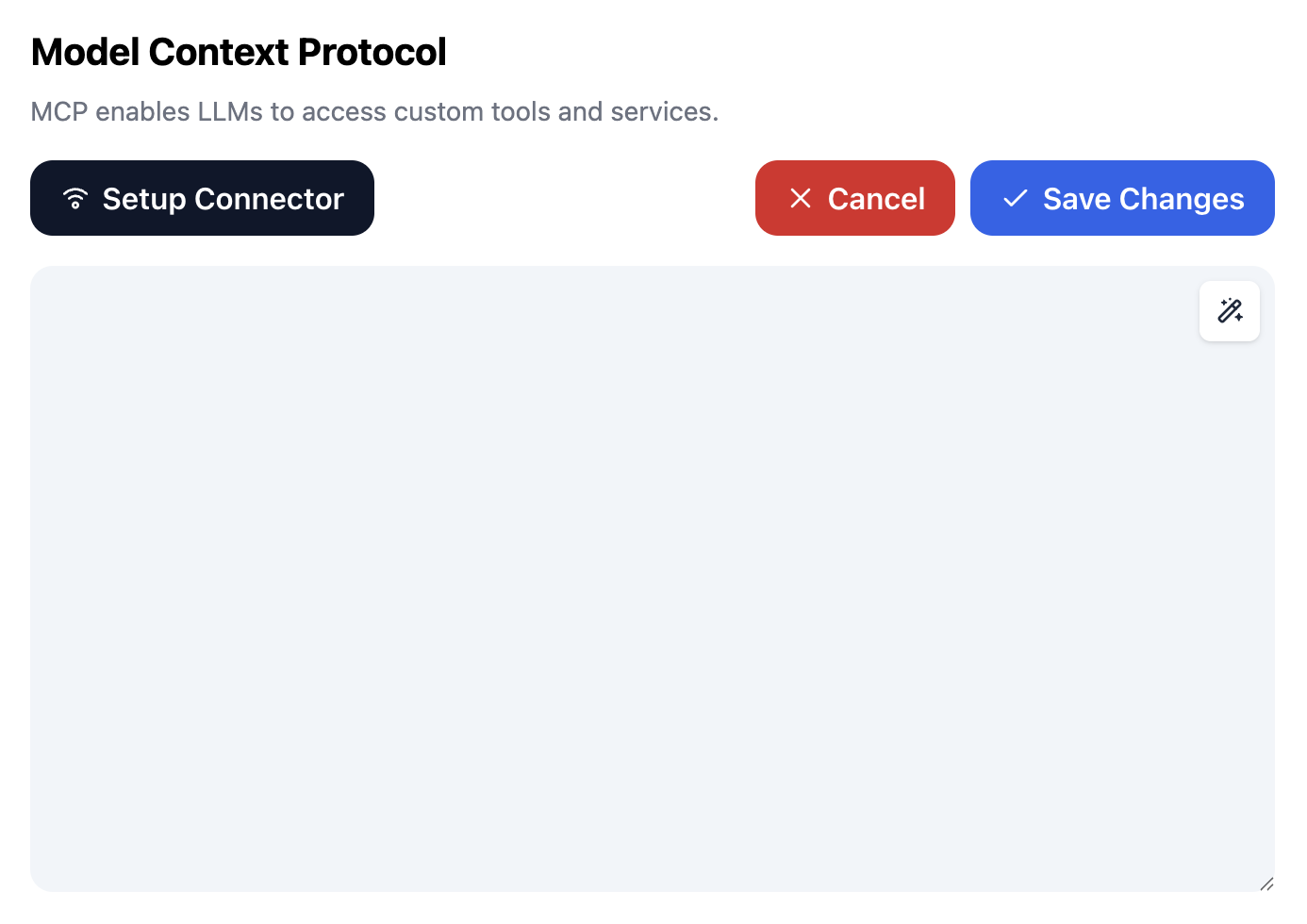
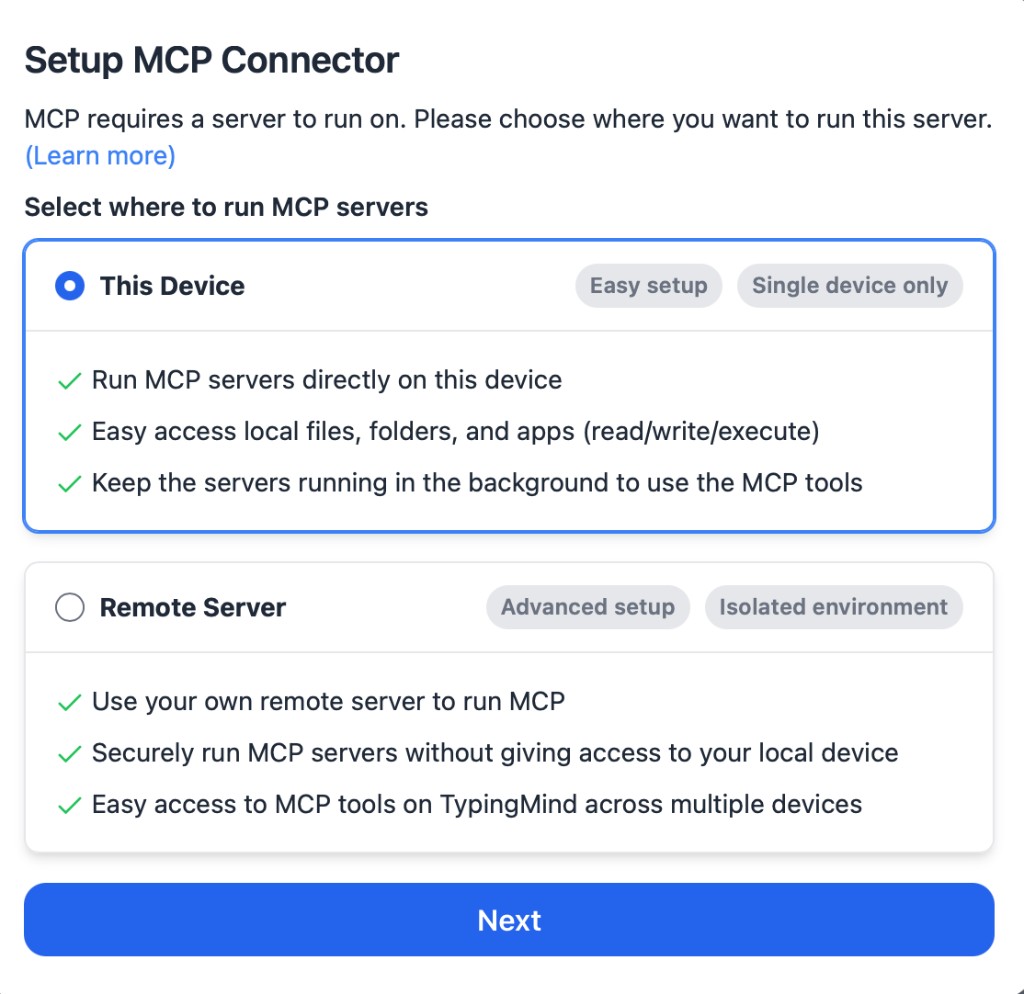
In TypingMind, go to Settings, Advanced Settings, then Model Context Protocol and choose Setup Connector.

  1. Open TypingMind in your browser.
  2. Click the Settings icon.
  3. Go to Advanced Settings.
  4. Open the Model Context Protocol section.
  5. Click Setup Connector and choose This Device.
TypingMind MCP connector setup screen with This Device selected
2

Run the connector command

Choose This Device, copy the command from TypingMind, and run it in Terminal. Keep the process running while you use MCP.

  1. Copy the setup command shown by TypingMind.
  2. Open Terminal on macOS or Windows Terminal on Windows.
  3. Paste and run the command.
  4. Approve the package install if Terminal asks you to proceed.
  5. Keep the Terminal window running while using MCP tools.
3

Add Agent-Native Slides as a server

When the connector status is Ready, click Edit Servers and paste the MCP server configuration.

  1. Wait until the connector status shows Ready.
  2. Click Edit Servers.
  3. Paste the Agent-Native Slides MCP server configuration.
  4. Save the server list.
  5. Refresh if you want to confirm the connector is still ready.
TypingMind MCP settings showing active server and Edit Servers button
{
  "mcpServers": {
    "agent-native": {
      "command": "npx",
      "args": [
        "-y",
        "<mcp-server-package>"
      ]
    }
  }
}
4

Use it across models

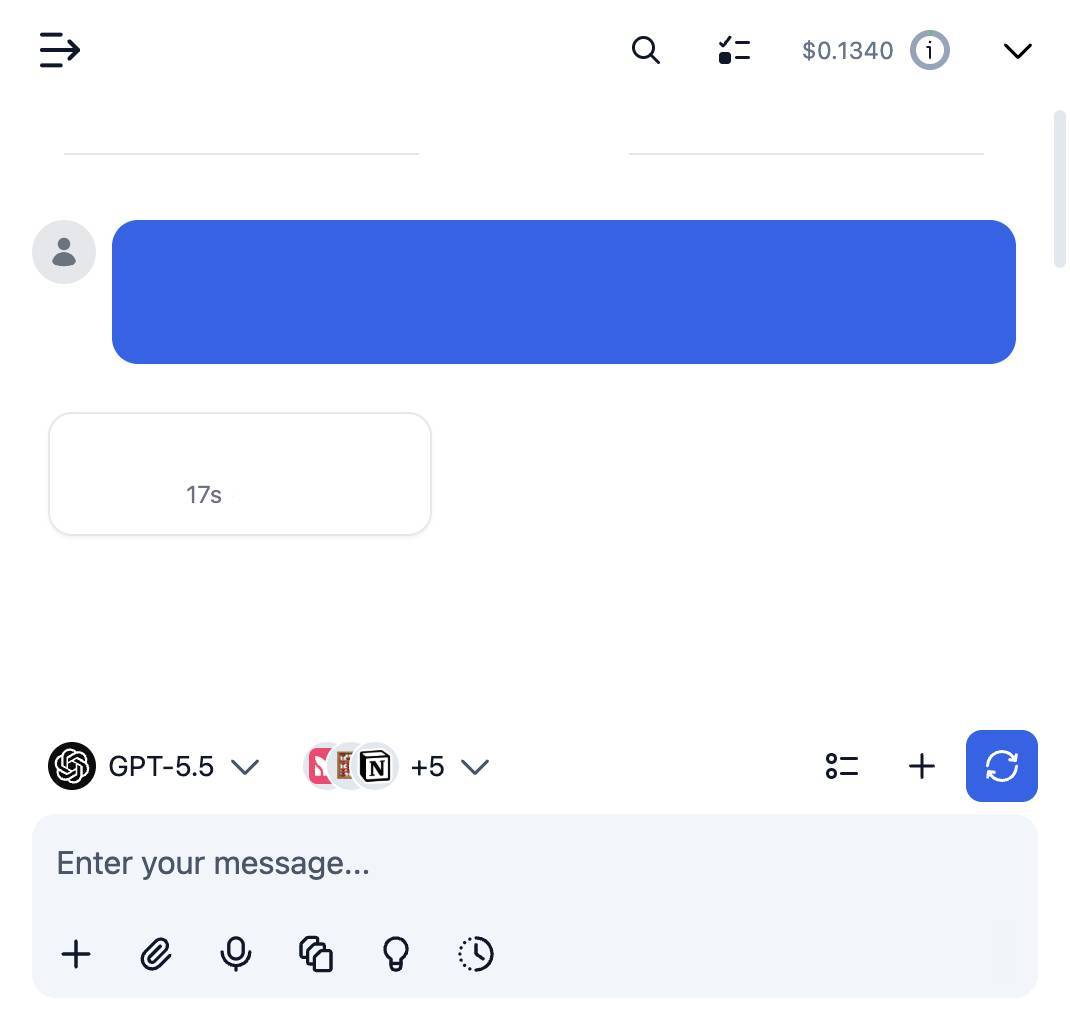
Save the server list, open Plugins, enable the Agent-Native Slides MCP tools, then select any supported AI model in TypingMind and use the tools in chat or assign them to an AI agent.

  1. Open the Plugins page in TypingMind.
  2. Enable the Agent-Native Slides MCP tools.
  3. Start a chat and choose the AI model you want to use.
  4. Use the MCP tools in chat or assign them to an AI agent.
  5. Switch to another AI model whenever needed without reconnecting MCP.
TypingMind chat using enabled MCP tools with a selected AI model
Can you use Agent-Native Slides to help me with this task?
Agent-Native Slides
Sure. I read it.
Here is what I found using Agent-Native Slides.

Frequently asked questions

What is the Agent-Native Slides MCP server used for?

Agent-Native Slides is an MCP server that lets compatible AI clients connect to external tools and context. In TypingMind, you can add this MCP server once and make its tools available in your AI workspace.

Can I use Agent-Native Slides MCP with multiple AI models in TypingMind?

Yes. TypingMind connects MCP tools at the workspace level, so you can use Agent-Native Slides with different AI models such as Claude, ChatGPT, Gemini, or other models you have configured in TypingMind without setting up the MCP server separately for each model.

Why use Agent-Native Slides MCP with TypingMind?

TypingMind is one of the best frontends for LLM chat because it brings multiple AI models, prompts, plugins, AI agents, API keys, and MCP tools into one workspace. With Agent-Native Slides connected, you can use its MCP tools across your preferred models while keeping your chat workflow organized in TypingMind.

How do I connect Agent-Native Slides MCP to TypingMind?

Agent-Native Slides runs through the TypingMind local MCP connector. This is best when the MCP server needs access to local files, desktop apps, command-line tools, or private resources on your computer.

What tools does Agent-Native Slides MCP provide in TypingMind?

Agent-Native Slides exposes MCP capabilities that can be enabled from the TypingMind Plugins page and used in chat or assigned to AI agents.

Do I need to share my API keys with TypingMind to use Agent-Native Slides MCP?

No. TypingMind is local-first and lets you keep your model providers, API keys, prompts, and MCP configuration under your control. If Agent-Native Slides requires authentication, add the required headers, OAuth settings, or local configuration for that MCP server when you create the connection.

Related MCP Servers

View all

Set up your own AI workspace now

Get notified about new features and future giveaways by subscribing to our newsletter 👇