AgentQL logo

AgentQL

Organization
tinyfish-io

Model Context Protocol server that integrates AgentQL's data extraction capabilities.

Publishertinyfish-io
Repositoryagentql-mcp
LanguageShell
Forks
39
Stars
170
Available tools
0
Transport typestdio
Categories
LicenseMIT
Links
  • Connect tools to AI workflows

    AgentQL exposes MCP capabilities that can be used by compatible AI clients and agents.

  • 0 available tools

    Browse the callable actions below, including names and descriptions when provided by the server.

  • Ready-to-copy setup

    Use the installation snippets to configure this server in your preferred MCP client.

  • Open source signals

    170 stars and 39 forks from the linked repository.

AgentQL MCP Server

This is a Model Context Protocol (MCP) server that integrates AgentQL's data extraction capabilities.

Features

Tools

  • extract-web-data - extract structured data from a given 'url', using 'prompt' as a description of actual data and its fields to extract.

Installation

To use AgentQL MCP Server to extract data from web pages, you need to install it via npm, get an API key from our Dev Portal, and configure it in your favorite app that supports MCP.

Install the package

bash
npm install -g agentql-mcp

Configure Claude

  • Open Claude Desktop Settings via +, (don't confuse with Claude Account Settings)
  • Go to Developer sidebar section
  • Click Edit Config and open claude_desktop_config.json file
  • Add agentql server inside mcpServers dictionary in the config file
  • Restart the app
json
{
  "mcpServers": {
    "agentql": {
      "command": "npx",
      "args": ["-y", "agentql-mcp"],
      "env": {
        "AGENTQL_API_KEY": "YOUR_API_KEY"
      }
    }
  }
}

Read more about MCP configuration in Claude here.

Configure VS Code

For one-click installation, click one of the install buttons below:

Install with NPX in VS Code Install with NPX in VS Code Insiders

Manual Installation

Click the install buttons at the top of this section for the quickest installation method. For manual installation, follow these steps:

Add the following JSON block to your User Settings (JSON) file in VS Code. You can do this by pressing Ctrl + Shift + P and typing Preferences: Open User Settings (JSON).

json
{
  "mcp": {
    "inputs": [
      {
        "type": "promptString",
        "id": "apiKey",
        "description": "AgentQL API Key",
        "password": true
      }
    ],
    "servers": {
      "agentql": {
        "command": "npx",
        "args": ["-y", "agentql-mcp"],
        "env": {
          "AGENTQL_API_KEY": "${input:apiKey}"
        }
      }
    }
  }
}

Optionally, you can add it to a file called .vscode/mcp.json in your workspace. This will allow you to share the configuration with others.

json
{
  "inputs": [
    {
      "type": "promptString",
      "id": "apiKey",
      "description": "AgentQL API Key",
      "password": true
    }
  ],
  "servers": {
    "agentql": {
      "command": "npx",
      "args": ["-y", "agentql-mcp"],
      "env": {
        "AGENTQL_API_KEY": "${input:apiKey}"
      }
    }
  }
}

Configure Cursor

  • Open Cursor Settings
  • Go to MCP > MCP Servers
  • Click + Add new MCP Server
  • Enter the following:
    • Name: "agentql" (or your preferred name)
    • Type: "command"
    • Command: env AGENTQL_API_KEY=YOUR_API_KEY npx -y agentql-mcp

Read more about MCP configuration in Cursor here.

Configure Windsurf

  • Open Windsurf: MCP Configuration Panel
  • Click Add custom server+
  • Alternatively you can open ~/.codeium/windsurf/mcp_config.json directly
  • Add agentql server inside mcpServers dictionary in the config file
json
{
  "mcpServers": {
    "agentql": {
      "command": "npx",
      "args": ["-y", "agentql-mcp"],
      "env": {
        "AGENTQL_API_KEY": "YOUR_API_KEY"
      }
    }
  }
}

Read more about MCP configuration in Windsurf here.

Validate MCP integration

Give your agent a task that will require extracting data from the web. For example:

text
Extract the list of videos from the page https://www.youtube.com/results?search_query=agentql, every video should have a title, an author name, a number of views and a url to the video. Make sure to exclude ads items. Format this as a markdown table.

[!TIP] In case your agent complains that it can't open urls or load content from the web instead of using AgentQL, try adding "use tools" or "use agentql tool" hint.

Development

Install dependencies:

bash
npm install

Build the server:

bash
npm run build

For development with auto-rebuild:

bash
npm run watch

If you want to try out development version, you can use the following config instead of the default one:

json
{
  "mcpServers": {
    "agentql": {
      "command": "/path/to/agentql-mcp/dist/index.js",
      "env": {
        "AGENTQL_API_KEY": "YOUR_API_KEY"
      }
    }
  }
}

[!NOTE] Don't forget to remove the default AgentQL MCP server config to not confuse Claude with two similar servers.

Debugging

Since MCP servers communicate over stdio, debugging can be challenging. We recommend using the MCP Inspector, which is available as a package script:

bash
npm run inspector

The Inspector will provide a URL to access debugging tools in your browser.
Installation

TypingMind
Prerequisites:

Node.js 18+

{
  "mcpServers": {
    "agentql": {
      "command": "npx",
      "args": [
        "-y",
        "agentql-mcp"
      ],
      "env": {
        "AGENTQL_API_KEY": "YOUR_API_KEY"
      }
    }
  }
}

Use AgentQL MCP with multiple AI models

TypingMind connects MCP tools at the workspace level, so once AgentQL is connected, you can use it with different AI models in TypingMind instead of setting it up separately for each model. This MCP runs locally through the TypingMind MCP connector on your device.

Setup guide to use the local connector

Use this when the MCP server needs access to local files, apps, or private resources on your computer.

1

Open the MCP settings

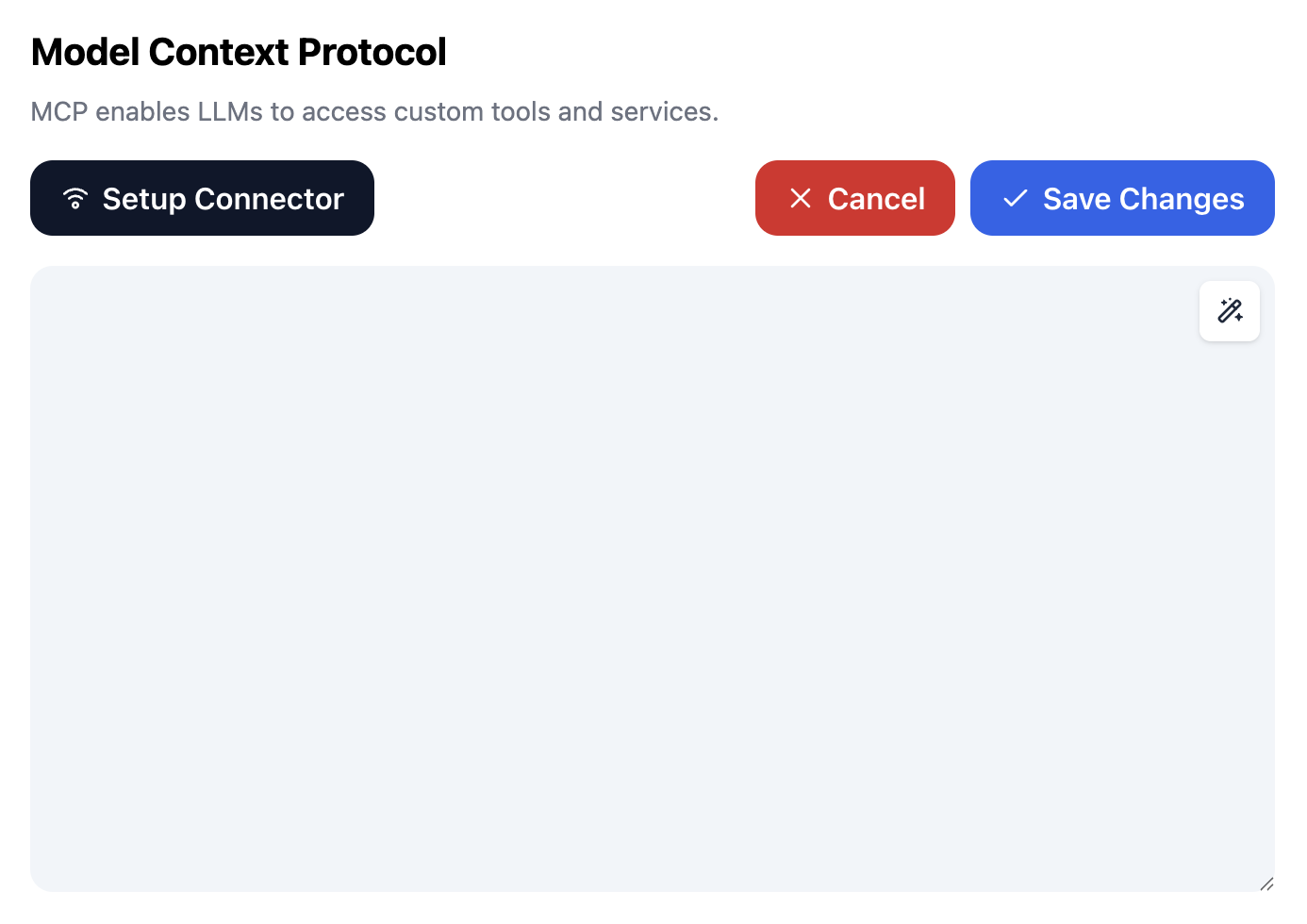
In TypingMind, go to Settings, Advanced Settings, then Model Context Protocol and choose Setup Connector.

  1. Open TypingMind in your browser.
  2. Click the Settings icon.
  3. Go to Advanced Settings.
  4. Open the Model Context Protocol section.
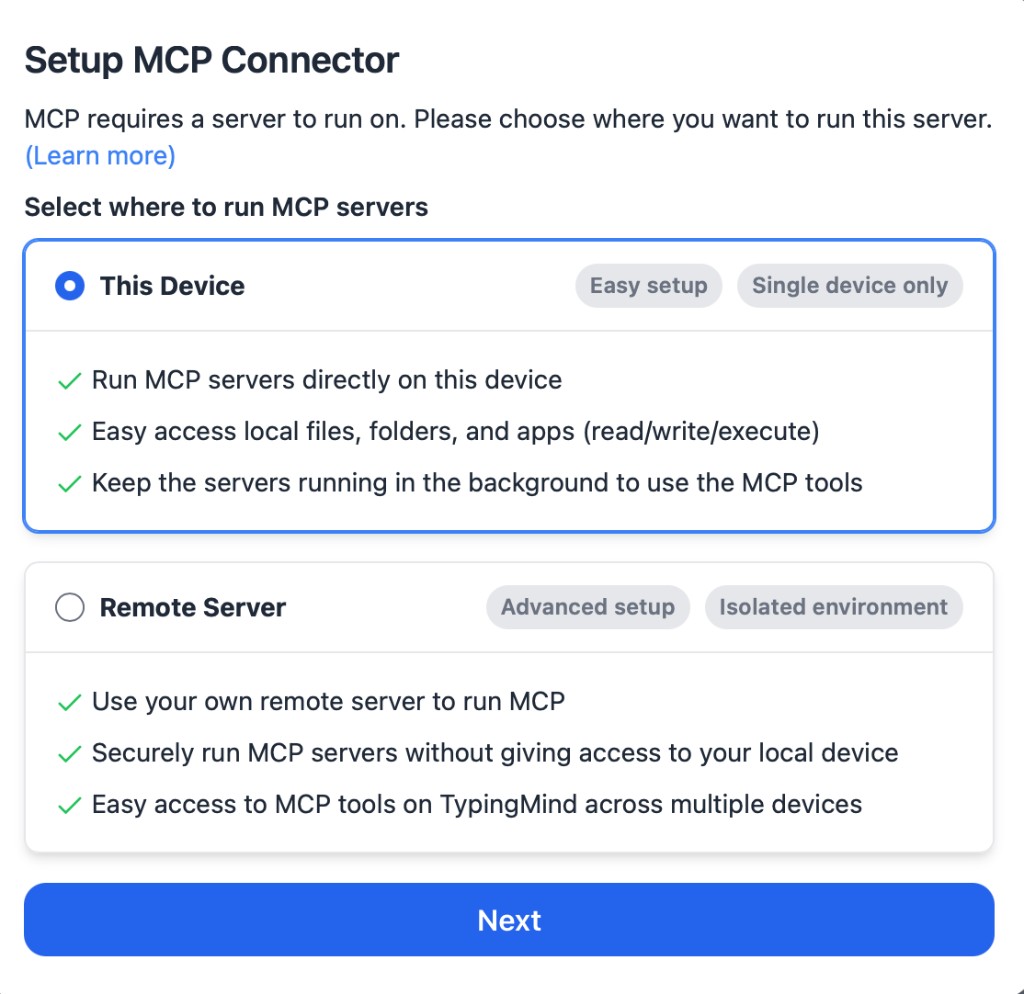
  5. Click Setup Connector and choose This Device.
TypingMind MCP connector setup screen with This Device selected
2

Run the connector command

Choose This Device, copy the command from TypingMind, and run it in Terminal. Keep the process running while you use MCP.

  1. Copy the setup command shown by TypingMind.
  2. Open Terminal on macOS or Windows Terminal on Windows.
  3. Paste and run the command.
  4. Approve the package install if Terminal asks you to proceed.
  5. Keep the Terminal window running while using MCP tools.
3

Add AgentQL as a server

When the connector status is Ready, click Edit Servers and paste the MCP server configuration.

  1. Wait until the connector status shows Ready.
  2. Click Edit Servers.
  3. Paste the AgentQL MCP server configuration.
  4. Save the server list.
  5. Refresh if you want to confirm the connector is still ready.
TypingMind MCP settings showing active server and Edit Servers button
{
  "mcpServers": {
    "agentql": {
      "command": "npx",
      "args": [
        "-y",
        "agentql-mcp"
      ]
    }
  }
}
4

Use it across models

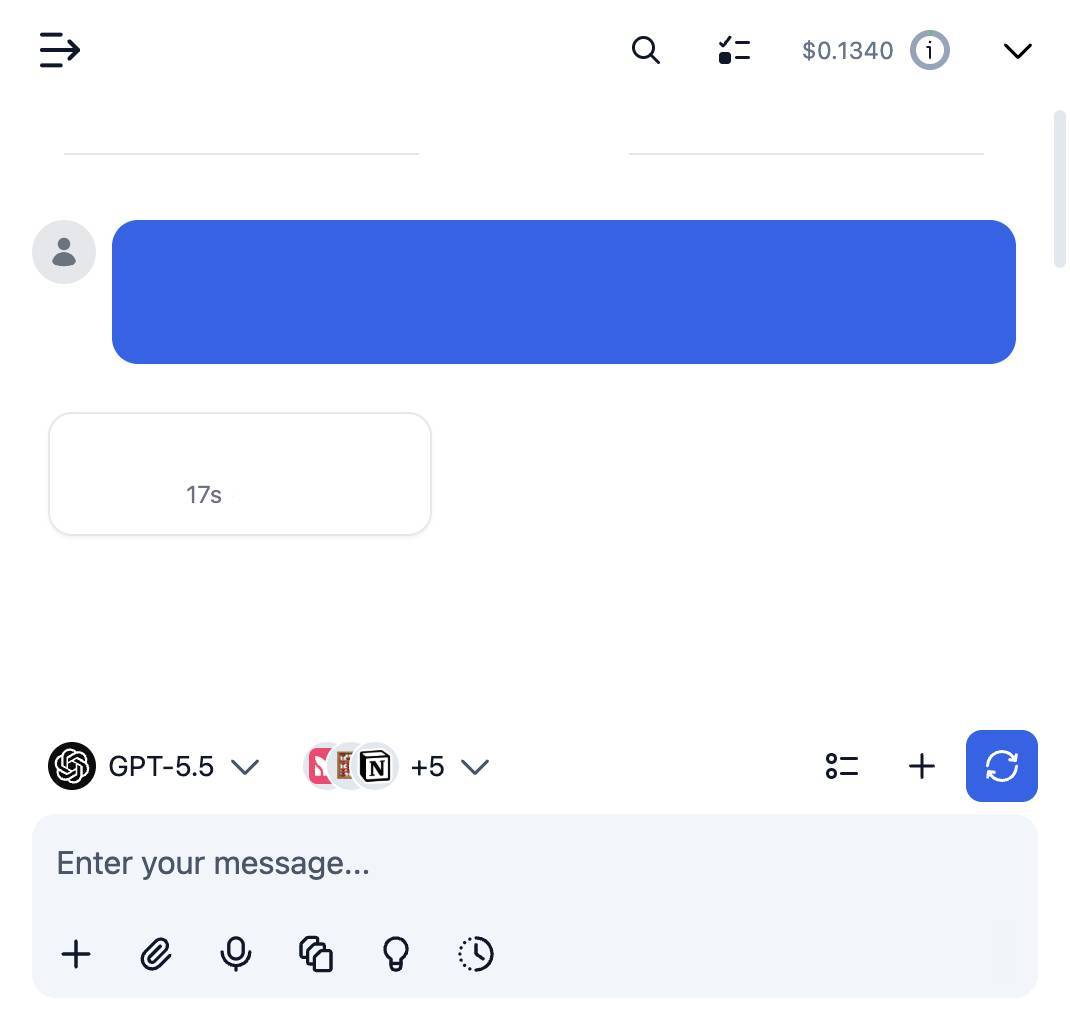
Save the server list, open Plugins, enable the AgentQL MCP tools, then select any supported AI model in TypingMind and use the tools in chat or assign them to an AI agent.

  1. Open the Plugins page in TypingMind.
  2. Enable the AgentQL MCP tools.
  3. Start a chat and choose the AI model you want to use.
  4. Use the MCP tools in chat or assign them to an AI agent.
  5. Switch to another AI model whenever needed without reconnecting MCP.
TypingMind chat using enabled MCP tools with a selected AI model
Can you use AgentQL to help me with this task?
AgentQL
Sure. I read it.
Here is what I found using AgentQL.

Frequently asked questions

What is the AgentQL MCP server used for?

AgentQL is an MCP server that lets compatible AI clients connect to external tools and context. In TypingMind, you can add this MCP server once and make its tools available in your AI workspace.

Can I use AgentQL MCP with multiple AI models in TypingMind?

Yes. TypingMind connects MCP tools at the workspace level, so you can use AgentQL with different AI models such as Claude, ChatGPT, Gemini, or other models you have configured in TypingMind without setting up the MCP server separately for each model.

Why use AgentQL MCP with TypingMind?

TypingMind is one of the best frontends for LLM chat because it brings multiple AI models, prompts, plugins, AI agents, API keys, and MCP tools into one workspace. With AgentQL connected, you can use its MCP tools across your preferred models while keeping your chat workflow organized in TypingMind.

How do I connect AgentQL MCP to TypingMind?

AgentQL runs through the TypingMind local MCP connector. This is best when the MCP server needs access to local files, desktop apps, command-line tools, or private resources on your computer.

What tools does AgentQL MCP provide in TypingMind?

AgentQL exposes MCP capabilities that can be enabled from the TypingMind Plugins page and used in chat or assigned to AI agents.

Do I need to share my API keys with TypingMind to use AgentQL MCP?

No. TypingMind is local-first and lets you keep your model providers, API keys, prompts, and MCP configuration under your control. If AgentQL requires authentication, add the required headers, OAuth settings, or local configuration for that MCP server when you create the connection.

Related MCP Servers

View all

Set up your own AI workspace now

Get notified about new features and future giveaways by subscribing to our newsletter 👇