Airtable logo

Airtable

Community
domdomegg

🗂️🤖 Airtable Model Context Protocol Server, for allowing AI systems to interact with your Airtable bases

Publisherdomdomegg
Repositoryairtable-mcp-server
LanguageTypeScript
Forks
131
Stars
444
Available tools
0
Transport typestdio
Categories
LicenseMIT
Links
  • Connect tools to AI workflows

    Airtable exposes MCP capabilities that can be used by compatible AI clients and agents.

  • 0 available tools

    Browse the callable actions below, including names and descriptions when provided by the server.

  • Ready-to-copy setup

    Use the installation snippets to configure this server in your preferred MCP client.

  • Open source signals

    444 stars and 131 forks from the linked repository.

airtable-mcp-server

A Model Context Protocol server that provides read and write access to Airtable databases. This server enables LLMs to inspect database schemas, then read and write records.

https://github.com/user-attachments/assets/c8285e76-d0ed-4018-94c7-20535db6c944

Installation

Step 1: Create an Airtable personal access token by clicking here. Details:

  • Name: Anything you want e.g. 'Airtable MCP Server Token'.
  • Scopes: schema.bases:read, data.records:read, and optionally schema.bases:write, data.records:write, data.recordComments:read, and data.recordComments:write.
  • Access: The bases you want to access. If you're not sure, select 'Add all resources'.

Keep the token handy, you'll need it in the next step. It should look something like pat123.abc123 (but longer).

Step 2: Follow the instructions below for your preferred client:

Claude Desktop

(Recommended) Via the extensions browser

  1. Open Claude Desktop and go to Settings → Extensions
  2. Click 'Browse Extensions' and find 'Airtable MCP Server'
  3. Click 'Install' and paste in your API key

(Advanced) Alternative: Via manual .mcpb installation

  1. Find the latest mcpb build in the GitHub Actions history (the top one)
  2. In the 'Artifacts' section, download the airtable-mcp-server-mcpb file
  3. Rename the .zip file to .mcpb
  4. Double-click the .mcpb file to open with Claude Desktop
  5. Click "Install" and configure with your API key

(Advanced) Alternative: Via JSON configuration

  1. Install Node.js
  2. Open Claude Desktop and go to Settings → Developer
  3. Click "Edit Config" to open your claude_desktop_config.json file
  4. Add the following configuration to the "mcpServers" section, replacing pat123.abc123 with your API key:
json
{
  "mcpServers": {
    "airtable": {
      "command": "npx",
      "args": [
        "-y",
        "airtable-mcp-server"
      ],
      "env": {
        "AIRTABLE_API_KEY": "pat123.abc123",
      }
    }
  }
}
  1. Save the file and restart Claude Desktop

Cursor

(Recommended) Via one-click install

  1. Click Install MCP Server
  2. Edit your mcp.json file to insert your API key

(Advanced) Alternative: Via JSON configuration

Create either a global (~/.cursor/mcp.json) or project-specific (.cursor/mcp.json) configuration file, replacing pat123.abc123 with your API key:

json
{
  "mcpServers": {
    "airtable": {
      "command": "npx",
      "args": ["-y", "airtable-mcp-server"],
      "env": {
        "AIRTABLE_API_KEY": "pat123.abc123"
      }
    }
  }
}

Cline

(Recommended) Via marketplace

  1. Click the "MCP Servers" icon in the Cline extension
  2. Search for "Airtable" and click "Install"
  3. Follow the prompts to install the server

(Advanced) Alternative: Via JSON configuration

  1. Click the "MCP Servers" icon in the Cline extension
  2. Click on the "Installed" tab, then the "Configure MCP Servers" button at the bottom
  3. Add the following configuration to the "mcpServers" section, replacing pat123.abc123 with your API key:
json
{
  "mcpServers": {
    "airtable": {
      "type": "stdio",
      "command": "npx",
      "args": ["-y", "airtable-mcp-server"],
      "env": {
        "AIRTABLE_API_KEY": "pat123.abc123"
      }
    }
  }
}

Components

Tools

  • list_records

    • Lists records from a specified Airtable table
    • Input parameters:
      • baseId (string, required): The ID of the Airtable base
      • tableId (string, required): The ID of the table to query
      • maxRecords (number, optional): Maximum number of records to return. Defaults to 100.
      • filterByFormula (string, optional): Airtable formula to filter records
  • search_records

    • Search for records containing specific text
    • Input parameters:
      • baseId (string, required): The ID of the Airtable base
      • tableId (string, required): The ID of the table to query
      • searchTerm (string, required): Text to search for in records
      • fieldIds (array, optional): Specific field IDs to search in. If not provided, searches all text-based fields.
      • maxRecords (number, optional): Maximum number of records to return. Defaults to 100.
  • list_bases

    • Lists all accessible Airtable bases
    • No input parameters required
    • Returns base ID, name, and permission level
  • list_tables

    • Lists all tables in a specific base
    • Input parameters:
      • baseId (string, required): The ID of the Airtable base
      • detailLevel (string, optional): The amount of detail to get about the tables (tableIdentifiersOnly, identifiersOnly, or full)
    • Returns table ID, name, description, fields, and views (to the given detailLevel)
  • describe_table

    • Gets detailed information about a specific table
    • Input parameters:
      • baseId (string, required): The ID of the Airtable base
      • tableId (string, required): The ID of the table to describe
      • detailLevel (string, optional): The amount of detail to get about the table (tableIdentifiersOnly, identifiersOnly, or full)
    • Returns the same format as list_tables but for a single table
    • Useful for getting details about a specific table without fetching information about all tables in the base
  • get_record

    • Gets a specific record by ID
    • Input parameters:
      • baseId (string, required): The ID of the Airtable base
      • tableId (string, required): The ID of the table
      • recordId (string, required): The ID of the record to retrieve
  • create_record

    • Creates a new record in a table
    • Input parameters:
      • baseId (string, required): The ID of the Airtable base
      • tableId (string, required): The ID of the table
      • fields (object, required): The fields and values for the new record
  • update_records

    • Updates one or more records in a table
    • Input parameters:
      • baseId (string, required): The ID of the Airtable base
      • tableId (string, required): The ID of the table
      • records (array, required): Array of objects containing record ID and fields to update
  • delete_records

    • Deletes one or more records from a table
    • Input parameters:
      • baseId (string, required): The ID of the Airtable base
      • tableId (string, required): The ID of the table
      • recordIds (array, required): Array of record IDs to delete
  • create_table

    • Creates a new table in a base
    • Input parameters:
      • baseId (string, required): The ID of the Airtable base
      • name (string, required): Name of the new table
      • description (string, optional): Description of the table
      • fields (array, required): Array of field definitions (name, type, description, options)
  • update_table

    • Updates a table's name or description
    • Input parameters:
      • baseId (string, required): The ID of the Airtable base
      • tableId (string, required): The ID of the table
      • name (string, optional): New name for the table
      • description (string, optional): New description for the table
  • create_field

    • Creates a new field in a table
    • Input parameters:
      • baseId (string, required): The ID of the Airtable base
      • tableId (string, required): The ID of the table
      • name (string, required): Name of the new field
      • type (string, required): Type of the field
      • description (string, optional): Description of the field
      • options (object, optional): Field-specific options
  • update_field

    • Updates a field's name or description
    • Input parameters:
      • baseId (string, required): The ID of the Airtable base
      • tableId (string, required): The ID of the table
      • fieldId (string, required): The ID of the field
      • name (string, optional): New name for the field
      • description (string, optional): New description for the field
  • create_comment

    • Creates a comment on a record
    • Input parameters:
      • baseId (string, required): The ID of the Airtable base
      • tableId (string, required): The ID of the table
      • recordId (string, required): The ID of the record
      • text (string, required): The comment text
      • parentCommentId (string, optional): Parent comment ID for threaded replies
    • Returns the created comment with ID, author, creation time, and text
  • list_comments

    • Lists comments on a record
    • Input parameters:
      • baseId (string, required): The ID of the Airtable base
      • tableId (string, required): The ID of the table
      • recordId (string, required): The ID of the record
      • pageSize (number, optional): Number of comments to return (max 100, default 100)
      • offset (string, optional): Pagination offset for retrieving additional comments
    • Returns comments array with author, text, timestamps, reactions, and mentions
    • Comments are returned from newest to oldest

HTTP Transport

The server can also run in HTTP mode for use with remote MCP clients:

bash
MCP_TRANSPORT=http PORT=3000 npx airtable-mcp-server

This starts a stateless HTTP server at http://localhost:3000/mcp. Note: HTTP transport has no built-in authentication - only use behind a reverse proxy or in a secured environment.

Contributing

Pull requests are welcomed on GitHub! To get started:

  1. Install Git and Node.js
  2. Clone the repository
  3. Install dependencies with npm install
  4. Run npm run test to run tests
  5. Build with npm run build
  • You can use npm run build:watch to automatically build after editing src/index.ts. This means you can hit save, reload Claude Desktop (with Ctrl/Cmd+R), and the changes apply.

Releases

Versions follow the semantic versioning spec.

To release:

  1. Use npm version <major | minor | patch> to bump the version
  2. Run git push --follow-tags to push with tags
  3. Wait for GitHub Actions to publish to the NPM registry.
Installation

TypingMind
Prerequisites:

Node.js 18+

{
  "mcpServers": {
    "airtable": {
      "command": "npx",
      "args": [
        "-y",
        "airtable-mcp-server"
      ],
      "env": {
        "AIRTABLE_API_KEY": "pat123.abc123"
      }
    }
  }
}

Use Airtable MCP with multiple AI models

TypingMind connects MCP tools at the workspace level, so once Airtable is connected, you can use it with different AI models in TypingMind instead of setting it up separately for each model. This MCP runs locally through the TypingMind MCP connector on your device.

Setup guide to use the local connector

Use this when the MCP server needs access to local files, apps, or private resources on your computer.

1

Open the MCP settings

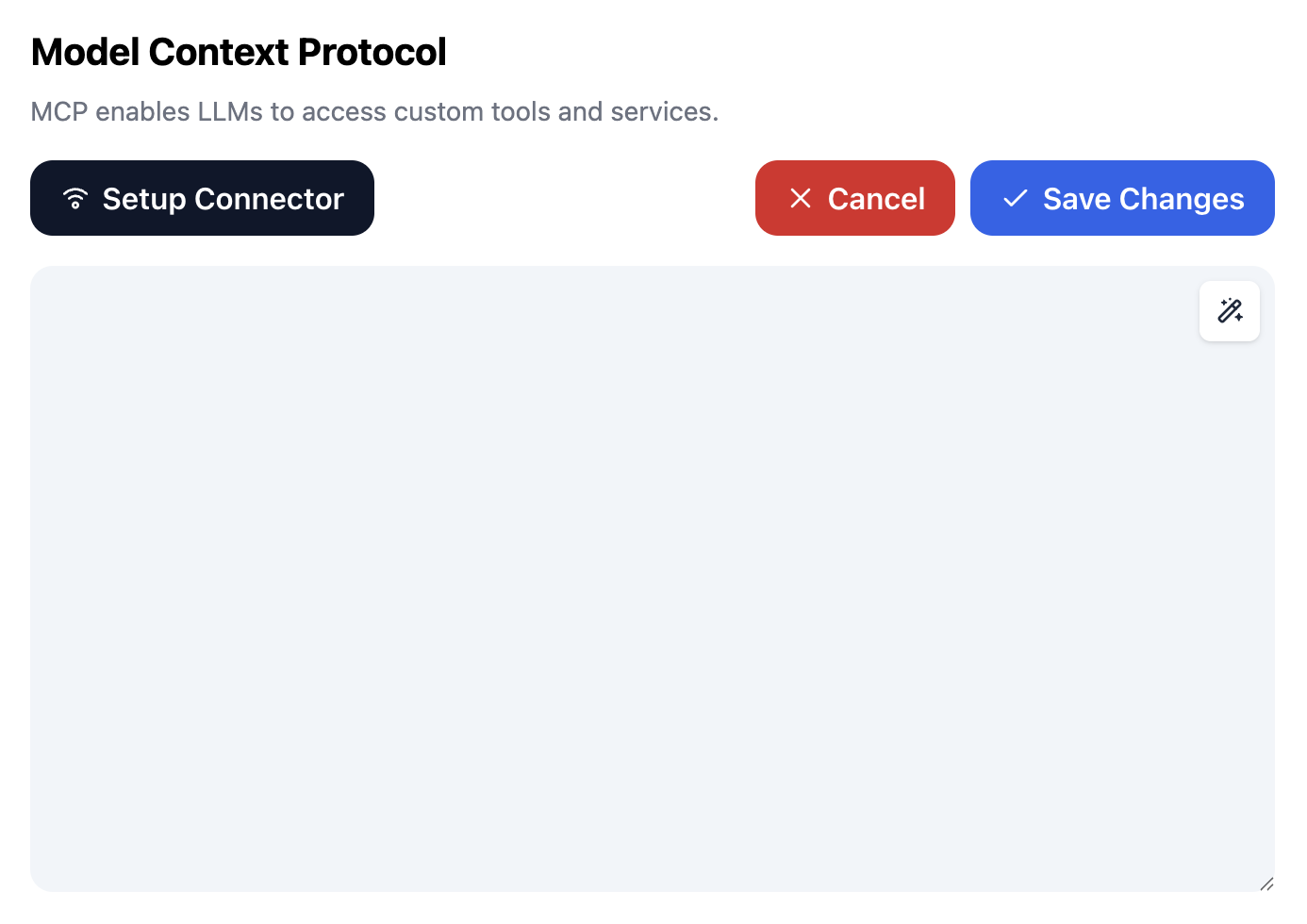
In TypingMind, go to Settings, Advanced Settings, then Model Context Protocol and choose Setup Connector.

  1. Open TypingMind in your browser.
  2. Click the Settings icon.
  3. Go to Advanced Settings.
  4. Open the Model Context Protocol section.
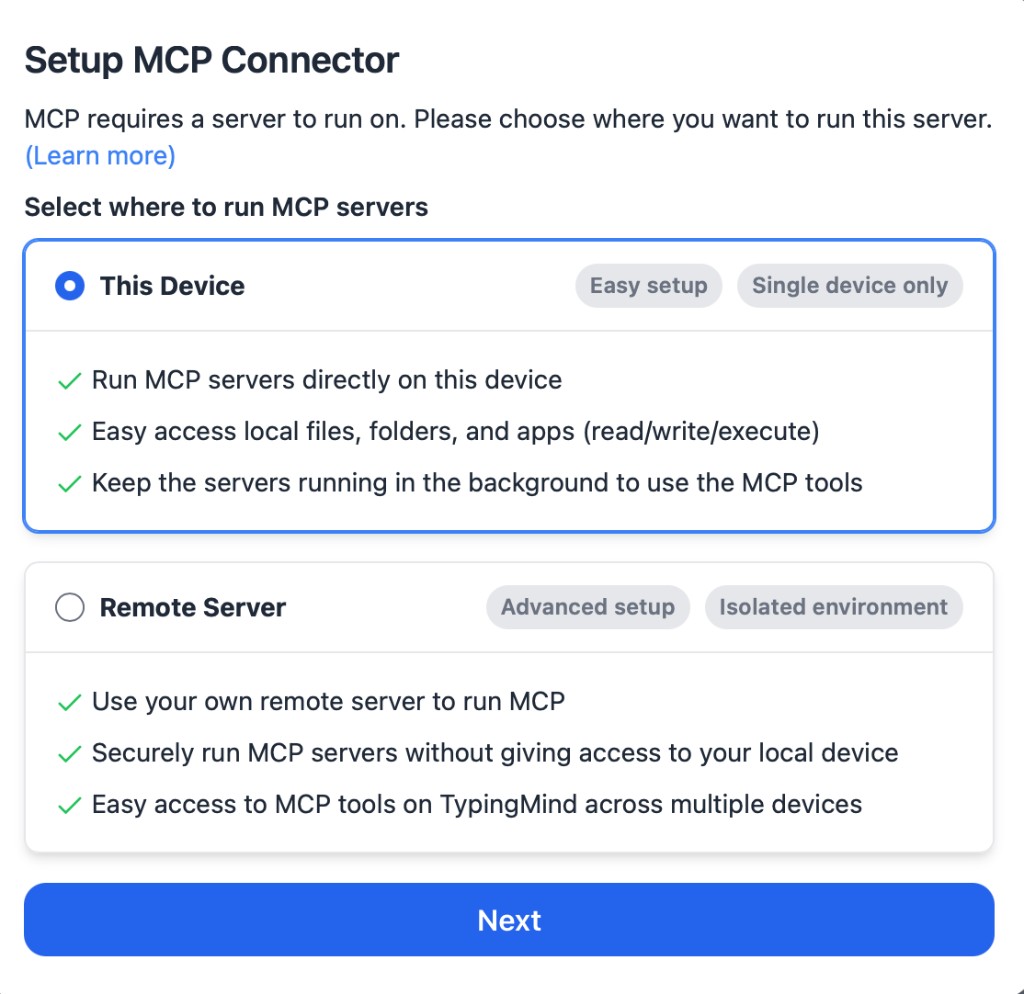
  5. Click Setup Connector and choose This Device.
TypingMind MCP connector setup screen with This Device selected
2

Run the connector command

Choose This Device, copy the command from TypingMind, and run it in Terminal. Keep the process running while you use MCP.

  1. Copy the setup command shown by TypingMind.
  2. Open Terminal on macOS or Windows Terminal on Windows.
  3. Paste and run the command.
  4. Approve the package install if Terminal asks you to proceed.
  5. Keep the Terminal window running while using MCP tools.
3

Add Airtable as a server

When the connector status is Ready, click Edit Servers and paste the MCP server configuration.

  1. Wait until the connector status shows Ready.
  2. Click Edit Servers.
  3. Paste the Airtable MCP server configuration.
  4. Save the server list.
  5. Refresh if you want to confirm the connector is still ready.
TypingMind MCP settings showing active server and Edit Servers button
{
  "mcpServers": {
    "airtable": {
      "command": "npx",
      "args": [
        "-y",
        "airtable-mcp-server"
      ]
    }
  }
}
4

Use it across models

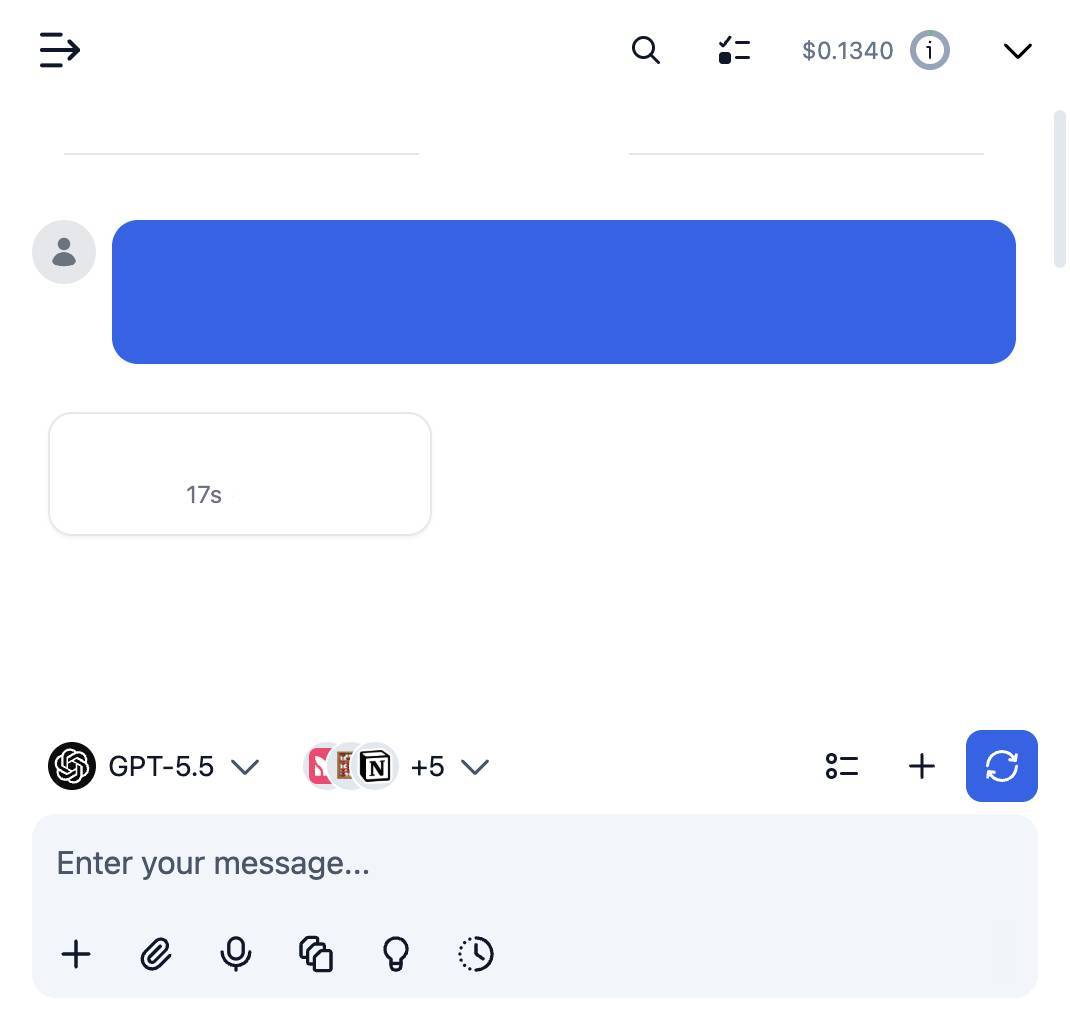
Save the server list, open Plugins, enable the Airtable MCP tools, then select any supported AI model in TypingMind and use the tools in chat or assign them to an AI agent.

  1. Open the Plugins page in TypingMind.
  2. Enable the Airtable MCP tools.
  3. Start a chat and choose the AI model you want to use.
  4. Use the MCP tools in chat or assign them to an AI agent.
  5. Switch to another AI model whenever needed without reconnecting MCP.
TypingMind chat using enabled MCP tools with a selected AI model
Can you use Airtable to help me with this task?
Airtable
Sure. I read it.
Here is what I found using Airtable.

Frequently asked questions

What is the Airtable MCP server used for?

Airtable is an MCP server that lets compatible AI clients connect to external tools and context. In TypingMind, you can add this MCP server once and make its tools available in your AI workspace.

Can I use Airtable MCP with multiple AI models in TypingMind?

Yes. TypingMind connects MCP tools at the workspace level, so you can use Airtable with different AI models such as Claude, ChatGPT, Gemini, or other models you have configured in TypingMind without setting up the MCP server separately for each model.

Why use Airtable MCP with TypingMind?

TypingMind is one of the best frontends for LLM chat because it brings multiple AI models, prompts, plugins, AI agents, API keys, and MCP tools into one workspace. With Airtable connected, you can use its MCP tools across your preferred models while keeping your chat workflow organized in TypingMind.

How do I connect Airtable MCP to TypingMind?

Airtable runs through the TypingMind local MCP connector. This is best when the MCP server needs access to local files, desktop apps, command-line tools, or private resources on your computer.

What tools does Airtable MCP provide in TypingMind?

Airtable exposes MCP capabilities that can be enabled from the TypingMind Plugins page and used in chat or assigned to AI agents.

Do I need to share my API keys with TypingMind to use Airtable MCP?

No. TypingMind is local-first and lets you keep your model providers, API keys, prompts, and MCP configuration under your control. If Airtable requires authentication, add the required headers, OAuth settings, or local configuration for that MCP server when you create the connection.

Related MCP Servers

View all

Set up your own AI workspace now

Get notified about new features and future giveaways by subscribing to our newsletter 👇