Airtable MCP Server logo

Airtable MCP Server

Community
felores

Search, create and update Airtable bases, tables, fields, and records using Claude Desktop and MCP (Model Context Protocol) clients

Publisherfelores
Repositoryairtable-mcp
LanguageJavaScript
Forks
34
Stars
73
Available tools
0
Transport typestdio
Categories
LicenseNOASSERTION
Links
  • Connect tools to AI workflows

    Airtable MCP Server exposes MCP capabilities that can be used by compatible AI clients and agents.

  • 0 available tools

    Browse the callable actions below, including names and descriptions when provided by the server.

  • Ready-to-copy setup

    Use the installation snippets to configure this server in your preferred MCP client.

  • Open source signals

    73 stars and 34 forks from the linked repository.

Airtable MCP Server

A Model Context Protocol server that provides tools for interacting with Airtable's API. This server enables programmatic management of Airtable bases, tables, fields, and records through Claude Desktop or other MCP clients.

This MCP server features a specialized implementation that allows it to build tables in stages, leveraging Claude's agentic capabilities and minimizing the failure rate typically seen in other MCP servers for Airtable when building complex tables. It also includes system prompt and project knowledge markdown files to provide additional guidance for the LLM when leveraging projects in Claude Desktop.

Requirements: Node.js

  1. Install Node.js (version 18 or higher) and npm from nodejs.org
  2. Verify installation:
    bash
    node --version
    npm --version

⚠️ Important: Before running, make sure to setup your Airtable API key

Obtaining an Airtable API Key

  1. Log in to your Airtable account at airtable.com
  2. Create a personal access token at Airtable's Builder Hub
  3. In the Personal access token section select these scopes:
    • data.records:read
    • data.records:write
    • schema.bases:read
    • schema.bases:write
  4. Select the workspace or bases you want to give access to the personal access token
  5. Keep this key secure - you'll need it for configuration

Installation

Method 1: Using npx (Recommended)

  1. Navigate to the Claude configuration directory:

    • Windows: C:\Users\NAME\AppData\Roaming\Claude
    • macOS: ~/Library/Application Support/Claude/

    You can also find these directories inside the Claude Desktop app: Claude Desktop > Settings > Developer > Edit Config

  2. Create or edit claude_desktop_config.json:

json
{
  "mcpServers": {
    "airtable": {
      "command": "npx",
      "args": ["@felores/airtable-mcp-server"],
      "env": {
        "AIRTABLE_API_KEY": "your_api_key_here"
      }
    }
  }
}

Note: For Windows paths, use double backslashes (\) or forward slashes (/).

Method 2: Using mcp-installer:

mcp-installer is a MCP server to install other MCP servers.

  1. Install mcp-installer
  2. Install the Airtable MCP server by prompting Claude Desktop:
bash
Install @felores/airtable-mcp-server set the environment variable AIRTABLE_API_KEY to 'your_api_key'

Claude will install the server, modify the configuration file and set the environment variable AIRTABLE_API_KEY to your Airtable API key.

Method 3: Local Development Installation

If you want to contribute or modify the code run this in your terminal:

bash
# Clone the repository
git clone https://github.com/felores/airtable-mcp.git
cd airtable-mcp

# Install dependencies
npm install

# Build the server
npm run build

# Run locally
node build/index.js

Then modify the Claude Desktop configuration file to use the local installation:

json
{
  "mcpServers": {
    "airtable": {
      "command": "node",
      "args": ["path/to/airtable-mcp/build/index.js"],
      "env": {
        "AIRTABLE_API_KEY": "your_api_key_here"
      }
    }
  }
}

Verifying Installation

  1. Start Claude Desktop
  2. The Airtable MCP server should be listed in the "Connected MCP Servers" section
  3. Test with a simple command:
List all bases

Features

Available Operations

Base Management

  • list_bases: List all accessible Airtable bases
  • list_tables: List all tables in a base
  • create_table: Create a new table with fields
  • update_table: Update a table's name or description

Field Management

  • create_field: Add a new field to a table
  • update_field: Modify an existing field

Record Operations

  • list_records: Retrieve records from a table
  • create_record: Add a new record
  • update_record: Modify an existing record
  • delete_record: Remove a record
  • search_records: Find records matching criteria
  • get_record: Get a single record by its ID

Field Types

  • singleLineText: Single line text field
  • multilineText: Multi-line text area
  • email: Email address field
  • phoneNumber: Phone number field
  • number: Numeric field with optional precision
  • currency: Money field with currency symbol
  • date: Date field with format options
  • singleSelect: Single choice from options
  • multiSelect: Multiple choices from options

Field Colors

Available colors for select fields:

  • blueBright, redBright, greenBright
  • yellowBright, purpleBright, pinkBright
  • grayBright, cyanBright, orangeBright
  • blueDark1, greenDark1

Contributing

We welcome contributions to improve the Airtable MCP server! Here's how you can contribute:

  1. Fork the Repository

  2. Create a Feature Branch

    bash
    git checkout -b feature/your-feature-name
  3. Make Your Changes

    • Follow the existing code style
    • Add tests if applicable
    • Update documentation as needed
  4. Commit Your Changes

    bash
    git add .
    git commit -m "feat: add your feature description"
  5. Push to Your Fork

    bash
    git push origin feature/your-feature-name
  6. Create a Pull Request

    • Go to your fork on GitHub
    • Click "New Pull Request"
    • Select your feature branch
    • Describe your changes in detail

Development Guidelines

  • Use TypeScript for new code
  • Follow semantic commit messages
  • Update documentation for new features
  • Add examples for new functionality
  • Test your changes thoroughly

Getting Help

  • Open an issue for bugs or feature requests
  • Join discussions in existing issues
  • Ask questions in pull requests

Your contributions help make this tool better for everyone. Whether it's:

  • Adding new features
  • Fixing bugs
  • Improving documentation
  • Suggesting enhancements

We appreciate your help in making the Airtable MCP server more powerful and user-friendly!

License

MIT


Made with ❤️ by the Airtable MCP community
Installation

TypingMind
Prerequisites:

Node.js 18+

{
  "mcpServers": {
    "airtable": {
      "command": "npx",
      "args": [
        "@felores/airtable-mcp-server"
      ],
      "env": {
        "AIRTABLE_API_KEY": "your_api_key_here"
      }
    }
  }
}

Use Airtable MCP Server MCP with multiple AI models

TypingMind connects MCP tools at the workspace level, so once Airtable MCP Server is connected, you can use it with different AI models in TypingMind instead of setting it up separately for each model. This MCP runs locally through the TypingMind MCP connector on your device.

Setup guide to use the local connector

Use this when the MCP server needs access to local files, apps, or private resources on your computer.

1

Open the MCP settings

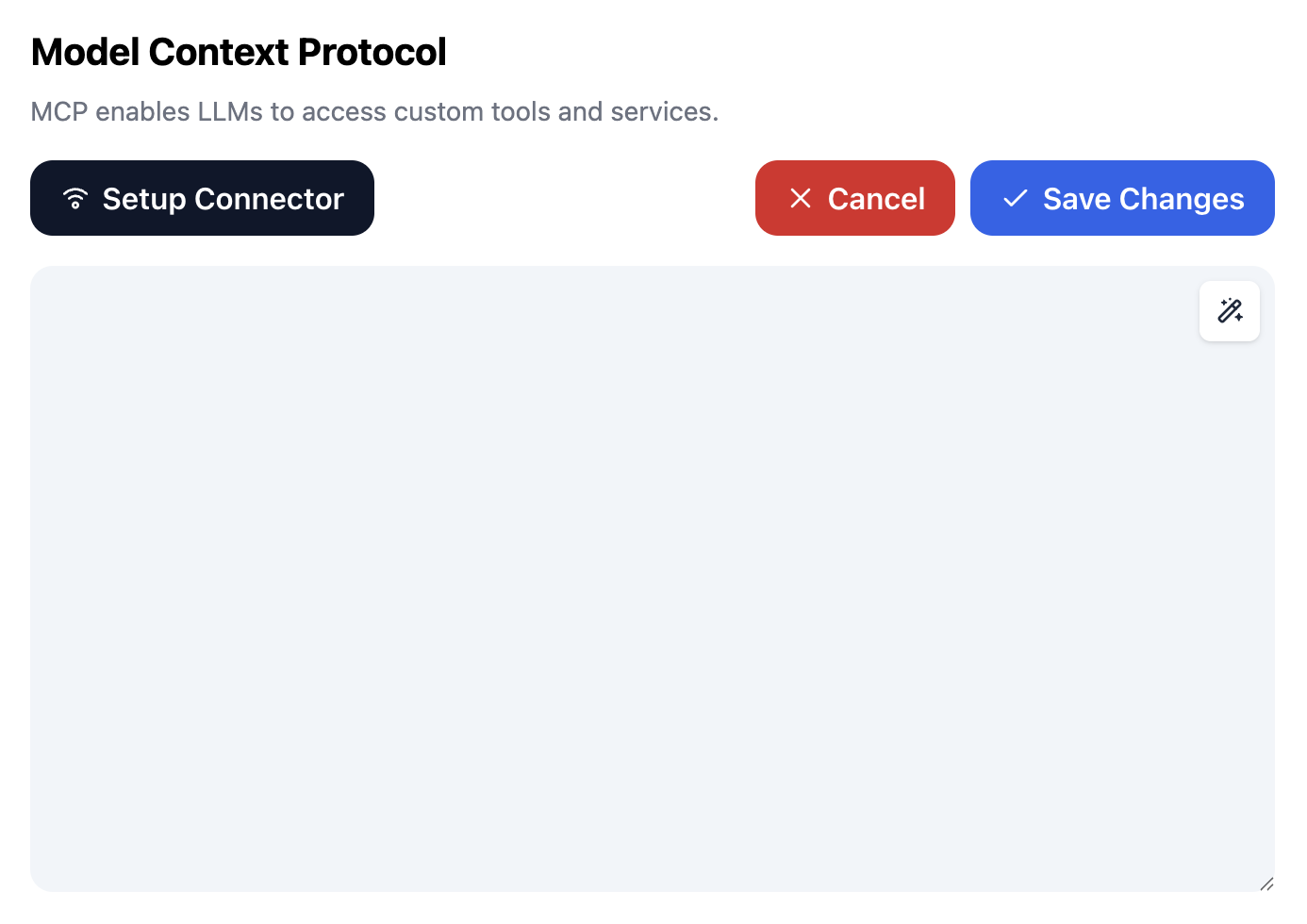
In TypingMind, go to Settings, Advanced Settings, then Model Context Protocol and choose Setup Connector.

  1. Open TypingMind in your browser.
  2. Click the Settings icon.
  3. Go to Advanced Settings.
  4. Open the Model Context Protocol section.
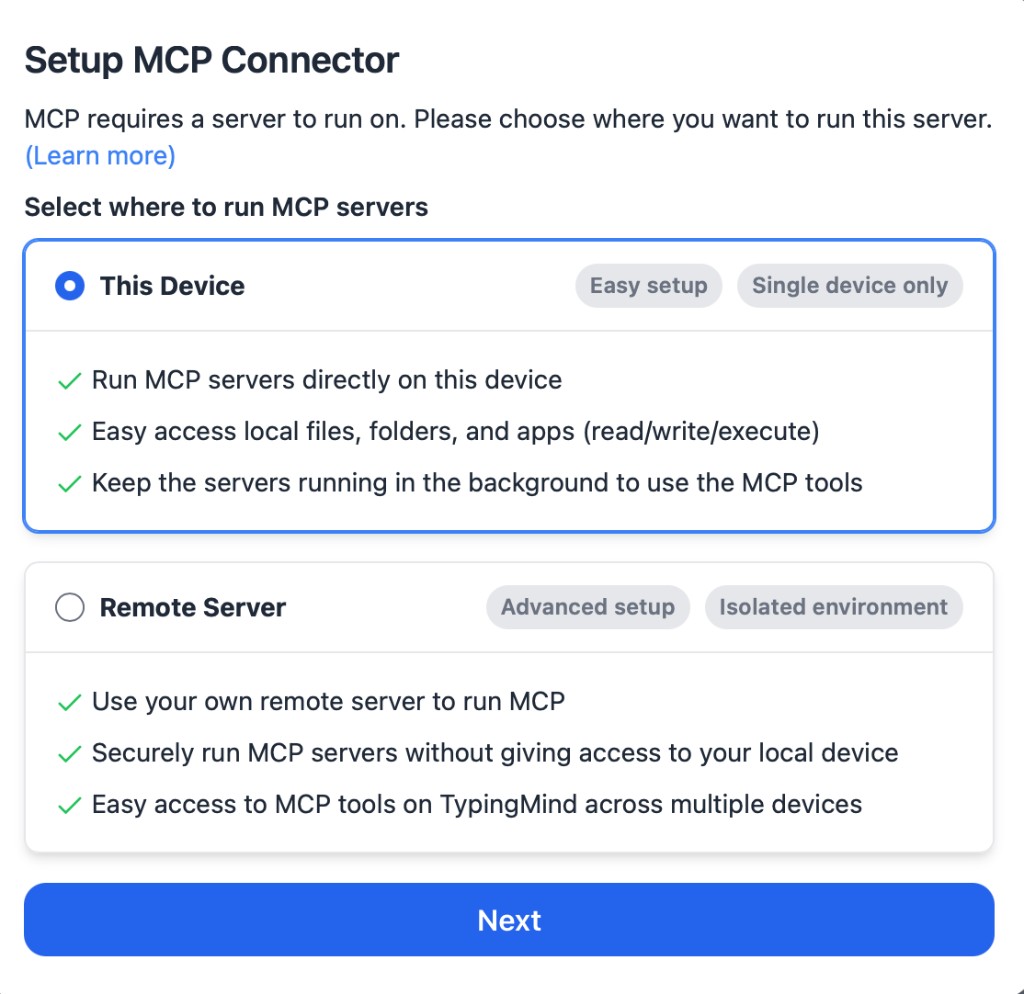
  5. Click Setup Connector and choose This Device.
TypingMind MCP connector setup screen with This Device selected
2

Run the connector command

Choose This Device, copy the command from TypingMind, and run it in Terminal. Keep the process running while you use MCP.

  1. Copy the setup command shown by TypingMind.
  2. Open Terminal on macOS or Windows Terminal on Windows.
  3. Paste and run the command.
  4. Approve the package install if Terminal asks you to proceed.
  5. Keep the Terminal window running while using MCP tools.
3

Add Airtable MCP Server as a server

When the connector status is Ready, click Edit Servers and paste the MCP server configuration.

  1. Wait until the connector status shows Ready.
  2. Click Edit Servers.
  3. Paste the Airtable MCP Server MCP server configuration.
  4. Save the server list.
  5. Refresh if you want to confirm the connector is still ready.
TypingMind MCP settings showing active server and Edit Servers button
{
  "mcpServers": {
    "airtable-mcp-server": {
      "command": "npx",
      "args": [
        "-y",
        "@felores/airtable-mcp-server"
      ]
    }
  }
}
4

Use it across models

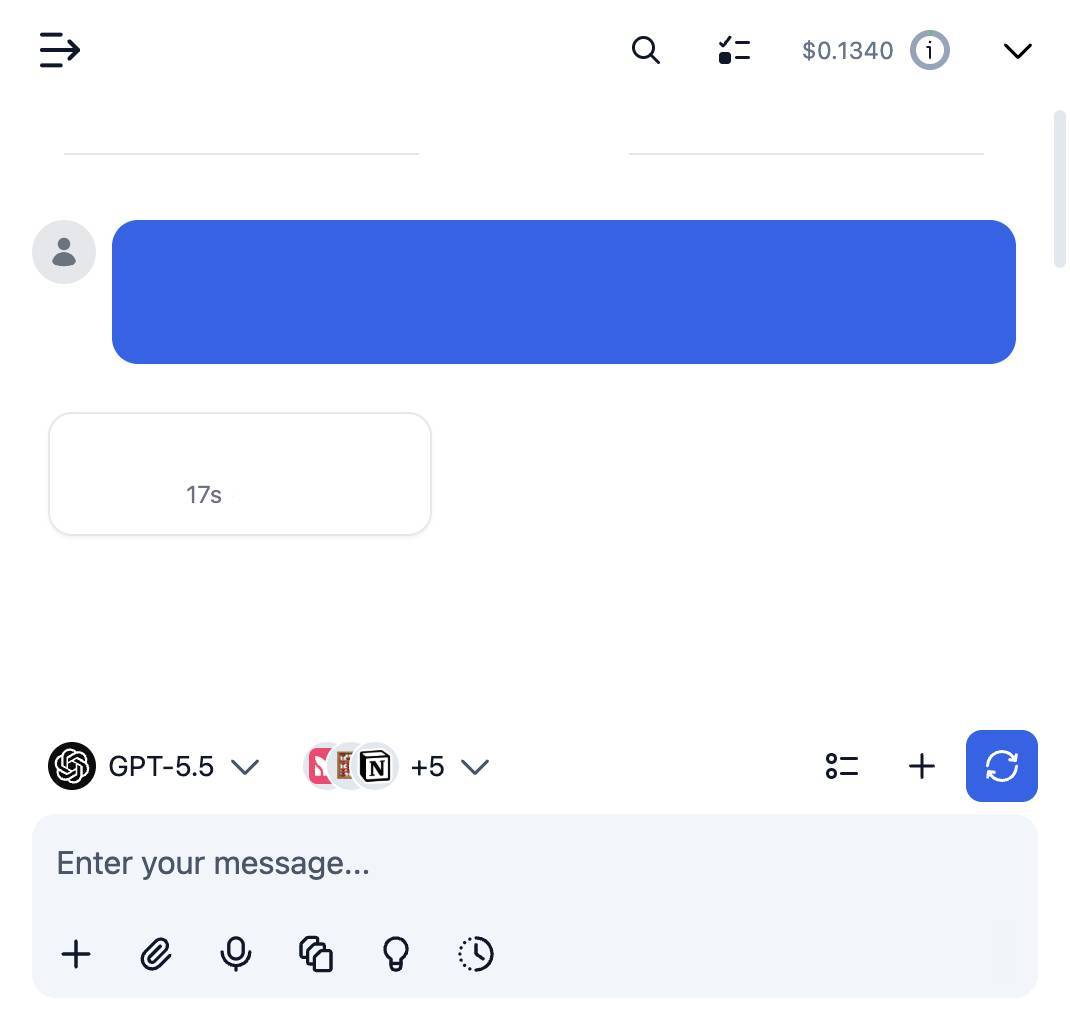
Save the server list, open Plugins, enable the Airtable MCP Server MCP tools, then select any supported AI model in TypingMind and use the tools in chat or assign them to an AI agent.

  1. Open the Plugins page in TypingMind.
  2. Enable the Airtable MCP Server MCP tools.
  3. Start a chat and choose the AI model you want to use.
  4. Use the MCP tools in chat or assign them to an AI agent.
  5. Switch to another AI model whenever needed without reconnecting MCP.
TypingMind chat using enabled MCP tools with a selected AI model
Can you use Airtable MCP Server to help me with this task?
Airtable MCP Server
Sure. I read it.
Here is what I found using Airtable MCP Server.

Frequently asked questions

What is the Airtable MCP Server MCP server used for?

Airtable MCP Server is an MCP server that lets compatible AI clients connect to external tools and context. In TypingMind, you can add this MCP server once and make its tools available in your AI workspace.

Can I use Airtable MCP Server MCP with multiple AI models in TypingMind?

Yes. TypingMind connects MCP tools at the workspace level, so you can use Airtable MCP Server with different AI models such as Claude, ChatGPT, Gemini, or other models you have configured in TypingMind without setting up the MCP server separately for each model.

Why use Airtable MCP Server MCP with TypingMind?

TypingMind is one of the best frontends for LLM chat because it brings multiple AI models, prompts, plugins, AI agents, API keys, and MCP tools into one workspace. With Airtable MCP Server connected, you can use its MCP tools across your preferred models while keeping your chat workflow organized in TypingMind.

How do I connect Airtable MCP Server MCP to TypingMind?

Airtable MCP Server runs through the TypingMind local MCP connector. This is best when the MCP server needs access to local files, desktop apps, command-line tools, or private resources on your computer.

What tools does Airtable MCP Server MCP provide in TypingMind?

Airtable MCP Server exposes MCP capabilities that can be enabled from the TypingMind Plugins page and used in chat or assigned to AI agents.

Do I need to share my API keys with TypingMind to use Airtable MCP Server MCP?

No. TypingMind is local-first and lets you keep your model providers, API keys, prompts, and MCP configuration under your control. If Airtable MCP Server requires authentication, add the required headers, OAuth settings, or local configuration for that MCP server when you create the connection.

Related MCP Servers

View all

Set up your own AI workspace now

Get notified about new features and future giveaways by subscribing to our newsletter 👇