Blowback (Frontend Development) logo

Blowback (Frontend Development)

Community
esnark

MCP Server for Frontend dev environment (formerly known as vite-mcp-server)

Publisheresnark
Repositoryblowback
LanguageTypeScript
Forks
7
Stars
23
Available tools
16
Transport typestdio
Categories
LicenseMIT
Links
  • Connect tools to AI workflows

    Blowback (Frontend Development) exposes MCP capabilities that can be used by compatible AI clients and agents.

  • 16 available tools

    Browse the callable actions below, including names and descriptions when provided by the server.

  • Ready-to-copy setup

    Use the installation snippets to configure this server in your preferred MCP client.

  • Open source signals

    23 stars and 7 forks from the linked repository.

Blowback

Vite MCP Server is now Blowback

Blowback aims to support various FE development servers, not only Vite

A Model Context Protocol (MCP) server that integrates FE development servers with AI tools like Claude Desktop and Cursor.

How to Use

Command (Claude Code):

bash
claude mcp add blowback -s project -e PROJECT_ROOT=/path/to/your/project -- npx -y blowback-context

Or use json configuration:

  • Claude Code: {PROJECT_ROOT}/.mcp.json
  • Cursor: {PROJECT_ROOT}/.cursor/mcp.json
json
{
  "mcpServers": {
    "blowback": {
      "command": "npx",
      "args": ["-y", "blowback-context"],
      "env": {
        "PROJECT_ROOT": "/path/to/your/project"
      }
    }
  }
}

Environment Variables

  • PROJECT_ROOT: Project root path (optional, defaults to current working directory)
  • ENABLE_BASE64: Include base64 encoded images in tool responses (default: false / affects token usage and context window when enabled)

Key Features

  • Integration of local development server with MCP server
  • Browser console log capture and transmission via MCP
  • Checkpoint-based log management
  • Screenshot capture and SQLite database management
  • HMR (Hot Module Replacement) event monitoring
  • Browser automation and element inspection

init Prompt

The init prompt provides guidance to AI assistants on how to effectively use the following features:

Cursor Chat does not support MCP prompt functionality, so this feature is not available. (Claude Code recommended) If needed, manually input the following prompt:

You can use checkpoint features by inserting <meta name="__mcp_checkpoint" data-id=""> into the head to create a named snapshot of the current state. The data-id attribute is a unique identifier for the checkpoint.

Console logs generated in the browser while a checkpoint is active are tagged with the checkpoint ID and can be queried individually.

Note: In some development environments, hot reload is triggered when files are saved, so carefully consider the sequence between meta tag changes and the changes you want to observe. Make sure to set the checkpoint meta tag before making the changes you want to track.

You can use the capture-screenshot tool to take screenshots. The captured screenshots are stored in the @.mcp_screenshot/ directory.

Tools

HMR Tools

Tool NameDescription
get-hmr-eventsRetrieves recent HMR events
check-hmr-statusChecks the HMR status

Note: HMR connection is optional, not required. HMR event monitoring starts automatically when the browser is launched.

Browser Tools

Tool NameDescription
start-browserStarts a browser instance and navigates to the development server. HMR monitoring starts automatically
capture-screenshotCaptures a screenshot of the current page or a specific element. Returns screenshot ID and resource URI
get-element-propertiesRetrieves properties and state information of a specific element
get-element-stylesRetrieves style information of a specific element
get-element-dimensionsRetrieves dimension and position information of a specific element
monitor-networkMonitors network requests in the browser for a specified duration
get-element-htmlRetrieves the HTML content of a specific element and its children
get-console-logsRetrieves console logs from the browser session with optional filtering
execute-browser-commandsSafely executes predefined browser commands

Help Tools

Tool NameDescription
how-to-useProvides instructions on how to use specific features of the server

Resources

screenshots

A resource for querying all captured screenshots. You can query screenshot reference IDs captured by the capture-screenshot tool using various criteria.

Images corresponding to reference IDs are managed in the {PROJECT_ROOT}/.mcp_screenshot/ directory.

  • URI: screenshot://
  • Returns a list of all screenshots

screenshot-by-url

A resource for querying specific screenshots based on URL path.

Note: Starting from version 1.0, Blob responses through resources are disabled by default, and file reference information is returned instead

  • URI template: screenshot://{+path}
  • Example: screenshot://localhost:5173/about
  • Use URL paths without protocol (http://, https://)

Data Storage Structure

Screenshot Storage

  • Screenshot images: Stored in {PROJECT_ROOT}/.mcp_screenshot/ directory
  • Metadata: Managed in SQLite database in temporary directory
  • It's recommended to add .mcp_screenshot/ directory to .gitignore

Log Management System

  • Captures browser console logs and saves them to files for querying
  • Checkpoint logs are only saved when checkpoints are active

Checkpoint System

How Checkpoints Work

  • Checkpoints are used to manage snapshots, logs, screenshots, etc. of specific versions
  • When <meta name="__mcp_checkpoint" data-id=""> is inserted into the head, data is recorded separately using the data-id attribute as an identifier

Architecture and Data Flow

Core Components

  1. MCP Server: Central module that exposes tools and resources to AI tools using the Model Context Protocol SDK.

  2. Browser Automation: Uses Playwright to control Chrome for visual inspection, screenshot capture, and DOM manipulation.

  3. Checkpoint System: Maintains snapshots of browser states for comparison and testing.

  4. SQLite Database: Efficiently manages screenshot metadata and enables quick URL-based queries.

Data Sources and State Management

The server maintains several important data stores:

  • HMR Event Records: Tracks recent HMR events (updates, errors) from development server.
  • Console Message Logs: Captures browser console output for debugging.
  • Checkpoint Storage: Stores named snapshots of browser states including DOM snapshots.
  • Screenshot Storage: Saves images in project directory and manages metadata with SQLite.

Communication Flow

  1. MCP Client → Development Server:

    • MCP Client changes the source code and development server detects the change
    • Development server automatically updates the browser or emits HMR events
  2. Web Browser → MCP Server:

    • HMR events and console logs are captured through Playwright
    • MCP Server queries the current state of the browser or captures screenshots
  3. MCP Server → MCP Client:

    • The server converts HMR events into structured responses
    • Provides tools for MCP Client to query HMR status, capture screenshots, and more

State Maintenance

The server maintains reference objects for:

  • Current browser and page instances
  • Recent HMR events

Installation

TypingMind
Prerequisites:

Node.js 18+

{
  "mcpServers": {
    "blowback": {
      "command": "npx",
      "args": [
        "-y",
        "blowback-context"
      ]
    }
  }
}

Available Tools

  • how-to-use

    Description of how to use the server

  • start-browser

    Creates a new browser context with an auto-generated unique ID

  • list-browsers

    Lists all active browser instances

  • close-browser

    Closes a specific browser instance

  • get-context-info

    Gets detailed information about a specific browser instance

  • get-context-stats

    Gets usage statistics for browsers

  • get-hmr-events

    Retrieves recent HMR events

  • capture-screenshot

    Captures a screenshot of the current page or a specific element. Stores the screenshot in the MCP resource system and returns a resource URI. If ENABLE_BASE64 environment variable is set to 'true', also includes base64 encoded image in the response.

  • get-element-properties

    Retrieves properties and state information of a specific element

  • get-element-styles

    Retrieves style information of a specific element

  • get-element-dimensions

    Retrieves dimension and position information of a specific element

  • monitor-network

    Monitors network requests in the browser for a specified duration

  • get-element-html

    Retrieves the HTML content of a specific element and its children with optional depth control

  • get-console-logs

    Retrieves console logs from the development server

  • execute-browser-commands

    $2d

  • browser-evaluate

    Evaluates JavaScript code directly in the browser context and returns the result. Supports expressions, function strings, and complex code with automatic execution handling. Can target the entire page or work with element handles for precise DOM manipulation.

    Examples:

    • Simple expression: "document.title"
    • Arrow function: "() => document.querySelectorAll('a').length"
    • Regular function: "function() { return document.body.children.length; }"
    • Function with arguments: "(tag) => document.getElementsByTagName(tag).length"
    • Complex code: "() => { const divs = document.querySelectorAll('div'); return { count: divs.length, hasClass: divs[0]?.className }; }"
    • Async function: "async () => { const res = await fetch('/api'); return res.json(); }"

Use Blowback (Frontend Development) MCP with multiple AI models

TypingMind connects MCP tools at the workspace level, so once Blowback (Frontend Development) is connected, you can use it with different AI models in TypingMind instead of setting it up separately for each model. This MCP runs locally through the TypingMind MCP connector on your device.

Setup guide to use the local connector

Use this when the MCP server needs access to local files, apps, or private resources on your computer.

1

Open the MCP settings

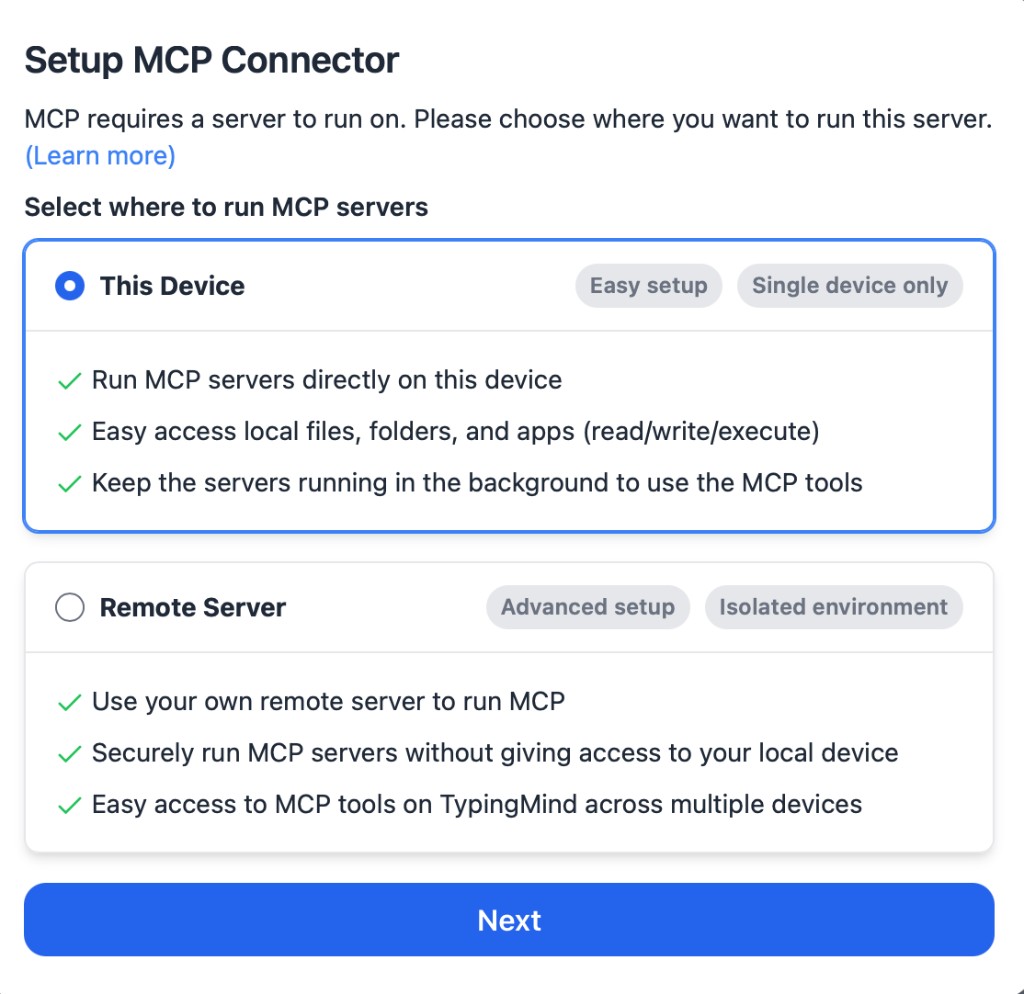
In TypingMind, go to Settings, Advanced Settings, then Model Context Protocol and choose Setup Connector.

  1. Open TypingMind in your browser.
  2. Click the Settings icon.
  3. Go to Advanced Settings.
  4. Open the Model Context Protocol section.
  5. Click Setup Connector and choose This Device.
TypingMind MCP connector setup screen with This Device selected
2

Run the connector command

Choose This Device, copy the command from TypingMind, and run it in Terminal. Keep the process running while you use MCP.

  1. Copy the setup command shown by TypingMind.
  2. Open Terminal on macOS or Windows Terminal on Windows.
  3. Paste and run the command.
  4. Approve the package install if Terminal asks you to proceed.
  5. Keep the Terminal window running while using MCP tools.
3

Add Blowback (Frontend Development) as a server

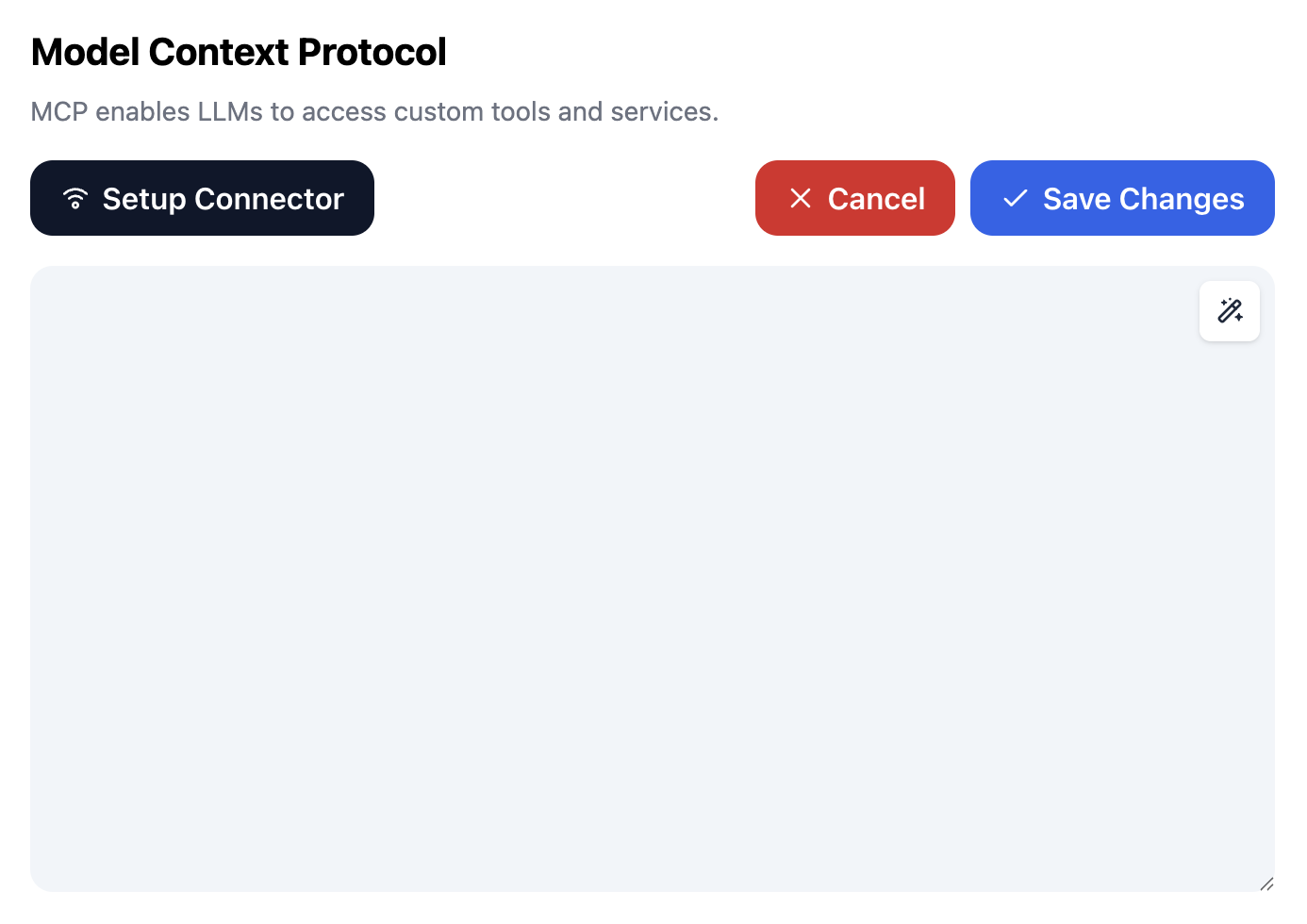
When the connector status is Ready, click Edit Servers and paste the MCP server configuration.

  1. Wait until the connector status shows Ready.
  2. Click Edit Servers.
  3. Paste the Blowback (Frontend Development) MCP server configuration.
  4. Save the server list.
  5. Refresh if you want to confirm the connector is still ready.
TypingMind MCP settings showing active server and Edit Servers button
{
  "mcpServers": {
    "blowback-frontend-development": {
      "command": "npx",
      "args": [
        "-y",
        "blowback-context"
      ]
    }
  }
}
4

Use it across models

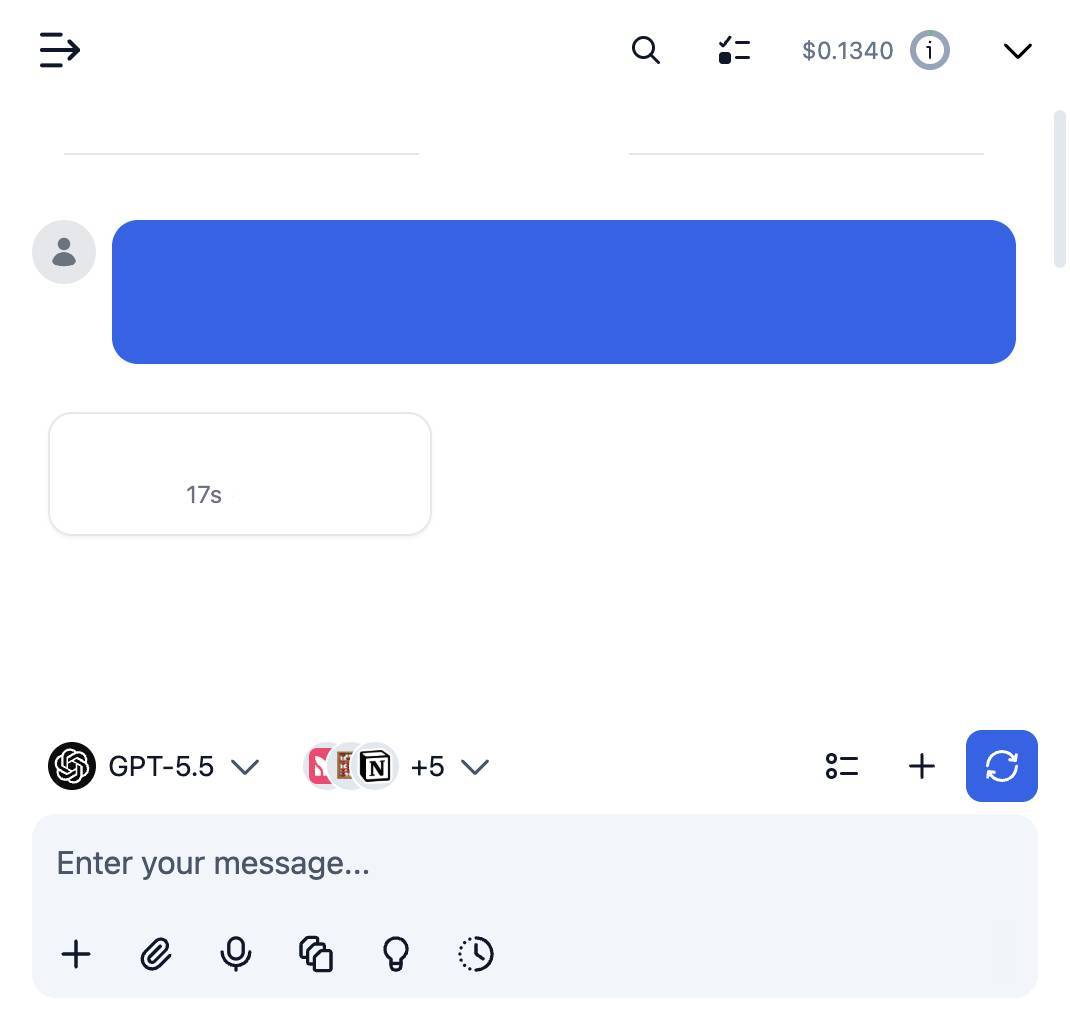
Save the server list, open Plugins, enable the Blowback (Frontend Development) MCP tools, then select any supported AI model in TypingMind and use the tools in chat or assign them to an AI agent.

  1. Open the Plugins page in TypingMind.
  2. Enable the Blowback (Frontend Development) MCP tools.
  3. Start a chat and choose the AI model you want to use.
  4. Use the MCP tools in chat or assign them to an AI agent.
  5. Switch to another AI model whenever needed without reconnecting MCP.
TypingMind chat using enabled MCP tools with a selected AI model
Can you use Blowback (Frontend Development) to help me with this task?
Blowback (Frontend Development)
Sure. I read it.
Here is what I found using Blowback (Frontend Development).

Frequently asked questions

What is the Blowback (Frontend Development) MCP server used for?

Blowback (Frontend Development) is an MCP server that lets compatible AI clients connect to external tools and context. In TypingMind, you can add this MCP server once and make its tools available in your AI workspace.

Can I use Blowback (Frontend Development) MCP with multiple AI models in TypingMind?

Yes. TypingMind connects MCP tools at the workspace level, so you can use Blowback (Frontend Development) with different AI models such as Claude, ChatGPT, Gemini, or other models you have configured in TypingMind without setting up the MCP server separately for each model.

Why use Blowback (Frontend Development) MCP with TypingMind?

TypingMind is one of the best frontends for LLM chat because it brings multiple AI models, prompts, plugins, AI agents, API keys, and MCP tools into one workspace. With Blowback (Frontend Development) connected, you can use its MCP tools across your preferred models while keeping your chat workflow organized in TypingMind.

How do I connect Blowback (Frontend Development) MCP to TypingMind?

Blowback (Frontend Development) runs through the TypingMind local MCP connector. This is best when the MCP server needs access to local files, desktop apps, command-line tools, or private resources on your computer.

What tools does Blowback (Frontend Development) MCP provide in TypingMind?

Blowback (Frontend Development) exposes 16 MCP tools that can be enabled from the TypingMind Plugins page and used in chat or assigned to AI agents.

Do I need to share my API keys with TypingMind to use Blowback (Frontend Development) MCP?

No. TypingMind is local-first and lets you keep your model providers, API keys, prompts, and MCP configuration under your control. If Blowback (Frontend Development) requires authentication, add the required headers, OAuth settings, or local configuration for that MCP server when you create the connection.

Related MCP Servers

View all

Set up your own AI workspace now

Get notified about new features and future giveaways by subscribing to our newsletter 👇