
Browserless
CommunityPopularBrowserless MCP server for self-hosted browser automation. Run Puppeteer, Playwright, and Selenium workflows at scale with enterprise-grade browser infrastructure.
| Publisher | browserless |
| Repository | browserless-mcp |
| Language | TypeScript |
| Forks | 0 |
| Stars | 3.6K |
| Available tools | 16 |
| Transport type | stdio |
| Categories | |
| License | MIT |
| Links |
- Connect tools to AI workflows
Browserless exposes MCP capabilities that can be used by compatible AI clients and agents.
- 16 available tools
Browse the callable actions below, including names and descriptions when provided by the server.
- Ready-to-copy setup
Use the installation snippets to configure this server in your preferred MCP client.
- Open source signals
3.6K stars and 0 forks from the linked repository.
Installation
Node.js 18+
{
  "mcpServers": {
    "browserless": {
      "command": "npx",
      "args": [
        "-y",
        "browserless-mcp"
      ],
      "env": {
        "BROWSERLESS_URL": "<YOUR_URL>",
        "BROWSERLESS_TOKEN": "<YOUR_TOKEN>"
      }
    }
  }
}
Available Tools
- create_browser_session
Creates a new browser session with specified configuration (browser type, viewport, user agent, etc.)
- navigate_to_url
Navigates the browser session to a specified URL and waits for page load completion
- take_screenshot
Captures a screenshot of the current page or specified element with customizable options
- extract_page_content
Extracts text content, HTML, or specific elements from the current page using CSS selectors
- execute_javascript
Executes custom JavaScript code within the browser context and returns results
- fill_form_fields
Fills out form fields on the current page using provided field selectors and values
- click_element
Clicks on a specified element using CSS selector or XPath with optional wait conditions
- wait_for_element
Waits for an element to appear, disappear, or meet specific conditions on the page
- generate_pdf
Generates a PDF document from the current page with customizable formatting options
- list_active_sessions
Lists all currently active browser sessions with their status and resource usage
- get_session_metrics
Retrieves performance metrics and resource usage statistics for a specific browser session
- set_viewport_size
Sets the browser viewport dimensions and device pixel ratio for responsive testing
- manage_cookies
Gets, sets, or deletes cookies for the current browser session and domain
- intercept_requests
Sets up request/response interception rules for network traffic monitoring and modification
- close_browser_session
Closes a specific browser session and releases associated resources
- upload_file
Uploads a file to a file input element on the current page
Use Browserless MCP with multiple AI models
TypingMind connects MCP tools at the workspace level, so once Browserless is connected, you can use it with different AI models in TypingMind instead of setting it up separately for each model. This MCP runs locally through the TypingMind MCP connector on your device.
Setup guide to use the local connector
Use this when the MCP server needs access to local files, apps, or private resources on your computer.
Open the MCP settings
In TypingMind, go to Settings, Advanced Settings, then Model Context Protocol and choose Setup Connector.
- Open TypingMind in your browser.
- Click the Settings icon.
- Go to Advanced Settings.
- Open the Model Context Protocol section.
- Click Setup Connector and choose This Device.
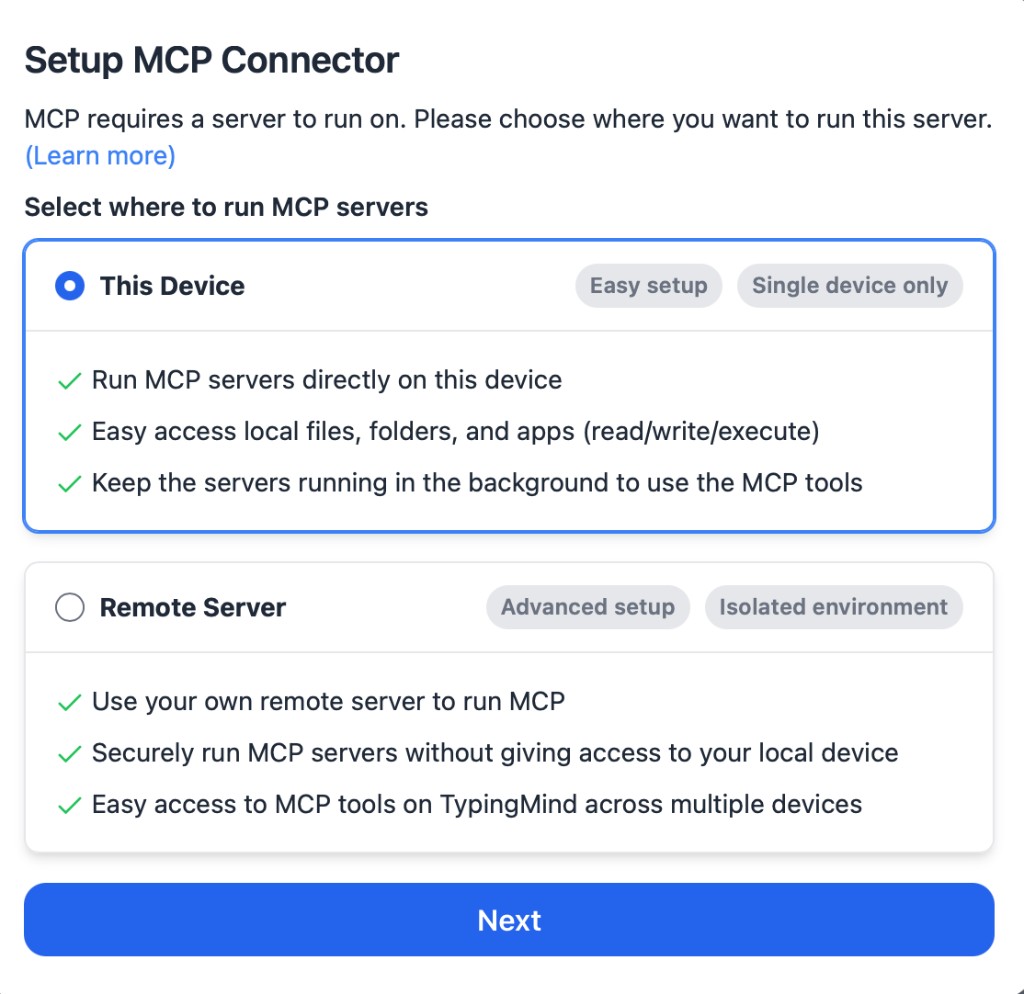
Run the connector command
Choose This Device, copy the command from TypingMind, and run it in Terminal. Keep the process running while you use MCP.
- Copy the setup command shown by TypingMind.
- Open Terminal on macOS or Windows Terminal on Windows.
- Paste and run the command.
- Approve the package install if Terminal asks you to proceed.
- Keep the Terminal window running while using MCP tools.
Add Browserless as a server
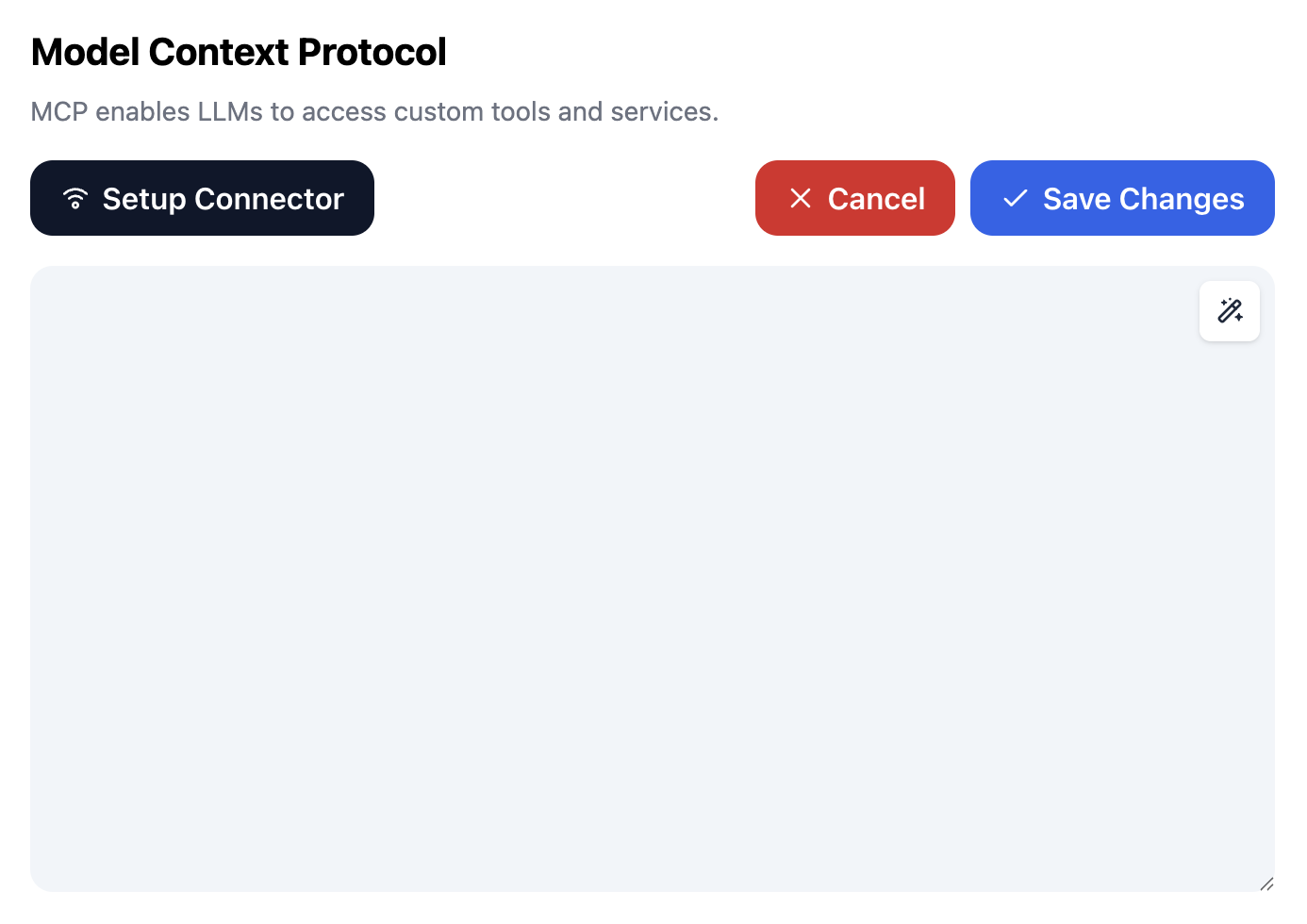
When the connector status is Ready, click Edit Servers and paste the MCP server configuration.
- Wait until the connector status shows Ready.
- Click Edit Servers.
- Paste the Browserless MCP server configuration.
- Save the server list.
- Refresh if you want to confirm the connector is still ready.
{
  "mcpServers": {
    "browserless": {
      "command": "npx",
      "args": [
        "-y",
        "browserless-mcp"
      ]
    }
  }
}Use it across models
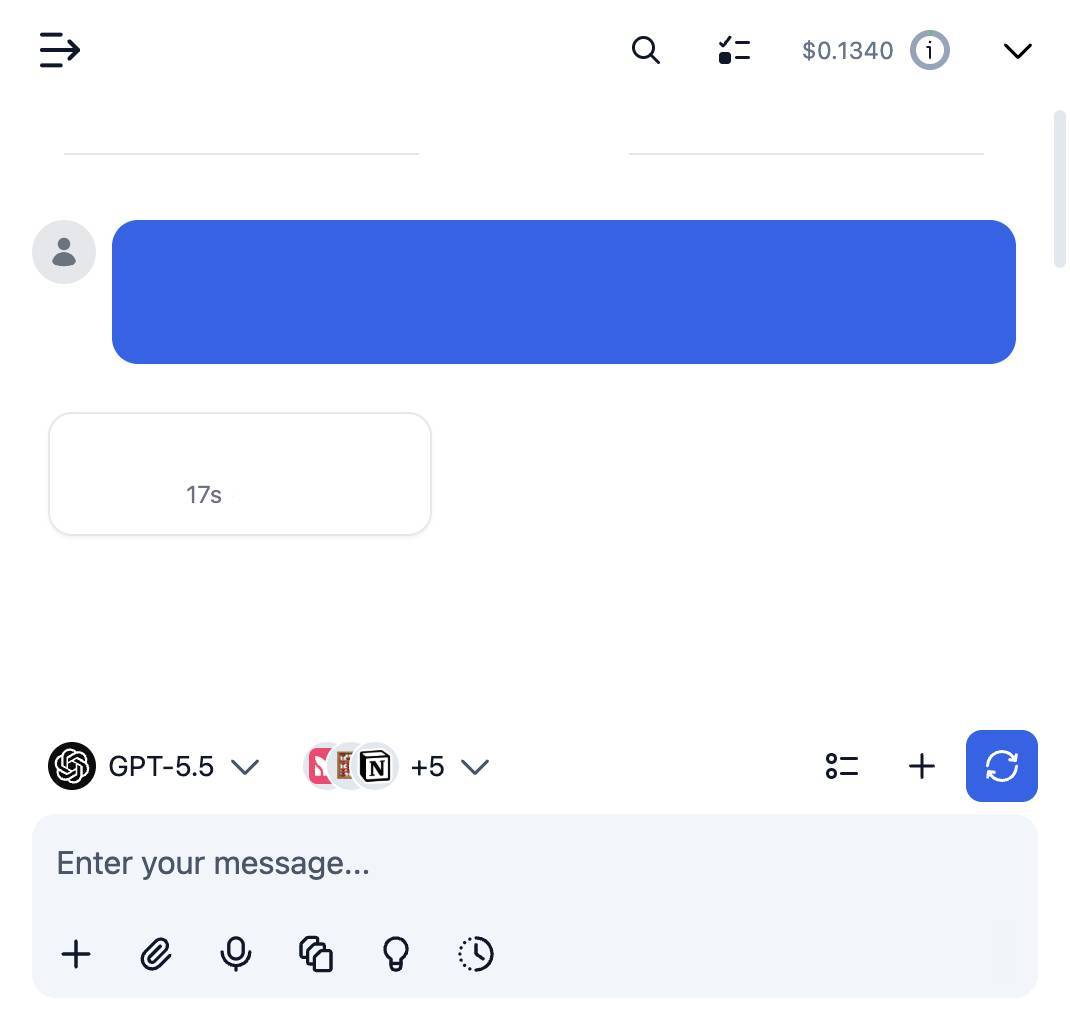
Save the server list, open Plugins, enable the Browserless MCP tools, then select any supported AI model in TypingMind and use the tools in chat or assign them to an AI agent.
- Open the Plugins page in TypingMind.
- Enable the Browserless MCP tools.
- Start a chat and choose the AI model you want to use.
- Use the MCP tools in chat or assign them to an AI agent.
- Switch to another AI model whenever needed without reconnecting MCP.
Here is what I found using Browserless.
Frequently asked questions
What is the Browserless MCP server used for?
Browserless is an MCP server that lets compatible AI clients connect to external tools and context. In TypingMind, you can add this MCP server once and make its tools available in your AI workspace.
Can I use Browserless MCP with multiple AI models in TypingMind?
Yes. TypingMind connects MCP tools at the workspace level, so you can use Browserless with different AI models such as Claude, ChatGPT, Gemini, or other models you have configured in TypingMind without setting up the MCP server separately for each model.
Why use Browserless MCP with TypingMind?
TypingMind is one of the best frontends for LLM chat because it brings multiple AI models, prompts, plugins, AI agents, API keys, and MCP tools into one workspace. With Browserless connected, you can use its MCP tools across your preferred models while keeping your chat workflow organized in TypingMind.
How do I connect Browserless MCP to TypingMind?
Browserless runs through the TypingMind local MCP connector. This is best when the MCP server needs access to local files, desktop apps, command-line tools, or private resources on your computer.
What tools does Browserless MCP provide in TypingMind?
Browserless exposes 16 MCP tools that can be enabled from the TypingMind Plugins page and used in chat or assigned to AI agents.
Do I need to share my API keys with TypingMind to use Browserless MCP?
No. TypingMind is local-first and lets you keep your model providers, API keys, prompts, and MCP configuration under your control. If Browserless requires authentication, add the required headers, OAuth settings, or local configuration for that MCP server when you create the connection.
Related MCP Servers
View all
GitHub
GitHub's official MCP Server

Task Master
An AI-powered task-management system you can drop into Cursor, Lovable, Windsurf, Roo, and others.

Mastra Docs
From the team behind Gatsby, Mastra is a framework for building AI-powered applications and agents with a modern TypeScript stack.

Beads
Beads - A memory upgrade for your coding agent
