Chrome Tools logo

Chrome Tools

Community
nicholmikey

Integrates with Chrome's DevTools Protocol to enable remote control of browser tabs, including JavaScript execution, screenshot capture, and network traffic monitoring.

Publishernicholmikey
Repositorychrome-tools-mcp
LanguageTypeScript
Forks
10
Stars
53
Available tools
0
Transport typestdio
Categories
LicenseMIT
Links
  • Connect tools to AI workflows

    Chrome Tools exposes MCP capabilities that can be used by compatible AI clients and agents.

  • 0 available tools

    Browse the callable actions below, including names and descriptions when provided by the server.

  • Ready-to-copy setup

    Use the installation snippets to configure this server in your preferred MCP client.

  • Open source signals

    53 stars and 10 forks from the linked repository.

Chrome Tools MCP Server

An MCP server that provides tools for interacting with Chrome through its DevTools Protocol. This server enables remote control of Chrome tabs, including executing JavaScript, capturing screenshots, monitoring network traffic, and more.

Why use an MCP server like this?

This type of MCP Server is useful When you need to manually configure your browser to be in a certain state before you let an AI tool like Cline poke at it. You can also use this tool to listen to and pull network events into its context.

Features

  • List Chrome tabs
  • Execute JavaScript in tabs
  • Capture screenshots
  • Monitor network traffic
  • Navigate tabs to URLs
  • Query DOM elements
  • Click elements with console output capture

Installation

bash
npm install @nicholmikey/chrome-tools

Configuration

The server can be configured through environment variables in your MCP settings:

json
{
  "chrome-tools": {
    "command": "node",
    "args": ["path/to/chrome-tools/dist/index.js"],
    "env": {
      "CHROME_DEBUG_URL": "http://localhost:9222",
      "CHROME_CONNECTION_TYPE": "direct",
      "CHROME_ERROR_HELP": "custom error message"
    }
  }
}

Environment Variables

  • CHROME_DEBUG_URL: The URL where Chrome's remote debugging interface is available (default: http://localhost:9222)
  • CHROME_CONNECTION_TYPE: Connection type identifier for logging (e.g., "direct", "ssh-tunnel", "docker")
  • CHROME_ERROR_HELP: Custom error message shown when connection fails

Setup Guide

Native Setup (Windows/Mac/Linux)

  1. Launch Chrome with remote debugging enabled:

    bash
    # Windows
    "C:\Program Files\Google\Chrome\Application\chrome.exe" --remote-debugging-port=9222
    
    # Mac
    /Applications/Google\ Chrome.app/Contents/MacOS/Google\ Chrome --remote-debugging-port=9222
    
    # Linux
    google-chrome --remote-debugging-port=9222
  2. Configure MCP settings:

    json
    {
      "env": {
        "CHROME_DEBUG_URL": "http://localhost:9222",
        "CHROME_CONNECTION_TYPE": "direct"
      }
    }

WSL Setup

When running in WSL, you'll need to set up an SSH tunnel to connect to Chrome running on Windows:

  1. Launch Chrome on Windows with remote debugging enabled
  2. Create an SSH tunnel:
    bash
    ssh -N -L 9222:localhost:9222 windowsuser@host
  3. Configure MCP settings:
    json
    {
      "env": {
        "CHROME_DEBUG_URL": "http://localhost:9222",
        "CHROME_CONNECTION_TYPE": "ssh-tunnel",
        "CHROME_ERROR_HELP": "Make sure the SSH tunnel is running: ssh -N -L 9222:localhost:9222 windowsuser@host"
      }
    }

Docker Setup

When running Chrome in Docker:

  1. Launch Chrome container:

    bash
    docker run -d --name chrome -p 9222:9222 chromedp/headless-shell
  2. Configure MCP settings:

    json
    {
      "env": {
        "CHROME_DEBUG_URL": "http://localhost:9222",
        "CHROME_CONNECTION_TYPE": "docker"
      }
    }

Tools

list_tabs

Lists all available Chrome tabs.

execute_script

Executes JavaScript code in a specified tab. Parameters:

  • tabId: ID of the Chrome tab
  • script: JavaScript code to execute

capture_screenshot

Captures a screenshot of a specified tab, automatically optimizing it for AI model consumption. Parameters:

  • tabId: ID of the Chrome tab
  • format: Image format (jpeg/png) - Note: This is only for initial capture. Final output uses WebP with PNG fallback
  • quality: JPEG quality (1-100) - Note: For initial capture only
  • fullPage: Capture full scrollable page

Image Processing:

  1. WebP Optimization (Primary Format):
    • First attempt: WebP with quality 80 and high compression effort
    • Second attempt: WebP with quality 60 and near-lossless compression if first attempt exceeds 1MB
  2. PNG Fallback:
    • Only used if WebP processing fails
    • Includes maximum compression and color palette optimization
  3. Size Constraints:
    • Maximum dimensions: 900x600 (maintains aspect ratio)
    • Maximum file size: 1MB
    • Progressive size reduction if needed

capture_network_events

Monitors and captures network events from a specified tab. Parameters:

  • tabId: ID of the Chrome tab
  • duration: Duration in seconds to capture
  • filters: Optional type and URL pattern filters

load_url

Navigates a tab to a specified URL. Parameters:

  • tabId: ID of the Chrome tab
  • url: URL to load

query_dom_elements

Queries and retrieves detailed information about DOM elements matching a CSS selector. Parameters:

  • tabId: ID of the Chrome tab
  • selector: CSS selector to find elements Returns:
  • Array of DOM elements with properties including:
    • nodeId: Unique identifier for the node
    • tagName: HTML tag name
    • textContent: Text content of the element
    • attributes: Object containing all element attributes
    • boundingBox: Position and dimensions of the element
    • isVisible: Whether the element is visible
    • ariaAttributes: ARIA attributes for accessibility

click_element

Clicks on a DOM element and captures any console output triggered by the click. Parameters:

  • tabId: ID of the Chrome tab
  • selector: CSS selector to find the element to click Returns:
  • Object containing:
    • message: Success/failure message
    • consoleOutput: Array of console messages triggered by the click

License

MIT
Installation

TypingMind
Prerequisites:

Node.js 18+

{
  "mcpServers": {
    "chrome-tools": {
      "command": "npx",
      "args": [
        "-y",
        "@nicholmikey/chrome-tools"
      ],
      "env": {
        "CHROME_DEBUG_URL": "http://localhost:9222",
        "CHROME_CONNECTION_TYPE": "direct",
        "CHROME_ERROR_HELP": "custom error message"
      }
    }
  }
}

Use Chrome Tools MCP with multiple AI models

TypingMind connects MCP tools at the workspace level, so once Chrome Tools is connected, you can use it with different AI models in TypingMind instead of setting it up separately for each model. This MCP runs locally through the TypingMind MCP connector on your device.

Setup guide to use the local connector

Use this when the MCP server needs access to local files, apps, or private resources on your computer.

1

Open the MCP settings

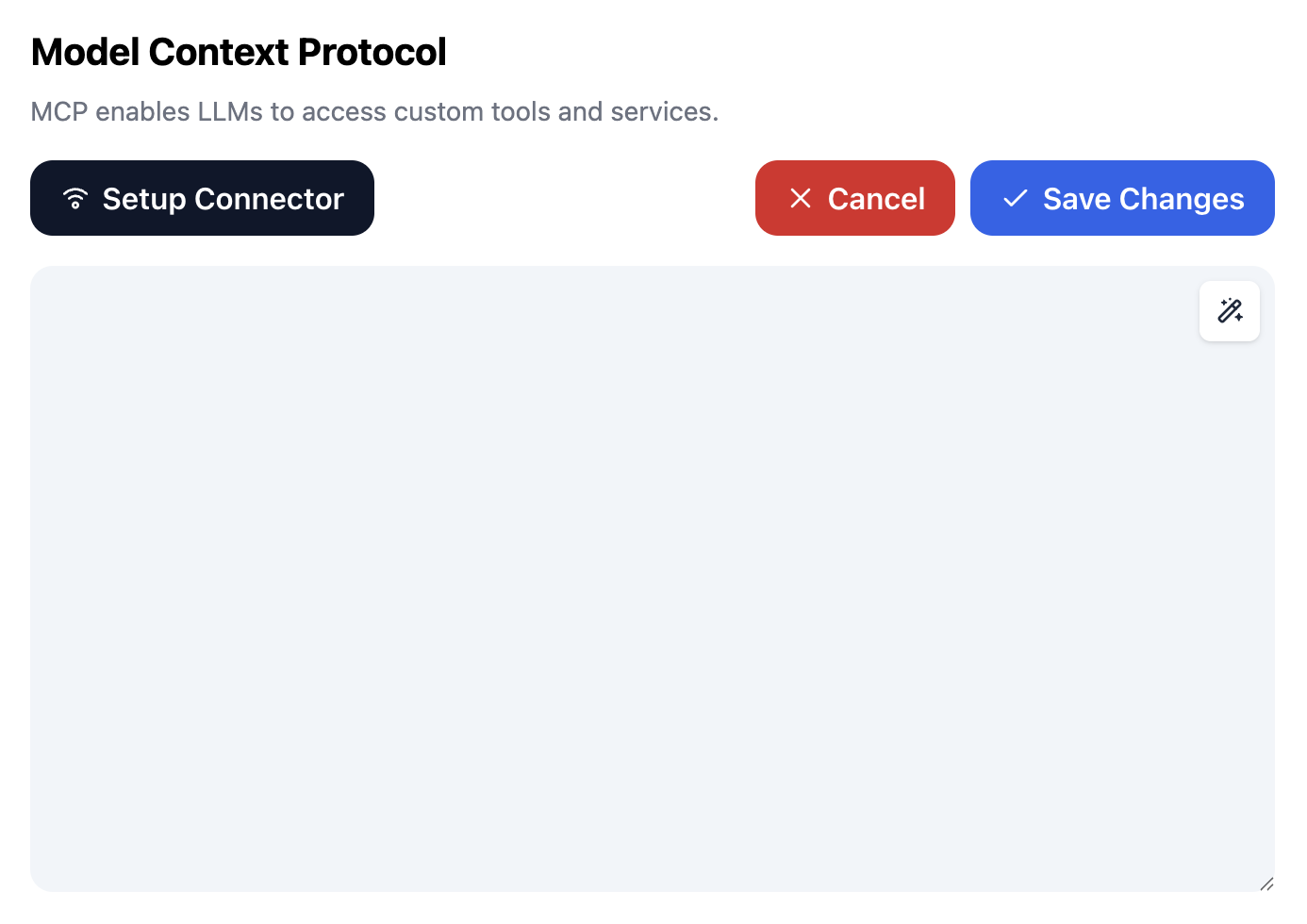
In TypingMind, go to Settings, Advanced Settings, then Model Context Protocol and choose Setup Connector.

  1. Open TypingMind in your browser.
  2. Click the Settings icon.
  3. Go to Advanced Settings.
  4. Open the Model Context Protocol section.
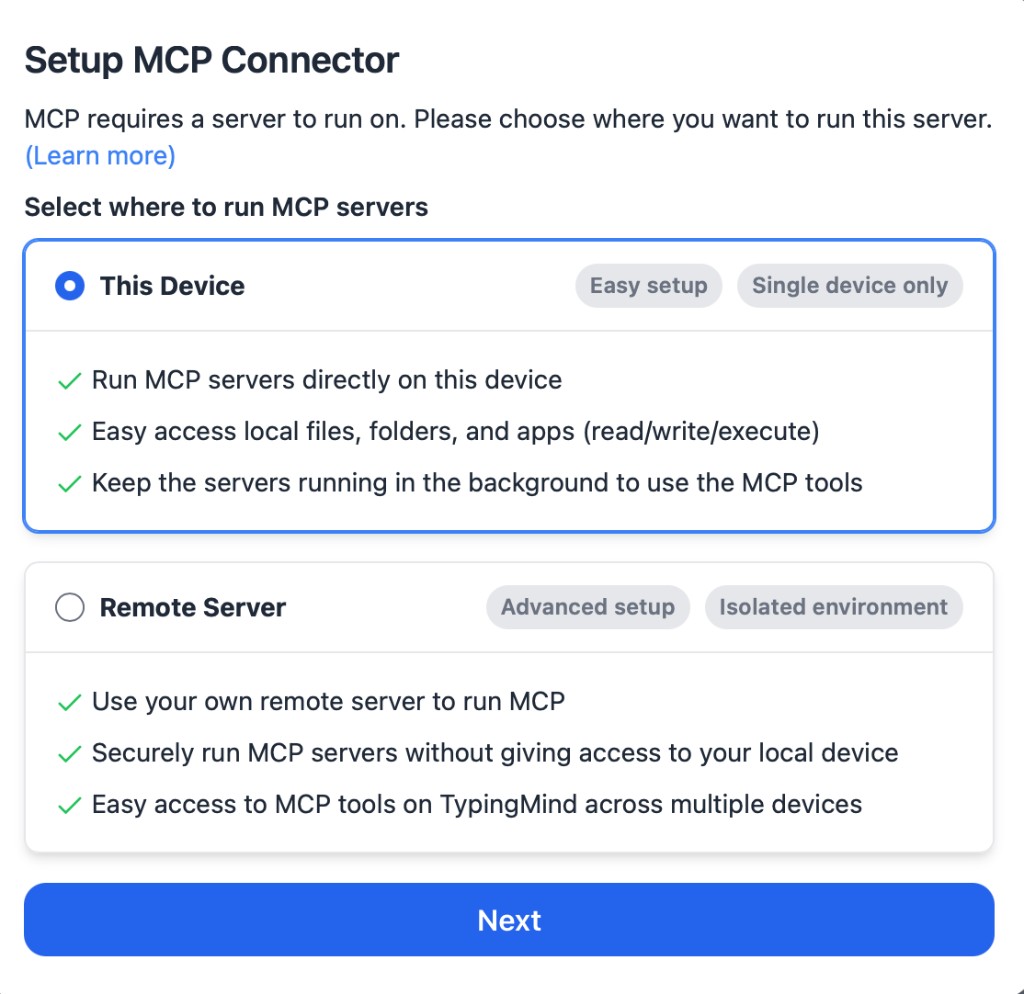
  5. Click Setup Connector and choose This Device.
TypingMind MCP connector setup screen with This Device selected
2

Run the connector command

Choose This Device, copy the command from TypingMind, and run it in Terminal. Keep the process running while you use MCP.

  1. Copy the setup command shown by TypingMind.
  2. Open Terminal on macOS or Windows Terminal on Windows.
  3. Paste and run the command.
  4. Approve the package install if Terminal asks you to proceed.
  5. Keep the Terminal window running while using MCP tools.
3

Add Chrome Tools as a server

When the connector status is Ready, click Edit Servers and paste the MCP server configuration.

  1. Wait until the connector status shows Ready.
  2. Click Edit Servers.
  3. Paste the Chrome Tools MCP server configuration.
  4. Save the server list.
  5. Refresh if you want to confirm the connector is still ready.
TypingMind MCP settings showing active server and Edit Servers button
{
  "mcpServers": {
    "chrome-tools": {
      "command": "npx",
      "args": [
        "-y",
        "@nicholmikey/chrome-tools"
      ]
    }
  }
}
4

Use it across models

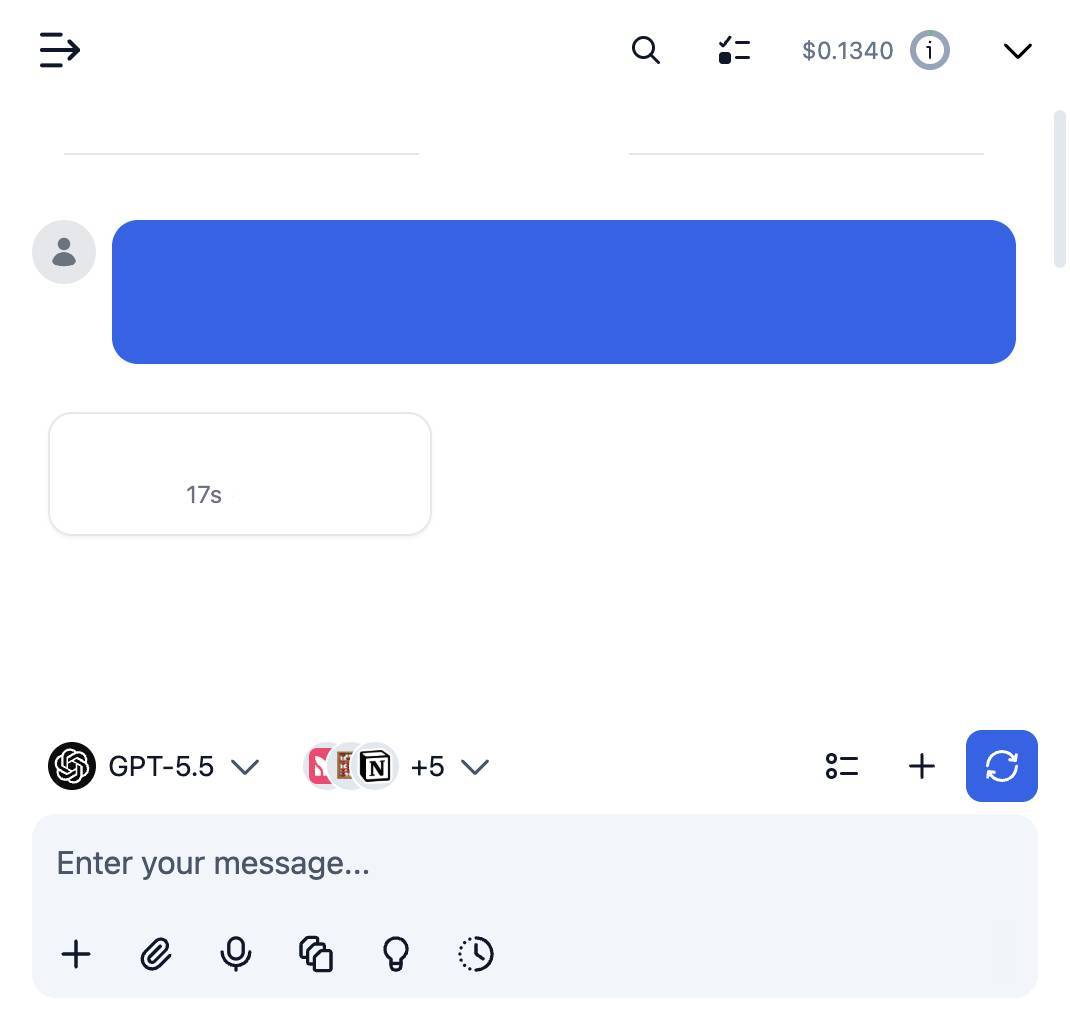
Save the server list, open Plugins, enable the Chrome Tools MCP tools, then select any supported AI model in TypingMind and use the tools in chat or assign them to an AI agent.

  1. Open the Plugins page in TypingMind.
  2. Enable the Chrome Tools MCP tools.
  3. Start a chat and choose the AI model you want to use.
  4. Use the MCP tools in chat or assign them to an AI agent.
  5. Switch to another AI model whenever needed without reconnecting MCP.
TypingMind chat using enabled MCP tools with a selected AI model
Can you use Chrome Tools to help me with this task?
Chrome Tools
Sure. I read it.
Here is what I found using Chrome Tools.

Frequently asked questions

What is the Chrome Tools MCP server used for?

Chrome Tools is an MCP server that lets compatible AI clients connect to external tools and context. In TypingMind, you can add this MCP server once and make its tools available in your AI workspace.

Can I use Chrome Tools MCP with multiple AI models in TypingMind?

Yes. TypingMind connects MCP tools at the workspace level, so you can use Chrome Tools with different AI models such as Claude, ChatGPT, Gemini, or other models you have configured in TypingMind without setting up the MCP server separately for each model.

Why use Chrome Tools MCP with TypingMind?

TypingMind is one of the best frontends for LLM chat because it brings multiple AI models, prompts, plugins, AI agents, API keys, and MCP tools into one workspace. With Chrome Tools connected, you can use its MCP tools across your preferred models while keeping your chat workflow organized in TypingMind.

How do I connect Chrome Tools MCP to TypingMind?

Chrome Tools runs through the TypingMind local MCP connector. This is best when the MCP server needs access to local files, desktop apps, command-line tools, or private resources on your computer.

What tools does Chrome Tools MCP provide in TypingMind?

Chrome Tools exposes MCP capabilities that can be enabled from the TypingMind Plugins page and used in chat or assigned to AI agents.

Do I need to share my API keys with TypingMind to use Chrome Tools MCP?

No. TypingMind is local-first and lets you keep your model providers, API keys, prompts, and MCP configuration under your control. If Chrome Tools requires authentication, add the required headers, OAuth settings, or local configuration for that MCP server when you create the connection.

Related MCP Servers

View all

Set up your own AI workspace now

Get notified about new features and future giveaways by subscribing to our newsletter 👇