Cloudflare logo

Cloudflare

Community
gutmutcode

Cloudflare MCP server for IDE ( Cline, Windsurf, Cursor, etc )

Publishergutmutcode
Repositorymcp-server-cloudflare
LanguageTypeScript
Forks
6
Stars
10
Available tools
0
Transport typestdio
Categories
LicenseApache-2.0
Links
  • Connect tools to AI workflows

    Cloudflare exposes MCP capabilities that can be used by compatible AI clients and agents.

  • 0 available tools

    Browse the callable actions below, including names and descriptions when provided by the server.

  • Ready-to-copy setup

    Use the installation snippets to configure this server in your preferred MCP client.

  • Open source signals

    10 stars and 6 forks from the linked repository.

Cloudflare MCP Server for IDE

Model Context Protocol (MCP) is a new, standardized protocol for managing context between large language models (LLMs) and external systems. In this repository, we provide an installer as well as an MCP Server for Cloudflare's API.

This lets you use Claude Desktop, and IDE like VSCode (Cline) and Windsurf or any MCP Client, to use natural language to accomplish things on your Cloudflare account, e.g.:

  • Please deploy me a new Worker with an example durable object.
  • Can you tell me about the data in my D1 database named '...'?
  • Can you copy all the entries from my KV namespace '...' into my R2 bucket '...'?

Demo

Setup

  1. Run npx @gutmutcode/mcp-server-cloudflare init
  1. Restart Claude Desktop, you should see a small 🔨 icon that shows the following tools available for use:
  1. Check out the Cline configuration file, you should see a cloudflare section with your Cloudflare account ID.
  1. Check out your Windsurf MCP configuration file, you should see a cloudflare section either. Windsurf has limitation on the use of MCP tools, so you can't use too many tools at the same time. (Unlike Cline and Claude)

Features

KV Store Management

  • get_kvs: List all KV namespaces in your account
  • kv_get: Get a value from a KV namespace
  • kv_put: Store a value in a KV namespace
  • kv_list: List keys in a KV namespace
  • kv_delete: Delete a key from a KV namespace

R2 Storage Management

  • r2_list_buckets: List all R2 buckets in your account
  • r2_create_bucket: Create a new R2 bucket
  • r2_delete_bucket: Delete an R2 bucket
  • r2_list_objects: List objects in an R2 bucket
  • r2_get_object: Get an object from an R2 bucket
  • r2_put_object: Put an object into an R2 bucket
  • r2_delete_object: Delete an object from an R2 bucket

D1 Database Management

  • d1_list_databases: List all D1 databases in your account
  • d1_create_database: Create a new D1 database
  • d1_delete_database: Delete a D1 database
  • d1_query: Execute a SQL query against a D1 database

Workers Management

  • worker_list: List all Workers in your account
  • worker_get: Get a Worker's script content
  • worker_put: Create or update a Worker script
  • worker_delete: Delete a Worker script

Analytics

  • analytics_get: Retrieve analytics data for your domain
    • Includes metrics like requests, bandwidth, threats, and page views
    • Supports date range filtering

Developing

In the current project folder, run:

pnpm install
pnpm build:watch

Then, in a second terminal:

node dist/index.js init

This will link Claude Desktop against your locally-installed version for you to test.

Usage outside of Claude

To run the server locally, run node dist/index run <account-id>.

If you're using an alternative MCP Client, or testing things locally, emit the tools/list command to get an up-to-date list of all available tools. Then you can call these directly using the tools/call command.

Workers

javascript
// List workers
worker_list()

// Get worker code
worker_get({ name: "my-worker" })

// Update worker
worker_put({
  name: "my-worker",
  script: "export default { async fetch(request, env, ctx) { ... }}",
  bindings: [
    {
      type: "kv_namespace",
      name: "MY_KV",
      namespace_id: "abcd1234"
    },
    {
      type: "r2_bucket",
      name: "MY_BUCKET",
      bucket_name: "my-files"
    }
  ],
  compatibility_date: "2024-01-01",
  compatibility_flags: ["nodejs_compat"]
})

// Delete worker
worker_delete({ name: "my-worker" })

KV Store

javascript
// List KV namespaces
get_kvs()

// Get value
kv_get({
    namespaceId: "your_namespace_id",
    key: "myKey"
})

// Store value
kv_put({
    namespaceId: "your_namespace_id",
    key: "myKey",
    value: "myValue",
    expirationTtl: 3600 // optional, in seconds
})

// List keys
kv_list({
    namespaceId: "your_namespace_id",
    prefix: "app_", // optional
    limit: 10 // optional
})

// Delete key
kv_delete({
    namespaceId: "your_namespace_id",
    key: "myKey"
})

R2 Storage

javascript
// List buckets
r2_list_buckets()

// Create bucket
r2_create_bucket({ name: "my-bucket" })

// Delete bucket
r2_delete_bucket({ name: "my-bucket" })

// List objects in bucket
r2_list_objects({ 
    bucket: "my-bucket",
    prefix: "folder/", // optional
    delimiter: "/", // optional
    limit: 1000 // optional
})

// Get object
r2_get_object({
    bucket: "my-bucket",
    key: "folder/file.txt"
})

// Put object
r2_put_object({
    bucket: "my-bucket",
    key: "folder/file.txt",
    content: "Hello, World!",
    contentType: "text/plain" // optional
})

// Delete object
r2_delete_object({
    bucket: "my-bucket",
    key: "folder/file.txt"
})

D1 Database

javascript
// List databases
d1_list_databases()

// Create database
d1_create_database({ name: "my-database" })

// Delete database
d1_delete_database({ databaseId: "your_database_id" })

// Execute a single query
d1_query({
    databaseId: "your_database_id",
    query: "SELECT * FROM users WHERE age > ?",
    params: ["25"] // optional
})

// Create a table
d1_query({
    databaseId: "your_database_id",
    query: `
        CREATE TABLE users (
            id INTEGER PRIMARY KEY AUTOINCREMENT,
            name TEXT NOT NULL,
            email TEXT UNIQUE,
            created_at TIMESTAMP DEFAULT CURRENT_TIMESTAMP
        )
    `
})

Analytics

javascript
// Get today's analytics
analytics_get({
    zoneId: "your_zone_id",
    since: "2024-11-26T00:00:00Z",
    until: "2024-11-26T23:59:59Z"
})

Contributing

Contributions are welcome! Please feel free to submit a Pull Request.
Installation

TypingMind
Prerequisites:

Node.js 18+

{
  "mcpServers": {
    "cloudflare": {
      "command": "npx",
      "args": [
        "-y",
        "@gutmutcode/mcp-server-cloudflare"
      ],
      "env": {
        "CLOUDFLARE_ACCOUNT_ID": "your-account-id",
        "CLOUDFLARE_API_TOKEN": "your-api-token"
      }
    }
  }
}

Use Cloudflare MCP with multiple AI models

TypingMind connects MCP tools at the workspace level, so once Cloudflare is connected, you can use it with different AI models in TypingMind instead of setting it up separately for each model. This MCP runs locally through the TypingMind MCP connector on your device.

Setup guide to use the local connector

Use this when the MCP server needs access to local files, apps, or private resources on your computer.

1

Open the MCP settings

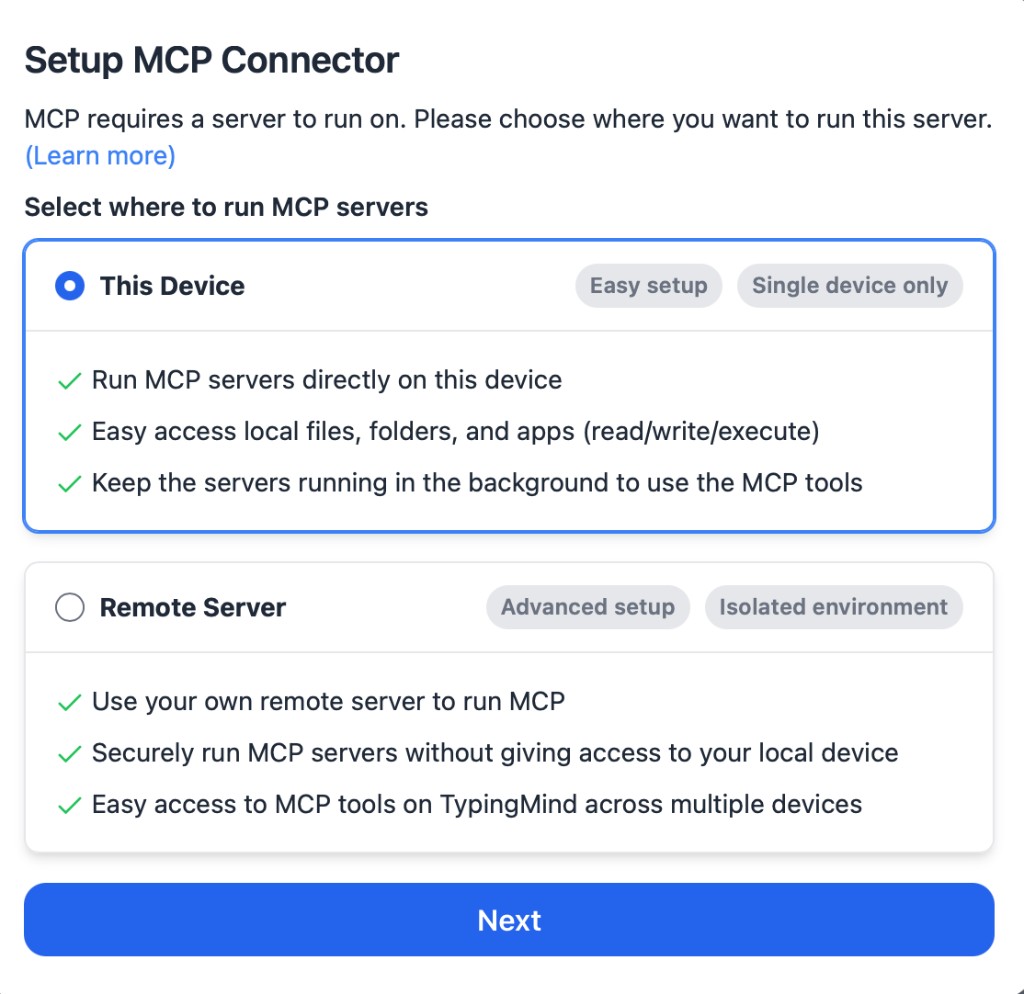
In TypingMind, go to Settings, Advanced Settings, then Model Context Protocol and choose Setup Connector.

  1. Open TypingMind in your browser.
  2. Click the Settings icon.
  3. Go to Advanced Settings.
  4. Open the Model Context Protocol section.
  5. Click Setup Connector and choose This Device.
TypingMind MCP connector setup screen with This Device selected
2

Run the connector command

Choose This Device, copy the command from TypingMind, and run it in Terminal. Keep the process running while you use MCP.

  1. Copy the setup command shown by TypingMind.
  2. Open Terminal on macOS or Windows Terminal on Windows.
  3. Paste and run the command.
  4. Approve the package install if Terminal asks you to proceed.
  5. Keep the Terminal window running while using MCP tools.
3

Add Cloudflare as a server

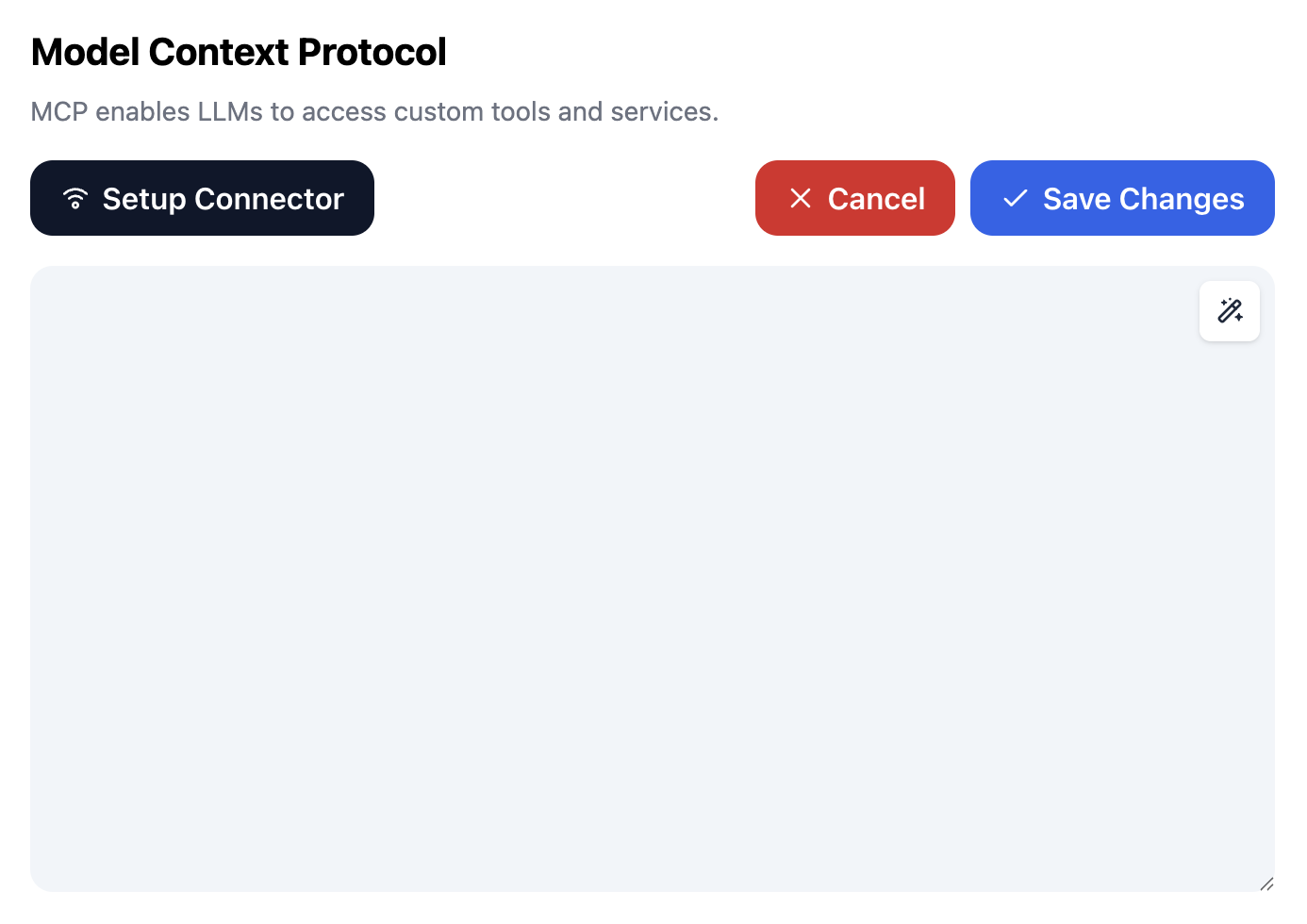
When the connector status is Ready, click Edit Servers and paste the MCP server configuration.

  1. Wait until the connector status shows Ready.
  2. Click Edit Servers.
  3. Paste the Cloudflare MCP server configuration.
  4. Save the server list.
  5. Refresh if you want to confirm the connector is still ready.
TypingMind MCP settings showing active server and Edit Servers button
{
  "mcpServers": {
    "cloudflare": {
      "command": "npx",
      "args": [
        "-y",
        "@gutmutcode/mcp-server-cloudflare"
      ]
    }
  }
}
4

Use it across models

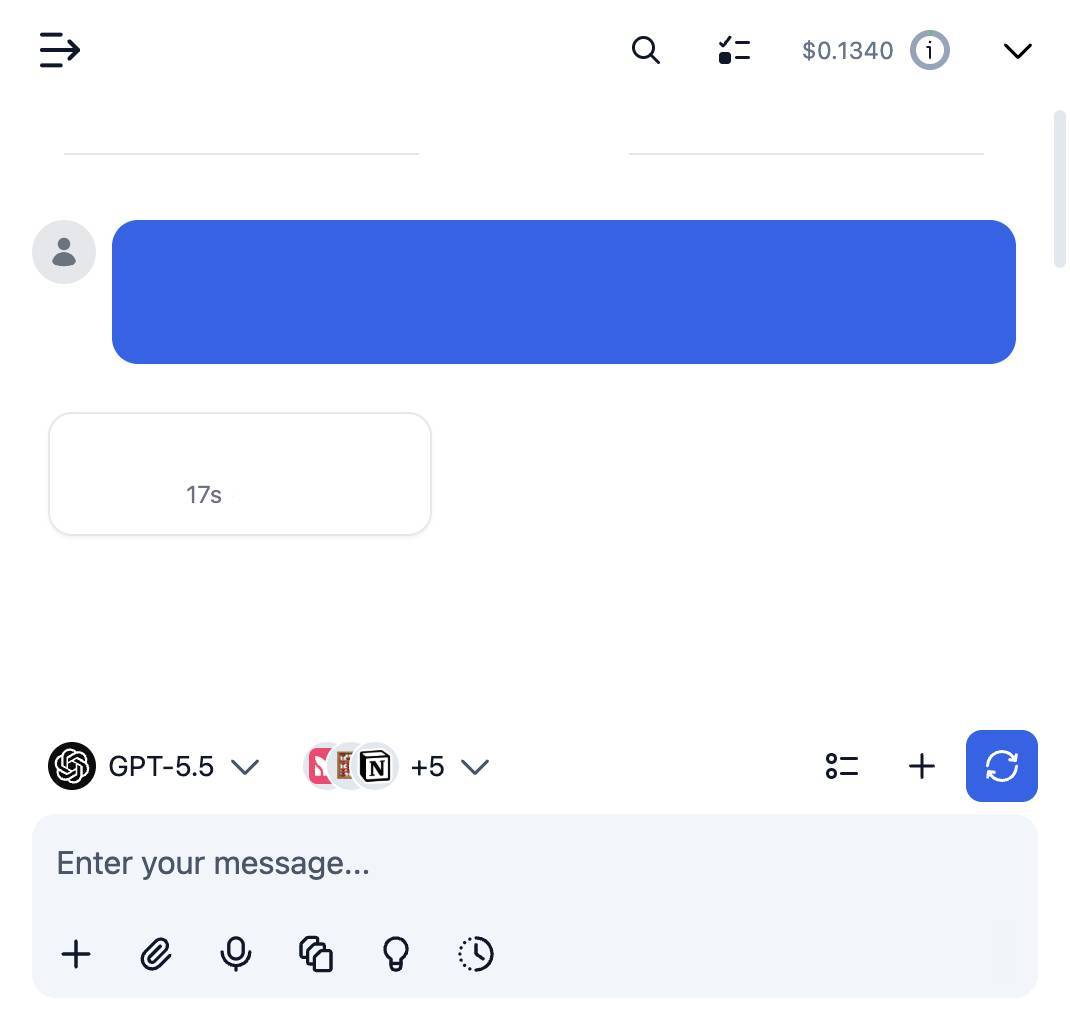
Save the server list, open Plugins, enable the Cloudflare MCP tools, then select any supported AI model in TypingMind and use the tools in chat or assign them to an AI agent.

  1. Open the Plugins page in TypingMind.
  2. Enable the Cloudflare MCP tools.
  3. Start a chat and choose the AI model you want to use.
  4. Use the MCP tools in chat or assign them to an AI agent.
  5. Switch to another AI model whenever needed without reconnecting MCP.
TypingMind chat using enabled MCP tools with a selected AI model
Can you use Cloudflare to help me with this task?
Cloudflare
Sure. I read it.
Here is what I found using Cloudflare.

Frequently asked questions

What is the Cloudflare MCP server used for?

Cloudflare is an MCP server that lets compatible AI clients connect to external tools and context. In TypingMind, you can add this MCP server once and make its tools available in your AI workspace.

Can I use Cloudflare MCP with multiple AI models in TypingMind?

Yes. TypingMind connects MCP tools at the workspace level, so you can use Cloudflare with different AI models such as Claude, ChatGPT, Gemini, or other models you have configured in TypingMind without setting up the MCP server separately for each model.

Why use Cloudflare MCP with TypingMind?

TypingMind is one of the best frontends for LLM chat because it brings multiple AI models, prompts, plugins, AI agents, API keys, and MCP tools into one workspace. With Cloudflare connected, you can use its MCP tools across your preferred models while keeping your chat workflow organized in TypingMind.

How do I connect Cloudflare MCP to TypingMind?

Cloudflare runs through the TypingMind local MCP connector. This is best when the MCP server needs access to local files, desktop apps, command-line tools, or private resources on your computer.

What tools does Cloudflare MCP provide in TypingMind?

Cloudflare exposes MCP capabilities that can be enabled from the TypingMind Plugins page and used in chat or assigned to AI agents.

Do I need to share my API keys with TypingMind to use Cloudflare MCP?

No. TypingMind is local-first and lets you keep your model providers, API keys, prompts, and MCP configuration under your control. If Cloudflare requires authentication, add the required headers, OAuth settings, or local configuration for that MCP server when you create the connection.

Related MCP Servers

View all

Set up your own AI workspace now

Get notified about new features and future giveaways by subscribing to our newsletter 👇