Debugg AI — MCP Server
AI-powered browser testing via the Model Context Protocol. Point it at any URL (or localhost) and describe what to test — an AI agent browses your app and returns pass/fail with screenshots.
Setup
Requires Node.js 20.20.0 or later (transitive requirement from posthog-node@^5.26.0).
Testing http://localhost:... URLs requires the caddy binary — check_app_in_browser,
probe_page, and trigger_crawl tunnel localhost targets through a local Caddy reverse proxy.
This installs automatically: the @radically-straightforward/caddy npm dependency downloads a
pinned Caddy release for your platform during npm install/npx — nothing to install yourself in
the normal case. It is now the only binary this package downloads; the tunnel client itself is
pure TypeScript — it replaced the ngrok package, which fetched the ngrok agent.
If that download never ran (npm install --ignore-scripts, an offline/air-gapped install), point CADDY_BIN at
your own install (brew install caddy / apt install caddy / see
caddyserver.com/docs/install) — missing it surfaces as a
clear error on the first localhost-URL call, not a silent hang. Public-URL calls, every
non-browser tool, and test_suite {action:"run"} (which uses its own dedicated tunnel and
bypasses Caddy entirely) don't need it either way.
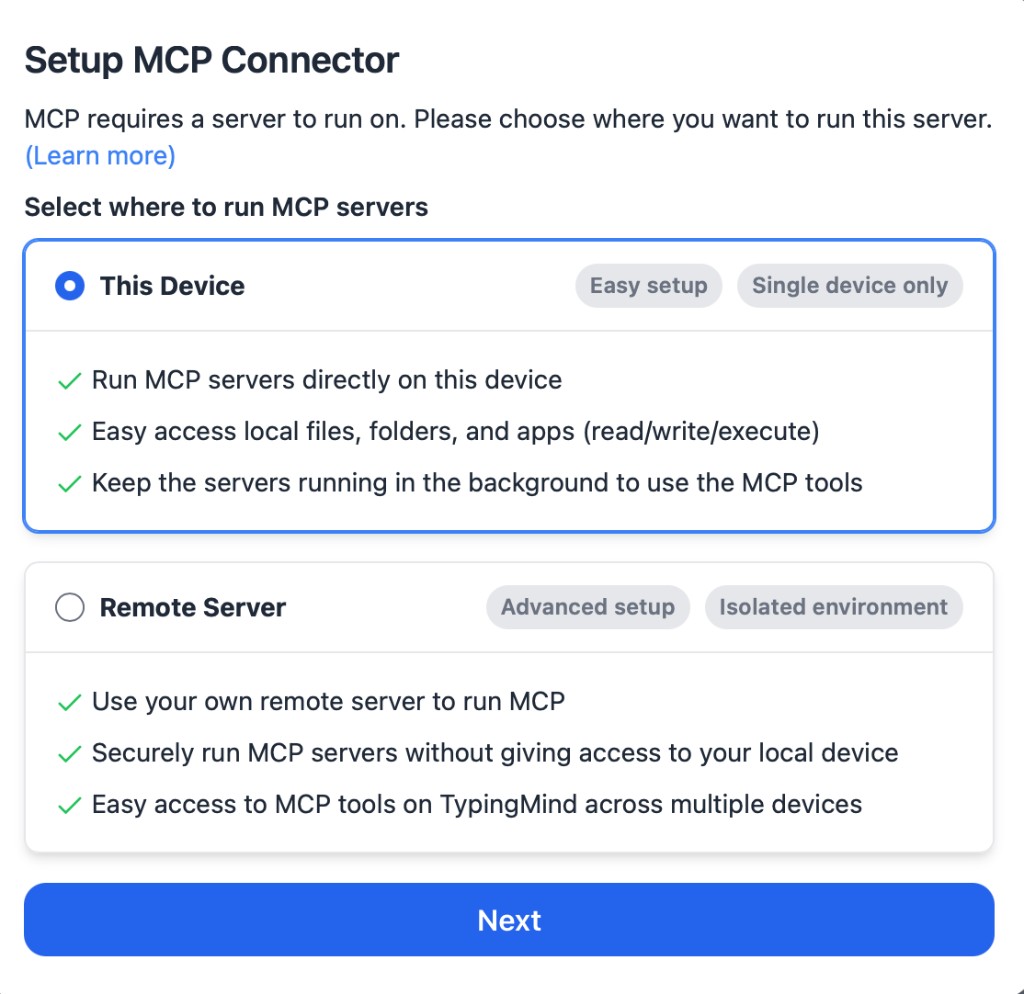
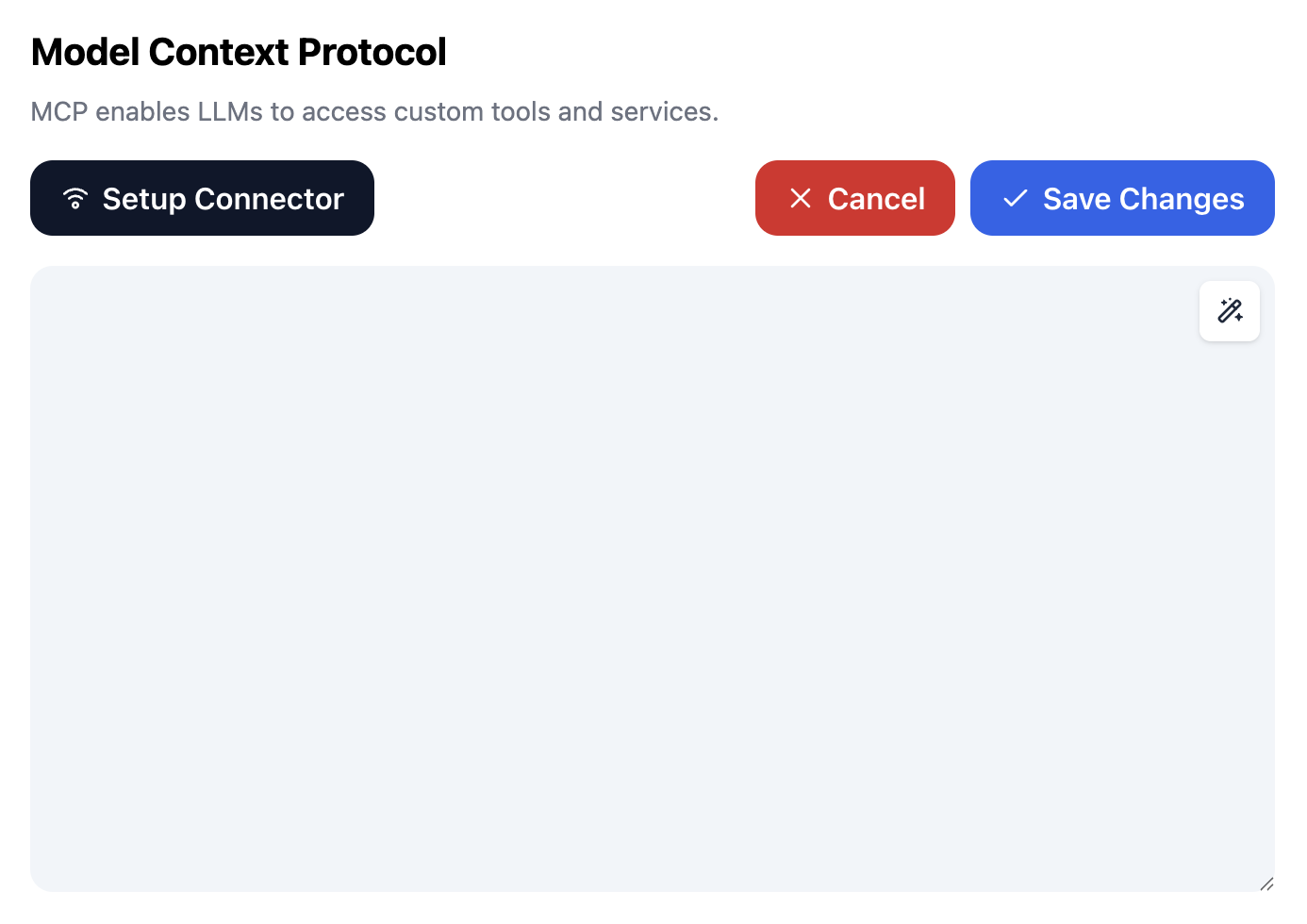
Get an API key at debugg.ai, then add to your MCP client config:
json{ "mcpServers": { "debugg-ai": { "command": "npx", "args": ["-y", "@debugg-ai/debugg-ai-mcp"], "env": { "DEBUGGAI_API_KEY": "your_api_key_here" } } } }
Or with Docker:
bashdocker run -i --rm --init -e DEBUGGAI_API_KEY=your_api_key quinnosha/debugg-ai-mcp
The Dockerfile's npm install step would pick up caddy the same automatic way local installs
do, in principle — but as of this writing the Dockerfile doesn't COPY several directories the
build now needs (handlers, tools, types, config) and still references a tunnels/
directory that no longer exists, so a fresh build likely fails before that matters. That's a
pre-existing gap, unrelated to Caddy. The currently published quinnosha/debugg-ai-mcp image
predates the Caddy dependency regardless — localhost-URL calls to
check_app_in_browser/probe_page/trigger_crawl will fail with CaddyBinaryNotFoundError
inside that image until it's rebuilt (Dockerfile fixed) and republished, or CADDY_BIN points at
one baked in separately. Public-URL calls, the non-browser tools, and test_suite {action:"run"}
are unaffected either way.
Tools
The server exposes 8 tools: three Browser tools plus one action-based tool per managed entity. The headline tools are check_app_in_browser (full AI agent) and probe_page (lightweight no-LLM page probe). The rest — project, environment, test_suite, test_case, executions — each take an action discriminator (e.g. {"action":"list"}) that selects the operation. Destructive delete actions require confirmation (an elicitation prompt where supported, otherwise confirm: true).
Browser
check_app_in_browser
Runs an AI browser agent against your app. The agent navigates, interacts, and reports back with screenshots. Localhost URLs are auto-tunneled through the debugg tunnel server.
| Parameter | Type | Description |
|---|---|---|
description | string required | What to test (natural language) |
url | string required | Target URL — http://localhost:3000 is auto-tunneled |
environmentId | string | UUID of a specific environment |
credentialId | string | UUID of a specific credential |
credentialRole | string | Pick a credential by role (e.g. admin, guest) |
username | string | Username for login (ephemeral — not persisted) |
password | string | Password for login (ephemeral — not persisted) |
loginCredentials | array | Accounts for logins the agent hits during the task — [{username, password, label?}] |
useEnvironmentCredentials | boolean | Default true. false forbids auto-filling the environment's stored credentials; with no account named it means do not log in at all |
freshSession | boolean | Default false. true forces a real login instead of reusing the warm session held for that account |
auth | object | Auth precondition — {precondition, entryUrl, deepUrl, environmentId, username, password} |
repoName | string | Override auto-detected git repo name (e.g. my-org/my-repo) |
One focused check per call. The agent has a ~25-step internal budget; split broader suites across multiple calls.
Credentials: pass them as parameters, not prose
Naming an account only in description does not make the agent use it — it falls back to the environment's stored credential, and the app's rejection of the wrong account comes back looking like an application failure. Anything you pass as a parameter beats the environment default for every login in the run, not just the first:
username/password(orcredentialId/credentialRole) — the run's identity.auth.username/auth.password— pins the precondition login when you also useauth.precondition: "login".loginCredentials— accounts for a login form the agent reaches part-way through the task. This is the one for flows like set a password → get bounced to sign-in → log in as the account you just created, where splitting into separate calls would lose browser state.
Set useEnvironmentCredentials: false when a silent fallback to the default test user would invalidate the check.
Cross-domain SSO? A run only types credentials on the app's own host and its subdomains; a sign-in page on another domain is refused as offscope_host. Add the identity provider's host to the environment's authorizedCredentialHosts (see environment).
Checking a page that needs no login at all? Pass useEnvironmentCredentials: false and name no account. That combination means exactly what it says — do not log in — and the run skips authentication entirely instead of hunting for a login form. Use it for public pages, marketing sites, docs, and anything pre-auth. It is also faster: on the default (auto) the agent will follow a "Log in" link off your page and try the environment's stored account before it evaluates anything.
Session reuse: why a check can report "no login form"
Runs don't log in every time. After a verified login the backend captures that account's session and restores it on the next run for the same identity, which skips the login entirely — that's why a check can legitimately come back with submitted: false and no login form: it was already signed in. A restored run reports itself in logins with reason: "restored_session", so you can tell it apart from a run that genuinely found no form.
Sessions are keyed per account, so naming a different account never reuses somebody else's. Two ways to bypass reuse:
freshSession: trueon a single call — log in for real this once, then re-capture. Use it when the login flow is what you're checking, when you suspect the stored session is stale, or when the app's only route between personas is a logout.environmenttool,action: "clearSessions"— invalidate the stored sessions so subsequent runs log in. Narrow withusername/credentialId; unscoped clears require confirmation because every account on the environment then re-authenticates.
Use action: "sessions" to see what an environment is currently holding and whether each would be reused.
Results report the identity actually used, so a wrong one is visible rather than masquerading as a broken app:
json"logins": [ { "username": "qa+invitefix@example.com", "source": "task", "submitted": true, "authenticated": true }, { "username": "qatest123@example.com", "source": "env_default", "submitted": false, "authenticated": false, "reason": "offscope_host", "detail": "refused to enter credentials on auth.idp.example: not part of this run's scope …" } ], "credentialWarning": { "requested": "qa+invitefix@example.com", "used": ["qatest123@example.com"], "message": "This run signed in with an environment default credential even though '…' was specified. …" }
source is task | explicit | credential_id (an account you named) or env | env_default (the environment's stored account). submitted is true only when credentials were actually typed and submitted; reason says what happened (e.g. offscope_host, restored_session), and detail, when present, is a human-readable explanation of it — for an offscope_host refusal it names the host and how to authorize it. credentialWarning appears only when you named an account and an environment default for a different account was actually submitted — never for a login that was refused or skipped. loginError appears when a named account could not be resolved and the run declined to substitute a different one.
Every successful run returns a browserSession block alongside the screenshot — presigned S3 URLs for the captured HAR (full network trace) and console log (every JS console message). Use them to detect refetch loops, hydration errors, and other runtime issues that pass type-checks and unit tests:
json"browserSession": { "harUrl": "https://...session_18139.har?X-Amz-...", "consoleLogUrl": "https://...session_18139_console.json?X-Amz-...", "recordingUrl": "https://...session_18139_recording.webm?X-Amz-...", "harStatus": "downloaded", "consoleLogStatus": "downloaded", "harRedactionStatus": "redacted", "consoleLogRedactionStatus": "redacted" }
URLs are short-lived presigned S3 — refetch the parent execution via executions {action:"get", uuid} to renew. harStatus / consoleLogStatus disambiguate 'downloaded' (URL fetchable), 'not_available' (page emitted nothing), 'failed' (capture broke). On a fresh run the URLs are commonly null because capture uploads async after the agent finishes — poll executions {action:"get", uuid: executionId} until status reaches 'downloaded'. Authorization / Cookie / token/secret/api_key headers are scrubbed server-side before the artifacts are persisted.
trigger_crawl
Fires a server-side browser-agent crawl to populate the project's knowledge graph. Localhost URLs tunnel automatically. Returns {executionId, status, targetUrl, durationMs, outcome?, crawlSummary?, knowledgeGraph?, browserSession?} with knowledgeGraph.imported === true on successful ingestion. The browserSession block (HAR + console-log URLs, same shape as above) is also present on completed crawls.
probe_page
Lightweight no-LLM batch page probe. Pass 1-20 URLs; each navigates, settles on content (the DOM going quiet, bounded — never on network silence, which a live app never reaches), and returns rendered state — screenshot + page metadata + structured console errors + network summary. No agent loop, no LLM cost, no scenario assertions. Use it for "did I just break /settings?", multi-route smoke after a refactor, CI per-PR sweeps, and quick is-it-up checks where check_app_in_browser's 60-150s agent loop is overkill.
| Parameter | Type | Description |
|---|---|---|
targets | array required | 1-20 entries: [{url, waitForSelector?, waitForLoadState?, timeoutMs?}] |
targets[].url | string required | Public URL or localhost (auto-tunneled) |
targets[].waitForLoadState | enum | 'domcontentloaded' (default, + a bounded content settle) / 'load' (also blocks on third-party embeds) / 'networkidle' (accepted, never issued — a live site's network does not go idle) |
targets[].waitForSelector | string | Optional CSS selector to wait for after navigation |
targets[].timeoutMs | number | Per-URL timeout, 1000-30000 (default 10000) |
includeHtml | boolean | Return raw HTML in each result (default false) |
captureScreenshots | boolean | Return one PNG per target (default true) |
All targets in a batch share one session tunnel, but only same-port (or all-public) batches share a single backend execution — 5 URLs on one port in one call is dramatically faster than 5 parallel single-URL calls. A batch that mixes multiple local ports decomposes into one sequential backend execution per port group (still one call, still one merged results[] in your original order, but N backend round-trips instead of one — slower, not rejected). Per-URL error field preserves batch resilience: a single failed target doesn't fail the others.
networkSummary aggregation key is origin + pathname — refetch loops (?n=0..4 repeatedly hitting the same endpoint) collapse into a single entry with the count, so /api/poll showing up with count: 47 is the actionable "infinite refetch loop" signal users originally asked for.
Performance budget: <10s for 1 URL, <25s for 20. Localhost dead-port returns LocalServerUnreachable in <2s without burning a workflow execution.
project
| Action | Params | Result |
|---|---|---|
get | {uuid} | Curated project detail |
list | {q?, page?, pageSize?} | Paginated summaries |
create | {name, platform, (teamUuid|teamName), (repoUuid|repoName)} | Created project |
Team and repo resolve by either uuid or name (case-insensitive exact match; NotFound if none, AmbiguousMatch if multiple). There is no update/delete — rename or delete a project from the DebuggAI web app.
environment
| Action | Params | Result |
|---|---|---|
get | {uuid, projectUuid?} | Env with credentials inlined (passwords never returned) |
list | {projectUuid?, q?, page?, pageSize?} | Paginated envs, each with a credentials array |
create | {name, url, description?, projectUuid?, credentials?, authorizedCredentialHosts?} | Created env (optionally seeds credentials) |
update | {uuid, name?, url?, description?, addCredentials?, updateCredentials?, removeCredentialIds?, authorizedCredentialHosts?} | Patched env; credential ops run remove → update → add |
delete | {uuid, projectUuid?, confirm?} | Deletes env (cascades credentials) — requires confirmation |
sessions | {uuid, username?, credentialId?} | Captured login sessions the env holds, per account, with isUsable and a usableCount |
clearSessions | {uuid, username?, credentialId?, confirm?} | Invalidates them so the next run logs in for real — unscoped clears require confirmation |
projectUuid auto-resolves from the git repo when omitted. Per-cred failures surface in credentialWarnings[] without blocking the env op.
authorizedCredentialHosts lists hosts where a run may enter this environment's credentials besides the app's own host — for cross-domain SSO, add the IdP host here (e.g. ["auth.example.com"]). Bare hostnames only: no scheme, path, port or wildcard (subdomains of the app's host are already in scope). On update it replaces the list; [] clears it. get/list return it when the server supports it. The response echoes the saved list; if the server did not persist it (older servers ignore the field), the result carries an authorizedCredentialHostsWarning saying so instead of a silent success.
sessions / clearSessions manage the warm authenticated sessions the backend reuses to skip login (see Session reuse). Session contents are never returned — a session cookie is a bearer credential. clearSessions marks sessions invalid rather than deleting the rows, so reuse stops immediately while the capture history stays readable.
test_suite
| Action | Params | Result |
|---|---|---|
list | {projectUuid|projectName, search?, page?, pageSize?} | Paginated suites with status + pass rate |
create | {name, description, projectUuid|projectName} | Created suite |
run | {suiteUuid|(suiteName+project), targetUrl?} | Triggers all tests async |
results | {suiteUuid|(suiteName+project)} | Suite + per-test outcomes |
delete | {suiteUuid|(suiteName+project), confirm?} | Soft-delete — requires confirmation |
test_case
| Action | Params | Result |
|---|---|---|
create | {name, description, agentTaskDescription, suiteUuid|(suiteName+project), relativeUrl?, maxSteps?} | Created test case (not auto-run) |
update | {testUuid, name?, description?, agentTaskDescription?} | Patched test case |
delete | {testUuid, confirm?} | Soft-delete — requires confirmation |
executions
| Action | Params | Result |
|---|---|---|
get | {uuid} | Full detail (nodeExecutions + state + errorInfo) + screenshot/gif artifacts |
list | {status?, projectUuid?, page?, pageSize?} | Paginated summaries |
404 from the backend surfaces as isError: true with {error: 'NotFound', message, uuid}. Credentials are always returned without passwords.
Pagination
Every filter-mode response is paginated. Response shape:
json{ "filter": { "...echoed query params..." }, "pageInfo": { "page": 1, "pageSize": 20, "totalCount": 47, "totalPages": 3, "hasMore": true }, "<items>": [ ... ] }
Pass optional page (1-indexed, default 1) and pageSize (default 20, max 200; oversized values are clamped). No response is ever silently truncated.
Resources
Alongside tools, the server exposes the read-only entities as MCP resources so clients can browse and @-mention them as context:
| URI | What |
|---|---|
debugg-ai://projects | All projects (first page) |
debugg-ai://environments | Environments for the auto-detected project |
debugg-ai://executions | Recent executions (first page) |
debugg-ai://project/{uuid} | One project, full detail |
debugg-ai://environment/{uuid} | One environment (credentials inline, passwords redacted) |
debugg-ai://execution/{uuid} | One execution, full node detail + artifact links |
Reads dispatch to the same handlers as the project / environment /
executions tools, so the data and auth are identical. Resources are additive —
clients without resource support keep using the tools.
Security invariants
- Passwords are write-only. They never appear in any response body from any tool.
- Tunnel URLs (
*.tunnel.debugg.ai, and the retired*.ngrok.debugg.aithat historical runs still reference) are stripped from all browser-agent responses, including agent-authored text. - 404s from the backend surface as
isError: truewith{error: 'NotFound', ...}, never as thrown exceptions. - Missing
DEBUGGAI_API_KEYsurfaces as a structured tool error on first invocation — the server still registers and lists tools normally.
Migration to v3.0.0 (action-based tools)
v3 consolidated the 20 per-verb tools into 8 action-based tools. Old tool → new tool {action}:
| Removed | Replacement |
|---|---|
search_projects | project {action:"get"} / project {action:"list"} |
create_project | project {action:"create"} |
update_project, delete_project | Dropped — use the DebuggAI web app |
search_environments | environment {action:"get"} / {action:"list"} |
create_environment / update_environment / delete_environment | environment {action:"create"|"update"|"delete"} |
create_test_suite / search_test_suites / run_test_suite / get_test_suite_results / delete_test_suite | test_suite {action:"create"|"list"|"run"|"results"|"delete"} |
create_test_case / update_test_case / delete_test_case | test_case {action:"create"|"update"|"delete"} |
search_executions | executions {action:"get"|"list"} |
trigger_crawl headless param | Dropped — always headless |
delete actions now require confirmation (elicitation prompt, or confirm: true). Clients pick up the new surface on MCP restart.
Migration from v1.x (breaking change in v2.0.0)
v2 collapsed a 22-tool surface to 11. Old-tool → new-tool mapping:
| Removed | Replacement |
|---|---|
list_projects, get_project | search_projects (uuid mode vs filter mode) |
list_environments, get_environment | search_environments |
list_credentials, get_credential | search_environments — credentials inline on each env |
create_credential | create_environment({credentials: [...]}) seed, or update_environment({addCredentials: [...]}) |
update_credential | update_environment({updateCredentials: [{uuid, ...patch}]}) |
delete_credential | update_environment({removeCredentialIds: [uuid]}) |
list_teams, list_repos | create_project({teamName, repoName}) — name resolution with ambiguity handling |
list_executions, get_execution | search_executions |
cancel_execution | Dropped — backend spin-down is automatic |
Response-shape changes: the bare count field on list responses is gone — use pageInfo.totalCount.
Configuration
| Env var | Required | Purpose |
|---|---|---|
DEBUGGAI_API_KEY | yes | Backend API key. Aliases: DEBUGGAI_API_TOKEN, DEBUGGAI_JWT_TOKEN. |
DEBUGGAI_API_URL | no | Backend base URL. Defaults to https://api.debugg.ai. |
DEBUGGAI_TOKEN_TYPE | no | token (default) or bearer. |
DEBUGGAI_EVAL_TEMPLATE | no | Override the App Evaluation workflow slug that check_app_in_browser dispatches to. Defaults to flow/e2es/app-eval. Dispatch pins to this slug so a backend template rename can't break it. |
LOG_LEVEL | no | error / warn / info (default) / debug. |
POSTHOG_API_KEY | no | Override the embedded telemetry project key (e.g. private fork). |
DEBUGGAI_TELEMETRY_DISABLED | no | Set to 1 / true / yes / on to disable telemetry entirely. |
bashDEBUGGAI_API_KEY=your_api_key
Remote / HTTP transport (optional)
By default the server speaks stdio (local npx). It can instead run as a
hosted, multi-user remote MCP over stateless Streamable HTTP + OAuth:
bashDEBUGGAI_MCP_TRANSPORT=http PORT=3000 DEBUGGAI_TOKEN_TYPE=bearer npx -y @debugg-ai/debugg-ai-mcp@latest
It is an OAuth Resource Server: every POST /mcp needs
Authorization: Bearer <token>; missing/invalid tokens get a 401 with a
WWW-Authenticate pointing at the RFC 9728 metadata, and clients run the OAuth
flow against the advertised authorization server. The bearer is request-scoped —
api.debugg.ai validates it.
| Endpoint | Purpose |
|---|---|
POST /mcp | MCP Streamable HTTP (bearer-protected) |
GET /.well-known/oauth-protected-resource | RFC 9728 metadata (authorization server discovery) |
GET /health | Load-balancer / ECS health check |
| Env var | Default | Purpose |
|---|---|---|
DEBUGGAI_MCP_TRANSPORT | stdio | Set to http for the remote transport |
PORT | 3000 | HTTP listen port |
DEBUGGAI_MCP_PUBLIC_URL | https://mcp.debugg.ai | This server's public resource URL (RFC 9728 resource) |
DEBUGGAI_OAUTH_ISSUER | https://auth.debugg.ai | Authorization server advertised to clients |
DEBUGGAI_TOKEN_TYPE | token | Set to bearer so OAuth tokens forward as Authorization: Bearer |
stdio installs need none of these.
Multi-replica deployments (go/no-go before rollout): tunnel state (the session tunnel,
its Caddy instance, and its port-route lock) is in-process, keyed per caller by a hash of the
bearer token — there is no cross-process coordination. Running several replicas behind a plain
round-robin load balancer means one caller's calls can land on different replicas and mint one
tunnel per replica they hit instead of one for the whole session (bounded by
replica count, self-healing via the existing 55-minute idle auto-shutoff — never a cross-session
correctness bug, since any single tool call stays on one replica for its whole duration). To get
the intended "one tunnel per session" behavior on a multi-replica HTTP deployment, configure
session-affine routing at the load balancer (sticky/consistent-hash keyed on the same identity
getSessionKey() derives — in practice, the caller's Authorization bearer token). See
docs/local-tunnel-multiplexer-architecture-2026-07-31.md §2.1 for the full reasoning and the
honest degrade path if this isn't configured.
Telemetry
The MCP server ships with telemetry enabled by default — an embedded write-only PostHog project key (phc_*) so the team can observe cache hit rates, poll cadence, tunnel reliability, and other operational metrics across the install base. Captured events:
| Event | When |
|---|---|
tool.executed / tool.failed | Per tool call |
workflow.executed | Per browser-agent execution (carries pollCount, durationMs, finalIntervalMs) |
tunnel.provisioned / tunnel.provision_retry / tunnel.stopped | Per tunnel lifecycle event |
template.lookup / project.lookup | Cache hit/miss with durationMs on cold-call |
Privacy posture:
- The distinct ID is
SHA-256(api_key).slice(0, 16)— never the raw key, no PII. phc_*keys are write-only by PostHog convention; safe to embed in source.- Set
DEBUGGAI_TELEMETRY_DISABLED=1to opt out entirely (resolves to a no-op provider; no events leave the process).
The active mode is logged at boot:
Telemetry enabled (PostHog, DebuggAI default project). Set DEBUGGAI_TELEMETRY_DISABLED=1 to opt out. Telemetry enabled (PostHog, custom POSTHOG_API_KEY) Telemetry disabled (DEBUGGAI_TELEMETRY_DISABLED is set)
Local Development
bashnpm install npm run build npm run test:e2e # real end-to-end evals against the backend
The eval suite spawns the built MCP server as a subprocess, exercises every tool against a real backend, and writes per-flow artifacts to scripts/evals/artifacts/<timestamp>/. See scripts/evals/flows/ for the individual scenarios.
MCP registration: debugg-ai-local vs debugg-ai
This repo ships a .mcp.json that registers a project-scoped server named debugg-ai-local pointing at node dist/index.js — the freshly-built local code. It only activates when Claude Code's working directory is this repo.
Your other projects should use the user-scoped debugg-ai registration that pulls from the published npm package:
bashnpm run mcp:global # registers debugg-ai in ~/.claude.json to npx -y @debugg-ai/debugg-ai-mcp
After editing code here, run npm run mcp:local (which just rebuilds) so the next invocation of debugg-ai-local picks up your changes.
Links
Dashboard · Docs · Issues · Discord
Apache-2.0 License © 2025 DebuggAI