DeepSeek MCP Server
An MCP server for DeepSeek's current V4.1 Flash API: text and visual chat, the Responses API, FIM completion, Files API lifecycle operations, model discovery, balance checks, and bounded in-memory conversations.
Version 1.0.1 uses the stable MCP TypeScript SDK v2 and serves both the 2026-07-28 protocol and stateless legacy clients.
What's current
As of September 10, 2026:
- The canonical fast model is
deepseek-flash, currently DeepSeek V4.1 Flash. deepseek-v4-flashanddeepseek-v4-flash-vision-expare temporary aliases fordeepseek-flash.- DeepSeek announced that
deepseek-v4-prowill begin serving V4.1 Flash on September 14 until V4.1 Pro is released. - V4.1 Flash accepts visual input through Chat Completions and Responses.
- The Files API supports upload, list, retrieve, and delete for reusable image inputs.
- DeepSeek documents a 1M-token context window and up to 384K output tokens for
deepseek-flash.
“Multimodal” here means image understanding. This server does not generate images, video, or audio.
Tools
The server exposes eleven tools:
chat_completion: text or visual Chat Completions, thinking controls, function tools, JSON output, streaming aggregation, and optionalconversation_idmemory.create_response: stateless Responses API calls with text/images, reasoning controls, function/custom tools, web search, structured output, and semantic streaming aggregation.completion: FIM completion through/beta/completions.list_models: live model discovery.get_user_balance: account availability and balances.upload_file: upload base64 JPEG, PNG, GIF, or WebP data and receive a reusable DeepSeekfile_id.list_files: list uploaded files with cursor, order, and purpose filters.retrieve_file: retrieve metadata for onefile_id.delete_file: delete one uploaded file.reset_conversation: clear one local in-memory conversation.list_conversations: list local in-memory conversation IDs.
Every tool declares an MCP output schema and behavior annotations. Full
provider payloads remain opt-in through include_raw_response=true.
Install
Node.js 20 or newer is required.
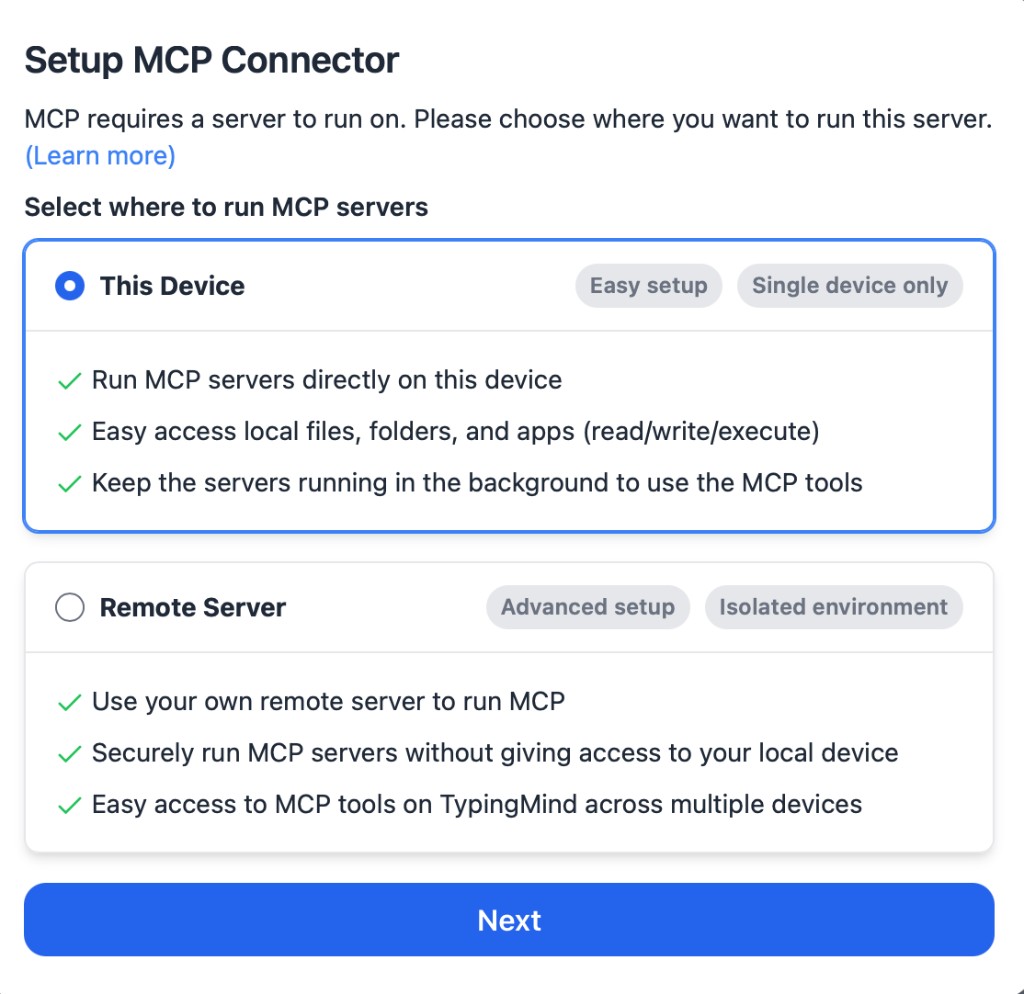
Run directly over stdio:
bashDEEPSEEK_API_KEY="REPLACE_WITH_DEEPSEEK_KEY" npx -y deepseek-mcp-server@1
Codex CLI:
bashcodex mcp add deepseek --env DEEPSEEK_API_KEY="REPLACE_WITH_DEEPSEEK_KEY" -- npx -y deepseek-mcp-server@1
Claude Code:
bashclaude mcp add deepseek --env DEEPSEEK_API_KEY="REPLACE_WITH_DEEPSEEK_KEY" -- npx -y deepseek-mcp-server@1
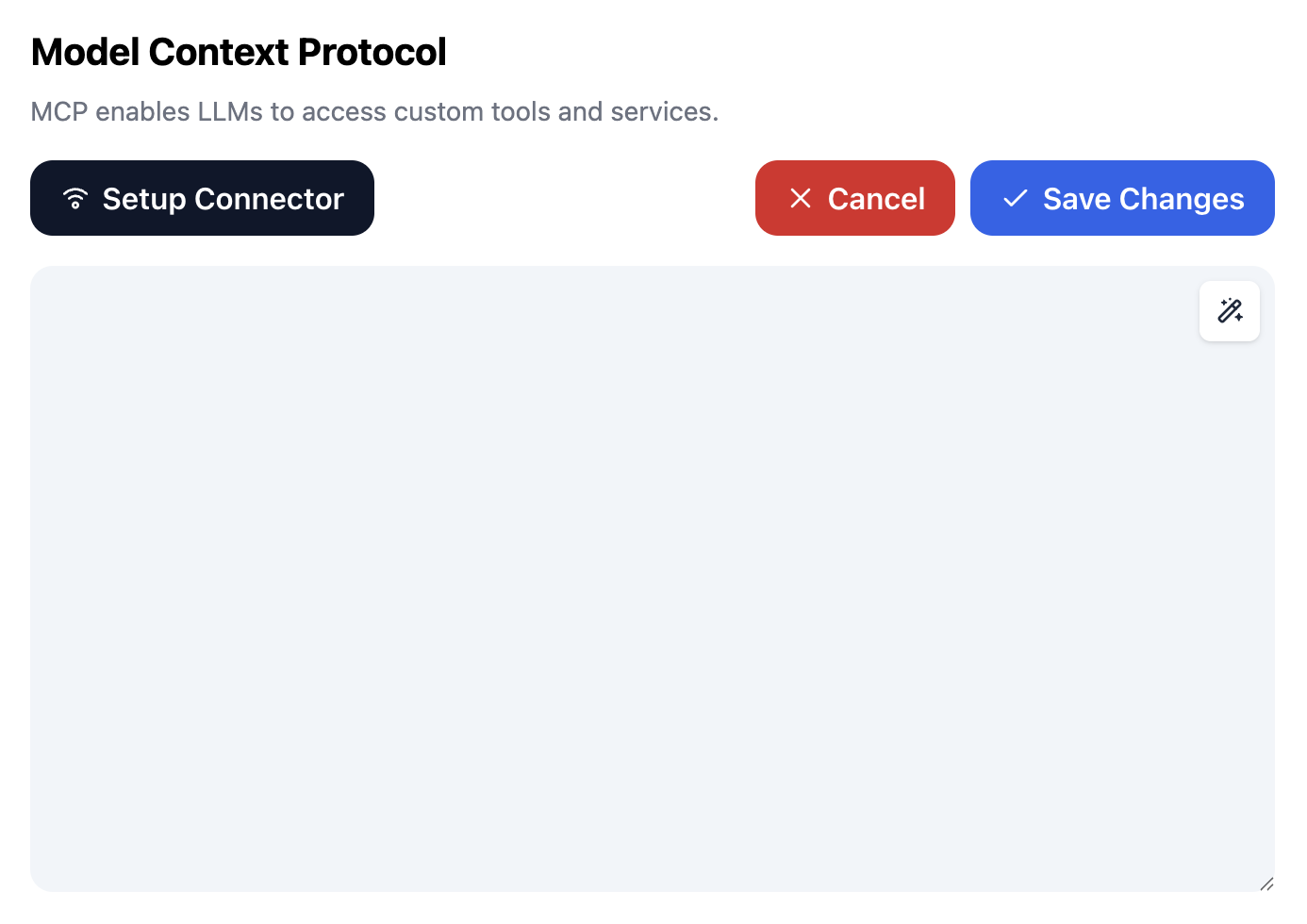
Example MCP client configuration:
json{ "mcpServers": { "deepseek": { "command": "npx", "args": ["-y", "deepseek-mcp-server@1"], "env": { "DEEPSEEK_API_KEY": "REPLACE_WITH_DEEPSEEK_KEY" } } } }
Visual input
chat_completion accepts image URLs:
json{ "message": [ { "type": "text", "text": "Describe this image." }, { "type": "image_url", "image_url": { "url": "https://example.com/photo.png", "detail": "high" } } ] }
It also accepts a supported base64 data URL without first uploading it:
json{ "message": [ { "type": "text", "text": "What is shown here?" }, { "type": "file", "file_data": "data:image/png;base64,iVBORw0KGgo...", "filename": "image.png" } ] }
For reuse, call upload_file, then pass its returned ID:
json{ "filename": "diagram.png", "file_data": "iVBORw0KGgo...", "expires_after_seconds": 86400 }
json{ "message": [ { "type": "text", "text": "Explain this diagram." }, { "type": "file", "file_id": "file-api-..." } ] }
The same uploaded file can be used with create_response:
json{ "input": [ { "role": "user", "content": [ { "type": "input_text", "text": "Read the image." }, { "type": "input_image", "file_id": "file-api-..." } ] } ] }
Supported image formats are JPEG, PNG, GIF, and WebP. Detail may be low,
high, original, or auto.
Upload safety boundary
upload_file accepts raw base64 or a supported image data URL. It deliberately
does not accept local file paths and does not fetch arbitrary URLs on the
server. Decoded uploads are limited to 64 MiB, and the bytes are
signature-checked before upload. Uploaded data is stored by DeepSeek under your
account; use an expiry or delete_file when it should not persist. Expiry must
be between 3,600 and 2,592,000 seconds.
Streamable HTTP
Run a local HTTP endpoint:
bashDEEPSEEK_API_KEY="REPLACE_WITH_DEEPSEEK_KEY" \ MCP_TRANSPORT=streamable-http \ MCP_HTTP_HOST=127.0.0.1 \ MCP_HTTP_PORT=3001 \ npx -y deepseek-mcp-server@1
The endpoint defaults to http://127.0.0.1:3001/mcp.
For browser clients, set an exact comma-separated origin allowlist:
bashMCP_HTTP_ALLOWED_ORIGINS=https://app.example.com,http://localhost:3000
Requests that include an Origin header are rejected with 403 unless the
origin is allowlisted. Native clients that omit Origin are unaffected.
Hosted endpoint
A separately deployed endpoint is available at
https://deepseek-mcp.ragweld.com/mcp using
Authorization: Bearer <token>. The hosted deployment has its own release
cycle and may lag the npm/GitHub release; inspect tools/list before relying
on a newly added tool.
Environment
Required:
bashDEEPSEEK_API_KEY=your-api-key
Optional:
bashDEEPSEEK_BASE_URL=https://api.deepseek.com DEEPSEEK_REQUEST_TIMEOUT_MS=120000 DEEPSEEK_DEFAULT_MODEL=deepseek-flash MCP_TRANSPORT=stdio MCP_HTTP_HOST=127.0.0.1 MCP_HTTP_PORT=3001 MCP_HTTP_PATH=/mcp MCP_HTTP_ALLOWED_ORIGINS=https://app.example.com,http://localhost:3000 CONVERSATION_MAX_MESSAGES=200
CONVERSATION_MAX_MESSAGES bounds the total messages retained in the
process-local conversation store. Restarting the process clears this store.
MCP compatibility
- Built on
@modelcontextprotocol/server,@modelcontextprotocol/node, and@modelcontextprotocol/client2.0. - Streamable HTTP negotiates MCP 2026-07-28 and falls back to stateless 2025-era handling for older clients.
- Stdio chooses the protocol era from the opening exchange and pins one server instance for that connection.
- Static discovery/list results carry one-hour public cache hints; dynamic resource lists, runtime data, live account data, and conversations remain private and short-lived or uncached.
- Explicit
conversation_idmemory is application state and works independently of transport session state.
Migrating from 0.6.0
- The default model changed from
deepseek-v4-flashtodeepseek-flash. - The MCP SDK moved from the monolithic v1 package to the split v2 packages.
MCP_HTTP_STATEFUL_SESSIONwas removed. HTTP protocol handling is now per-request/stateless; useconversation_idfor retained chat context.- Four Files API tools and visual inputs were added.
- Existing tool names and
include_raw_responsebehavior remain compatible.
Development and verification
bashnpm ci npm run build npm test npm pack --dry-run
Credentialed smoke tests:
bashDEEPSEEK_API_KEY="REPLACE_WITH_DEEPSEEK_KEY" npm run test:live DEEPSEEK_MCP_AUTH_TOKEN="REPLACE_WITH_TOKEN" npm run test:remote
The live smoke covers model listing, balance, text chat, thinking streaming, Responses, FIM, visual input, and a Files upload/retrieve/list/delete lifecycle with cleanup.
Registry identity
- MCP Registry:
io.github.DMontgomery40/deepseek - npm:
deepseek-mcp-server@1.0.1 - OCI:
docker.io/dmontgomery40/deepseek-mcp-server:0.5.0is the last published image and does not contain the 1.0.1 feature set.
Official references
- DeepSeek V4.1 Flash announcement
- DeepSeek pricing and model limits
- DeepSeek visual input guide
- DeepSeek Files API guide
- DeepSeek Chat Completions
- DeepSeek Responses API
- MCP 2026-07-28 specification
- MCP TypeScript SDK v2
- MCP SDK v2 migration guide
License
MIT