ElevenLabs logo

ElevenLabs

OrganizationPopular
elevenlabs

The official ElevenLabs MCP server

Publisherelevenlabs
Repositoryelevenlabs-mcp
LanguagePython
Forks
256
Stars
1.5K
Available tools
24
Transport typestdio
Categories
LicenseMIT
Links
  • Connect tools to AI workflows

    ElevenLabs exposes MCP capabilities that can be used by compatible AI clients and agents.

  • 24 available tools

    Browse the callable actions below, including names and descriptions when provided by the server.

  • Ready-to-copy setup

    Use the installation snippets to configure this server in your preferred MCP client.

  • Open source signals

    1.5K stars and 256 forks from the linked repository.

export

[!WARNING] This local MCP server is deprecated in favor of the ElevenLabs hosted MCP server.

The hosted server is available at https://api.elevenlabs.io/v1/mcp, with nothing to install or run locally. It authenticates with OAuth, so no API keys are copied into your client. See the hosted MCP server documentation to connect from Claude, Cursor, or any other MCP client.

This repository is no longer actively maintained.

Discord Community Twitter PyPI Tests

Quickstart with Claude Desktop

  1. Get your API key from ElevenLabs. There is a free tier with 10k credits per month.
  2. Install uv (Python package manager), install with curl -LsSf https://astral.sh/uv/install.sh | sh or see the uv repo for additional install methods.
  3. Go to Claude > Settings > Developer > Edit Config > claude_desktop_config.json to include the following:
{
  "mcpServers": {
    "ElevenLabs": {
      "command": "uvx",
      "args": ["elevenlabs-mcp"],
      "env": {
        "ELEVENLABS_API_KEY": "<insert-your-api-key-here>"
      }
    }
  }
}

If you're using Windows, you will have to enable "Developer Mode" in Claude Desktop to use the MCP server. Click "Help" in the hamburger menu at the top left and select "Enable Developer Mode".

Other MCP clients

For other clients like Cursor and Windsurf, run:

  1. pip install elevenlabs-mcp
  2. python -m elevenlabs_mcp --api-key={{PUT_YOUR_API_KEY_HERE}} --print to get the configuration. Paste it into appropriate configuration directory specified by your MCP client.

That's it. Your MCP client can now interact with ElevenLabs through these tools:

Example usage

⚠️ Warning: ElevenLabs credits are needed to use these tools.

Try asking Claude:

  • "Create an AI agent that speaks like a film noir detective and can answer questions about classic movies"
  • "Generate three voice variations for a wise, ancient dragon character, then I will choose my favorite voice to add to my voice library"
  • "Convert this recording of my voice to sound like a medieval knight"
  • "Create a soundscape of a thunderstorm in a dense jungle with animals reacting to the weather"
  • "Turn this speech into text, identify different speakers, then convert it back using unique voices for each person"

Optional features

File Output Configuration

You can configure how the MCP server handles file outputs using these environment variables in your claude_desktop_config.json:

  • ELEVENLABS_MCP_BASE_PATH: Specify the base path for file operations (default: ~/Desktop). This directory is also the security boundary for input files: any path passed to a tool that reads a local file (e.g. speech_to_text, isolate_audio, speech_to_speech, video_to_music, upload_music_for_inpainting) must resolve inside this directory, whether given as an absolute or relative path. Paths outside it — even if absolute and previously accepted — are rejected. Set this to a directory that contains everything you need to read from or write to.
  • ELEVENLABS_MCP_OUTPUT_MODE: Control how generated files are returned (default: files)

Output Modes

The ELEVENLABS_MCP_OUTPUT_MODE environment variable supports three modes:

  1. files (default): Save files to disk and return file paths

    json
    "env": {
      "ELEVENLABS_API_KEY": "your-api-key",
      "ELEVENLABS_MCP_OUTPUT_MODE": "files"
    }
  2. resources: Return files as MCP resources; binary data is base64-encoded, text is returned as UTF-8 text

    json
    "env": {
      "ELEVENLABS_API_KEY": "your-api-key",
      "ELEVENLABS_MCP_OUTPUT_MODE": "resources"
    }
  3. both: Save files to disk AND return as MCP resources

    json
    "env": {
      "ELEVENLABS_API_KEY": "your-api-key",
      "ELEVENLABS_MCP_OUTPUT_MODE": "both"
    }

Resource Mode Benefits:

  • Files are returned directly in the MCP response as base64-encoded data
  • No disk I/O required - useful for containerized or serverless environments
  • MCP clients can access file content immediately without file system access
  • In both mode, resources can be fetched later using the elevenlabs://filename URI pattern

Use Cases:

  • files: Traditional file-based workflows, local development
  • resources: Cloud environments, MCP clients without file system access
  • both: Maximum flexibility, caching, and resource sharing scenarios

Data residency keys

You can specify the data residency region with the ELEVENLABS_API_RESIDENCY environment variable. Defaults to "us".

Note: Data residency is an enterprise only feature. See the docs for more details.

Contributing

If you want to contribute or run from source:

  1. Clone the repository:
bash
git clone https://github.com/elevenlabs/elevenlabs-mcp
cd elevenlabs-mcp
  1. Create a virtual environment and install dependencies using uv:
bash
uv venv
source .venv/bin/activate
uv pip install -e ".[dev]"
  1. Copy .env.example to .env and add your ElevenLabs API key:
bash
cp .env.example .env
# Edit .env and add your API key
  1. Run the tests to make sure everything is working:
bash
./scripts/test.sh
# Or with options
./scripts/test.sh --verbose --fail-fast
  1. Install the server in Claude Desktop: mcp install elevenlabs_mcp/server.py

  2. Debug and test locally with MCP Inspector: mcp dev elevenlabs_mcp/server.py

Troubleshooting

Logs when running with Claude Desktop can be found at:

  • Windows: %APPDATA%\Claude\logs\mcp-server-elevenlabs.log
  • macOS: ~/Library/Logs/Claude/mcp-server-elevenlabs.log

Timeouts when using certain tools

Certain ElevenLabs API operations, like voice design and audio isolation, can take a long time to resolve. When using the MCP inspector in dev mode, you might get timeout errors despite the tool completing its intended task.

This shouldn't occur when using a client like Claude.

MCP ElevenLabs: spawn uvx ENOENT

If you encounter the error "MCP ElevenLabs: spawn uvx ENOENT", confirm its absolute path by running this command in your terminal:

bash
which uvx

Once you obtain the absolute path (e.g., /usr/local/bin/uvx), update your configuration to use that path (e.g., "command": "/usr/local/bin/uvx"). This ensures that the correct executable is referenced.
Installation

TypingMind
Prerequisites:

Node.js 18+

{
  "mcpServers": {
    "ElevenLabs": {
      "command": "uvx",
      "args": [
        "elevenlabs-mcp"
      ],
      "env": {
        "ELEVENLABS_API_KEY": "<insert-your-api-key-here>"
      }
    }
  }
}

Available Tools

  • text_to_speech

    Convert text to speech with a given voice. Saves output file to directory (default: $HOME/Desktop).

    Only one of voice_id or voice_name can be provided. If none are provided, the default voice will be used.
    
    ⚠️ COST WARNING: This tool makes an API call to ElevenLabs which may incur costs. Only use when explicitly requested by the user.
    
     Args:
        text (str): The text to convert to speech.
        voice_name (str, optional): The name of the voice to use.
        model_id (str, optional): The model ID to use for speech synthesis. Options include:
            - eleven_multilingual_v2: High quality multilingual model (29 languages)
            - eleven_flash_v2_5: Fastest model with ultra-low latency (32 languages)
            - eleven_turbo_v2_5: Balanced quality and speed (32 languages)
            - eleven_flash_v2: Fast English-only model
            - eleven_turbo_v2: Balanced English-only model
            - eleven_monolingual_v1: Legacy English model
           
    
  • speech_to_text

    Transcribe speech from an audio file. When save_transcript_to_file=True: Saves output file to directory (default: $HOME/Desktop). When return_transcript_to_client_directly=True, always returns text directly regardless of output mode.

    ⚠️ COST WARNING: This tool makes an API call to ElevenLabs which may incur costs. Only use when explicitly requested by the user.
    
    Args:
        file_path: Path to the audio file to transcribe
        language_code: ISO 639-3 language code for transcription. If not provided, the language will be detected automatically.
        diarize: Whether to diarize the audio file. If True, which speaker is currently speaking will be annotated in the transcription.
        save_transcript_to_file: Whether to save the transcript to a file.
        return_transcript_to_client_directly: Whether to return the transcript to the client directly.
        output_directory: Directory where files should be saved (only used when saving files).
            Defaults to $H
    
  • text_to_sound_effects

    Convert text description of a sound effect to sound effect with a given duration. Saves output file to directory (default: $HOME/Desktop).

    Duration must be between 0.5 and 5 seconds.
    
    ⚠️ COST WARNING: This tool makes an API call to ElevenLabs which may incur costs. Only use when explicitly requested by the user.
    
    Args:
        text: Text description of the sound effect
        duration_seconds: Duration of the sound effect in seconds
        output_directory: Directory where files should be saved (only used when saving files).
            Defaults to $HOME/Desktop if not provided.
        loop: Whether to loop the sound effect. Defaults to False.
        output_format (str, optional): Output format of the generated audio. Formatted as codec_sample_rate_bitrate. So an mp3 with 22.05kHz sample rate at 32kbs is represented as mp3_22050_32. MP3 with 192kbps bitrate requires you to be subscribed to Creator tier or above. PCM with 44.1kHz sample rate requires you to be subsc
    
  • search_voices

    Search for existing voices, a voice that has already been added to the user's ElevenLabs voice library. Searches in name, description, labels and category.

    Args:
        search: Search term to filter voices by. Searches in name, description, labels and category.
        sort: Which field to sort by. `created_at_unix` might not be available for older voices.
        sort_direction: Sort order, either ascending or descending.
    
    Returns:
        List of voices that match the search criteria.
    
  • list_models

    List all available models

  • get_voice

    Get details of a specific voice

  • voice_clone

    Create an instant voice clone of a voice using provided audio files.

    ⚠️ COST WARNING: This tool makes an API call to ElevenLabs which may incur costs. Only use when explicitly requested by the user.
    
  • isolate_audio

    Isolate audio from a file. Saves output file to directory (default: $HOME/Desktop).

    ⚠️ COST WARNING: This tool makes an API call to ElevenLabs which may incur costs. Only use when explicitly requested by the user.
    
  • check_subscription

    Check the current subscription status. Could be used to measure the usage of the API.

  • create_agent

    Create a conversational AI agent with custom configuration.

    ⚠️ COST WARNING: This tool makes an API call to ElevenLabs which may incur costs. Only use when explicitly requested by the user.
    
    Args:
        name: Name of the agent
        first_message: First message the agent will say i.e. "Hi, how can I help you today?"
        system_prompt: System prompt for the agent
        voice_id: ID of the voice to use for the agent
        language: ISO 639-1 language code for the agent
        llm: LLM to use for the agent
        temperature: Temperature for the agent. The lower the temperature, the more deterministic the agent's responses will be. Range is 0 to 1.
        max_tokens: Maximum number of tokens to generate.
        asr_quality: Quality of the ASR. `high` or `low`.
        model_id: ID of the ElevenLabs model to use for the agent.
        optimize_streaming_latency: Optimize streaming latency. Range is 0 to 4.
        stability: Stability for the agent. Range is 0 to 1
    
  • add_knowledge_base_to_agent

    Add a knowledge base to ElevenLabs workspace. Allowed types are epub, pdf, docx, txt, html.

    ⚠️ COST WARNING: This tool makes an API call to ElevenLabs which may incur costs. Only use when explicitly requested by the user.
    
    Args:
        agent_id: ID of the agent to add the knowledge base to.
        knowledge_base_name: Name of the knowledge base.
        url: URL of the knowledge base.
        input_file_path: Path to the file to add to the knowledge base.
        text: Text to add to the knowledge base.
    
  • list_agents

    List all available conversational AI agents

  • get_agent

    Get details about a specific conversational AI agent

  • get_conversation

    Gets conversation with transcript. Returns: conversation details and full transcript. Use when: analyzing completed agent conversations.

    Args:
        conversation_id: The unique identifier of the conversation to retrieve, you can get the ids from the list_conversations tool.
    
  • list_conversations

    Lists agent conversations. Returns: conversation list with metadata. Use when: asked about conversation history.

    Args:
        agent_id (str, optional): Filter conversations by specific agent ID
        cursor (str, optional): Pagination cursor for retrieving next page of results
        call_start_before_unix (int, optional): Filter conversations that started before this Unix timestamp
        call_start_after_unix (int, optional): Filter conversations that started after this Unix timestamp
        page_size (int, optional): Number of conversations to return per page (1-100, defaults to 30)
        max_length (int, optional): Maximum character length of the response text (defaults to 10000)
    
  • speech_to_speech

    Transform audio from one voice to another using provided audio files. Saves output file to directory (default: $HOME/Desktop).

    ⚠️ COST WARNING: This tool makes an API call to ElevenLabs which may incur costs. Only use when explicitly requested by the user.
    
  • text_to_voice

    Create voice previews from a text prompt. Creates three previews with slight variations. Saves output file to directory (default: $HOME/Desktop).

    If no text is provided, the tool will auto-generate text.
    
    Voice preview files are saved as: voice_design_(generated_voice_id)_(timestamp).mp3
    
    Example file name: voice_design_Ya2J5uIa5Pq14DNPsbC1_20250403_164949.mp3
    
    ⚠️ COST WARNING: This tool makes an API call to ElevenLabs which may incur costs. Only use when explicitly requested by the user.
    
  • create_voice_from_preview

    Add a generated voice to the voice library. Uses the voice ID from the text_to_voice tool.

    ⚠️ COST WARNING: This tool makes an API call to ElevenLabs which may incur costs. Only use when explicitly requested by the user.
    
  • make_outbound_call

    Make an outbound call using an ElevenLabs agent. Automatically detects provider type (Twilio or SIP trunk) and uses the appropriate API.

    ⚠️ COST WARNING: This tool makes an API call to ElevenLabs which may incur costs. Only use when explicitly requested by the user.
    
    Args:
        agent_id: The ID of the agent that will handle the call
        agent_phone_number_id: The ID of the phone number to use for the call
        to_number: The phone number to call (E.164 format: +1xxxxxxxxxx)
    
    Returns:
        TextContent containing information about the call
    
  • search_voice_library

    Search for a voice across the entire ElevenLabs voice library.

    Args:
        page: Page number to return (0-indexed)
        page_size: Number of voices to return per page (1-100)
        search: Search term to filter voices by
    
    Returns:
        TextContent containing information about the shared voices
    
  • list_phone_numbers

    List all phone numbers associated with the ElevenLabs account

  • play_audio

    Play an audio file. Supports WAV and MP3 formats.

  • compose_music

    Convert a prompt to music and save the output audio file to a given directory. Directory is optional, if not provided, the output file will be saved to $HOME/Desktop.

    Args:
        prompt: Prompt to convert to music. Must provide either prompt or composition_plan.
        output_directory: Directory to save the output audio file
        composition_plan: Composition plan to use for the music. Must provide either prompt or composition_plan.
        music_length_ms: Length of the generated music in milliseconds. Cannot be used if composition_plan is provided.
    
    ⚠️ COST WARNING: This tool makes an API call to ElevenLabs which may incur costs. Only use when explicitly requested by the user.
    
  • create_composition_plan

    Create a composition plan for music generation. Usage of this endpoint does not cost any credits but is subject to rate limiting depending on your tier. Composition plans can be used when generating music with the compose_music tool.

    Args:
        prompt: Prompt to create a composition plan for
        music_length_ms: The length of the composition plan to generate in milliseconds. Must be between 10000ms and 300000ms. Optional - if not provided, the model will choose a length based on the prompt.
        source_composition_plan: An optional composition plan to use as a source for the new composition plan
    

Use ElevenLabs MCP with multiple AI models

TypingMind connects MCP tools at the workspace level, so once ElevenLabs is connected, you can use it with different AI models in TypingMind instead of setting it up separately for each model. This MCP runs locally through the TypingMind MCP connector on your device.

Setup guide to use the local connector

Use this when the MCP server needs access to local files, apps, or private resources on your computer.

1

Open the MCP settings

In TypingMind, go to Settings, Advanced Settings, then Model Context Protocol and choose Setup Connector.

  1. Open TypingMind in your browser.
  2. Click the Settings icon.
  3. Go to Advanced Settings.
  4. Open the Model Context Protocol section.
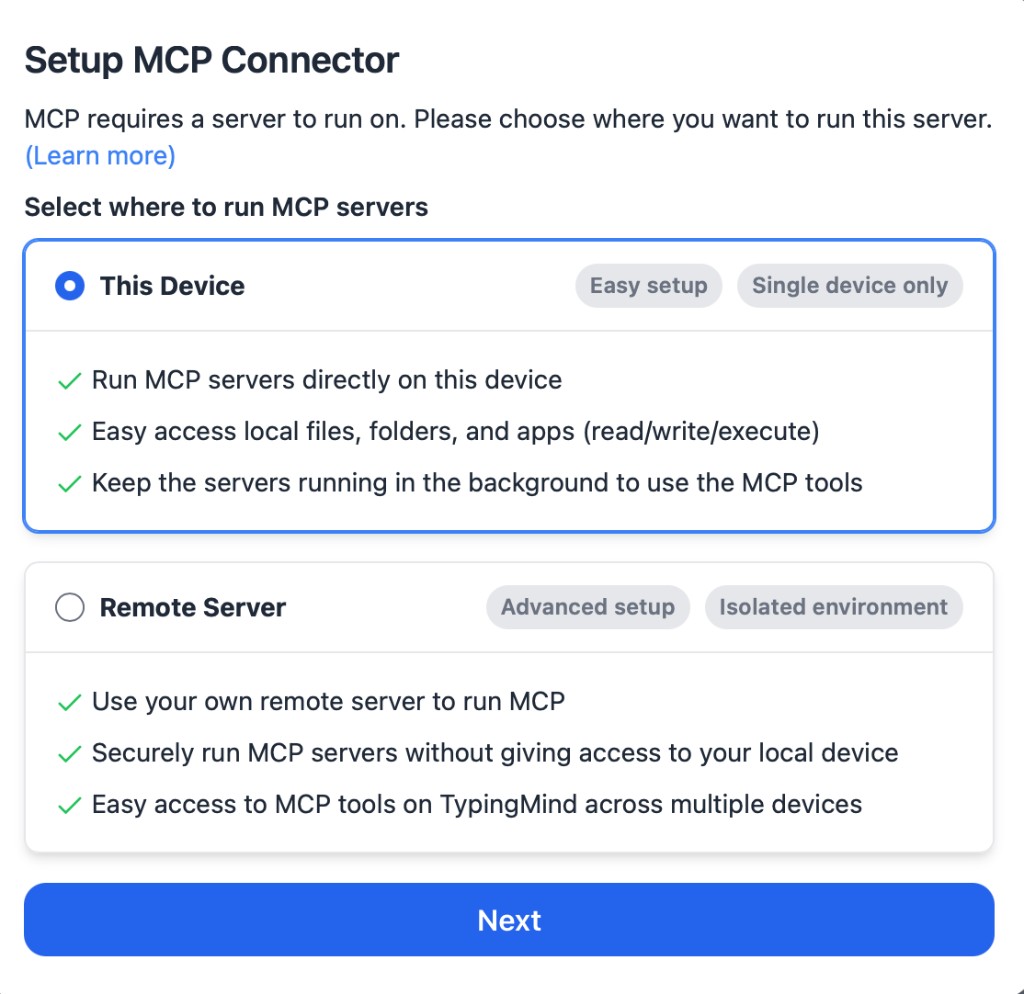
  5. Click Setup Connector and choose This Device.
TypingMind MCP connector setup screen with This Device selected
2

Run the connector command

Choose This Device, copy the command from TypingMind, and run it in Terminal. Keep the process running while you use MCP.

  1. Copy the setup command shown by TypingMind.
  2. Open Terminal on macOS or Windows Terminal on Windows.
  3. Paste and run the command.
  4. Approve the package install if Terminal asks you to proceed.
  5. Keep the Terminal window running while using MCP tools.
3

Add ElevenLabs as a server

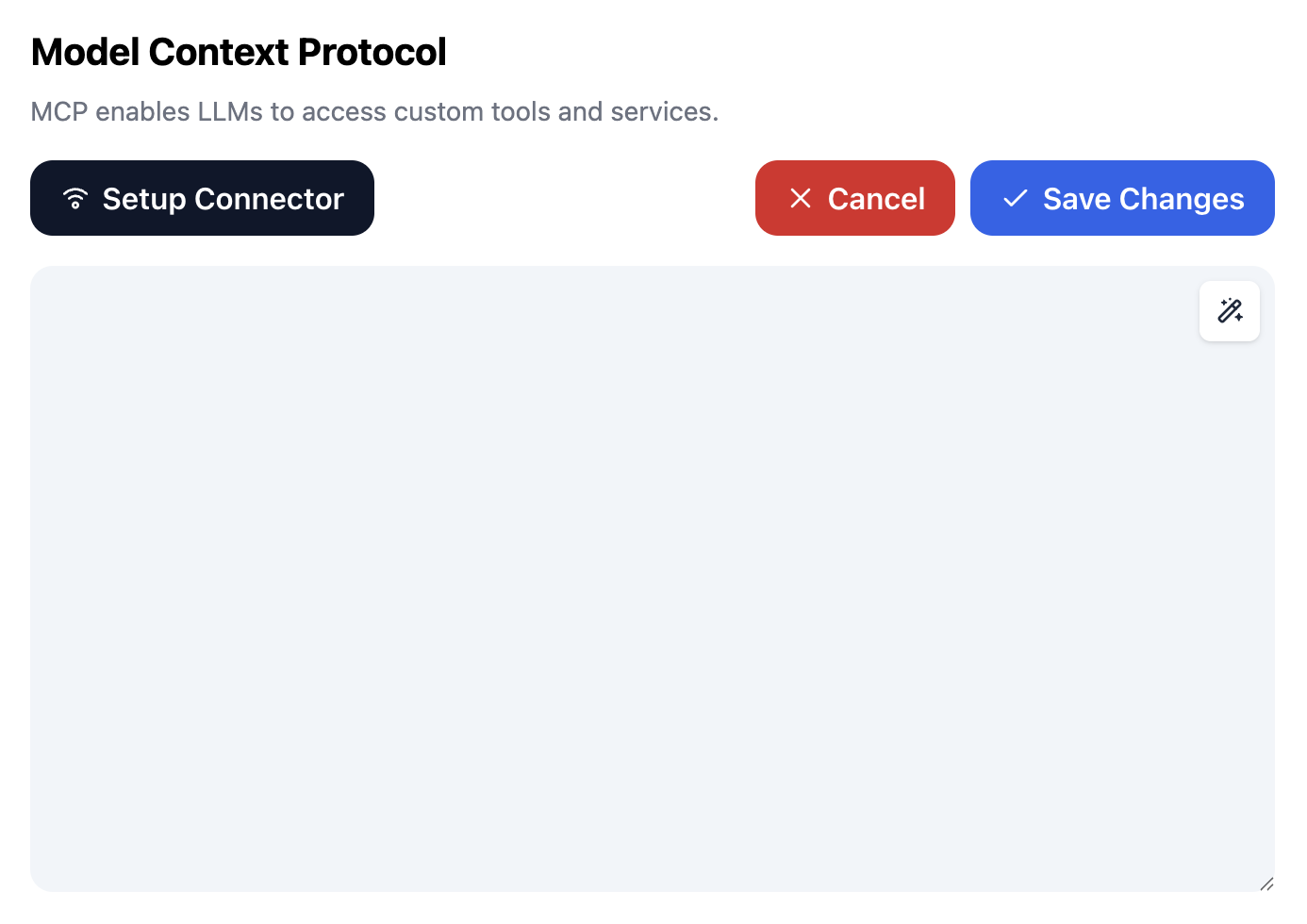
When the connector status is Ready, click Edit Servers and paste the MCP server configuration.

  1. Wait until the connector status shows Ready.
  2. Click Edit Servers.
  3. Paste the ElevenLabs MCP server configuration.
  4. Save the server list.
  5. Refresh if you want to confirm the connector is still ready.
TypingMind MCP settings showing active server and Edit Servers button
{
  "mcpServers": {
    "elevenlabs": {
      "command": "npx",
      "args": [
        "-y",
        "elevenlabs-mcp"
      ]
    }
  }
}
4

Use it across models

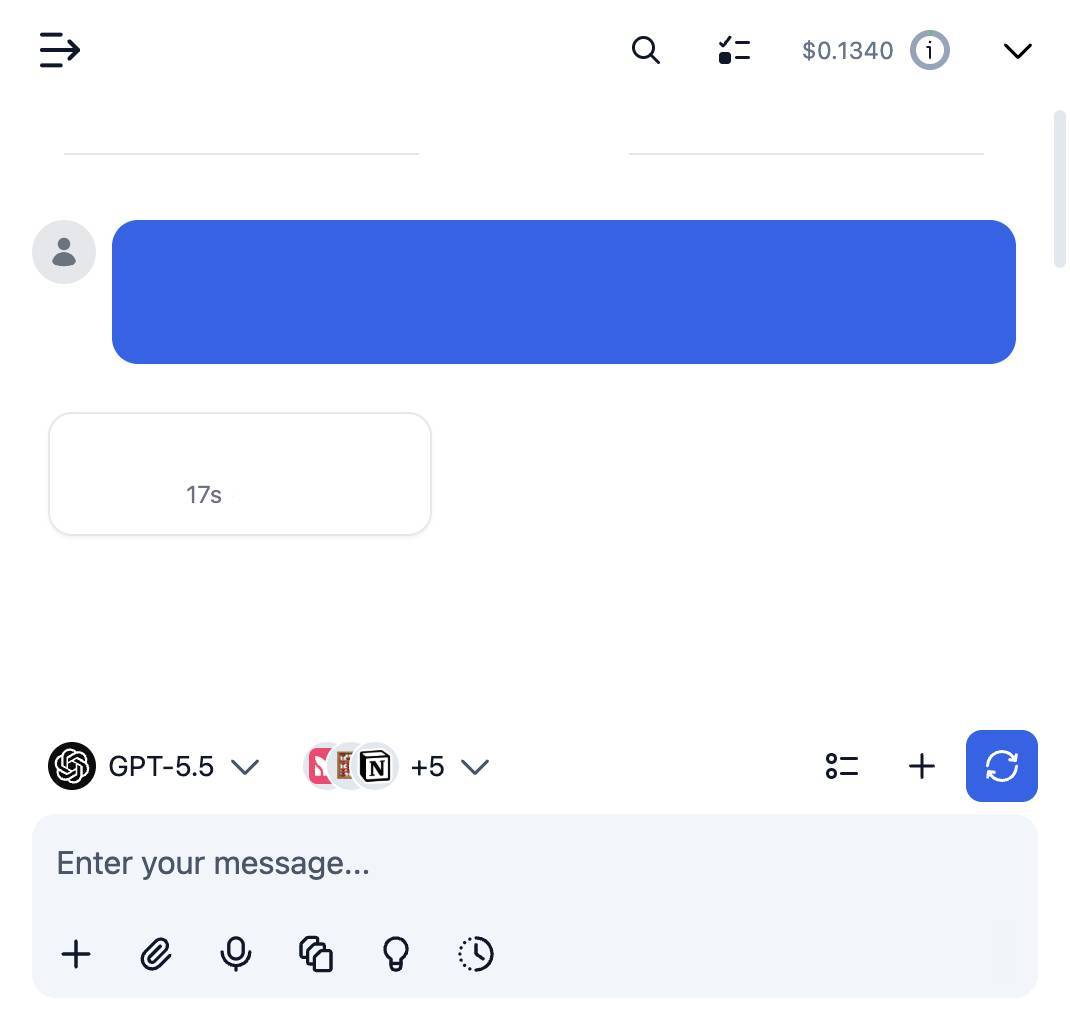
Save the server list, open Plugins, enable the ElevenLabs MCP tools, then select any supported AI model in TypingMind and use the tools in chat or assign them to an AI agent.

  1. Open the Plugins page in TypingMind.
  2. Enable the ElevenLabs MCP tools.
  3. Start a chat and choose the AI model you want to use.
  4. Use the MCP tools in chat or assign them to an AI agent.
  5. Switch to another AI model whenever needed without reconnecting MCP.
TypingMind chat using enabled MCP tools with a selected AI model
Can you use ElevenLabs to help me with this task?
ElevenLabs
Sure. I read it.
Here is what I found using ElevenLabs.

Frequently asked questions

What is the ElevenLabs MCP server used for?

ElevenLabs is an MCP server that lets compatible AI clients connect to external tools and context. In TypingMind, you can add this MCP server once and make its tools available in your AI workspace.

Can I use ElevenLabs MCP with multiple AI models in TypingMind?

Yes. TypingMind connects MCP tools at the workspace level, so you can use ElevenLabs with different AI models such as Claude, ChatGPT, Gemini, or other models you have configured in TypingMind without setting up the MCP server separately for each model.

Why use ElevenLabs MCP with TypingMind?

TypingMind is one of the best frontends for LLM chat because it brings multiple AI models, prompts, plugins, AI agents, API keys, and MCP tools into one workspace. With ElevenLabs connected, you can use its MCP tools across your preferred models while keeping your chat workflow organized in TypingMind.

How do I connect ElevenLabs MCP to TypingMind?

ElevenLabs runs through the TypingMind local MCP connector. This is best when the MCP server needs access to local files, desktop apps, command-line tools, or private resources on your computer.

What tools does ElevenLabs MCP provide in TypingMind?

ElevenLabs exposes 24 MCP tools that can be enabled from the TypingMind Plugins page and used in chat or assigned to AI agents.

Do I need to share my API keys with TypingMind to use ElevenLabs MCP?

No. TypingMind is local-first and lets you keep your model providers, API keys, prompts, and MCP configuration under your control. If ElevenLabs requires authentication, add the required headers, OAuth settings, or local configuration for that MCP server when you create the connection.

Related MCP Servers

View all

Set up your own AI workspace now

Get notified about new features and future giveaways by subscribing to our newsletter 👇