Firewalla MCP Server

A Model Context Protocol (MCP) server that provides real-time access to Firewalla firewall data through 28 specialized tools, compatible with any MCP client.
Why Firewalla MCP Server?
Simple Network Security Integration
- 28 Tools for network monitoring and analysis
- 23 Direct API Endpoints + 5 Convenience Wrappers
- Advanced Search with query syntax and filters
- Clean, Verified Architecture with corrected API schemas
Features
- Real-time Firewall Data: Query security alerts, network flows, and device status
- Security Analysis: Get insights on threats, blocked attacks, and network anomalies
- Bandwidth Monitoring: Track top bandwidth consumers and usage patterns
- Rule Management: View and temporarily pause firewall rules
- Target Lists: Manage custom security target lists and categories
- Search Tools: Query syntax with filters and logical operators
Client Setup Guides
| Client | Quick Start | Full Guide |
|---|---|---|
| Claude Desktop | npm i -g firewalla-mcp-server → Configure MCP | Setup Guide |
| Claude Code | npm i -g firewalla-mcp-server → CLI integration | Setup Guide |
| VS Code | Install MCP extension → Configure server | Setup Guide |
| Cursor | Install Claude Code → VSIX method | Setup Guide |
| Roocode | Install MCP support → Configure server | Setup Guide |
| Cline | Configure in VS Code → Enable MCP | Setup Guide |
How It Works
Claude Desktop/Code ↔ MCP Server ↔ Firewalla API
The MCP server acts as a bridge between Claude and your Firewalla firewall, translating Claude's requests into Firewalla API calls and returning the results in a format Claude can understand.
Prerequisites
- Node.js 18+ and npm
- Firewalla MSP account with API access
- Your Firewalla device online and connected
Quick Start
1. Installation
Option A: Install from npm (Recommended)
bash# Install globally npm install -g firewalla-mcp-server # Or install locally in your project npm install firewalla-mcp-server
Option B: Use Docker
Warning: Not for production use – secrets visible in process list
The examples below pass credentials directly in the command line, which exposes them to process listing and shell history. For production use, consider these secure alternatives:
- Use
--env-filewith a.envfile:docker run --env-file .env ... - Set environment variables in your shell before running Docker
- Use Docker secrets for orchestration environments
Stdio Transport (Default - for Claude Desktop integration):
bash# Using Docker Hub image docker run -it --rm \ -e FIREWALLA_MSP_TOKEN=your_token \ -e FIREWALLA_MSP_ID=yourdomain.firewalla.net \ -e FIREWALLA_BOX_ID=your_box_gid \ amittell/firewalla-mcp-server # Or build locally docker build -t firewalla-mcp-server . docker run -it --rm \ -e FIREWALLA_MSP_TOKEN=your_token \ -e FIREWALLA_MSP_ID=yourdomain.firewalla.net \ -e FIREWALLA_BOX_ID=your_box_gid \ firewalla-mcp-server # Recommended: Using env file (more secure) docker run -it --rm --env-file .env amittell/firewalla-mcp-server
HTTP Transport (for standalone Docker containers and external access):
bash# Run with HTTP transport on port 3000 docker run -d --name firewalla-mcp \ -p 3000:3000 \ -e MCP_TRANSPORT=http \ -e MCP_HTTP_PORT=3000 \ -e FIREWALLA_MSP_TOKEN=your_token \ -e FIREWALLA_MSP_ID=yourdomain.firewalla.net \ -e FIREWALLA_BOX_ID=your_box_gid \ amittell/firewalla-mcp-server # The server will be accessible at http://localhost:3000/mcp # Using env file (recommended) docker run -d --name firewalla-mcp \ -p 3000:3000 \ --env-file .env \ amittell/firewalla-mcp-server # For docker-compose cat > docker-compose.yml << EOF version: '3.8' services: firewalla-mcp: image: amittell/firewalla-mcp-server ports: - "3000:3000" environment: - MCP_TRANSPORT=http - MCP_HTTP_PORT=3000 - FIREWALLA_MSP_TOKEN=\${FIREWALLA_MSP_TOKEN} - FIREWALLA_MSP_ID=\${FIREWALLA_MSP_ID} - FIREWALLA_BOX_ID=\${FIREWALLA_BOX_ID} restart: unless-stopped EOF docker-compose up -d
Option C: Install from source
bashgit clone https://github.com/amittell/firewalla-mcp-server.git cd firewalla-mcp-server npm install npm run build
2. Configuration
Create a .env file with your Firewalla credentials:
env# Required FIREWALLA_MSP_TOKEN=your_msp_access_token_here FIREWALLA_MSP_ID=yourdomain.firewalla.net # Optional - filters all queries to a specific box # FIREWALLA_BOX_ID=your_box_gid_here
Getting Your Credentials:
- Log into your Firewalla MSP portal at
https://yourdomain.firewalla.net - Your MSP ID is the full domain (e.g.,
company123.firewalla.net) - Generate an access token in API settings
- (Optional) Find your Box GID in device settings to filter queries to a specific box, or retrieve available boxes using the
get_boxestool
Transport Configuration
The MCP server supports two transport modes:
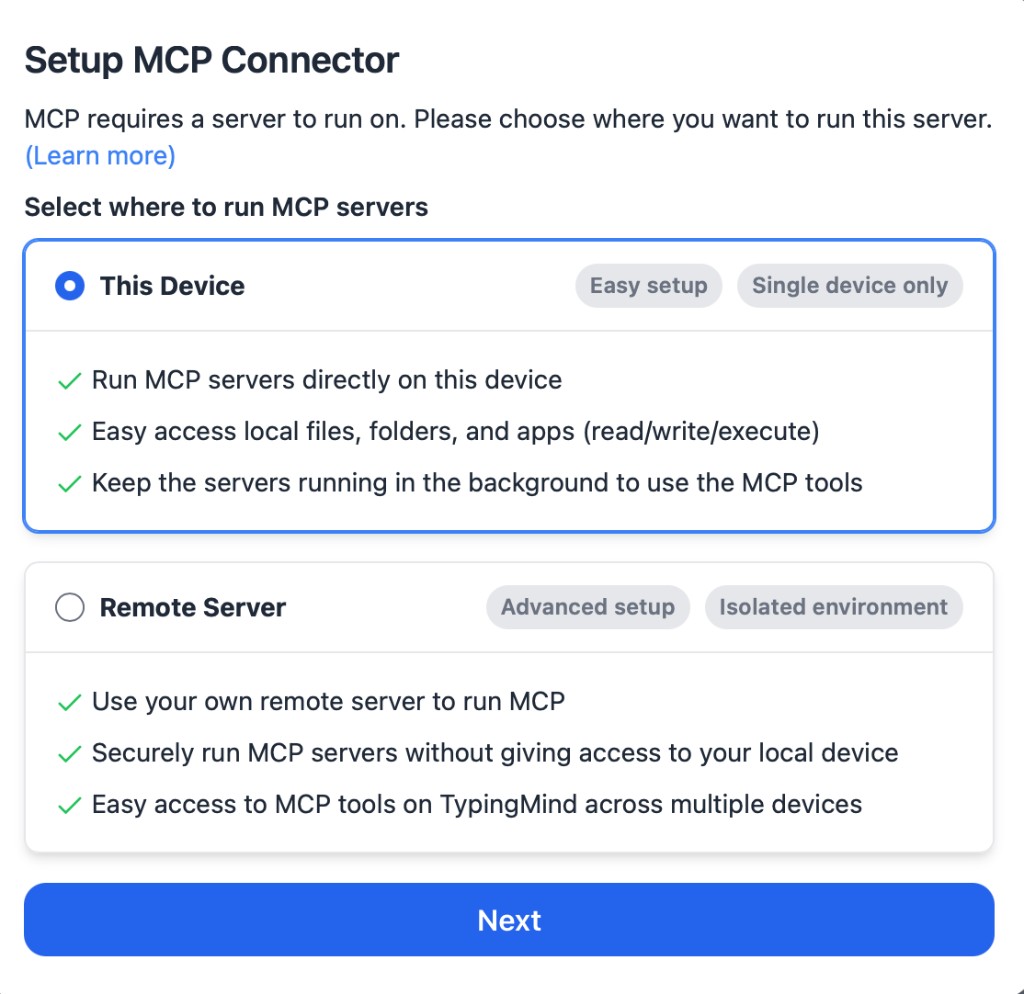
Stdio Transport (Default): Standard input/output communication for Claude Desktop and similar MCP clients
envMCP_TRANSPORT=stdio
HTTP Transport: HTTP server mode for Docker containers, MCP orchestrators, and external access
envMCP_TRANSPORT=http MCP_HTTP_PORT=3000 # Default: 3000 MCP_HTTP_PATH=/mcp # Default: /mcp
When to use HTTP transport:
- Running in Docker containers independently
- Accessing from MCP orchestrators (e.g., open-webui)
- Multiple clients need to connect to the same server instance
- Network-based access to the MCP server
When to use stdio transport:
- Claude Desktop integration (default)
- Claude Code CLI integration
- Single-process MCP client setups
- Standard MCP client configurations
3. Build and Start
bashnpm run build npm run mcp:start
4. Connect Claude Desktop
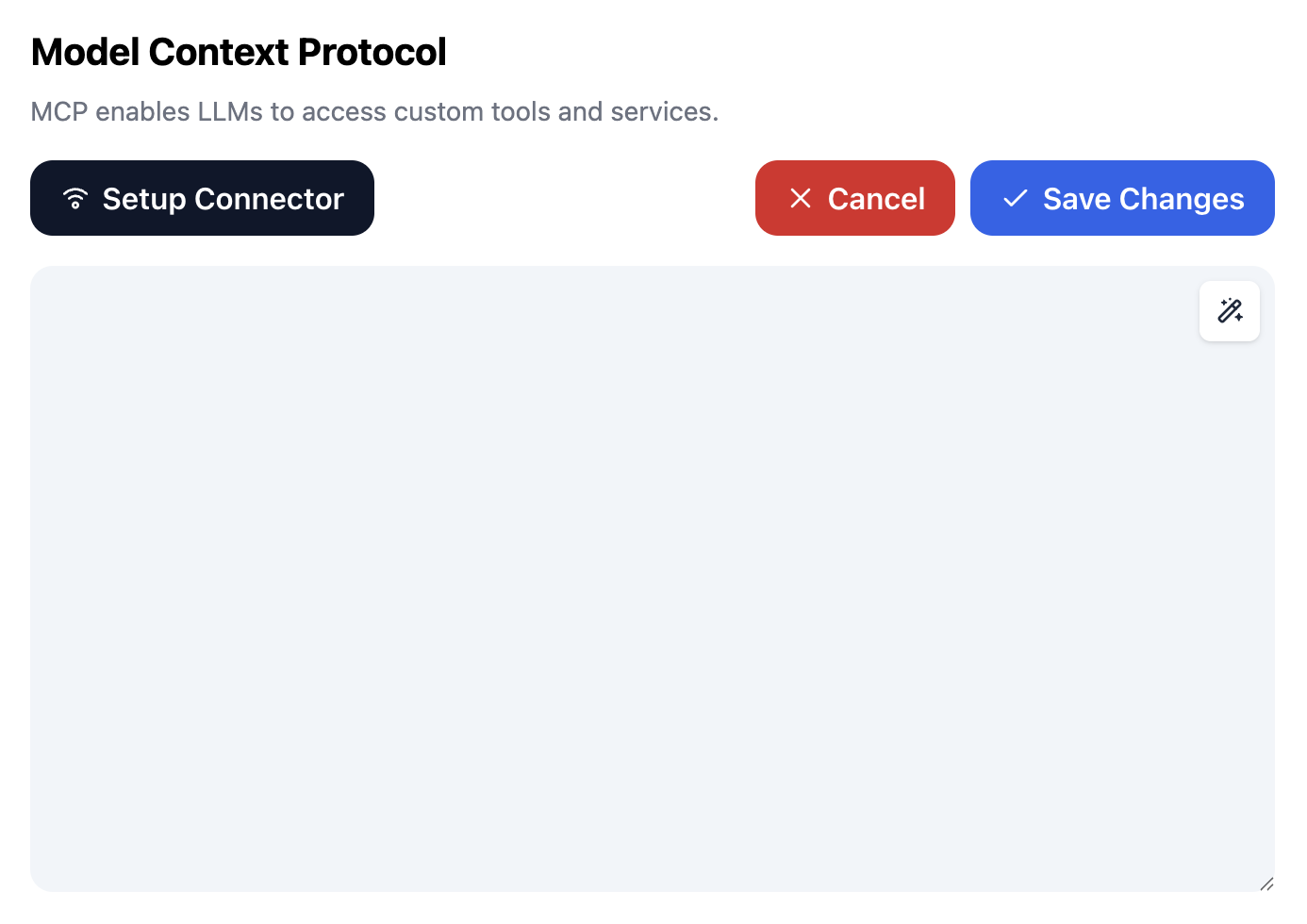
Add this configuration to your Claude Desktop claude_desktop_config.json:
If installed via npm
json{ "mcpServers": { "firewalla": { "command": "npx", "args": ["firewalla-mcp-server"], "env": { "FIREWALLA_MSP_TOKEN": "your_msp_access_token_here", "FIREWALLA_MSP_ID": "yourdomain.firewalla.net", "FIREWALLA_BOX_ID": "your_box_gid_here" } } } }
If using Docker
json{ "mcpServers": { "firewalla": { "command": "docker", "args": ["run", "-i", "--rm", "-e", "FIREWALLA_MSP_TOKEN=your_token", "-e", "FIREWALLA_MSP_ID=yourdomain.firewalla.net", "-e", "FIREWALLA_BOX_ID=your_box_gid", "amittell/firewalla-mcp-server" ] } } }
If installed from source
json{ "mcpServers": { "firewalla": { "command": "node", "args": ["/full/path/to/firewalla-mcp-server/dist/server.js"], "env": { "FIREWALLA_MSP_TOKEN": "your_msp_access_token_here", "FIREWALLA_MSP_ID": "yourdomain.firewalla.net", "FIREWALLA_BOX_ID": "your_box_gid_here" } } } }
Config file locations:
- macOS:
~/Library/Application Support/Claude/claude_desktop_config.json - Windows:
%APPDATA%\Claude\claude_desktop_config.json
5. Next Steps
- See USAGE.md for practical examples and common queries
- Check TROUBLESHOOTING.md if you encounter issues
- Review client-specific setup guides in docs/clients/
Usage Examples
Step-by-Step First Use
1. Verify Connection After completing the setup, verify the MCP server is working:
bash# Start the server npm run mcp:start # You should see output like: # MCP Server starting... # Firewalla client initialized # Server ready on stdio transport
2. Test with Claude Open Claude Desktop and try these starter queries:
Basic Health Check:
text"Can you check my Firewalla status and show me a summary?"
This uses: firewall_summary resource + get_simple_statistics tool
Security Overview:
text"What security alerts do I have? Show me the 5 most recent ones."
This uses: get_active_alarms tool with limit parameter
Practical Workflows
Daily Security Review:
text"Give me today's security report. Include: 1. Any new security alerts 2. Top 3 devices using bandwidth 3. Any devices that went offline 4. Status of critical firewall rules"
Investigating Suspicious Activity:
text"I noticed unusual traffic. Can you: 1. Show me all security and abnormal upload alarms from the last 4 hours 2. Find any blocked connections to external IPs 3. Check which devices had the most network activity"
Network Troubleshooting:
text"A device seems to have connectivity issues. Can you: 1. Check if device 192.168.1.100 is online 2. Show its recent network flows 3. See if any rules are blocking its traffic"
Bandwidth Investigation:
text"Our internet is slow. Help me find the cause: 1. Show top 10 bandwidth users in the last hour 2. Look for any devices with unusual upload/download patterns 3. Check for any streaming or video traffic"
Advanced Search Examples
Find Specific Threats:
textsearch for: security activity alarms from IP range 10.0.0.* in the last 24 hours
Uses: search_alarms with query: "type:1 AND source_ip:10.0.0. AND timestamp:>24h"*
Analyze Rule Effectiveness:
text"Show me firewall rules that blocked the most connections this week"
Uses: get_network_rules + search_flows for blocked traffic analysis
Device Behavior Analysis:
text"Find all devices that were online yesterday but are offline now"
Uses: search_devices with temporal queries + get_offline_devices
Troubleshooting Common Issues
Connection Problems: If you get authentication errors:
- Verify your
.envfile has correct credentials - Check your MSP token hasn't expired
- Confirm your Box ID is the full GID format
Empty Results: If queries return no data:
- Check your Firewalla is online and reporting
- Verify the time range isn't too narrow
- Try broader search terms first
Performance Issues: If responses are slow:
- Reduce the limit parameter in queries
- Use more specific time ranges
- Check your network connection to the MSP API
Available Tools (28 total)
Core Tools
- Security: Get alarms, analyze threats
- Network: Monitor traffic flows, track bandwidth usage
- Devices: Check device status, find offline devices
- Rules: Manage firewall rules, pause/resume rules
- Search: Advanced search across all data types
- Analytics: Statistics, trends, and geographic analysis
- Target Management: Create, update, and delete security target lists
Quick Reference
Security: get_active_alarms, get_specific_alarm Network: get_flow_data, get_bandwidth_usage, get_offline_devices Devices: get_device_status, get_boxes, search_devices Rules: get_network_rules, pause_rule, resume_rule, get_target_lists Search: search_flows, search_alarms, search_rules, search_target_lists Analytics: get_simple_statistics, get_flow_insights, get_flow_trends, get_alarm_trends Management: create_target_list, update_target_list, delete_target_list
Development
Scripts
bashnpm run dev # Start development server with hot reload npm run build # Build TypeScript to JavaScript npm run test # Run all tests npm run test:watch # Run tests in watch mode npm run lint # Run ESLint npm run lint:fix # Fix ESLint issues
MCP Execution Methods
Why npx for MCP servers?
- Version Management: Always uses the correct/latest version
- Dependency Resolution: Handles package dependencies automatically
- No global installation required: Works without global installation
- MCP Standard: Follows Model Context Protocol conventions
- Reliable: Works consistently across different environments
Alternative execution methods:
bash# Development (from source) npm run mcp:start # Production (npm installed) npx firewalla-mcp-server # Direct execution (from source after build) node dist/server.js
Project Structure
textfirewalla-mcp-server/ ├── src/ │ ├── server.ts # Main MCP server │ ├── firewalla/ # Firewalla API client │ ├── tools/ # MCP tool implementations │ ├── resources/ # MCP resource implementations │ └── prompts/ # MCP prompt implementations ├── tests/ # Test files ├── docs/ │ └── firewalla-api-reference.md # API documentation ├── CLAUDE.md # Comprehensive development guide ├── SPEC.md # Technical specifications └── README.md # This file
Documentation
- README.md (this file) - Setup and basic usage
- USAGE.md - Simple usage guide with examples
- TROUBLESHOOTING.md - Common issues and solutions
- docs/clients/ - Client-specific setup guides
- CLAUDE.md - Development guide and commands
Security
- MSP tokens are stored securely in environment variables
- No credentials are logged or stored in code
- Rate limiting prevents API abuse
- Input validation prevents injection attacks
- All API communications use HTTPS
Known Behaviors and Limitations
Category Classification
- Flow Categories: Many network flows may show as empty category ("") in the Firewalla API response. This is expected behavior - Firewalla categorizes traffic when it recognizes the domain/service (e.g., "av" for audio/video, "social" for social media).
- Target List Categories: Some target lists may show category as "unknown". This is normal for user-created or certain system lists.
- Timeline: Category classification happens at the Firewalla device level and may take time to build up meaningful categorization data.
Data Characteristics
- Response Sizes: The
get_recent_flow_activitytool returns up to 150 recent flows to stay within token limits. For larger datasets or historical analysis, usesearch_flowswith time filters for more targeted queries. - Geographic Data: IP geolocation is enriched by the MCP server and includes country, city, and risk scores when available.
API Limitations
- Alarm Deletion: The
delete_alarmtool may not actually delete alarms even though the Firewalla API returns a success response. This appears to be a limitation of the MSP API where delete operations return{"message": "success", "success": true}but the alarm remains in the system. This may be due to permission restrictions or API design.
Troubleshooting
Quick Fixes
Server won't start:
bash# Clean and rebuild npm run clean npm run build # If build fails, try: npm install npm run build
Authentication errors:
- Check your MSP token is valid
- Verify Box ID format (long UUID)
- Confirm MSP domain is correct
No data returned:
- Try broader queries: "last week" vs "last hour"
- Check if Firewalla is online
- Test with: "show me basic statistics"
Slow responses:
- Add limits: "top 10 devices"
- Use shorter time ranges
- Restart the server
Debug Mode
Enable detailed logging:
bashDEBUG=mcp:* npm run mcp:start
For more detailed troubleshooting, see TROUBLESHOOTING.md
Contributing
- Fork the repository
- Create a feature branch
- Make your changes
- Add tests for new functionality
- Run the test suite
- Submit a pull request
What's New
Version 1.0.0:
- 28 tools with API-verified schemas
- 24 direct API endpoints + 5 convenience wrappers
- NEW: get_flow_insights for category-based traffic analysis
- Advanced search with logical operators (AND, OR, NOT)
- All limits corrected to API maximum (500)
- Required parameters added for proper API calls
- Better caching for faster responses
- Handles high-volume networks (300k+ flows/day)
License
Support
For issues and questions:
- Check the troubleshooting guide
- Review the technical specifications
- Open an issue on GitHub
GitHub Repository
Repository: https://github.com/amittell/firewalla-mcp-server
Quick Links
Repository Stats