Gemini Cloud Assist logo

Gemini Cloud Assist

Organization
GoogleCloudPlatform

An MCP Server for Gemini Cloud Assist; provides tools to assist with your tasks on GCP

PublisherGoogleCloudPlatform
Repositorygemini-cloud-assist-mcp
Forks
20
Stars
67
Available tools
4
Transport typestdio
Categories
LicenseApache-2.0
Links
  • Connect tools to AI workflows

    Gemini Cloud Assist exposes MCP capabilities that can be used by compatible AI clients and agents.

  • 4 available tools

    Browse the callable actions below, including names and descriptions when provided by the server.

  • Ready-to-copy setup

    Use the installation snippets to configure this server in your preferred MCP client.

  • Open source signals

    67 stars and 20 forks from the linked repository.

Gemini Cloud Assist MCP server

[!IMPORTANT] Private Preview Notice The Gemini Cloud Assist MCP server APIs are currently in Private Preview and are behind an allowlist. Please contact your Google Cloud account team to request access.

[!WARNING] Deprecation Notice & Migration to Remote MCP Server

The Gemini Cloud Assist MCP server has migrated from a local Node.js architecture to a Remote MCP Server architecture. The older local Node.js server will lose support in the coming months.

To use the new Remote MCP Servers, please use version v0.8.0 or later. If you wish to continue using the legacy local server during the transition, please pin your configuration to older versions.


npm @google-cloud/gemini-cloud-assist-mcp package

This server connects Model Context Protocol (MCP) clients to the Gemini Cloud Assist APIs. It allows you to use natural language to understand, manage, and troubleshoot your Google Cloud environment directly from the local command line.

[!NOTE] The Google Cloud Platform Terms of Service (available at https://cloud.google.com/terms/) and the Data Processing and Security Terms (available at https://cloud.google.com/terms/data-processing-terms) do not apply to any component of the Gemini Cloud Assist MCP Server software.

To learn more about Gemini Cloud Assist, see the Gemini Cloud Assist overview in the Google Cloud documentation.

✨ Key features

  • Design infrastructure: Create and architect infrastructure configurations for Google Cloud.
  • Troubleshoot issues: Run deep investigations to find the root cause of complex issues in your Google Cloud environment.
  • Manage resources: Create, update, and delete Google Cloud resources directly from your chat workflow (requires Agent Actions).
  • Optimize costs: Analyze your spend, track costs, and identify opportunities for efficiency such as idle resources.
  • Get general assistance: Ask questions and get guidance on Google Cloud best practices, architectures, and operations.

Quick start

Before you begin, ensure you have the following set up:

  • Google Cloud SDK installed and configured.
  • A Google Cloud project.
  • The following IAM roles on your user account:
    • roles/serviceusage.serviceUsageAdmin: Required to enable the Cloud Assist APIs.
    • roles/geminicloudassist.user: Required to make requests to the Cloud Assist APIs.

Step 1: Authenticate to Google Cloud

The Gemini Cloud Assist MCP server uses local Application Default Credentials (ADC) to securely authenticate to Google Cloud. To set up ADC, run the following gcloud commands:

shell
# Authenticate your user account to the gcloud CLI
gcloud auth login

# Set up Application Default Credentials for the server.
gcloud auth application-default login

Configure your MCP client

The client-agent configuration depends on which agent you are using.

Antigravity

Add the following to your mcp_config.json:

json
"mcpServers": {
  "gemini_cloud_assist": {
    "serverUrl": "https://geminicloudassist.googleapis.com/mcp",
    "headers": {},
    "authProviderType": "google_credentials"
  },
  "application_design_center": {
    "serverUrl": "https://designcenter.googleapis.com/mcp",
    "headers": {},
    "authProviderType": "google_credentials"
  }
}

Cursor

  1. In your Google Cloud project, create an OAuth 2.0 client ID for a desktop app.
  2. Configure URI://anysphere.cursor-mcp/oauth/callback as the redirect URL.
  3. Add or merge the following configuration block:
json
{
  "mcpServers": {
    "gemini_cloud_assist": {
      "url": "https://geminicloudassist.googleapis.com/mcp",
      "auth": {
        "CLIENT_ID": "${env:OAUTH_CLIENT_ID}",
        "CLIENT_SECRET": "${env:OAUTH_CLIENT_SECRET}",
        "scopes": ["https://www.googleapis.com/auth/cloud-platform"]
      }
    },
    "application_design_center": {
      "url": "https://designcenter.googleapis.com/mcp",
      "auth": {
        "CLIENT_ID": "${env:OAUTH_CLIENT_ID}",
        "CLIENT_SECRET": "${env:OAUTH_CLIENT_SECRET}",
        "scopes": ["https://www.googleapis.com/auth/cloud-platform"]
      }
    }
  }
}

Claude

Follow the configuration instructions for your specific application:

MCP Tools

Gemini Cloud Assist MCP tools

Gemini Cloud Assist is an agent accessible through a set of MCP tools. The agent invoked by MCP tool calls makes its own tool calls internally to Google Cloud. The following MCP tools are published for agents to consume:

ToolDescription
ask_cloud_assistThe primary interface for Google Cloud assistance and for the Gemini Cloud Assist agent. All functionality is accessible through this tool.
design_infraSupports workflows for designing and architecting infrastructure on Google Cloud.
investigate_issueSupports workflows for troubleshooting in Google Cloud. Can do quick troubleshooting or deeper troubleshooting through an Investigation resource.
invoke_operationSupports workflows for creating, updating, and deleting resources in Google Cloud. Only functional when Agent Actions are enabled.
optimize_costsSupports workflows for analyzing, tracking, and optimizing Google Cloud costs. Provides breakdowns of spend and identifies opportunities for cost efficiency.

Application Design Center MCP tools

Application Design Center MCP tools, often orchestrated by GCA’s design_infra tool, manages the infrastructure application lifecycle using Application Design Center, including template management, security compliance and remediation and deployment.

ToolDescription
setup_adcInitializes the Application Design Center environment. This is a one-time setup step that must be performed before other ADC tools can be used.
manage_applicationManages the deployment lifecycle of an application. Use this tool to deploy a verified design using the Application Design Center or retrieve the status and details of an existing deployment. This is the final step that turns your design into a deployed infrastructure on Google Cloud.
manage_application_templateManages the Infrastructure as Code (IaC) content of your infrastructure design. Use this to save the design as an Application Design Center template, export the design as Terraform files, or update the design (e.g. component, parameters configurations etc).
assess_best_practicesPerforms a comprehensive security and configuration audit on your application design before deployment. It validates the design against Security Command Center frameworks and relevant controls, returning a report with actionable findings for remediation.
list_application_templatesLists all available application designs.

Note: These tools should not be treated as stable APIs. Parameters might be renamed or modified to account for the evolving capabilities of Gemini Cloud Assist.

Agent Skills

The Gemini Cloud Assist MCP tools leverage SKILL.md files to instruct your agent on how to properly use the tools. The skills help to guide your agent on chaining together multiple tools into a workstream, passing relevant local information to Gemini Cloud Assist, and enabling explicit invocation.

SkillDescription
designing-and-deploying-infrastructureGuides the agent on how to design, assess, deploy, and troubleshoot cloud infrastructure using the Application Design Center (ADC) and Gemini Cloud Assist tools.
operating-google-cloudProvides instructions for managing Google Cloud Platform (GCP) resources and Kubernetes using specialized MCP tools.

Contributing

License

This project is licensed under the Apache 2.0 License and provided as-is, without warranty or representation for any use or purpose. For details, see the LICENSE file.
Installation

TypingMind
Prerequisites:

Node.js 18+

{
  "mcpServers": {
    "gemini-cloud-assist": {
      "command": "npx",
      "args": [
        "-y",
        "@google-cloud/gemini-cloud-assist-mcp"
      ]
    }
  }
}

Available Tools

  • fetch_investigation

    /**

    • Fetches Gemini Cloud Assist Investigations.
    • This function serves as a versatile entry point for retrieving investigation data.
    • It can operate in two modes:
      1. List Mode: If only a projectId is provided, it will list all
    • troubleshooting investigations associated with that project. It can be
      
    • optionally filtered by title using the filter_expression parameter. If the user indicates to fetch more pages, use the next_page_token parameter.
      
      1. Get Mode: If an investigationId is also provided, it will fetch the
    • detailed report for that specific investigation. If a revisionId is
      
    • also provided, it fetches that particular revision; otherwise, it
      
    • retrieves the latest version.
      

    */

  • create_investigation

    /**

    • Creates a new Gemini Cloud Assist Investigation. This tool is the primary entry point for initiating any new troubleshooting analysis.
    • Prerequisites:
    • Argument Resolution: Before invoking this tool, you MUST resolve all user-provided information into the specific formats required by the arguments.
    • Resource URI Mandate: The 'relevant_resources' parameter requires a list of full Google Cloud Platform (GCP) resource URIs.
      • Format: Each URI MUST strictly adhere to the format: //.googleapis.com/.
      • Validation: The tool will fail if the provided strings are not well-formed URIs in this exact format.
      • Resolution: You are responsible for converting any partial, ambiguous, or incomplete resource names (e.g., "my GKE cluster", "the default nodepool", or "project/zone/resource_type/resource_name") into their full URI representation. Utilize available tools like 'gcloud', 'kubectl', or your internal knowledge base to disco
  • run_investigation

    /**

    • Triggers the Gemini analysis, waits for completion, and returns the final report.
    • This is a synchronous, blocking call that runs the full analysis.
    • The tool will not return a response until the investigation is complete.
    • Workflow: This tool MUST be called immediately after
    • 'create_investigation' or 'add_observation'. The string returned by this function is the final,
    • detailed report. There is no need to call any other tool after this to get the
    • results.
    • Interpreting the Output: The output of this tool represents a set of observations & hypotheses based on the data,
    • not a definitive conclusion. NEVER treat the output as a confirmed root cause without further validation.
    • Your job is to analyze the returned hypotheses and use other tools at your disposal to gather evidence that proves or disproves them.
    • @returns {string} A detailed troubleshooting report in a structured string format. The
    •       report is organized wit
      
  • add_observation

    /**

    • Adds a new user observation to an existing investigation.
    • Prerequisites:
    • Argument Resolution: Before invoking this tool, you MUST resolve any new resource names mentioned in the user's observation into the specific formats required by the arguments.
    • Resource URI Mandate: If the user's 'observation' mentions new resources, the 'relevant_resources' parameter requires a list of full Google Cloud Platform (GCP) resource URIs. If no new resources are mentioned, provide an empty list '[]'.
      • Format: Each URI MUST strictly adhere to the format: //.googleapis.com/.
      • Validation: The tool will fail if any provided strings are not well-formed URIs in this exact format.
      • Resolution: You are responsible for converting any partial, ambiguous, or incomplete resource names into their full URI representation. Utilize available tools like 'gcloud', 'kubectl', or your internal knowledge base to discover the complete and accurate

Use Gemini Cloud Assist MCP with multiple AI models

TypingMind connects MCP tools at the workspace level, so once Gemini Cloud Assist is connected, you can use it with different AI models in TypingMind instead of setting it up separately for each model. This MCP runs locally through the TypingMind MCP connector on your device.

Setup guide to use the local connector

Use this when the MCP server needs access to local files, apps, or private resources on your computer.

1

Open the MCP settings

In TypingMind, go to Settings, Advanced Settings, then Model Context Protocol and choose Setup Connector.

  1. Open TypingMind in your browser.
  2. Click the Settings icon.
  3. Go to Advanced Settings.
  4. Open the Model Context Protocol section.
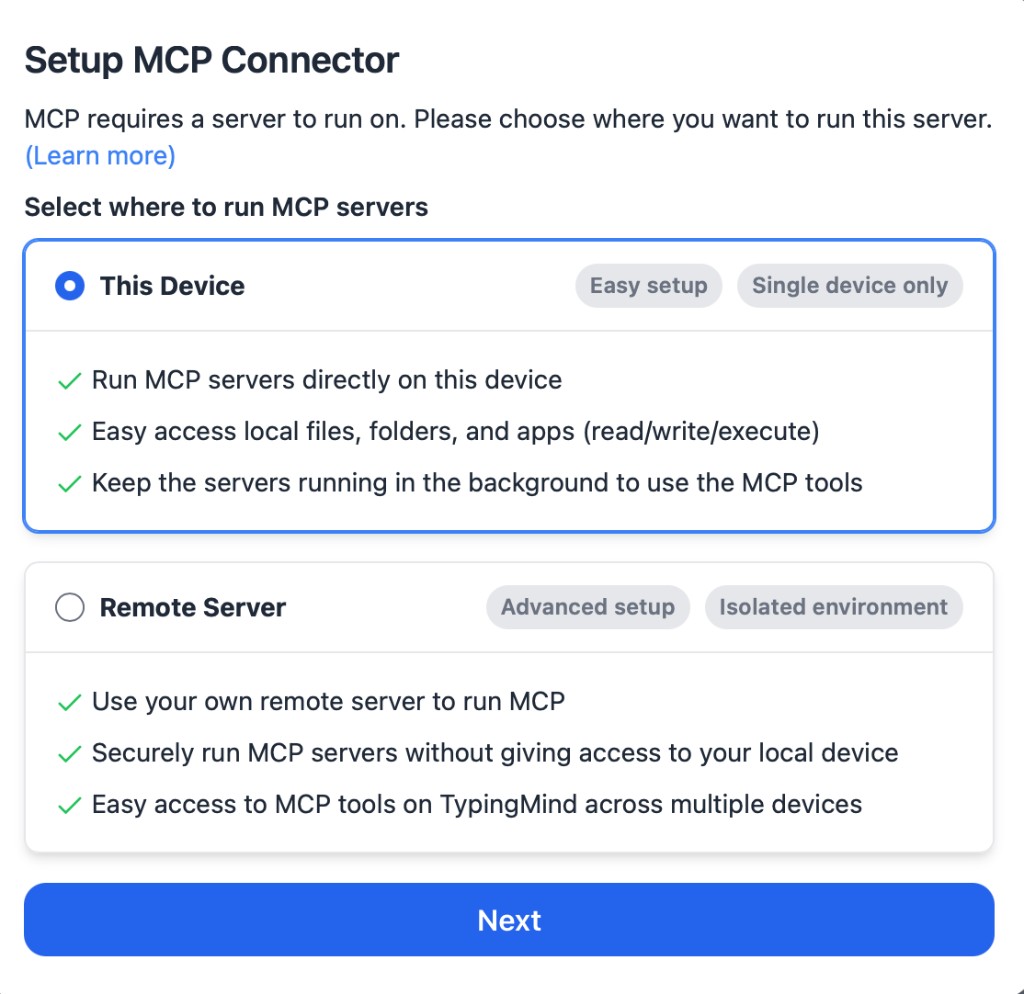
  5. Click Setup Connector and choose This Device.
TypingMind MCP connector setup screen with This Device selected
2

Run the connector command

Choose This Device, copy the command from TypingMind, and run it in Terminal. Keep the process running while you use MCP.

  1. Copy the setup command shown by TypingMind.
  2. Open Terminal on macOS or Windows Terminal on Windows.
  3. Paste and run the command.
  4. Approve the package install if Terminal asks you to proceed.
  5. Keep the Terminal window running while using MCP tools.
3

Add Gemini Cloud Assist as a server

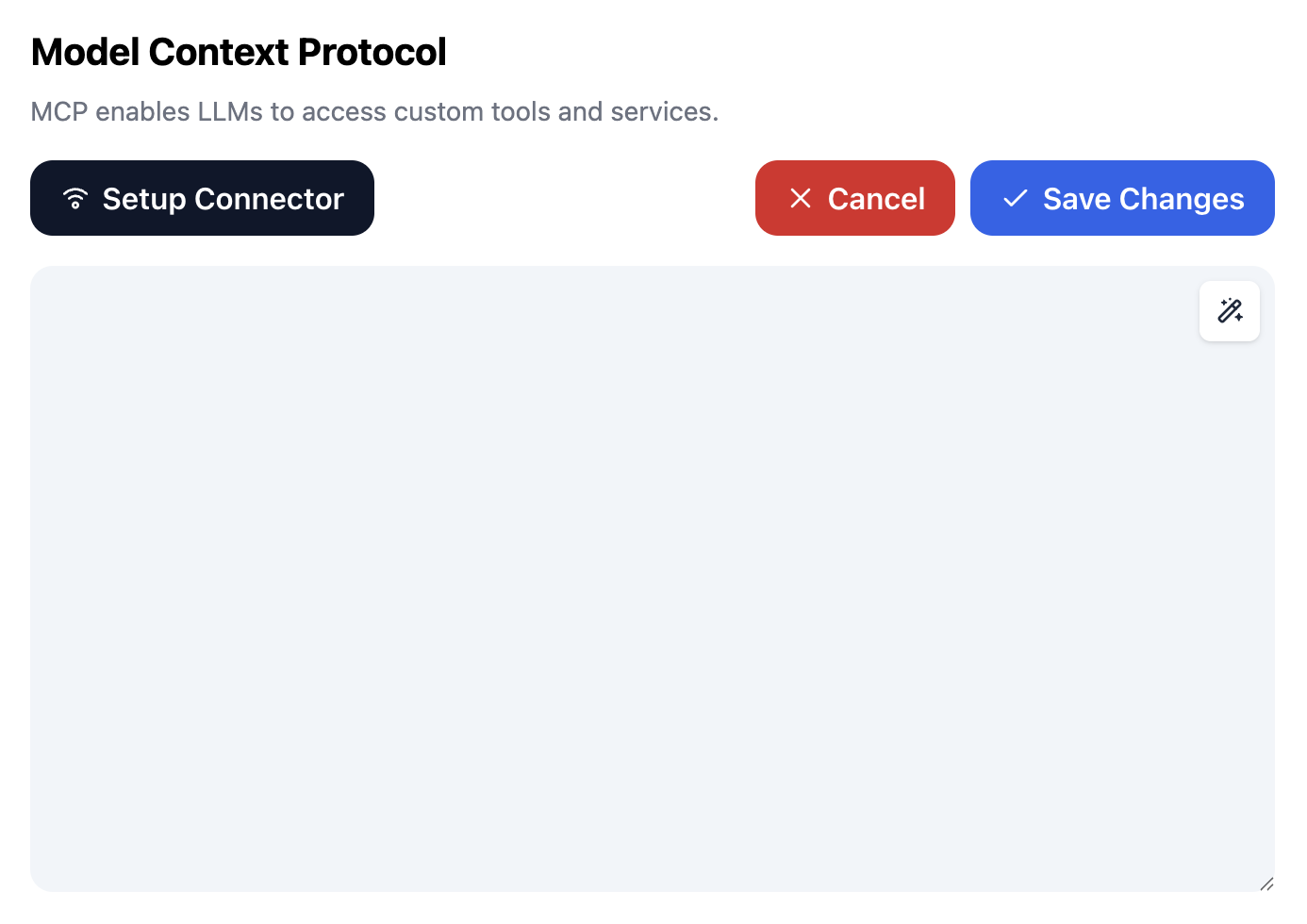
When the connector status is Ready, click Edit Servers and paste the MCP server configuration.

  1. Wait until the connector status shows Ready.
  2. Click Edit Servers.
  3. Paste the Gemini Cloud Assist MCP server configuration.
  4. Save the server list.
  5. Refresh if you want to confirm the connector is still ready.
TypingMind MCP settings showing active server and Edit Servers button
{
  "mcpServers": {
    "gemini-cloud-assist": {
      "command": "npx",
      "args": [
        "-y",
        "@google-cloud/gemini-cloud-assist-mcp"
      ]
    }
  }
}
4

Use it across models

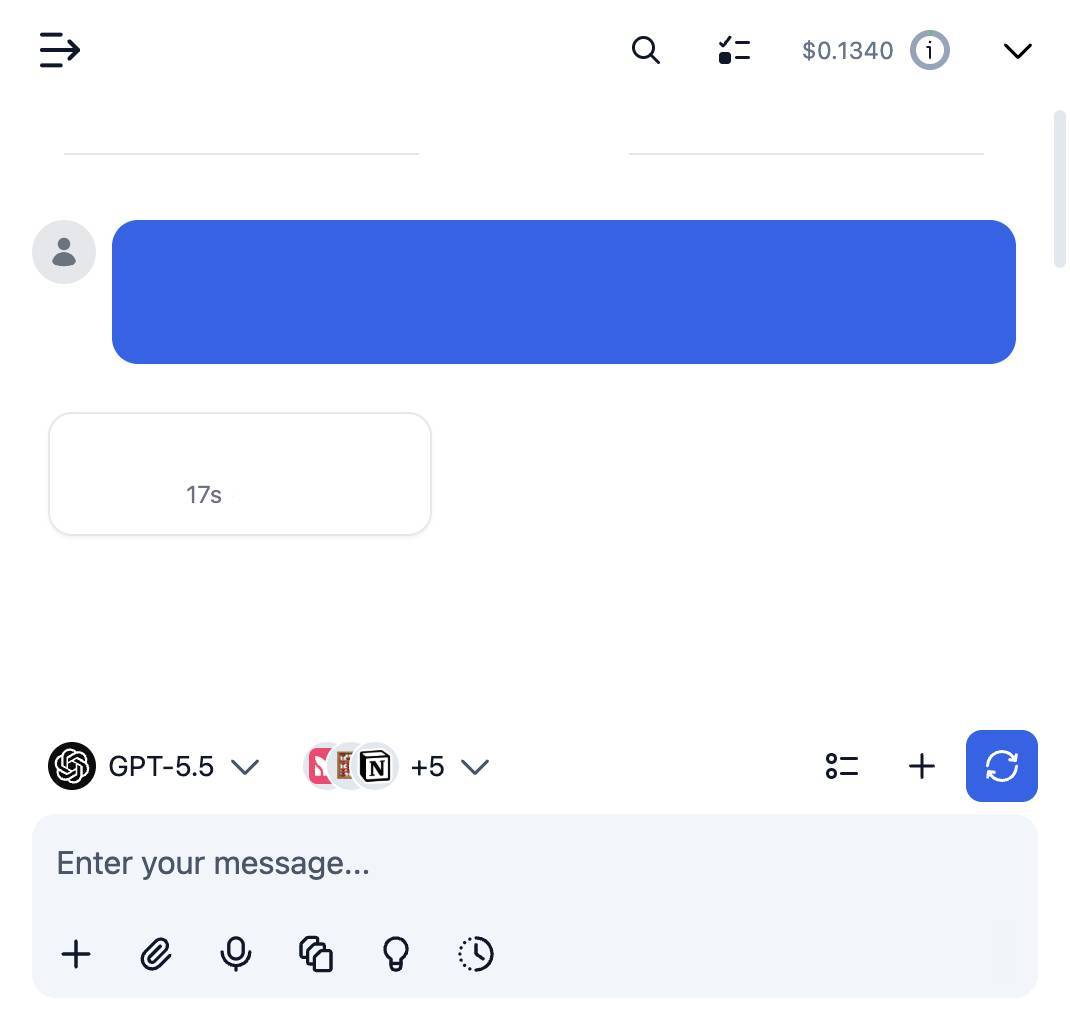
Save the server list, open Plugins, enable the Gemini Cloud Assist MCP tools, then select any supported AI model in TypingMind and use the tools in chat or assign them to an AI agent.

  1. Open the Plugins page in TypingMind.
  2. Enable the Gemini Cloud Assist MCP tools.
  3. Start a chat and choose the AI model you want to use.
  4. Use the MCP tools in chat or assign them to an AI agent.
  5. Switch to another AI model whenever needed without reconnecting MCP.
TypingMind chat using enabled MCP tools with a selected AI model
Can you use Gemini Cloud Assist to help me with this task?
Gemini Cloud Assist
Sure. I read it.
Here is what I found using Gemini Cloud Assist.

Frequently asked questions

What is the Gemini Cloud Assist MCP server used for?

Gemini Cloud Assist is an MCP server that lets compatible AI clients connect to external tools and context. In TypingMind, you can add this MCP server once and make its tools available in your AI workspace.

Can I use Gemini Cloud Assist MCP with multiple AI models in TypingMind?

Yes. TypingMind connects MCP tools at the workspace level, so you can use Gemini Cloud Assist with different AI models such as Claude, ChatGPT, Gemini, or other models you have configured in TypingMind without setting up the MCP server separately for each model.

Why use Gemini Cloud Assist MCP with TypingMind?

TypingMind is one of the best frontends for LLM chat because it brings multiple AI models, prompts, plugins, AI agents, API keys, and MCP tools into one workspace. With Gemini Cloud Assist connected, you can use its MCP tools across your preferred models while keeping your chat workflow organized in TypingMind.

How do I connect Gemini Cloud Assist MCP to TypingMind?

Gemini Cloud Assist runs through the TypingMind local MCP connector. This is best when the MCP server needs access to local files, desktop apps, command-line tools, or private resources on your computer.

What tools does Gemini Cloud Assist MCP provide in TypingMind?

Gemini Cloud Assist exposes 4 MCP tools that can be enabled from the TypingMind Plugins page and used in chat or assigned to AI agents.

Do I need to share my API keys with TypingMind to use Gemini Cloud Assist MCP?

No. TypingMind is local-first and lets you keep your model providers, API keys, prompts, and MCP configuration under your control. If Gemini Cloud Assist requires authentication, add the required headers, OAuth settings, or local configuration for that MCP server when you create the connection.

Related MCP Servers

View all

Set up your own AI workspace now

Get notified about new features and future giveaways by subscribing to our newsletter 👇