GitGuardian MCP Server logo

GitGuardian MCP Server

Organization
GitGuardian

MCP server for scanning and remediating hardcoded secrets using GitGuardian’s API. Detect over 500 secret types and prevent credential leaks before code goes public.

PublisherGitGuardian
Repositoryggmcp
LanguagePython
Forks
14
Stars
34
Available tools
0
Transport typestdio
Categories
LicenseMIT
Links
  • Connect tools to AI workflows

    GitGuardian MCP Server exposes MCP capabilities that can be used by compatible AI clients and agents.

  • 0 available tools

    Browse the callable actions below, including names and descriptions when provided by the server.

  • Ready-to-copy setup

    Use the installation snippets to configure this server in your preferred MCP client.

  • Open source signals

    34 stars and 14 forks from the linked repository.

GitGuardian MCP Server

Stay focused on building your product while your AI assistant handles the security heavy lifting with GitGuardian's comprehensive protection.

This MCP server enables your AI agent to scan projects using GitGuardian's industry-leading API, featuring over 500 secret detectors to prevent credential leaks before they reach public repositories.

Resolve security incidents without context switching to the GitGuardian console. Take advantage of rich contextual data to enhance your agent's remediation capabilities, enabling rapid resolution and automated removal of hardcoded secrets.

Disclaimer

[!CAUTION] MCP servers are an emerging and rapidly evolving technology. While they can significantly boost productivity and improve the developer experience, their use with various agents and models should always be supervised.

Agents act on your behalf and under your responsibility. Always use MCP servers from trusted sources (just as you would with any dependency), and carefully review agent actions when they interact with MCP server tools.

To better assist you in safely using this server, we have:

(1) Designed our MCP server to operate with "read-only" permissions, minimizing the access level granted to your agent. This helps ensure that, even if the agent tries to perform unintended actions, its capabilities remain limited to safe, non-destructive operations.

(2) Released this official MCP server to ensure you are using a legitimate and trusted implementation.

Features supported

  • Secret Scanning: Scan code for leaked secrets, credentials, and API keys
  • Incident Management: View security incidents related to the project you are currently working.
  • Honeytokens: Create honeytokens to detect unauthorized access
  • Authentication Management: Get authenticated user information and token details
  • Token Management: Revoke current API tokens

Want more features? Have a use case that's not covered? We'd love to hear from you! Submit your ideas and feedback by opening an issue on GitHub to help us prioritize new MCP server capabilities.

Prompts examples

Remediate all incidents related to my project

Scan this codebase for any leaked secrets or credentials

Check if there are any new security incidents assigned to me

Help me understand this security incident and provide remediation steps

List all my active honeytokens

Generate a new honeytoken for monitoring AWS credential access

Show me my most recent honeytoken and help me embed it in my codebase

Create a honeytoken named 'dev-database' and hide it in config files

Prerequisites

Before installing the GitGuardian MCP servers, ensure you have the following prerequisites:

Installation

Below are instructions for installing the GitGuardian MCP servers with various AI editors and interfaces.

The MCP server supports both GitGuardian SaaS and self-hosted instances.

Installation with Cursor

Quick Install with One-Click Buttons (Cursor >= 1.0):

For Developer MCP Server:

Install Developer MCP Server

Note: The one-click install sets up the default US SaaS configuration. For EU SaaS or self-hosted instances, you'll need to manually add environment variables as shown in the Configuration section.

Manual Configuration:

  1. Edit your Cursor MCP configuration file located at ~/.cursor/mcp.json

  2. Add the GitGuardian MCP server configuration:

    json
    {
      "mcpServers": {
        "GitGuardianDeveloper": {
          "command": "uvx",
          "args": [
            "--from",
            "git+https://github.com/GitGuardian/ggmcp.git",
            "developer-mcp-server"
          ]
        }
      }
    }

Installation with Claude Desktop

  1. Edit your Claude Desktop MCP configuration file located at:

    • macOS: ~/Library/Application Support/Claude Desktop/mcp.json
    • Windows: %APPDATA%\Claude Desktop\mcp.json
  2. Add the GitGuardian MCP server configuration:

    json
    {
      "mcpServers": {
        "GitGuardianDeveloper": {
          "command": "/path/to/uvx",
          "args": [
            "--from",
            "git+https://github.com/GitGuardian/ggmcp.git",
            "developer-mcp-server"
          ]
        }
      }
    }
  3. Replace /path/to/uvx with the absolute path to the uvx executable on your system.

    ⚠️ WARNING: For Claude Desktop, you must specify the full absolute path to the uvx executable, not just "command": "uvx". This is different from other MCP clients.

  4. Restart Claude Desktop to apply the changes.

Installation with Windsurf

To use the GitGuardian MCP server with Windsurf:

  1. Edit your Windsurf MCP configuration file located at:

    • macOS: ~/Library/Application Support/Windsurf/mcp.json
    • Windows: %APPDATA%\Windsurf\mcp.json
    • Linux: ~/.config/Windsurf/mcp.json
  2. Add the following entry to the configuration file:

    json
    {
      "mcp": {
        "servers": {
          "GitGuardianDeveloper": {
            "type": "stdio",
            "command": "uvx",
            "args": [
              "--from",
              "git+https://github.com/GitGuardian/ggmcp.git",
              "developer-mcp-server"
            ]
          }
        }
      }
    }

Installation with Zed Editor

  1. Edit your Zed MCP configuration file located at:

    • macOS: ~/Library/Application Support/Zed/mcp.json
    • Linux: ~/.config/Zed/mcp.json
  2. Add the GitGuardian MCP server configuration:

    json
    {
      "GitGuardianDeveloper": {
        "command": {
          "path": "uvx",
          "args": [
            "--from",
            "git+https://github.com/GitGuardian/ggmcp.git",
            "developer-mcp-server"
          ]
        }
      }
    }

Authentication

The GitGuardian MCP server supports multiple authentication methods depending on your deployment mode.

OAuth Authentication (Default for stdio transport)

When using stdio transport (the default for desktop IDE integrations), the server uses OAuth for authentication by default:

  1. OAuth is enabled by default (ENABLE_LOCAL_OAUTH=true) for local-first usage
  2. When you start the server, it will automatically open a browser window to authenticate with GitGuardian
  3. After you log in to GitGuardian and authorize the application, you'll be redirected back to the local server
  4. The authentication token will be securely stored in ~/.gitguardian/ for future use
  5. The next time you start the server, it will reuse the stored token without requiring re-authentication

Example configuration (OAuth is enabled by default, no need to specify):

json
{
  "mcpServers": {
    "GitGuardianDeveloper": {
      "command": "uvx",
      "args": [
        "--from",
        "git+https://github.com/GitGuardian/ggmcp.git",
        "developer-mcp-server"
      ]
    }
  }
}

To disable OAuth (e.g., for using PAT instead):

json
{
  "mcpServers": {
    "GitGuardianDeveloper": {
      "command": "uvx",
      "args": [
        "--from",
        "git+https://github.com/GitGuardian/ggmcp.git",
        "developer-mcp-server"
      ],
      "env": {
        "ENABLE_LOCAL_OAUTH": "false",
        "GITGUARDIAN_PERSONAL_ACCESS_TOKEN": "your_pat_here"
      }
    }
  }
}

Personal Access Token (PAT) Authentication

For non-interactive environments, CI/CD pipelines, or when you prefer not to use OAuth, you can authenticate using a Personal Access Token:

  1. Create a Personal Access Token in your GitGuardian dashboard
  2. Set the GITGUARDIAN_PERSONAL_ACCESS_TOKEN environment variable

Example configuration with PAT:

json
{
  "mcpServers": {
    "GitGuardianDeveloper": {
      "command": "uvx",
      "args": [
        "--from",
        "git+https://github.com/GitGuardian/ggmcp.git",
        "developer-mcp-server"
      ],
      "env": {
        "GITGUARDIAN_PERSONAL_ACCESS_TOKEN": "your_personal_access_token_here"
      }
    }
  }
}

Per-Request Authentication (HTTP/SSE transport)

When using HTTP/SSE transport (with MCP_PORT set), the server expects authentication via the Authorization header in each HTTP request. This is the recommended approach for server deployments.

Important: Since ENABLE_LOCAL_OAUTH defaults to true, you must explicitly set it to false when using HTTP/SSE mode:

bash
# Start server with HTTP transport (OAuth must be disabled)
ENABLE_LOCAL_OAUTH=false MCP_PORT=8000 MCP_HOST=127.0.0.1 uvx --from git+https://github.com/GitGuardian/ggmcp.git developer-mcp-server

# Make authenticated request
curl -X POST http://127.0.0.1:8000/tools/list \
  -H "Authorization: Bearer YOUR_PERSONAL_ACCESS_TOKEN" \
  -H "Content-Type: application/json" \
  -d '{}'

Configuration validation: The server will raise an error if both MCP_PORT and ENABLE_LOCAL_OAUTH=true are set, as HTTP/SSE mode requires per-request authentication for security reasons.

Configuration for Different GitGuardian Instances

The MCP server uses OAuth authentication and defaults to GitGuardian SaaS (US region) at https://dashboard.gitguardian.com. For other instances, you'll need to specify the URL:

Environment Variables

The following environment variables can be configured:

VariableDescriptionDefaultExample
GITGUARDIAN_URLGitGuardian instance URLhttps://dashboard.gitguardian.comhttps://dashboard.eu1.gitguardian.com
GITGUARDIAN_CLIENT_IDOAuth client IDggshield_oauthmy-custom-oauth-client
GITGUARDIAN_SCOPESOAuth scopes to requestAuto-detected based on instance typescan,incidents:read,sources:read,honeytokens:read,honeytokens:write
GITGUARDIAN_TOKEN_NAMEName for the OAuth tokenAuto-generated based on server type"Developer MCP Token"
GITGUARDIAN_TOKEN_LIFETIMEToken lifetime in days3060 or never
GITGUARDIAN_PERSONAL_ACCESS_TOKENPersonal Access Token for authentication (alternative to OAuth)Not setYOUR_PAT_TOKEN
ENABLE_LOCAL_OAUTHEnable local OAuth flow (stdio mode only, cannot be used with MCP_PORT)true (enabled by default for local-first usage)false
MCP_PORTPort for HTTP/SSE transport (when set, enables HTTP transport instead of stdio, requires ENABLE_LOCAL_OAUTH=false)Not set (uses stdio)8000
MCP_HOSTHost address for HTTP/SSE transport127.0.0.10.0.0.0

HTTP/SSE Transport

By default, the MCP server uses stdio transport for local IDE integrations. If you need to expose the MCP server over HTTP (for remote access or custom integrations), you can use the MCP_PORT and MCP_HOST environment variables.

Enabling HTTP Transport

To enable HTTP/SSE transport, set the MCP_PORT environment variable. Important: You must also set ENABLE_LOCAL_OAUTH=false since OAuth defaults to enabled:

json
{
  "mcpServers": {
    "GitGuardianDeveloper": {
      "command": "uvx",
      "args": [
        "--from",
        "git+https://github.com/GitGuardian/ggmcp.git",
        "developer-mcp-server"
      ],
      "env": {
        "ENABLE_LOCAL_OAUTH": "false",
        "MCP_PORT": "8000",
        "MCP_HOST": "127.0.0.1"
      }
    }
  }
}

Running the server directly with HTTP transport

You can also run the server directly with HTTP transport:

bash
# Run with HTTP transport (must disable OAuth)
ENABLE_LOCAL_OAUTH=false MCP_PORT=8000 MCP_HOST=127.0.0.1 uvx --from git+https://github.com/GitGuardian/ggmcp.git developer-mcp-server

The server will automatically start on http://127.0.0.1:8000 and be accessible for remote integrations.

Authentication via Authorization Header

When using HTTP/SSE transport, authentication is done via the Authorization header on each request. See the Per-Request Authentication section for detailed configuration.

Supported header formats:

  • Authorization: Bearer <token>
  • Authorization: Token <token>
  • Authorization: <token>

Example using curl:

bash
# List available tools
curl -X POST http://127.0.0.1:8000/tools/list \
  -H "Authorization: Bearer YOUR_PERSONAL_ACCESS_TOKEN" \
  -H "Content-Type: application/json" \
  -d '{}'

# Call a tool
curl -X POST http://127.0.0.1:8000/tools/call \
  -H "Authorization: Bearer YOUR_PERSONAL_ACCESS_TOKEN" \
  -H "Content-Type: application/json" \
  -d '{"name": "get_authenticated_user_info", "arguments": {}}'

Example using Python:

python
import httpx

headers = {
    "Authorization": "Bearer YOUR_PERSONAL_ACCESS_TOKEN",
    "Content-Type": "application/json"
}

async with httpx.AsyncClient() as client:
    response = await client.post(
        "http://127.0.0.1:8000/tools/list",
        headers=headers,
        json={}
    )
    tools = response.json()

Authentication Priority:

When using HTTP transport, the authentication priority is:

  1. Authorization header (if present in the HTTP request) - recommended for HTTP/SSE mode
  2. GITGUARDIAN_PERSONAL_ACCESS_TOKEN environment variable - fallback option

Note that OAuth (ENABLE_LOCAL_OAUTH=true) is not supported in HTTP/SSE mode for security reasons. Each HTTP request must include its own authentication credentials.

Notes:

  • uvicorn is included as a dependency - no additional installation needed.
  • When MCP_PORT is not set, the server uses stdio transport (default behavior).
  • MCP_HOST defaults to 127.0.0.1 (localhost only). Use 0.0.0.0 to allow connections from any network interface.
  • The HTTP/SSE transport is useful for remote access, but stdio is recommended for local IDE integrations.
  • Each HTTP request can have its own Authorization header, allowing multi-tenant use cases.

Self-Hosted GitGuardian

For self-hosted GitGuardian instances, add the GITGUARDIAN_URL environment variable to your MCP configuration:

json
{
  "mcpServers": {
    "GitGuardianDeveloper": {
      "command": "uvx",
      "args": ["--from", "git+https://github.com/GitGuardian/ggmcp.git", "developer-mcp-server"],
      "env": {
        "GITGUARDIAN_URL": "https://dashboard.gitguardian.mycorp.local"
      }
    }
  }
}

Self-Hosted with Honeytoken Support

If your self-hosted instance has honeytokens enabled and your user has the required permissions ("manager" role), you can explicitly request honeytoken scopes:

json
{
  "mcpServers": {
    "GitGuardianDeveloper": {
      "command": "uvx",
      "args": ["--from", "git+https://github.com/GitGuardian/ggmcp.git", "developer-mcp-server"],
      "env": {
        "GITGUARDIAN_URL": "https://dashboard.gitguardian.mycorp.local",
        "GITGUARDIAN_SCOPES": "scan,incidents:read,sources:read,honeytokens:read,honeytokens:write"
      }
    }
  }
}

GitGuardian EU Instance

For the GitGuardian EU instance, use:

json
{
  "mcpServers": {
    "GitGuardianDeveloper": {
      "command": "uvx",
      "args": ["--from", "git+https://github.com/GitGuardian/ggmcp.git", "developer-mcp-server"],
      "env": {
        "GITGUARDIAN_URL": "https://dashboard.eu1.gitguardian.com"
      }
    }
  }
}

Custom OAuth Client

If you have your own OAuth application configured in GitGuardian, you can specify a custom client ID:

json
{
  "mcpServers": {
    "GitGuardianDeveloper": {
      "command": "uvx",
      "args": ["--from", "git+https://github.com/GitGuardian/ggmcp.git", "developer-mcp-server"],
      "env": {
        "GITGUARDIAN_CLIENT_ID": "my-custom-oauth-client"
      }
    }
  }
}

Development

If you want to contribute to this project or add new tools, please see the Development Guide.

Testing

This project includes a comprehensive test suite to ensure functionality and prevent regressions.

Running Tests

  1. Install development dependencies:

    bash
    uv sync --dev
  2. Run the test suite:

    bash
    ENABLE_LOCAL_OAUTH=false uv run pytest

    Note: Tests disable OAuth by default via the ENABLE_LOCAL_OAUTH=false environment variable to prevent OAuth prompts during test execution.

  3. Run tests with verbose output:

    bash
    ENABLE_LOCAL_OAUTH=false uv run pytest -v
  4. Run tests with coverage:

    bash
    ENABLE_LOCAL_OAUTH=false uv run pytest --cov=packages --cov-report=html

This will run all tests and generate a coverage report showing which parts of the codebase are covered by tests.

Installation

TypingMind
Prerequisites:

Node.js 18+

{
  "mcpServers": {
    "GitGuardianDeveloper": {
      "command": "uvx",
      "args": [
        "--from",
        "git+https://github.com/GitGuardian/ggmcp.git",
        "developer-mcp-server"
      ]
    }
  }
}

Use GitGuardian MCP Server MCP with multiple AI models

TypingMind connects MCP tools at the workspace level, so once GitGuardian MCP Server is connected, you can use it with different AI models in TypingMind instead of setting it up separately for each model. This MCP runs locally through the TypingMind MCP connector on your device.

Setup guide to use the local connector

Use this when the MCP server needs access to local files, apps, or private resources on your computer.

1

Open the MCP settings

In TypingMind, go to Settings, Advanced Settings, then Model Context Protocol and choose Setup Connector.

  1. Open TypingMind in your browser.
  2. Click the Settings icon.
  3. Go to Advanced Settings.
  4. Open the Model Context Protocol section.
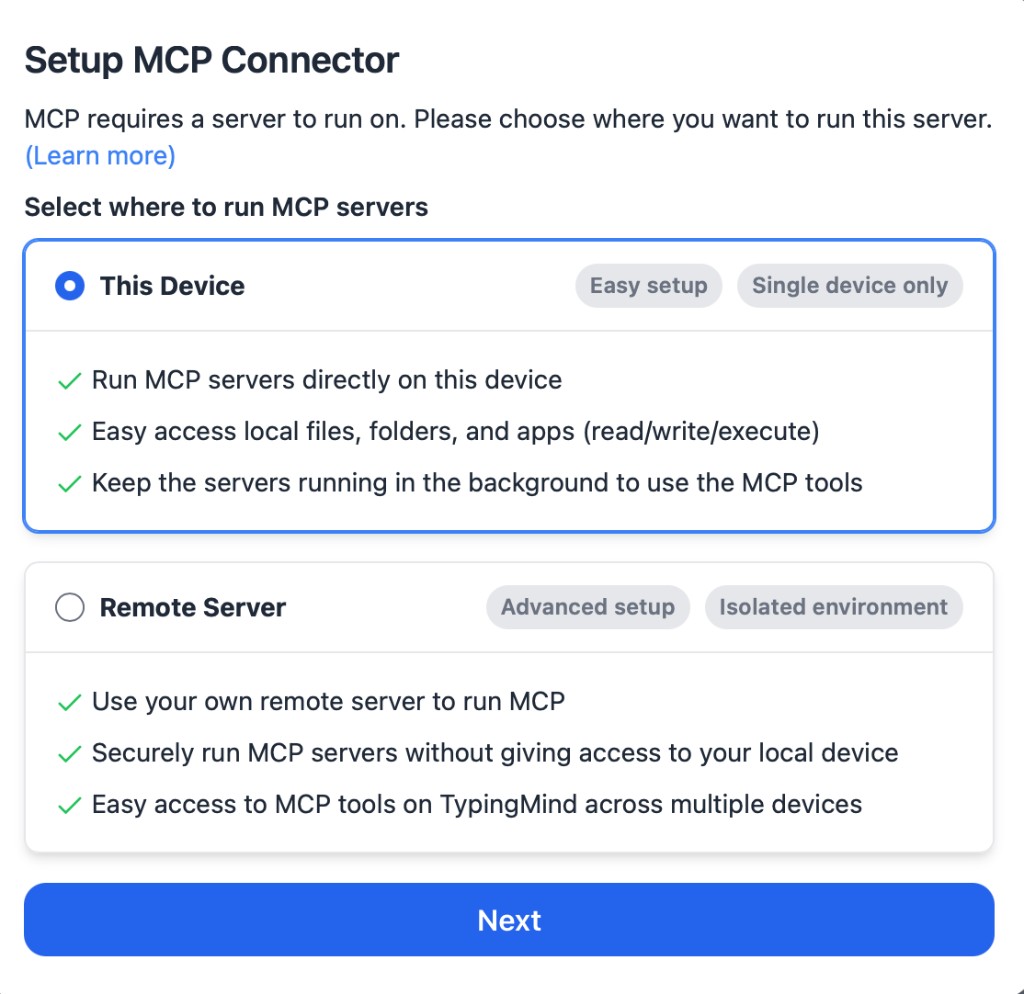
  5. Click Setup Connector and choose This Device.
TypingMind MCP connector setup screen with This Device selected
2

Run the connector command

Choose This Device, copy the command from TypingMind, and run it in Terminal. Keep the process running while you use MCP.

  1. Copy the setup command shown by TypingMind.
  2. Open Terminal on macOS or Windows Terminal on Windows.
  3. Paste and run the command.
  4. Approve the package install if Terminal asks you to proceed.
  5. Keep the Terminal window running while using MCP tools.
3

Add GitGuardian MCP Server as a server

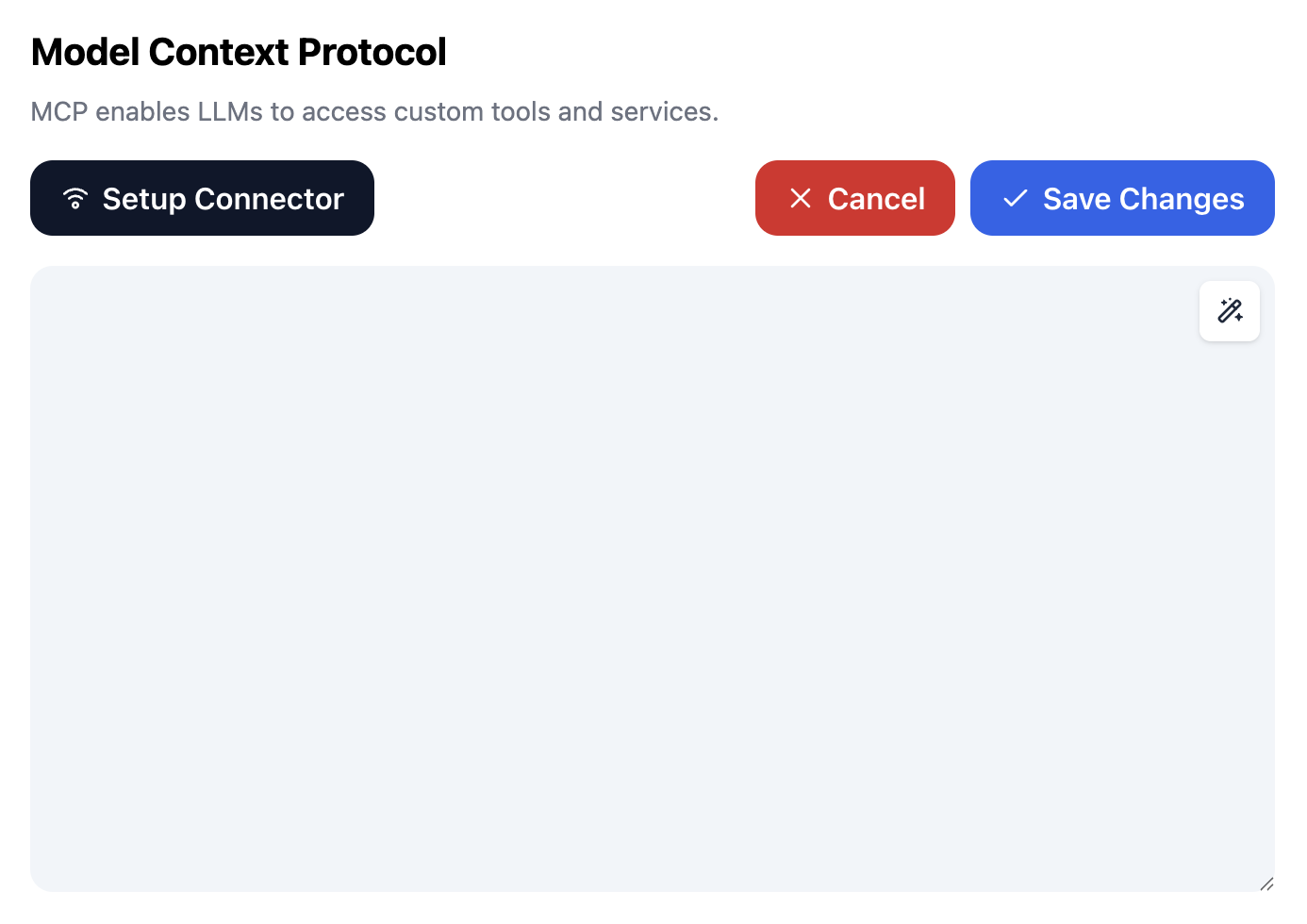
When the connector status is Ready, click Edit Servers and paste the MCP server configuration.

  1. Wait until the connector status shows Ready.
  2. Click Edit Servers.
  3. Paste the GitGuardian MCP Server MCP server configuration.
  4. Save the server list.
  5. Refresh if you want to confirm the connector is still ready.
TypingMind MCP settings showing active server and Edit Servers button
{
  "mcpServers": {
    "gitguardian-mcp-server": {
      "command": "npx",
      "args": [
        "-y",
        "git+https://github.com/GitGuardian/ggmcp.git"
      ]
    }
  }
}
4

Use it across models

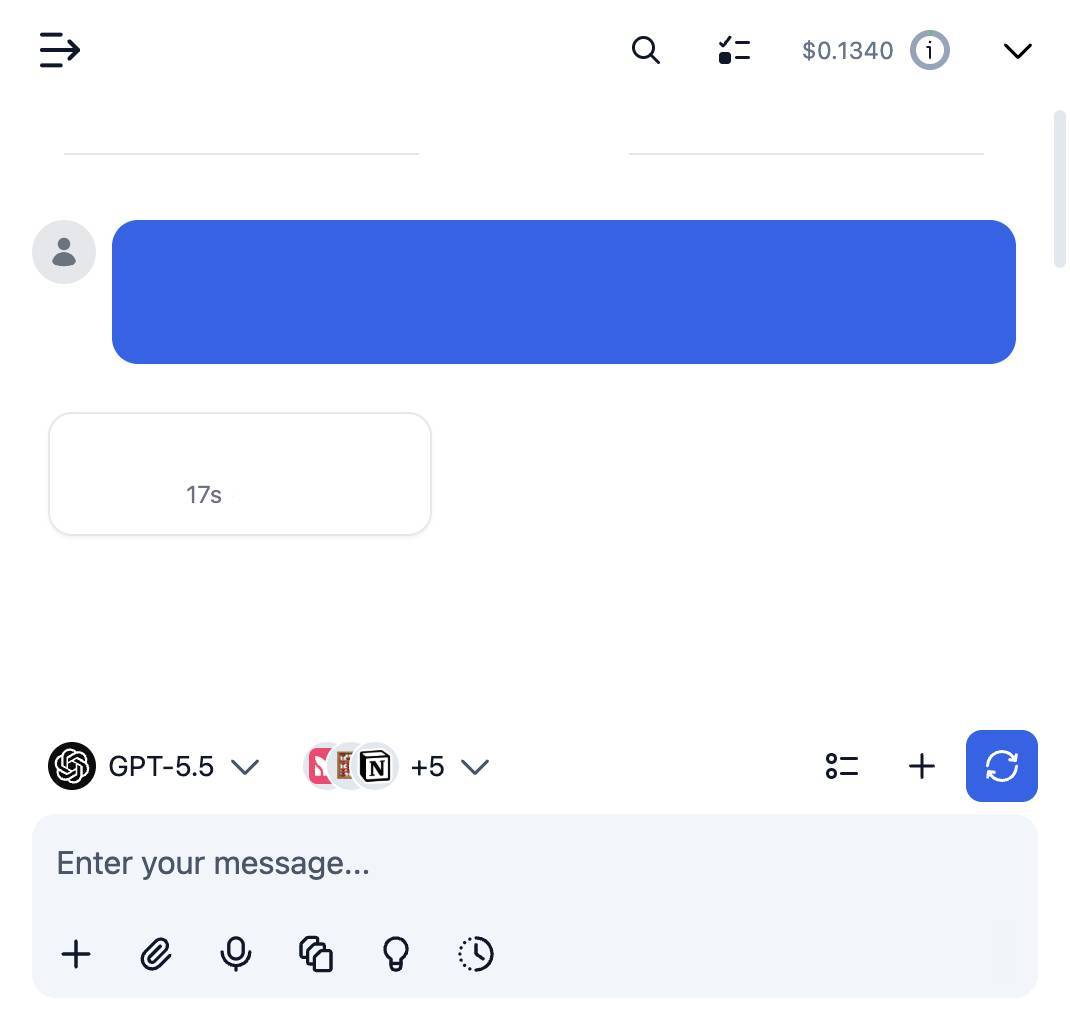
Save the server list, open Plugins, enable the GitGuardian MCP Server MCP tools, then select any supported AI model in TypingMind and use the tools in chat or assign them to an AI agent.

  1. Open the Plugins page in TypingMind.
  2. Enable the GitGuardian MCP Server MCP tools.
  3. Start a chat and choose the AI model you want to use.
  4. Use the MCP tools in chat or assign them to an AI agent.
  5. Switch to another AI model whenever needed without reconnecting MCP.
TypingMind chat using enabled MCP tools with a selected AI model
Can you use GitGuardian MCP Server to help me with this task?
GitGuardian MCP Server
Sure. I read it.
Here is what I found using GitGuardian MCP Server.

Frequently asked questions

What is the GitGuardian MCP Server MCP server used for?

GitGuardian MCP Server is an MCP server that lets compatible AI clients connect to external tools and context. In TypingMind, you can add this MCP server once and make its tools available in your AI workspace.

Can I use GitGuardian MCP Server MCP with multiple AI models in TypingMind?

Yes. TypingMind connects MCP tools at the workspace level, so you can use GitGuardian MCP Server with different AI models such as Claude, ChatGPT, Gemini, or other models you have configured in TypingMind without setting up the MCP server separately for each model.

Why use GitGuardian MCP Server MCP with TypingMind?

TypingMind is one of the best frontends for LLM chat because it brings multiple AI models, prompts, plugins, AI agents, API keys, and MCP tools into one workspace. With GitGuardian MCP Server connected, you can use its MCP tools across your preferred models while keeping your chat workflow organized in TypingMind.

How do I connect GitGuardian MCP Server MCP to TypingMind?

GitGuardian MCP Server runs through the TypingMind local MCP connector. This is best when the MCP server needs access to local files, desktop apps, command-line tools, or private resources on your computer.

What tools does GitGuardian MCP Server MCP provide in TypingMind?

GitGuardian MCP Server exposes MCP capabilities that can be enabled from the TypingMind Plugins page and used in chat or assigned to AI agents.

Do I need to share my API keys with TypingMind to use GitGuardian MCP Server MCP?

No. TypingMind is local-first and lets you keep your model providers, API keys, prompts, and MCP configuration under your control. If GitGuardian MCP Server requires authentication, add the required headers, OAuth settings, or local configuration for that MCP server when you create the connection.

Related MCP Servers

View all

Set up your own AI workspace now

Get notified about new features and future giveaways by subscribing to our newsletter 👇