Google Analytics MCP logo

Google Analytics MCP

OrganizationPopular
googleanalytics

This repo contains the source code for running a local

Publishergoogleanalytics
Repositorygoogle-analytics-mcp
LanguagePython
Forks
699
Stars
3.3K
Available tools
0
Transport typestdio
Categories
LicenseApache-2.0
Links
  • Connect tools to AI workflows

    Google Analytics MCP exposes MCP capabilities that can be used by compatible AI clients and agents.

  • 0 available tools

    Browse the callable actions below, including names and descriptions when provided by the server.

  • Ready-to-copy setup

    Use the installation snippets to configure this server in your preferred MCP client.

  • Open source signals

    3.3K stars and 699 forks from the linked repository.

Google Analytics MCP Server (Experimental)

PyPI version Python 3.10+ GitHub branch check runs PyPI - Downloads GitHub stars GitHub forks YouTube Video Views

This repo contains the source code for running a local MCP server that interacts with APIs for Google Analytics.

Join the discussion and ask questions in the 🤖-analytics-mcp channel on Discord.

Tools 🛠️

The server uses the Google Analytics Admin API and Google Analytics Data API to provide several Tools for use with LLMs.

Retrieve account and property information 🟠

  • get_account_summaries: Retrieves information about the user's Google Analytics accounts and properties.
  • get_property_details: Returns details about a property.
  • list_google_ads_links: Returns a list of links to Google Ads accounts for a property.

Run core reports 📙

  • run_report: Runs a Google Analytics report using the Data API.
  • run_funnel_report: Runs a Google Analytics funnel report using the Data API.
  • get_custom_dimensions_and_metrics: Retrieves the custom dimensions and metrics for a specific property.

Run realtime reports ⏳

  • run_realtime_report: Runs a Google Analytics realtime report using the Data API.

Setup instructions 🔧

✨ Watch the Google Analytics MCP Setup Tutorial on YouTube for a step-by-step walkthrough of these instructions.
Watch the video

Setup involves the following steps:

  1. Configure Python.
  2. Configure credentials for Google Analytics.
  3. Configure Gemini.

Configure Python 🐍

Install pipx.

Enable APIs in your project ✅

Follow the instructions to enable the following APIs in your Google Cloud project:

Configure credentials 🔑

Configure your Application Default Credentials (ADC). Make sure the credentials are for a user with access to your Google Analytics accounts or properties.

Credentials must include the Google Analytics read-only scope:

https://www.googleapis.com/auth/analytics.readonly

Check out Manage OAuth Clients for how to create an OAuth client.

Here are some sample gcloud commands you might find useful:

  • Set up ADC using user credentials and an OAuth desktop or web client after downloading the client JSON to YOUR_CLIENT_JSON_FILE.

    shell
    gcloud auth application-default login \
      --scopes https://www.googleapis.com/auth/analytics.readonly,https://www.googleapis.com/auth/cloud-platform \
      --client-id-file=YOUR_CLIENT_JSON_FILE
  • Set up ADC using service account impersonation.

    shell
    gcloud auth application-default login \
      --impersonate-service-account=SERVICE_ACCOUNT_EMAIL \
      --scopes=https://www.googleapis.com/auth/analytics.readonly,https://www.googleapis.com/auth/cloud-platform

When the gcloud auth application-default command completes, copy the PATH_TO_CREDENTIALS_JSON file location printed to the console in the following message. You'll need this for the next step!

Credentials saved to file: [PATH_TO_CREDENTIALS_JSON]

Configure Gemini

  1. Install Gemini CLI or Gemini Code Assist.

  2. Create or edit the file at ~/.gemini/settings.json, adding your server to the mcpServers list.

    Replace PATH_TO_CREDENTIALS_JSON with the path you copied in the previous step.

    We also recommend that you add a GOOGLE_CLOUD_PROJECT attribute to the env object. Replace YOUR_PROJECT_ID in the following example with the project ID of your Google Cloud project.

    json
    {
      "mcpServers": {
        "analytics-mcp": {
          "command": "pipx",
          "args": ["run", "analytics-mcp"],
          "env": {
            "GOOGLE_APPLICATION_CREDENTIALS": "PATH_TO_CREDENTIALS_JSON",
            "GOOGLE_PROJECT_ID": "YOUR_PROJECT_ID"
          }
        }
      }
    }

Configure Claude Code

  1. Add the MCP server with the following command:

    Replace PATH_TO_CREDENTIALS_JSON with the path you copied in the previous step, and replace YOUR_PROJECT_ID with the project ID of your Google Cloud project.

    shell
    claude mcp add analytics-mcp \
      --scope user \
      -e "GOOGLE_APPLICATION_CREDENTIALS=PATH_TO_CREDENTIALS_JSON" \
      -e "GOOGLE_PROJECT_ID=YOUR_PROJECT_ID" \
      -- pipx run analytics-mcp

Try it out 🥼

Launch Gemini Code Assist or Gemini CLI and type /mcp. You should see analytics-mcp listed in the results.

Here are some sample prompts to get you started:

  • Ask what the server can do:

    what can the analytics-mcp server do?
  • Ask about a Google Analytics property

    Give me details about my Google Analytics property with 'xyz' in the name
  • Prompt for analysis:

    what are the most popular events in my Google Analytics property in the last 180 days?
  • Ask about signed-in users:

    were most of my users in the last 6 months logged in?
  • Ask about property configuration:

    what are the custom dimensions and custom metrics in my property?

Contributing ✨

Contributions welcome! See the Contributing Guide.
Installation

TypingMind
{
  "mcpServers": {
    "google-analytics-mcp": {
      "command": "pipx",
      "args": [
        "run",
        "analytics-mcp"
      ],
      "env": {
        "GOOGLE_APPLICATION_CREDENTIALS": "<GOOGLE_APPLICATION_CREDENTIALS>",
        "GOOGLE_PROJECT_ID": "<GOOGLE_PROJECT_ID>"
      }
    }
  }
}

Use Google Analytics MCP MCP with multiple AI models

TypingMind connects MCP tools at the workspace level, so once Google Analytics MCP is connected, you can use it with different AI models in TypingMind instead of setting it up separately for each model. This MCP runs locally through the TypingMind MCP connector on your device.

Setup guide to use the local connector

Use this when the MCP server needs access to local files, apps, or private resources on your computer.

1

Open the MCP settings

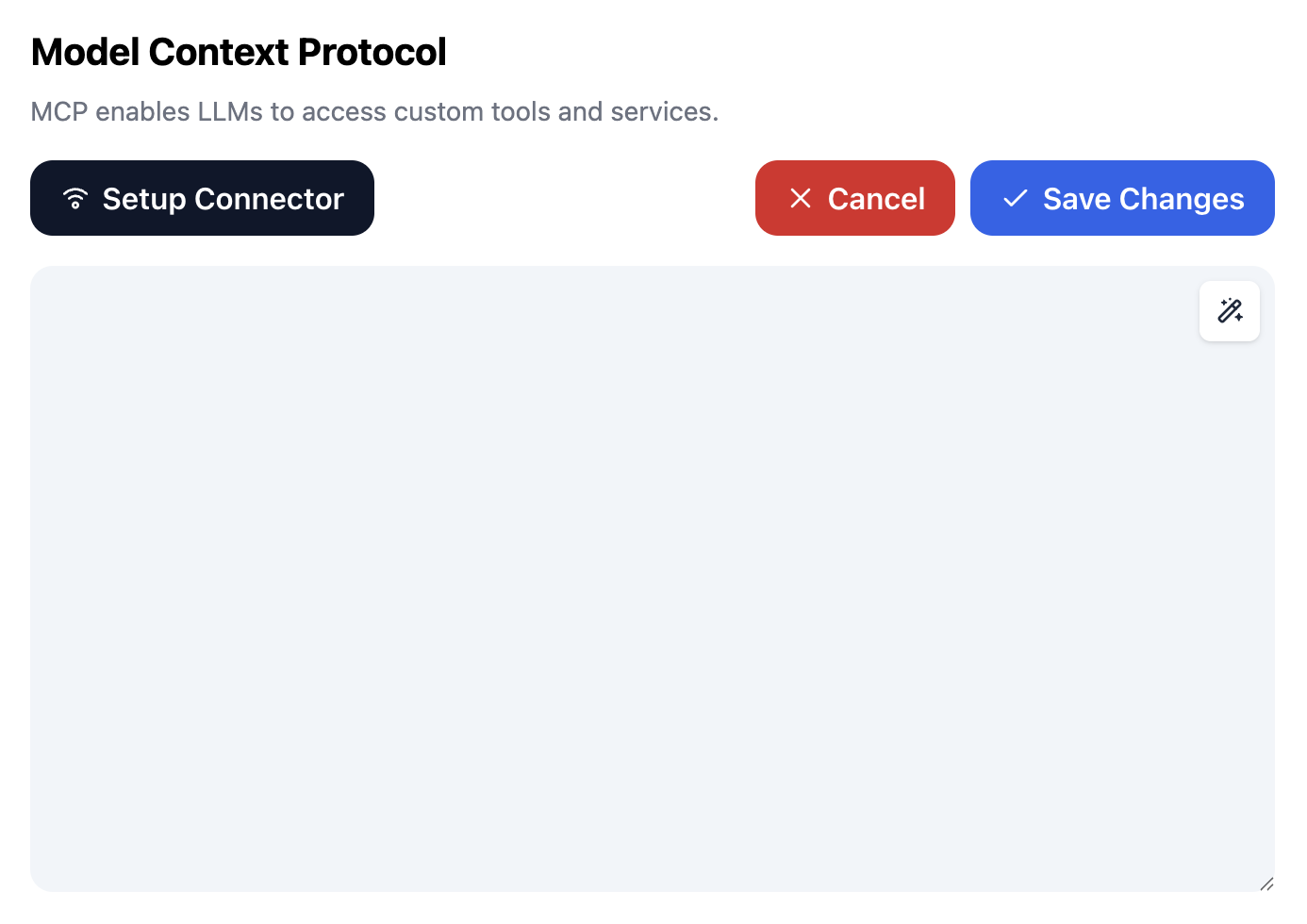
In TypingMind, go to Settings, Advanced Settings, then Model Context Protocol and choose Setup Connector.

  1. Open TypingMind in your browser.
  2. Click the Settings icon.
  3. Go to Advanced Settings.
  4. Open the Model Context Protocol section.
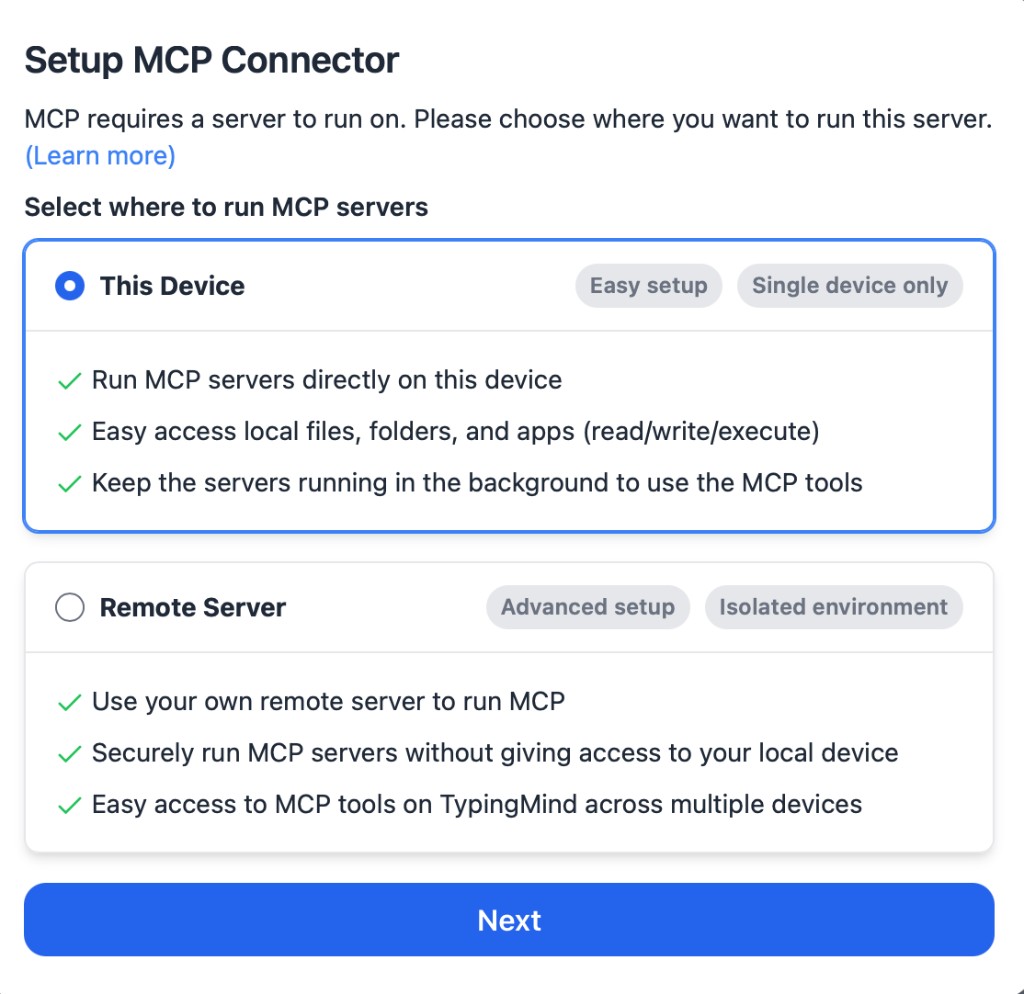
  5. Click Setup Connector and choose This Device.
TypingMind MCP connector setup screen with This Device selected
2

Run the connector command

Choose This Device, copy the command from TypingMind, and run it in Terminal. Keep the process running while you use MCP.

  1. Copy the setup command shown by TypingMind.
  2. Open Terminal on macOS or Windows Terminal on Windows.
  3. Paste and run the command.
  4. Approve the package install if Terminal asks you to proceed.
  5. Keep the Terminal window running while using MCP tools.
3

Add Google Analytics MCP as a server

When the connector status is Ready, click Edit Servers and paste the MCP server configuration.

  1. Wait until the connector status shows Ready.
  2. Click Edit Servers.
  3. Paste the Google Analytics MCP MCP server configuration.
  4. Save the server list.
  5. Refresh if you want to confirm the connector is still ready.
TypingMind MCP settings showing active server and Edit Servers button
{
  "mcpServers": {
    "google-analytics-mcp": {
      "command": "npx",
      "args": [
        "-y",
        "<mcp-server-package>"
      ]
    }
  }
}
4

Use it across models

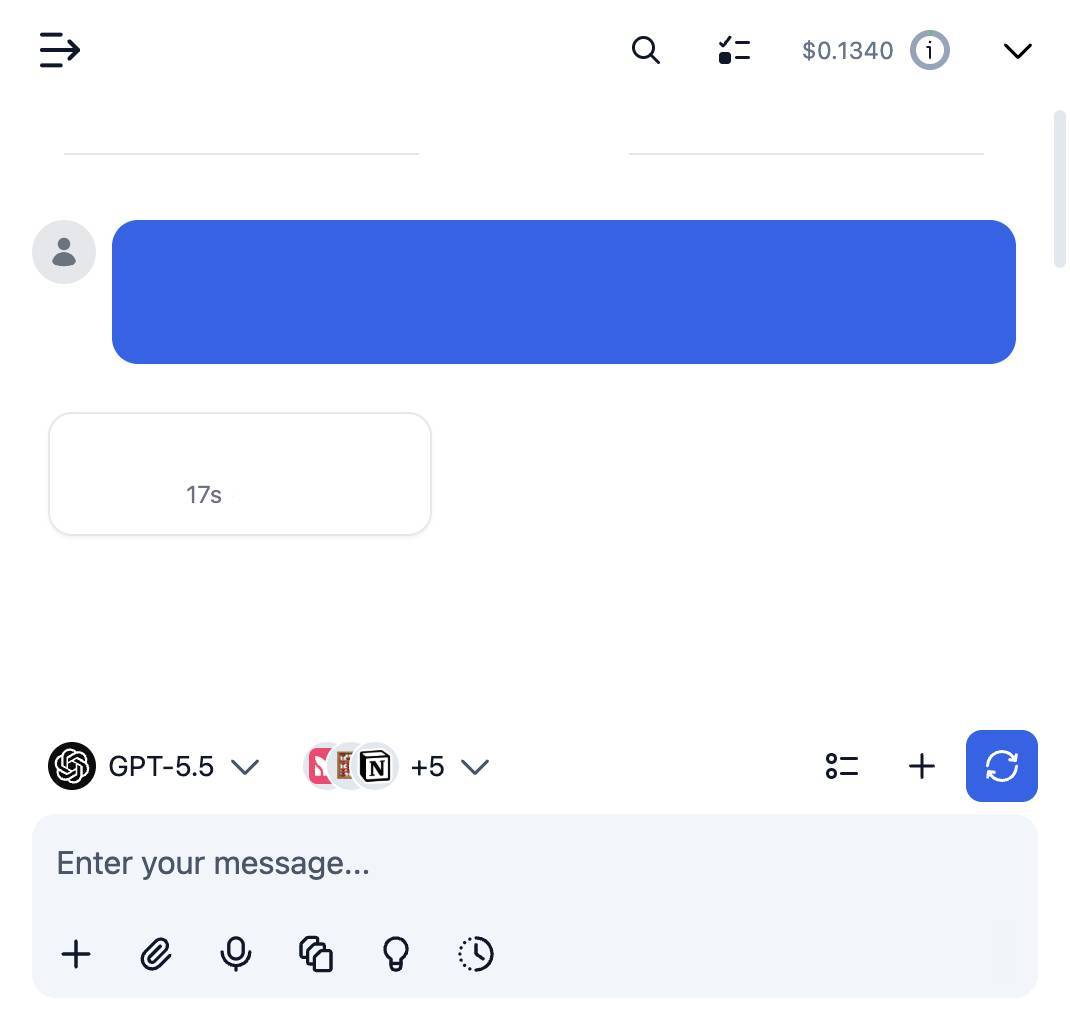
Save the server list, open Plugins, enable the Google Analytics MCP MCP tools, then select any supported AI model in TypingMind and use the tools in chat or assign them to an AI agent.

  1. Open the Plugins page in TypingMind.
  2. Enable the Google Analytics MCP MCP tools.
  3. Start a chat and choose the AI model you want to use.
  4. Use the MCP tools in chat or assign them to an AI agent.
  5. Switch to another AI model whenever needed without reconnecting MCP.
TypingMind chat using enabled MCP tools with a selected AI model
Can you use Google Analytics MCP to help me with this task?
Google Analytics MCP
Sure. I read it.
Here is what I found using Google Analytics MCP.

Frequently asked questions

What is the Google Analytics MCP MCP server used for?

Google Analytics MCP is an MCP server that lets compatible AI clients connect to external tools and context. In TypingMind, you can add this MCP server once and make its tools available in your AI workspace.

Can I use Google Analytics MCP MCP with multiple AI models in TypingMind?

Yes. TypingMind connects MCP tools at the workspace level, so you can use Google Analytics MCP with different AI models such as Claude, ChatGPT, Gemini, or other models you have configured in TypingMind without setting up the MCP server separately for each model.

Why use Google Analytics MCP MCP with TypingMind?

TypingMind is one of the best frontends for LLM chat because it brings multiple AI models, prompts, plugins, AI agents, API keys, and MCP tools into one workspace. With Google Analytics MCP connected, you can use its MCP tools across your preferred models while keeping your chat workflow organized in TypingMind.

How do I connect Google Analytics MCP MCP to TypingMind?

Google Analytics MCP runs through the TypingMind local MCP connector. This is best when the MCP server needs access to local files, desktop apps, command-line tools, or private resources on your computer.

What tools does Google Analytics MCP MCP provide in TypingMind?

Google Analytics MCP exposes MCP capabilities that can be enabled from the TypingMind Plugins page and used in chat or assigned to AI agents.

Do I need to share my API keys with TypingMind to use Google Analytics MCP MCP?

No. TypingMind is local-first and lets you keep your model providers, API keys, prompts, and MCP configuration under your control. If Google Analytics MCP requires authentication, add the required headers, OAuth settings, or local configuration for that MCP server when you create the connection.

Related MCP Servers

View all

Set up your own AI workspace now

Get notified about new features and future giveaways by subscribing to our newsletter 👇