InfraNodus MCP Server
A Model Context Protocol (MCP) server that integrates InfraNodus knowledge graph and text network analysis capabilities into LLM workflows and AI assistants like Claude Desktop.

Available on npm: https://www.npmjs.com/package/infranodus-mcp-server
Overview
InfraNodus MCP Server enables LLM workflows and AI assistants to analyze text using advanced network science algorithms, generate knowledge graphs, detect content gaps, and identify key topics and concepts. It transforms unstructured text into structured insights using graph theory and network analysis.

Features
You Can Use It To
- Connect your existing InfraNodus knowledge graphs to your LLM workflows and AI chats
- Identify the main topical clusters in discourse without missing the important nuances (works better than standard LLM workflows)
- Identify the content gaps in any discourse (helpful for content creation and research)
- Generate new knowledge graphs from any text and use them to augment your LLM responses
- Save and retrieve entities and relations from memory using the knowledge graphs
Available Tools
-
generate_knowledge_graph
- Convert any text into a visual knowledge graph
- Extract topics, concepts, and their relationships
- Identify structural patterns and clusters
- Apply AI-powered topic naming
- Perform entity detection for cleaner graphs
-
analyze_existing_graph_by_name
- Retrieve and analyze existing graphs from your InfraNodus account
- Access previously saved analyses
- Export graph data with full statistics
-
analyze_text
- Analyze a text, URL, or YouTube transcript
- Extract and analyze a graph from text or URL; provide either text or url
- Get topics, clusters, statements, graph structure, and AI summary as requested
-
generate_content_gaps
- Detect missing connections in discourse
- Identify underexplored topics
- Generate research questions
- Suggest content development opportunities
-
generate_topical_clusters
- Generate topics and clusters of keywords from text using knowledge graph analysis
- Make sure to beyond genetic insights and detect smaller topics
- Use the topical clusters to establish topical authority for SEO
- Returns AI-generated overviews of the topical clusters (
topicalClusterSummaries), summarizing the discourse each cluster represents — useful for SEO-optimized content creation. Enabled by default; setgenerateTopicalSummaries: falseto increase processing speed or if the summary request fails
-
generate_contextual_hint
- Generate a topical overview of a text and provide insights for LLMs to generate better responses
- Use it to get a high-level understanding of a text
- Use it to augment prompts in your LLM workflows and AI assistants
-
generate_research_questions
- Generate research questions that bridge content gaps from text, URL, or an existing InfraNodus graph
- Use them as prompts in your LLM models and AI workflows
- Use any AI model (included in InfraNodus API)
- Content gaps are identified based on topical clustering
-
generate_research_ideas
- Generate innovative research ideas based on content gaps identified in the text
- Get actionable ideas to improve the text and develop the discourse
- Use any AI model (included in InfraNodus API)
- Ideas are generated from gaps between topical clusters
-
optimize_text_structure
- Analyze the level of bias and coherence in text using knowledge graph analysis
- If the text is too biased, develop the represented topics to balance the discourse
- If the text is focused or diversified, develop the content gaps to deepen the analysis
- If the text is dispersed, focus the most common gap topics to improve coherence
- Choose response type: response, idea, question, or transcend
-
optimize_reasoning
- Applies the same bias/coherence analysis to the model's own reasoning trace or chat with the user (pass it as
text) - Detects whether the reasoning is biased, focused, diversified, or dispersed
- Steers the reasoning toward optimal diversity and coherence at the same time
- If too biased, develop the under-represented topics; if focused or diversified, bridge the content gaps; if dispersed, focus the most common gap topics
- Returns a structural diagnosis (diversity stats, topical clusters, gaps) plus suggestions for how to continue thinking
- Applies the same bias/coherence analysis to the model's own reasoning trace or chat with the user (pass it as
-
generate_responses_from_graph
- Generate responses based on an existing InfraNodus graph
- Integrate them into your LLM workflows and AI assistants
- Use any AI model (included in InfraNodus API)
- Use any prompt
-
develop_conceptual_bridges
- Analyze text and develop latent ideas based on concepts that connect this text to a broader discourse
- Discover hidden themes and patterns that link your text to wider contexts
- Use any AI model (included in InfraNodus API)
- Generate insights that help develop the discourse
-
develop_latent_topics
- Analyze text and extract underdeveloped topics with ideas on how to develop them
- Identify topics that need more attention and elaboration
- Use any AI model (included in InfraNodus API)
- Get actionable suggestions for content expansion
-
develop_text_tool
- Comprehensive text analysis combining content gap ideas, latent topics, and conceptual bridges
- Executes multiple analyses in sequence with progress tracking
- Generates research ideas based on content gaps
- Identifies latent topics and conceptual bridges to develop
- Finds content gaps for deeper exploration
-
create_knowledge_graph
- Create a knowledge graph in InfraNodus from text and provide a link to it
- Use it to create a knowledge graph in InfraNodus from text
- Also accepts
statements(discrete items) with parallelcategoriesandtimestamps. Categories are stored as metadata on each statement (filter, group, delete, or relabel by them) and stay out of the graph unlesscategoriesAsNodes: true, which turns each label into a[[label]]node — meant for large knowledge bases and Obsidian vaults where the connections between pages are the point. The parent modes ofwikilinksMode(obsidianStyle,parentAndConcepts) always make the parent page a node
-
generate_ontology_graph
- Use AI to generate a reasoning ontology graph (entities and the relations between them) from one of three sources: a
prompt(a topic — e.g. "build an ontology on AI attention mechanisms"), atext(a long document or a structural digest of a project, chunked server-side), or asourceGraphName(an existing graph — e.g. a fully ingested repo or corpus — whose statements are read back, chunked, and condensed into an ontology) ontologyMode: 'codebase'frames the extraction around modules, functions, data stores, services, and the concepts they implement;ontologyMode: 'procedural'writes a digest instead — prose statements on how the project works with[[wikilinks]], each typed as[principles],[rules],[procedures],[handoffs],[main_ideas]or[gaps](saved as the statement's category), from an already-uploaded docs/structure graph; save it asrepo-<project>-digestforoptimize_knowledge_base;chunkSize(default 12000 chars) controls granularity; every chunk appends to the same graph and the response reportschunksProcessed/chunksTotal- Saved as a persistent InfraNodus graph by default and a link is returned; set
saveGraph: falseif the user asks not to save, or when you only need a one-off AI ontology overview of a topic for the current context that won't be reused later (the generated statements are returned directly without persisting) modelToUsedefaults toclaude-opus-5for richer ontologies (alsoclaude-fable-5,gpt-5.6-terra); pick-mini/-litevariants (orgpt-4o-mini) for faster, cheaper generation- Returns the compact graph structure (
knowledgeGraph) and analytics (main topical clusters, content gaps, top influential nodes, top relations, statistics) by default. SetincludeGraph: falseto save context space when only the ontology statements or insights are needed. SetincludeAnalytics: falseif you just need the raw ontology without graph-derived insights — keep it on whenever you want to understand the structure, gaps, or key concepts
- Use AI to generate a reasoning ontology graph (entities and the relations between them) from one of three sources: a
-
analyze_llm_results
- Ask an LLM to describe a topic and turn its response into a knowledge graph that reveals how the model frames it — main concepts, clusters, content gaps, and the relations between them
- Use it to probe model bias, surface the implicit structure of an LLM's view on a subject, or compare how different models describe the same topic
modelToUsedefaults toclaude-opus-5; pick the model you actually want to studymodifyAnalyzedTextcontrols how the LLM output is parsed:'detectEntities'(default — mixed entities + words),'extractEntitiesOnly'(entity-only graph), or'none'(plain co-occurrence)- Saves the graph by default; set
saveGraph: falsefor a one-off probe. Returns analytics by default and omits the raw graph (includeGraph: false) to keep responses compact — enableincludeGraphwhen you also need nodes/edges
-
overlap_between_texts
- Create knowledge graphs from two or more texts and find the overlap (similarities) between them
- Use it to find similar topics and keywords across different texts
-
merged_graph_from_texts
- Build a graph of all the texts and URLs provided, providing topical clusters and gaps present in the merged graph generated from all the texts
- Use it to combine multiple sources into one graph and see clusters and content gaps across the merged content
-
difference_between_texts
- Compare knowledge graphs from two or more texts and find what's not present in the first graph that's present in the others
- Use it to find how one text can be enriched with the others
-
analyze_google_search_results
- Generate a graph with keywords and topics for Google search results for a certain query
- Use it to understand the current informational supply (what people find)
-
analyze_youtube_results
- Generate a graph with keywords and topics from YouTube results for a query, channel, or playlist
- Choose what to pull via
searchMode:search(video metadata for a search term),comments(comments on a video),channel(a channel's videos — pass a username, URL, or @handle),playlist(a playlist's videos — pass a playlist ID or a URL withlist=),subtitles/subtitlesChannel/subtitlesPlaylist(transcribed subtitles of a video / channel / playlist), orsearchVideos(analyzes the content of the videos found — limit hard-capped to 20) - Control results with
limit(default 100, max 2000),sortBy(Popular/Oldest/Latest),excludeDescriptions,importLanguage, andimportRegion - Use it to understand the topics, clusters, and content gaps in the discourse around a video, channel, playlist, or search term on YouTube
-
analyze_related_search_queries
- Generate a graph from the search queries suggested by Google for a certain query
- Use it to understand the current informational demand (what people are looking for)
-
search_queries_vs_search_results
- Generate a graph of keyword combinations and topics people tend to search for that do not readily appear in the search results for the same queries
- Use it to understand what people search for but don't yet find
-
generate_seo_report
- Analyze content for SEO optimization by comparing it with Google search results and search queries
- Identify content gaps and opportunities for better search visibility
- Get comprehensive analysis of what's in search results but not in your text
- Discover what people search for but don't find in current results
-
memory_add_relations
- Add relations to the InfraNodus memory from text
- Automatically detect entities or use [[wikilinks]] syntax to mark them
- Save memory to a specified graph name for future retrieval
- Support automatic entity extraction or manual entity marking
- Provide links to created memory graphs for easy access
-
memory_get_relations
- Retrieve relations from InfraNodus memory for specific entities
- Search for entity relations using [[wikilinks]] syntax
- Query specific memory contexts or search across all memory graphs
- Extract statements and relationships from stored knowledge graphs
- Support both entity-specific searches and full context retrieval
-
retrieve_from_knowledge_base
- Retrieve context from an existing InfraNodus knowledge graph using GraphRAG
- Query your knowledge base with a natural language prompt to get relevant statements
- Include graph summaries for quick overviews of the knowledge structure
- Optionally retrieve the full graph, statements, or extended analysis
- Ideal for augmenting LLM responses with domain-specific knowledge
-
search
- Search through existing InfraNodus graphs
- Also use it to search through the public graphs of a specific user
- Compatible with ChatGPT Deep Research mode via Developer Mode > Connectors
-
fetch
- Fetch a specific search result for a graph
- Can be used in ChatGPT Deep Research mode via Developer Mode > Connectors
-
enable_project_learnings
- Create the opt-in, per-project, append-only learnings graph (
learn-<project>) in your account — the place where the assistant saves what it learned about operating in a project - Called only when you explicitly ask to start saving learnings for a project; idempotent, so calling it again just returns the existing graph
- The assistant tells you first what will be stored (project knowledge only, never anything about you), where (a private graph you can delete at any time), and that batches are shown before saving
- Create the opt-in, per-project, append-only learnings graph (
-
add_project_learnings
- Save learnings about a project — where things live, traps, conventions, decisions, workflows, and a self-assessment of what worked well and what should be done differently next time — as statements with a
typecategory each, for later sessions on any client - Refuses (without error) when the project has not been enabled and never creates the graph itself
- Dry run by default: returns what would be written, marking near-duplicates as
reinforced; writes only withconfirm: true— or in the same call when your client supports MCP elicitation and you approve the form - Rejects statements with secret-like content server-side (indices only, never the content)
- Save learnings about a project — where things live, traps, conventions, decisions, workflows, and a self-assessment of what worked well and what should be done differently next time — as statements with a
-
get_project_learnings
- Retrieve learnings for a project: by
prompt(GraphRAG — most relevant statements plus an overview of what is known), byentity(a file path, module, or concept), or a structural overview with neither - Call with no
projectto list the projects that have learnings in your account - Returns
enabled: falsewith an empty list when a project has no learnings graph — not an error
Also available as the
save-learningsprompt in clients that expose MCP prompts. SetINFRANODUS_LEARNINGS=0to remove these three tools from the server entirely (see Project learnings). - Retrieve learnings for a project: by
-
optimize_knowledge_base
- Structural feedback on a whole code base, document vault, or body of procedural knowledge (rules, frameworks, principles) from its digest graph (
repo-<project>-digest/vault-<project>-digest) — or from a digest you write and pass as text, saved withsaveAs - Diagnoses the structure (biased / focused / diversified / dispersed) and reads it for the chosen
focus(codebase,vault,procedural,general): what dominates, which areas are under-developed (with latent-topic ideas), which clusters never connect — missing integrations, missing bridge notes, missing hand-offs between frameworks — plus AI suggestions for what to develop next compareWithup to two other layers of the same project (e.g. digest vs structure map, docs vs code) and get what each has that the other lacks: rules without code, code without documentation, features described but not built- Two ways to get the digest: the assistant reads the project and writes it (the infranodus skill's digest build mode, or
text+saveAshere), orgenerate_ontology_graphwithontologyMode: 'procedural'writes it server-side from an uploaded docs/structure graph - Pairs with the infranodus skill's build modes: full ingestion, digest, structure map, ontology
- Structural feedback on a whole code base, document vault, or body of procedural knowledge (rules, frameworks, principles) from its digest graph (
-
submit_workflow_feedback
- Internal telemetry: after a workflow of InfraNodus calls, the assistant reports what it actually did with the output — how much it used, whether it contained anything new, whether it was the right tool, how many calls it took, concrete defects — as observations rather than a score; a rating is derived from them server-side
- Autonomous: it never asks you anything and never surfaces in the conversation
- The report contains short paraphrases of what you were working on (capped at 200 characters), the same policy as the prompts InfraNodus already logs;
MCPCAT_ANONYMOUS=1skips the per-user log entirely - Set
INFRANODUS_FEEDBACK=0to remove the tool (and the one-line nudge appended to workflow-ending results) from the server
-
delete_statements
- Delete statements from a graph in your own account by a filter the server resolves — exactly one of
categories(everything uploaded under a source label: a file path, a page name, a[[label]]parent),statements(exact text),query(substring or/regex/),before/after(ISO 8601 window),deleteAll(empties the graph but keeps its name, URL, and settings), orstatementIds - Dry run by default: returns the matched count, a sample of the statements, and a per-category breakdown; nothing is removed until the same filter is sent again with
confirm: true— or, on clients with MCP elicitation, until you accept the form in the same call. A filter that matches nothing returnsdeleted: 0without asking - The per-source replace path:
delete_statementswith the source's category, thencreate_knowledge_graphto the same graph name.deleteAllthencreate_knowledge_graphrebuilds a graph in place - Irreversible, own-account only (no
userName), never creates a graph, and the assistant is instructed never to call it on its own initiative. SetINFRANODUS_DELETE=0to remove the tool from the server
- Delete statements from a graph in your own account by a filter the server resolves — exactly one of
-
update_statements
- Edit statements of a graph in your own account in place — content, categories, or timestamp — keeping each statement's id, date, and position (unlike deleting and re-creating it)
- Two modes:
editsrewrites specific statements, each named by its exact current text (match, e.g. fromanalyze_existing_graph_by_namewithincludeStatements) orstatementId; or one selector (the same asdelete_statements, withallinstead ofdeleteAll) plusset(addCategories,removeCategories,categories,timestamp) and/orreplace({ pattern, with }, substring or/regex/flags) for bulk relabelling or a find-and-replace across the graph — renaming a[[concept]]or a source path everywhere - Dry run by default: returns the matched count and the before → after of every change; nothing is written until the same arguments are sent again with
confirm: true— or, on clients with MCP elicitation, until you accept the form in the same call. A request that matches nothing returnsupdated: 0without asking - New content is capped at 1000 characters; for longer text use
delete_statementsthencreate_knowledge_graph. Irreversible (the old text survives only in the dry-run output), own-account only, never creates a graph, and the assistant is instructed never to call it on its own initiative.INFRANODUS_DELETE=0removes it together withdelete_statements
-
delete_graph
- Delete one graph from your own account entirely — its statements, revisions, settings, and URL; the name becomes free again.
delete_statementswithdeleteAllis the alternative that keeps the graph for a rebuild in place - Dry run by default: confirms the graph exists and reports its URL and whether it is a live graph; nothing is removed until the same
graphNameis sent again withconfirm: true. Clients that support elicitation ask you directly and delete in the same call - Irreversible, own-account only (no
userName; the graph is resolved from your API key's own graph list and the backend scopes the delete to the same user), and the assistant is instructed never to call it on its own initiative.INFRANODUS_DELETE=0removes it together with the other two mutation tools
- Delete one graph from your own account entirely — its statements, revisions, settings, and URL; the name becomes free again.
More capabilites coming soon!
Key Capabilities
- Topic Modeling: Automatic clustering and categorization of concepts
- Content Gap Detection: Find missing links between concept clusters
- Entity Recognition: Clean extraction of names, places, and organizations
- AI Enhancement: Optional AI-powered topic naming and analysis
- Structural Analysis: Identify influential nodes and community structures
- Network Structure Statistics: Modularity, centrality, betweenness, and other graph metrics
- Knowledge Graph Memory: Save and retrieve knowledge graph memories and analyze them to retrieve key nodes, clusters, and connectors
Knowledge Graph Memory Use Advice
InfraNodus represents any text as a network graph in order to identify the main clusters of ideas and gaps between them. This helps generate advanced insights based on the text's structure. The network is effectively a knowledge graph that can also be used to retrieve complex ontological relations between different entities and concepts. This process is automated in InfraNodus using the search and fetch tools along with the other tools that analyze the underlying network.
However, you can also easily use InfraNodus as a more traditional memory server to save and retrieve relations. We use [[wikilinks]] to highlight entities in your text to make your content and graphs compatible with markup syntax and PKM tools such as Obsidian. By default, InfraNodus will generate the name of the memory graph for you based on the context of the conversation. However, you can modify this default behavior by adding a system prompt or project instruction into your LLM client.
Specifically you can specify to always use a speciic knowlege graph for memories to store everything in one place:
Save all memories in the `my-memories` graph in InfraNodus.
Or you can ask InfraNodus to only save certain entities, e.g. for building social networks:
When generating entities, only extract people, companies, and organizations. Ignore everything else.
Installation
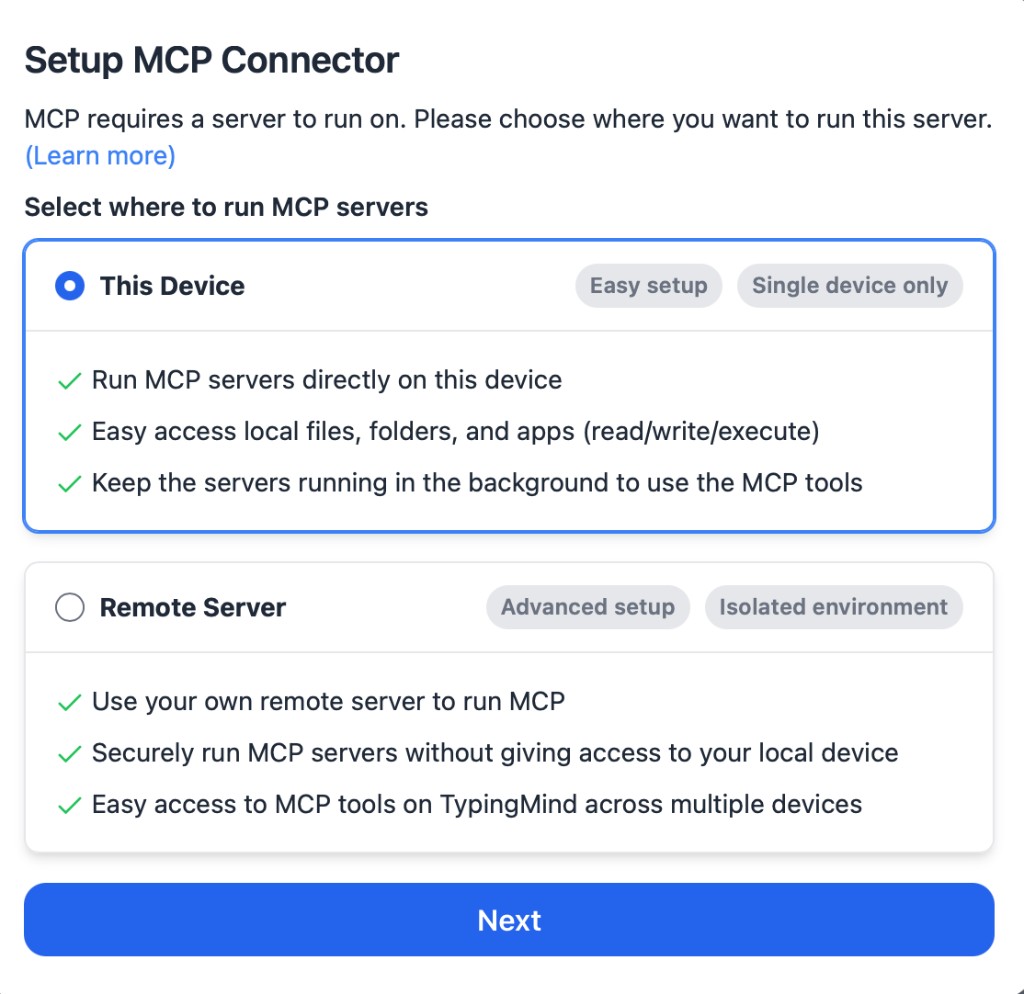
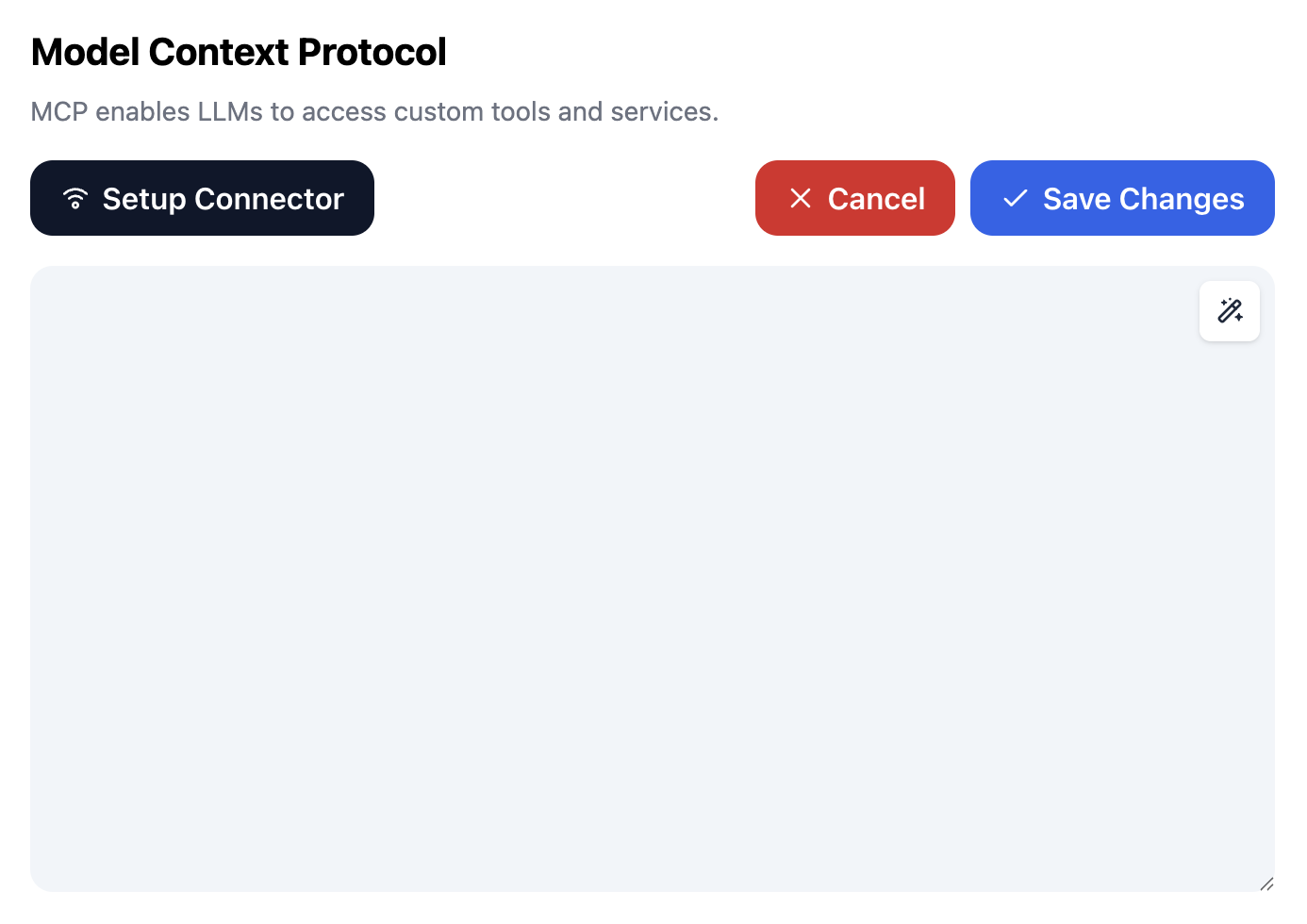
The easiest and the fastest way to launch the InfraNodus MCP server is to either use our server URL https://mcp.infranodus.com for the remote / web applications or to add a manual configuration to your LLM apps if you're running them locally.
You can also install the server locally, so you have more control over it. In this case, you can also edit the source files and even create your tools based on the InfraNodus API.
Below we describe the two different ways to set up your InfraNodus MCP server.
1. Easiest Setup: InfraNodus MCP Server (via HTTP/SSE)
- Prerequisites
- Create an account on InfraNodus if you don't have it already and get your InfraNodus API Key. We offer 14-day free trials.
- Get the URL
- We currently use the following URL for our MCP server deployed in our infrastructure:
bashhttps://mcp.infranodus.com
- Add the MCP server URL to the Client Tool Where You Want to Use InfraNodus
- Once you add the URL above to your tool, it will automatically prompt you to authenticate using OAuth in order to be able to access the InfraNodus MCP hosted on it.
- Using InfraNodus Tools in Your Calls
-
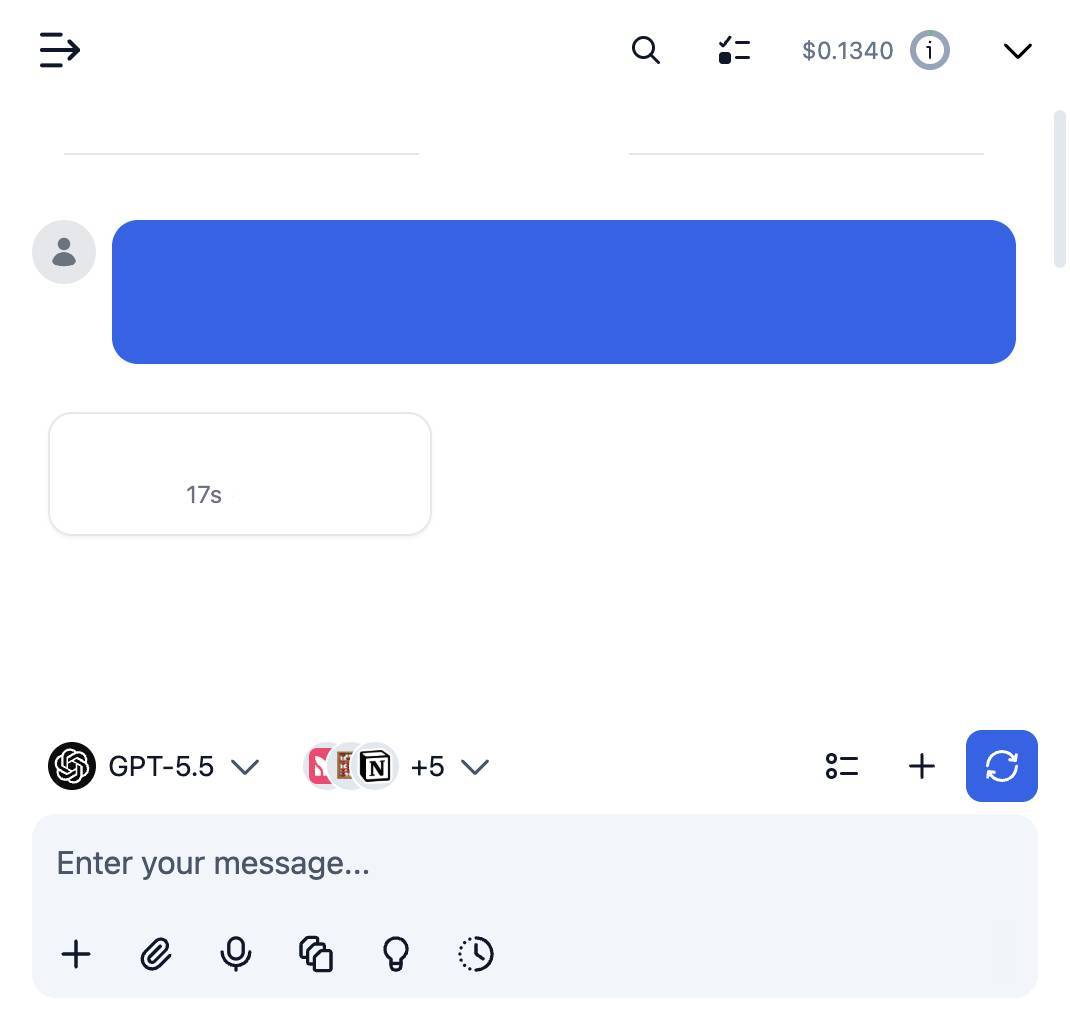
To use InfraNodus, see the tools available and simply call them through the chat interface (e.g. "show me the graphs where I talk about this topic" or "get the content gaps from the document I uploaded")
-
If your client is not using InfraNodus for some actions, add the instruction to use InfraNodus explicitly.
2. Manual Setup: via NPX
You can deploy the InfraNodus server manually via npx — a package that allows to execute local and remote Node.Js packages on your computer.
The InfraNodus MCP server is available as an npm package at https://www.npmjs.com/package/infranodus-mcp-server from where you can launch it remotely on your local computer with npx. It will expose its tools to the MCP client that will be using this command to launch the server
For Claude Desktop / Cursor IDE:
Just add this in your Claude's configuration file (Settings > Developer > Edit Config), inside the "mcpServers" object where the different servers are listed:
json{ "mcpServers": { "infranodus": { "command": "npx", "args": ["-y", "infranodus-mcp-server"], "env": { "INFRANODUS_API_KEY": "YOUR_INFRANODUS_API_KEY" } } } }
For Claude Code
To connect the InfraNodus MCP server to your Claude code, you can use this command. Make sure to provide the correct InfraNodus API key for your account:
bashclaude mcp add infranodus -s user \ -- env INFRANODUS_API_KEY=YOUR_INRANODUS_KEY \ npx -y infranodus-mcp-server
3. Manual Setup: Launching MCP as a Local Server (for inspection & development)
- Prerequisites
- Node.js 18+ installed
- InfraNodus API key (get yours at https://infranodus.com/api-access)
-
Clone and build the server:
bashgit clone https://github.com/yourusername/mcp-server-infranodus.git cd mcp-server-infranodus npm install npm run build:inspect npm run inspect
Note that build:inspect will generate the dist/index.js file which you will then use in your server setup. The standard npm run build command will only build a Smithery file.
-
Set up your API key:
Create a
.envfile in the project root:INFRANODUS_API_KEY=your-api-key-here -
Inspect the MCP:
bashnpm run inspect
Claude Desktop Configuration (macOS)
-
Open your Claude Desktop configuration file:
bashopen ~/Library/Application\ Support/Claude/claude_desktop_config.json -
Add the InfraNodus server configuration:
a. remote launch via npx:
json{ "mcpServers": { "infranodus": { "command": "npx", "args": ["-y", "infranodus-mcp-server"], "env": { "INFRANODUS_API_KEY": "YOUR_INFRANODUS_API_KEY" } } } }
b. launch this repo with node, specify the absolute path to the repo + /dist/index.js:
json{ "mcpServers": { "infranodus": { "command": "node", "args": ["/absolute/path/to/mcp-server-infranodus/dist/index.js"], "env": { "INFRANODUS_API_KEY": "your-api-key-here" } } } }
Note: you can leave the INFRANODUS_API_KEY empty in which case you can make 70 free requests after which you will hit quota and will need to add your API key.
- Restart Claude Desktop to load the new server.
Claude Desktop Configuration (Windows)
-
Open your Claude Desktop configuration file:
%APPDATA%\Claude\claude_desktop_config.json -
Add the InfraNodus server configuration:
a. remote launch via npx:
json{ "mcpServers": { "infranodus": { "command": "npx", "args": ["-y", "infranodus-mcp-server"], "env": { "INFRANODUS_API_KEY": "YOUR_INFRANODUS_API_KEY" } } } }
b. launch this repo with node:
json{ "mcpServers": { "infranodus": { "command": "node", "args": ["C:\\path\\to\\mcp-server-infranodus\\dist\\index.js"], "env": { "INFRANODUS_API_KEY": "your-api-key-here" } } } }
- Restart Claude Desktop.
Cursor Configuration
Other MCP-Compatible Applications
For other applications supporting MCP, use the following command to start the server via npx:
bashINFRANODUS_API_KEY=your-api-key npx -y infranodus-mcp-server
or locally
bashINFRANODUS_API_KEY=your-api-key node /path/to/mcp-server-infranodus/dist/index.js
The server communicates via stdio, so configure your application to run this command and communicate through standard input/output.
Legacy Setup via Smithery
InfraNodus server is also available through Smithery: a repository of MCP servers that has an easy-to-follow installation process for most LLM clients. You will need a separate accout at Smithery though.
-
Create an account on Smithery.Ai (it's free and you can use your Google or GitHub login)
-
Then go to the Smithery InfraNodus Server, click "Configure" at the top right, and add your InfraNodus API key there.
-
Go to Smithery InfraNodus Server and get the URL link from Smithery https://server.smithery.ai/@infranodus/mcp-server-infranodus/mcp for the server or use one of their automatic setup tools for Claude or Cursor.
-
You may need to get your separate Smithery API key and Smithery proile link to make this work.
For Cursor:
json// e.g. Cursor will access directly the server via Smithery "mcpServers": { "mcp-server-infranodus": { "type": "http", "url": "https://server.smithery.ai/@infranodus/mcp-server-infranodus/mcp?api_key=YOUR_SMITHERY_KEY&profile=YOUR_SMITHERY_PROFILE", "headers": {} } }
For Claude:
json// Claude uses a slightly different implementation // Fot this, it launches the MCP server on your local machine "mcpServers": { "mcp-server-infranodus": { "command": "npx", "args": [ "-y", "@smithery/cli@latest", "run", "@infranodus/mcp-server-infranodus", "--key", "YOUR_SMITHERY_KEY", "--profile", "YOUR_SMITHERY_PROFILE" ] } }
Note, in both cases, you'll automatically get the YOUR_SMITHERY_KEY and YOUR_SMITHERY_PROFILE values from Smithery when you copy the URL with credentials. These are not your InfraNodus API keys. You can use the InfraNodus API server without the API for the first 70 calls. Then you can add it to your Smithery profile and it will automatically connect to your account using the link above.
Usage Examples
Once installed, you can ask Claude to:
- "Use InfraNodus to analyze this text and show me the main topics"
- "Generate a knowledge graph from this document"
- "Find content gaps in this article"
- "Retrieve my existing graph called 'Research Notes' from InfraNodus"
- "What are the structural gaps in this text?"
- "Identify the most influential concepts in this content"
Development
Running in Development Mode
bashnpm run dev
Using the MCP Inspector
Test the server with the MCP Inspector:
bashnpm run build:inspect npm run inspect
Building from Source
bashnpm run build
Watching for Changes
bashnpm run watch
API Documentation
generate_knowledge_graph
Analyzes text and generates a knowledge graph.
Parameters:
text(string): The text to analyze. Provide this,url, orstatementsstatements(string[]): Already-separated statements, with optional parallelcategories(string[][]) andtimestamps(ISO 8601 strings)categoriesAsNodes(boolean, default false): Show category labels as[[label]]nodes. Only for large knowledge bases and Obsidian vaults where the connections between pages matter; otherwise the labels stay metadatawikilinksMode(string): How[[wikilinks]]become nodes — "default", "wikilinksOnly", "obsidianStyle", "parentAndConcepts", or "plainText"includeStatements(boolean): Include original statements in responsemodifyAnalyzedText(string): Entity detection — "none", "detectEntities", or "extractEntitiesOnly"
analyze_existing_graph_by_name
Retrieves and analyzes an existing graph from your InfraNodus account.
Parameters:
graphName(string, required): Name of the existing graphincludeStatements(boolean): Include statements in responseincludeGraphSummary(boolean): Include graph summary
analyze_text
Analyze a text, URL, or YouTube transcript. Extract and analyze a graph from text or URL; provide either text or url.
Parameters:
text(string, optional): Text to analyze. Provide either this or url.url(string, optional): URL to fetch content from (e.g. webpage or YouTube transcript). Provide either this or text.includeStatements(boolean): Include processed statements in responseincludeGraph(boolean): Include full graph structure in responseaddNodesAndEdges(boolean): Include nodes and edges in responseincludeGraphSummary(boolean): Include AI-generated graph summary for RAG prompt augmentationmodifyAnalyzedText(string): Entity detection — "none", "detectEntities", or "extractEntitiesOnly"
generate_content_gaps
Identifies content gaps and missing connections in text.
Parameters:
text(string, required): The text to analyze for gaps
Progress Notifications
For long-running operations (like SEO analysis), the MCP server supports real-time progress notifications that provide intermediary feedback to AI agents. This allows agents to:
- Track the progress of multi-step operations
- Display status messages to users
- Understand what's happening during lengthy analyses
Implementation
The server implements MCP progress notifications using:
- ToolHandlerContext: All tool handlers can receive an optional context parameter containing the server instance and progress token
- ProgressReporter: A utility class that simplifies sending progress updates with percentages and messages
- Wrapped Handlers: Tool registration automatically injects the server context into handlers
Example Usage in Tools
typescriptimport { ProgressReporter } from "../utils/progress.js"; import { ToolHandlerContext } from "../types/index.js"; handler: async (params: ParamType, context: ToolHandlerContext = {}) => { const progress = new ProgressReporter(context); await progress.report(25, "Fetching data from API..."); // Do work await progress.report(75, "Analyzing results..."); // More work await progress.report(100, "Complete!"); return results; };
The generate_seo_report tool demonstrates this pattern with 6 major progress checkpoints that provide detailed status updates throughout the multi-step analysis process.
Usage Analytics & Privacy
To improve the product, this MCP server records which tools are used (tool names, errors, and latency). This helps us understand which features are useful and where things break. We do not train any models on your data — see the InfraNodus terms and conditions.
If you prefer these usage stats not to be linked to your InfraNodus account, set the MCPCAT_ANONYMOUS environment variable:
json{ "mcpServers": { "infranodus": { "command": "npx", "args": ["-y", "infranodus-mcp-server"], "env": { "INFRANODUS_API_KEY": "YOUR_INFRANODUS_API_KEY", "MCPCAT_ANONYMOUS": "1" } } } }
With MCPCAT_ANONYMOUS=1 set, tool usage is still recorded but stays anonymous — it is not tied to your user account. It also disables the per-user submit_workflow_feedback log described under tool 34 (the report includes duration / error / retry of the call it rates).
Project learnings
The enable_project_learnings, add_project_learnings, and get_project_learnings tools let the assistant keep an append-only graph of what it learned about operating in a project (learn-<project> in your InfraNodus account). They are opt-in per project: the graph exists only after you explicitly ask to enable it, the write tool refuses when the graph is missing and never creates one, and every batch is shown to you before it is saved. If you never want these tools exposed, set INFRANODUS_LEARNINGS=0 in the server's environment (same place as MCPCAT_ANONYMOUS). To stop collecting for a project, delete its learn-<project> graph in InfraNodus.
As most tools have the doNotSave=1 option turned on, all the graphs you create are ephemeral and won't be saved into your InfraNodus account unless you explicitly ask the MCP server to do so. We will also not keep the logs of the data you process. We also never use your data for LLM training according to the InfraNodus [https://infranodus.com/terms-conditions](terms of service).
Troubleshooting
Server doesn't appear in Claude
- Verify the configuration file path is correct
- Check that the API key is valid
- Ensure Node.js is in your system PATH
- Restart Claude Desktop completely
API Key Issues
- Get your API key at: https://infranodus.com/api-access
- Ensure the key is correctly set in the configuration
- Check that the key has not expired
Build Errors
bash# Clean install rm -rf node_modules package-lock.json npm install npm run build
Resources
- InfraNodus Website
- InfraNodus MCP
- InfraNodus API Documentation
- MCP Protocol Documentation
- Graph Theory Concepts
License
MIT
Support
For issues related to:
- This MCP server: Open an issue in this repository
- InfraNodus API: Contact support@infranodus.com
- MCP Protocol: Visit the MCP community