FastMCP logo

FastMCP

CommunityPopular
jlowin

🚀 The fast, Pythonic way to build MCP servers and clients.

Publisherjlowin
Repositoryfastmcp
LanguagePython
Forks
2K
Stars
25.3K
Available tools
0
Transport typestdio
Categories
LicenseApache-2.0
Links
  • Connect tools to AI workflows

    FastMCP exposes MCP capabilities that can be used by compatible AI clients and agents.

  • 0 available tools

    Browse the callable actions below, including names and descriptions when provided by the server.

  • Ready-to-copy setup

    Use the installation snippets to configure this server in your preferred MCP client.

  • Open source signals

    25.3K stars and 2K forks from the linked repository.

FastMCP 🚀

Move fast and make things.

Made with 💙 by Prefect

Docs Discord PyPI - Version Tests License


The Model Context Protocol (MCP) connects LLMs to tools and data. FastMCP gives you everything you need to go from prototype to production:

python
from fastmcp import FastMCP

mcp = FastMCP("Demo 🚀")

@mcp.tool
def add(a: int, b: int) -> int:
    """Add two numbers"""
    return a + b

if __name__ == "__main__":
    mcp.run()

Why FastMCP

Building an effective MCP application is harder than it looks. FastMCP handles all of it. Declare a tool with a Python function, and the schema, validation, and documentation are generated automatically. Connect to a server with a URL, and transport negotiation, authentication, and protocol lifecycle are managed for you. You focus on your logic, and the MCP part just works: with FastMCP, best practices are built in.

That's why FastMCP is the standard framework for working with MCP. FastMCP 1.0 was incorporated into the official MCP Python SDK in 2024. Today, the actively maintained standalone project is downloaded a million times a day, and some version of FastMCP powers 70% of MCP servers across all languages.

FastMCP has three pillars:

Servers wrap your Python functions into MCP-compliant tools, resources, and prompts. Clients connect to any server with full protocol support. And Apps give your tools interactive UIs rendered directly in the conversation.

Ready to build? Start with the installation guide or jump straight to the quickstart.

Run FastMCP in production with Horizon

FastMCP is the standard way to build MCP servers. Prefect Horizon is the enterprise MCP gateway for running them safely.

Built by the FastMCP team, Horizon packages the best practices we've learned shipping the world's most popular MCP framework.

Deploy FastMCP servers from GitHub with branch previews and instant rollback. Create a private registry of every MCP your company uses. Secure access with SSO and tool-level RBAC. Get audit logs, observability, and governance across your MCP stack. Remix approved tools into purpose-built endpoints for teams and agents.

Start with FastMCP. Scale with Horizon →

Installation

We recommend installing FastMCP with uv:

bash
uv pip install fastmcp

For full installation instructions, including verification and upgrading, see the Installation Guide.

Upgrading? We have guides for:

[!NOTE] If import fastmcp fails right after a pip upgrade from FastMCP 3.2 or earlier, run pip install --force-reinstall fastmcp. See Troubleshooting for why this happens (uv is unaffected).

📚 Documentation

FastMCP's complete documentation is available at gofastmcp.com, including detailed guides, API references, and advanced patterns.

Documentation is also available in llms.txt format, which is a simple markdown standard that LLMs can consume easily:

  • llms.txt is essentially a sitemap, listing all the pages in the documentation.
  • llms-full.txt contains the entire documentation. Note this may exceed the context window of your LLM.

Community: Join our Discord server to connect with other FastMCP developers and share what you're building.

Contributing

We welcome contributions! See the Contributing Guide for setup instructions, testing requirements, and PR guidelines.
Installation

TypingMind
Prerequisites:

Node.js 18+

{
  "mcpServers": {
    "jlowin-fastmcp": {
      "command": "uvx",
      "args": [
        "fastmcp"
      ]
    }
  }
}

Use FastMCP MCP with multiple AI models

TypingMind connects MCP tools at the workspace level, so once FastMCP is connected, you can use it with different AI models in TypingMind instead of setting it up separately for each model. This MCP runs locally through the TypingMind MCP connector on your device.

Setup guide to use the local connector

Use this when the MCP server needs access to local files, apps, or private resources on your computer.

1

Open the MCP settings

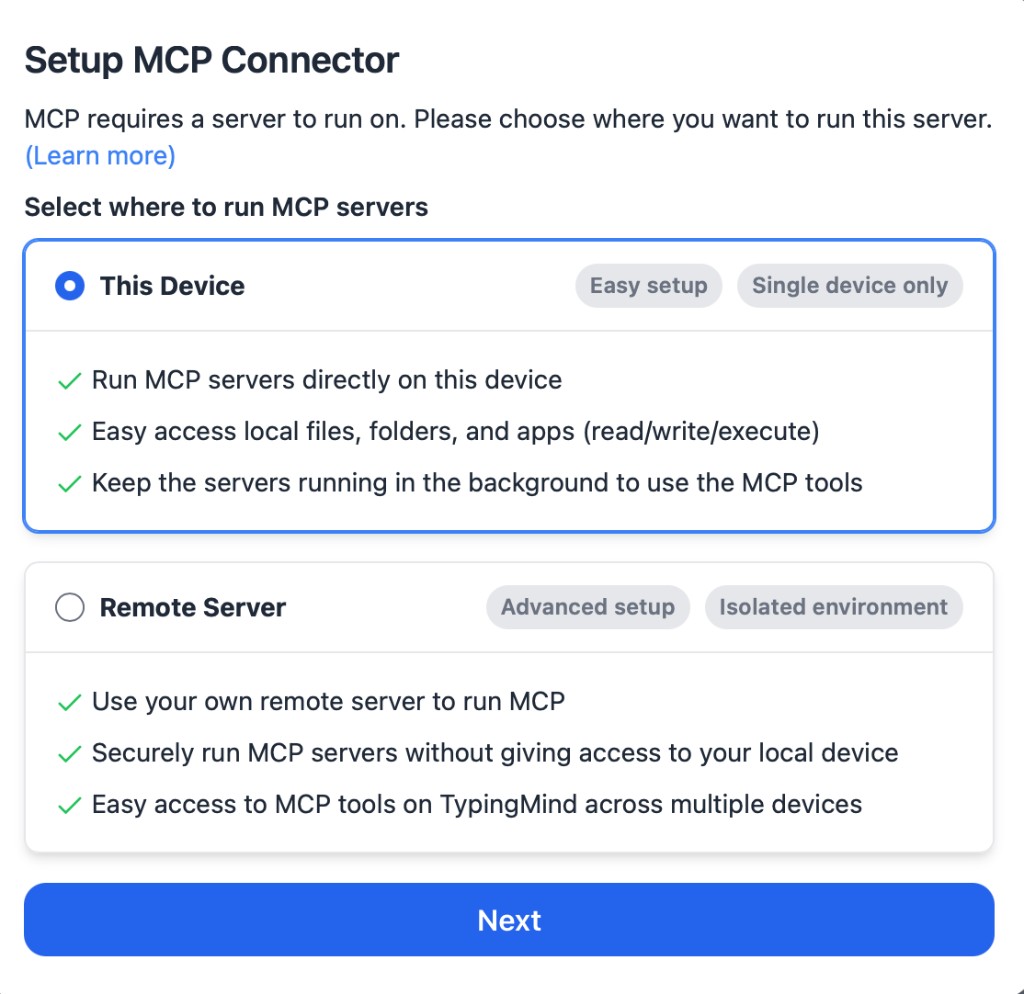
In TypingMind, go to Settings, Advanced Settings, then Model Context Protocol and choose Setup Connector.

  1. Open TypingMind in your browser.
  2. Click the Settings icon.
  3. Go to Advanced Settings.
  4. Open the Model Context Protocol section.
  5. Click Setup Connector and choose This Device.
TypingMind MCP connector setup screen with This Device selected
2

Run the connector command

Choose This Device, copy the command from TypingMind, and run it in Terminal. Keep the process running while you use MCP.

  1. Copy the setup command shown by TypingMind.
  2. Open Terminal on macOS or Windows Terminal on Windows.
  3. Paste and run the command.
  4. Approve the package install if Terminal asks you to proceed.
  5. Keep the Terminal window running while using MCP tools.
3

Add FastMCP as a server

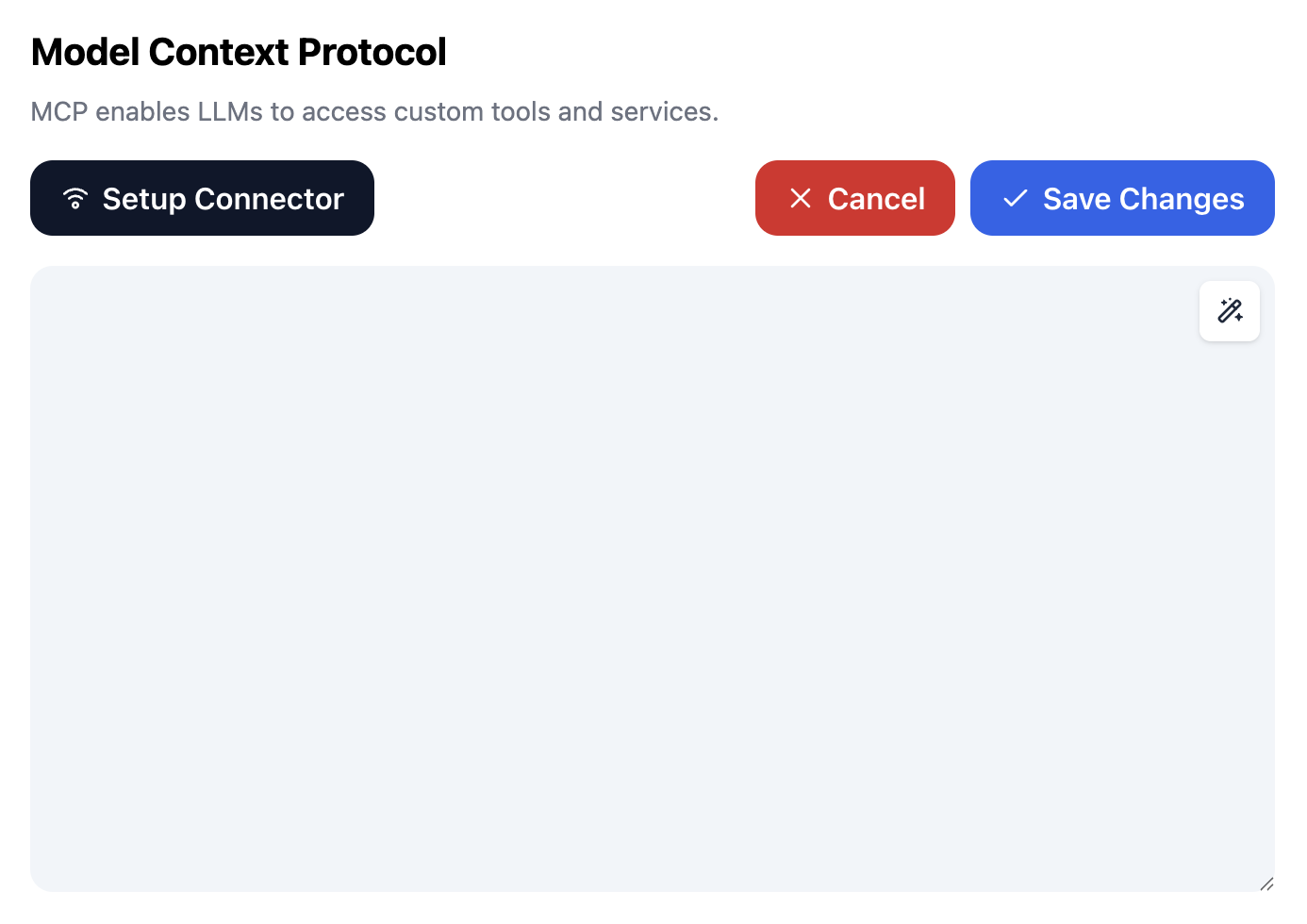
When the connector status is Ready, click Edit Servers and paste the MCP server configuration.

  1. Wait until the connector status shows Ready.
  2. Click Edit Servers.
  3. Paste the FastMCP MCP server configuration.
  4. Save the server list.
  5. Refresh if you want to confirm the connector is still ready.
TypingMind MCP settings showing active server and Edit Servers button
{
  "mcpServers": {
    "jlowin-fastmcp": {
      "command": "npx",
      "args": [
        "-y",
        "fastmcp"
      ]
    }
  }
}
4

Use it across models

Save the server list, open Plugins, enable the FastMCP MCP tools, then select any supported AI model in TypingMind and use the tools in chat or assign them to an AI agent.

  1. Open the Plugins page in TypingMind.
  2. Enable the FastMCP MCP tools.
  3. Start a chat and choose the AI model you want to use.
  4. Use the MCP tools in chat or assign them to an AI agent.
  5. Switch to another AI model whenever needed without reconnecting MCP.
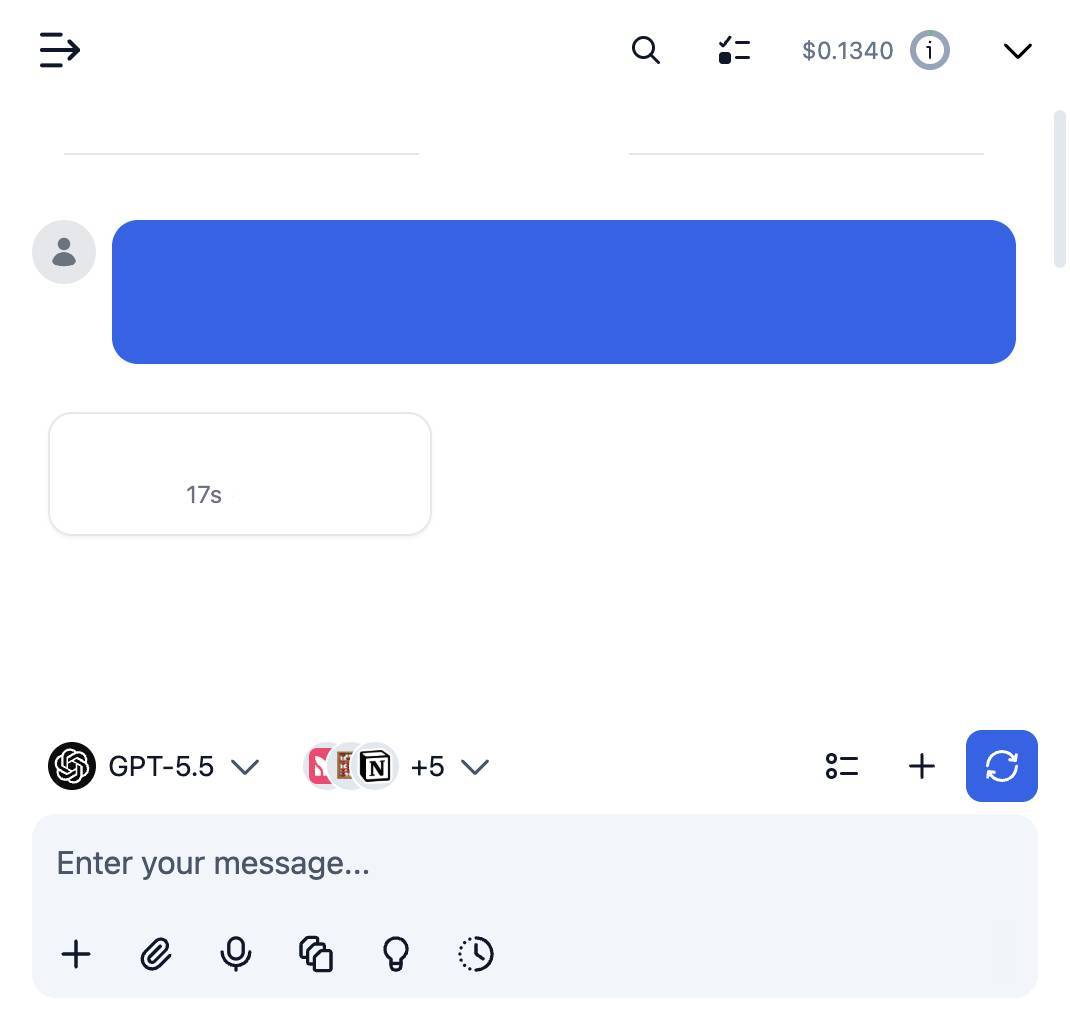
TypingMind chat using enabled MCP tools with a selected AI model
Can you use FastMCP to help me with this task?
FastMCP
Sure. I read it.
Here is what I found using FastMCP.

Frequently asked questions

What is the FastMCP MCP server used for?

FastMCP is an MCP server that lets compatible AI clients connect to external tools and context. In TypingMind, you can add this MCP server once and make its tools available in your AI workspace.

Can I use FastMCP MCP with multiple AI models in TypingMind?

Yes. TypingMind connects MCP tools at the workspace level, so you can use FastMCP with different AI models such as Claude, ChatGPT, Gemini, or other models you have configured in TypingMind without setting up the MCP server separately for each model.

Why use FastMCP MCP with TypingMind?

TypingMind is one of the best frontends for LLM chat because it brings multiple AI models, prompts, plugins, AI agents, API keys, and MCP tools into one workspace. With FastMCP connected, you can use its MCP tools across your preferred models while keeping your chat workflow organized in TypingMind.

How do I connect FastMCP MCP to TypingMind?

FastMCP runs through the TypingMind local MCP connector. This is best when the MCP server needs access to local files, desktop apps, command-line tools, or private resources on your computer.

What tools does FastMCP MCP provide in TypingMind?

FastMCP exposes MCP capabilities that can be enabled from the TypingMind Plugins page and used in chat or assigned to AI agents.

Do I need to share my API keys with TypingMind to use FastMCP MCP?

No. TypingMind is local-first and lets you keep your model providers, API keys, prompts, and MCP configuration under your control. If FastMCP requires authentication, add the required headers, OAuth settings, or local configuration for that MCP server when you create the connection.

Related MCP Servers

View all

Set up your own AI workspace now

Get notified about new features and future giveaways by subscribing to our newsletter 👇