KOSPI/KOSDAQ Stock Data logo

KOSPI/KOSDAQ Stock Data

Community
dragon1086

An MCP server that provides KOSPI/KOSDAQ stock data using FastMCP

Publisherdragon1086
Repositorykospi-kosdaq-stock-server
LanguagePython
Forks
26
Stars
71
Available tools
6
Transport typestdio, streamable-http
Categories
LicenseMIT
Links
  • Connect tools to AI workflows

    KOSPI/KOSDAQ Stock Data exposes MCP capabilities that can be used by compatible AI clients and agents.

  • 6 available tools

    Browse the callable actions below, including names and descriptions when provided by the server.

  • Ready-to-copy setup

    Use the installation snippets to configure this server in your preferred MCP client.

  • Open source signals

    71 stars and 26 forks from the linked repository.

MseeP.ai Security Assessment Badge

kospi-kosdaq-stock-server

PyPI version smithery badge

An MCP server that provides KOSPI/KOSDAQ stock data from KRX Data Marketplace.

What's New in v0.3.0

Since December 27, 2024, KRX Data Marketplace requires Kakao/Naver login for data access. This version implements:

  • Direct KRX API integration with Kakao OAuth login
  • Playwright-based headless browser for authentication
  • Automatic session management with 4-hour timeout and auto re-login
  • No more pykrx dependency for core functionality

Features

  • Lookup KOSPI/KOSDAQ ticker symbols and names
  • Retrieve OHLCV (Open/High/Low/Close/Volume) data for stocks
  • Retrieve market capitalization data
  • Retrieve fundamental data (PER/PBR/Dividend Yield)
  • Retrieve trading volume by investor type (institutional, foreign, individual)
  • Retrieve index OHLCV data (KOSPI, KOSDAQ indices)

Requirements

  • Python 3.10+
  • Kakao account (2FA must be disabled)
  • Playwright Chromium browser

Environment Variables

bash
# Required: Kakao login credentials
KAKAO_ID=your_kakao_id
KAKAO_PW=your_kakao_password

Important: Your Kakao account must have 2-step verification (2FA) disabled. On first login, you may need to approve the login request via KakaoTalk.

Installation

Prerequisites

bash
# Install Playwright and Chromium browser
pip install playwright
playwright install chromium

Installing via Smithery

bash
npx -y @smithery/cli install @dragon1086/kospi-kosdaq-stock-server --client claude

Manual Installation

bash
# Create and activate a virtual environment
uv venv .venv
source .venv/bin/activate  # On Unix/macOS
# .venv\Scripts\activate   # On Windows

# Install the package
uv pip install kospi-kosdaq-stock-server

# Install Playwright browser
playwright install chromium

Configuration for Claude Desktop

macOS

  1. Open the config file:
bash
code ~/Library/Application\ Support/Claude/claude_desktop_config.json
  1. Add the server configuration:
json
{
  "mcpServers": {
    "kospi-kosdaq": {
      "command": "uvx",
      "args": ["kospi_kosdaq_stock_server"],
      "env": {
        "KAKAO_ID": "your_kakao_id",
        "KAKAO_PW": "your_kakao_password"
      }
    }
  }
}

Windows

  1. Open the config file at %APPDATA%/Claude/claude_desktop_config.json

  2. Add the same configuration as above

  3. Restart Claude Desktop

Available Tools

load_all_tickers

Loads all ticker symbols and names for KOSPI and KOSDAQ.

  • No arguments required
  • Returns: Dictionary mapping ticker codes to stock names

get_stock_ohlcv

Retrieves OHLCV (Open/High/Low/Close/Volume) data for a specific stock.

  • fromdate (string, required): Start date (YYYYMMDD)
  • todate (string, required): End date (YYYYMMDD)
  • ticker (string, required): Stock ticker symbol (e.g., "005930")
  • adjusted (boolean, optional): Use adjusted prices (default: True)

get_stock_market_cap

Retrieves market capitalization data for a specific stock.

  • fromdate (string, required): Start date (YYYYMMDD)
  • todate (string, required): End date (YYYYMMDD)
  • ticker (string, required): Stock ticker symbol

get_stock_fundamental

Retrieves fundamental data (PER/PBR/Dividend Yield) for a specific stock.

  • fromdate (string, required): Start date (YYYYMMDD)
  • todate (string, required): End date (YYYYMMDD)
  • ticker (string, required): Stock ticker symbol

get_stock_trading_volume

Retrieves trading volume by investor type for a specific stock.

  • fromdate (string, required): Start date (YYYYMMDD)
  • todate (string, required): End date (YYYYMMDD)
  • ticker (string, required): Stock ticker symbol
  • detail (boolean, optional): If true, returns 12 investor types; if false (default), returns 5 aggregated types

get_index_ohlcv

Retrieves OHLCV data for market indices.

  • fromdate (string, required): Start date (YYYYMMDD)
  • todate (string, required): End date (YYYYMMDD)
  • ticker (string, required): Index ticker (e.g., "1001" for KOSPI, "2001" for KOSDAQ)
  • freq (string, optional): Frequency - "d" (daily), "m" (monthly), "y" (yearly). Default: "d"

Available Resources

stock://tickers

Returns all KOSPI/KOSDAQ ticker symbols and names.

stock://index-tickers

Returns index ticker information:

  • KOSPI: 1001, KOSPI 200: 1028, KOSPI 100: 1034, KOSPI 50: 1035
  • KOSDAQ: 2001, KOSDAQ 150: 2203

stock://data-sources

Returns current data source status.

Docker Support

Using Docker Compose

bash
# Build and run
docker-compose up -d

# View logs
docker-compose logs -f

Environment Variables for Docker

Create a .env file:

bash
KAKAO_ID=your_kakao_id
KAKAO_PW=your_kakao_password

Troubleshooting

"KakaoTalk login notification" popup

On first login, Kakao may require approval via KakaoTalk:

  1. Run with headless=False to see the browser
  2. Approve the login in KakaoTalk
  3. Cookies will be saved for future sessions

401 Unauthorized / Session Expired

Session expires after ~4 hours. The server auto-renews, but if it fails:

  1. Delete ~/.krx_session.json
  2. Restart the server

Linux Headless Environment

bash
# Install required packages on Ubuntu/Debian
apt-get install -y libnss3 libatk1.0-0 libatk-bridge2.0-0 libcups2 libdrm2 \
    libxkbcommon0 libxcomposite1 libxdamage1 libxfixes3 libxrandr2 libgbm1 libasound2

Architecture

β”Œβ”€β”€β”€β”€β”€β”€β”€β”€β”€β”€β”€β”€β”€β”€β”€β”€β”€β”€β”€β”€β”€β”€β”€β”€β”€β”€β”€β”€β”€β”€β”€β”€β”€β”€β”€β”€β”€β”€β”€β”€β”€β”€β”€β”€β”€β”€β”€β”€β”€β”€β”€β”€β”€β”
β”‚                MCP Server (FastMCP)                 β”‚
β”‚              kospi_kosdaq_stock_server.py           β”‚
β””β”€β”€β”€β”€β”€β”€β”€β”€β”€β”€β”€β”€β”€β”€β”€β”€β”€β”€β”€β”€β”€β”€β”¬β”€β”€β”€β”€β”€β”€β”€β”€β”€β”€β”€β”€β”€β”€β”€β”€β”€β”€β”€β”€β”€β”€β”€β”€β”€β”€β”€β”€β”€β”€β”˜
                       β”‚
                       β–Ό
β”Œβ”€β”€β”€β”€β”€β”€β”€β”€β”€β”€β”€β”€β”€β”€β”€β”€β”€β”€β”€β”€β”€β”€β”€β”€β”€β”€β”€β”€β”€β”€β”€β”€β”€β”€β”€β”€β”€β”€β”€β”€β”€β”€β”€β”€β”€β”€β”€β”€β”€β”€β”€β”€β”€β”
β”‚               KRXDataClient                         β”‚
β”‚  - get_market_ohlcv()                               β”‚
β”‚  - get_market_cap()                                 β”‚
β”‚  - get_market_fundamental()                         β”‚
β”‚  - get_market_trading_volume_by_date()              β”‚
β”‚  - get_index_ohlcv()                                β”‚
β””β”€β”€β”€β”€β”€β”€β”€β”€β”€β”€β”€β”€β”€β”€β”€β”€β”€β”€β”€β”€β”€β”€β”¬β”€β”€β”€β”€β”€β”€β”€β”€β”€β”€β”€β”€β”€β”€β”€β”€β”€β”€β”€β”€β”€β”€β”€β”€β”€β”€β”€β”€β”€β”€β”˜
                       β”‚
                       β–Ό
β”Œβ”€β”€β”€β”€β”€β”€β”€β”€β”€β”€β”€β”€β”€β”€β”€β”€β”€β”€β”€β”€β”€β”€β”€β”€β”€β”€β”€β”€β”€β”€β”€β”€β”€β”€β”€β”€β”€β”€β”€β”€β”€β”€β”€β”€β”€β”€β”€β”€β”€β”€β”€β”€β”€β”
β”‚             KakaoAuthManager                        β”‚
β”‚  - Playwright headless browser                      β”‚
β”‚  - Kakao OAuth login                                β”‚
β”‚  - Session cookie management                        β”‚
β”‚  - Auto re-login on session expiry (4h)             β”‚
β””β”€β”€β”€β”€β”€β”€β”€β”€β”€β”€β”€β”€β”€β”€β”€β”€β”€β”€β”€β”€β”€β”€β”¬β”€β”€β”€β”€β”€β”€β”€β”€β”€β”€β”€β”€β”€β”€β”€β”€β”€β”€β”€β”€β”€β”€β”€β”€β”€β”€β”€β”€β”€β”€β”˜
                       β”‚
                       β–Ό
β”Œβ”€β”€β”€β”€β”€β”€β”€β”€β”€β”€β”€β”€β”€β”€β”€β”€β”€β”€β”€β”€β”€β”€β”€β”€β”€β”€β”€β”€β”€β”€β”€β”€β”€β”€β”€β”€β”€β”€β”€β”€β”€β”€β”€β”€β”€β”€β”€β”€β”€β”€β”€β”€β”€β”
β”‚           KRX Data Marketplace                      β”‚
β”‚             data.krx.co.kr                          β”‚
β””β”€β”€β”€β”€β”€β”€β”€β”€β”€β”€β”€β”€β”€β”€β”€β”€β”€β”€β”€β”€β”€β”€β”€β”€β”€β”€β”€β”€β”€β”€β”€β”€β”€β”€β”€β”€β”€β”€β”€β”€β”€β”€β”€β”€β”€β”€β”€β”€β”€β”€β”€β”€β”€β”˜

Known Limitations

  • Kakao accounts with 2FA enabled are not supported
  • First login may require KakaoTalk approval
  • Session validity: ~4 hours (auto-renewal supported)
  • Naver login is not yet implemented

Usage Example

Human: Please load all available stock tickers.
Assistant: I'll load all KOSPI and KOSDAQ stock tickers.

> Using tool 'load_all_tickers'...
Successfully loaded 2,738 stock tickers.
Human: Show me Samsung Electronics' stock data for December 2024.
Assistant: I'll retrieve Samsung Electronics' (005930) OHLCV data.

> Using tool 'get_stock_ohlcv'...
Date        Open      High      Low       Close     Volume
2024-12-20  53,800    54,200    53,500    53,900    8,234,521
2024-12-19  54,000    54,300    53,700    53,800    7,123,456
...

License

MIT License

Contributing

Issues and pull requests are welcome!

Changelog

v0.3.0 (2025-01-04)

  • Breaking: Removed pykrx dependency for core functionality
  • Added KRX Data Marketplace direct integration with Kakao OAuth
  • Added Playwright-based headless authentication
  • Added automatic session management
  • Added index OHLCV support

v0.2.x

  • pykrx-based implementation (deprecated due to KRX login requirement)
Installation

TypingMind
Prerequisites:

Node.js 18+

{
  "mcpServers": {
    "kospi-kosdaq": {
      "command": "uvx",
      "args": [
        "kospi_kosdaq_stock_server"
      ]
    }
  }
}

Available Tools

  • load_all_tickers

    Loads all ticker symbols and names for KOSPI and KOSDAQ into memory.

    Returns:
        Dict[str, str]: A dictionary mapping tickers to stock names.
        Example: {"005930": "μ‚Όμ„±μ „μž", "035720": "카카였", ...}
    
  • get_stock_ohlcv

    Retrieves OHLCV (Open/High/Low/Close/Volume) data for a specific stock.

    Args:
        fromdate (str): Start date for retrieval (YYYYMMDD)
        todate   (str): End date for retrieval (YYYYMMDD)
        ticker   (str): Stock ticker symbol
        adjusted (bool, optional): Whether to use adjusted prices (True: adjusted, False: unadjusted). Defaults to True.
    
    Returns:
        DataFrame:
            >> get_stock_ohlcv("20210118", "20210126", "005930")
                            Open     High     Low    Close   Volume
            Date
            2021-01-26  89500  94800  89500  93800  46415214
            2021-01-25  87300  89400  86800  88700  25577517
            2021-01-22  89000  89700  86800  86800  30861661
            2021-01-21  87500  88600  86500  88100  25318011
            2021-01-20  89000  89000  86500  87200  25211127
            2021-01-19  84500  88000  83600  87000  39895044
            2021-01-18  86600  87300  84100  85000  43227951
    
  • get_stock_market_cap

    Retrieves market capitalization data for a specific stock.

    Args:
        fromdate (str): Start date for retrieval (YYYYMMDD)
        todate   (str): End date for retrieval (YYYYMMDD)
        ticker   (str): Stock ticker symbol
    
    Returns:
        DataFrame:
            >> get_stock_market_cap("20150720", "20150724", "005930")
                              Market Cap  Volume      Trading Value  Listed Shares
            Date
            2015-07-24  181030885173000  196584  241383636000  147299337
            2015-07-23  181767381858000  208965  259446564000  147299337
            2015-07-22  184566069261000  268323  333813094000  147299337
            2015-07-21  186039062631000  194055  244129106000  147299337
            2015-07-20  187806654675000  128928  165366199000  147299337
    
  • get_stock_fundamental

    Retrieves fundamental data (PER/PBR/Dividend Yield) for a specific stock.

    Args:
        fromdate (str): Start date for retrieval (YYYYMMDD)
        todate   (str): End date for retrieval (YYYYMMDD)
        ticker   (str): Stock ticker symbol
    
    Returns:
        DataFrame:
            >> get_stock_fundamental("20210104", "20210108", "005930")
                              BPS        PER       PBR   EPS       DIV   DPS
                Date
                2021-01-08  37528  28.046875  2.369141  3166  1.589844  1416
                2021-01-07  37528  26.187500  2.210938  3166  1.709961  1416
                2021-01-06  37528  25.953125  2.189453  3166  1.719727  1416
                2021-01-05  37528  26.500000  2.240234  3166  1.690430  1416
                2021-01-04  37528  26.218750  2.210938  3166  1.709961  1416
    
  • get_stock_trading_volume

    Retrieves trading volume by investor type for a specific stock.

    Args:
        fromdate (str): Start date for retrieval (YYYYMMDD)
        todate   (str): End date for retrieval (YYYYMMDD)
        ticker   (str): Stock ticker symbol
    
    Returns:
        DataFrame with columns:
        - Volume (Sell/Buy/Net Buy)
        - Trading Value (Sell/Buy/Net Buy)
        Broken down by investor types (Financial Investment, Insurance, Trust, etc.)
    
  • get_index_ohlcv

    Retrieves OHLCV data for a specific index.

    Args:
        fromdate (str): Start date for retrieval (YYYYMMDD)
        todate   (str): End date for retrieval (YYYYMMDD)
        ticker   (str): Index ticker symbol (e.g., 1001 for KOSPI, 2001 for KOSDAQ)
        freq     (str, optional): d - daily / m - monthly / y - yearly. Defaults to 'd'.
    
    Returns:
        DataFrame:
            >> get_index_ohlcv("20210101", "20210130", "1001")
                           Open     High      Low    Close       Volume    Trading Value
            Date
            2021-01-04  2874.50  2946.54  2869.11  2944.45  1026510465  25011393960858
            2021-01-05  2943.67  2990.57  2921.84  2990.57  1519911750  26548380179493
            2021-01-06  2993.34  3027.16  2961.37  2968.21  1793418534  29909396443430
            2021-01-07  2980.75  3055.28  2980.75  3031.68  1524654500  27182807334912
            2021-01-08  3040.11  3161.11  3040.11  3152.18  1297903388  40909490005818
    

Use KOSPI/KOSDAQ Stock Data MCP with multiple AI models

TypingMind connects MCP tools at the workspace level, so once KOSPI/KOSDAQ Stock Data is connected, you can use it with different AI models in TypingMind instead of setting it up separately for each model. You can run MCP locally on your device or connect to a remote MCP server URL.

Option 1: Use the local connector

Use this when the MCP server needs access to local files, apps, or private resources on your computer.

1

Open the MCP settings

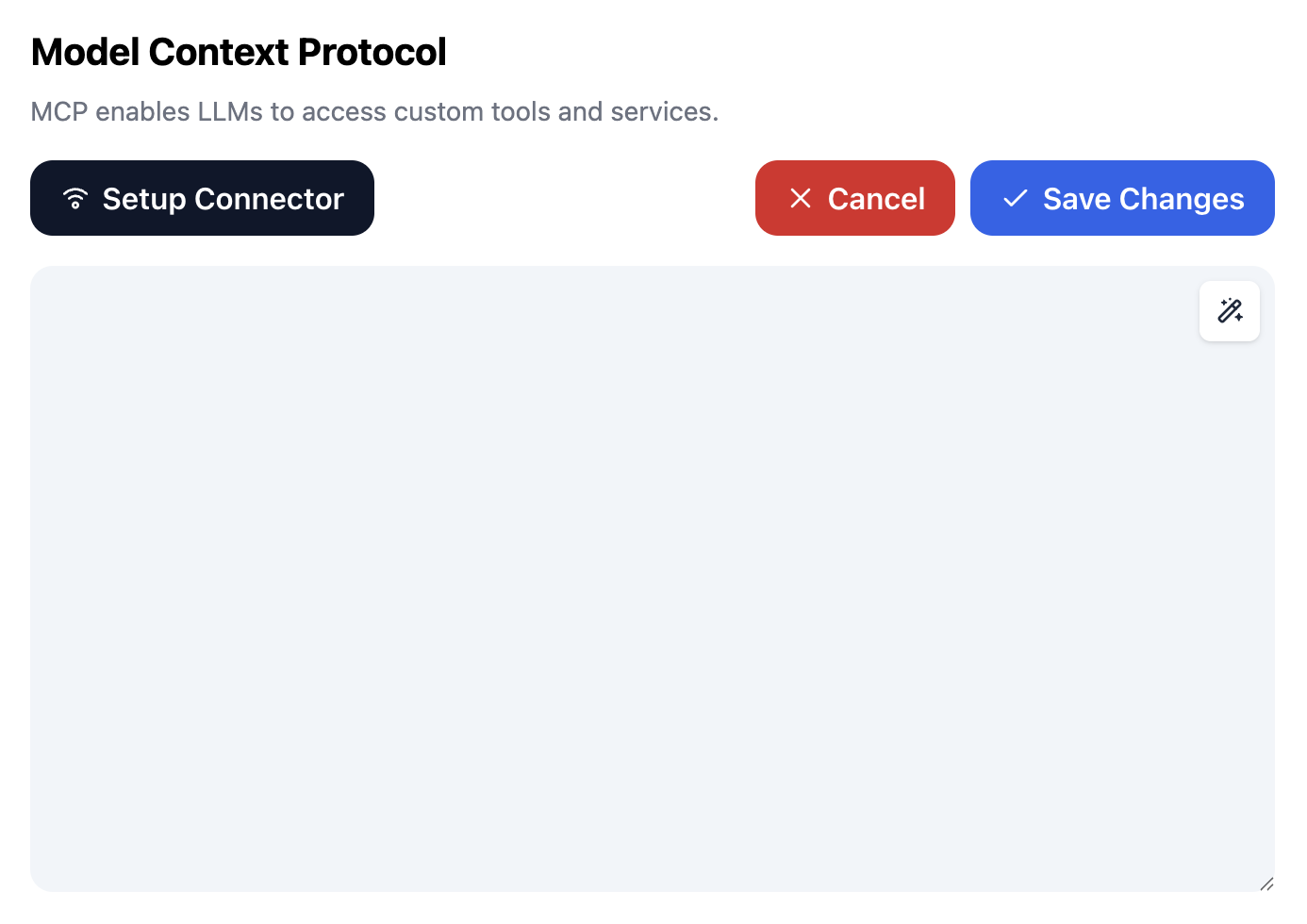
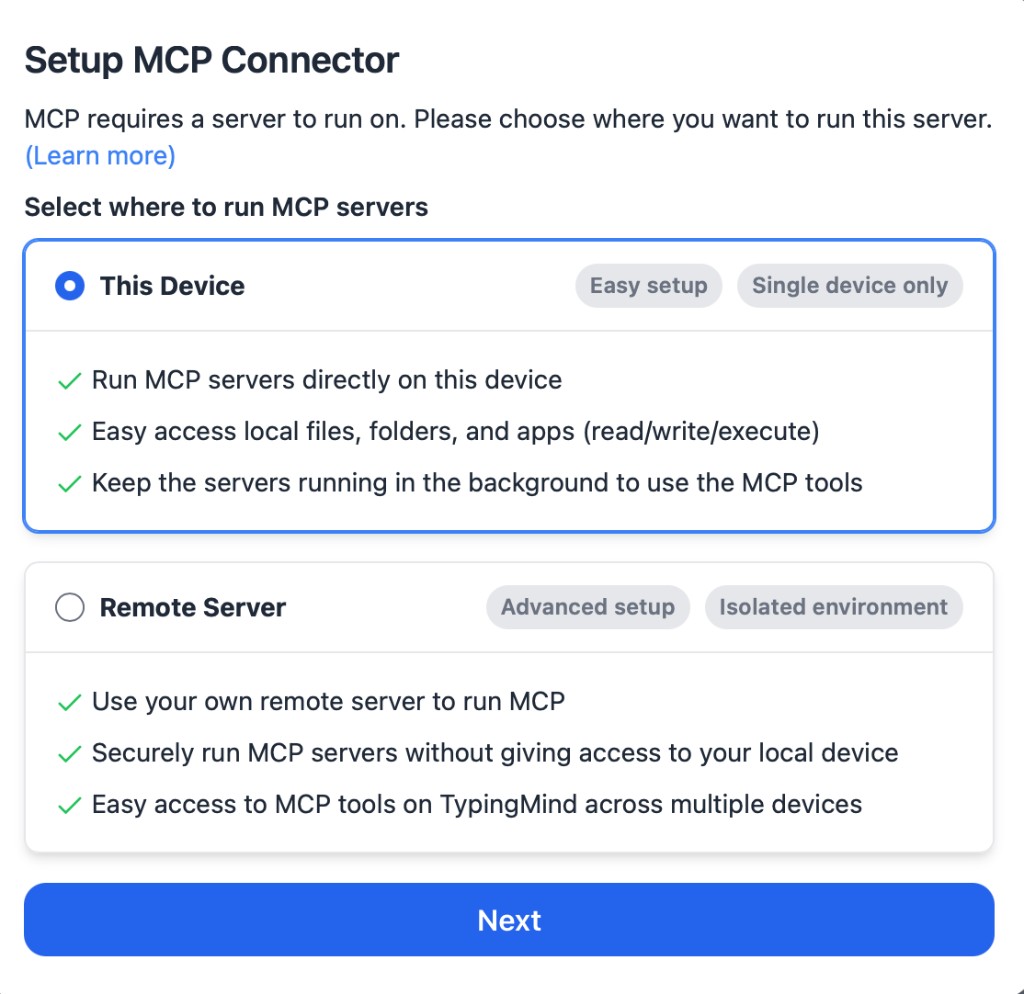
In TypingMind, go to Settings, Advanced Settings, then Model Context Protocol and choose Setup Connector.

  1. Open TypingMind in your browser.
  2. Click the Settings icon.
  3. Go to Advanced Settings.
  4. Open the Model Context Protocol section.
  5. Click Setup Connector and choose This Device.
TypingMind MCP connector setup screen with This Device selected
2

Run the connector command

Choose This Device, copy the command from TypingMind, and run it in Terminal. Keep the process running while you use MCP.

  1. Copy the setup command shown by TypingMind.
  2. Open Terminal on macOS or Windows Terminal on Windows.
  3. Paste and run the command.
  4. Approve the package install if Terminal asks you to proceed.
  5. Keep the Terminal window running while using MCP tools.
3

Add KOSPI/KOSDAQ Stock Data as a server

When the connector status is Ready, click Edit Servers and paste the MCP server configuration.

  1. Wait until the connector status shows Ready.
  2. Click Edit Servers.
  3. Paste the KOSPI/KOSDAQ Stock Data MCP server configuration.
  4. Save the server list.
  5. Refresh if you want to confirm the connector is still ready.
TypingMind MCP settings showing active server and Edit Servers button
{
  "mcpServers": {
    "kospi-kosdaq-stock-data": {
      "command": "npx",
      "args": [
        "-y",
        "kospi-kosdaq-stock-server"
      ]
    }
  }
}
4

Use it across models

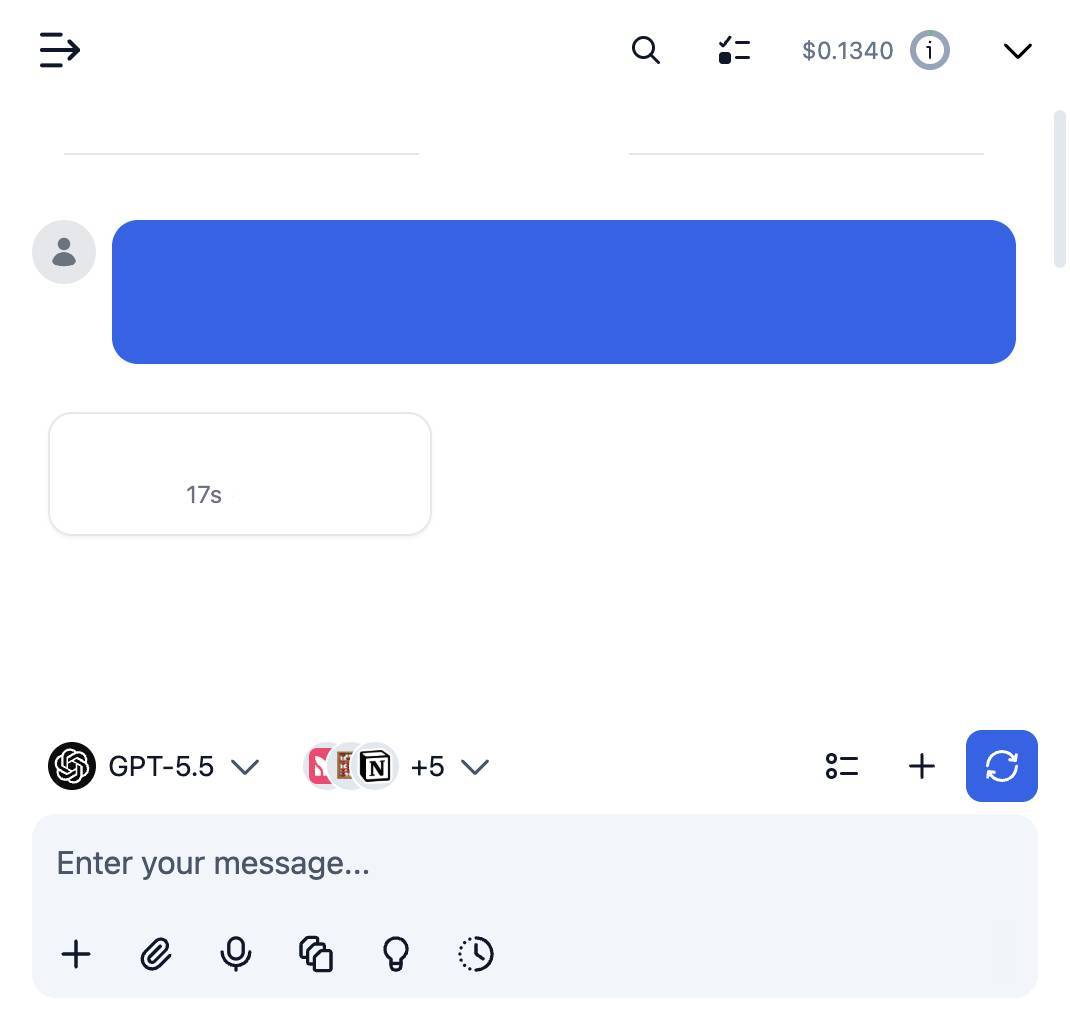
Save the server list, open Plugins, enable the KOSPI/KOSDAQ Stock Data MCP tools, then select any supported AI model in TypingMind and use the tools in chat or assign them to an AI agent.

  1. Open the Plugins page in TypingMind.
  2. Enable the KOSPI/KOSDAQ Stock Data MCP tools.
  3. Start a chat and choose the AI model you want to use.
  4. Use the MCP tools in chat or assign them to an AI agent.
  5. Switch to another AI model whenever needed without reconnecting MCP.
TypingMind chat using enabled MCP tools with a selected AI model
Can you use KOSPI/KOSDAQ Stock Data to help me with this task?
KOSPI/KOSDAQ Stock Data
Sure. I read it.
Here is what I found using KOSPI/KOSDAQ Stock Data.

Option 2: Add an MCP server URL

Use this when KOSPI/KOSDAQ Stock Data is already hosted remotely or your team wants one shared connector that multiple users can access.

1

Open MCP connectors

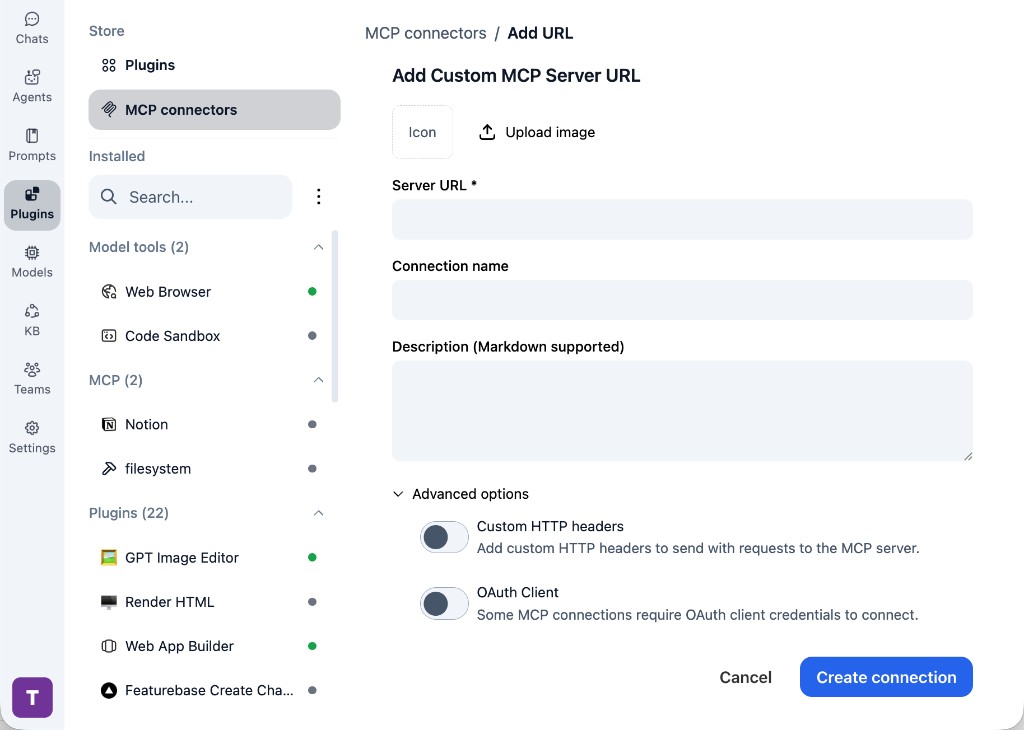
In TypingMind, go to Plugins, open MCP connectors, then choose Add URL.

  1. Open TypingMind in your browser.
  2. Go to Plugins.
  3. Open MCP connectors.
  4. Click Add URL.
TypingMind Add Custom MCP Server URL form
2

Paste the server URL

Enter your server URL in the Server URL field. Add a connection name, description, icon, custom HTTP headers, or OAuth client settings if the server requires them.

  1. Paste your server URL into the Server URL field.
  2. Enter a connection name for KOSPI/KOSDAQ Stock Data.
  3. Add a description and icon if you want it to be easier to identify.
  4. Add custom HTTP headers or OAuth client details if the server requires authentication.
3

Create the connection

Click Create connection, then return to the Plugins list and confirm the new MCP connection is active.

  1. Click Create connection.
  2. Return to the MCP connectors list.
  3. Confirm the KOSPI/KOSDAQ Stock Data connection appears as active.
  4. Refresh the plugin list if the connection does not appear immediately.
4

Switch models without reconnecting

Start a chat with your preferred model, enable the KOSPI/KOSDAQ Stock Data tools from Plugins, and switch to another model whenever needed. The MCP connection stays available to the TypingMind workspace.

  1. Start a new chat in TypingMind.
  2. Select the AI model you want to use.
  3. Enable the KOSPI/KOSDAQ Stock Data tools from Plugins.
  4. Ask the model to use the tool when needed.
  5. Switch to another AI model and reuse the same MCP connection.
TypingMind chat using enabled MCP tools with a selected AI model
Can you use KOSPI/KOSDAQ Stock Data to help me with this task?
KOSPI/KOSDAQ Stock Data
Sure. I read it.
Here is what I found using KOSPI/KOSDAQ Stock Data.

Frequently asked questions

What is the KOSPI/KOSDAQ Stock Data MCP server used for?

KOSPI/KOSDAQ Stock Data is an MCP server that lets compatible AI clients connect to external tools and context. In TypingMind, you can add this MCP server once and make its tools available in your AI workspace.

Can I use KOSPI/KOSDAQ Stock Data MCP with multiple AI models in TypingMind?

Yes. TypingMind connects MCP tools at the workspace level, so you can use KOSPI/KOSDAQ Stock Data with different AI models such as Claude, ChatGPT, Gemini, or other models you have configured in TypingMind without setting up the MCP server separately for each model.

Why use KOSPI/KOSDAQ Stock Data MCP with TypingMind?

TypingMind is one of the best frontends for LLM chat because it brings multiple AI models, prompts, plugins, AI agents, API keys, and MCP tools into one workspace. With KOSPI/KOSDAQ Stock Data connected, you can use its MCP tools across your preferred models while keeping your chat workflow organized in TypingMind.

How do I connect KOSPI/KOSDAQ Stock Data MCP to TypingMind?

KOSPI/KOSDAQ Stock Data can be connected in TypingMind with the local MCP connector or by adding a remote MCP server URL. Use the local connector when the server needs access to files, apps, or private resources on your device, and use a server URL when the MCP server is hosted remotely.

What tools does KOSPI/KOSDAQ Stock Data MCP provide in TypingMind?

KOSPI/KOSDAQ Stock Data exposes 6 MCP tools that can be enabled from the TypingMind Plugins page and used in chat or assigned to AI agents.

Do I need to share my API keys with TypingMind to use KOSPI/KOSDAQ Stock Data MCP?

No. TypingMind is local-first and lets you keep your model providers, API keys, prompts, and MCP configuration under your control. If KOSPI/KOSDAQ Stock Data requires authentication, add the required headers, OAuth settings, or local configuration for that MCP server when you create the connection.

Related MCP Servers

View all

Set up your own AI workspace now

Get notified about new features and future giveaways by subscribing to our newsletter πŸ‘‡