Markdownify MCP logo

Markdownify MCP

CommunityPopular
zcaceres

A Model Context Protocol server for converting almost anything to Markdown

Publisherzcaceres
Repositorymarkdownify-mcp
LanguageTypeScript
Forks
224
Stars
2.7K
Available tools
0
Transport typestdio
Categories
LicenseMIT
Links
  • Connect tools to AI workflows

    Markdownify MCP exposes MCP capabilities that can be used by compatible AI clients and agents.

  • 0 available tools

    Browse the callable actions below, including names and descriptions when provided by the server.

  • Ready-to-copy setup

    Use the installation snippets to configure this server in your preferred MCP client.

  • Open source signals

    2.7K stars and 224 forks from the linked repository.

Markdownify MCP Server

markdownify mcp logo

Markdownify is a Model Context Protocol (MCP) server that converts various file types and web content to Markdown format. It provides a set of tools to transform PDFs, images, audio files, web pages, and more into easily readable and shareable Markdown text.

Features

  • Convert multiple file types to Markdown:
    • PDF
    • Images
    • Audio (with transcription)
    • DOCX
    • XLSX
    • PPTX
  • Convert web content to Markdown:
    • YouTube video transcripts
    • Bing search results
    • General web pages
  • Retrieve existing Markdown files

Getting Started

  1. Clone this repository

  2. Install dependencies:

    bun install

    The preinstall step creates a Python virtual environment at .venv and installs markitdown[all].

  3. Build the project:

    bun run build
  4. Start the server:

    bun start

Development

  • Use bun run dev to start the TypeScript compiler in watch mode
  • Modify src/server.ts to customize server behavior
  • Add or modify tools in src/tools.ts

Usage with Desktop App

To integrate this server with a desktop app, add the following to your app's server configuration:

js
{
  "mcpServers": {
    "markdownify": {
      "command": "node",
      "args": [
        "{ABSOLUTE PATH TO FILE HERE}/dist/index.js"
      ]
    }
  }
}

Environment variables

All paths default to sensible values; override only when the defaults don't fit your install layout.

VariableDefaultPurpose
MARKITDOWN_PATH<project>/.venv/bin/markitdown, then markitdown on PATHAbsolute path to the markitdown executable. Set this when you've installed markitdown system-wide (e.g. pipx install "markitdown[pdf]") instead of using the bundled venv.
REPOMIX_PATH<project>/node_modules/.bin/repomix, then repomix on PATHAbsolute path to the repomix executable used by git-repo-to-markdown.
MD_ALLOWED_PATHSunset (unrestricted)Path-delimiter-separated list (: on POSIX, ; on Windows) of directories the server is allowed to read. When set, all file-input tools (pdf-to-markdown, get-markdown-file, etc.) reject paths outside these directories.
MD_SHARE_DIRunsetDeprecated alias for MD_ALLOWED_PATHS (single directory). Still honored for backward compatibility.

Usage with Docker

Build and run:

sh
docker build -t markdownify-mcp .
docker run --rm -i \
  -v "$HOME/Documents:/data:ro" \
  -e MD_ALLOWED_PATHS=/data \
  markdownify-mcp

Notes for the Docker MCP catalog (mcp/markdownify):

  • Mount any host directories you want the server to read into the container, then pass the container paths to the tools (e.g. /data/foo.pdf, not /Users/you/Documents/foo.pdf).
  • Set MD_ALLOWED_PATHS to the colon-separated list of mounted directories so the server enforces a read boundary that matches the bind mount.
  • The published Docker image installs markitdown[pdf] only — audio transcription and image OCR (audio-to-markdown, image-to-markdown) require the [all] extras and will fail in the slim image. Use the local install (bun install) for the full feature set.

Available Tools

  • youtube-to-markdown: Convert YouTube videos to Markdown

  • pdf-to-markdown: Convert PDF files to Markdown

  • bing-search-to-markdown: Convert Bing search results to Markdown

  • webpage-to-markdown: Convert web pages to Markdown

  • image-to-markdown: Convert images to Markdown with metadata

  • audio-to-markdown: Convert audio files to Markdown with transcription

  • docx-to-markdown: Convert DOCX files to Markdown

  • xlsx-to-markdown: Convert XLSX files to Markdown

  • pptx-to-markdown: Convert PPTX files to Markdown

  • get-markdown-file: Retrieve an existing Markdown file. File extension must end with: *.md, *.markdown.

    OPTIONAL: set MD_ALLOWED_PATHS to restrict every file-input tool to a list of directories, e.g. MD_ALLOWED_PATHS=/data/in:/data/out bun start.

Contributing

Contributions are welcome! Please feel free to submit a Pull Request.

License

This project is licensed under the MIT License - see the LICENSE file for details.
Use Markdownify MCP MCP with multiple AI models

TypingMind connects MCP tools at the workspace level, so once Markdownify MCP is connected, you can use it with different AI models in TypingMind instead of setting it up separately for each model. This MCP runs locally through the TypingMind MCP connector on your device.

Setup guide to use the local connector

Use this when the MCP server needs access to local files, apps, or private resources on your computer.

1

Open the MCP settings

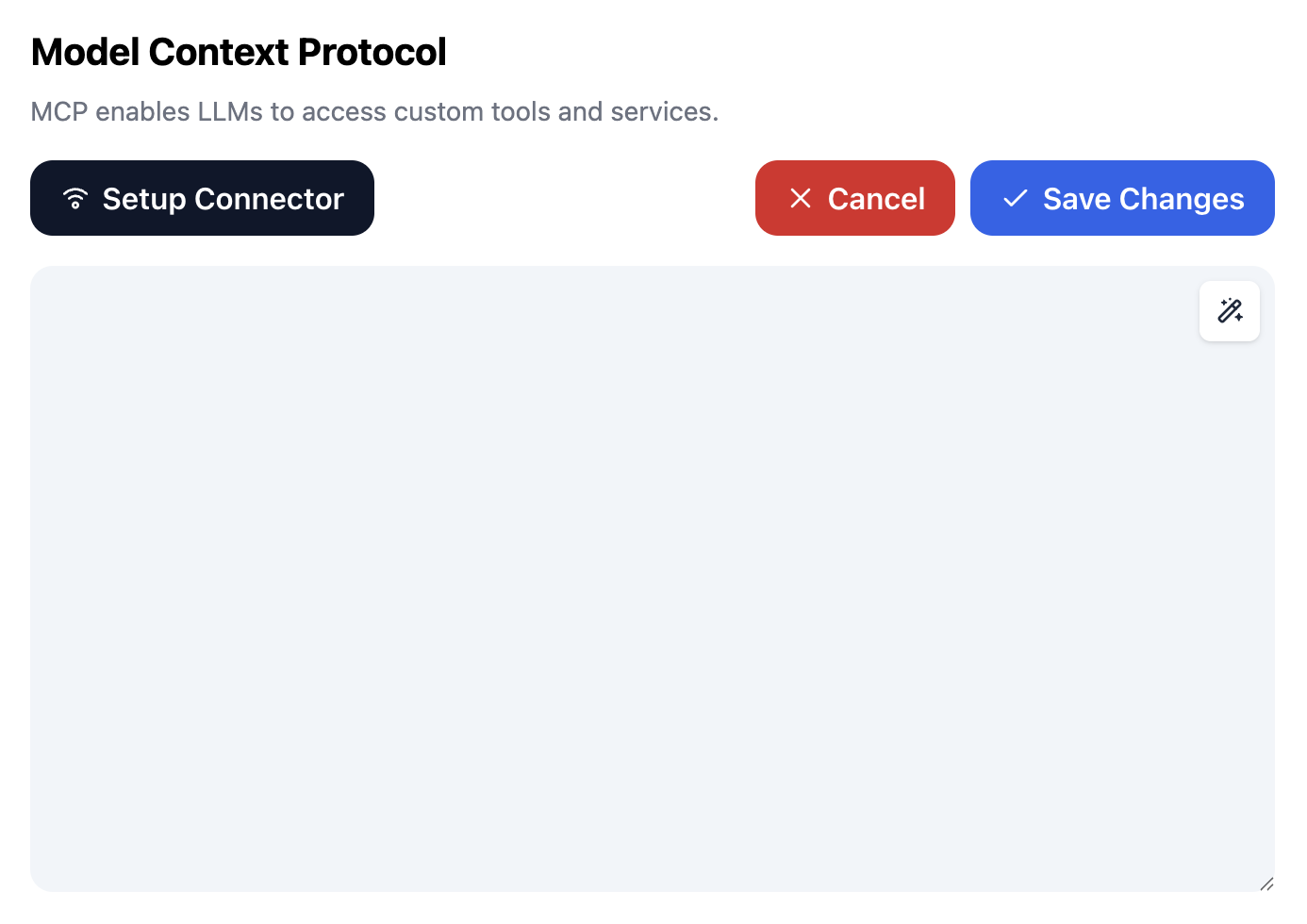
In TypingMind, go to Settings, Advanced Settings, then Model Context Protocol and choose Setup Connector.

  1. Open TypingMind in your browser.
  2. Click the Settings icon.
  3. Go to Advanced Settings.
  4. Open the Model Context Protocol section.
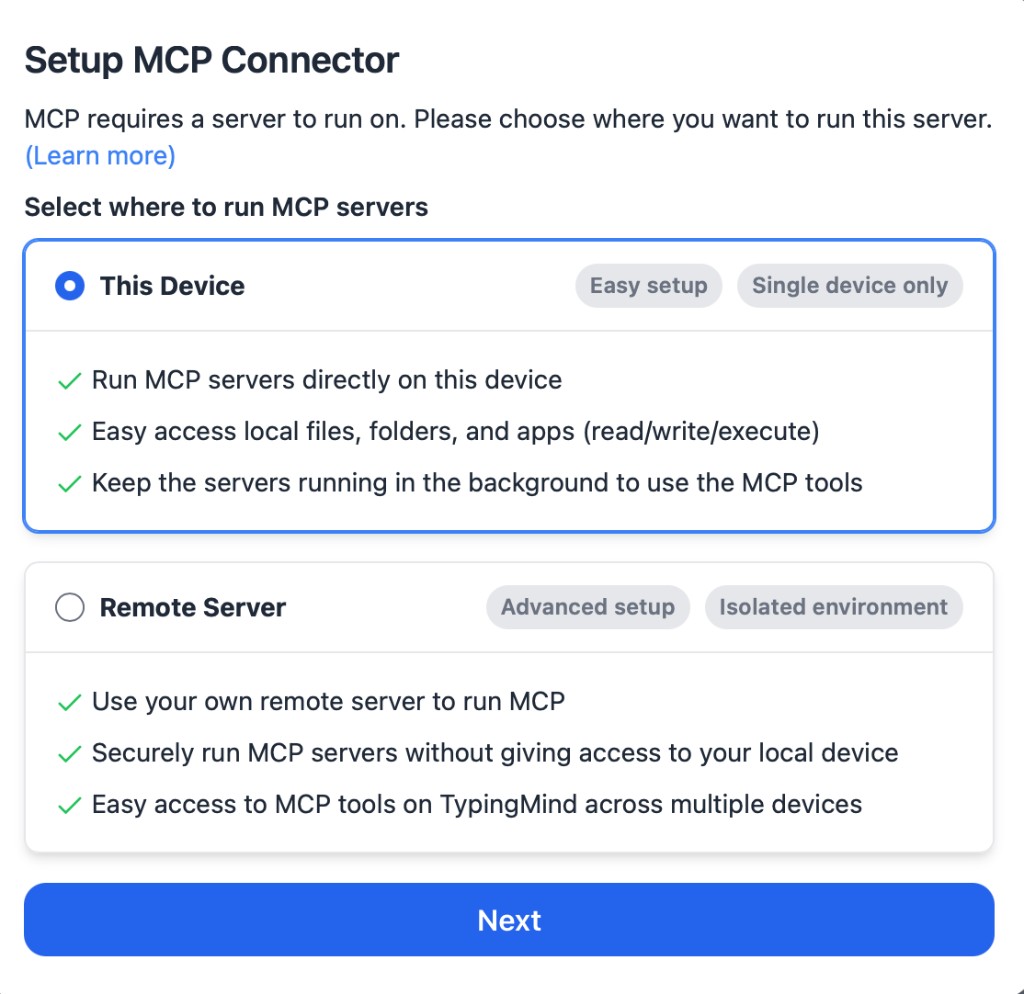
  5. Click Setup Connector and choose This Device.
TypingMind MCP connector setup screen with This Device selected
2

Run the connector command

Choose This Device, copy the command from TypingMind, and run it in Terminal. Keep the process running while you use MCP.

  1. Copy the setup command shown by TypingMind.
  2. Open Terminal on macOS or Windows Terminal on Windows.
  3. Paste and run the command.
  4. Approve the package install if Terminal asks you to proceed.
  5. Keep the Terminal window running while using MCP tools.
3

Add Markdownify MCP as a server

When the connector status is Ready, click Edit Servers and paste the MCP server configuration.

  1. Wait until the connector status shows Ready.
  2. Click Edit Servers.
  3. Paste the Markdownify MCP MCP server configuration.
  4. Save the server list.
  5. Refresh if you want to confirm the connector is still ready.
TypingMind MCP settings showing active server and Edit Servers button
{
  "mcpServers": {
    "markdownify-mcp": {
      "command": "npx",
      "args": [
        "-y",
        "null"
      ]
    }
  }
}
4

Use it across models

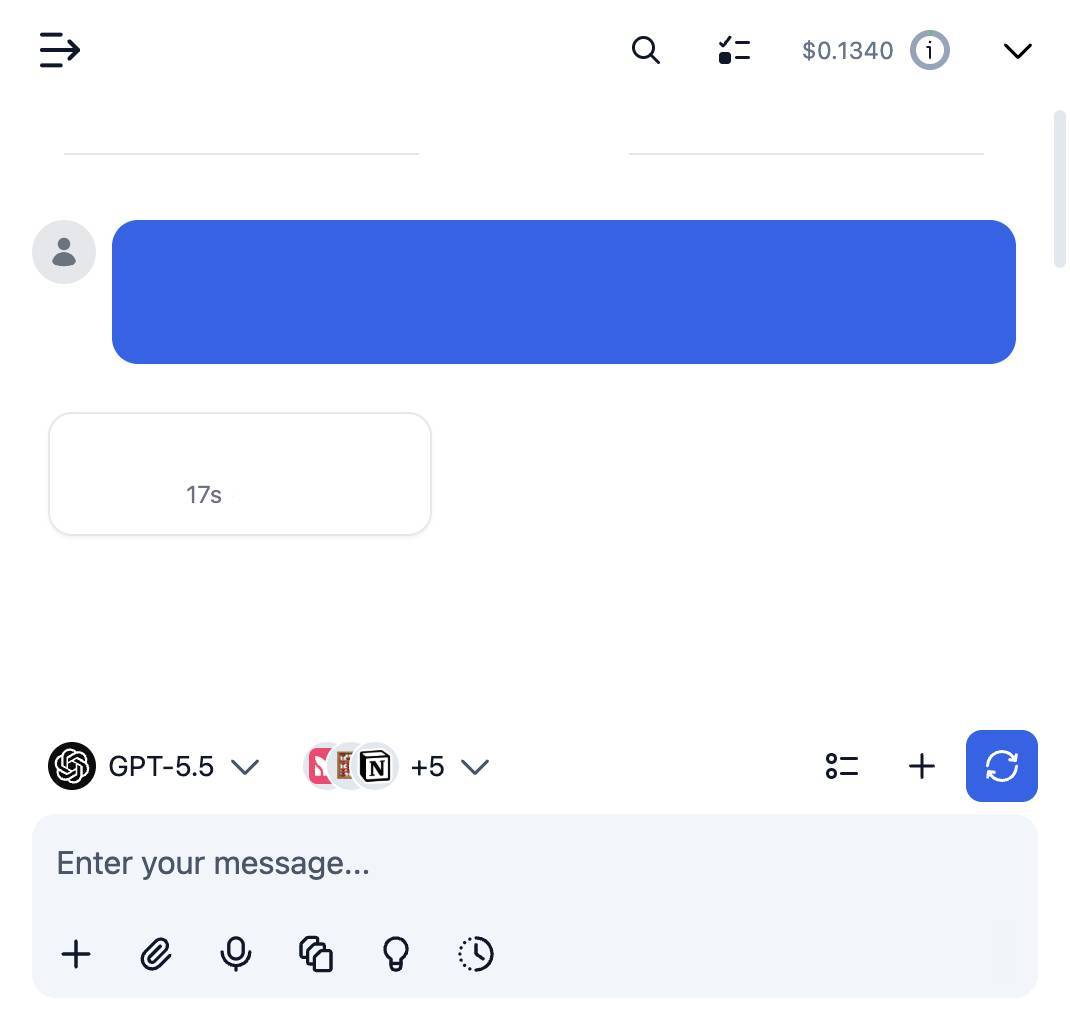
Save the server list, open Plugins, enable the Markdownify MCP MCP tools, then select any supported AI model in TypingMind and use the tools in chat or assign them to an AI agent.

  1. Open the Plugins page in TypingMind.
  2. Enable the Markdownify MCP MCP tools.
  3. Start a chat and choose the AI model you want to use.
  4. Use the MCP tools in chat or assign them to an AI agent.
  5. Switch to another AI model whenever needed without reconnecting MCP.
TypingMind chat using enabled MCP tools with a selected AI model
Can you use Markdownify MCP to help me with this task?
Markdownify MCP
Sure. I read it.
Here is what I found using Markdownify MCP.

Frequently asked questions

What is the Markdownify MCP MCP server used for?

Markdownify MCP is an MCP server that lets compatible AI clients connect to external tools and context. In TypingMind, you can add this MCP server once and make its tools available in your AI workspace.

Can I use Markdownify MCP MCP with multiple AI models in TypingMind?

Yes. TypingMind connects MCP tools at the workspace level, so you can use Markdownify MCP with different AI models such as Claude, ChatGPT, Gemini, or other models you have configured in TypingMind without setting up the MCP server separately for each model.

Why use Markdownify MCP MCP with TypingMind?

TypingMind is one of the best frontends for LLM chat because it brings multiple AI models, prompts, plugins, AI agents, API keys, and MCP tools into one workspace. With Markdownify MCP connected, you can use its MCP tools across your preferred models while keeping your chat workflow organized in TypingMind.

How do I connect Markdownify MCP MCP to TypingMind?

Markdownify MCP runs through the TypingMind local MCP connector. This is best when the MCP server needs access to local files, desktop apps, command-line tools, or private resources on your computer.

What tools does Markdownify MCP MCP provide in TypingMind?

Markdownify MCP exposes MCP capabilities that can be enabled from the TypingMind Plugins page and used in chat or assigned to AI agents.

Do I need to share my API keys with TypingMind to use Markdownify MCP MCP?

No. TypingMind is local-first and lets you keep your model providers, API keys, prompts, and MCP configuration under your control. If Markdownify MCP requires authentication, add the required headers, OAuth settings, or local configuration for that MCP server when you create the connection.

Related MCP Servers

View all

Set up your own AI workspace now

Get notified about new features and future giveaways by subscribing to our newsletter 👇