Neo4j logo

Neo4j

Organization
neo4j-contrib

Neo4j Labs Model Context Protocol servers

Publisherneo4j-contrib
Repositorymcp-neo4j
LanguagePython
Forks
260
Stars
984
Available tools
0
Transport typestdio
Categories
LicenseMIT
Links
  • Connect tools to AI workflows

    Neo4j exposes MCP capabilities that can be used by compatible AI clients and agents.

  • 0 available tools

    Browse the callable actions below, including names and descriptions when provided by the server.

  • Ready-to-copy setup

    Use the installation snippets to configure this server in your preferred MCP client.

  • Open source signals

    984 stars and 260 forks from the linked repository.

Neo4j Labs MCP Servers

Neo4j Labs

These MCP servers are a part of the Neo4j Labs program. They are developed and maintained by the Neo4j Field GenAI team and welcome contributions from the larger developer community. These servers are frequently updated with new and experimental features, but are not supported by the Neo4j product team.

They are actively developed and maintained, but we don’t provide any SLAs or guarantees around backwards compatibility and deprecation.

If you are looking for the official product Neo4j MCP server please find it here.

Overview

Model Context Protocol (MCP) is a standardized protocol for managing context between large language models (LLMs) and external systems.

This lets you use Claude Desktop, or any other MCP Client (VS Code, Cursor, Windsurf, Gemini CLI), to use natural language to accomplish things with Neo4j and your Aura account, e.g.:

  • What is in this graph?
  • Render a chart from the top products sold by frequency, total and average volume
  • List my instances
  • Create a new instance named mcp-test for Aura Professional with 4GB and Graph Data Science enabled
  • Store the fact that I worked on the Neo4j MCP Servers today with Andreas and Oskar

Servers

mcp-neo4j-cypher - natural language to Cypher queries

Details in Readme

Get database schema for a configured database and execute generated read and write Cypher queries on that database.

Requirement: Requires the APOC plugin to be installed and enabled on the Neo4j instance for schema inspection.

mcp-neo4j-memory - knowledge graph memory stored in Neo4j

Details in Readme

Store and retrieve entities and relationships from your personal knowledge graph in a local or remote Neo4j instance. Access that information over different sessions, conversations, clients.

mcp-neo4j-cloud-aura-api - Neo4j Aura cloud service management API

Details in Readme

Manage your Neo4j Aura instances directly from the comfort of your AI assistant chat.

Create and destroy instances, find instances by name, scale them up and down and enable features.

mcp-neo4j-data-modeling - interactive graph data modeling and visualization

Details in Readme

Create, validate, and visualize Neo4j graph data models. Allows for model import/export from Arrows.app.

Transport Modes

All servers support multiple transport modes:

  • STDIO (default): Standard input/output for local tools and Claude Desktop integration
  • SSE: Server-Sent Events for web-based deployments
  • HTTP: Streamable HTTP for modern web deployments and microservices

HTTP Transport Configuration

To run a server in HTTP mode, use the --transport http flag:

bash
# Basic HTTP mode
mcp-neo4j-cypher --transport http

# Custom HTTP configuration
mcp-neo4j-cypher --transport http --host 127.0.0.1 --port 8080 --path /api/mcp/

Environment variables are also supported:

bash
export NEO4J_TRANSPORT=http
export NEO4J_MCP_SERVER_HOST=127.0.0.1
export NEO4J_MCP_SERVER_PORT=8080
export NEO4J_MCP_SERVER_PATH=/api/mcp/
mcp-neo4j-cypher

Cloud Deployment

All servers in this repository are containerized and ready for cloud deployment on platforms like AWS ECS Fargate and Azure Container Apps. Each server supports HTTP transport mode specifically designed for scalable, production-ready deployments with auto-scaling and load balancing capabilities.

πŸ“‹ Complete Cloud Deployment Guide β†’

The deployment guide covers:

  • AWS ECS Fargate: Step-by-step deployment with auto-scaling and Application Load Balancer
  • Azure Container Apps: Serverless container deployment with built-in scaling and traffic management
  • Configuration Best Practices: Security, monitoring, resource recommendations, and troubleshooting
  • Integration Examples: Connecting MCP clients to cloud-deployed servers

Contributing

Contributions are welcome! Please feel free to submit a Pull Request.

Blog Posts

License

MIT License

Use Neo4j MCP with multiple AI models

TypingMind connects MCP tools at the workspace level, so once Neo4j is connected, you can use it with different AI models in TypingMind instead of setting it up separately for each model. This MCP runs locally through the TypingMind MCP connector on your device.

Setup guide to use the local connector

Use this when the MCP server needs access to local files, apps, or private resources on your computer.

1

Open the MCP settings

In TypingMind, go to Settings, Advanced Settings, then Model Context Protocol and choose Setup Connector.

  1. Open TypingMind in your browser.
  2. Click the Settings icon.
  3. Go to Advanced Settings.
  4. Open the Model Context Protocol section.
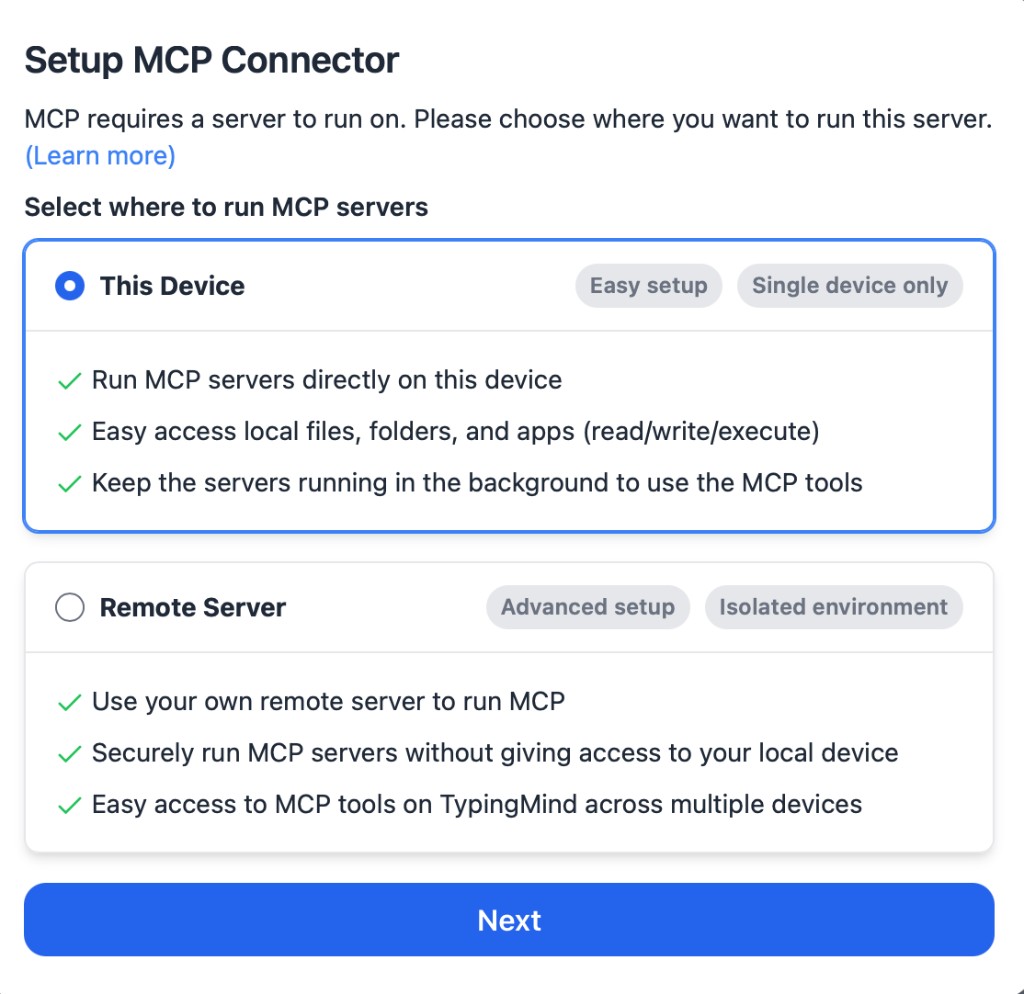
  5. Click Setup Connector and choose This Device.
TypingMind MCP connector setup screen with This Device selected
2

Run the connector command

Choose This Device, copy the command from TypingMind, and run it in Terminal. Keep the process running while you use MCP.

  1. Copy the setup command shown by TypingMind.
  2. Open Terminal on macOS or Windows Terminal on Windows.
  3. Paste and run the command.
  4. Approve the package install if Terminal asks you to proceed.
  5. Keep the Terminal window running while using MCP tools.
3

Add Neo4j as a server

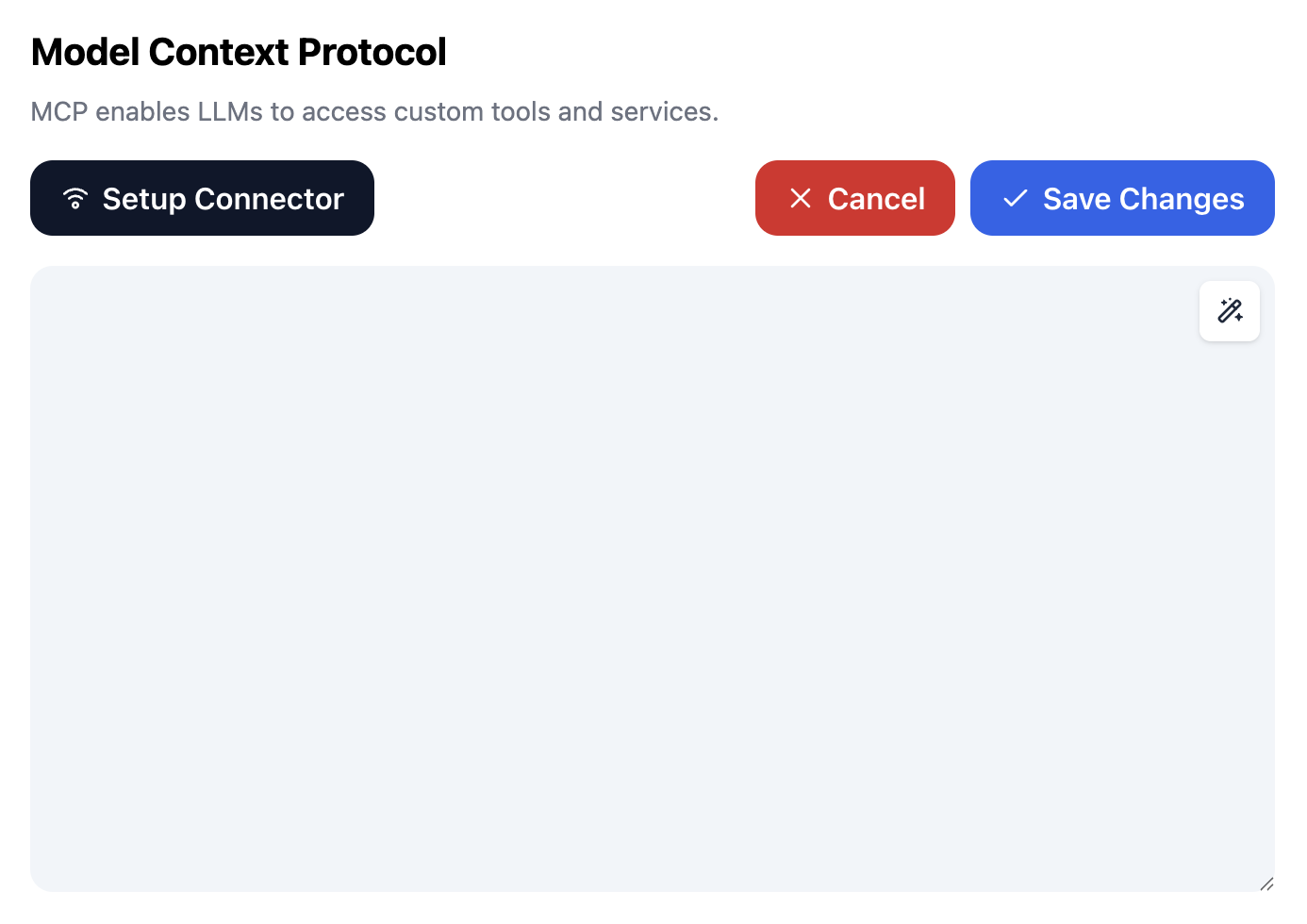
When the connector status is Ready, click Edit Servers and paste the MCP server configuration.

  1. Wait until the connector status shows Ready.
  2. Click Edit Servers.
  3. Paste the Neo4j MCP server configuration.
  4. Save the server list.
  5. Refresh if you want to confirm the connector is still ready.
TypingMind MCP settings showing active server and Edit Servers button
{
  "mcpServers": {
    "mcp-neo4j": {
      "command": "npx",
      "args": [
        "-y",
        "<mcp-server-package>"
      ]
    }
  }
}
4

Use it across models

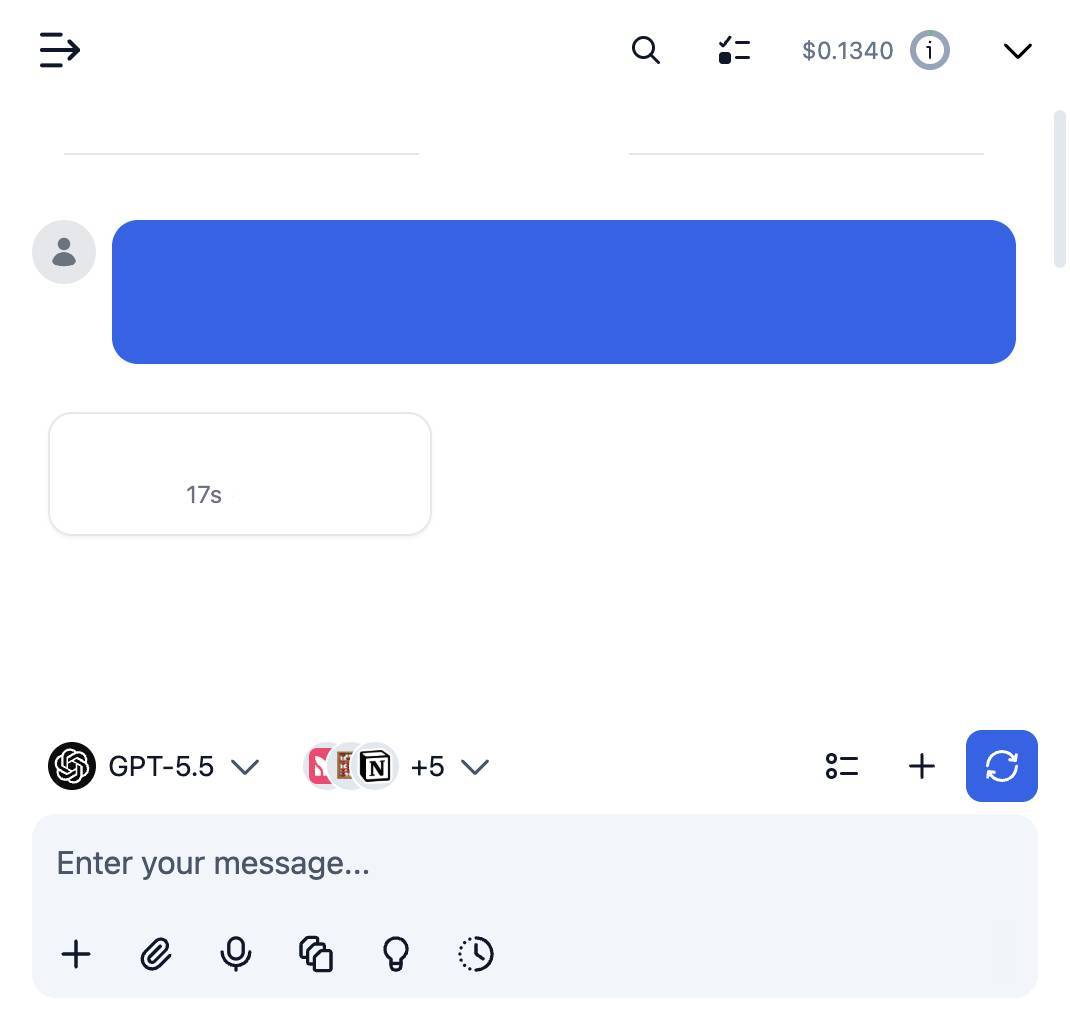
Save the server list, open Plugins, enable the Neo4j MCP tools, then select any supported AI model in TypingMind and use the tools in chat or assign them to an AI agent.

  1. Open the Plugins page in TypingMind.
  2. Enable the Neo4j MCP tools.
  3. Start a chat and choose the AI model you want to use.
  4. Use the MCP tools in chat or assign them to an AI agent.
  5. Switch to another AI model whenever needed without reconnecting MCP.
TypingMind chat using enabled MCP tools with a selected AI model
Can you use Neo4j to help me with this task?
Neo4j
Sure. I read it.
Here is what I found using Neo4j.

Frequently asked questions

What is the Neo4j MCP server used for?

Neo4j is an MCP server that lets compatible AI clients connect to external tools and context. In TypingMind, you can add this MCP server once and make its tools available in your AI workspace.

Can I use Neo4j MCP with multiple AI models in TypingMind?

Yes. TypingMind connects MCP tools at the workspace level, so you can use Neo4j with different AI models such as Claude, ChatGPT, Gemini, or other models you have configured in TypingMind without setting up the MCP server separately for each model.

Why use Neo4j MCP with TypingMind?

TypingMind is one of the best frontends for LLM chat because it brings multiple AI models, prompts, plugins, AI agents, API keys, and MCP tools into one workspace. With Neo4j connected, you can use its MCP tools across your preferred models while keeping your chat workflow organized in TypingMind.

How do I connect Neo4j MCP to TypingMind?

Neo4j runs through the TypingMind local MCP connector. This is best when the MCP server needs access to local files, desktop apps, command-line tools, or private resources on your computer.

What tools does Neo4j MCP provide in TypingMind?

Neo4j exposes MCP capabilities that can be enabled from the TypingMind Plugins page and used in chat or assigned to AI agents.

Do I need to share my API keys with TypingMind to use Neo4j MCP?

No. TypingMind is local-first and lets you keep your model providers, API keys, prompts, and MCP configuration under your control. If Neo4j requires authentication, add the required headers, OAuth settings, or local configuration for that MCP server when you create the connection.

Related MCP Servers

View all

Set up your own AI workspace now

Get notified about new features and future giveaways by subscribing to our newsletter πŸ‘‡