MCP Shrimp Task Manager logo

MCP Shrimp Task Manager

CommunityPopular
cjo4m06

Shrimp Task Manager is a task tool built for AI Agents, emphasizing chain-of-thought, reflection, and style consistency. It converts natural language into structured dev tasks with dependency tracking and iterative refinement, enabling agent-like developer behavior in reasoning AI systems.

Publishercjo4m06
Repositorymcp-shrimp-task-manager
LanguageJavaScript
Forks
256
Stars
2.2K
Available tools
15
Transport typestdio
Categories
LicenseMIT
Links
  • Connect tools to AI workflows

    MCP Shrimp Task Manager exposes MCP capabilities that can be used by compatible AI clients and agents.

  • 15 available tools

    Browse the callable actions below, including names and descriptions when provided by the server.

  • Ready-to-copy setup

    Use the installation snippets to configure this server in your preferred MCP client.

  • Open source signals

    2.2K stars and 256 forks from the linked repository.

๐Ÿ‡บ๐Ÿ‡ธ English | ๐Ÿ‡ฉ๐Ÿ‡ช Deutsch | ๐Ÿ‡ช๐Ÿ‡ธ Espaรฑol | ๐Ÿ‡ซ๐Ÿ‡ท Franรงais | ๐Ÿ‡ฎ๐Ÿ‡น Italiano | ๐Ÿ‡ฎ๐Ÿ‡ณ เคนเคฟเคจเฅเคฆเฅ€ | ๐Ÿ‡ฐ๐Ÿ‡ท ํ•œ๊ตญ์–ด | ๐Ÿ‡ง๐Ÿ‡ท Portuguรชs | ๐Ÿ‡ท๐Ÿ‡บ ะ ัƒััะบะธะน | ๐Ÿ‡จ๐Ÿ‡ณ ไธญๆ–‡

MCP Shrimp Task Manager

๐Ÿฆ Intelligent task management for AI-powered development - Break down complex projects into manageable tasks, maintain context across sessions, and accelerate your development workflow.

Shrimp Task Manager Demo

Watch Demo Video โ€ข Quick Start โ€ข Documentation

smithery badge

๐Ÿš€ Quick Start

Prerequisites

  • Node.js 18+
  • npm or yarn
  • MCP-compatible AI client (Claude Code, etc.)

Installation

Installing Claude Code

Windows 11 (with WSL2):

bash
# First, ensure WSL2 is installed (in PowerShell as Administrator)
wsl --install

# Enter Ubuntu/WSL environment
wsl -d Ubuntu

# Install Claude Code globally
npm install -g @anthropic-ai/claude-code

# Start Claude Code
claude

macOS/Linux:

bash
# Install Claude Code globally
npm install -g @anthropic-ai/claude-code

# Start Claude Code
claude

Installing Shrimp Task Manager

bash
# Clone the repository
git clone https://github.com/cjo4m06/mcp-shrimp-task-manager.git
cd mcp-shrimp-task-manager

# Install dependencies
npm install

# Build the project
npm run build

Configure Claude Code

Create a .mcp.json file in your project directory:

json
{
  "mcpServers": {
    "shrimp-task-manager": {
      "command": "node",
      "args": ["/path/to/mcp-shrimp-task-manager/dist/index.js"],
      "env": {
        "DATA_DIR": "/path/to/your/shrimp_data",
        "TEMPLATES_USE": "en",
        "ENABLE_GUI": "false"
      }
    }
  }
}

Example configuration:

json
{
  "mcpServers": {
    "shrimp-task-manager": {
      "command": "node",
      "args": ["/home/fire/claude/mcp-shrimp-task-manager/dist/index.js"],
      "env": {
        "DATA_DIR": "/home/fire/claude/project/shrimp_data",
        "TEMPLATES_USE": "en",
        "ENABLE_GUI": "false"
      }
    }
  }
}

Then start Claude Code with your custom MCP configuration:

bash
claude --dangerously-skip-permissions --mcp-config .mcp.json

Cline (VS Code Extension): A VS Code extension for AI-assisted coding. Add to VS Code settings.json under cline.mcpServers

Claude Desktop: Add to ~/Library/Application Support/Claude/claude_desktop_config.json (macOS) or %APPDATA%\Claude\claude_desktop_config.json (Windows)

Start Using

  1. Initialize your project: "init project rules"
  2. Plan a task: "plan task: implement user authentication"
  3. Execute tasks: "execute task" or "continuous mode"

๐Ÿ’ก What is Shrimp?

Shrimp Task Manager is an MCP (Model Context Protocol) server that transforms how AI agents approach software development. Instead of losing context or repeating work, Shrimp provides:

  • ๐Ÿง  Persistent Memory: Tasks and progress persist across sessions
  • ๐Ÿ“‹ Structured Workflows: Guided processes for planning, execution, and verification
  • ๐Ÿ”„ Smart Decomposition: Automatically breaks complex tasks into manageable subtasks
  • ๐ŸŽฏ Context Preservation: Never lose your place, even with token limits

โœจ Core Features

Task Management

  • Intelligent Planning: Deep analysis of requirements before implementation
  • Task Decomposition: Break down large projects into atomic, testable units
  • Dependency Tracking: Automatic management of task relationships
  • Progress Monitoring: Real-time status tracking and updates

Advanced Capabilities

  • ๐Ÿ”ฌ Research Mode: Systematic exploration of technologies and solutions
  • ๐Ÿค– Agent System: Assign specialized AI agents to specific tasks (Learn more)
  • ๐Ÿ“ Project Rules: Define and maintain coding standards across your project
  • ๐Ÿ’พ Task Memory: Automatic backup and restoration of task history

Web Interfaces

๐Ÿ–ฅ๏ธ Task Viewer

Modern React interface for visual task management with drag-and-drop, real-time search, and multi-profile support.

Quick Setup:

bash
cd tools/task-viewer
npm install
npm run start:all
# Access at http://localhost:5173

๐Ÿ“– Full Task Viewer Documentation

๐ŸŒ Web GUI

Optional lightweight web interface for quick task overview.

Enable in .env: ENABLE_GUI=true

๐Ÿ“š Documentation

๐ŸŽฏ Common Use Cases

Agent: "plan task: add user authentication with JWT"
# Agent analyzes codebase, creates subtasks

Agent: "execute task"
# Implements authentication step by step
Agent: "plan task: fix memory leak in data processing"
# Agent researches issue, creates fix plan

Agent: "continuous mode"
# Executes all fix tasks automatically
Agent: "research: compare React vs Vue for this project"
# Systematic analysis with pros/cons

Agent: "plan task: migrate component to chosen framework"
# Creates migration plan based on research

๐Ÿ› ๏ธ Configuration

Environment Variables

Create a .env file:

bash
# Required
DATA_DIR=/path/to/data/storage

# Optional
ENABLE_GUI=true          # Enable web GUI
WEB_PORT=3000           # Custom web port
PROMPT_LANGUAGE=en      # Prompt language (en, zh, etc.)

Available Commands

CommandDescription
init project rulesInitialize project standards
plan task [description]Create a task plan
execute task [id]Execute specific task
continuous modeExecute all tasks sequentially
list tasksShow all tasks
research [topic]Enter research mode
reflect task [id]Review and improve task

๐Ÿค Contributing

We welcome contributions! Please see our Contributing Guide for details.

๐Ÿ“„ License

This project is licensed under the MIT License - see the LICENSE file for details.

๐ŸŒŸ Credits

Created by cjo4m06 and maintained by the community.

Installation

TypingMind
{
  "mcpServers": {
    "mcp-shrimp-task-manager": {
      "command": "npx",
      "args": [
        "mcp-shrimp-task-manager"
      ]
    }
  }
}

Available Tools

  • plan_task

    When you need to plan tasks or construct complex features, you can use this tool to receive task planning guidance. You are expected to strictly follow the step-by-step instructions provided by the tool when organizing your tasks. You may optionally choose to reference existing tasks for extended planning.

    Critical Warning: All forms of assumptions, guesses, and imagination are strictly prohibited. You must use every available tool at your disposal to gather real information.

  • analyze_task

    Deeply analyze task requirements and systematically examine the codebase, assess technical feasibility and potential risks, if code needs to be provided use pseudocode format and only provide high-level logic flow and key steps avoiding complete code

  • reflect_task

    Critically review analysis results, assess solution completeness and identify optimization opportunities, ensure solutions conform to best practices, if code needs to be provided use pseudocode format and only provide high-level logic flow and key steps avoiding complete code

  • split_tasks

    Break down complex tasks into independent subtasks, establishing dependencies and priorities.

    1. Granularity Control (Required Reading)

    • Minimum Viable Task

      Each subtask should be completable and verifiable by a single developer within 1โ€“2 working days (approximately 8โ€“16 hours).

    • Maximum Complexity Limitation

      A single subtask should not span multiple technical domains such as frontend, backend, and database.
      If cross-domain work is required, split it into multiple subtasks.

    • Recommended Number of Tasks

      Avoid splitting into more than 10 subtasks at once.
      If more are needed, submit them in prioritized batches (6โ€“8 tasks per batch).

    • Recommended Task Length

      Each split should not exceed 5,000 characters.
      If it does, divide and submit in multiple batches.

    • Depth Limitation

      The task tree should not exceed 3 levels:

      • Level 1: Functional Modules
      • Level 2: Main Processe
  • list_tasks

    Generate structured task lists, including complete status tracking, priorities, and dependencies

  • execute_task

    Retrieve the instructional guidance for a specific task. You will complete the programming task based on this guidance. You must strictly follow the feedback and instructions provided by the tool โ€” it is designed to guide you toward perfect task completion, not to execute the task for you. Severe Warning: Calling the executeTask tool does not mean you have completed the task. You must follow the step-by-step guidance returned by the tool to complete the task properly.

  • verify_task

    Verify Task

    Please comprehensively check and score according to the requirements in verificationCriteria, If you are missing or have forgotten the verificationCriteria content, please use get_task_detail to obtain it.

    Please score according to the following rules:

    Verification Standards

    1. Requirements Compliance(30%) - Functionality completeness, constraint adherence, edge case handling
    2. Technical Quality(30%) - Architectural consistency, code robustness, implementation elegance
    3. Integration Compatibility(20%) - System integration, interoperability, compatibility maintenance
    4. Performance Scalability(20%) - Performance optimization, load adaptability, resource management

    score Parameter Guidelines

    Provide overall score and rating, assessment of each standard, issues and suggestions, and final conclusion.

    Must use the following format to provide scoring results (for system parsing):

    score: [number from 0-100]
    

    summary Par

  • delete_task

    Delete incomplete tasks, but does not allow deleting completed tasks, ensuring the integrity of system records

  • clear_all_tasks

    Clear incomplete tasks and reset the task list

  • update_task

    Update task content, including name, description and notes, dependent tasks, related files, implementation guide, and verification criteria, completed tasks only allow updating summary and related files

  • query_task

    Search for tasks based on keywords or ID, display abbreviated task information

  • get_task_detail

    Retrieve complete detailed information of a task based on task ID, including untruncated implementation guides and verification criteria

  • process_thought

    Conduct flexible and evolvable thinking processes, progressively deepen understanding and generate effective solutions through establishing, questioning, verifying, and correcting ideas. When encountering situations requiring data collection, analysis, or research, prioritize reviewing project-related code; if relevant code does not exist, query the web rather than speculate. Set nextThoughtNeeded to false when thinking is sufficient, otherwise adjust total_thoughts to extend the process

  • init_project_rules

    Initialize project standards, call this tool when the user requests to generate or initialize a project standards document, also call this tool if the user requests to change or update project standards

  • research_mode

    When you need to conduct in-depth research on programming-related topics, you can use this tool to enter a specialized research mode. This tool will guide you on how to use web search and code search tools to systematically research technical topics, ensuring research depth and breadth while avoiding topic deviation. Suitable for technical research, best practice exploration, solution comparison, and other scenarios.

Use MCP Shrimp Task Manager MCP with multiple AI models

TypingMind connects MCP tools at the workspace level, so once MCP Shrimp Task Manager is connected, you can use it with different AI models in TypingMind instead of setting it up separately for each model. This MCP runs locally through the TypingMind MCP connector on your device.

Setup guide to use the local connector

Use this when the MCP server needs access to local files, apps, or private resources on your computer.

1

Open the MCP settings

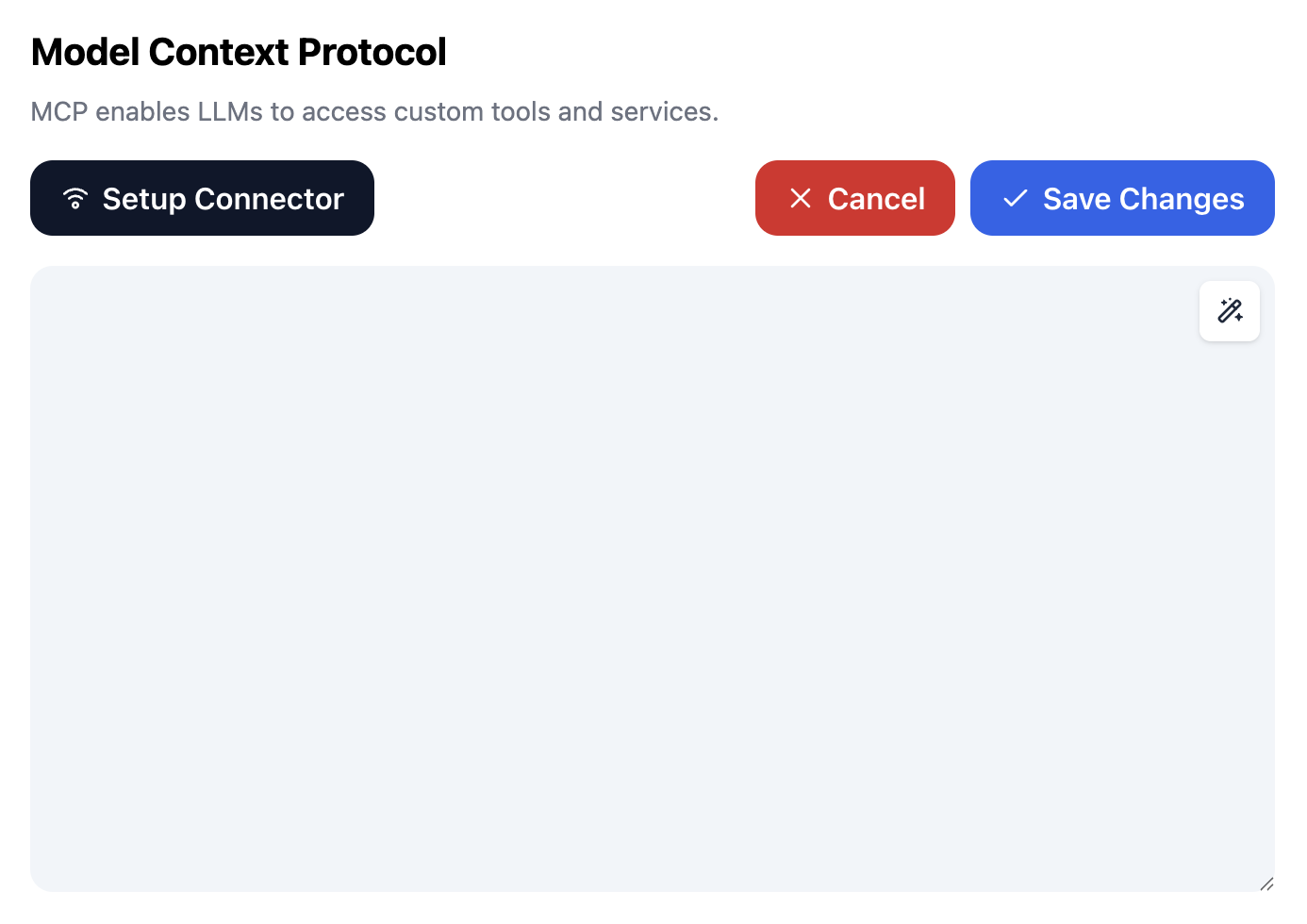
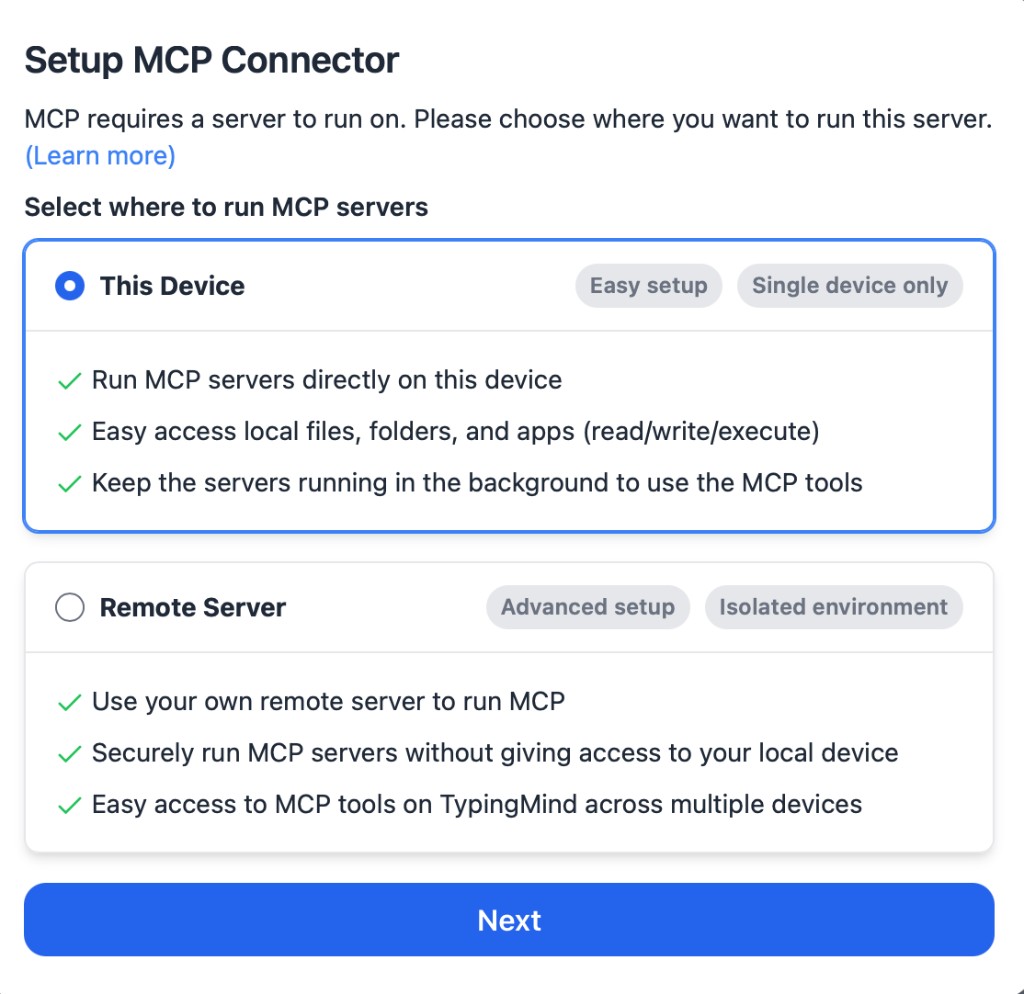
In TypingMind, go to Settings, Advanced Settings, then Model Context Protocol and choose Setup Connector.

  1. Open TypingMind in your browser.
  2. Click the Settings icon.
  3. Go to Advanced Settings.
  4. Open the Model Context Protocol section.
  5. Click Setup Connector and choose This Device.
TypingMind MCP connector setup screen with This Device selected
2

Run the connector command

Choose This Device, copy the command from TypingMind, and run it in Terminal. Keep the process running while you use MCP.

  1. Copy the setup command shown by TypingMind.
  2. Open Terminal on macOS or Windows Terminal on Windows.
  3. Paste and run the command.
  4. Approve the package install if Terminal asks you to proceed.
  5. Keep the Terminal window running while using MCP tools.
3

Add MCP Shrimp Task Manager as a server

When the connector status is Ready, click Edit Servers and paste the MCP server configuration.

  1. Wait until the connector status shows Ready.
  2. Click Edit Servers.
  3. Paste the MCP Shrimp Task Manager MCP server configuration.
  4. Save the server list.
  5. Refresh if you want to confirm the connector is still ready.
TypingMind MCP settings showing active server and Edit Servers button
{
  "mcpServers": {
    "mcp-shrimp-task-manager": {
      "command": "npx",
      "args": [
        "-y",
        "mcp-shrimp-task-manager"
      ]
    }
  }
}
4

Use it across models

Save the server list, open Plugins, enable the MCP Shrimp Task Manager MCP tools, then select any supported AI model in TypingMind and use the tools in chat or assign them to an AI agent.

  1. Open the Plugins page in TypingMind.
  2. Enable the MCP Shrimp Task Manager MCP tools.
  3. Start a chat and choose the AI model you want to use.
  4. Use the MCP tools in chat or assign them to an AI agent.
  5. Switch to another AI model whenever needed without reconnecting MCP.
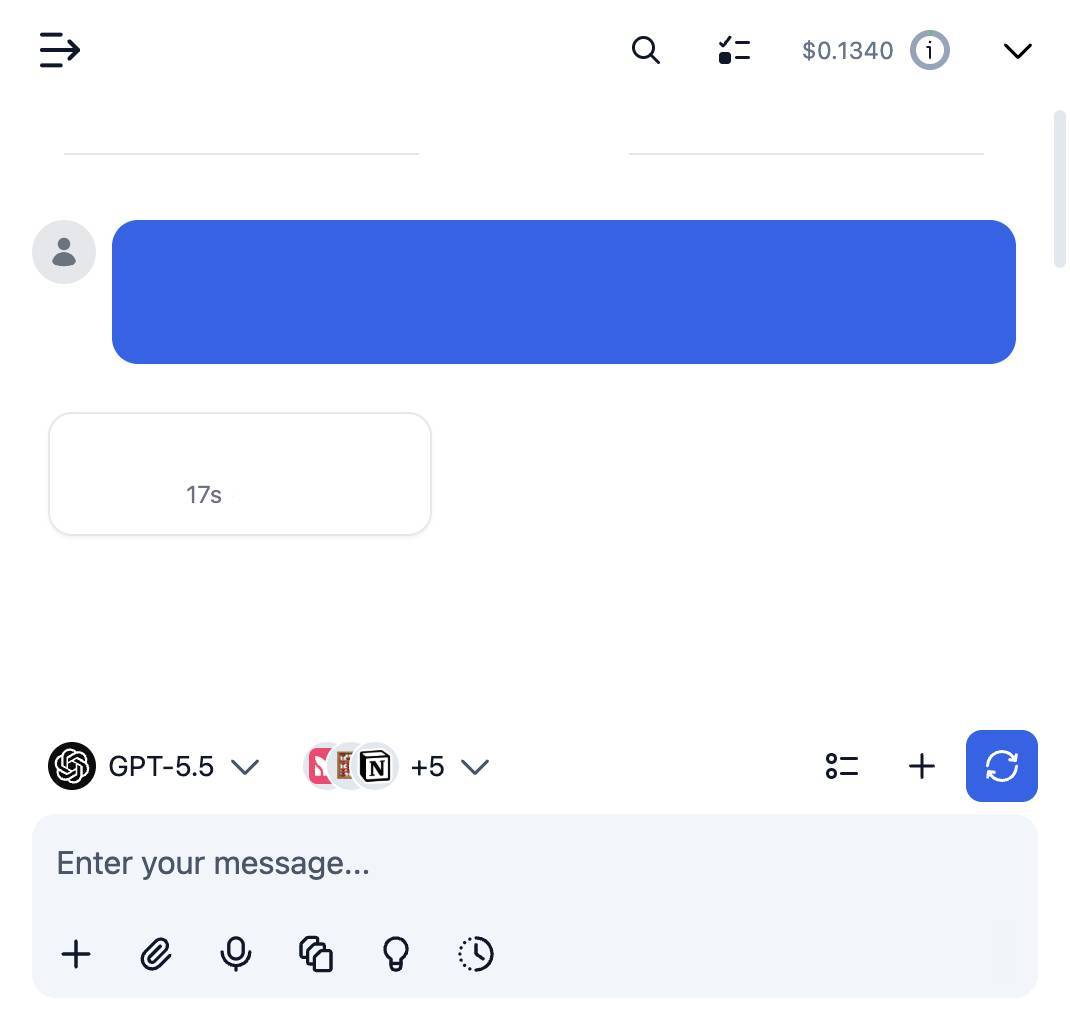
TypingMind chat using enabled MCP tools with a selected AI model
Can you use MCP Shrimp Task Manager to help me with this task?
MCP Shrimp Task Manager
Sure. I read it.
Here is what I found using MCP Shrimp Task Manager.

Frequently asked questions

What is the MCP Shrimp Task Manager MCP server used for?

MCP Shrimp Task Manager is an MCP server that lets compatible AI clients connect to external tools and context. In TypingMind, you can add this MCP server once and make its tools available in your AI workspace.

Can I use MCP Shrimp Task Manager MCP with multiple AI models in TypingMind?

Yes. TypingMind connects MCP tools at the workspace level, so you can use MCP Shrimp Task Manager with different AI models such as Claude, ChatGPT, Gemini, or other models you have configured in TypingMind without setting up the MCP server separately for each model.

Why use MCP Shrimp Task Manager MCP with TypingMind?

TypingMind is one of the best frontends for LLM chat because it brings multiple AI models, prompts, plugins, AI agents, API keys, and MCP tools into one workspace. With MCP Shrimp Task Manager connected, you can use its MCP tools across your preferred models while keeping your chat workflow organized in TypingMind.

How do I connect MCP Shrimp Task Manager MCP to TypingMind?

MCP Shrimp Task Manager runs through the TypingMind local MCP connector. This is best when the MCP server needs access to local files, desktop apps, command-line tools, or private resources on your computer.

What tools does MCP Shrimp Task Manager MCP provide in TypingMind?

MCP Shrimp Task Manager exposes 15 MCP tools that can be enabled from the TypingMind Plugins page and used in chat or assigned to AI agents.

Do I need to share my API keys with TypingMind to use MCP Shrimp Task Manager MCP?

No. TypingMind is local-first and lets you keep your model providers, API keys, prompts, and MCP configuration under your control. If MCP Shrimp Task Manager requires authentication, add the required headers, OAuth settings, or local configuration for that MCP server when you create the connection.

Related MCP Servers

View all

Set up your own AI workspace now

Get notified about new features and future giveaways by subscribing to our newsletter ๐Ÿ‘‡