
Miro
CommunityPopularMiro MCP server for whiteboard automation. Create boards, add sticky notes, shapes, and connectors. Export boards and query content for AI-driven collaboration.
| Publisher | miroapp |
| Repository | miro-mcp |
| Language | TypeScript |
| Forks | 0 |
| Stars | 2.9K |
| Available tools | 17 |
| Transport type | stdio |
| Categories | |
| License | MIT |
| Links |
- Connect tools to AI workflows
Miro exposes MCP capabilities that can be used by compatible AI clients and agents.
- 17 available tools
Browse the callable actions below, including names and descriptions when provided by the server.
- Ready-to-copy setup
Use the installation snippets to configure this server in your preferred MCP client.
- Open source signals
2.9K stars and 0 forks from the linked repository.
Installation
Node.js 18+
{
  "mcpServers": {
    "miro": {
      "command": "npx",
      "args": [
        "-y",
        "miro-mcp"
      ],
      "env": {
        "MIRO_ACCESS_TOKEN": "<YOUR_TOKEN>"
      }
    }
  }
}
Available Tools
- list_boards
List all boards accessible to the user with metadata including title, creation date, and team information
- create_board
Create a new Miro board with specified title, description, and sharing permissions
- get_board_info
Get detailed information about a specific board including metadata, permissions, and collaboration settings
- delete_board
Delete a specified board permanently from the user's workspace
- create_sticky_note
Add a new sticky note to a board with specified text, color, position, and size
- update_sticky_note
Update the content, color, position, or size of an existing sticky note
- create_shape
Add geometric shapes like rectangles, circles, or arrows to a board with customizable styling
- create_connector
Draw connectors or lines between objects on the board to show relationships
- add_text_widget
Add formatted text blocks to the board with specified font, size, and positioning
- upload_image
Upload and place images on the board from local files or URLs
- list_board_objects
Get all objects on a board including sticky notes, shapes, text, and their properties
- search_board_content
Search for specific text content across all objects within a board
- move_objects
Change the position of one or multiple objects on the board
- delete_objects
Remove specified objects from the board by their IDs
- export_board
Export board content as PDF, PNG, or JSON format with specified quality and dimensions
- get_board_collaborators
List all users who have access to a board and their permission levels
- create_frame
Create organizational frames or sections on the board to group related content
Use Miro MCP with multiple AI models
TypingMind connects MCP tools at the workspace level, so once Miro is connected, you can use it with different AI models in TypingMind instead of setting it up separately for each model. This MCP runs locally through the TypingMind MCP connector on your device.
Setup guide to use the local connector
Use this when the MCP server needs access to local files, apps, or private resources on your computer.
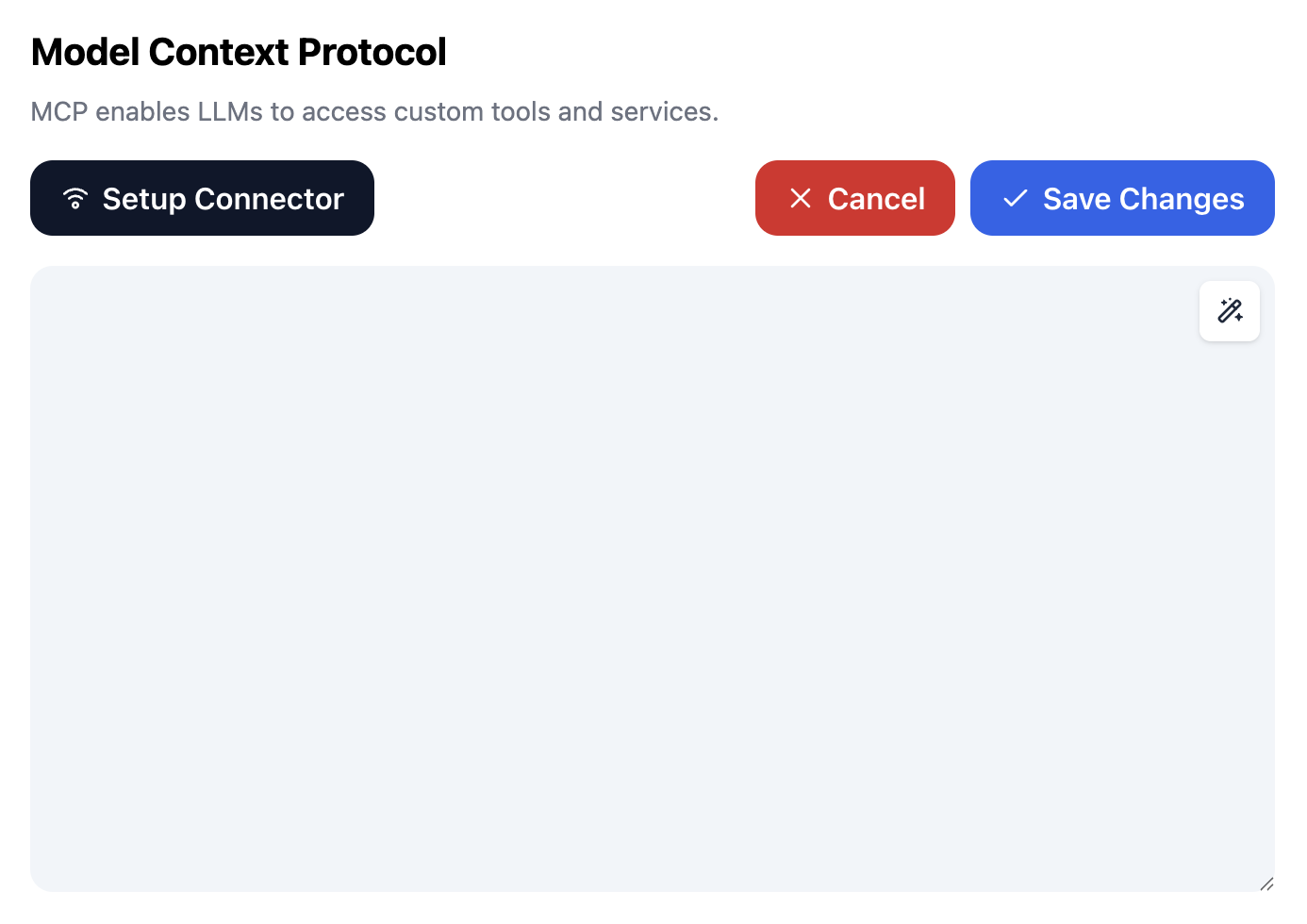
Open the MCP settings
In TypingMind, go to Settings, Advanced Settings, then Model Context Protocol and choose Setup Connector.
- Open TypingMind in your browser.
- Click the Settings icon.
- Go to Advanced Settings.
- Open the Model Context Protocol section.
- Click Setup Connector and choose This Device.
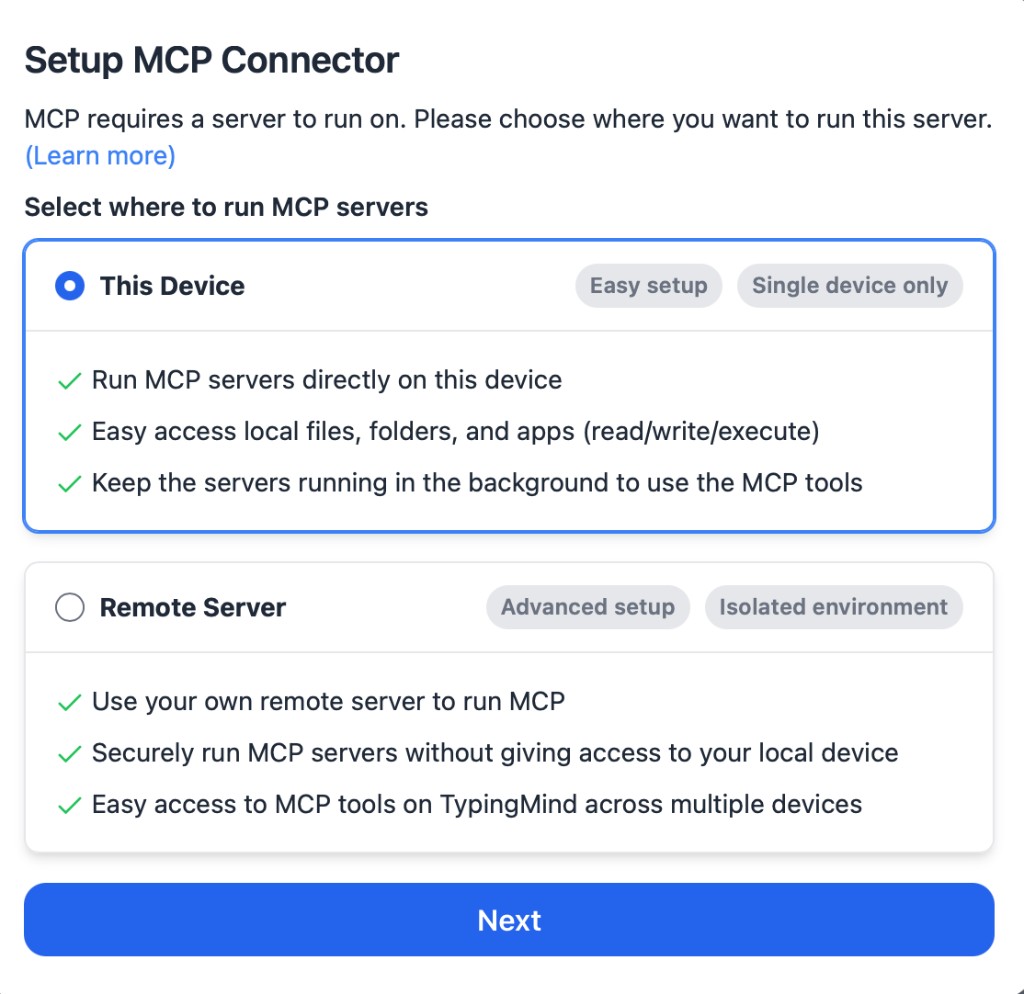
Run the connector command
Choose This Device, copy the command from TypingMind, and run it in Terminal. Keep the process running while you use MCP.
- Copy the setup command shown by TypingMind.
- Open Terminal on macOS or Windows Terminal on Windows.
- Paste and run the command.
- Approve the package install if Terminal asks you to proceed.
- Keep the Terminal window running while using MCP tools.
Add Miro as a server
When the connector status is Ready, click Edit Servers and paste the MCP server configuration.
- Wait until the connector status shows Ready.
- Click Edit Servers.
- Paste the Miro MCP server configuration.
- Save the server list.
- Refresh if you want to confirm the connector is still ready.
{
  "mcpServers": {
    "miro": {
      "command": "npx",
      "args": [
        "-y",
        "miro-mcp"
      ]
    }
  }
}Use it across models
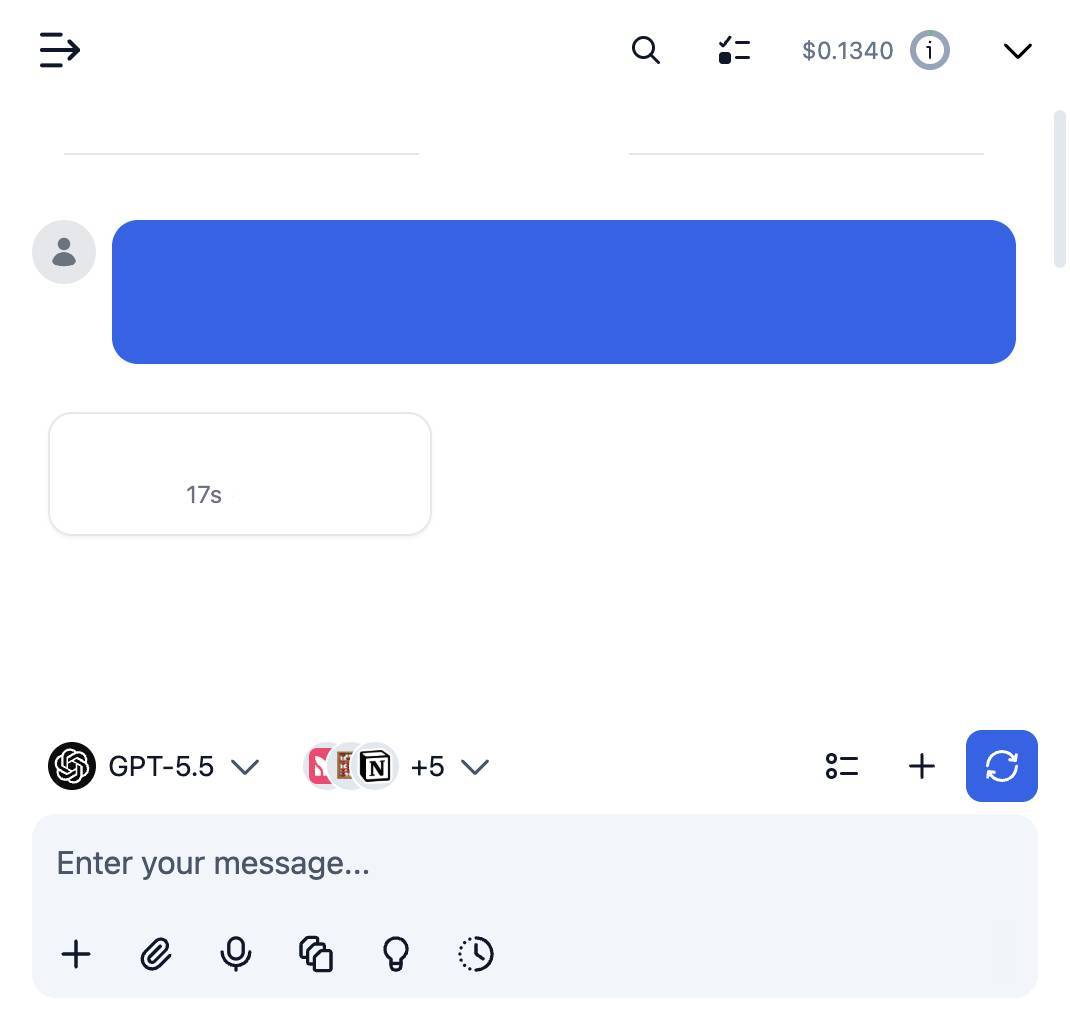
Save the server list, open Plugins, enable the Miro MCP tools, then select any supported AI model in TypingMind and use the tools in chat or assign them to an AI agent.
- Open the Plugins page in TypingMind.
- Enable the Miro MCP tools.
- Start a chat and choose the AI model you want to use.
- Use the MCP tools in chat or assign them to an AI agent.
- Switch to another AI model whenever needed without reconnecting MCP.
Here is what I found using Miro.
Frequently asked questions
What is the Miro MCP server used for?
Miro is an MCP server that lets compatible AI clients connect to external tools and context. In TypingMind, you can add this MCP server once and make its tools available in your AI workspace.
Can I use Miro MCP with multiple AI models in TypingMind?
Yes. TypingMind connects MCP tools at the workspace level, so you can use Miro with different AI models such as Claude, ChatGPT, Gemini, or other models you have configured in TypingMind without setting up the MCP server separately for each model.
Why use Miro MCP with TypingMind?
TypingMind is one of the best frontends for LLM chat because it brings multiple AI models, prompts, plugins, AI agents, API keys, and MCP tools into one workspace. With Miro connected, you can use its MCP tools across your preferred models while keeping your chat workflow organized in TypingMind.
How do I connect Miro MCP to TypingMind?
Miro runs through the TypingMind local MCP connector. This is best when the MCP server needs access to local files, desktop apps, command-line tools, or private resources on your computer.
What tools does Miro MCP provide in TypingMind?
Miro exposes 17 MCP tools that can be enabled from the TypingMind Plugins page and used in chat or assigned to AI agents.
Do I need to share my API keys with TypingMind to use Miro MCP?
No. TypingMind is local-first and lets you keep your model providers, API keys, prompts, and MCP configuration under your control. If Miro requires authentication, add the required headers, OAuth settings, or local configuration for that MCP server when you create the connection.
Related MCP Servers
View all
Knowledge Graph Memory
Model Context Protocol Servers

Context7
Context7 Platform -- Up-to-date code documentation for LLMs and AI code editors

Blender
Experience seamless AI-powered 3D modeling by connecting Blender with Claude AI via the Model Context Protocol. BlenderMCP enables two-way communication, allowing you to create, modify, and inspect 3D scenes directly through AI prompts. Control objects, materials, lighting, and execute Python code in Blender effortlessly. Access assets from Poly Haven and generate AI-driven models using Hyper3D Rodin. This integration enhances creative workflows by combining Blender’s robust tools with Claude’s intelligent guidance, making 3D content creation faster, interactive, and more intuitive. Perfect for artists and developers seeking AI-assisted 3D design within Blender’s environment.

Google GenAI Toolbox
MCP Toolbox for Databases is an open source MCP server for databases.
