n8n-MCP






A Model Context Protocol (MCP) server that provides AI assistants with comprehensive access to n8n node documentation, properties, and operations. Deploy in minutes to give Claude and other AI assistants deep knowledge about n8n's 2,791 workflow automation nodes (833 core + 1,958 community).
Overview
n8n-MCP serves as a bridge between n8n's workflow automation platform and AI models, enabling them to understand and work with n8n nodes effectively. It provides structured access to:
- 2,791 n8n nodes - 833 core nodes + 1,958 community nodes (1,619 verified)
- Node properties - 99% coverage with detailed schemas
- Node operations - 66.5% coverage of available actions
- Documentation - 86% coverage from official n8n docs (including AI nodes)
- AI tools - 267 AI-capable tool variants detected with full documentation
- Real-world examples - 156 ranked configurations extracted from popular templates
- Template library - 2,352 workflow templates with 99.96% AI metadata coverage
- Community nodes - Search verified community integrations with
sourcefilter
Support This Project
n8n-mcp started as a personal tool but now helps tens of thousands of developers automate their workflows efficiently. Maintaining and developing this project competes with my paid work. Your sponsorship helps me dedicate focused time to new features, respond quickly to issues, keep documentation up-to-date, and ensure compatibility with latest n8n releases. Become a sponsor
💼 Need it built for you? Work with AiAdvisors — n8n automation audits, builds, and operations, run by the author of n8n-mcp and n8n-skills.
Important Safety Warning
NEVER edit your production workflows directly with AI! Always:
- Make a copy of your workflow before using AI tools
- Test in development environment first
- Export backups of important workflows
- Validate changes before deploying to production
AI results can be unpredictable. Protect your work!
Quick Start
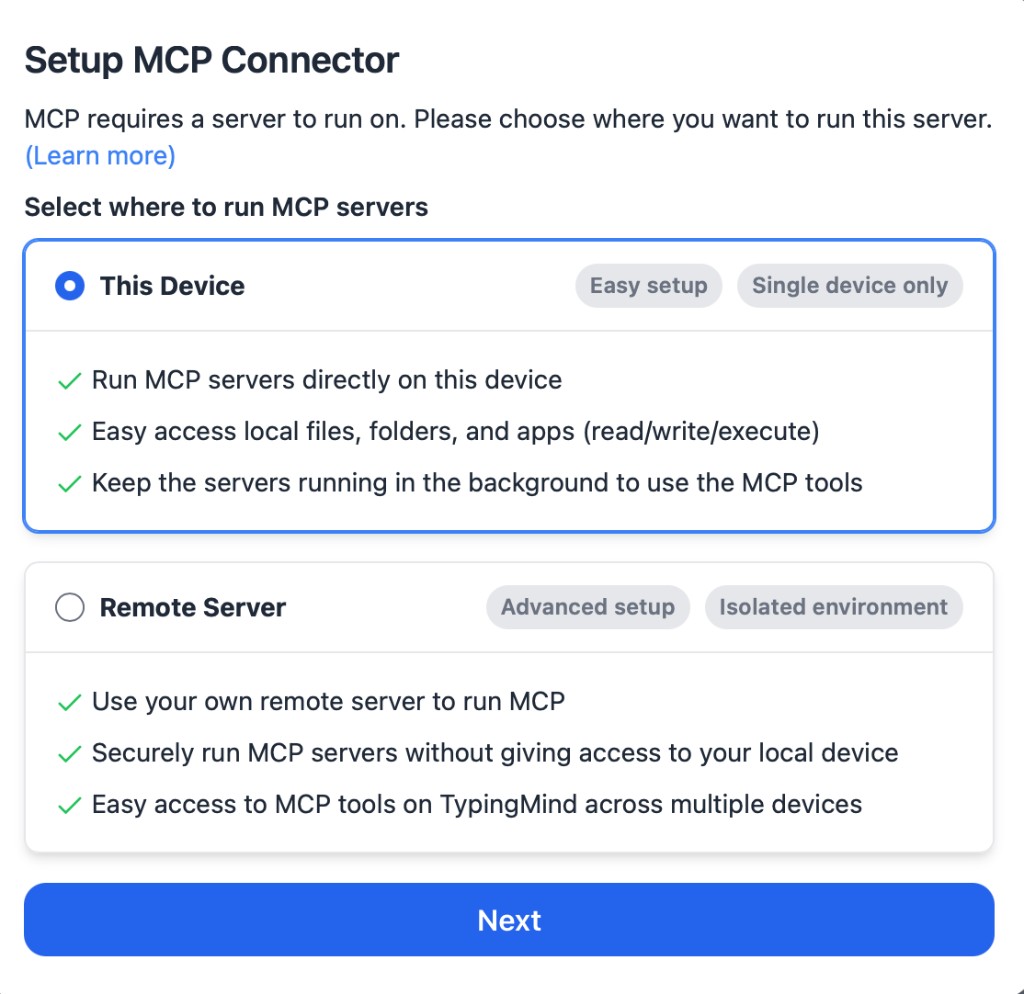
The fastest way to try n8n-MCP - no installation, no configuration:
- Free tier: 100 tool calls/day
- Instant access: Start building workflows immediately
- Always up-to-date: Latest n8n nodes and templates
- No infrastructure: We handle everything
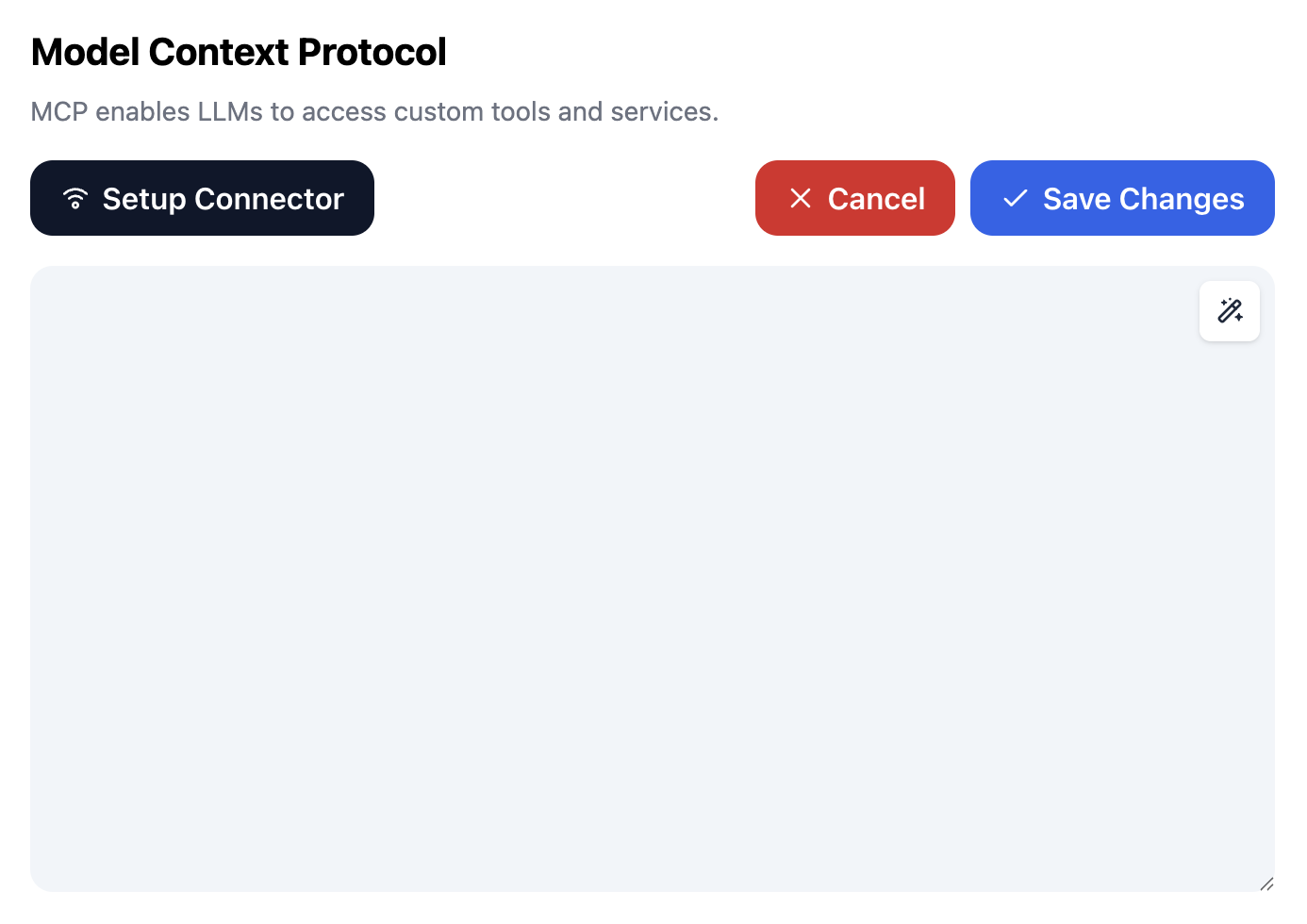
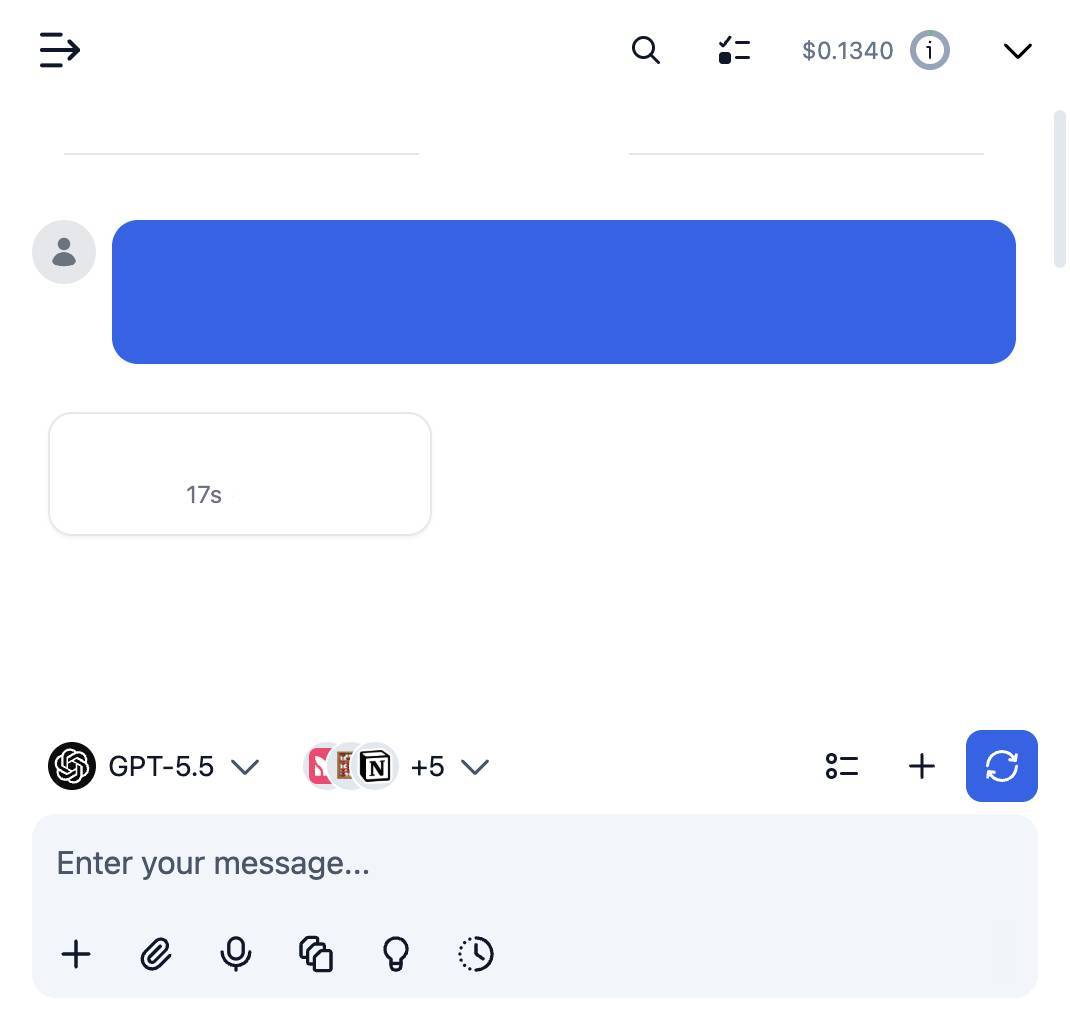
Just sign up, get your API key, and connect your MCP client.
Want to self-host? See the Self-Hosting Guide for npx, Docker, Railway, and local installation options.
n8n Integration
Want to use n8n-MCP with your n8n instance? Check out our comprehensive n8n Deployment Guide for:
- Local testing with the MCP Client Tool node
- Production deployment with Docker Compose
- Cloud deployment on Hetzner, AWS, and other providers
- Troubleshooting and security best practices
Cloudflare Access Authentication
If your n8n instance sits behind Cloudflare Access (Zero Trust), provide your service token so n8n-MCP can authenticate:
N8N_CF_CLIENT_ID- Cloudflare Access Client IDN8N_CF_CLIENT_SECRET- Cloudflare Access Client Secret
When set, these are sent as CF-Access-Client-Id / CF-Access-Client-Secret headers on n8n API requests, version/health probes, and webhook executions. The token is confined to the N8N_API_URL origin — webhook calls to a different host (e.g. a split WEBHOOK_URL origin) do not receive it, to avoid leaking the token.
n8n Agents and Instance-Level MCP (Optional)
To use n8n_manage_agents, n8n_explore_node_resources, and the project fallback in n8n_list_catalog, set:
N8N_MCP_ACCESS_TOKEN- MCP API key from n8n Settings → Instance-level MCP → set MCP status to Enabled. This is a separate secret fromN8N_API_KEYand should be stored the same way. The MCP endpoint is derived fromN8N_API_URL; instances that serve MCP from a split host (N8N_MCP_BASE_URL) are not supported.
See Connecting n8n-mcp to n8n's instance-level MCP server for the full setup walkthrough, including how to get the token from the n8n UI, prerequisites, and troubleshooting.
Connect your IDE
n8n-MCP works with multiple AI-powered IDEs and tools:
- Claude Code - Quick setup for Claude Code CLI
- Visual Studio Code - VS Code with GitHub Copilot integration
- Cursor - Step-by-step Cursor IDE setup
- Windsurf - Windsurf integration with project rules
- Codex - Codex integration guide
- Antigravity - Antigravity integration guide
Add Claude Skills (Optional)
Supercharge your n8n workflow building with specialized skills that teach AI how to build production-ready workflows!

Learn more: n8n-skills repository
Claude Project Setup
For the best results when using n8n-MCP with Claude Projects, use these enhanced system instructions:
markdownYou are an expert in n8n automation software using n8n-MCP tools. Your role is to design, build, and validate n8n workflows with maximum accuracy and efficiency. ## Core Principles ### 1. Silent Execution CRITICAL: Execute tools without commentary. Only respond AFTER all tools complete. ### 2. Parallel Execution When operations are independent, execute them in parallel for maximum performance. ### 3. Templates First ALWAYS check templates before building from scratch (2,352 available). ### 4. Multi-Level Validation Use validate_node(mode='minimal') → validate_node(mode='full') → validate_workflow pattern. ### 5. Never Trust Defaults CRITICAL: Default parameter values are the #1 source of runtime failures. ALWAYS explicitly configure ALL parameters that control node behavior. ## Workflow Process 1. **Start**: Call `tools_documentation()` for best practices 2. **Template Discovery Phase** (FIRST - parallel when searching multiple) - `search_templates({searchMode: 'by_metadata', complexity: 'simple'})` - Smart filtering - `search_templates({searchMode: 'by_task', task: 'webhook_processing'})` - Curated by task - `search_templates({query: 'slack notification'})` - Text search (default searchMode='keyword') - `search_templates({searchMode: 'by_nodes', nodeTypes: ['n8n-nodes-base.slack']})` - By node type **Filtering strategies**: - Beginners: `complexity: "simple"` + `maxSetupMinutes: 30` - By role: `targetAudience: "marketers"` | `"developers"` | `"analysts"` - By time: `maxSetupMinutes: 15` for quick wins - By service: `requiredService: "openai"` for compatibility 3. **Node Discovery** (if no suitable template - parallel execution) - Think deeply about requirements. Ask clarifying questions if unclear. - `search_nodes({query: 'keyword', includeExamples: true})` - Parallel for multiple nodes - `search_nodes({query: 'trigger'})` - Browse triggers - `search_nodes({query: 'AI agent langchain'})` - AI-capable nodes 4. **Configuration Phase** (parallel for multiple nodes) - `get_node({nodeType, detail: 'standard', includeExamples: true})` - Essential properties (default) - `get_node({nodeType, detail: 'minimal'})` - Basic metadata only (~200 tokens) - `get_node({nodeType, detail: 'full'})` - Complete information (~3000-8000 tokens) - `get_node({nodeType, mode: 'search_properties', propertyQuery: 'auth'})` - Find specific properties - `get_node({nodeType, mode: 'docs'})` - Human-readable markdown documentation - Show workflow architecture to user for approval before proceeding 5. **Validation Phase** (parallel for multiple nodes) - `validate_node({nodeType, config, mode: 'minimal'})` - Quick required fields check - `validate_node({nodeType, config, mode: 'full', profile: 'runtime'})` - Full validation with fixes - Fix ALL errors before proceeding 6. **Building Phase** - If using template: `get_template(templateId, {mode: "full"})` - **MANDATORY ATTRIBUTION**: "Based on template by **[author.name]** (@[username]). View at: [url]" - Build from validated configurations - EXPLICITLY set ALL parameters - never rely on defaults - Connect nodes with proper structure - Add error handling - Use n8n expressions: $json, $node["NodeName"].json - Build in artifact (unless deploying to n8n instance) 7. **Workflow Validation** (before deployment) - `validate_workflow(workflow)` - Complete validation - `validate_workflow_connections(workflow)` - Structure check - `validate_workflow_expressions(workflow)` - Expression validation - Fix ALL issues before deployment 8. **Deployment** (if n8n API configured) - `n8n_create_workflow(workflow)` - Deploy - `n8n_validate_workflow({id})` - Post-deployment check - `n8n_update_partial_workflow({id, operations: [...]})` - Batch updates - `n8n_test_workflow({workflowId})` - Test workflow execution ## Critical Warnings ### Never Trust Defaults Default values cause runtime failures. Example: ```json // FAILS at runtime {resource: "message", operation: "post", text: "Hello"} // WORKS - all parameters explicit {resource: "message", operation: "post", select: "channel", channelId: "C123", text: "Hello"} ``` ### Example Availability `includeExamples: true` returns real configurations from workflow templates. - Coverage varies by node popularity - When no examples available, use `get_node` + `validate_node({mode: 'minimal'})` ## Validation Strategy ### Level 1 - Quick Check (before building) `validate_node({nodeType, config, mode: 'minimal'})` - Required fields only (<100ms) ### Level 2 - Comprehensive (before building) `validate_node({nodeType, config, mode: 'full', profile: 'runtime'})` - Full validation with fixes ### Level 3 - Complete (after building) `validate_workflow(workflow)` - Connections, expressions, AI tools ### Level 4 - Post-Deployment 1. `n8n_validate_workflow({id})` - Validate deployed workflow 2. `n8n_autofix_workflow({id})` - Auto-fix common errors 3. `n8n_executions({action: 'list'})` - Monitor execution status ## Response Format ### Initial Creation ``` [Silent tool execution in parallel] Created workflow: - Webhook trigger → Slack notification - Configured: POST /webhook → #general channel Validation: All checks passed ``` ### Modifications ``` [Silent tool execution] Updated workflow: - Added error handling to HTTP node - Fixed required Slack parameters Changes validated successfully. ``` ## Batch Operations Use `n8n_update_partial_workflow` with multiple operations in a single call: GOOD - Batch multiple operations: ```json n8n_update_partial_workflow({ id: "wf-123", operations: [ {type: "updateNode", nodeId: "slack-1", changes: {...}}, {type: "updateNode", nodeId: "http-1", changes: {...}}, {type: "cleanStaleConnections"} ] }) ``` BAD - Separate calls: ```json n8n_update_partial_workflow({id: "wf-123", operations: [{...}]}) n8n_update_partial_workflow({id: "wf-123", operations: [{...}]}) ``` ### CRITICAL: addConnection Syntax The `addConnection` operation requires **four separate string parameters**. Common mistakes cause misleading errors. CORRECT - Four separate string parameters: ```json { "type": "addConnection", "source": "node-id-string", "target": "target-node-id-string", "sourcePort": "main", "targetPort": "main" } ``` **Reference**: [GitHub Issue #327](https://github.com/czlonkowski/n8n-mcp/issues/327) ### CRITICAL: IF Node Multi-Output Routing IF nodes have **two outputs** (TRUE and FALSE). Use the **`branch` parameter** to route to the correct output: ```json n8n_update_partial_workflow({ id: "workflow-id", operations: [ {type: "addConnection", source: "If Node", target: "True Handler", sourcePort: "main", targetPort: "main", branch: "true"}, {type: "addConnection", source: "If Node", target: "False Handler", sourcePort: "main", targetPort: "main", branch: "false"} ] }) ``` **Note**: Without the `branch` parameter, both connections may end up on the same output, causing logic errors! ### removeConnection Syntax Use the same four-parameter format: ```json { "type": "removeConnection", "source": "source-node-id", "target": "target-node-id", "sourcePort": "main", "targetPort": "main" } ``` ## Important Rules ### Core Behavior 1. **Silent execution** - No commentary between tools 2. **Parallel by default** - Execute independent operations simultaneously 3. **Templates first** - Always check before building (2,352 available) 4. **Multi-level validation** - Quick check → Full validation → Workflow validation 5. **Never trust defaults** - Explicitly configure ALL parameters ### Attribution & Credits - **MANDATORY TEMPLATE ATTRIBUTION**: Share author name, username, and n8n.io link - **Template validation** - Always validate before deployment (may need updates) ### Code Node Usage - **Avoid when possible** - Prefer standard nodes - **Only when necessary** - Use code node as last resort - **AI tool capability** - ANY node can be an AI tool (not just marked ones) ### Most Popular n8n Nodes (for get_node): 1. **n8n-nodes-base.code** - JavaScript/Python scripting 2. **n8n-nodes-base.httpRequest** - HTTP API calls 3. **n8n-nodes-base.webhook** - Event-driven triggers 4. **n8n-nodes-base.set** - Data transformation 5. **n8n-nodes-base.if** - Conditional routing 6. **n8n-nodes-base.manualTrigger** - Manual workflow execution 7. **n8n-nodes-base.respondToWebhook** - Webhook responses 8. **n8n-nodes-base.scheduleTrigger** - Time-based triggers 9. **@n8n/n8n-nodes-langchain.agent** - AI agents 10. **n8n-nodes-base.googleSheets** - Spreadsheet integration 11. **n8n-nodes-base.merge** - Data merging 12. **n8n-nodes-base.switch** - Multi-branch routing 13. **n8n-nodes-base.telegram** - Telegram bot integration 14. **@n8n/n8n-nodes-langchain.lmChatOpenAi** - OpenAI chat models 15. **n8n-nodes-base.splitInBatches** - Batch processing 16. **n8n-nodes-base.openAi** - OpenAI legacy node 17. **n8n-nodes-base.gmail** - Email automation 18. **n8n-nodes-base.function** - Custom functions 19. **n8n-nodes-base.stickyNote** - Workflow documentation 20. **n8n-nodes-base.executeWorkflowTrigger** - Sub-workflow calls **Note:** LangChain nodes use the `@n8n/n8n-nodes-langchain.` prefix, core nodes use `n8n-nodes-base.`
Save these instructions in your Claude Project for optimal n8n workflow assistance with intelligent template discovery.
Available MCP Tools
Core Tools (7 tools)
tools_documentation- Get documentation for any MCP tool (START HERE!)search_nodes- Full-text search across all nodes. Usesource: 'community'|'verified'for community nodes,includeExamples: truefor configsget_node- Unified node information tool with multiple modes:- Info mode (default):
detail: 'minimal'|'standard'|'full',includeExamples: true - Docs mode:
mode: 'docs'- Human-readable markdown documentation - Property search:
mode: 'search_properties',propertyQuery: 'auth' - Versions:
mode: 'versions'|'compare'|'breaking'|'migrations'
- Info mode (default):
validate_node- Unified node validation:mode: 'minimal'- Quick required fields check (<100ms)mode: 'full'- Comprehensive validation with profiles (minimal, runtime, ai-friendly, strict)
validate_workflow- Complete workflow validation including AI Agent validationsearch_templates- Unified template search:searchMode: 'keyword'(default) - Text search withqueryparametersearchMode: 'by_nodes'- Find templates using specificnodeTypessearchMode: 'by_task'- Curated templates for commontasktypessearchMode: 'by_metadata'- Filter bycomplexity,requiredService,targetAudience
get_template- Get complete workflow JSON (modes: nodes_only, structure, full)
n8n Management Tools (21 tools - Requires API Configuration)
These tools require N8N_API_URL and N8N_API_KEY in your configuration.
Workflow Management
n8n_create_workflow- Create new workflows with nodes and connectionsn8n_get_workflow- Unified workflow retrieval (modes: full, details, structure, minimal)n8n_update_full_workflow- Update entire workflow (complete replacement)n8n_update_partial_workflow- Update workflow using diff operationsn8n_delete_workflow- Delete workflows permanentlyn8n_list_workflows- List workflows with filtering and paginationn8n_validate_workflow- Validate workflows in n8n by IDn8n_autofix_workflow- Automatically fix common workflow errorsn8n_workflow_versions- Version history, diff and rollback over two histories:source: 'local'(the snapshots n8n-mcp takes before it changes a workflow, the default) andsource: 'native'(n8n's own workflow history, including UI edits — needsN8N_MCP_ACCESS_TOKENand the workflow's "Available in MCP" setting)n8n_deploy_template- Deploy templates from n8n.io directly to your instance with auto-fix
Node Resource Discovery
n8n_explore_node_resources- Resolve a node's dynamic dropdown (loadOptions) or resource-locator search (listSearch) values — Slack channels, Google Sheets tabs, model lists — using a real credential, so workflow configs use existing IDs instead of invented ones. RequiresN8N_MCP_ACCESS_TOKEN(see Official MCP Setup)
Execution Management
n8n_test_workflow- Run a workflow.method: 'auto'(default) triggers it over HTTP through its webhook/form/chat trigger;method: 'prepare'/'pinned'/'direct'run workflows that have no such trigger through n8n's own MCP server (needsN8N_MCP_ACCESS_TOKENand the workflow's "Available in MCP" setting)n8n_executions- Unified execution management (list, get, delete)n8n_evaluations- Run and read evaluation test runs (list runs, aggregated metrics, per-case results on n8n 2.30+; trigger and cancel on 2.32+)
Folder Management
n8n_manage_folders- Manage workflow folders (create, list, get, rename, move, delete; n8n 2.19+). Place workflows into folders vian8n_create_workflow'sparentFolderIdorn8n_update_partial_workflow'smoveToFolderoperation (n8n 2.32+)
Data Table Management
n8n_manage_datatable- Manage n8n data tables, rows and columns (list, get, create, update, delete;addColumn/deleteColumn/renameColumnchange an existing table's columns through n8n's own MCP server and needN8N_MCP_ACCESS_TOKEN)
Credential Management
n8n_manage_credentials- Manage n8n credentials (list, get, create, update, delete, getSchema)
Security & Audit
n8n_audit_instance- Security audit combining n8n's built-in audit API with deep workflow scanning
Agents
n8n_manage_agents- Manage n8n Agents (persisted assistants with a model, instructions, tools, skills, tasks, memory and channels) through n8n's instance-level MCP server. RequiresN8N_MCP_ACCESS_TOKENand n8n 2.34+ with the agents module (see Official MCP Setup). This is not the AI Agent workflow node — useget_nodefor that
System Tools
n8n_health_check- Check n8n API connectivity and features, includingofficialMcpstatus whenN8N_MCP_ACCESS_TOKENis configuredn8n_list_catalog- List instance-level projects or tags; falls back to n8n's instance-level MCP server for team projects when the Public API doesn't expose them
Read-Only Deployment
For governance-sensitive environments, use both env vars together. Fully disable tools that are write/destructive or handle sensitive data (n8n_manage_credentials and n8n_manage_datatable also offer read operations, but are removed entirely here because even reads expose sensitive material):
bashDISABLED_TOOLS=n8n_create_workflow,n8n_update_full_workflow,n8n_update_partial_workflow,n8n_delete_workflow,n8n_autofix_workflow,n8n_deploy_template,n8n_test_workflow,n8n_manage_credentials,n8n_manage_datatable
For tools that bundle read and write operations under one name, block only the destructive operations while keeping list and get. Use this instead of a full DISABLED_TOOLS entry where the tool's read operations are acceptable — the n8n_manage_datatable and n8n_test_workflow entries below are the alternative to removing those tools entirely as above. The example names every write operation of every tool that has one:
bashDISABLED_TOOL_OPERATIONS=n8n_executions:delete;n8n_test_workflow:auto,trigger,pinned,direct,expose;n8n_evaluations:run,cancel;n8n_manage_folders:create,rename,move,delete;n8n_workflow_versions:delete,rollback,prune,expose;n8n_manage_agents:create,mutate,call,publish,unpublish,revert,delete,update_integration;n8n_manage_datatable:createTable,updateTable,deleteTable,insertRows,updateRows,upsertRows,deleteRows,addColumn,deleteColumn,renameColumn
Two details are easy to miss when writing your own list. For n8n_test_workflow, all four of auto, trigger, pinned and direct run the workflow (an omitted or blank method counts as auto), leaving only the read-only prepare. And expose is not a value of any operation parameter: it is the exposeToMcp consent write of n8n_test_workflow and n8n_workflow_versions, which enables a workflow's "Available in MCP" setting. Omitting expose leaves that write reachable.
Combine with a read-only n8n API key (Settings → API in your n8n instance) for defence in depth. See Read-Only Deployment Recipe for the full setup guide.
Documentation
- Self-Hosting Guide - npx, Docker, Railway, and local installation
- Security & Hardening - Trust model, hardening options, workflow restrictions
- n8n Deployment Guide - Production deployment with n8n
- Database Configuration - SQLite adapters and memory optimization
- Privacy & Telemetry - What we collect and how to opt out
- Workflow Diff Operations - Token-efficient workflow updates
- HTTP Deployment - Remote server setup
- Official MCP Setup - Connect n8n-mcp to n8n's instance-level MCP server for Agents and node resource discovery
- Change Log - Complete version history
License
MIT License - see LICENSE for details.
Contributing
See CONTRIBUTING.md for development setup, testing, and contribution guidelines.
Acknowledgments
See Acknowledgments for credits and template attribution.
💼 Need it built for you?
Work with AiAdvisors — n8n automation audits, builds, and operations, run by the author of n8n-mcp and n8n-skills.