Rapidly build reliable web automation agents





What is Notte?
Notte provides all the essential tools for building and deploying AI agents that interact seamlessly with the web. Our full-stack framework combines AI agents with traditional scripting for maximum efficiency - letting you script deterministic parts and use AI only when needed, cutting costs by 50%+ while improving reliability. We allow you to develop, deploy, and scale your own agents and web automations, all with a single API. Read more in our documentation here 🔥
Opensource Core:
- Run web agents → Give AI agents natural language tasks to complete on websites
- Structured Output → Get data in your exact format with Pydantic models
- Site Interactions → Observe website states, scrape data and execute actions using Playwright compatible primitives and natural language commands
API service (Recommended)
- Stealth Browser Sessions → Browser instances with built-in CAPTCHA solving, proxies, and anti-detection
- Hybrid Workflows → Combine scripting and AI agents to reduce costs and improve reliability
- Secrets Vaults → Enterprise-grade credential management to store emails, passwords, MFA tokens, SSO, etc.
- Digital Personas → Create digital identities with unique emails, phones, and automated 2FA for account creation workflows
Quickstart
For JavaScript and TypeScript, see the Node SDK (npm install notte-sdk).
pip install notte patchright install --with-deps chromium
Run in local mode
Use the following script to spinup an agent using opensource features (you'll need your own LLM API keys):
pythonimport notte import os from dotenv import load_dotenv load_dotenv() with notte.Session(headless=False) as session: model = os.getenv("NOTTE_EXAMPLE_MODEL", "gemini/gemini-3.5-flash") agent = notte.Agent(session=session, reasoning_model=model, max_steps=10) response = agent.run(task="Find three cat memes on Google Images and describe them")
Using Python SDK (Recommended)
We also provide an effortless API that hosts the browser sessions for you - and provide plenty of premium features. To run the agent you'll need to first sign up on the Notte Console and create a free Notte API key 🔑
pythonfrom notte_sdk import NotteClient import os client = NotteClient(api_key=os.getenv("NOTTE_API_KEY")) with client.Session(open_viewer=True) as session: agent = client.Agent(session=session, reasoning_model='gemini/gemini-3.5-flash', max_steps=30) response = agent.run(task="doom scroll cat memes on google images")
Our setup allows you to experiment locally, then drop-in replace the import and prefix notte objects with cli to switch to SDK and get hosted browser sessions plus access to premium features!
Benchmarks
| Rank | Provider | Agent Self-Report | LLM Evaluation | Time per Task | Task Reliability |
|---|---|---|---|---|---|
| 🏆 | Notte | 86.2% | 79.0% | 47s | 96.6% |
| 2️⃣ | Browser-Use | 77.3% | 60.2% | 113s | 83.3% |
| 3️⃣ | Convergence | 38.4% | 31.4% | 83s | 50% |
Read the full story here: https://github.com/nottelabs/open-operator-evals
Agent features
Structured output
Structured output is a feature of the agent's run function that allows you to specify a Pydantic model as the response_format parameter. The agent will return data in the specified structure.
pythonfrom notte_sdk import NotteClient from pydantic import BaseModel class HackerNewsPost(BaseModel): title: str url: str points: int author: str comments_count: int class TopPosts(BaseModel): posts: list[HackerNewsPost] client = NotteClient() with client.Session(open_viewer=True, browser_type="chrome") as session: agent = client.Agent(session=session, reasoning_model='gemini/gemini-3.5-flash', max_steps=15) response = agent.run( task="Go to Hacker News (news.ycombinator.com) and extract the top 5 posts with their titles, URLs, points, authors, and comment counts.", response_format=TopPosts, ) print(response.answer)
Agent vault
Vaults are tools you can attach to your Agent instance to securely store and manage credentials. The agent automatically uses these credentials when needed.
pythonfrom notte_sdk import NotteClient client = NotteClient() with client.Vault() as vault, client.Session(open_viewer=True) as session: vault.add_credentials( url="https://x.com", username="your-email", password="your-password", ) agent = client.Agent(session=session, vault=vault, max_steps=10) response = agent.run( task="go to twitter; login and go to my messages", ) print(response.answer)
Agent persona
Personas are tools you can attach to your Agent instance to provide digital identities with unique email addresses, phone numbers, and automated 2FA handling.
pythonfrom notte_sdk import NotteClient client = NotteClient() with client.Persona(create_phone_number=False) as persona: with client.Session(browser_type="chrome", open_viewer=True) as session: agent = client.Agent(session=session, persona=persona, max_steps=15) response = agent.run( task="Open the Google form and RSVP yes with your name", url="https://forms.google.com/your-form-url", ) print(response.answer)
Session features
Stealth
Stealth features include automatic CAPTCHA solving and proxy configuration to enhance automation reliability and anonymity.
pythonfrom notte_sdk import NotteClient client = NotteClient() # Built-in proxies with CAPTCHA solving with client.Session( solve_captchas=True, proxies=True, # US-based proxy browser_type="chrome", open_viewer=True ) as session: agent = client.Agent(session=session, max_steps=5) response = agent.run( task="Try to solve the CAPTCHA using internal tools", url="https://www.google.com/recaptcha/api2/demo" )
For a custom proxy, set PROXY_SERVER, PROXY_USERNAME, and PROXY_PASSWORD to your provider's connection details.
pythonimport os from notte_sdk import NotteClient from notte_sdk.types import ExternalProxy client = NotteClient() proxy_settings = ExternalProxy( server=os.environ["PROXY_SERVER"], username=os.environ["PROXY_USERNAME"], password=os.environ["PROXY_PASSWORD"], ) with client.Session(proxies=[proxy_settings]) as session: agent = client.Agent(session=session, max_steps=5) response = agent.run(task="Navigate to a website")
File download / upload
File Storage allows you to upload files for your agents and download files that agents retrieve during their work.
Both uploaded files and browser downloads belong to a session. Start a session before uploading files, and use file IDs to download them.
Set UPLOAD_FILE_PATH to a local document and UPLOAD_URL to the website where your agent should upload it.
pythonimport os from notte_sdk import NotteClient from notte_sdk.types import FileSource client = NotteClient() with client.Session() as session: storage = session.storage uploaded_file = storage.upload(os.environ["UPLOAD_FILE_PATH"]) storage.download(file_id=uploaded_file.id, local_dir="./inputs") agent = client.Agent(session=session, max_steps=5) response = agent.run( task=f"Upload {uploaded_file.filename} to the website and download the cat picture", url=os.environ["UPLOAD_URL"], ) # Download files that the agent downloaded (100 files per page) offset = 0 while True: downloaded_files = storage.list(source=FileSource.SESSION_DOWNLOAD, offset=offset) for file in downloaded_files.files: storage.download(file_id=file.id, local_dir="./results") offset += len(downloaded_files.files) if offset >= downloaded_files.total or not downloaded_files.files: break
Cookies / Auth Sessions
Cookies provide a flexible way to authenticate your sessions. While we recommend using the secure vault for credential management, cookies offer an alternative approach for certain use cases.
pythonfrom notte_sdk import NotteClient import json client = NotteClient() # Upload cookies for authentication cookies = [ { "name": "sb-db-auth-token", "value": "base64-cookie-value", "domain": "github.com", "path": "/", "expires": 9778363203.913704, "httpOnly": False, "secure": False, "sameSite": "Lax" } ] with client.Session() as session: session.set_cookies(cookies=cookies) # or cookie_file="path/to/cookies.json" agent = client.Agent(session=session, max_steps=5) response = agent.run( task="go to nottelabs/notte get repo info", ) # Get cookies from the session cookies_resp = session.get_cookies() with open("cookies.json", "w") as f: json.dump(cookies_resp, f)
CDP Browser compatibility
You can plug in any browser session provider you want and use our agent on top. Use external headless browser providers via CDP to benefit from Notte's agentic capabilities with any CDP-compatible browser.
Set EXTERNAL_CDP_URL to the WebSocket URL of a running browser from your provider.
pythonimport os from notte_sdk import NotteClient client = NotteClient() cdp_url = os.environ["EXTERNAL_CDP_URL"] with client.Session(cdp_url=cdp_url, proxies=False, viewport_width=None, viewport_height=None) as session: agent = client.Agent(session=session) response = agent.run(task="extract pricing plans from https://www.notte.cc/")
Hybrid workflows
Notte's close compatibility with Playwright allows you to mix web automation primitives with agents for specific parts that require reasoning and adaptability. This hybrid approach cuts LLM costs and is much faster by using scripting for deterministic parts and agents only when needed.
pythonfrom notte_sdk import NotteClient client = NotteClient() with client.Session(open_viewer=True) as session: # Start with a deterministic navigation session.execute(type="goto", url="https://github.com/nottelabs") agent = client.Agent(session=session, max_steps=10) # Use an agent to reason about the next step response = agent.run(task="Open the notte repository owned by nottelabs. Finish on its repository home page.") assert response.success, response.answer assert session.observe().metadata.url.split("?")[0].rstrip("/") == "https://github.com/nottelabs/notte" # Use a scraping endpoint to extract data data = session.scrape(instructions="Extract number of stars")
Agent fallback
Workflows are a powerful way to combine scripting and agents to reduce costs and improve reliability. However, deterministic parts of the workflow can still fail. To gracefully handle these failures with agents, you can use the AgentFallback class:
pythonimport notte with notte.Session() as session: _ = session.execute(type="goto", url="https://shop.notte.cc/") _ = session.observe() with notte.AgentFallback(session, "Go to cart"): # Force execution failure -> trigger an agent fallback to gracefully fix the issue res = session.execute(type="click", id="INVALID_ACTION_ID")
Scraping
For fast data extraction, we provide a dedicated scraping endpoint that automatically creates and manages sessions. You can pass custom instructions for structured outputs and enable stealth mode.
pythonfrom notte_sdk import NotteClient from pydantic import BaseModel client = NotteClient() # Simple scraping response = client.scrape( url="https://notte.cc", scrape_links=True, only_main_content=True ) # Structured scraping with custom instructions class Article(BaseModel): title: str content: str date: str response = client.scrape( url="https://example.com/blog", response_format=Article, instructions="Extract only the title, date and content of the articles" )
Or directly with cURL
bashcurl -X POST 'https://api.notte.cc/scrape' \ -H 'Authorization: Bearer <NOTTE-API-KEY>' \ -H 'Content-Type: application/json' \ -d '{ "url": "https://notte.cc", "only_main_content": false, }'
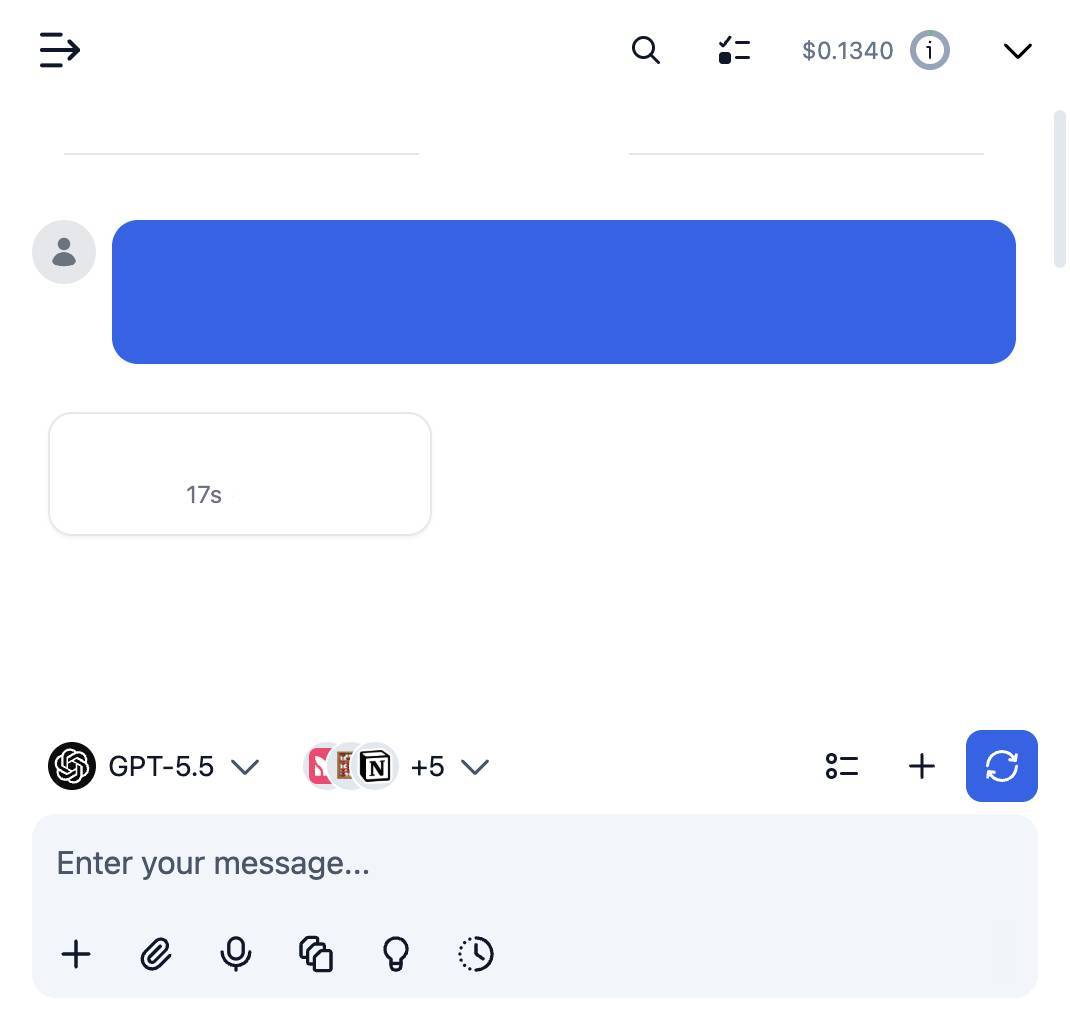
Search: We've built a cool demo of an LLM leveraging the scraping endpoint in an MCP server to make real-time search in an LLM chatbot - works like a charm! Available here: https://search.notte.cc/
License
This project is licensed under the Server Side Public License v1. See the LICENSE file for details.
Citation
If you use notte in your research or project, please cite:
bibtex@software{notte2025, author = {Pinto, Andrea and Giordano, Lucas and {nottelabs-team}}, title = {Notte: Software suite for internet-native agentic systems}, url = {https://github.com/nottelabs/notte}, year = {2025}, publisher = {GitHub}, license = {SSPL-1.0} version = {1.4.4}, }
Copyright © 2025 Notte Labs, Inc.