Ogham MCP
Ogham (pronounced "OH-um") -- persistent, searchable shared memory for AI coding agents. Works across clients.




What it is
AI coding agents forget everything between sessions. Switch from Claude Code to Cursor to Kiro to OpenCode and the context is gone -- decisions, gotchas, the shape of your codebase -- so you repeat yourself, re-explain, and re-debug the same issues.
Ogham gives your agents one shared memory that persists across sessions and clients. It is a retrieval engine: it stores what matters and finds it again, and your LLM reads the results.
The retrieval is structured -- hybrid search plus a typed-edge graph, not just vector similarity. That is what lets it answer questions whose answer is a path between two facts, the case where plain vector RAG falls down.
Quick start
bashuvx --from ogham-mcp ogham init
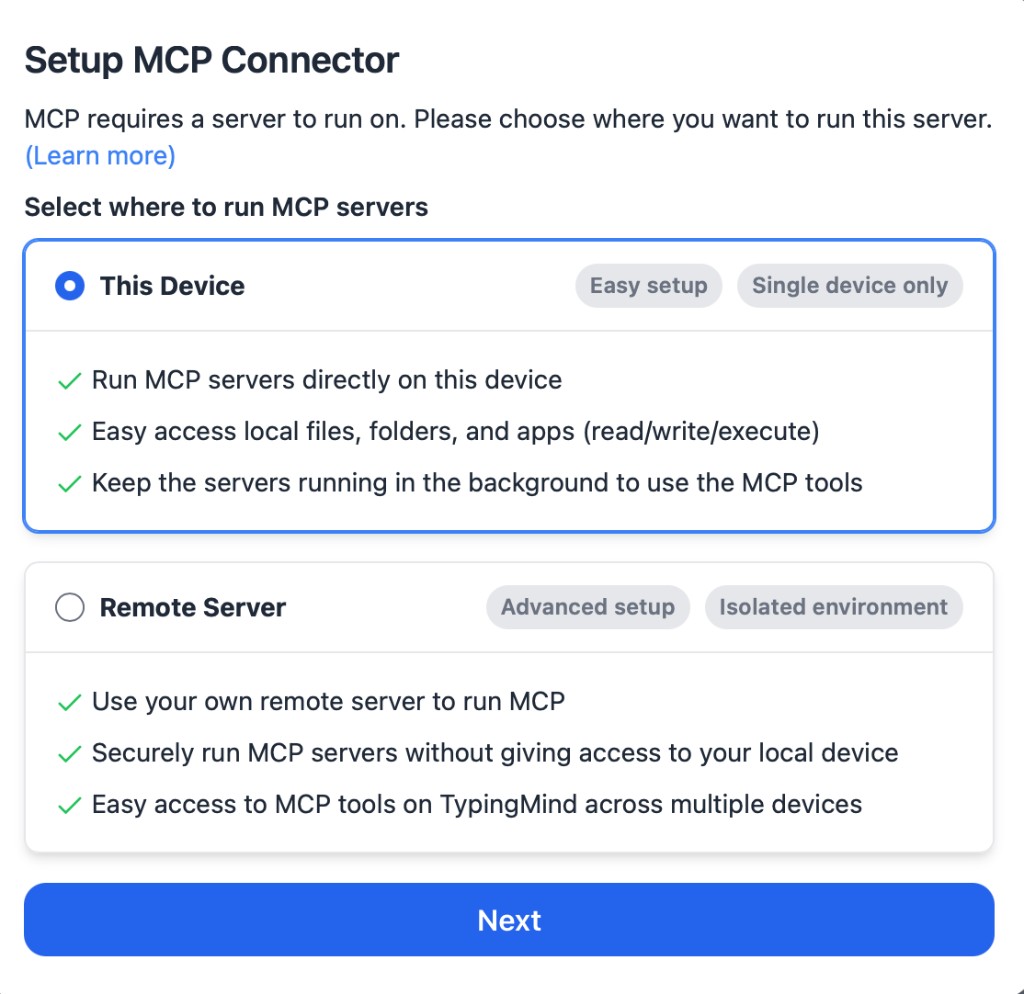
ogham init runs a setup wizard: it connects your database, picks an embedding provider, migrates the schema, and writes the MCP client config (Claude Code, Cursor, VS Code, and others). For Claude Code it runs claude mcp add for you; for other clients it prints the snippet to copy.
You need a database first -- a free Supabase project or a Neon database. On Neon or self-hosted Postgres, install the postgres extra so the driver is available:
bashuvx --from 'ogham-mcp[postgres]' ogham init
Then tell your agent to remember something and ask about it later -- from the same client or a different one. They share the database, so the memory follows you.
Manual setup
If you'd rather configure things yourself instead of using the wizard:
bash# Supabase export SUPABASE_URL=https://your-project.supabase.co export SUPABASE_KEY=your-service-role-key export EMBEDDING_PROVIDER=openai # or ollama, mistral, voyage export OPENAI_API_KEY=sk-... # for your chosen provider # Or Postgres (Neon, self-hosted) export DATABASE_BACKEND=postgres export DATABASE_URL=postgresql://user:pass@host/db export EMBEDDING_PROVIDER=openai export OPENAI_API_KEY=sk-...
Run the schema migration (sql/schema.sql for Supabase, sql/schema_postgres.sql for Neon/self-hosted), then add the MCP server to your client.
Installation methods
| Method | Command | When to use |
|---|---|---|
| uvx (recommended) | uvx ogham-mcp | Quick setup, auto-updates |
| Docker | docker pull ghcr.io/ogham-mcp/ogham-mcp | Isolation, self-hosted |
| Git clone | git clone + uv sync | Development, contributions |
Claude Code
bashclaude mcp add ogham -- uvx ogham-mcp
OpenCode -- add to ~/.config/opencode/opencode.json:
json{ "mcp": { "ogham": { "type": "local", "command": ["uvx", "ogham-mcp"], "environment": { "SUPABASE_URL": "https://your-project.supabase.co", "SUPABASE_KEY": "{env:SUPABASE_KEY}", "EMBEDDING_PROVIDER": "openai", "OPENAI_API_KEY": "{env:OPENAI_API_KEY}" } } } }
Docker
bashdocker run --rm \ -e SUPABASE_URL=https://your-project.supabase.co \ -e SUPABASE_KEY=your-key \ -e EMBEDDING_PROVIDER=openai \ -e OPENAI_API_KEY=sk-... \ ghcr.io/ogham-mcp/ogham-mcp
From source
bashgit clone https://github.com/ogham-mcp/ogham-mcp.git cd ogham-mcp uv sync uv run ogham --help
HTTP transport (multi-agent)
By default, Ogham runs in stdio mode -- each MCP client spawns its own server process. To let several agents share one server, run it over HTTP:
bashogham serve --transport streamable-http --port 8742
The server runs as a persistent background process. All clients connect to the same instance -- one database pool, one embedding cache, shared memory.
Client config (any MCP client):
json{ "mcpServers": { "ogham": { "url": "http://127.0.0.1:8742/mcp" } } }
Health check at http://127.0.0.1:8742/health (cached, sub-10ms). Configure via env vars (OGHAM_TRANSPORT=streamable-http, OGHAM_HOST, OGHAM_PORT) or CLI flags. http is accepted as an alias for streamable-http.
In Docker, bind to all interfaces. The default host is 127.0.0.1, which inside a container means the container itself -- publishing the port will not reach it:
bashdocker run -p 8742:8742 ghcr.io/ogham-mcp/ogham-mcp:latest \ serve --transport streamable-http --host 0.0.0.0 --port 8742
SSE (legacy)
Ogham still accepts --transport sse and serves that endpoint at /sse. It works, and it stays for existing deployments, but new setups should use streamable-http.
The MCP specification now defines two standard transports, stdio and Streamable HTTP, and treats HTTP+SSE as deprecated. The difference that matters is what happens when a session is lost. Streamable HTTP assigns an Mcp-Session-Id and defines the way back: the server answers a dead session with HTTP 404, and the client starts a fresh one. SSE defines no recovery at all, so a session that loses its initialized state rejects every later request with -32602, and the client cannot tell a lifecycle problem from a bad argument. One dropped connection can leave an agent failing every call until someone restarts it.
Entry points
ogham-- the CLI. Use this forogham init,ogham health,ogham search, and other commands you run yourself. Runningoghamwith no arguments starts the MCP server.ogham-serve-- starts the MCP server directly. This is what MCP clients should call. When you runuvx ogham-mcp, it invokesogham-serve.
Retrieval quality
Ogham is a retrieval engine -- it finds the memories, your LLM reads them. The headline numbers, and they measure different things:
- Retrieval: 97.2% R@10 on LongMemEval with one Postgres query (pgvector + tsvector CCF hybrid search). The paper baseline is 78.4%. Other systems that report similar R@10 typically stack cross-encoder reranking, NLI verification, and knowledge-graph enrichment.
- End-to-end QA: 85.8% on the AMB harness (500 questions, April 2026, strict substring judge, GPT-5-mini reader; R@10 99.5%), and 0.554 nugget on BEAM 100K (paper baseline 0.358; seven of nine categories beat the paper).
QA accuracy tests whether the full system (retrieval + LLM) produces the correct answer. R@10 tests whether retrieval alone found the right memories. Full tables, methodology, and the competitor comparison live at ogham-mcp.dev/features; the write-ups explain why the AMB and internal numbers differ (LongMemEval, BEAM).
85.8% QA accuracy on the AMB benchmark harness (500 questions, April 2026) -- 429/500 questions answered correctly using GPT-5-mini with reasoning, evaluated by Gemini 2.5 Flash Lite as a strict judge. Retrieval R@10: 99.5%. AMB is the standardised evaluation harness built by the Vectorize team (creators of Hindsight). Thanks to Nicolo and the Vectorize team for making the harness open.
Previously: 91.8% on our internal LongMemEval benchmark pipeline (gpt-5.4-mini reader, rubric judge). The AMB number is lower because AMB uses a stricter substring-matching judge -- see the full write-up for methodology differences.
0.554 nugget score on BEAM 100K (400 questions across 10 memory abilities, ICLR 2026), using the paper's exact judge prompt from Appendix G. The published baseline is 0.358 (Llama-4-Maverick + LIGHT). Retrieval R@10: 0.737. Seven of nine categories beat the paper. Full write-up.
End-to-end QA accuracy on LongMemEval (retrieval + LLM reads and answers):
| System | Accuracy | Architecture |
|---|---|---|
| OMEGA | 95.4% | Classification + extraction pipeline |
| Observational Memory (Mastra) | 94.9% | Observation extraction + GPT-5-mini |
| Ogham v0.9.2 | 85.8% | Verbatim + read-time extraction + gpt-5-mini (AMB harness, strict judge) |
| Ogham v0.9.1 | 91.8% | Hybrid search + context engineering + gpt-5.4-mini (internal benchmark) |
| Hindsight (Vectorize) | 91.4% | 4 memory types + Gemini-3 |
| Zep (Graphiti) | 71.2% | Temporal knowledge graph + GPT-4o |
| Mem0 | 49.0% | RAG-based |
Retrieval only (R@10 -- no LLM in the search loop):
| System | R@10 | Architecture |
|---|---|---|
| Ogham | 97.2% | 1 SQL query (pgvector + tsvector CCF hybrid search) |
| LongMemEval paper baseline | 78.4% | Session decomposition + fact-augmented keys |
Other retrieval systems that report similar R@10 numbers typically use cross-encoder reranking, NLI verification, knowledge graph enrichment, and LLM-as-a-judge pipelines. Ogham reaches 97.2% with one Postgres query. Optional FlashRank reranking is available for self-hosters who want extra ranking precision.
These tables measure different things. QA accuracy tests whether the full system (retrieval + LLM) produces the correct answer. R@10 tests whether retrieval alone finds the right memories. Ogham is a retrieval engine -- it finds the memories, your LLM reads them.
| Category | R@10 | Questions |
|---|---|---|
| single-session-assistant | 100% | 56 |
| knowledge-update | 100% | 78 |
| single-session-user | 98.6% | 70 |
| multi-session | 97.3% | 133 |
| single-session-preference | 96.7% | 30 |
| temporal-reasoning | 93.5% | 133 |
Full breakdown: ogham-mcp.dev/features
How it works
AI Client (Claude Code, Cursor, Kiro, OpenCode, ...) | | stdio or SSE (MCP protocol) | Ogham MCP Server | | HTTPS (Supabase REST API) or direct connection (Postgres) | PostgreSQL + pgvector
Memories are stored as rows with vector embeddings. Search combines pgvector cosine similarity with PostgreSQL full-text search using Reciprocal Rank Fusion (RRF) -- position-based, score-agnostic fusion that handles different score scales correctly. The knowledge graph lives in a memory_relationships table walked with recursive CTEs; the typed-edge graph (v0.16) adds structural, predicate-typed relationships for two-fact join queries. No separate graph database. Optional FlashRank cross-encoder reranking adds a second pass for self-hosters.
What's in it
- Memory operations -- store memories, decisions, preferences, facts, and events; update, reinforce, and contradict.
- Hybrid search -- semantic + full-text (RRF), tag filters, multi-profile search, read-time fact extraction.
- Typed-edge graph (v0.16) --
store_triple/query_joinfor two-fact join queries against a controlled predicate vocabulary. docs - Knowledge graph -- auto-linking, spreading-activation retrieval, and connection suggestions via shared entities.
- Wiki layer -- synthesize a tag's memories into a cached markdown page; walk the graph; lint health.
- Open Knowledge Format -- portable round-trip bundles (markdown + a self-contained graph viewer), OKF v0.1.
- Entity enrichment -- regex entity tags across 18 languages with no LLM in the write path; a timeline table; Lost-in-the-Middle reordering.
- Memory lifecycle -- FRESH / STABLE / EDITING stages, ACT-R importance, Hebbian decay, and automatic condensing.
- Importers -- Claude Code auto-memory, Claude.ai export, Linear issues, and JSON.
- Ingestion adapters (v0.17) -- capture into memory from an Obsidian/markdown vault (
ingest-obsidian), Telegram (ingest-telegram), and Slack (ingest-slack). Outbound-only, idempotent, and timer-friendly; all three share one server-side enrichment and dedup path. - Lifecycle hooks -- recall context at session start, inscribe signal (not noise) after tool use; secrets masked before storage.
- Skills --
ogham-research,ogham-recall,ogham-maintain. - Self-hoster options -- ONNX local embeddings (BGE-M3), optional FlashRank reranking, five embedding providers.
Full reference for every tool, env var, and setup path is in Reference below.
The deeper story
The retrieval pipeline is built on established information-retrieval and cognitive-science work, not ad-hoc heuristics:
- Hybrid search -- Reciprocal Rank Fusion (Cormack, Clarke & Butt, SIGIR 2009): dense vector similarity rank-fused with BM25-style keyword matching, no score normalisation.
- ACT-R importance + Hebbian decay -- recency, frequency, and surprise weighting (Anderson & Lebiere, 1998; Hebb, 1949). Unaccessed memories fade; frequently accessed ones potentiate and persist.
- Read-time fact extraction -- verbatim storage with query-aware extraction at retrieval, so the ground truth stays re-extractable with different questions later (Anthropic, arXiv:2510.05179). Supports local models via Ollama for full data sovereignty.
- Contradiction detection + supersession -- opposite-polarity memories are linked, not deleted; the edge records that the newer memory superseded the older one.
- Append-only audit trail -- every store, search, delete, and update logged to an
audit_logtable in the same Postgres instance, aligned with GDPR Article 15 and OTEL GenAI conventions.
Ogham's retrieval pipeline combines established information retrieval and cognitive science techniques:
-
Hybrid search -- Reciprocal Rank Fusion (Cormack, Clarke & Butt, SIGIR 2009) combining dense vector similarity (pgvector) with BM25-style keyword matching (PostgreSQL tsvector). Two independent retrieval systems, rank-fused without score normalisation.
-
Entity overlap boost -- memories sharing named entities with the query receive a bounded relevance boost (up to 1.4x), inspired by entity-linking literature (Kolitsas et al., CoNLL 2018). Entity extraction covers 18 languages via YAML-based word lists with no LLM in the write path.
-
Matryoshka embeddings -- flexible dimensionality via Matryoshka Representation Learning (Kusupati et al., NeurIPS 2022). Embedding providers (OpenAI, Voyage, Gemini, Ollama) produce native-dimension vectors truncated to 512d, enabling provider-portable storage without re-embedding.
-
Temporal diversity re-ranking -- density-gated soft penalty preventing semantic clustering on a single time period, extending Maximal Marginal Relevance principles (Carbonell & Goldstein, SIGIR 1998). Only activates when the top-k results are temporally concentrated, leaving well-distributed results untouched.
-
ACT-R importance scoring -- cognitive-architecture-inspired memory weighting based on recency, access frequency, and surprise (Anderson & Lebiere, 1998). Frequently accessed memories stay sharp, rarely accessed ones fade, disputed ones drop in ranking without deletion.
-
Hebbian decay and potentiation -- memories that are not accessed lose importance over time (5% per 30-day idle period). Memories accessed 10+ times become "potentiated" with a slower decay rate (1% per 30 days), simulating long-term potentiation. Based on Hebb's learning rule (Hebb, 1949) and computational models of synaptic plasticity (Bi & Poo, 2001). Importance serves as a multiplier in the relevance formula -- decayed memories sink in rankings but remain retrievable (floor at 0.05). Original importance is preserved in metadata for recovery. Run as a batch job via
ogham decayor pg_cron. -
Memory lifecycle (v0.11.0): FRESH / STABLE / EDITING. Every memory now has an explicit stage tracked in a dedicated
memory_lifecycletable. New memories land atfresh. The session-start hook sweeps aged fresh memories tostablewhen they clear an importance-or-surprise gate and have dwelled long enough. Retrieval opens a 30-minuteeditingwindow on the returned memories so follow-upupdate_memorycalls refine recent thoughts in place; windows auto-close on the next sweep. Memories retrieved together also strengthen their pairwise graph edges (eta=0.01 per co-retrieval, capped at 1.0). The design draws on three lines of prior art: Hebbian co-activation (Hebb, 1949), the hybrid exponential-then-power-law forgetting curve characterised by Wixted (2004) building on Ebbinghaus (1885), and the memory reconsolidation window from neuroscience (Nader, Schafe & LeDoux, 2000) for the editing-on-retrieval mechanic. Stage state lives in its own table so transitions do not touch the HNSW vector index. -
Spreading activation -- when a search hits one memory, activation spreads along relationship edges to pull in connected memories that wouldn't have matched on their own. Integrated into cross-reference, ordering, and summary queries. Density-adaptive weighting means sparse graphs lean harder on graph signal, dense graphs rely more on retrieval score. Inspired by Collins & Loftus (1975) semantic network theory.
-
Contradiction detection -- when a new memory has opposite polarity to a high-similarity existing memory, Ogham automatically creates a
contradictsrelationship edge. Polarity detection uses negation markers across 18 languages loaded from YAML word lists. Contradicted memories are not deleted -- the edge records that the newer memory superseded the older one. -
Read-time fact extraction -- query-aware extraction at retrieval time preserves verbatim storage for auditability, contrasting with write-time compression approaches. Verbatim storage ensures the ground truth is always available for re-extraction with different questions later -- a design choice informed by alignment considerations in persistent agent memory (Anthropic, arXiv:2510.05179). Supports local models via Ollama for full data sovereignty.
-
Append-only audit trails -- every store, search, delete, and update operation is logged to an
audit_logtable in the same Postgres instance. Designed for GDPR Article 15 subject access requests and cost governance. Fields align with OTEL GenAI Semantic Conventions. Query viaogham auditCLI. No extra infrastructure -- runs in the same database as memories.
Reference
bashogham init # Interactive setup wizard ogham health # Check database + embedding provider ogham config # Show runtime configuration (secrets masked) ogham store "some fact" # Store a memory ogham search "query" # Search memories (hybrid: semantic + keyword) ogham search "q" --json # JSON output for scripting ogham search "q" --tags "a,b" # Filter by comma-separated tags ogham list # List recent memories ogham list --json # JSON output ogham delete <id> # Delete a memory by ID ogham use <profile> # Switch default profile ogham profiles # List profiles and counts ogham stats # Profile statistics ogham export -o backup.json # Export memories (JSON) ogham export --format markdown # Export as Obsidian-compatible markdown ogham export --format okf # Export as Open Knowledge Format v0.1 bundle ogham import backup.json # Import a JSON export ogham import <okf-bundle-dir> # Import an OKF bundle directory (auto-detected) ogham import <dir> --with-graph # ...including its entities/ graph layer (opt-in) ogham cleanup # Remove expired memories ogham hooks install # Auto-detect client + configure hooks ogham hooks recall # Read from the stone (load project context) ogham hooks inscribe # Carve into the stone (capture activity) ogham hooks inscribe --dry-run # Preview hook memory without storing ogham serve # Start MCP server (stdio, default) ogham serve --transport http # Start HTTP server on port 8742 ogham openapi # Generate OpenAPI spec
Multi-profile search -- search across multiple profiles in a single query (v0.8.5+):
python# MCP tool hybrid_search(query="architecture decisions", profiles=["work", "shared"]) # Python library from ogham.service import search_memories_enriched results = search_memories_enriched( query="architecture decisions", profile="work", profiles=["work", "shared", "project-alpha"], )
When profiles is set, results include memories from all listed profiles with a profile field showing which profile each result came from.
| Variable | Required | Default | Description |
|---|---|---|---|
DATABASE_BACKEND | No | supabase | supabase or postgres |
SUPABASE_URL | If supabase | -- | Your Supabase project URL |
SUPABASE_KEY | If supabase | -- | Supabase secret key (service_role) |
DATABASE_URL | If postgres | -- | PostgreSQL connection string |
EMBEDDING_PROVIDER | No | ollama | ollama, openai, mistral, voyage, gemini, or onnx |
EMBEDDING_DIM | No | 512 | Vector dimensions -- must match your schema (see below) |
OPENAI_API_KEY | If openai | -- | OpenAI API key |
MISTRAL_API_KEY | If mistral | -- | Mistral API key |
VOYAGE_API_KEY | If voyage | -- | Voyage AI API key |
GEMINI_API_KEY | If gemini | -- | Google Gemini API key |
OLLAMA_URL | No | http://localhost:11434 | Ollama server URL |
OLLAMA_EMBED_MODEL | No | embeddinggemma | Ollama embedding model |
MISTRAL_EMBED_MODEL | No | mistral-embed | Mistral embedding model |
VOYAGE_EMBED_MODEL | No | voyage-4-lite | Voyage embedding model |
GEMINI_EMBED_MODEL | No | gemini-embedding-2-preview | Gemini embedding model |
RERANK_ENABLED | No | false | Enable FlashRank cross-encoder reranking |
RERANK_ALPHA | No | 0.55 | Cross-encoder score weight (0-1) |
DEFAULT_MATCH_THRESHOLD | No | 0.7 | Similarity threshold (see below) |
DEFAULT_MATCH_COUNT | No | 10 | Max results per search |
DEFAULT_PROFILE | No | default | Memory profile name |
OGHAM_RECALL_ENABLED | No | true | Enable memory recall/context retrieval |
OGHAM_INSCRIBE_ENABLED | No | true | Enable memory capture/content writes |
Embedding providers
| Provider | Default dimensions | Recommended threshold | Notes |
|---|---|---|---|
| OpenAI | 512 (schema default) | 0.35 | Set EMBEDDING_DIM=512 explicitly -- OpenAI defaults to 1024 |
| Ollama | 512 | 0.70 | Tight clustering, scores run 0.8-0.9 |
| Mistral | 1024 | 0.60 | Fixed 1024 dims, can't truncate. Schema must be vector(1024) |
| Voyage | 512 (schema default) | 0.45 | Moderate spread |
| Gemini | 512 | 0.35 | gemini-embedding-2-preview, supports MRL truncation |
| ONNX | 1024 | 0.35 | Local BGE-M3 inference, dense + sparse vectors. See ONNX section |
EMBEDDING_DIM must match the vector(N) column in your database schema. The default schema uses vector(512). If you use Mistral, you need to alter the column to vector(1024) before storing anything.
Each provider clusters vectors differently, so the similarity threshold matters. Start with the recommended value and adjust based on your results.
Temporal search -- queries with time expressions like "last week" or "three months ago" are resolved automatically using parsedatetime, no configuration needed. This handles roughly 80% of temporal queries at zero cost. For expressions parsedatetime cannot parse ("the quarter before last", "around Thanksgiving"), set TEMPORAL_LLM_MODEL to call an LLM as a fallback:
bash# Self-hosted with Ollama (free, local) TEMPORAL_LLM_MODEL=ollama/llama3.2 # Cloud API TEMPORAL_LLM_MODEL=gpt-4o-mini
Any litellm-compatible model string works -- deepseek/deepseek-chat, moonshot/moonshot-v1-8k, etc. The LLM is only called when parsedatetime fails and the query has temporal intent, so costs stay near zero. If TEMPORAL_LLM_MODEL is empty (the default), parsedatetime handles everything on its own. Requires the litellm package.
Ogham hooks inject memory context at session start and preserve it across compaction. Install for your client:
bashogham hooks install
| Client | What gets installed |
|---|---|
| Claude Code | Hooks in ~/.claude/settings.json (recall on SessionStart/PostCompact, inscribe on PostToolUse/PreCompact) |
| Kiro | Instructions for Hook UI (recall on Prompt Submit, inscribe on Agent Stop) |
| Codex, Cursor, others | Project instruction file (CLAUDE.md, AGENTS.md, or .cursorrules) |
Two commands, named after the Ogham stones:
- recall -- read from the stone. Searches Ogham for memories relevant to your project and injects them as context. Fires at session start and after compaction.
- inscribe -- carve into the stone. Captures meaningful tool activity as memories. Skips noise (
ls,cat,git status) and only stores signal (commits, deploys, errors, config changes). Fires after tool use and before compaction. Secrets are masked before storing.
Disable either flow when you want an agent attached to Ogham without letting it pull memory into context or write new memory:
bashOGHAM_RECALL_ENABLED=false ogham serve # no context injection / memory search OGHAM_INSCRIBE_ENABLED=false ogham serve # no memory capture / content writes ogham hooks recall --no-recall # one-off hook recall skip ogham hooks inscribe --no-inscribe # one-off hook capture skip ogham search "query" --no-recall # one-off CLI search skip ogham store "some fact" --no-inscribe # one-off CLI store skip
For MCP clients, put the env vars in that client's Ogham server config:
json{ "mcpServers": { "ogham": { "command": "ogham-serve", "env": { "OGHAM_RECALL_ENABLED": "false", "OGHAM_INSCRIBE_ENABLED": "false" } } } }
Admin operations such as config, health, stats, audit, export, delete, and cleanup remain available so you can inspect or clean memory even when recall or inscribe is disabled.
Smart filtering: Hooks don't capture everything. Routine commands (ls, pwd, git add) are skipped. Only signal events (errors, deployments, commits, config changes) are stored -- typically 20-30 memories per session instead of hundreds.
Secret masking: API keys, tokens, passwords, and JWTs are automatically replaced with ***MASKED*** before storing. The event is captured ("configured Stripe API key") but the actual secret never touches the database.
Memory operations
| Tool | Description | Key parameters |
|---|---|---|
store_memory | Store a new memory with embedding | content (required), source, tags[], auto_link |
store_decision | Store an architectural decision | decision, reasoning, alternatives[], tags[] |
store_preference | Store a user preference with strength metadata | preference, subject, alternatives[], strength |
store_fact | Store a factual statement with confidence and citation | fact, subject, confidence, source_citation |
store_event | Store an event with temporal and participant metadata | event, when, participants[], location |
update_memory | Update content of existing memory | memory_id, content, tags[] |
delete_memory | Delete a memory by ID | memory_id |
reinforce_memory | Increase confidence score | memory_id |
contradict_memory | Decrease confidence score | memory_id |
Search
| Tool | Description | Key parameters |
|---|---|---|
hybrid_search | Combined semantic + full-text search (RRF) | query, limit, tags[], graph_depth, profiles[], extract_facts |
list_recent | List recent memories | limit, profile |
find_related | Find memories related to a given one | memory_id, limit |
Knowledge graph
| Tool | Description | Key parameters |
|---|---|---|
link_unlinked | Auto-link memories by embedding similarity | threshold, limit |
explore_knowledge | Traverse the knowledge graph | memory_id, depth, direction |
suggest_connections | Find hidden connections via shared entities | memory_id, min_shared_entities, limit |
Typed-edge graph (v0.16) -- structural, typed relationships for two-fact join queries. Full detail in /docs/typed-edges/.
| Tool | Description | Key parameters |
|---|---|---|
store_triple | Write a typed edge against a controlled predicate vocabulary; supersedes the prior current edge for the same subject + predicate + object | subject, predicate, object, profile, source_memory_id |
query_join | Walk a typed predicate path from a start entity; returns the entities (BFS order), edges, and citations along the path -- no fuzzy ranking | start_entity, predicate_path[], hop_limit (required), direction |
Referring to an entity (v0.19). Entities are keyed on
(canonical_name, entity_type), so a bare name is not always enough to identify
one. The same word can legitimately land under two types -- ValueError is both
an entity: (interior capitalisation) and an error: (the Error suffix). Pass
a qualified reference to be explicit:
store_triple(subject="error:ValueError", ...) # exactly the error node store_triple(subject="ValueError", ...) # lowest-id match, and logs the collision
An unqualified reference still resolves, deterministically, and warns when it had to choose. Before v0.19 it chose silently.
Evidence class (v0.19). Every entity now records how it was established:
| class | meaning |
|---|---|
syntactic | an unambiguous marker in the text -- interior capitalisation, a path separator, an Error suffix, a number with a unit |
inferred | a dictionary or keyword lookup with no marker -- places, events, preferences, emotions |
structured | derived from adapter provenance rather than from text |
It is deliberately not a confidence score. Calibration is a property of an
estimated probability (Guo, Pleiss, Sun and Weinberger, ICML 2017);
a fixed class per rule estimates nothing, so a float here would invite consumers
to multiply it into a relevance score as though it meant something. It is an
enumerated value with a CHECK constraint.
Existing entities are classified from their type on upgrade. Nothing in retrieval reads it yet -- it exists so that when enrichment does start writing entities, a machine-suggested one is distinguishable from adapter-derived fact.
Importers
| Tool | Description | Key parameters |
|---|---|---|
import_linear | Import Linear issues as memories, read-only, deduped by tracker id (v0.16) | see /docs/import-linear/ |
Profiles
| Tool | Description | Key parameters |
|---|---|---|
switch_profile | Switch active memory profile | profile |
current_profile | Show active profile | -- |
list_profiles | List all profiles with counts | -- |
set_profile_ttl | Set auto-expiry for a profile | profile, ttl_days |
Import / export
| Tool | Description | Key parameters |
|---|---|---|
export_profile | Export all memories in active profile | format (json, markdown, or okf), include_viewer (default true for OKF) |
import_memories_tool | Import a JSON export string OR auto-detect an OKF bundle directory by path | data, dedup_threshold |
--format okf writes an Open Knowledge Format v0.1 conformant bundle: a directory of one-markdown-file-per-memory with YAML frontmatter, a bundle-root index.md declaring okf_version: "0.1", and a self-contained viewer.html (Cytoscape.js graph, opens with file://, no server or CDN needed). Round-trip preserves UUID, content, tags, source, and metadata; the embedding is regenerated on import. Pass include_viewer=false to skip the HTML graph. See the OKF round-trip write-up for the background.
Maintenance
| Tool | Description | Key parameters |
|---|---|---|
re_embed_all | Re-embed all memories (after switching providers) | -- |
compress_old_memories | Condense old inactive memories (full text to summary to tags) | -- |
cleanup_expired | Remove expired memories (TTL) | -- |
health_check | Check database and embedding connectivity | -- |
get_config | Show runtime configuration with masked secrets | -- |
get_stats | Memory counts, sources, tags, and profile health (orphans, decay, tagging) | -- |
get_cache_stats | Embedding cache hit rates | -- |
The wiki layer turns a tag full of related memories into a synthesized markdown page. Run compile_wiki on a tag, get back a summarized topic; the cache invalidates automatically when underlying memories change. Four MCP tools cover the lifecycle:
| Tool | Description | Key parameters |
|---|---|---|
compile_wiki | Compile a tag's memories into a synthesized markdown page (LLM call, cached) | topic, provider, model, force |
query_topic_summary | Read the cached page for a topic without recomputing | topic |
walk_knowledge | Direction-aware graph walk from a known memory along relationship edges | start_id, depth, direction (outgoing, incoming, both), min_strength, relationship_types |
lint_wiki | Health report: contradictions, orphans, stale lifecycle, stale summaries, summary drift | stable_days, sample_size, include_drift |
The wiki layer needs an LLM. Synthesis is the LLM step that turns a list of memories into a coherent page; embeddings alone aren't enough. You can run that LLM locally (Ollama with llama3.2, vLLM, or any OpenAI-compatible local server) or in the cloud (Gemini, OpenAI, Anthropic, Mistral, Groq, OpenRouter). Local keeps everything private and free; cloud generally writes more polished prose at the cost of a few cents per compile.
Set the default with LLM_PROVIDER and LLM_MODEL in your environment (e.g. LLM_PROVIDER=gemini + LLM_MODEL=gemini-2.5-flash, or LLM_PROVIDER=ollama + LLM_MODEL=llama3.2). Override per call with compile_wiki(topic=..., provider=..., model=...). The provider/model is stamped into the resulting page's frontmatter, so you can re-compile the same topic with a different LLM and see how the synthesis changes.
compile_wiki short-circuits when the source memories haven't changed since the last compile -- the call is effectively free if nothing has moved. Pass force=True to bypass that check (useful for re-compiling with a different model on the same source set).
The wiki layer requires migrations 028, 030, and 031 applied to your database. See Database setup for details.
Snapshot your wiki layer to a folder of Obsidian-compatible markdown files. One .md per topic with full YAML frontmatter, plus a README.md index. Wikilinks between topics are auto-detected and wrapped in [[brackets]] for Obsidian's graph view.
bashogham export-obsidian /path/to/vault ogham export-obsidian /path/to/vault --profile work --force
The export is read-only -- it writes files but never reads them back. Edits in Obsidian stay in Obsidian; re-run the export to refresh the snapshot. By design the exporter refuses to write into a directory that already contains files it didn't create; pass --force to override that guardrail.
Full guide with frontmatter reference, troubleshooting, and screenshots: obsidian export docs.
Round-trip portability for your memories. Ogham reads and writes Open Knowledge Format (OKF) v0.1, the markdown-based interchange format Google Cloud published in June 2026. The same bundle is portable to any other OKF-speaking tool -- Google's Knowledge Catalog, a colleague's homegrown reader, or your own future system.
bash# Export your profile as an OKF v0.1 bundle directory ogham export --format okf # Round-trip it back (auto-detected as an OKF bundle) ogham import ogham-okf-<profile>-<timestamp>
The bundle is a directory tree:
ogham-okf-<profile>-<timestamp>/ ├── index.md # declares okf_version: "0.1" (+ ogham_graph_version: 1) ├── context.jsonld # predicate URIs, with Schema.org alignments where they fit ├── viewer.html # self-contained Cytoscape.js graph (opens with file://) ├── memories/ │ ├── <slug>-<uuid8>.md # one markdown file per memory │ └── ... └── entities/ # present only if the profile has a typed-edge graph ├── <slug>-e<entity_id>.md # one file per entity, edges as frontmatter triples └── ...
Each memory file has YAML frontmatter (type, id, tags, timestamp, source, optional title) and the memory body as markdown. type: is derived from the first type:X tag alphabetically (falling back to Memory). Round-trip preserves UUID, content, tags, source, and any extension metadata; the embedding is regenerated on import.
The viewer.html is a 425 KB self-contained file with Cytoscape.js (MIT) vendored inline -- no server, no internet, no CDN. Open it in any browser via file:// to see your memories as a graph coloured by type, with edges following intra-bundle markdown links. Pass include_viewer=false to skip it.
Import behaviour:
- Memories with the
id:extension upsert by UUID (idempotent re-imports). - Memories without
id:insert as new; the count surfaces asmissing_id_countin the result. - The importer requires a bundle-root
index.mdwithokf_versiondeclared so pointing it at a random directory fails fast.
Importing the entity graph is opt-in and off by default:
bash# See what it would do -- writes nothing ogham import <bundle> --with-graph --graph-dry-run # Actually import the entities/ layer ogham import <bundle> --with-graph
The default is off because the entities table has no profile column -- it is
global, scoped only through memory_entities and entity_edges -- so importing
a graph touches rows every profile reads.
Two things worth knowing before you run it:
- It merges, it does not restore. Importing into a profile that already has a graph moves matching edges forward rather than returning the profile to the bundle's state. Into a fresh profile the result is exact.
- There is no undo, so there is a dry run. Snapshotting the profile first
does not give you one -- the snapshot is built from this same export path, and
edge qualifiers do not round-trip through it.
--graph-dry-runreports exactly what the real run would do: entities to create, edges to write, edges already present, and edges whose target is missing from the bundle.
Re-running is safe. An edge that already exists is skipped rather than rewritten, so a retry after a partial failure converges instead of churning.
Scope: this is for your own bundles. Importing a bundle from someone else's install is not supported -- the reader is bounded against corruption, not against a hostile bundle.
User-facing write-up: Ogham v0.15 speaks Open Knowledge Format.
From Claude Code (auto-memory MD files)
Claude Code's auto-memory system writes per-project notes under ~/.claude/projects/<encoded-cwd>/memory/. Each note is a markdown file with YAML frontmatter (name, description, type, optional originSessionId). Pull them into Ogham:
bashogham import-claude-code ~/.claude/projects/<encoded-cwd>/memory \ --project ogham --dedup 0.8
Each parseable file becomes one Ogham memory tagged source:claude-code-memory + type:<frontmatter type> + project:<inferred or explicit>. MEMORY.md (the index) and dotfiles are skipped. Files without recognisable frontmatter log a warning and are skipped.
The encoded-cwd directory naming is lossy on hyphenated repo names: openbrain-sharedmemory decodes to sharedmemory because every / and - becomes the same separator. Pass --project NAME to override the inferred tag and keep your project tags consistent.
The importer respects inscribe_enabled() -- --no-inscribe and OGHAM_INSCRIBE_ENABLED=false skip the import. Re-runs are dedup-safe via the --dedup cosine threshold (default 0.8). MCP tool: import_claude_code_memories(directory, project_tag=...).
From Claude.ai (conversation data export)
Anthropic offers a first-party data export at Settings → Privacy → Request your data. After ~24-48h you receive a ZIP containing conversations.json. Pull it into Ogham:
bashogham import-claude-ai ~/Downloads/data-<id>-batch-0000 --profile claude-ai
Accepts the ZIP itself, the unzipped directory, or conversations.json directly. Each (human, assistant) turn-pair becomes one memory with the assistant turn as content (the signal you'll search on) and the human prompt in metadata.user_prompt (recoverable for context). Tagging: source:claude-ai, claude-conversation:<title-slug>, optional project:<tag>.
A conservative smart filter drops pleasantry exchanges; pass --no-smart-filter to keep them. Use --since 2026-01-01 to import only recent conversations, or --mode raw for one memory per individual message instead of per turn-pair.
To get an LLM-distilled summary of an imported conversation, call compile_wiki(topic="claude-conversation:<slug>") via MCP. Verbatim ingest plus on-demand synthesis means you keep the raw turns and get a digest, without the importer making LLM calls upfront. The summary regenerates whenever the source memories change.
UUIDs from the export land in metadata so re-importing the same export later only adds new turns. MCP tool: import_claude_ai_export(path, profile, mode=...).
Bulk imports skip per-memory enrichment -- the Claude Code, Claude.ai, and JSON importers all write through import_memories, which embeds + dedups + inserts in batches but skips per-memory entity extraction and auto-link (a 600-memory import would otherwise run thousands of secondary RPCs). Imported memories are immediately searchable via embedding + keyword. To populate the entity graph after a bulk import, run ogham backfill-entities --profile <name> (see Entity graph below).
From a JSON export
bashogham export --profile work > backup.json ogham import backup.json --profile work-restored
Round-trips the full memory schema (content, embeddings, tags, metadata, lifecycle state). Useful for migrating between deployments or seeding a fresh profile from another.
Ogham extracts entity tags from every stored memory at ingest (people, files, errors, locations, projects -- pure regex, no LLM). v0.14 added the live wire-up so those tags also populate a separate entity graph used for spreading-activation retrieval and cross-memory connection suggestions.
After applying migration 036 on an existing deployment, run a one-shot backfill to populate historical memories:
bashogham backfill-entities --profile work
The backfill walks the memories table, runs the entity extractor, and links each memory to its entities via link_memory_entities. ON CONFLICT DO NOTHING makes re-runs free. New writes after v0.14 are linked automatically; the backfill only matters for memories created before the upgrade.
Once the graph is populated:
suggest_connectionsreturns memories that share entities with an anchor memory (was always empty before).entity_graph_densityreturns real numbers (count of distinct entities and edges per profile).- The
spread_entity_activation_memoriesRPC walks the bipartite memory/entity graph for context-rich retrieval.
MCP tool: backfill_entities(profile=None, batch_size=200).
Scoring and condensing -- three server-side features run automatically, no configuration needed:
- Novelty detection. When you store a memory, Ogham checks how similar it is to what you already have. Redundant content gets a lower novelty score and ranks quieter in search results. You can still find it, but it won't push out more useful memories.
- Content signal scoring. Memories that mention decisions, errors, architecture, or contain code blocks get a higher signal score. A debug session where you fixed a real bug ranks above a casual note about a meeting. The scoring is pure regex, no LLM involved.
- Automatic condensing. Old memories that nobody accesses gradually shrink. Full text becomes a summary of key sentences, then a one-line description with tags. The original is always preserved and can be restored if the memory becomes relevant again. Run
compress_old_memoriesmanually or on a schedule. High-importance and frequently-accessed memories resist condensing.
Entity enrichment -- every memory is automatically enriched at ingest with structured entity tags, no LLM calls, pure regex and dictionary matching across 18 languages:
- Six entity categories. Events (wedding, concert, meeting), activities (hiking, coding, cooking), emotions (frustrated, happy, relieved), relationships (sister, boss, colleague), quantities (3 books, 5 miles), and locations (Berlin, Tokyo -- via GeoNames database).
- 18 languages. English, German, French, Spanish, Italian, Portuguese, Brazilian Portuguese, Dutch, Polish, Russian, Ukrainian, Turkish, Arabic, Hindi, Japanese, Korean, Chinese, and Irish. Each language includes common inflected forms (case endings, verb tenses, lenition) so "svadʹbu" matches "svadʹba" in Russian and "bhainis" matches "bainis" in Irish.
- Timeline table. Search results include a chronological timeline with pre-computed "days ago" and memory ID cross-references. Helps LLM readers answer temporal questions without doing date arithmetic.
- Lost in the Middle reordering. Search results are reordered so the highest-relevance memories appear at the start and end of the context, where LLMs pay the most attention (Liu et al., 2023).
Cross-encoder reranking -- optional FlashRank cross-encoder reranking for self-hoster