🤔 Why MinerU Document Explorer?
MinerU Document Explorer equips your agent with three tool suites — Retrieve, Deep Read, and Ingest — closing the full knowledge loop:

- 🔍 Retrieve — Cross-collection search: BM25, vector, and hybrid with LLM reranking and query expansion
- 📖 Deep Read — Navigate inside a single document without loading the whole file: table of contents, section reading, inline search, and element extraction
- 📝 Ingest — Build and maintain a LLM wiki from raw documents, following the Karpathy LLM Wiki pattern
Developed by the MinerU team, building on QMD and Karpathy's LLM Wiki.
💡 What can you do with it?
- Research assistant — Point it at a folder of PDFs and ask your AI agent to survey the literature, compare methods, or find specific results across papers
- Project knowledge base — Index your codebase, docs, and design specs; let the agent answer questions about architecture, find relevant code, or trace requirements
- Study companion — Upload textbooks or lecture notes; use
doc_toc+doc_readto navigate,doc_grepto search, and build a wiki of key concepts - Enterprise document search — Index contracts, reports, or manuals and search them with natural language queries enhanced by LLM reranking
See it in action: The demo/ folder contains a complete end-to-end example — an AI agent automatically reads ~10 arXiv papers on RAG, builds an interlinked wiki knowledge base, and writes a research survey. See the Demo Guide for step-by-step instructions.
🚀 Quick Start
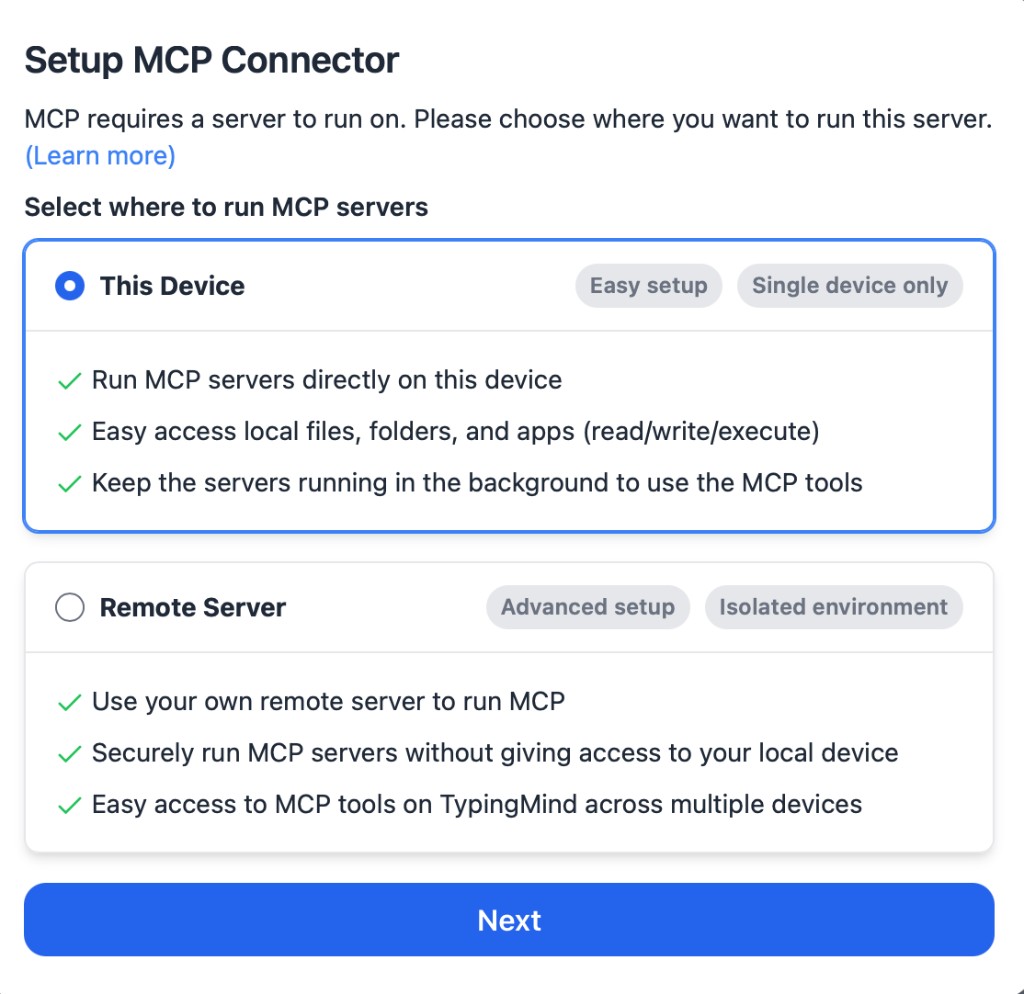
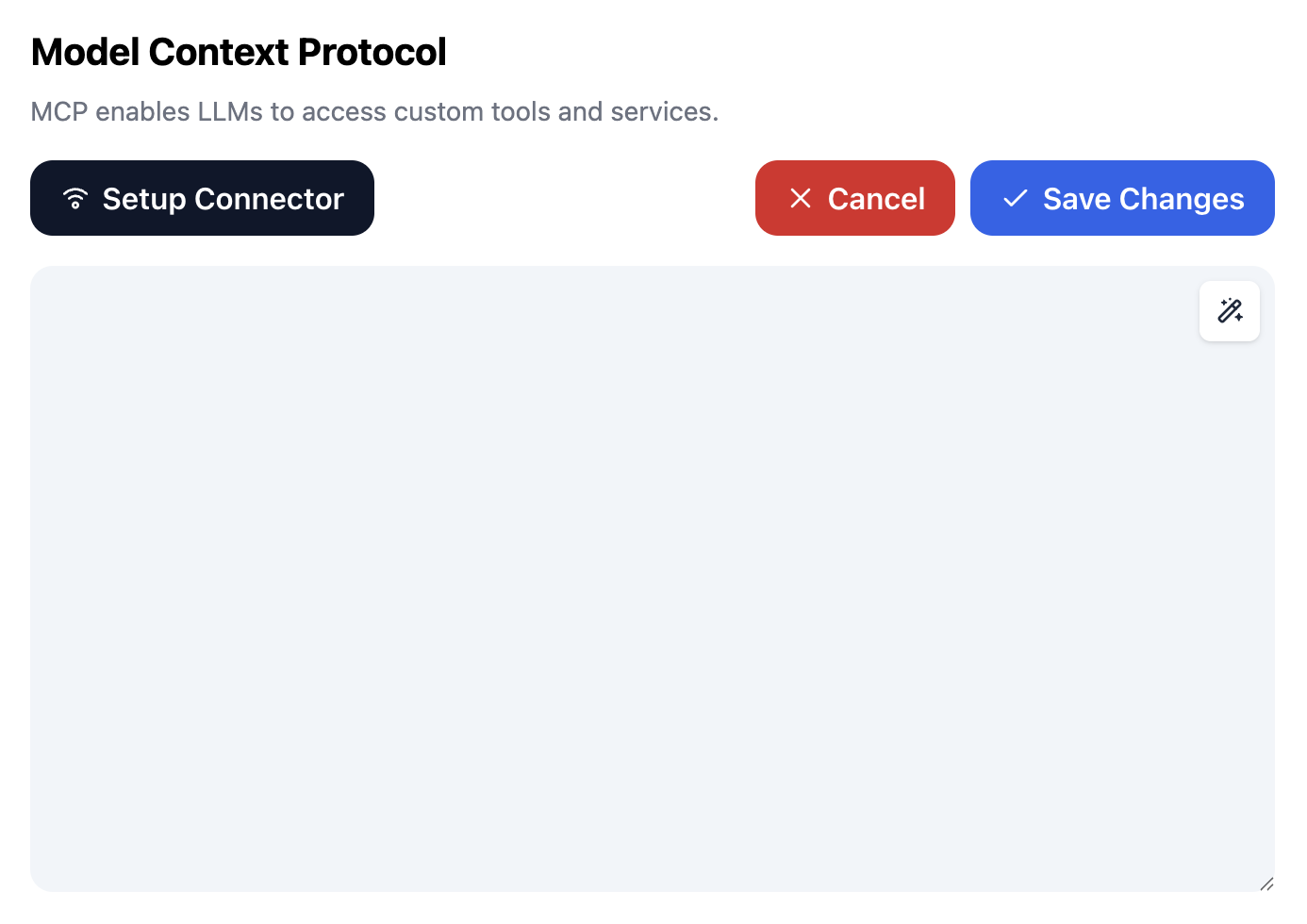
Agent-Assisted Setup: If you're using an AI agent (Claude Code, Cursor, etc.), simply ask it to help you deploy MinerU Document Explorer and install skills — the agent can handle the entire setup process for you, including MCP configuration.
Follow the https://github.com/opendatalab/MinerU-Document-Explorer/blob/main/docs/quickstart.md to install MinerU Document Explorer and walk the user through configuration.
📖 Document Deep Reading
Navigate and search within a single document without reading the whole file:
sh# View document structure qmd doc-toc papers/attention-is-all-you-need.pdf # Read specific sections by address qmd doc-read papers/attention-is-all-you-need.pdf "line:45-120" # Search within one document qmd doc-grep papers/attention-is-all-you-need.pdf "self-attention"
🔌 MCP Server — 15 Tools for AI Agents
Integrate with AI agents via Model Context Protocol.
MCP Server vs CLI: The MCP server runs as a persistent process — LLM models (embeddings, reranker, query expansion) are loaded once and stay in memory across requests. CLI commands like
qmd querymust reload all models on every invocation, adding ~5–15 s of startup overhead each time. For agent workflows, always prefer the MCP server.
Two transport modes:
| Mode | Command | Best for |
|---|---|---|
| stdio | qmd mcp | Claude Desktop, Claude Code — client spawns and manages the process |
| HTTP daemon | qmd mcp --http --daemon | Cursor, Windsurf, VS Code, multi-client setups — one shared persistent server |
sh# Start the HTTP daemon (recommended — models stay loaded across all requests) qmd mcp --http --daemon # default port 8181 qmd mcp --http --daemon --port 8080 # custom port # Verify server is running curl http://localhost:8181/health # Stop the daemon qmd mcp stop
Client Configuration
Option A — stdio (Cursor manages the process lifecycle):
json{ "mcpServers": { "qmd": { "command": "qmd", "args": ["mcp"] } } }
Option B — HTTP (run qmd mcp --http --daemon first; models stay loaded, faster responses):
json{ "mcpServers": { "qmd": { "url": "http://localhost:8181/mcp" } } }
json{ "mcpServers": { "qmd": { "command": "qmd", "args": ["mcp"] } } }
json{ "mcpServers": { "qmd": { "command": "qmd", "args": ["mcp"] } } }
For stdio transport, use "command": "qmd", "args": ["mcp"] in your client's MCP configuration.
For HTTP transport, start qmd mcp --http --daemon and point your client to http://localhost:8181/mcp.
See MCP setup guide for all 15 tools and HTTP transport details.
Agent Skills
MinerU Document Explorer ships with a built-in Agent Skill that teaches AI agents how to use the full tool suite effectively — decision trees, usage patterns, and best practices for all 15 MCP tools.
sh# Install the skill (works with both npm and source installs) qmd skill install # local project (.agents/skills/) qmd skill install --global # global (~/.agents/skills/) # Or from source repo claude skill add ./skills/mineru-document-explorer/SKILL.md
📊 How It Compares
| MinerU Doc Explorer | LlamaIndex | Obsidian | NotebookLM | |
|---|---|---|---|---|
| Runs 100% locally | ✅ | ⚠️ LLM APIs | ✅ | ❌ Cloud |
| Agent integration (MCP) | 15 tools | Plugin | ❌ | ❌ |
| Deep reading within docs | ✅ | ❌ | ❌ | ✅ |
| Wiki knowledge compilation | ✅ | ❌ | Manual | ❌ |
| Formats | MD, PDF, DOCX, PPTX | Many | MD | PDF, URL |
| Search pipeline | BM25 + vec + rerank | Configurable | Basic | Proprietary |
| Zero-config search | ✅ qmd search | ❌ | Plugin | N/A |
| Open source | MIT | MIT | Partial | ❌ |
⚙️ Requirements
| Requirement | Notes |
|---|---|
| Node.js >= 22 or Bun | Runtime |
| Python >= 3.10 | Document processing (pymupdf, python-docx, python-pptx) |
| macOS | brew install sqlite for extension support |
📄 Document Processing Setup
Python 3.10+ is required for document processing (PDF, DOCX, PPTX):
sh# Check Python version python3 --version # needs >= 3.10 # Install required Python packages pip install pymupdf python-docx python-pptx # Verify python3 -c "import pymupdf; import docx; import pptx; print('OK')"
shpip install mineru-open-sdk export MINERU_API_KEY="your-key" # get from https://mineru.net
When MINERU_API_KEY is set, MinerU Cloud is automatically used as the primary PDF provider with PyMuPDF as fallback.
For advanced configuration (custom providers, local VLM models, GPT PageIndex), create ~/.config/qmd/doc-reading.json:
json{ "docReading": { "providers": { "fullText": { "pdf": ["mineru_cloud", "pymupdf"] } }, "credentials": { "mineru": { "api_key": "your-api-key" } } } }
🤖 LLM Models (auto-downloaded on first use)
| Model | Purpose | Size |
|---|---|---|
| embeddinggemma-300M | Vector embeddings | ~300 MB |
| qwen3-reranker-0.6b | Re-ranking | ~640 MB |
| qmd-query-expansion-1.7B | Query expansion | ~1.1 GB |
Models are only needed for
qmd embed,qmd vsearch, andqmd query.qmd searchruns BM25 retrieval.
📚 Documentation
| 🎯 Demo Guide | End-to-end example: agent-driven RAG research survey |
| 📖 CLI Reference | All commands, options, output formats |
| 🔌 MCP Server | Setup, 15 tools, HTTP transport |
| 📦 SDK / Library | TypeScript API, types, examples |
| 🏗️ Architecture | Search pipeline, scoring, data schema, chunking |
| 🤝 Contributing | Development setup, code style, how to contribute |
❤️ Acknowledgments
MinerU Document Explorer builds upon these foundational projects:
- QMD by Tobi Lutke — An on-device search engine and CLI toolkit for markdown documents
- LLM Wiki by Andrej Karpathy — the conceptual pattern for LLM-maintained knowledge bases
- MinerU by OpenDataLab — high-quality document parsing and extraction
📝 Changelog
v1 — 2026-04-07 (Current)
Rebuilt from an OpenClaw agent skill into a full agent-native knowledge engine: npm package (npm install -g mineru-document-explorer), qmd CLI, MCP server with 15 tools across three groups (Retrieval / Deep Reading / Knowledge Ingestion), multi-format support (MD, PDF, DOCX, PPTX), hybrid search (BM25 + vector + LLM reranking), and LLM Wiki knowledge base pattern.
v0 — 2026-03-30 (Previous)
OpenClaw-native agent skill (doc-search CLI). Four capabilities: Logic Retrieval, Semantic Retrieval, Keyword Retrieval, Evidence Extraction. See the v0 repository.