Prisma AIRS MCP Security Relay
By Palo Alto Networks
Overview
pan-mcp-relay is a security-enhanced Model Context Protocol
(MCP) Relay (Proxy) Server providing real-time AI threat protection for MCP Clients, built with the Prisma AIRS AI Runtime API Intercept.
pan-mcp-relay will help protect MCP Clients such as IDE's, LLM Chat Clients, and AI Agents from harmful MCP Server Tools by automatically scanning and blocking
various threats, including prompt injections, malicious URLs, insecure outputs, AI agentic threats, sensitive data loss, and more.
The MCP Relay scans all MCP Server tool descriptions, tool call parameters, and tool call responses.
For licensing, onboarding, activation, and to obtain an API authentication key and profile name, refer to the Prisma AIRS AI Runtime: API Intercept Overview administration documentation.
Prerequisites
Follow the following Activation and Onboarding guides:
- Create and associate a deployment profile for Prisma AIRS AI Runtime API intercept in your Customer Support Portal.
- Onboard Prisma AIRS AI Runtime API intercept in Strata Cloud Manager.
- Manage applications, API keys, security profiles, and custom topics in Strata Cloud Manager.
Requirements for Prisma AIRS API Usage
- API Key: Generate an API Key during the onboarding process in Strata Cloud Manager (see the onboarding prerequisite step above).
- Specify the API Key via configuration flag, environment variable or configuration file.
- AI Security Profile Name: This is the API security profile you created during the onboarding process in Strata Cloud Manager (see the prerequisite step on creating an API security profile above).
- Specify the profile name or the profile ID via configuration flag, environment variable, or configuration file.
[!NOTE] You can manage API keys and AI security profiles in Strata Cloud Manager.
Log in to Strata Cloud Manager.
Navigate to Insights > Prisma AIRS > Prisma AIRS AI Runtime: API Intercept.
In the top right corner, click:
- Manage > API Keys to copy, regenerate, or rotate the API key token.
- Manage > Security Profiles to fetch details or update AI security profiles.
- Manage > Custom Topics create or update custom topics for custom topic guardrails threat detections.
For complete details, refer to the Activation and Onboarding guides on how to Manage Applications, API Keys, Security Profiles, and Custom Topics.
Installation
We highly recommend using uv over pip or pipx. Try it! You'll love it.
See more installation methods at https://docs.astral.sh/uv/getting-started/installation/.
Standalone installer
uv provides a standalone installer to download and install uv:
=== "macOS and Linux"
Use `curl` to download the script and execute it with `sh`: ```console $ curl -LsSf https://astral.sh/uv/install.sh | sh ``` If your system doesn't have `curl`, you can use `wget`: ```console $ wget -qO- https://astral.sh/uv/install.sh | sh ``` Request a specific version by including it in the URL: ```console $ curl -LsSf https://astral.sh/uv/0.8.13/install.sh | sh ```
=== "Windows"
Use `irm` to download the script and execute it with `iex`: ```pwsh-session PS> powershell -ExecutionPolicy ByPass -c "irm https://astral.sh/uv/install.ps1 | iex" ``` Changing the [execution policy](https://learn.microsoft.com/en-us/powershell/module/microsoft.powershell.core/about/about_execution_policies?view=powershell-7.4#powershell-execution-policies) allows running a script from the internet. Request a specific version by including it in the URL: ```pwsh-session PS> powershell -ExecutionPolicy ByPass -c "irm https://astral.sh/uv/0.8.13/install.ps1 | iex" ```
!!! tip
The installation script may be inspected before use: === "macOS and Linux" ```console $ curl -LsSf https://astral.sh/uv/install.sh | less ``` === "Windows" ```pwsh-session PS> powershell -c "irm https://astral.sh/uv/install.ps1 | more" ``` Alternatively, the installer or binaries can be downloaded directly from [GitHub](#github-releases).
Update uv if already installed - uv releases updates frequently, so make sure you're on the latest.
uv self update
Quickstart: Install and Run via pypi.org
Install and run pan-mcp-relay in one line, showing the CLI help:
shuvx pan-mcp-relay@latest --help
[!NOTE] While this makes it easy to get started, you can get faster startup times by following the Standard Install
Standard Install
uv installs to a standard location, which automatically added to your $PATH during uv installation.
On macOS and Linux, this is usually ~/.local/bin.
sh# Installs to $(uv tool dir)/pan-mcp-relay uv tool install pan-mcp-relay@latest # Executable symlinked to $(uv tool dir --bin)/pan-mcp-relay pan-mcp-relay --help
Install the bleeding edge development version
shuv tool install https://github.com/PaloAltoNetworks/aisecurity-mcp-relay.git pan-mcp-relay --help
Upgrade
If you're using uvx pan-mcp-relay@latest, you're already using the latest version.
Update the installed version with
shuv tool install --upgrade pan-mcp-relay
- Install or Upgrade
pan-mcp-relayusinguv:uv tool install --upgrade pan-mcp-relay - Create an
mcp-relay.yamlconfiguration file containing:- Prisma AIRS API Configuration
- Prisma AIRS API Key
- Prisma AIRS AI Profile
- Prisma AIRS API Endpoint (Optional, defaults to United States Prisma AIRS API Endpoint.)
- MCP Servers
- Supports stdio, SSE, and Streamable HTTP MCP Servers.
- Run the MCP Relay Server
- Prisma AIRS API Configuration
Configuration
MCP Relay Server Configuration
Configuration Precedence
- CLI Flags
- Environment Variables
- .env file variables
- Configuration File
pan-mcp-relay supports loading a configuration file via --config-file flag, MCP_RELAY_CONFIG_FILE environment variable, or detecting a configuration file on a set of pre-determined locations:
--config-file(-c) CLI flagMCP_RELAY_CONFIG_FILEenvironment variable./mcp-relay.yaml~/.mcp-relay.yaml~/.config/pan-mcp-relay/mcp-relay.yaml./mcp-relay.json~/.mcp-relay.json~/.config/pan-mcp-relay/mcp-relay.json
Configuration File Format
An example MCP Relay Server configuration is available in the repository in examples/config/mcp-relay.yaml
Copy or create a new mcp-relay.yaml file. The only required section is mcpServers: {}.
yaml# mcpRelay section is optional. # Specify API Key, AI Profile and API Endpoint via CLI flags or environment variables. mcpRelay: # Prisma AIRS API Key (required), environment variables supported apiKey: | ${PRISMA_AIRS_API_KEY} # Prisma AIRS AI Profile Name or ID (required), environment variables supported aiProfile: | your-ai-profile-name-or-id # Endpoint Optional, default shown # endpoint: | # https://service.api.aisecurity.paloaltonetworks.com # mcpServers section requires at least one MCP Server. mcpServers: # Example / demo MCP Servers homebrew: command: brew args: - mcp-server # Optional working directory, supports environment variables cwd: "${HOMEBREW_PREFIX}" # optional environment variables, inherited from the parent shell env: HOMEBREW_NO_ENV_HINTS: 1 fetch: command: uvx args: - mcp-server-fetch # filesystem: # command: npx # args: # - -y # - '@modelcontextprotocol/server-filesystem' # - /var/tmp/change/this/path # # Command line arguments support environment variables # - "${XDG_PICTURES_DIR}"
Environment Variables
In addition to CLI flags and the configuration file, pan-mcp-relay supports setting configuration through the following environment variables:
sh# Required for Prisma AIRS API PRISMA_AIRS_API_KEY=YOUR_API_KEY # Required for Prisma AIRS API PRISMA_AIRS_AI_PROFILE=YOUR_AI_PROFILE_NAME # Optional, default is https://service.api.aisecurity.paloaltonetworks.com PRISMA_AIRS_API_ENDPOINT=https://service.api.aisecurity.paloaltonetworks.com # See https://pan.dev/prisma-airs/scan/api/#scan-api-endpoints for additional regional API endpoints # Defaults shown for all other Environment Variables MCP_RELAY_CONFIG_FILE=~/.config/pan-mcp-relay/mcp-relay.yaml MCP_RELAY_TRANSPORT=stdio # Host For SSE Transport Mode MCP_RELAY_HOST=127.0.0.1 # Port for SSE Transport Mode MCP_RELAY_TOOL_CACHE_TTL=86400 MCP_RELAY_MAX_SERVERS=32 MCP_RELAY_MAX_TOOLS=256 # Path to optional .env file MCP_RELAY_DOTENV= # Supports $PATH-style colon-separated list and environment variables. Directory entries will search for a file named `.env` # MCP_RELAY_DOTENV=$HOME/.env:~/.config/pan-mcp-relay:$PWD MCP_RELAY_LOG_LEVEL=INFO
MCP Client Configuration
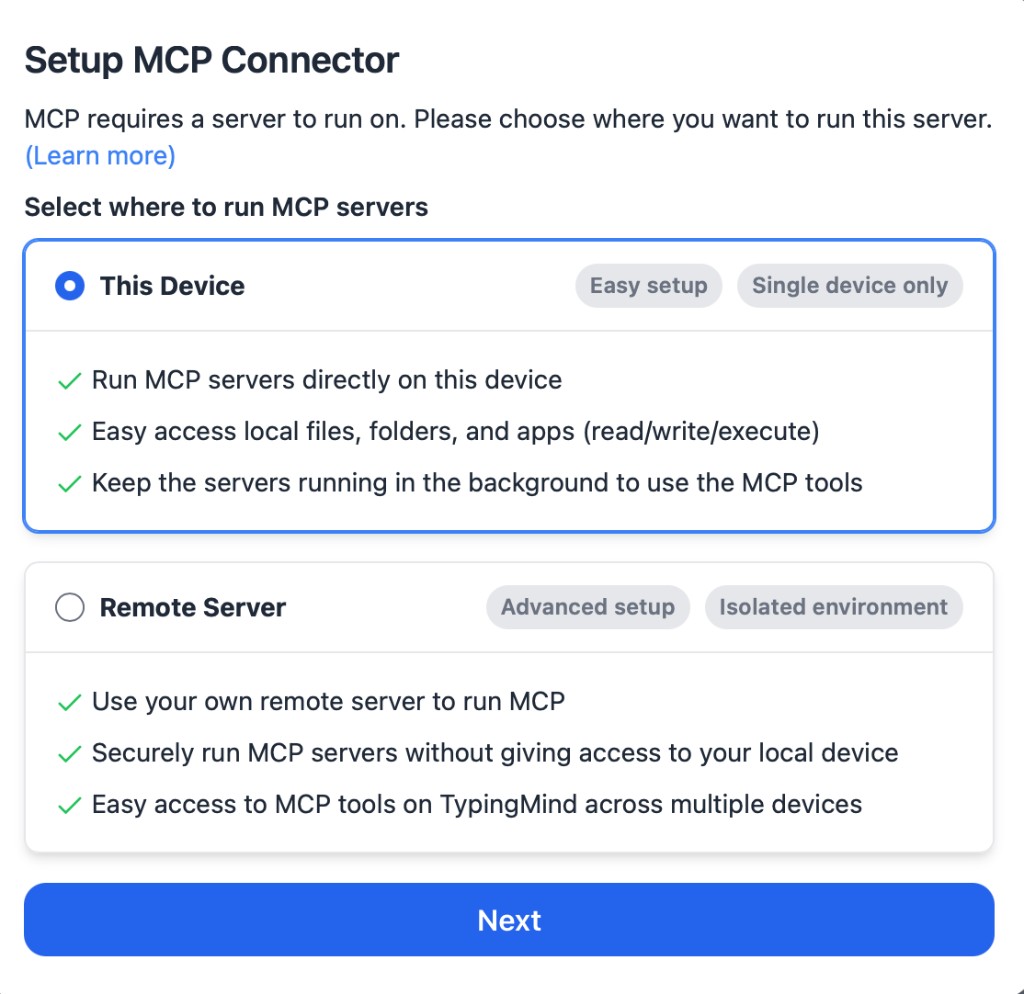
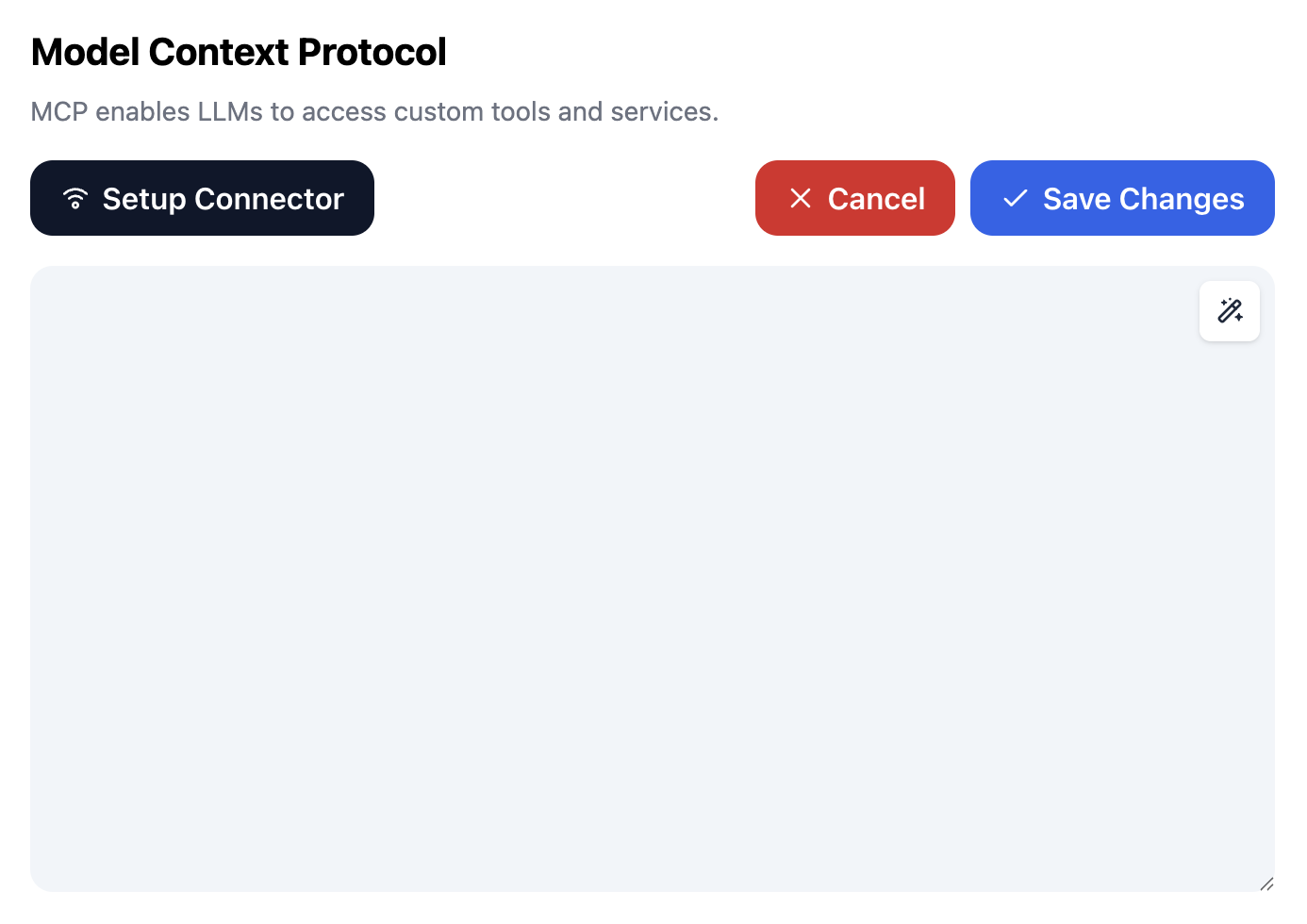
Create a new config file mcp-relay.json to use with your MCP Client (IDE, Chat Client, or Agent).
json{ "mcpServers": { "pan-mcp-relay": { "command": "uvx", "args": [ "pan-mcp-relay@latest" ] } } }
For faster startup times, install/upgrade pan-mcp-relay using uv tool install --upgrade pan-mcp-relay, and use the command name directly:
json{ "mcpServers": { "pan-mcp-relay": { "command": "pan-mcp-relay" } } }
[!CAUTION]
pan-mcp-relayshould be the only MCP Server listed in your MCP Client configuration file.Any other MCP Servers listed here will NOT be visible to the security capabilities of the MCP Relay.
Optionally, specify additional environment variables or CLI flags:
json{ "mcpServers": { "pan-mcp-relay": { "command": "uvx", "args": [ "pan-mcp-relay", "--config-file", "~/.config/pan-mcp-relay/mcp-relay.yaml" ], "env": { "PRISMA_AIRS_AI_PROFILE": "your-ai-profile", "MCP_RELAY_LOG_LEVEL": "WARNING" } } } }
Transport Options
The MCP Relay Server supports the standard MCP transport mechanisms:
stdioTransport: For local process communication (default)StreamableTransport: For HTTP-based communication, supporting SSE (Server-Sent Events).SSETransport: For backwards compatibility with SSE-only MCP Clients.
Usage
pan-mcp-relay CLI Usage
terminaloutputpan-mcp-relay --help Usage: pan-mcp-relay [OPTIONS] COMMAND [ARGS]... Run the MCP Relay Server. Options: -k, --api-key TEXT Prisma AIRS API Key [PRISMA_AIRS_API_KEY=] -e, --api-endpoint TEXT Prisma AIRS API Endpoint [PRISMA_AIRS_API_ENDPOINT=] -p, --ai-profile TEXT Prisma AIRS AI Profile Name or ID [PRISMA_AIRS_AI_PROFILE=] -c, --config-file FILE Path to configuration file (yaml, json) [MCP_RELAY_CONFIG_FILE=] -t, --transport [stdio|sse|http] Transport protocol to use [MCP_RELAY_TRANSPORT=] [default: stdio] -h, --host TEXT Host for HTTP/SSE server [MCP_RELAY_HOST=] [default: 127.0.0.1] -p, --port INTEGER Port for HTTP/SSE server [MCP_RELAY_PORT=] [default: 8000] -TTL, --tool-registry-cache-ttl INTEGER Tool registry cache TTL (in seconds) [MCP_RELAY_TOOL_CACHE_TTL=] [default: 86400] -MS, --max-mcp-servers INTEGER Maximum number of downstream MCP servers to allow [MCP_RELAY_MAX_SERVERS=] [default: 32] -MT, --max-mcp-tools INTEGER Maximum number of MCP tools to allow [MCP_RELAY_MAX_TOOLS=] [default: 256] --env TEXT Use ./.env file, or specify colon separated path to .env file(s)or directories containing .env files. [MCP_RELAY_DOTENV=] --system-ca Use System CA instead of Mozilla CA Bundle --capath FILE Path to Custom Trusted CA bundle -d, --debug Extremely verbose logging output (DEBUG) -v, --verbose Verbose logging output (INFO, DEFAULT) -q, --quiet Minimal logging output (WARNING) --show-config, --dump-config Show configuration and exit [MCP_RELAY_SHOW_CONFIG=] -V, --version Show the version and exit. --help Show this message and exit. Commands: json-schema Print Configuration File JSON Schema, optionally to a file. run Run the MCP Relay Server. show-config Print MCP Relay Configuration and exit.
Running the Relay Server
stdio transport (default)
sh# Run with stdio transport with automatic configuration detection (default) uvx pan-mcp-relay # Specify a configuration file uvx pan-mcp-relay --config-file ~/.config/pan-mcp-relay/mcp-relay.yaml # Specify a path to a custom .env file uvx pan-mcp-relay --env /var/run/secrets/.env
Streamable HTTP transport
sh# Run with Streamable transport pan-mcp-relay --transport=http
SSE transport
sh# Run with SSE transport pan-mcp-relay --transport=sse
Legal
Copyright © 2025, Palo Alto Networks
Licensed under the Polyform Internal Use License 1.0.0 (the "License"); you may not use this file except in compliance with the License.
You may obtain a copy of the License at:
https://polyformproject.org/licenses/internal-use/1.0.0
(or)
https://github.com/polyformproject/polyform-licenses/blob/76a278c4/PolyForm-Internal-Use-1.0.0.md
As far as the law allows, the software comes as is, without any warranty or condition, and the licensor will not be liable to you for any damages arising out of these terms or the use or nature of the software, under any kind of legal claim.