Playwright Recorder logo

Playwright Recorder

Community
ashish-bansal

Playwright MCP enables browser automation and interaction recording by capturing DOM interactions, screenshots, and page navigation events to generate reproducible test scripts through a visual, context-driven workflow.

Publisherashish-bansal
Repositoryplaywright-mcp
LanguageTypeScript
Forks
6
Stars
32
Available tools
5
Transport typestdio
Categories
LicenseNOASSERTION
Links
  • Connect tools to AI workflows

    Playwright Recorder exposes MCP capabilities that can be used by compatible AI clients and agents.

  • 5 available tools

    Browse the callable actions below, including names and descriptions when provided by the server.

  • Ready-to-copy setup

    Use the installation snippets to configure this server in your preferred MCP client.

  • Open source signals

    32 stars and 6 forks from the linked repository.

How to Use playwright-mcp?


npm version Docs

Introduction

Ever tried using Cursor or Claude to write Playwright tests? Yeah, it's kind of a mess.

Why? Because your AI assistant has no clue what's on your web page. It's like trying to describe a painting to someone who's blindfolded. The result?

  • Flaky tests → The AI is guessing selectors, and it gets them wrong.
  • Broken scripts → You spend more time fixing tests than writing them.
  • Debugging nightmares → The AI can't "see" what's happening, so you end up doing all the heavy lifting.

Wouldn't it be nice if your AI could actually understand your web page instead of just making educated guesses?

Enter playwright-mcp !

playwright-mcp gives your AI assistant superpowers by making the browser fully visible to it. Instead of working in the dark, your AI assistant now has real-time access to the page DOM, elements, and interactions.

How playwright-mcp Works (AKA How We Fix This Mess)

Once installed, playwright-mcp spins up a Playwright-controlled browser and gives your AI assistant full access to it. This unlocks:

  1. Recording interactions → Click, type, scroll—let playwright-mcp turn your actions into fully functional Playwright test cases.
  2. Taking screenshots → Capture elements or full pages so your AI gets actual visual context (no more guessing).
  3. Extracting the DOM → Grab the entire HTML structure so the AI can generate rock-solid selectors.
  4. Executing JavaScript → Run custom JS inside the browser for debugging, automation, or just for fun.

Why You'll Love playwright-mcp

🚀 AI-generated tests that actually work → No more flaky selectors, broken tests, or guesswork.

Massive time savings → Write and debug Playwright tests 5x faster.

🛠️ Fewer headaches → Your AI assistant gets live page context, so it can generate real test cases.

🔌 Works out of the box → Plug it into Cursor, Claude, WindSurf, or whatever you use—it just works.

Give Your AI the Context It Deserves

Tired of fixing AI-generated tests? Stop debugging AI's bad guesses—start writing flawless Playwright tests. Use the guide below to install playwright-mcp and let your AI assistant actually help you for once.


Installation: Get Up and Running in No Time

Prerequisites (a.k.a. What You Need Before You Start)

Before you install playwright-mcp, make sure you have:

✅ Node.js installed on your system (because, well… it's an npm package)

✅ Playwright and its Chromium browser installed

✅ An IDE that supports MCP, like Cursor

✅ A brain that's ready to automate Playwright tests like a pro

Setting Up playwright-mcp (It's Easy, I Promise)

Connect It to Your IDE (Cursor Setup)

If you're using Cursor, follow these steps to connect playwright-mcp like a boss:

  1. Open Cursor IDE

  2. Navigate to Settings (⚙️)

  3. Select Cursor Settings → Go to the MCP tab

  4. Click "Add new MCP server"

  5. Fill in the following details:

    Connect playwright-mcp to cursor

    • Name → playwright-mcp
    • Command → npx -y playwright-mcp
  6. Click "Add", and boom—you're connected! 🚀

Note: If clicking on "Add new MCP server", opens a file(.cursor/mcp.json), Paste the following code and save:

jsx
{
  "mcpServers": {
    "playwright-mcp": {
      "command": "npx",
      "args": [
        "-y",
        "playwright-mcp"
      ]
    }
  }
}

Now Cursor actually understands your web pages. No more random test suggestions based on zero context! Head to the Claude tutorial or Cursor tutorial to understand it in details.


Connect It to Claude desktop

Wait… Does It Work with Other AI Assistants? Yes! While playwright-mcp is a match made in heaven for IDEs, you can use it with Claude desktop to write tests as well.

  1. Install playwright-mcp (The Easy Part)

    1. First things first, fire up your terminal and run:
    2. npm install -g playwright-mcp
  2. Hook It Up to Claude Desktop

    1. Find the Configuration File
    2. On windows
      1. %APPDATA%\Claude\claude_desktop_config.json
    3. On macOS:
      1. ~/Library/Application Support/Claude/claude_desktop_config.json
    4. Update the config file
    jsx
    {
      "mcpServers": {
        "playwright": {
          "command": "npx",
          "args": ["-y", "playwright-mcp"]
        }
      }
    }
  3. Restart Claude Desktop (Because It's a New Day)

    1. Close and reopen Claude Desktop to apply the changes.
  4. Verify That It's Working

    1. Once everything is set up, let's test if Claude can actually talk to Playwright now.
    2. Open Claude and ask: "List all available MCP tools."
    3. If playwright-mcp is installed correctly, it should list tools like:
      1. get-context
      2. get-full-dom
      3. get-screenshot
      4. execute-code
      5. init-browser
      6. validate-selectors
    4. Ask Claude to init browser and a browser should open up after your approval!

Now that the Calude has access to the web pages. You can ask it write highly contextual tests! Head to the Claude tutorial or Cursor tutorial to understand it in details.
📖 View Documentation

Installation

TypingMind
Prerequisites:

Node.js 18+

{
  "mcpServers": {
    "playwright-mcp": {
      "command": "npx",
      "args": [
        "-y",
        "playwright-mcp"
      ]
    }
  }
}

Available Tools

  • init-browser

    Initialize a browser with a URL

  • get-full-dom

    Get the full DOM of the current page. (Deprecated, use get-context instead)

  • get-screenshot

    Get a screenshot of the current page

  • execute-code

    Execute custom Playwright JS code against the current page

  • get-context

    Get the website context which would be used to write the testcase

Use Playwright Recorder MCP with multiple AI models

TypingMind connects MCP tools at the workspace level, so once Playwright Recorder is connected, you can use it with different AI models in TypingMind instead of setting it up separately for each model. This MCP runs locally through the TypingMind MCP connector on your device.

Setup guide to use the local connector

Use this when the MCP server needs access to local files, apps, or private resources on your computer.

1

Open the MCP settings

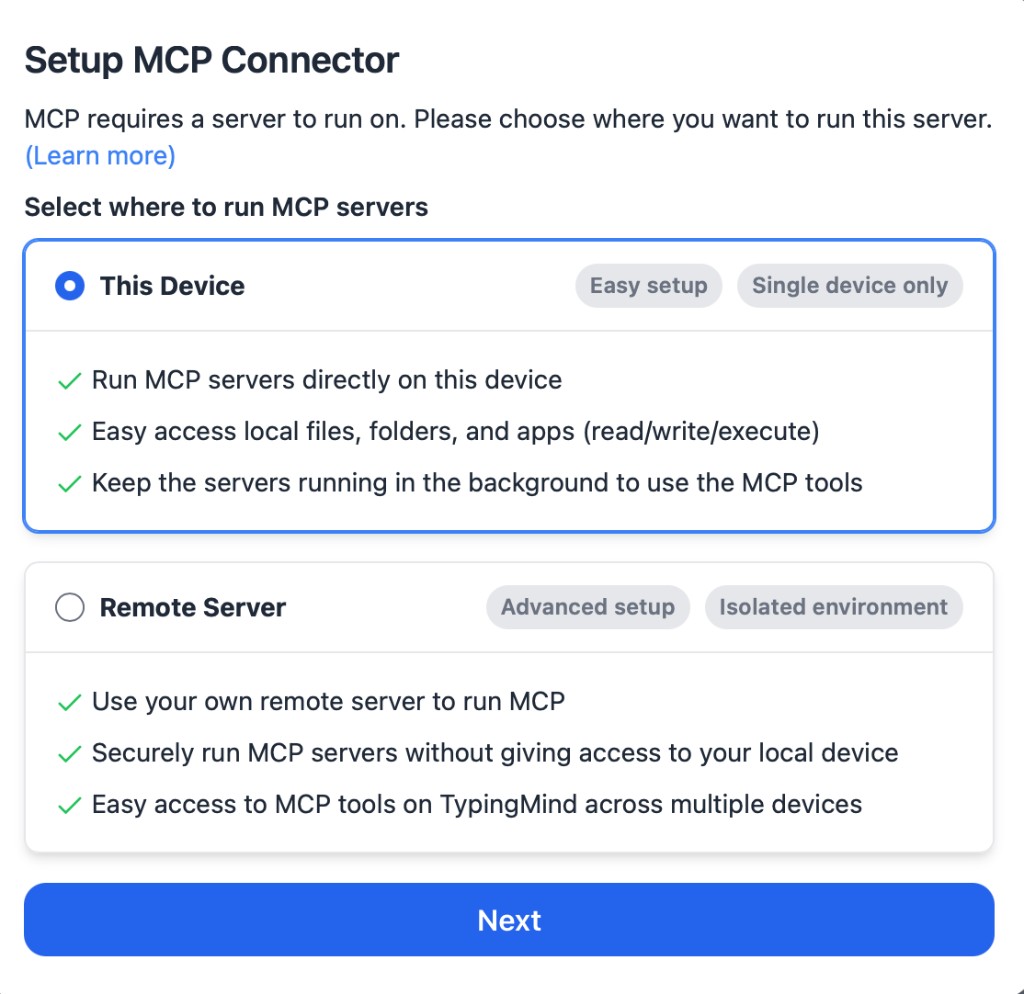
In TypingMind, go to Settings, Advanced Settings, then Model Context Protocol and choose Setup Connector.

  1. Open TypingMind in your browser.
  2. Click the Settings icon.
  3. Go to Advanced Settings.
  4. Open the Model Context Protocol section.
  5. Click Setup Connector and choose This Device.
TypingMind MCP connector setup screen with This Device selected
2

Run the connector command

Choose This Device, copy the command from TypingMind, and run it in Terminal. Keep the process running while you use MCP.

  1. Copy the setup command shown by TypingMind.
  2. Open Terminal on macOS or Windows Terminal on Windows.
  3. Paste and run the command.
  4. Approve the package install if Terminal asks you to proceed.
  5. Keep the Terminal window running while using MCP tools.
3

Add Playwright Recorder as a server

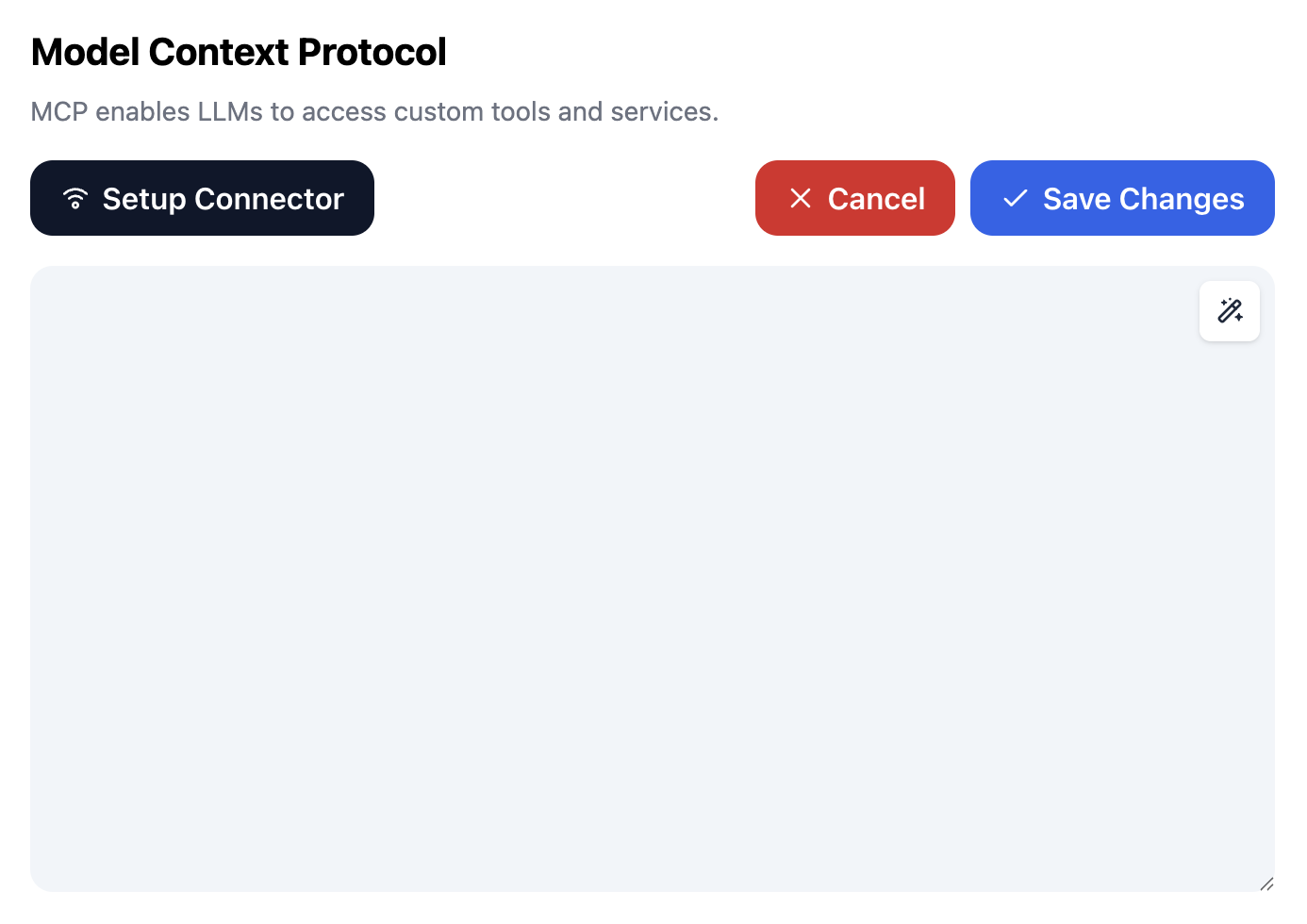
When the connector status is Ready, click Edit Servers and paste the MCP server configuration.

  1. Wait until the connector status shows Ready.
  2. Click Edit Servers.
  3. Paste the Playwright Recorder MCP server configuration.
  4. Save the server list.
  5. Refresh if you want to confirm the connector is still ready.
TypingMind MCP settings showing active server and Edit Servers button
{
  "mcpServers": {
    "playwright-recorder": {
      "command": "npx",
      "args": [
        "-y",
        "playwright-mcp"
      ]
    }
  }
}
4

Use it across models

Save the server list, open Plugins, enable the Playwright Recorder MCP tools, then select any supported AI model in TypingMind and use the tools in chat or assign them to an AI agent.

  1. Open the Plugins page in TypingMind.
  2. Enable the Playwright Recorder MCP tools.
  3. Start a chat and choose the AI model you want to use.
  4. Use the MCP tools in chat or assign them to an AI agent.
  5. Switch to another AI model whenever needed without reconnecting MCP.
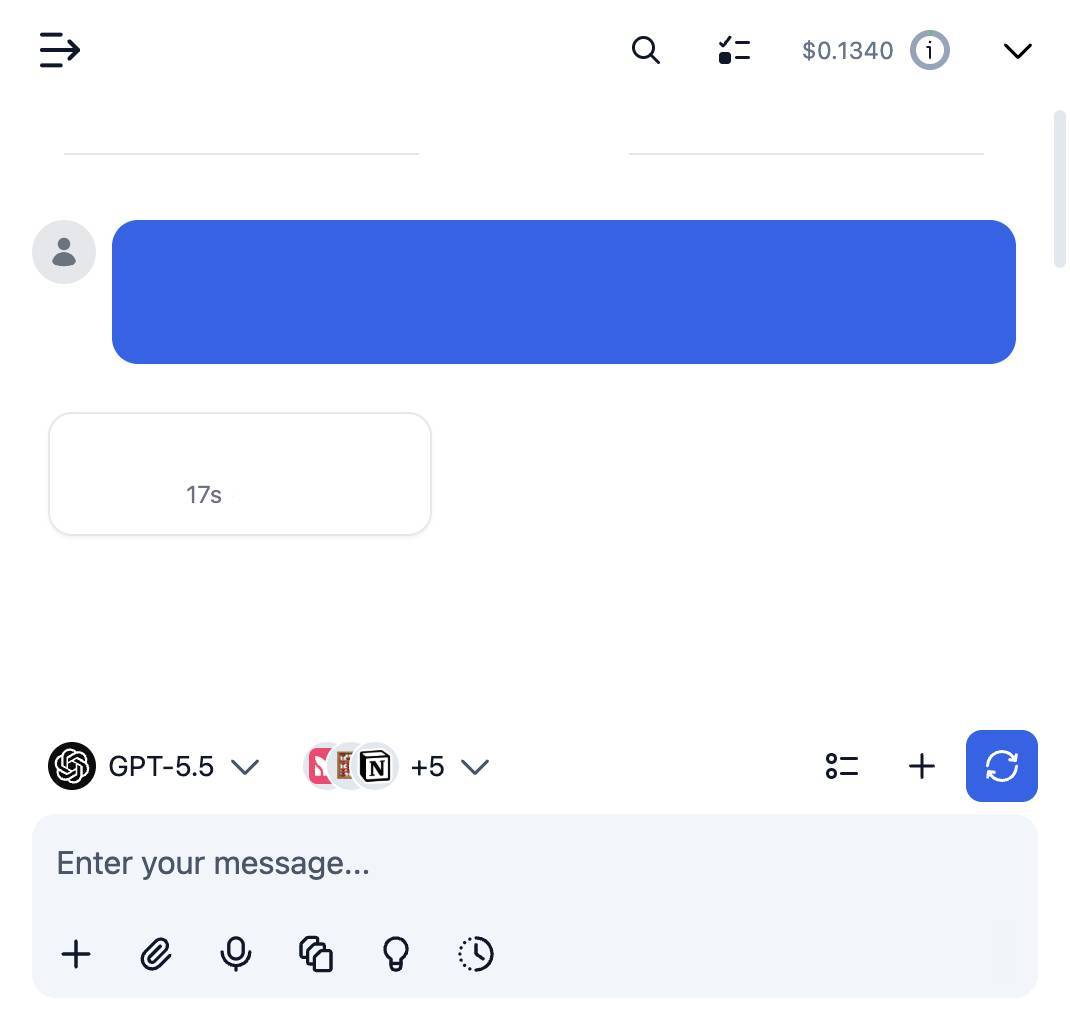
TypingMind chat using enabled MCP tools with a selected AI model
Can you use Playwright Recorder to help me with this task?
Playwright Recorder
Sure. I read it.
Here is what I found using Playwright Recorder.

Frequently asked questions

What is the Playwright Recorder MCP server used for?

Playwright Recorder is an MCP server that lets compatible AI clients connect to external tools and context. In TypingMind, you can add this MCP server once and make its tools available in your AI workspace.

Can I use Playwright Recorder MCP with multiple AI models in TypingMind?

Yes. TypingMind connects MCP tools at the workspace level, so you can use Playwright Recorder with different AI models such as Claude, ChatGPT, Gemini, or other models you have configured in TypingMind without setting up the MCP server separately for each model.

Why use Playwright Recorder MCP with TypingMind?

TypingMind is one of the best frontends for LLM chat because it brings multiple AI models, prompts, plugins, AI agents, API keys, and MCP tools into one workspace. With Playwright Recorder connected, you can use its MCP tools across your preferred models while keeping your chat workflow organized in TypingMind.

How do I connect Playwright Recorder MCP to TypingMind?

Playwright Recorder runs through the TypingMind local MCP connector. This is best when the MCP server needs access to local files, desktop apps, command-line tools, or private resources on your computer.

What tools does Playwright Recorder MCP provide in TypingMind?

Playwright Recorder exposes 5 MCP tools that can be enabled from the TypingMind Plugins page and used in chat or assigned to AI agents.

Do I need to share my API keys with TypingMind to use Playwright Recorder MCP?

No. TypingMind is local-first and lets you keep your model providers, API keys, prompts, and MCP configuration under your control. If Playwright Recorder requires authentication, add the required headers, OAuth settings, or local configuration for that MCP server when you create the connection.

Related MCP Servers

View all

Set up your own AI workspace now

Get notified about new features and future giveaways by subscribing to our newsletter 👇