Qdrant Docs Rag logo

Qdrant Docs Rag

Community
hannesrudolph

An MCP server implementation that provides tools for retrieving and processing documentation through vector search, enabling AI assistants to augment their responses with relevant documentation context.

Publisherhannesrudolph
Repositorymcp-ragdocs
LanguageTypeScript
Forks
24
Stars
261
Available tools
0
Transport typestdio
Categories
LicenseMIT
Links
  • Connect tools to AI workflows

    Qdrant Docs Rag exposes MCP capabilities that can be used by compatible AI clients and agents.

  • 0 available tools

    Browse the callable actions below, including names and descriptions when provided by the server.

  • Ready-to-copy setup

    Use the installation snippets to configure this server in your preferred MCP client.

  • Open source signals

    261 stars and 24 forks from the linked repository.

RAG Documentation MCP Server

An MCP server implementation that provides tools for retrieving and processing documentation through vector search, enabling AI assistants to augment their responses with relevant documentation context.

Features

  • Vector-based documentation search and retrieval
  • Support for multiple documentation sources
  • Semantic search capabilities
  • Automated documentation processing
  • Real-time context augmentation for LLMs

Tools

search_documentation

Search through stored documentation using natural language queries. Returns matching excerpts with context, ranked by relevance.

Inputs:

  • query (string): The text to search for in the documentation. Can be a natural language query, specific terms, or code snippets.
  • limit (number, optional): Maximum number of results to return (1-20, default: 5). Higher limits provide more comprehensive results but may take longer to process.

list_sources

List all documentation sources currently stored in the system. Returns a comprehensive list of all indexed documentation including source URLs, titles, and last update times. Use this to understand what documentation is available for searching or to verify if specific sources have been indexed.

extract_urls

Extract and analyze all URLs from a given web page. This tool crawls the specified webpage, identifies all hyperlinks, and optionally adds them to the processing queue.

Inputs:

  • url (string): The complete URL of the webpage to analyze (must include protocol, e.g., https://). The page must be publicly accessible.
  • add_to_queue (boolean, optional): If true, automatically add extracted URLs to the processing queue for later indexing. Use with caution on large sites to avoid excessive queuing.

remove_documentation

Remove specific documentation sources from the system by their URLs. The removal is permanent and will affect future search results.

Inputs:

  • urls (string[]): Array of URLs to remove from the database. Each URL must exactly match the URL used when the documentation was added.

list_queue

List all URLs currently waiting in the documentation processing queue. Shows pending documentation sources that will be processed when run_queue is called. Use this to monitor queue status, verify URLs were added correctly, or check processing backlog.

run_queue

Process and index all URLs currently in the documentation queue. Each URL is processed sequentially, with proper error handling and retry logic. Progress updates are provided as processing occurs. Long-running operations will process until the queue is empty or an unrecoverable error occurs.

clear_queue

Remove all pending URLs from the documentation processing queue. Use this to reset the queue when you want to start fresh, remove unwanted URLs, or cancel pending processing. This operation is immediate and permanent - URLs will need to be re-added if you want to process them later.

Usage

The RAG Documentation tool is designed for:

  • Enhancing AI responses with relevant documentation
  • Building documentation-aware AI assistants
  • Creating context-aware tooling for developers
  • Implementing semantic documentation search
  • Augmenting existing knowledge bases

Configuration

Usage with Claude Desktop

Add this to your claude_desktop_config.json:

json
{
  "mcpServers": {
    "rag-docs": {
      "command": "npx",
      "args": [
        "-y",
        "@hannesrudolph/mcp-ragdocs"
      ],
      "env": {
        "OPENAI_API_KEY": "",
        "QDRANT_URL": "",
        "QDRANT_API_KEY": ""
      }
    }
  }
}

You'll need to provide values for the following environment variables:

  • OPENAI_API_KEY: Your OpenAI API key for embeddings generation
  • QDRANT_URL: URL of your Qdrant vector database instance
  • QDRANT_API_KEY: API key for authenticating with Qdrant

License

This MCP server is licensed under the MIT License. This means you are free to use, modify, and distribute the software, subject to the terms and conditions of the MIT License. For more details, please see the LICENSE file in the project repository.

Acknowledgments

This project is a fork of qpd-v/mcp-ragdocs, originally developed by qpd-v. The original project provided the foundation for this implementation.
Installation

TypingMind
Prerequisites:

Node.js 18+

{
  "mcpServers": {
    "rag-docs": {
      "command": "npx",
      "args": [
        "-y",
        "@hannesrudolph/mcp-ragdocs"
      ],
      "env": {
        "OPENAI_API_KEY": "",
        "QDRANT_URL": "",
        "QDRANT_API_KEY": ""
      }
    }
  }
}

Use Qdrant Docs Rag MCP with multiple AI models

TypingMind connects MCP tools at the workspace level, so once Qdrant Docs Rag is connected, you can use it with different AI models in TypingMind instead of setting it up separately for each model. This MCP runs locally through the TypingMind MCP connector on your device.

Setup guide to use the local connector

Use this when the MCP server needs access to local files, apps, or private resources on your computer.

1

Open the MCP settings

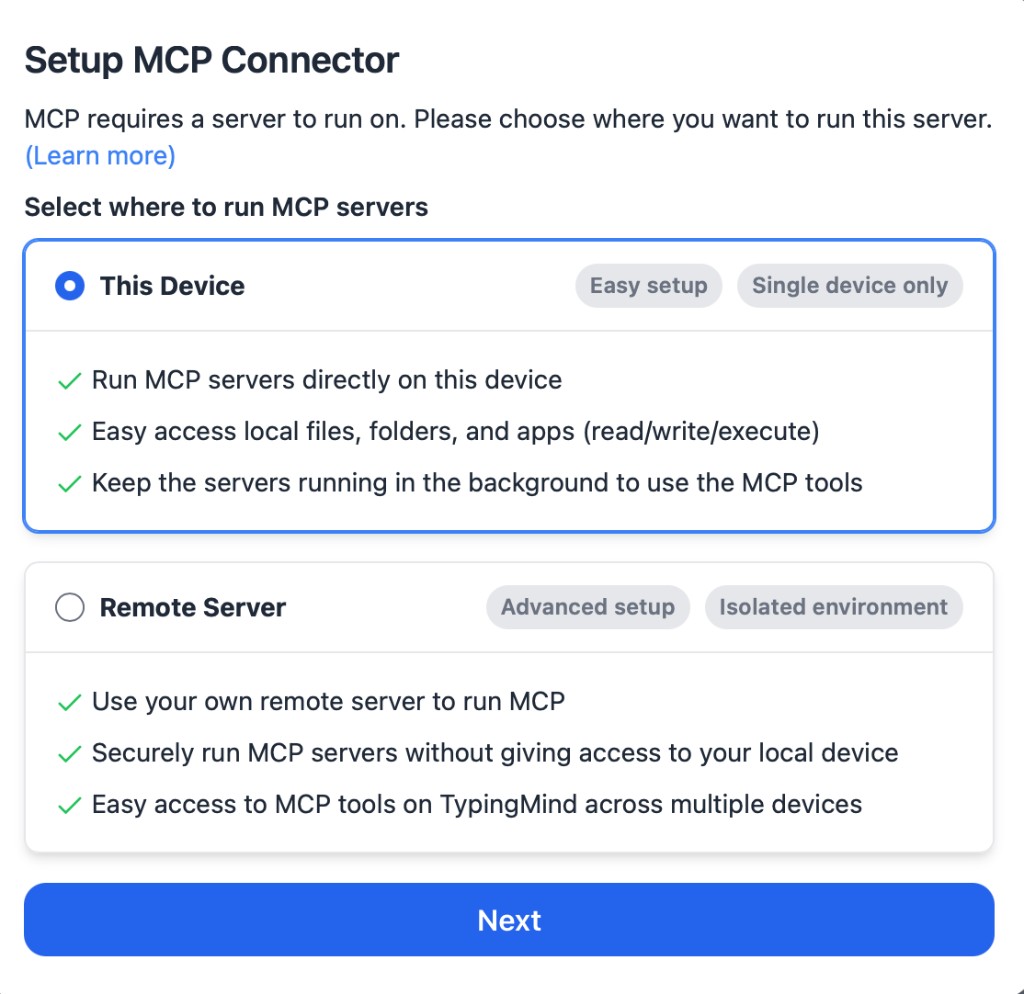
In TypingMind, go to Settings, Advanced Settings, then Model Context Protocol and choose Setup Connector.

  1. Open TypingMind in your browser.
  2. Click the Settings icon.
  3. Go to Advanced Settings.
  4. Open the Model Context Protocol section.
  5. Click Setup Connector and choose This Device.
TypingMind MCP connector setup screen with This Device selected
2

Run the connector command

Choose This Device, copy the command from TypingMind, and run it in Terminal. Keep the process running while you use MCP.

  1. Copy the setup command shown by TypingMind.
  2. Open Terminal on macOS or Windows Terminal on Windows.
  3. Paste and run the command.
  4. Approve the package install if Terminal asks you to proceed.
  5. Keep the Terminal window running while using MCP tools.
3

Add Qdrant Docs Rag as a server

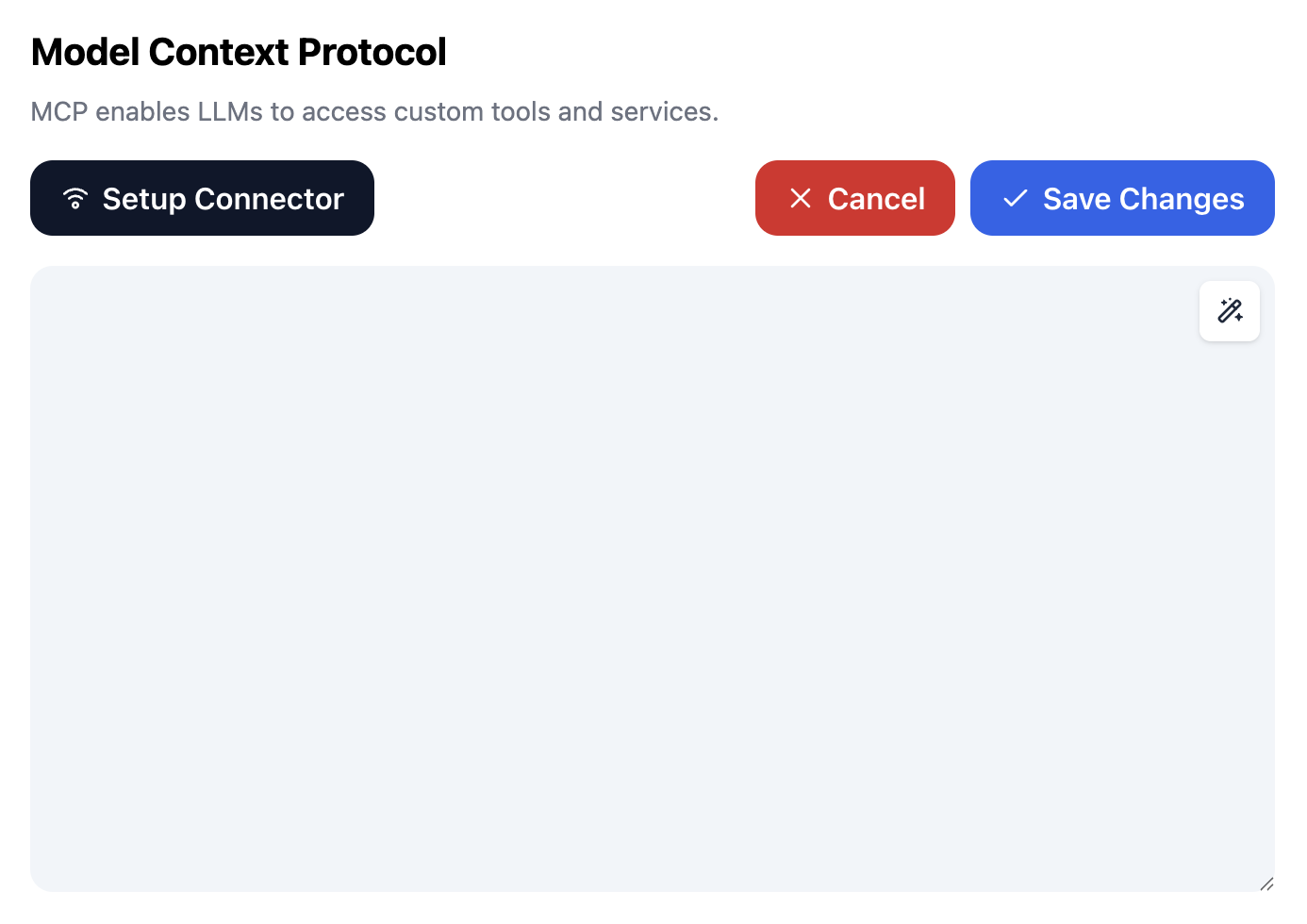
When the connector status is Ready, click Edit Servers and paste the MCP server configuration.

  1. Wait until the connector status shows Ready.
  2. Click Edit Servers.
  3. Paste the Qdrant Docs Rag MCP server configuration.
  4. Save the server list.
  5. Refresh if you want to confirm the connector is still ready.
TypingMind MCP settings showing active server and Edit Servers button
{
  "mcpServers": {
    "qdrant-docs-rag": {
      "command": "npx",
      "args": [
        "-y",
        "@hannesrudolph/mcp-ragdocs"
      ]
    }
  }
}
4

Use it across models

Save the server list, open Plugins, enable the Qdrant Docs Rag MCP tools, then select any supported AI model in TypingMind and use the tools in chat or assign them to an AI agent.

  1. Open the Plugins page in TypingMind.
  2. Enable the Qdrant Docs Rag MCP tools.
  3. Start a chat and choose the AI model you want to use.
  4. Use the MCP tools in chat or assign them to an AI agent.
  5. Switch to another AI model whenever needed without reconnecting MCP.
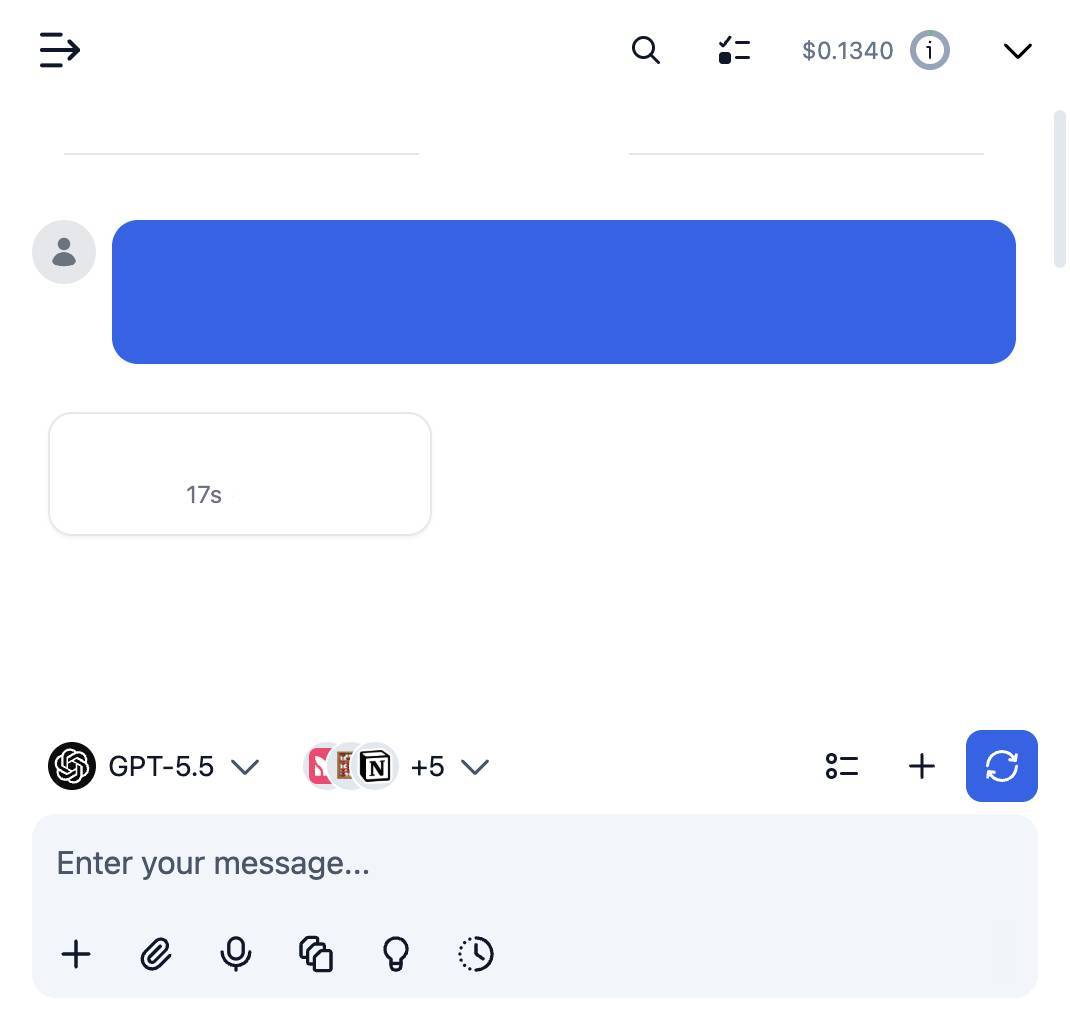
TypingMind chat using enabled MCP tools with a selected AI model
Can you use Qdrant Docs Rag to help me with this task?
Qdrant Docs Rag
Sure. I read it.
Here is what I found using Qdrant Docs Rag.

Frequently asked questions

What is the Qdrant Docs Rag MCP server used for?

Qdrant Docs Rag is an MCP server that lets compatible AI clients connect to external tools and context. In TypingMind, you can add this MCP server once and make its tools available in your AI workspace.

Can I use Qdrant Docs Rag MCP with multiple AI models in TypingMind?

Yes. TypingMind connects MCP tools at the workspace level, so you can use Qdrant Docs Rag with different AI models such as Claude, ChatGPT, Gemini, or other models you have configured in TypingMind without setting up the MCP server separately for each model.

Why use Qdrant Docs Rag MCP with TypingMind?

TypingMind is one of the best frontends for LLM chat because it brings multiple AI models, prompts, plugins, AI agents, API keys, and MCP tools into one workspace. With Qdrant Docs Rag connected, you can use its MCP tools across your preferred models while keeping your chat workflow organized in TypingMind.

How do I connect Qdrant Docs Rag MCP to TypingMind?

Qdrant Docs Rag runs through the TypingMind local MCP connector. This is best when the MCP server needs access to local files, desktop apps, command-line tools, or private resources on your computer.

What tools does Qdrant Docs Rag MCP provide in TypingMind?

Qdrant Docs Rag exposes MCP capabilities that can be enabled from the TypingMind Plugins page and used in chat or assigned to AI agents.

Do I need to share my API keys with TypingMind to use Qdrant Docs Rag MCP?

No. TypingMind is local-first and lets you keep your model providers, API keys, prompts, and MCP configuration under your control. If Qdrant Docs Rag requires authentication, add the required headers, OAuth settings, or local configuration for that MCP server when you create the connection.

Related MCP Servers

View all

Set up your own AI workspace now

Get notified about new features and future giveaways by subscribing to our newsletter 👇