◆ QuantConnect MCP Server






Production-ready Model Context Protocol server for QuantConnect's algorithmic trading platform
Integrate QuantConnect's research environment, statistical analysis, and portfolio optimization into your AI workflows. Locally hosted, secure & capable of dramatically improving productivity
◉ Quick Start • ◉ Documentation • ◉ Architecture • ◉ Contributing
◈ Is this crazy?
- Full Project Lifecycle:
Create,read,update,compile, and manage QuantConnect projects and files programmatically. - End-to-End Backtesting:
Compileprojects,create backtests,read detailed results, and analyzecharts,orders, andinsights. - Live Trading Management:
Deploy,monitor,liquidate, andcontrollive algorithms with comprehensive runtime statistics and logging. - Historical Data Access: Comprehensive data retrieval capabilities for historical and
alternative dataanalysis. - Advanced Analytics: Perform
Principal Component Analysis (PCA),Engle-Granger cointegration tests,mean-reversion analysis, andcorrelation studies. - Portfolio Optimization: Utilize sophisticated
sparse optimizationwith Huber Downward Risk minimization, calculate performance, and benchmark strategies. - Universe Selection: Dynamically
screen assetsby multiple criteria, analyzeETF constituents, and select assets based on correlation. - Enterprise-Grade Security: Secure,
SHA-256 authenticatedAPI integration with QuantConnect. - High-Performance Core: Built with an
async-firstdesign for concurrent data processing and responsiveness. - AI-Native Interface: Designed for seamless interaction via
natural languagein advanced AI clients.
◉ Table of Contents
- ◈ Quick Start
- ◈ Authentication
- ◈ Natural Language Examples
- ◈ Comprehensive API Reference
- ◈ Architecture
- ◈ Advanced Configuration
- ◈ Testing
- ◈ Contributing
- ◈ License
◈ Quick Start
Get up and running in under 2 minutes:
Prerequisites: You must have QuantConnect credentials (User ID and API Token) before running the server. The server will not function without proper authentication. See Authentication section for details on obtaining these credentials.
Install with uvx (Recommended)
bash# Install and run directly from PyPI - no cloning required! uvx quantconnect-mcp # Or install with uv/pip uv pip install quantconnect-mcp pip install quantconnect-mcp
One-Click Claude Desktop Install (Recommended)
- Download: Grab the latest
quantconnect-mcp.dxtfrom the “Releases” page - Install: Double-click the file – Claude Desktop opens and prompts you to Install
- Configure: In Claude Desktop → Settings → Extensions → QuantConnect MCP, paste your user ID and API token
- Use it: Start a new Claude chat and call any QuantConnect tool
Why DXT?
Desktop Extensions (
.dxt) bundle the server, dependencies, and manifest so users go from download → working MCP in one click – no terminal, no JSON editing, no version conflicts.
2. Set Up QuantConnect Credentials (Required)
The server requires these environment variables to function properly:
bashexport QUANTCONNECT_USER_ID="your_user_id" # Required export QUANTCONNECT_API_TOKEN="your_api_token" # Required export QUANTCONNECT_ORGANIZATION_ID="your_org_id" # Optional
3. Launch the Server
bash# STDIO transport (default) - Recommended for MCP clients uvx quantconnect-mcp # HTTP transport MCP_TRANSPORT=streamable-http MCP_PORT=8000 uvx quantconnect-mcp
4. Interact with Natural Language
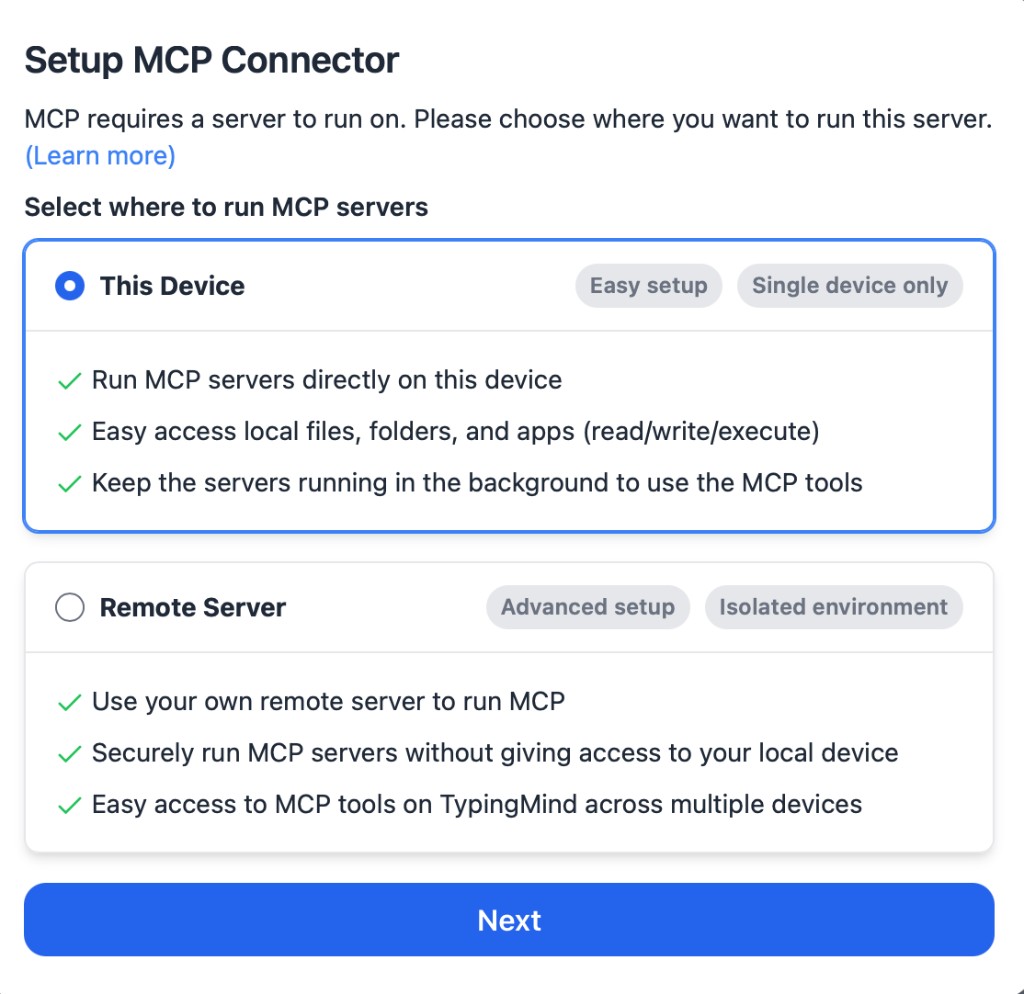
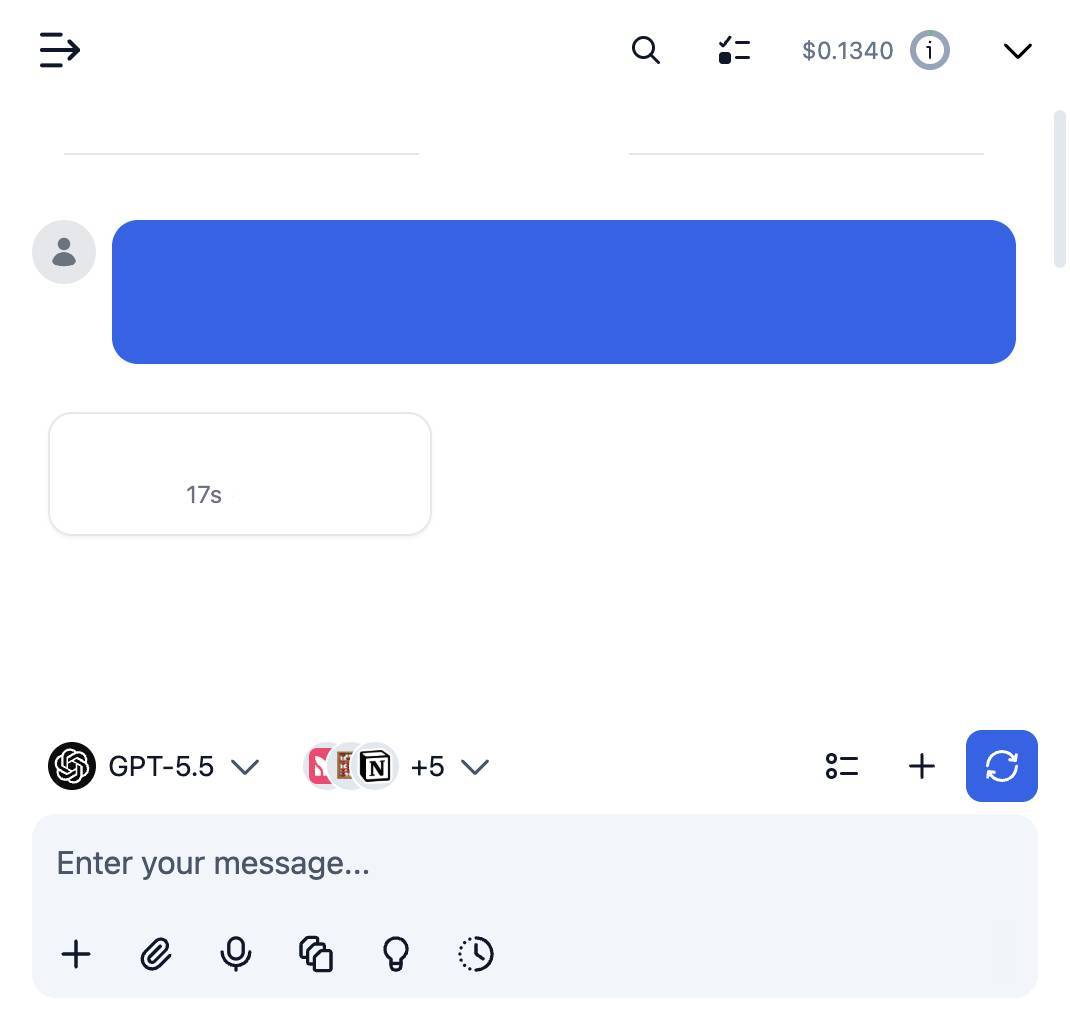
Instead of calling tools programmatically, you use natural language with a connected AI client (like Claude, a GPT, or any other MCP-compatible interface).
"Add GOOGL, AMZN, and MSFT, then run a PCA analysis on them for 2023."
◈ Authentication
Getting Your Credentials
| Credential | Where to Find | Required |
|---|---|---|
| User ID | Email received when signing up | ◉ Yes |
| API Token | QuantConnect Settings | ◉ Yes |
| Organization ID | Organization URL: /organization/{ID} | ◦ Optional |
Configuration Methods
Method 1: Environment Variables (Recommended)
bash# Add to your .bashrc, .zshrc, or .env file export QUANTCONNECT_USER_ID="123456" export QUANTCONNECT_API_TOKEN="your_secure_token_here" export QUANTCONNECT_ORGANIZATION_ID="your_org_id" # Optional
◈ Natural Language Examples
This MCP server is designed to be used with natural language. Below are examples of how you can instruct an AI assistant to perform complex financial analysis tasks.
Factor‑Driven Portfolio Construction Pipeline
“Build a global equity long/short portfolio for 2025:
- Pull the constituents of QQQ, SPY, and EEM as of 2024‑12‑31 (survivor‑bias free).
- For each symbol, calculate Fama‑French 5‑factor and quality‑minus‑junk loadings using daily data 2022‑01‑01 → 2024‑12‑31.
- Rank stocks into terciles on value (B/M) and momentum (12‑1); go long top tercile, short bottom, beta‑neutral to the S&P 500.
- Within each book, apply Hierarchical Risk Parity (HRP) for position sizing, capped at 5 % gross exposure per leg.
- Target annualised ex‑ante volatility ≤ 10 %; solve with CVaR minimisation under a 95 % confidence level.
- Benchmark against MSCI World; report annualised return, vol, Sharpe, Sortino, max DD, hit‑rate, turnover for the period 2023‑01‑01 → 2024‑12‑31.
- Export the optimal weights and full tear‑sheet as
csv.- Schedule a monthly rebalance job and push signals to the live trading endpoint.”
Robust Statistical‑Arbitrage Workflow
“Test and refine a pairs‑trading idea: • Universe: US Staples sector, market cap > $5 B, price > $10. • Data: 15‑minute bars, 2023‑01‑02 → 2025‑06‑30. • Step 1 – For all pairs, calculate rolling 60‑day distance correlation; keep pairs with dCor ≥ 0.80. • Step 2 – Run Johansen cointegration (lag = 2) on the survivors; retain pairs with trace‑stat < 5 % critical value. • Step 3 – For each cointegrated pair: – Estimate half‑life of mean‑reversion; discard if > 7 days. – Compute Hurst exponent; require H < 0.4. • Step 4 – Simulate a Bayesian Kalman‑filter spread to allow time‑varying hedge ratios. • Entry: z‑score crosses ±2 (two‑bar confirmation); Exit: z = 0 or t_max = 3 × half‑life. • Risk: cap pair notional at 3 % NAV, portfolio gross leverage ≤ 3 ×, stop‑loss at z = 4. • Output: trade log, PnL attribution, bootstrapped p‑value of alpha, and Likelihood‑Ratio test for regime shifts.”
Automated Project, Backtest & Hyper‑Parameter Sweep
“Spin up an experiment suite in QuantConnect:
- Create project ‘DynamicPairs_Kalman’ (Python).
- Add files: •
alpha.py– signal generation (placeholder) •risk.py– custom position sizing •config.yaml– parameter grid:yaml entry_z: [1.5, 2.0, 2.5] lookback: [30, 60, 90] hedge: ['OLS', 'Kalman']- Trigger a parameter‑sweep backtest labelled ‘GridSearch‑v1’ using in‑sample 2022‑23.
- When jobs finish, rank runs by Information Ratio and max DD < 10 %; persist top‑3 configs.
- Automatically launch out‑of‑sample backtests 2024‑YTD for the winners.
- Produce an executive summary: tables + charts (equity curve, rolling Sharpe, exposure histogram).
- Package the best model as a Docker image, push to registry, and deploy to the live‑trading cluster with a kill‑switch if 1‑day loss > 3 σ.”
Statistical Analysis Workflow
"Are Coca-Cola (KO) and Pepsi (PEP) cointegrated? Run the test for the period from 2023 to 2024. If they are, analyze their mean-reversion properties with a 20-day lookback."
Project and Backtest Management
"I need to manage my QuantConnect projects. First, create a new Python project named 'My_Awesome_Strategy'. Then, create a file inside it called 'main.py' and add this code:
...your algorithm code here.... After that, compile it and run a backtest named 'Initial Run'. When it's done, show me the performance results."
Live Trading Deployment & Monitoring
"Deploy my compiled algorithm to live trading using Interactive Brokers paper trading. Set up the brokerage configuration with my IB credentials, then monitor the runtime statistics including equity, holdings, and net profit. If the algorithm shows a loss greater than 5%, automatically liquidate all positions and stop the algorithm."
Live Algorithm Management
"Show me all my currently running live algorithms. For each one, display the runtime statistics, recent logs from the last 100 lines, and current portfolio holdings. If any algorithm has been running for more than 24 hours without trades, flag it for review."
◈ Comprehensive API Reference
◆ Authentication Tools
| Tool | Description | Key Parameters |
|---|---|---|
configure_quantconnect_auth | Set up API credentials | user_id, api_token, organization_id |
validate_quantconnect_auth | Test credential validity | - |
get_auth_status | Check authentication status | - |
test_quantconnect_api | Test API connectivity | endpoint, method |
clear_quantconnect_auth | Clear stored credentials | - |
◆ Project Management Tools
| Tool | Description | Key Parameters |
|---|---|---|
create_project | Create new QuantConnect project | name, language, organization_id |
read_project | Get project details or list all | project_id (optional) |
update_project | Update project name/description | project_id, name, description |
compile_project | Compile a project for backtesting | project_id |
read_compilation_result | Read compilation job result | project_id, compile_id |
◆ File Management Tools
| Tool | Description | Key Parameters |
|---|---|---|
create_file | Create file in project | project_id, name, content |
read_file | Read file(s) from project | project_id, name (optional) |
update_file_content | Update file content | project_id, name, content |
update_file_name | Rename file in project | project_id, old_file_name, new_name |
◆ Data Retrieval Tools
| Tool | Description | Key Parameters |
|---|---|---|
add_equity | Add single equity security | ticker, resolution, instance_name |
add_multiple_equities | Add multiple securities | tickers, resolution, instance_name |
get_history | Get historical price data | symbols, start_date, end_date, resolution |
add_alternative_data | Subscribe to alt data | data_type, symbol, instance_name |
get_alternative_data_history | Get alt data history | data_type, symbols, start_date, end_date |
◆ Statistical Analysis Tools
| Tool | Description | Key Parameters |
|---|---|---|
perform_pca_analysis | Principal Component Analysis | symbols, start_date, end_date, n_components |
test_cointegration | Engle-Granger cointegration test | symbol1, symbol2, start_date, end_date |
analyze_mean_reversion | Mean reversion analysis | symbols, start_date, end_date, lookback_period |
calculate_correlation_matrix | Asset correlation analysis | symbols, start_date, end_date |
◆ Portfolio Optimization Tools
| Tool | Description | Key Parameters |
|---|---|---|
sparse_optimization | Advanced sparse optimization | portfolio_symbols, benchmark_symbol, optimization params |
calculate_portfolio_performance | Performance metrics | symbols, weights, start_date, end_date |
optimize_equal_weight_portfolio | Equal-weight optimization | symbols, start_date, end_date, rebalance_frequency |
◆ Universe Selection Tools
| Tool | Description | Key Parameters |
|---|---|---|
get_etf_constituents | Get ETF holdings | etf_ticker, date, instance_name |
add_etf_universe_securities | Add all ETF constituents | etf_ticker, date, resolution |
select_uncorrelated_assets | Find uncorrelated assets | symbols, num_assets, method |
screen_assets_by_criteria | Multi-criteria screening | symbols, min_return, max_volatility, etc. |
◆ Backtest Management Tools
| Tool | Description | Key Parameters |
|---|---|---|
create_backtest | Create new backtest from compile | project_id, compile_id, backtest_name |
read_backtest | Get backtest results | project_id, backtest_id, chart |
read_backtest_chart | Get chart data | project_id, backtest_id, name |
read_backtest_orders | Get order history | project_id, backtest_id, start, end |
read_backtest_insights | Get insights data | project_id, backtest_id, start, end |
◆ Live Trading Management Tools
| Tool | Description | Key Parameters |
|---|---|---|
create_live_algorithm | Deploy live algorithm with brokerage | project_id, compile_id, node_id, brokerage_config |
read_live_algorithm | Get detailed runtime statistics & status | project_id, deploy_id |
liquidate_live_algorithm | Emergency liquidation of all positions | project_id |
stop_live_algorithm | Stop live algorithm execution | project_id |
list_live_algorithms | List algorithms with status filters | status, start, end |
read_live_logs | Read algorithm execution logs | project_id, algorithm_id, start_line, end_line |
◈ Architecture
quantconnect-mcp/ ├── ◆ quantconnect_mcp/ # Main package directory │ ├── main.py # Server entry point & configuration │ └── src/ # Source code modules │ ├── ⚙ server.py # FastMCP server core │ ├── ⚙ tools/ # Tool implementations │ │ ├── ▪ auth_tools.py # Authentication management │ │ ├── ▪ project_tools.py # Project CRUD operations │ │ ├── ▪ file_tools.py # File management │ │ ├── ▪ data_tools.py # Data retrieval │ │ ├── ▪ analysis_tools.py # Statistical analysis │ │ ├── ▪ portfolio_tools.py # Portfolio optimization │ │ ├── ▪ universe_tools.py # Universe selection │ │ ├── ▪ backtest_tools.py # Backtest management │ │ └── ▪ live_tools.py # Live trading management │ ├── ◆ auth/ # Authentication system │ │ ├── __init__.py │ │ └── quantconnect_auth.py # Secure API authentication │ └── ◆ resources/ # System resources │ ├── __init__.py │ └── system_resources.py # Server monitoring ├── ◆ tests/ # Comprehensive test suite │ ├── test_auth.py │ ├── test_server.py │ └── __init__.py ├── ◆ pyproject.toml # Project configuration └── ◆ README.md # This file
Core Design Principles
- ◎ Modular Architecture: Each tool category is cleanly separated for maintainability
- ▪ Security First: SHA-256 authenticated API with secure credential management
- ⚡ Async Performance: Non-blocking operations for maximum throughput
- ◆ Type Safety: Full type annotations with mypy verification
- ⚙ Extensible: Plugin-based architecture for easy feature additions
◈ Advanced Configuration
Environment Variables
| Variable | Description | Default | Example |
|---|---|---|---|
MCP_TRANSPORT | Transport method | stdio | streamable-http |
MCP_HOST | Server host | 127.0.0.1 | 0.0.0.0 |
MCP_PORT | Server port | 8000 | 3000 |
MCP_PATH | HTTP endpoint path | /mcp | /api/v1/mcp |
LOG_LEVEL | Logging verbosity | INFO | DEBUG |
System Resources
You can monitor server performance and status using natural language queries for system resources:
"Show me the server's system info."
"What's the current server status and are there any active QuantBook instances?"
"Give me a summary of all available tools."
"Get the latest performance metrics for the server."
"What are the top 10 most resource-intensive processes running on the server?"
◈ Testing
Run the Test Suite
bash# Run all tests pytest tests/ -v # Run with coverage pytest tests/ --cov=src --cov-report=html # Run specific test category pytest tests/test_auth.py -v # Run tests in parallel pytest tests/ -n auto
◈ Contributing
We welcome contributions! This project follows the highest Python development standards:
Development Setup
bash# Fork and clone the repository git clone https://github.com/your-username/quantconnect-mcp cd quantconnect-mcp # Install development dependencies uv sync --dev # Install pre-commit hooks pre-commit install
Code Quality Standards
- ◉ Type Hints: All functions must have complete type annotations
- ◉ Documentation: Comprehensive docstrings for all public functions
- ◉ Testing: Minimum 90% test coverage required
- ◉ Formatting: Black code formatting enforced
- ◉ Linting: Ruff linting with zero warnings
- ◉ Type Checking: mypy verification required
Development Workflow
bash# Create feature branch git checkout -b feature/amazing-new-feature # Make changes and run quality checks ruff check src/ black src/ tests/ mypy src/ # Run tests pytest tests/ --cov=src # Commit with conventional commits git commit -m "feat: add amazing new feature" # Push and create pull request git push origin feature/amazing-new-feature
Pull Request Guidelines
- ◆ Clear Description: Explain what and why, not just how
- ◆ Test Coverage: Include tests for all new functionality
- ◆ Documentation: Update README and docstrings as needed
- ◆ Code Review: Address all review feedback
- ◆ CI Passing: All automated checks must pass
◈ License
This project is licensed under the MIT License - see the LICENSE file for details.
Built with precision for the algorithmic trading community