


ROS MCP Server logo

ROS MCP Server

OrganizationPopular
robotmcp

Connect AI models like Claude & GPT with robots using MCP and ROS.

Publisherrobotmcp
Repositoryros-mcp-server
LanguagePython
Forks
182
Stars
1.2K
Available tools
0
Transport typestdio
Categories
LicenseApache-2.0
Links
  • Connect tools to AI workflows

    ROS MCP Server exposes MCP capabilities that can be used by compatible AI clients and agents.

  • 0 available tools

    Browse the callable actions below, including names and descriptions when provided by the server.

  • Ready-to-copy setup

    Use the installation snippets to configure this server in your preferred MCP client.

  • Open source signals

    1.2K stars and 182 forks from the linked repository.

ROS MCP Server ๐Ÿง โ‡„๐Ÿค–

Static Badge Static Badge Static Badge Python pip Dev Container GitHub Repo stars GitHub last commit

ROS-MCP-Server connects large language models (such as Claude, GPT, and Gemini) to robots, enabling bidirectional communication with no changes to existing robot source code.

Why ROS-MCP?

  • No robot source code changes โ†’ just add the rosbridge node to your existing ROS setup.
  • True two-way communication โ†’ LLMs can both control robots and observe everything happening on the Robot.
  • Full context โ†’ publish & subscribe to topics, call services & actions, set parameters, read sensor data, and monitor robot state in real time.
  • Deep ROS understanding โ†’ guides the LLM to discover available topics, services, actions, and their types (including custom ones) โ€” enabling it to use them with the right syntax without manual configuration.
  • Works with any MCP client โ†’ built on the open MCP standard, supporting Claude Code, Codex CLI, Gemini CLI, Claude Desktop, ChatGPT, Cursor, and more.
  • Works across ROS versions โ†’ compatible across ROS 2 (Jazzy, Humble, and others) and ROS 1 distros.

๐ŸŽฅ Examples in Action

๐Ÿ–ฅ๏ธ Example - Controlling the MOCA mobile manipulator in NVIDIA Isaac Sim
Commands are entered into Claude Desktop, which uses the MCP server to control the simulated robot.


๐Ÿ• Example - Controlling Unitree Go2 with natural language (video)
The MCP server enables Claude to interpret images from the robot's cameras, and then command the robot based on human natural language commands.


๐Ÿญ Example - Debugging an industrial robot (Video)

  • Connecting to an industrial robot enables the LLM to browse all ROS topics and services to assess the robot state.
  • With no predefined context, the MCP server enables the LLM to query details about custom topic and service types and their syntax (00:28).
  • Using only natural language, the operator calls the custom services to test and debug the robot (01:42).

๐Ÿ›  Getting Started

Follow the installation guide to get started.

ROS-MCP works with Claude Code, Codex CLI, Gemini CLI, Claude Desktop, ChatGPT, Cursor, or any MCP-compatible client.


๐Ÿ“š More Examples & Tutorials

Browse our examples to see the server in action.
We welcome community PRs with new examples and integrations!


๐Ÿค Contributing

We love contributions of all kinds:

  • Bug fixes and documentation updates
  • New features (e.g., Action support, permissions)
  • Additional examples and tutorials

Check out the contributing guidelines and see issues tagged good first issue to get started.


๐Ÿ“œ License

This project is licensed under the Apache License 2.0.
Installation

TypingMind
Prerequisites:

Node.js 18+

{
  "mcpServers": {
    "ros-mcp-server": {
      "command": "uvx",
      "args": [
        "ros-mcp",
        "--transport=stdio"
      ]
    }
  }
}

Use ROS MCP Server MCP with multiple AI models

TypingMind connects MCP tools at the workspace level, so once ROS MCP Server is connected, you can use it with different AI models in TypingMind instead of setting it up separately for each model. This MCP runs locally through the TypingMind MCP connector on your device.

Setup guide to use the local connector

Use this when the MCP server needs access to local files, apps, or private resources on your computer.

1

Open the MCP settings

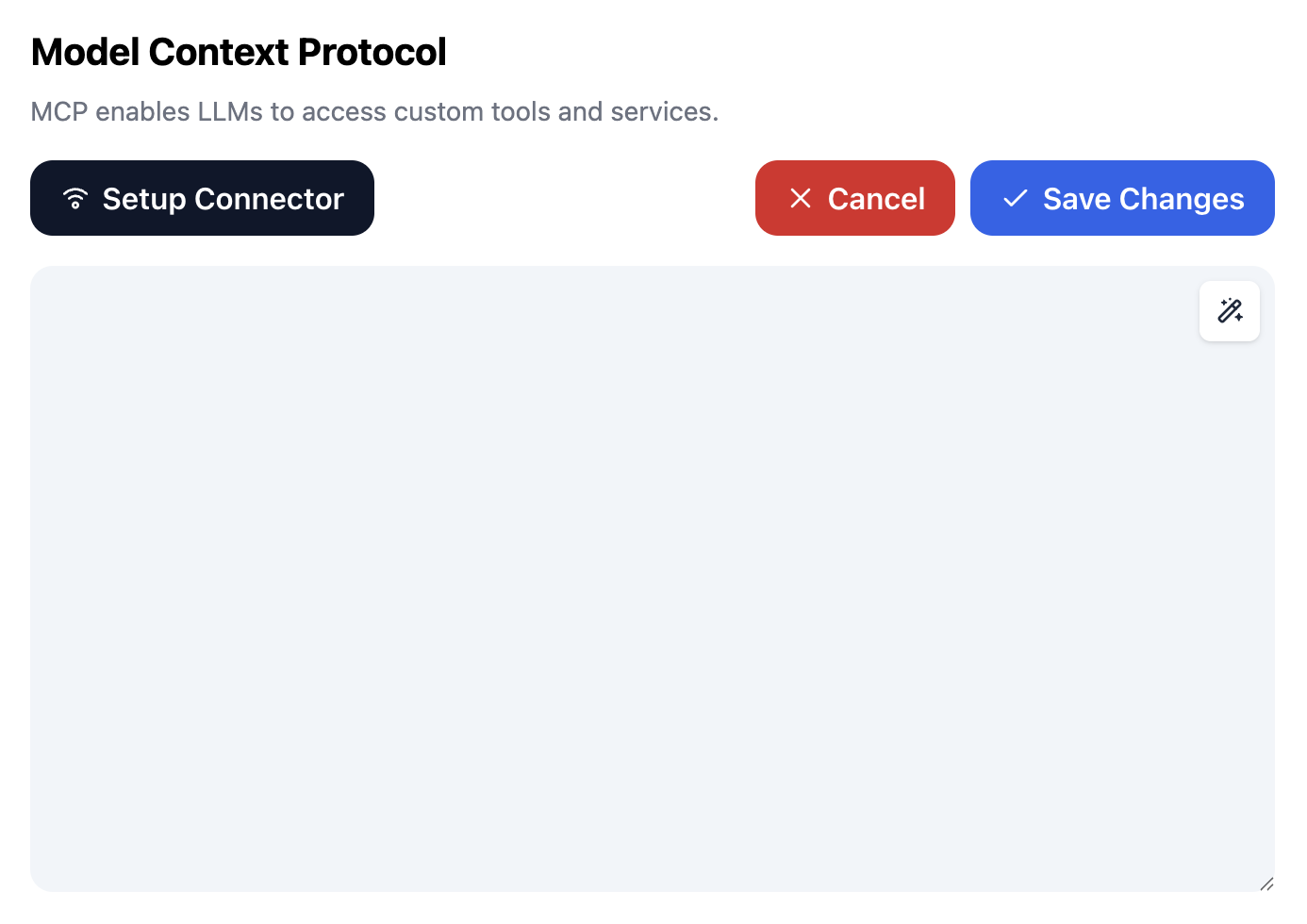
In TypingMind, go to Settings, Advanced Settings, then Model Context Protocol and choose Setup Connector.

  1. Open TypingMind in your browser.
  2. Click the Settings icon.
  3. Go to Advanced Settings.
  4. Open the Model Context Protocol section.
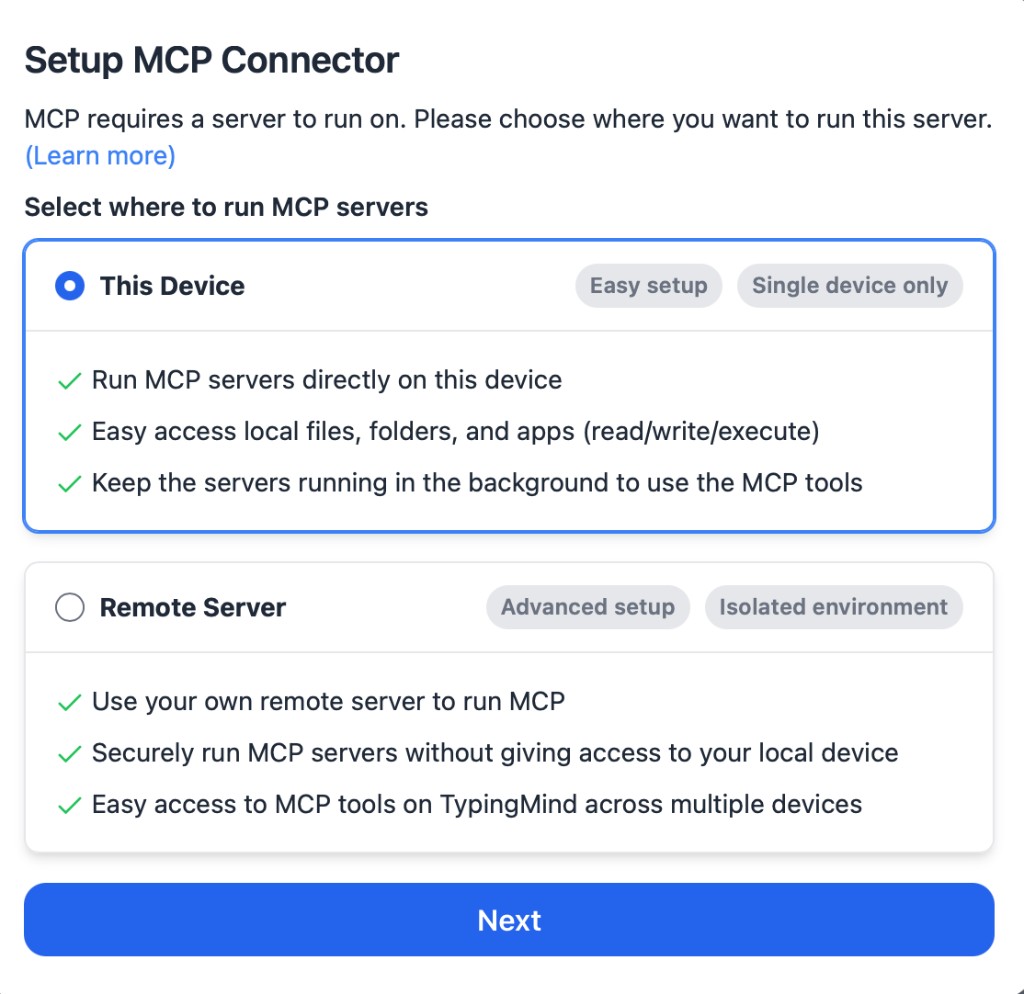
  5. Click Setup Connector and choose This Device.
TypingMind MCP connector setup screen with This Device selected
2

Run the connector command

Choose This Device, copy the command from TypingMind, and run it in Terminal. Keep the process running while you use MCP.

  1. Copy the setup command shown by TypingMind.
  2. Open Terminal on macOS or Windows Terminal on Windows.
  3. Paste and run the command.
  4. Approve the package install if Terminal asks you to proceed.
  5. Keep the Terminal window running while using MCP tools.
3

Add ROS MCP Server as a server

When the connector status is Ready, click Edit Servers and paste the MCP server configuration.

  1. Wait until the connector status shows Ready.
  2. Click Edit Servers.
  3. Paste the ROS MCP Server MCP server configuration.
  4. Save the server list.
  5. Refresh if you want to confirm the connector is still ready.
TypingMind MCP settings showing active server and Edit Servers button
{
  "mcpServers": {
    "ros-mcp-server": {
      "command": "npx",
      "args": [
        "-y",
        "ros-mcp"
      ]
    }
  }
}
4

Use it across models

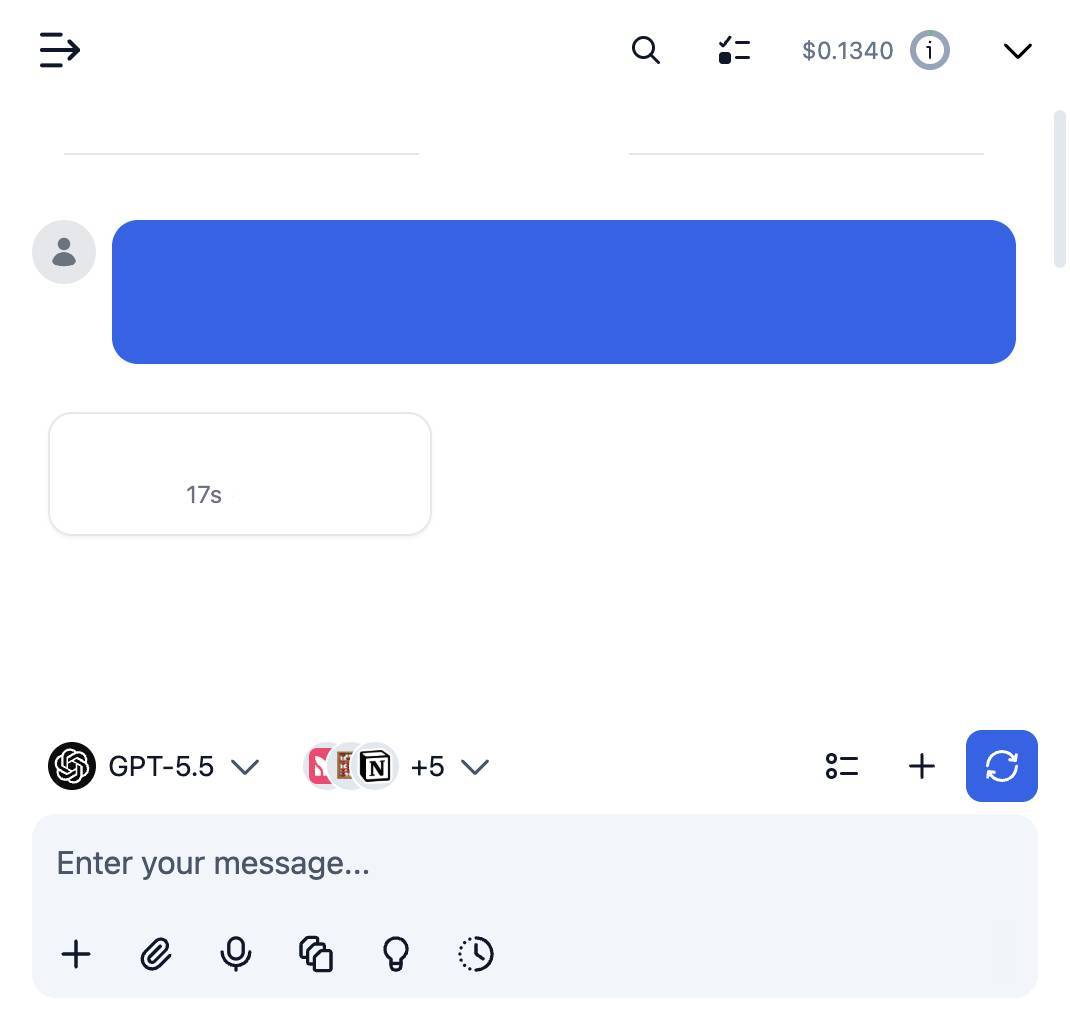
Save the server list, open Plugins, enable the ROS MCP Server MCP tools, then select any supported AI model in TypingMind and use the tools in chat or assign them to an AI agent.

  1. Open the Plugins page in TypingMind.
  2. Enable the ROS MCP Server MCP tools.
  3. Start a chat and choose the AI model you want to use.
  4. Use the MCP tools in chat or assign them to an AI agent.
  5. Switch to another AI model whenever needed without reconnecting MCP.
TypingMind chat using enabled MCP tools with a selected AI model
Can you use ROS MCP Server to help me with this task?
ROS MCP Server
Sure. I read it.
Here is what I found using ROS MCP Server.

Frequently asked questions

What is the ROS MCP Server MCP server used for?

ROS MCP Server is an MCP server that lets compatible AI clients connect to external tools and context. In TypingMind, you can add this MCP server once and make its tools available in your AI workspace.

Can I use ROS MCP Server MCP with multiple AI models in TypingMind?

Yes. TypingMind connects MCP tools at the workspace level, so you can use ROS MCP Server with different AI models such as Claude, ChatGPT, Gemini, or other models you have configured in TypingMind without setting up the MCP server separately for each model.

Why use ROS MCP Server MCP with TypingMind?

TypingMind is one of the best frontends for LLM chat because it brings multiple AI models, prompts, plugins, AI agents, API keys, and MCP tools into one workspace. With ROS MCP Server connected, you can use its MCP tools across your preferred models while keeping your chat workflow organized in TypingMind.

How do I connect ROS MCP Server MCP to TypingMind?

ROS MCP Server runs through the TypingMind local MCP connector. This is best when the MCP server needs access to local files, desktop apps, command-line tools, or private resources on your computer.

What tools does ROS MCP Server MCP provide in TypingMind?

ROS MCP Server exposes MCP capabilities that can be enabled from the TypingMind Plugins page and used in chat or assigned to AI agents.

Do I need to share my API keys with TypingMind to use ROS MCP Server MCP?

No. TypingMind is local-first and lets you keep your model providers, API keys, prompts, and MCP configuration under your control. If ROS MCP Server requires authentication, add the required headers, OAuth settings, or local configuration for that MCP server when you create the connection.

Related MCP Servers

View all

Set up your own AI workspace now

Get notified about new features and future giveaways by subscribing to our newsletter ๐Ÿ‘‡