ScreenshotOne.com - MCP Server
This project provides a Model Context Protocol (MCP) server that connects AI assistants to ScreenshotOne.com API to capture screenshots of websites.
Available Features
- Take screenshots of any URL
- Render HTML content and take screenshots
- Customize viewport size and device emulation
- Capture full-page screenshots
- Select specific elements using CSS selectors
- Multiple output formats (PNG, JPEG, WebP, PDF)
- Block ads, trackers, and cookie banners
- Inject custom CSS and JavaScript
- Control wait behavior and timing
ScreenshotOne.com
- Website
- Playground
- API Docs
- Create your API key here
Supported Transports
- "stdio" transport - Default transport for CLI usage
- "Streamable HTTP" transport - For web-based clients
- Implement auth ("Authorization" headers with
Bearer <token>)
- Implement auth ("Authorization" headers with
-
"sse" transport(Deprecated) - Write tests
How to use
CLI
bash# Take a screenshot of a URL npm run dev:cli -- take-screenshot --url "https://example.com" --access-key "your-access-key" # Take a screenshot with custom viewport npm run dev:cli -- take-screenshot --url "https://example.com" --viewport-width 1920 --viewport-height 1080 # Capture a full page screenshot npm run dev:cli -- take-screenshot --url "https://example.com" --full-page # Save the screenshot to a file npm run dev:cli -- take-screenshot --url "https://example.com" --output screenshot.png # Block ads and trackers npm run dev:cli -- take-screenshot --url "https://example.com" --block-ads --block-trackers --block-cookie-banners # ---------------------------------------------- # UPLOAD SCREENSHOT TO CLOUDFLARE # REMEMBER TO SET THE ENVIRONMENT VARIABLES # > See example at ".env.example" file # ---------------------------------------------- # Take a screenshot and upload it to Cloudflare npm run dev:cli -- take-screenshot --url https://example.com --upload # Take a screenshot with a custom filename npm run dev:cli -- take-screenshot --url https://example.com --upload --upload-filename my-screenshot # Take a screenshot with upload debugging enabled npm run dev:cli -- take-screenshot --url https://example.com --upload --upload-debug
MCP Setup
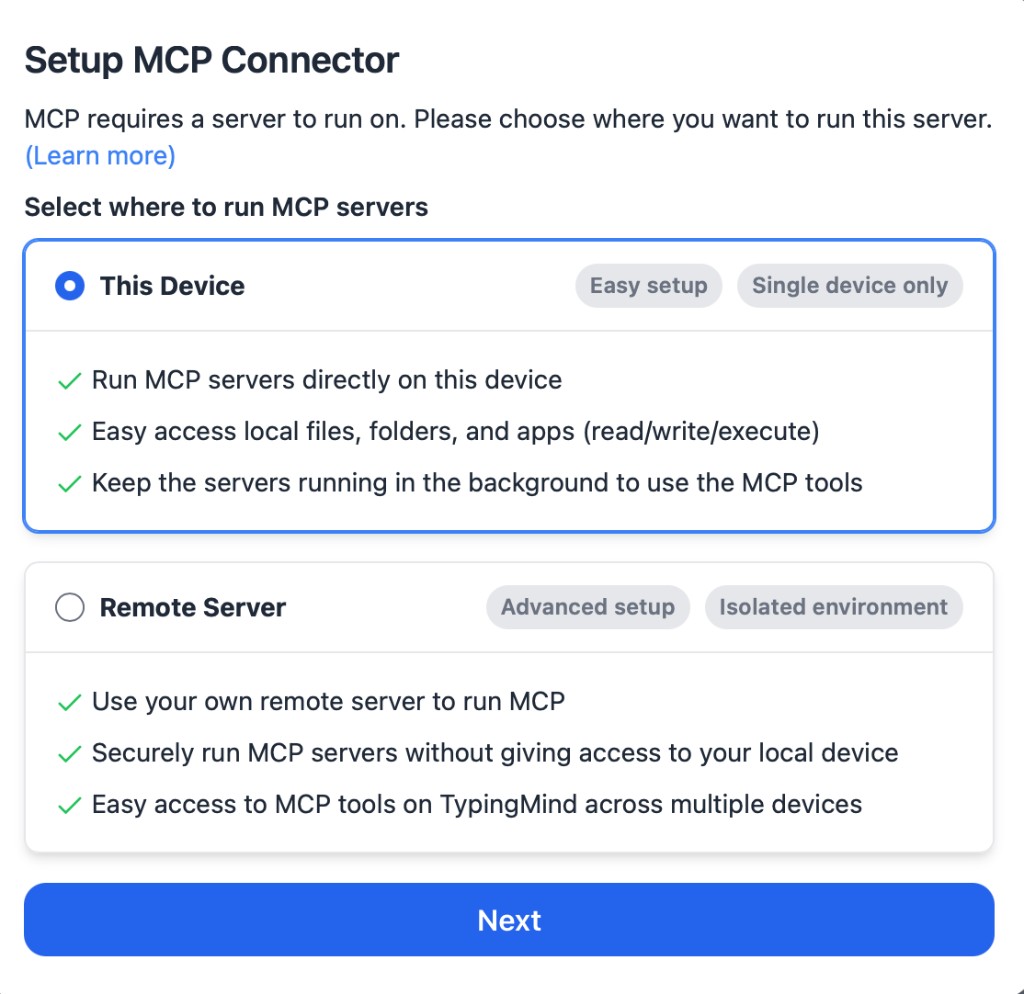
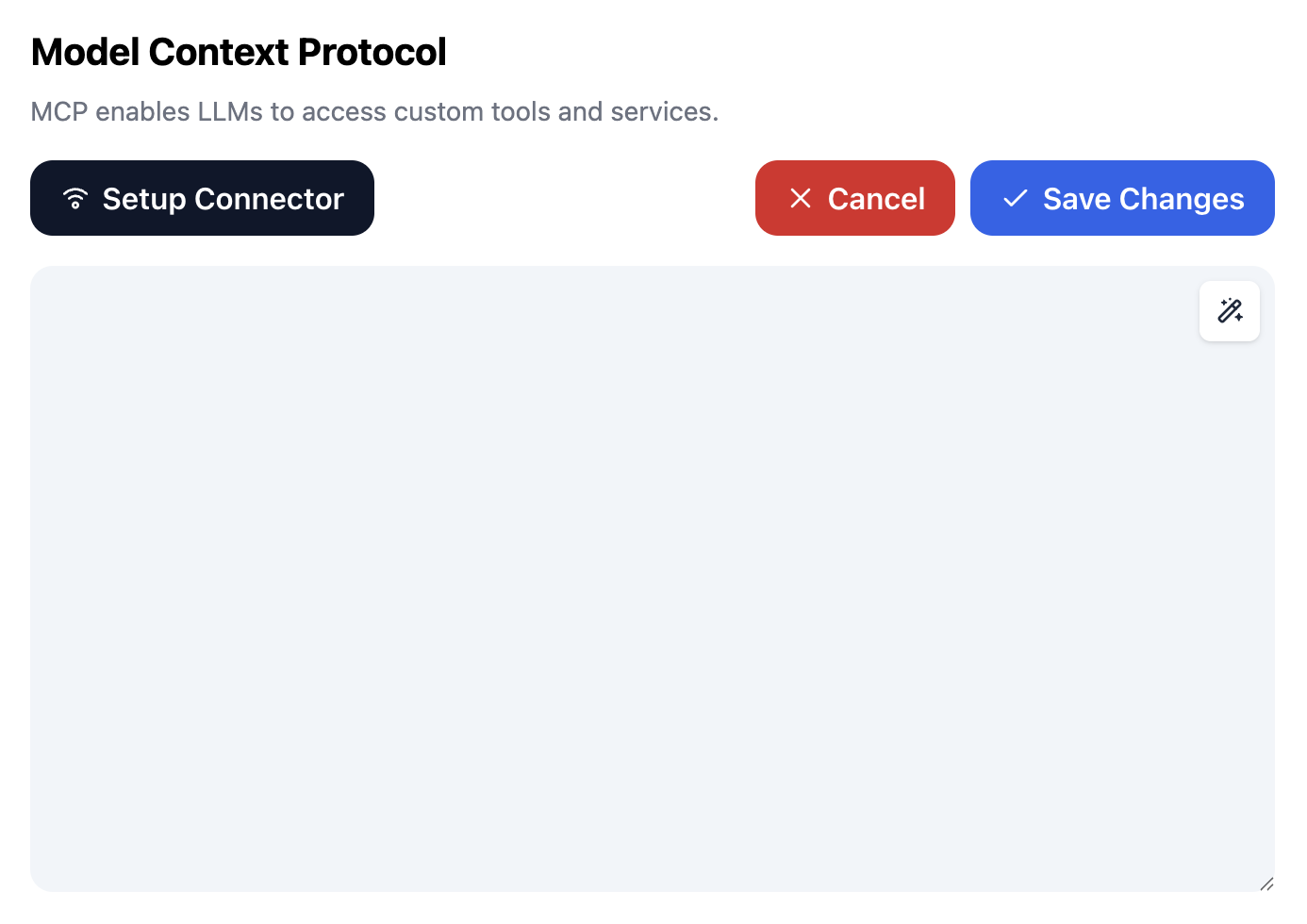
For local configuration with stdio transport:
json{ "mcpServers": { "screenshotone": { "command": "node", "args": ["/path/to/screenshotone-mcp-server/dist/index.js"], "transportType": "stdio" } } }
For remote HTTP configuration:
json{ "mcpServers": { "screenshotone": { "type": "http", "url": "http://localhost:8080/mcp" } } }
Environment Variables for HTTP Transport:
You can configure the HTTP server using these environment variables:
MCP_HTTP_HOST: The host to bind to (default:127.0.0.1)MCP_HTTP_PORT: The port to listen on (default:8080)MCP_HTTP_PATH: The endpoint path (default:/mcp)
Source Code Overview
What is MCP?
Model Context Protocol (MCP) is an open standard that allows AI systems to securely and contextually connect with external tools and data sources.
This boilerplate implements the MCP specification with a clean, layered architecture that can be extended to build custom MCP servers for any API or data source.
Why Use This Boilerplate?
-
Production-Ready Architecture: Follows the same pattern used in published MCP servers, with clear separation between CLI, tools, controllers, and services.
-
Type Safety: Built with TypeScript for improved developer experience, code quality, and maintainability.
-
Working Example: Includes a fully implemented IP lookup tool demonstrating the complete pattern from CLI to API integration.
-
Testing Framework: Comes with testing infrastructure for both unit and CLI integration tests, including coverage reporting.
-
Development Tooling: Includes ESLint, Prettier, TypeScript, and other quality tools preconfigured for MCP server development.
Getting Started
Prerequisites
- Node.js (>=18.x): Download
- Git: For version control
Step 1: Clone and Install
bash# Clone the repository git clone https://github.com/mrgoonie/screenshotone-mcp-server.git cd screenshotone-mcp-server # Install dependencies npm install
Step 2: Run Development Server
Start the server in development mode with stdio transport (default):
bashnpm run dev:server
Or with the Streamable HTTP transport:
bashnpm run dev:server:http
This starts the MCP server with hot-reloading and enables the MCP Inspector at http://localhost:5173.
⚙️ Proxy server listening on port 6277 🔍 MCP Inspector is up and running at http://127.0.0.1:6274
When using HTTP transport, the server will be available at http://127.0.0.1:8080/mcp by default.
Step 3: Test the Screenshot Tool
Take a screenshot using the CLI:
bash# Basic screenshot npm run dev:cli -- take-screenshot --url "https://example.com" --access-key "your-access-key" # Advanced options npm run dev:cli -- take-screenshot --url "https://example.com" --format png --viewport-width 1920 --viewport-height 1080 --full-page --output screenshot.png
Architecture
This boilerplate follows a clean, layered architecture pattern that separates concerns and promotes maintainability.
Project Structure
src/ ├── cli/ # Command-line interfaces ├── controllers/ # Business logic ├── resources/ # MCP resources: expose data and content from your servers to LLMs ├── services/ # External API interactions ├── tools/ # MCP tool definitions ├── types/ # Type definitions ├── utils/ # Shared utilities └── index.ts # Entry point
Layers and Responsibilities
CLI Layer (src/cli/*.cli.ts)
- Purpose: Define command-line interfaces that parse arguments and call controllers
- Naming: Files should be named
<feature>.cli.ts - Testing: CLI integration tests in
<feature>.cli.test.ts
Tools Layer (src/tools/*.tool.ts)
- Purpose: Define MCP tools with schemas and descriptions for AI assistants
- Naming: Files should be named
<feature>.tool.tswith types in<feature>.types.ts - Pattern: Each tool should use zod for argument validation
Controllers Layer (src/controllers/*.controller.ts)
- Purpose: Implement business logic, handle errors, and format responses
- Naming: Files should be named
<feature>.controller.ts - Pattern: Should return standardized
ControllerResponseobjects
Services Layer (src/services/*.service.ts)
- Purpose: Interact with external APIs or data sources
- Naming: Files should be named
<feature>.service.ts - Pattern: Pure API interactions with minimal logic
Utils Layer (src/utils/*.util.ts)
- Purpose: Provide shared functionality across the application
- Key Utils:
logger.util.ts: Structured loggingerror.util.ts: Error handling and standardizationformatter.util.ts: Markdown formatting helpers
Development Guide
Development Scripts
bash# Start server in development mode (hot-reload & inspector) npm run dev:server # Run CLI in development mode npm run dev:cli -- [command] [args] # Build the project npm run build # Start server in production mode npm run start:server # Run CLI in production mode npm run start:cli -- [command] [args]
Testing
bash# Run all tests npm test # Run specific tests npm test -- src/path/to/test.ts # Generate test coverage report npm run test:coverage
Code Quality
bash# Lint code npm run lint # Format code with Prettier npm run format # Check types npm run typecheck
Building Custom Tools
Follow these steps to add your own tools to the server:
1. Define Service Layer
Create a new service in src/services/ to interact with your external API:
typescript// src/services/example.service.ts import { Logger } from '../utils/logger.util.js'; const logger = Logger.forContext('services/example.service.ts'); export async function getData(param: string): Promise<any> { logger.debug('Getting data', { param }); // API interaction code here return { result: 'example data' }; }
2. Create Controller
Add a controller in src/controllers/ to handle business logic:
typescript// src/controllers/example.controller.ts import { Logger } from '../utils/logger.util.js'; import * as exampleService from '../services/example.service.js'; import { formatMarkdown } from '../utils/formatter.util.js'; import { handleControllerError } from '../utils/error-handler.util.js'; import { ControllerResponse } from '../types/common.types.js'; const logger = Logger.forContext('controllers/example.controller.ts'); export interface GetDataOptions { param?: string; } export async function getData( options: GetDataOptions = {}, ): Promise<ControllerResponse> { try { logger.debug('Getting data with options', options); const data = await exampleService.getData(options.param || 'default'); const content = formatMarkdown(data); return { content }; } catch (error) { throw handleControllerError(error, { entityType: 'ExampleData', operation: 'getData', source: 'controllers/example.controller.ts', }); } }
3. Implement MCP Tool
Create a tool definition in src/tools/:
typescript// src/tools/example.tool.ts import { McpServer } from '@modelcontextprotocol/sdk/server/mcp.js'; import { z } from 'zod'; import { Logger } from '../utils/logger.util.js'; import { formatErrorForMcpTool } from '../utils/error.util.js'; import * as exampleController from '../controllers/example.controller.js'; const logger = Logger.forContext('tools/example.tool.ts'); const GetDataArgs = z.object({ param: z.string().optional().describe('Optional parameter'), }); type GetDataArgsType = z.infer<typeof GetDataArgs>; async function handleGetData(args: GetDataArgsType) { try { logger.debug('Tool get_data called', args); const result = await exampleController.getData({ param: args.param, }); return { content: [{ type: 'text' as const, text: result.content }], }; } catch (error) { logger.error('Tool get_data failed', error); return formatErrorForMcpTool(error); } } export function register(server: McpServer) { server.tool( 'get_data', `Gets data from the example API, optionally using \`param\`. Use this to fetch example data. Returns formatted data as Markdown.`, GetDataArgs.shape, handleGetData, ); }
4. Add CLI Support
Create a CLI command in src/cli/:
typescript// src/cli/example.cli.ts import { program } from 'commander'; import { Logger } from '../utils/logger.util.js'; import * as exampleController from '../controllers/example.controller.js'; import { handleCliError } from '../utils/error-handler.util.js'; const logger = Logger.forContext('cli/example.cli.ts'); program .command('get-data') .description('Get example data') .option('--param <value>', 'Optional parameter') .action(async (options) => { try { logger.debug('CLI get-data called', options); const result = await exampleController.getData({ param: options.param, }); console.log(result.content); } catch (error) { handleCliError(error); } });
5. Register Components
Update the entry points to register your new components:
typescript// In src/cli/index.ts import '../cli/example.cli.js'; // In src/index.ts (for the tool) import exampleTool from './tools/example.tool.js'; // Then in registerTools function: exampleTool.register(server);
Debugging Tools
MCP Inspector
Access the visual MCP Inspector to test your tools and view request/response details:
- Run
npm run dev:server - Open http://localhost:5173 in your browser
- Test your tools and view logs directly in the UI
Server Logs
Enable debug logs for development:
bash# Set environment variable DEBUG=true npm run dev:server # Or configure in ~/.mcp/configs.json
Publishing Your MCP Server
When ready to publish your custom MCP server:
- Update package.json with your details
- Update README.md with your tool documentation
- Build the project:
npm run build - Test the production build:
npm run start:server - Publish to npm:
npm publish
License
json{ "screenshotone": { "environments": { "DEBUG": "true", "SCREENSHOTONE_ACCESS_KEY": "value" } } }
Note: For backward compatibility, the server will also recognize configurations under the full package name (screenshotone-mcp-server) or the unscoped package name (screenshotone-mcp-server) if the screenshotone key is not found. However, using the short screenshotone key is recommended for new configurations.