Storybook logo

Storybook

Organization
mcpland

A MCP server for Storybook.

Publishermcpland
Repositorystorybook-mcp
LanguageTypeScript
Forks
10
Stars
46
Available tools
0
Transport typestdio
Categories
LicenseMIT
Links
  • Connect tools to AI workflows

    Storybook exposes MCP capabilities that can be used by compatible AI clients and agents.

  • 0 available tools

    Browse the callable actions below, including names and descriptions when provided by the server.

  • Ready-to-copy setup

    Use the installation snippets to configure this server in your preferred MCP client.

  • Open source signals

    46 stars and 10 forks from the linked repository.

Storybook MCP Server

Node CI npm license

A Model Context Protocol (MCP) server that provides tools to interact with Storybook documentation and component information.

Features

  • getComponentList: Get a list of all components from a configured Storybook
  • getComponentsProps: Get detailed props information for multiple components using headless browser automation
  • Custom Tools: Create custom tools that can extract any information from your Storybook pages using JavaScript

Installation and Configuration

MCP Settings

Add the following configuration to MCP settings:

json
{
  "mcpServers": {
    "storybook": {
      "command": "npx",
      "args": ["-y", "storybook-mcp@latest"],
      "env": {
        "STORYBOOK_URL": "<your_storybook_url>/index.json"
      }
    }
  }
}

storybook-mcp starts immediately and installs Chromium in the background the first time it runs. If you want to preinstall the browser ahead of time, run npx -y storybook-mcp@latest install-browser. Until that download finishes, the first browser-backed tool call can take longer.

Environment Variables

  • STORYBOOK_URL (required): The URL to your Storybook's index.json file
  • CUSTOM_TOOLS (optional): JSON array of custom tool definitions for extracting specific information from your Storybook

Usage

The server provides built-in tools and supports custom tools:

Built-in Tools

1. getComponentList

Retrieves a list of all available components from the configured Storybook.

Example:

Available components:
Accordion
Avatar
Badge
Button
...

2. getComponentsProps

Gets detailed props information for multiple components, including:

  • Property names
  • Types
  • Default values
  • Descriptions
  • Required/optional status

Parameters:

  • componentNames (array of strings): Array of component names to get props information for

Example usage:

Tool: getComponentsProps
Parameters: { "componentNames": ["Button", "Input", "Avatar"] }

Custom Tools

You can define custom tools to extract specific information from your Storybook pages. Each custom tool can:

  • Navigate to any page in your Storybook
  • Execute custom JavaScript to extract data
  • Return structured data to the AI assistant

Custom Tool Structure:

typescript
interface CustomTool {
  name: string; // Unique tool name
  description: string; // Tool description for the AI
  parameters: object; // Input parameters schema (optional)
  page: string; // URL to navigate to
  handler: string; // JavaScript code to execute on the page
}

Example Custom Tools:

json
[
  {
    "name": "getIconList",
    "description": "Get All Icons from the Icon page",
    "parameters": {},
    "page": "https://your-storybook.com/?path=/docs/icon--docs",
    "handler": "Array.from(document.querySelectorAll('.icon-name')).map(i => i.textContent)"
  },
  {
    "name": "getColorPalette",
    "description": "Extract color palette from design tokens",
    "parameters": {},
    "page": "https://your-storybook.com/?path=/docs/design-tokens--colors",
    "handler": "Array.from(document.querySelectorAll('.color-swatch')).map(el => ({ name: el.getAttribute('data-color-name'), value: el.style.backgroundColor }))"
  }
]

For more examples and detailed documentation, see examples/custom-tools-example.md.

Example

Set Spectrum storybook-mcp config with STORYBOOK_URL and CUSTOM_TOOLS environment variables.

json
{
  "mcpServers": {
    "storybook-mcp": {
      "command": "npx",
      "args": ["-y", "storybook-mcp@latest"],
      "env": {
        "STORYBOOK_URL": "https://opensource.adobe.com/spectrum-web-components/storybook/index.json",
        "CUSTOM_TOOLS": "[{\"name\":\"getIconList\",\"description\":\"Get All Icons from the Icon page\",\"parameters\":{},\"page\":\"https://opensource.adobe.com/spectrum-web-components/storybook/iframe.html?viewMode=docs&id=icons--docs&globals=\",\"handler\":\"Array.from(document.querySelector('icons-demo').shadowRoot.querySelectorAll('.icon')).map(i => i.textContent)\"}]"
      }
    }
  }
}

How it works

  1. Component List: The server fetches the Storybook's index.json file(v3 is stories.json) and extracts all components marked as "docs" type
  2. Props Information: For component props, the server:
    • Finds the component's documentation ID from the index.json
    • Constructs the iframe URL for the component's docs page
    • Uses Playwright to load the page in a headless browser
    • Extracts the props table HTML from the documentation

Supported Storybook URLs

The server works with any Storybook that exposes an index.json file(v3 is stories.json). Common patterns:

  • https://your-storybook-domain.com/index.json
  • https://your-storybook-domain.com/storybook/index.json

Development

Local Development

  1. Clone the repository
  2. Install dependencies: yarn install
  3. Install Playwright browsers: yarn install:browser
  4. Set the environment variable: export STORYBOOK_URL="your-storybook-url"
  5. Run in development mode: yarn dev

Note: You can also use npx @modelcontextprotocol/inspector tsx src/index.ts instead of yarn dev if you prefer.

Building

bash
yarn build

Testing

bash
yarn test

Requirements

  • Node.js 18.0.0 or higher
  • Chromium browser installed by Playwright

Error Handling

The server includes comprehensive error handling for:

  • Missing or invalid Storybook URLs
  • Network connectivity issues
  • Component not found scenarios
  • Playwright browser automation failures

License

Storybook MCP is MIT licensed.
Installation

TypingMind
Prerequisites:

Node.js 18+

{
  "mcpServers": {
    "storybook-mcp": {
      "command": "npx",
      "args": [
        "-y",
        "storybook-mcp@latest"
      ],
      "env": {
        "STORYBOOK_URL": "https://opensource.adobe.com/spectrum-web-components/storybook/index.json",
        "CUSTOM_TOOLS": "[{\"name\":\"getIconList\",\"description\":\"Get All Icons from the Icon page\",\"parameters\":{},\"page\":\"https://opensource.adobe.com/spectrum-web-components/storybook/iframe.html?viewMode=docs&id=icons--docs&globals=\",\"handler\":\"Array.from(document.querySelector('icons-demo').shadowRoot.querySelectorAll('.icon')).map(i => i.textContent)\"}]"
      }
    }
  }
}

Use Storybook MCP with multiple AI models

TypingMind connects MCP tools at the workspace level, so once Storybook is connected, you can use it with different AI models in TypingMind instead of setting it up separately for each model. This MCP runs locally through the TypingMind MCP connector on your device.

Setup guide to use the local connector

Use this when the MCP server needs access to local files, apps, or private resources on your computer.

1

Open the MCP settings

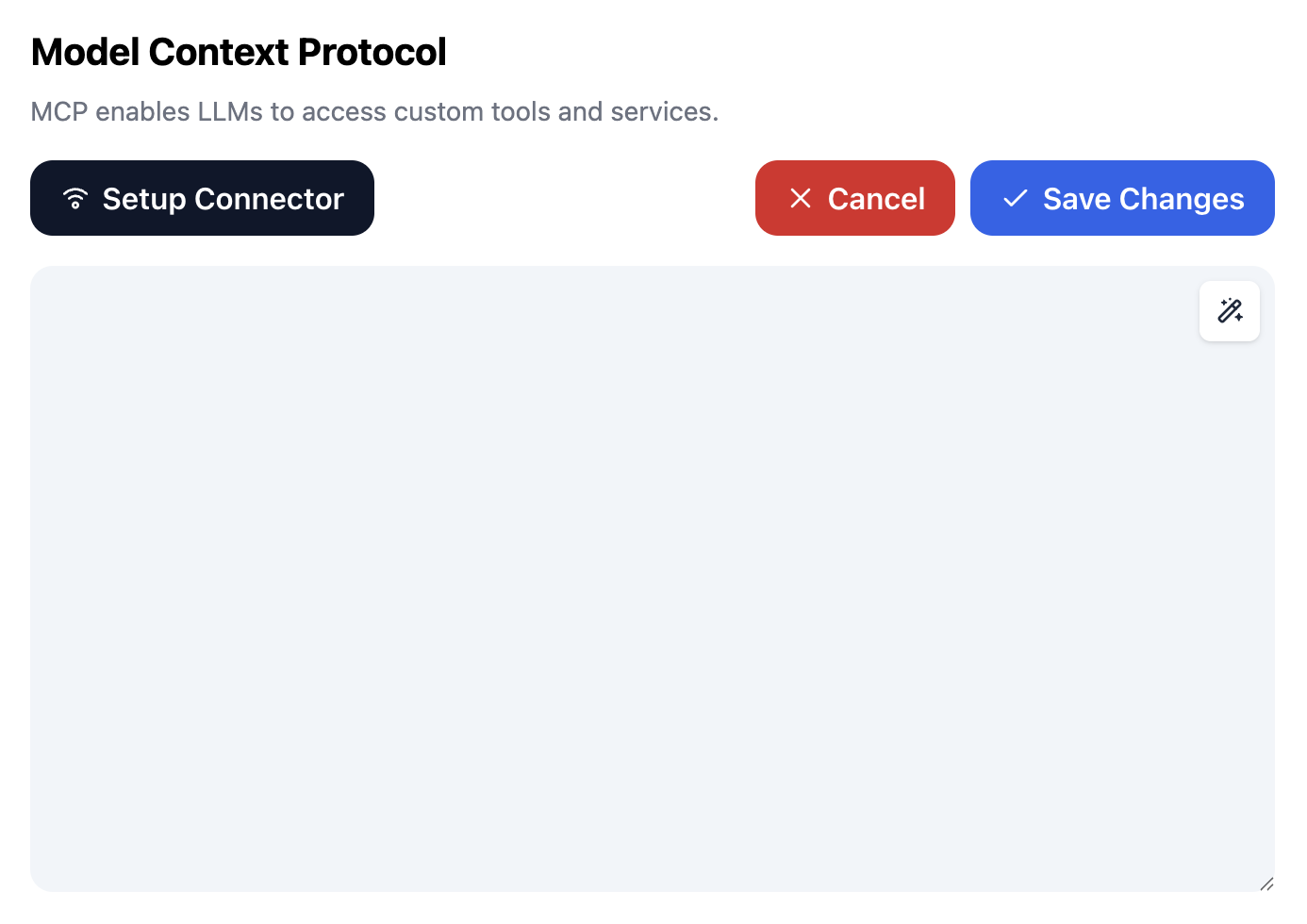
In TypingMind, go to Settings, Advanced Settings, then Model Context Protocol and choose Setup Connector.

  1. Open TypingMind in your browser.
  2. Click the Settings icon.
  3. Go to Advanced Settings.
  4. Open the Model Context Protocol section.
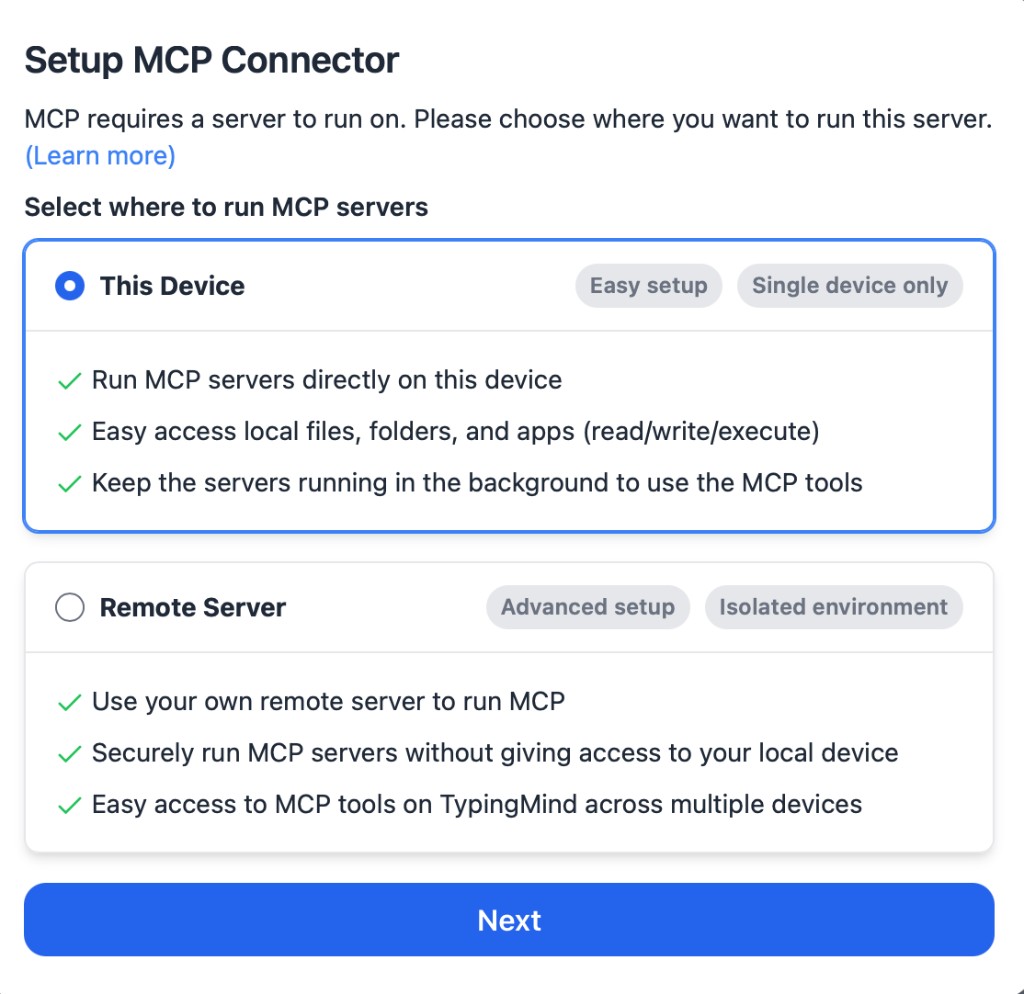
  5. Click Setup Connector and choose This Device.
TypingMind MCP connector setup screen with This Device selected
2

Run the connector command

Choose This Device, copy the command from TypingMind, and run it in Terminal. Keep the process running while you use MCP.

  1. Copy the setup command shown by TypingMind.
  2. Open Terminal on macOS or Windows Terminal on Windows.
  3. Paste and run the command.
  4. Approve the package install if Terminal asks you to proceed.
  5. Keep the Terminal window running while using MCP tools.
3

Add Storybook as a server

When the connector status is Ready, click Edit Servers and paste the MCP server configuration.

  1. Wait until the connector status shows Ready.
  2. Click Edit Servers.
  3. Paste the Storybook MCP server configuration.
  4. Save the server list.
  5. Refresh if you want to confirm the connector is still ready.
TypingMind MCP settings showing active server and Edit Servers button
{
  "mcpServers": {
    "storybook": {
      "command": "npx",
      "args": [
        "-y",
        "storybook-mcp"
      ]
    }
  }
}
4

Use it across models

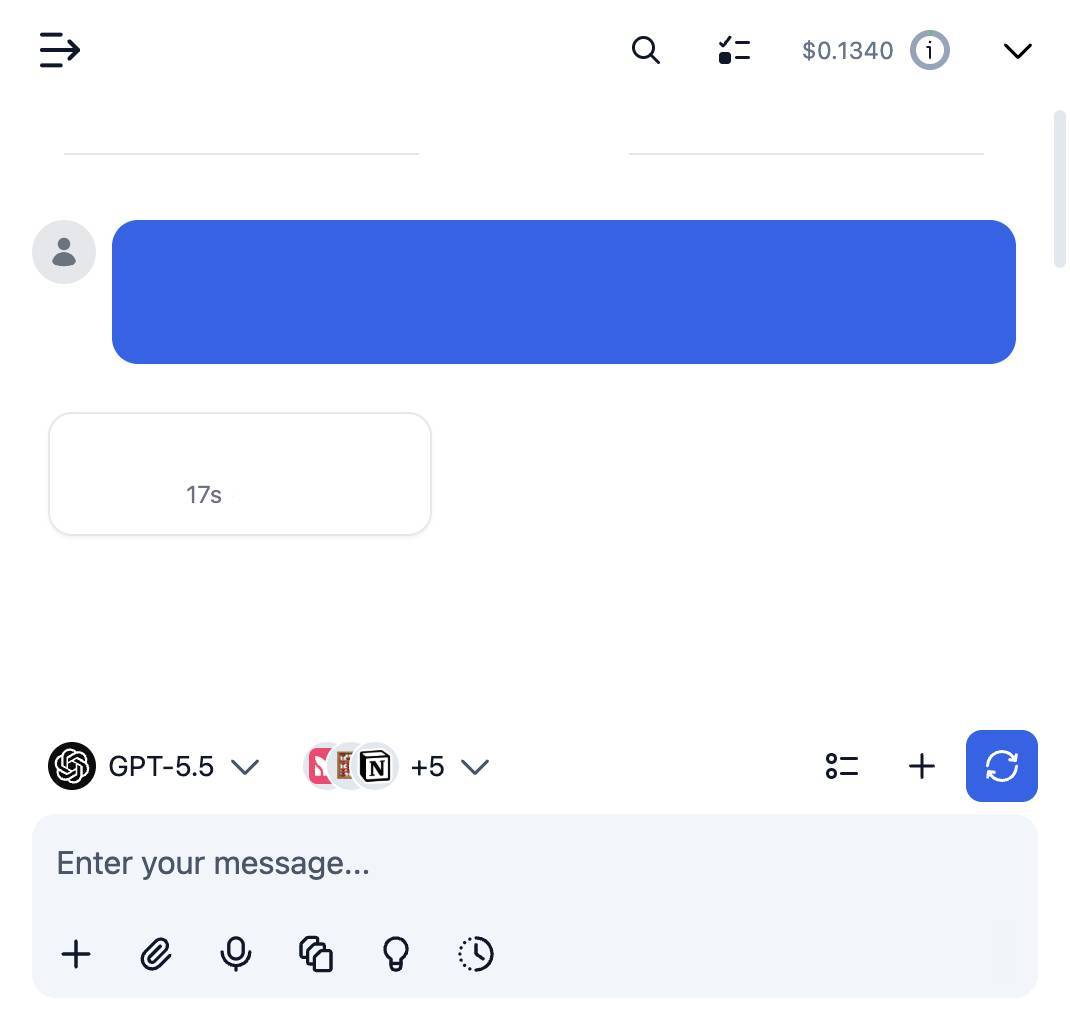
Save the server list, open Plugins, enable the Storybook MCP tools, then select any supported AI model in TypingMind and use the tools in chat or assign them to an AI agent.

  1. Open the Plugins page in TypingMind.
  2. Enable the Storybook MCP tools.
  3. Start a chat and choose the AI model you want to use.
  4. Use the MCP tools in chat or assign them to an AI agent.
  5. Switch to another AI model whenever needed without reconnecting MCP.
TypingMind chat using enabled MCP tools with a selected AI model
Can you use Storybook to help me with this task?
Storybook
Sure. I read it.
Here is what I found using Storybook.

Frequently asked questions

What is the Storybook MCP server used for?

Storybook is an MCP server that lets compatible AI clients connect to external tools and context. In TypingMind, you can add this MCP server once and make its tools available in your AI workspace.

Can I use Storybook MCP with multiple AI models in TypingMind?

Yes. TypingMind connects MCP tools at the workspace level, so you can use Storybook with different AI models such as Claude, ChatGPT, Gemini, or other models you have configured in TypingMind without setting up the MCP server separately for each model.

Why use Storybook MCP with TypingMind?

TypingMind is one of the best frontends for LLM chat because it brings multiple AI models, prompts, plugins, AI agents, API keys, and MCP tools into one workspace. With Storybook connected, you can use its MCP tools across your preferred models while keeping your chat workflow organized in TypingMind.

How do I connect Storybook MCP to TypingMind?

Storybook runs through the TypingMind local MCP connector. This is best when the MCP server needs access to local files, desktop apps, command-line tools, or private resources on your computer.

What tools does Storybook MCP provide in TypingMind?

Storybook exposes MCP capabilities that can be enabled from the TypingMind Plugins page and used in chat or assigned to AI agents.

Do I need to share my API keys with TypingMind to use Storybook MCP?

No. TypingMind is local-first and lets you keep your model providers, API keys, prompts, and MCP configuration under your control. If Storybook requires authentication, add the required headers, OAuth settings, or local configuration for that MCP server when you create the connection.

Related MCP Servers

View all

Set up your own AI workspace now

Get notified about new features and future giveaways by subscribing to our newsletter 👇