Telegram Communicator logo

Telegram Communicator

Community
qpd-v

An MCP server that enables communication with users through Telegram. This server provides a tool to ask questions to users and receive their responses via a Telegram bot.

Publisherqpd-v
Repositorymcp-communicator-telegram
LanguageJavaScript
Forks
20
Stars
45
Available tools
0
Transport typestdio
Categories
LicenseMIT
Links
  • Connect tools to AI workflows

    Telegram Communicator exposes MCP capabilities that can be used by compatible AI clients and agents.

  • 0 available tools

    Browse the callable actions below, including names and descriptions when provided by the server.

  • Ready-to-copy setup

    Use the installation snippets to configure this server in your preferred MCP client.

  • Open source signals

    45 stars and 20 forks from the linked repository.

MCP Communicator (Telegram)

An MCP server that enables communication with users through Telegram. This server provides tools to interact with users via a Telegram bot, including asking questions, sending notifications, sharing files, and creating project archives.

Installation

Via npm (global)

bash
npm install -g mcp-communicator-telegram

Via npx (on-demand)

bash
npx mcptelegram

To get your Telegram chat ID:

bash
npx mcptelegram-chatid

Features

  • Ask questions to users through Telegram
  • Send notifications to users (no response required)
  • Send files to users via Telegram
  • Create and send project zip files (respecting .gitignore)
  • Receive responses asynchronously (waits indefinitely for response)
  • Support for reply-based message tracking
  • Secure chat ID validation
  • Error handling and logging

Prerequisites

  • Node.js (v14 or higher)
  • A Telegram bot token (obtained from @BotFather)
  • Your Telegram chat ID (can be obtained using the included utility)

Installation

  1. Clone the repository:
bash
git clone https://github.com/qpd-v/mcp-communicator-telegram.git
cd mcp-communicator-telegram
  1. Install dependencies:
bash
npm install
  1. Create a Telegram bot:

    • Open Telegram and search for @BotFather
    • Send /newbot and follow the instructions
    • Save the bot token you receive
  2. Get your chat ID:

    • Copy .env.example to .env
    • Add your bot token to the .env file:
      TELEGRAM_TOKEN=your_bot_token_here
    • Run the chat ID utility:
      bash
      npm run build
      node build/get-chat-id.js
    • Send any message to your bot
    • Copy the chat ID that appears in the console
    • Add the chat ID to your .env file:
      TELEGRAM_TOKEN=your_bot_token_here
      CHAT_ID=your_chat_id_here

Configuration

Add the server to your MCP settings file (usually located at %APPDATA%\Code\User\globalStorage\rooveterinaryinc.roo-cline\settings\cline_mcp_settings.json on Windows):

json
{
  "mcpServers": {
    "mcp-communicator-telegram": {
      "command": "node",
      "args": ["path/to/mcp-communicator-telegram/build/index.js"],
      "env": {
        "TELEGRAM_TOKEN": "your_bot_token_here",
        "CHAT_ID": "your_chat_id_here"
      }
    }
  }
}

Available Tools

ask_user

Asks a question to the user via Telegram and waits for their response.

Input Schema:

json
{
  "type": "object",
  "properties": {
    "question": {
      "type": "string",
      "description": "The question to ask the user"
    }
  },
  "required": ["question"]
}

Example usage:

typescript
const response = await use_mcp_tool({
  server_name: "mcp-communicator-telegram",
  tool_name: "ask_user",
  arguments: {
    question: "What is your favorite color?"
  }
});

notify_user

Sends a notification message to the user via Telegram (no response required).

Input Schema:

json
{
  "type": "object",
  "properties": {
    "message": {
      "type": "string",
      "description": "The message to send to the user"
    }
  },
  "required": ["message"]
}

Example usage:

typescript
await use_mcp_tool({
  server_name: "mcp-communicator-telegram",
  tool_name: "notify_user",
  arguments: {
    message: "Task completed successfully!"
  }
});

send_file

Sends a file to the user via Telegram.

Input Schema:

json
{
  "type": "object",
  "properties": {
    "filePath": {
      "type": "string",
      "description": "The path to the file to send"
    }
  },
  "required": ["filePath"]
}

Example usage:

typescript
await use_mcp_tool({
  server_name: "mcp-communicator-telegram",
  tool_name: "send_file",
  arguments: {
    filePath: "path/to/file.txt"
  }
});

zip_project

Creates a zip file of a project directory (respecting .gitignore patterns) and sends it to the user via Telegram.

Input Schema:

json
{
  "type": "object",
  "properties": {
    "directory": {
      "type": "string",
      "description": "Directory to zip (defaults to current working directory)"
    }
  },
  "required": []
}

Example usage with default directory (current working directory):

typescript
await use_mcp_tool({
  server_name: "mcp-communicator-telegram",
  tool_name: "zip_project",
  arguments: {}
});

Example usage with specific directory:

typescript
await use_mcp_tool({
  server_name: "mcp-communicator-telegram",
  tool_name: "zip_project",
  arguments: {
    directory: "/path/to/your/project"
  }
});

Features:

  • Creates a zip file named [project-name]-project.zip based on the directory name
  • Can zip any specified directory or the current working directory
  • Respects .gitignore patterns
  • Maintains correct file paths in the archive
  • Automatically cleans up the zip file after sending
  • Handles files up to 2GB in size

Development

Build the project:

bash
npm run build

Run in development mode:

bash
npm run dev

Watch for changes:

bash
npm run watch

Clean build directory:

bash
npm run clean

Security

  • The server only responds to messages from the configured chat ID
  • Environment variables are used for sensitive configuration
  • Message IDs are used to track question/answer pairs
  • The bot ignores messages without proper context

License

ISC

Author

qpd-v

Version

0.2.1 # Major version bump for new features: notify_user, send_file, and zip_project tools
Installation

TypingMind
Prerequisites:

Node.js 18+

{
  "mcpServers": {
    "mcp-communicator-telegram": {
      "command": "npx",
      "args": [
        "-y",
        "mcp-communicator-telegram"
      ],
      "env": {
        "TELEGRAM_TOKEN": "your_bot_token_here",
        "CHAT_ID": "your_chat_id_here"
      }
    }
  }
}

Use Telegram Communicator MCP with multiple AI models

TypingMind connects MCP tools at the workspace level, so once Telegram Communicator is connected, you can use it with different AI models in TypingMind instead of setting it up separately for each model. This MCP runs locally through the TypingMind MCP connector on your device.

Setup guide to use the local connector

Use this when the MCP server needs access to local files, apps, or private resources on your computer.

1

Open the MCP settings

In TypingMind, go to Settings, Advanced Settings, then Model Context Protocol and choose Setup Connector.

  1. Open TypingMind in your browser.
  2. Click the Settings icon.
  3. Go to Advanced Settings.
  4. Open the Model Context Protocol section.
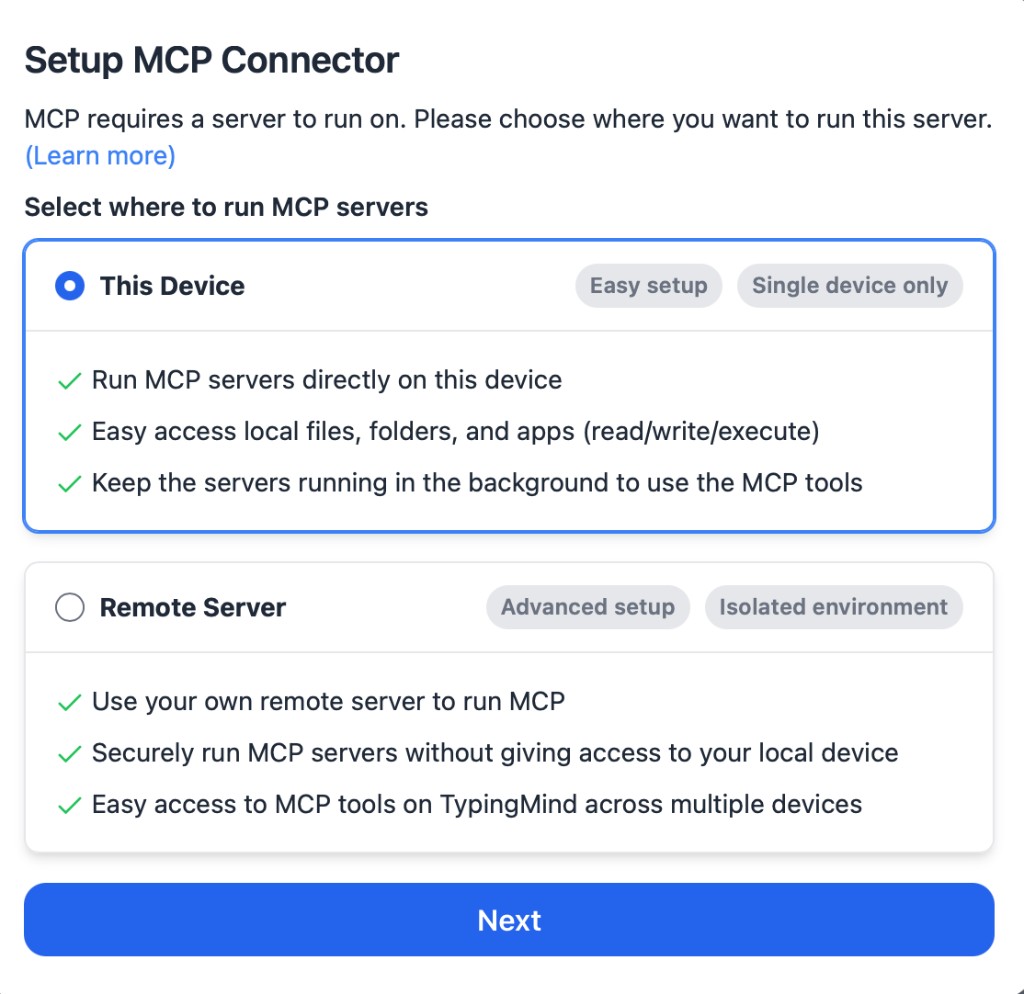
  5. Click Setup Connector and choose This Device.
TypingMind MCP connector setup screen with This Device selected
2

Run the connector command

Choose This Device, copy the command from TypingMind, and run it in Terminal. Keep the process running while you use MCP.

  1. Copy the setup command shown by TypingMind.
  2. Open Terminal on macOS or Windows Terminal on Windows.
  3. Paste and run the command.
  4. Approve the package install if Terminal asks you to proceed.
  5. Keep the Terminal window running while using MCP tools.
3

Add Telegram Communicator as a server

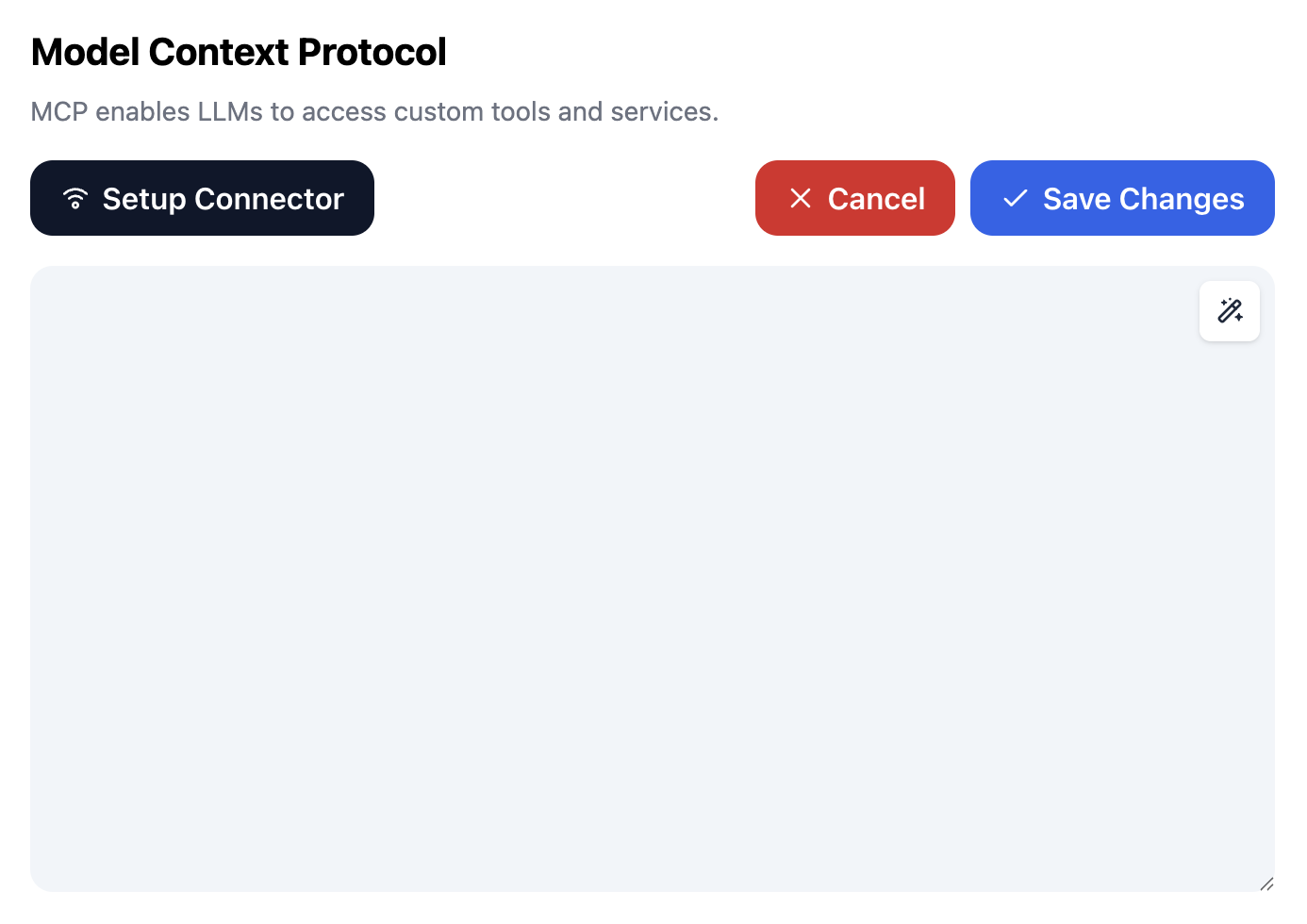
When the connector status is Ready, click Edit Servers and paste the MCP server configuration.

  1. Wait until the connector status shows Ready.
  2. Click Edit Servers.
  3. Paste the Telegram Communicator MCP server configuration.
  4. Save the server list.
  5. Refresh if you want to confirm the connector is still ready.
TypingMind MCP settings showing active server and Edit Servers button
{
  "mcpServers": {
    "telegram-communicator": {
      "command": "npx",
      "args": [
        "-y",
        "mcp-communicator-telegram"
      ]
    }
  }
}
4

Use it across models

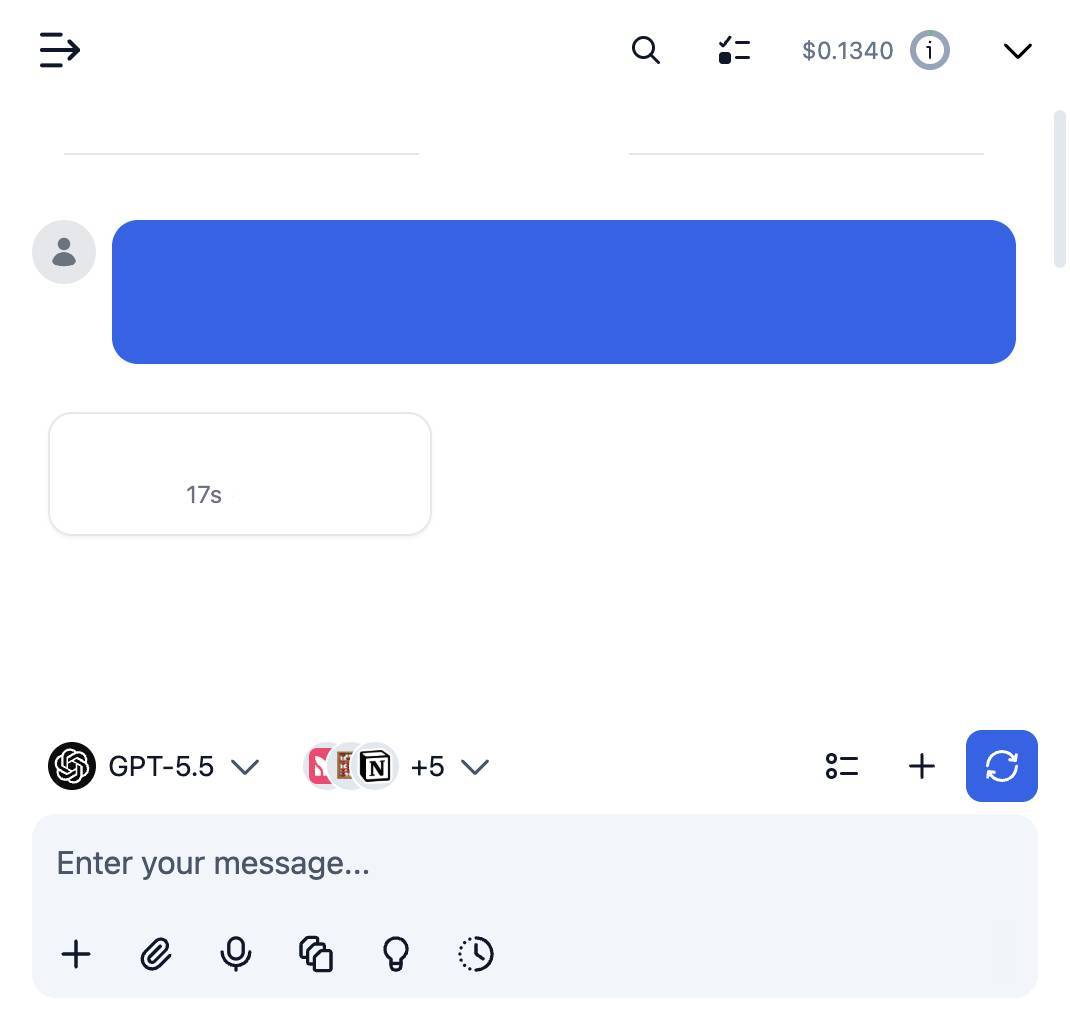
Save the server list, open Plugins, enable the Telegram Communicator MCP tools, then select any supported AI model in TypingMind and use the tools in chat or assign them to an AI agent.

  1. Open the Plugins page in TypingMind.
  2. Enable the Telegram Communicator MCP tools.
  3. Start a chat and choose the AI model you want to use.
  4. Use the MCP tools in chat or assign them to an AI agent.
  5. Switch to another AI model whenever needed without reconnecting MCP.
TypingMind chat using enabled MCP tools with a selected AI model
Can you use Telegram Communicator to help me with this task?
Telegram Communicator
Sure. I read it.
Here is what I found using Telegram Communicator.

Frequently asked questions

What is the Telegram Communicator MCP server used for?

Telegram Communicator is an MCP server that lets compatible AI clients connect to external tools and context. In TypingMind, you can add this MCP server once and make its tools available in your AI workspace.

Can I use Telegram Communicator MCP with multiple AI models in TypingMind?

Yes. TypingMind connects MCP tools at the workspace level, so you can use Telegram Communicator with different AI models such as Claude, ChatGPT, Gemini, or other models you have configured in TypingMind without setting up the MCP server separately for each model.

Why use Telegram Communicator MCP with TypingMind?

TypingMind is one of the best frontends for LLM chat because it brings multiple AI models, prompts, plugins, AI agents, API keys, and MCP tools into one workspace. With Telegram Communicator connected, you can use its MCP tools across your preferred models while keeping your chat workflow organized in TypingMind.

How do I connect Telegram Communicator MCP to TypingMind?

Telegram Communicator runs through the TypingMind local MCP connector. This is best when the MCP server needs access to local files, desktop apps, command-line tools, or private resources on your computer.

What tools does Telegram Communicator MCP provide in TypingMind?

Telegram Communicator exposes MCP capabilities that can be enabled from the TypingMind Plugins page and used in chat or assigned to AI agents.

Do I need to share my API keys with TypingMind to use Telegram Communicator MCP?

No. TypingMind is local-first and lets you keep your model providers, API keys, prompts, and MCP configuration under your control. If Telegram Communicator requires authentication, add the required headers, OAuth settings, or local configuration for that MCP server when you create the connection.

Related MCP Servers

View all

Set up your own AI workspace now

Get notified about new features and future giveaways by subscribing to our newsletter 👇