Web Fetcher logo

Web Fetcher

CommunityPopular
jae-jae

MCP server for fetch web page content using Playwright headless browser.

Publisherjae-jae
Repositoryfetcher-mcp
LanguageTypeScript
Forks
94
Stars
1K
Available tools
3
Transport typestdio, streamable-http
Categories
LicenseMIT
Links
  • Connect tools to AI workflows

    Web Fetcher exposes MCP capabilities that can be used by compatible AI clients and agents.

  • 3 available tools

    Browse the callable actions below, including names and descriptions when provided by the server.

  • Ready-to-copy setup

    Use the installation snippets to configure this server in your preferred MCP client.

  • Open source signals

    1K stars and 94 forks from the linked repository.

中文 | Deutsch | Español | français | 日本語 | 한국어 | Português | Русский

Fetcher MCP

MCP server for fetch web page content using Playwright headless browser.

🌟 Recommended: OllaMan - Powerful Ollama AI Model Manager.

Advantages

  • JavaScript Support: Unlike traditional web scrapers, Fetcher MCP uses Playwright to execute JavaScript, making it capable of handling dynamic web content and modern web applications.

  • Intelligent Content Extraction: Built-in Readability algorithm automatically extracts the main content from web pages, removing ads, navigation, and other non-essential elements.

  • Flexible Output Format: Supports both HTML and Markdown output formats, making it easy to integrate with various downstream applications.

  • Parallel Processing: The fetch_urls tool enables concurrent fetching of multiple URLs, significantly improving efficiency for batch operations.

  • Resource Optimization: Automatically blocks unnecessary resources (images, stylesheets, fonts, media) to reduce bandwidth usage and improve performance.

  • Robust Error Handling: Comprehensive error handling and logging ensure reliable operation even when dealing with problematic web pages.

  • Configurable Parameters: Fine-grained control over timeouts, content extraction, and output formatting to suit different use cases.

Quick Start

Run directly with npx:

bash
npx -y fetcher-mcp

First time setup - install the required browser by running the following command in your terminal:

bash
npx playwright install chromium

HTTP and SSE Transport

Use the --transport=http parameter to start both Streamable HTTP endpoint and SSE endpoint services simultaneously:

bash
npx -y fetcher-mcp --log --transport=http --host=0.0.0.0 --port=3000

After startup, the server provides the following endpoints:

  • /mcp - Streamable HTTP endpoint (modern MCP protocol)
  • /sse - SSE endpoint (legacy MCP protocol)

Clients can choose which method to connect based on their needs.

Debug Mode

Run with the --debug option to show the browser window for debugging:

bash
npx -y fetcher-mcp --debug

Configuration MCP

Configure this MCP server in Claude Desktop:

On MacOS: ~/Library/Application Support/Claude/claude_desktop_config.json

On Windows: %APPDATA%/Claude/claude_desktop_config.json

json
{
  "mcpServers": {
    "fetcher": {
      "command": "npx",
      "args": ["-y", "fetcher-mcp"]
    }
  }
}

Docker Deployment

Running with Docker

bash
docker run -p 3000:3000 ghcr.io/jae-jae/fetcher-mcp:latest

Deploying with Docker Compose

Create a docker-compose.yml file:

yaml
version: "3.8"

services:
  fetcher-mcp:
    image: ghcr.io/jae-jae/fetcher-mcp:latest
    container_name: fetcher-mcp
    restart: unless-stopped
    ports:
      - "3000:3000"
    environment:
      - NODE_ENV=production
    # Using host network mode on Linux hosts can improve browser access efficiency
    # network_mode: "host"
    volumes:
      # For Playwright, may need to share certain system paths
      - /tmp:/tmp
    # Health check
    healthcheck:
      test: ["CMD", "wget", "--spider", "-q", "http://localhost:3000"]
      interval: 30s
      timeout: 10s
      retries: 3

Then run:

bash
docker-compose up -d

Features

  • fetch_url - Retrieve web page content from a specified URL

    • Uses Playwright headless browser to parse JavaScript
    • Supports intelligent extraction of main content and conversion to Markdown
    • Supports the following parameters:
      • url: The URL of the web page to fetch (required parameter)
      • timeout: Page loading timeout in milliseconds, default is 30000 (30 seconds)
      • waitUntil: Specifies when navigation is considered complete, options: 'load', 'domcontentloaded', 'networkidle', 'commit', default is 'load'
      • extractContent: Whether to intelligently extract the main content, default is true
      • maxLength: Maximum length of returned content (in characters), default is no limit
      • returnHtml: Whether to return HTML content instead of Markdown, default is false
      • waitForNavigation: Whether to wait for additional navigation after initial page load (useful for sites with anti-bot verification), default is false
      • navigationTimeout: Maximum time to wait for additional navigation in milliseconds, default is 10000 (10 seconds)
      • disableMedia: Whether to disable media resources (images, stylesheets, fonts, media), default is true
      • debug: Whether to enable debug mode (showing browser window), overrides the --debug command line flag if specified
  • fetch_urls - Batch retrieve web page content from multiple URLs in parallel

    • Uses multi-tab parallel fetching for improved performance
    • Returns combined results with clear separation between webpages
    • Supports the following parameters:
      • urls: Array of URLs to fetch (required parameter)
      • Other parameters are the same as fetch_url
  • browser_install - Install Playwright Chromium browser binary automatically

    • Installs required Chromium browser binary when not available
    • Automatically suggested when browser installation errors occur
    • Supports the following parameters:
      • withDeps: Install system dependencies required by Chromium browser, default is false
      • force: Force installation even if Chromium is already installed, default is false

Tips

Handling Special Website Scenarios

Dealing with Anti-Crawler Mechanisms

  • Wait for Complete Loading: For websites using CAPTCHA, redirects, or other verification mechanisms, include in your prompt:

    Please wait for the page to fully load

    This will use the waitForNavigation: true parameter.

  • Increase Timeout Duration: For websites that load slowly:

    Please set the page loading timeout to 60 seconds

    This adjusts both timeout and navigationTimeout parameters accordingly.

Content Retrieval Adjustments

  • Preserve Original HTML Structure: When content extraction might fail:

    Please preserve the original HTML content

    Sets extractContent: false and returnHtml: true.

  • Fetch Complete Page Content: When extracted content is too limited:

    Please fetch the complete webpage content instead of just the main content

    Sets extractContent: false.

  • Return Content as HTML: When HTML format is needed instead of default Markdown:

    Please return the content in HTML format

    Sets returnHtml: true.

Debugging and Authentication

Enabling Debug Mode

  • Dynamic Debug Activation: To display the browser window during a specific fetch operation:
    Please enable debug mode for this fetch operation
    This sets debug: true even if the server was started without the --debug flag.

Using Custom Cookies for Authentication

  • Manual Login: To login using your own credentials:

    Please run in debug mode so I can manually log in to the website

    Sets debug: true or uses the --debug flag, keeping the browser window open for manual login.

  • Interacting with Debug Browser: When debug mode is enabled:

    1. The browser window remains open
    2. You can manually log into the website using your credentials
    3. After login is complete, content will be fetched with your authenticated session
  • Enable Debug for Specific Requests: Even if the server is already running, you can enable debug mode for a specific request:

    Please enable debug mode for this authentication step

    Sets debug: true for this specific request only, opening the browser window for manual login.

Development

Install Dependencies

bash
npm install

Install Playwright Browser

Install the browsers needed for Playwright:

bash
npm run install-browser

Build the Server

bash
npm run build

Debugging

Use MCP Inspector for debugging:

bash
npm run inspector

You can also enable visible browser mode for debugging:

bash
node build/index.js --debug

Related Projects

  • g-search-mcp: A powerful MCP server for Google search that enables parallel searching with multiple keywords simultaneously. Perfect for batch search operations and data collection.

License

Licensed under the MIT License
Powered by DartNode

Installation

TypingMind
Prerequisites:

Node.js 18+

{
  "mcpServers": {
    "fetcher": {
      "command": "npx",
      "args": [
        "-y",
        "fetcher-mcp"
      ]
    }
  }
}

Available Tools

  • fetch_url

    Retrieve web page content from a specified URL

  • fetch_urls

    Retrieve web page content from multiple specified URLs

  • browser_install

    Install Playwright Chromium browser binary. Call this if you get an error about the browser not being installed.

Use Web Fetcher MCP with multiple AI models

TypingMind connects MCP tools at the workspace level, so once Web Fetcher is connected, you can use it with different AI models in TypingMind instead of setting it up separately for each model. You can run MCP locally on your device or connect to a remote MCP server URL.

Option 1: Use the local connector

Use this when the MCP server needs access to local files, apps, or private resources on your computer.

1

Open the MCP settings

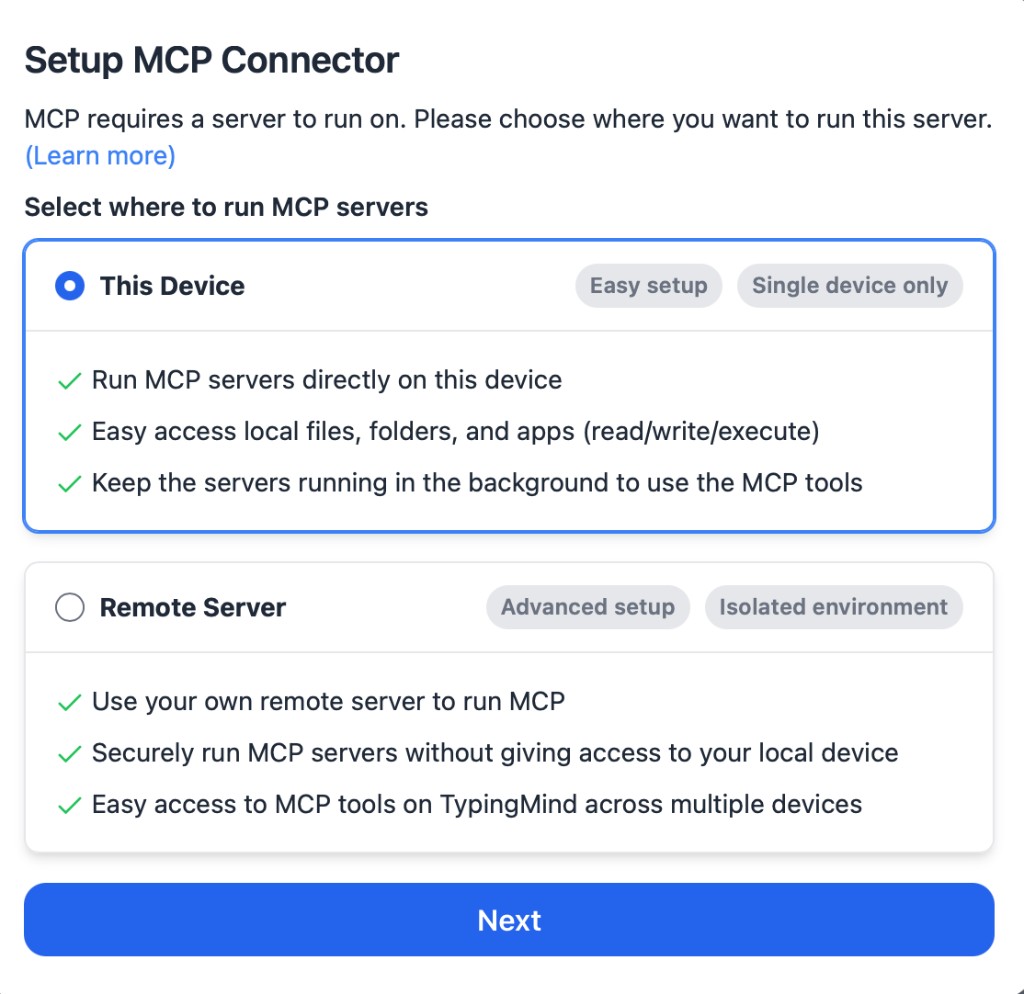
In TypingMind, go to Settings, Advanced Settings, then Model Context Protocol and choose Setup Connector.

  1. Open TypingMind in your browser.
  2. Click the Settings icon.
  3. Go to Advanced Settings.
  4. Open the Model Context Protocol section.
  5. Click Setup Connector and choose This Device.
TypingMind MCP connector setup screen with This Device selected
2

Run the connector command

Choose This Device, copy the command from TypingMind, and run it in Terminal. Keep the process running while you use MCP.

  1. Copy the setup command shown by TypingMind.
  2. Open Terminal on macOS or Windows Terminal on Windows.
  3. Paste and run the command.
  4. Approve the package install if Terminal asks you to proceed.
  5. Keep the Terminal window running while using MCP tools.
3

Add Web Fetcher as a server

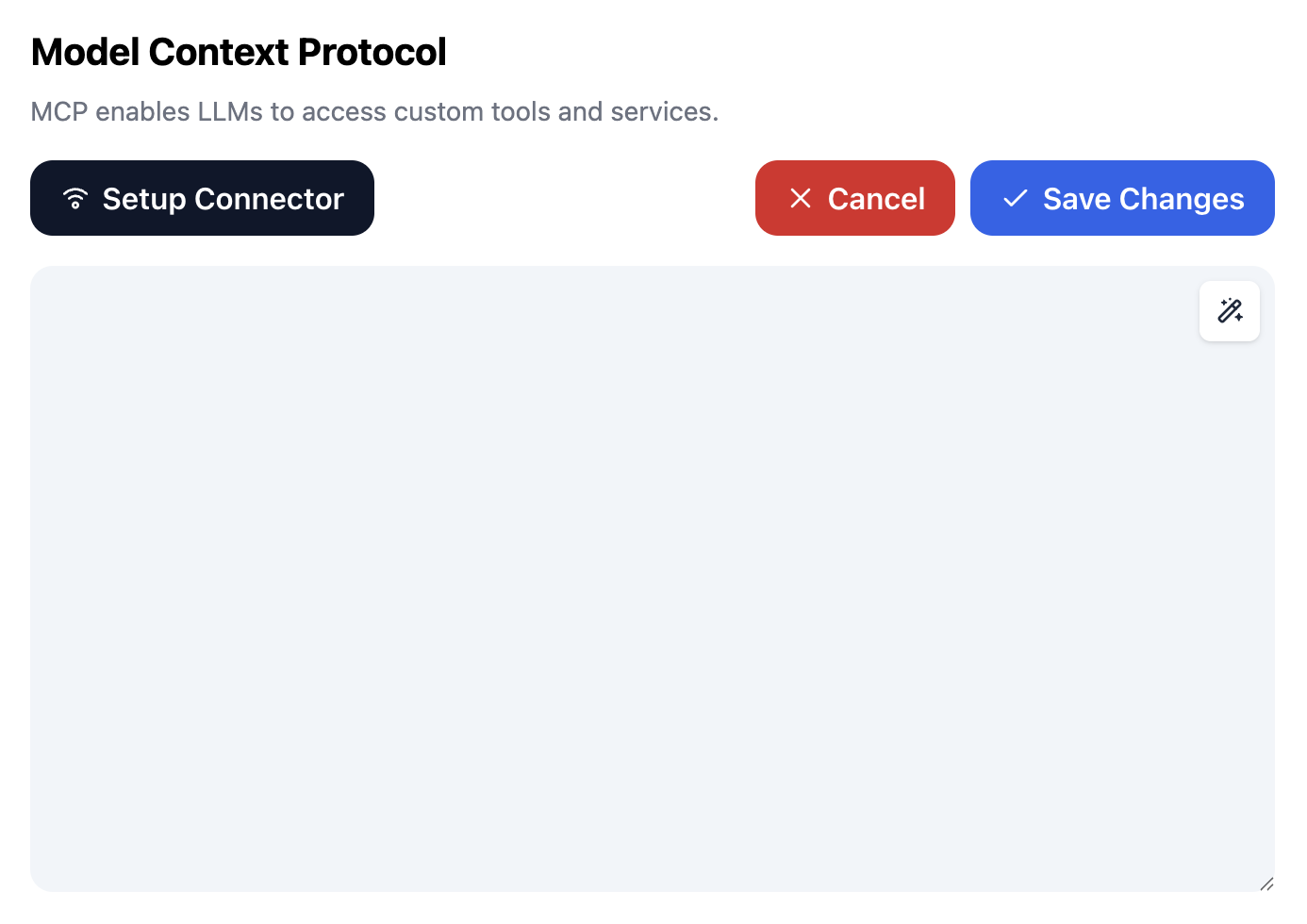
When the connector status is Ready, click Edit Servers and paste the MCP server configuration.

  1. Wait until the connector status shows Ready.
  2. Click Edit Servers.
  3. Paste the Web Fetcher MCP server configuration.
  4. Save the server list.
  5. Refresh if you want to confirm the connector is still ready.
TypingMind MCP settings showing active server and Edit Servers button
{
  "mcpServers": {
    "web-fetcher": {
      "command": "npx",
      "args": [
        "-y",
        "fetcher-mcp"
      ]
    }
  }
}
4

Use it across models

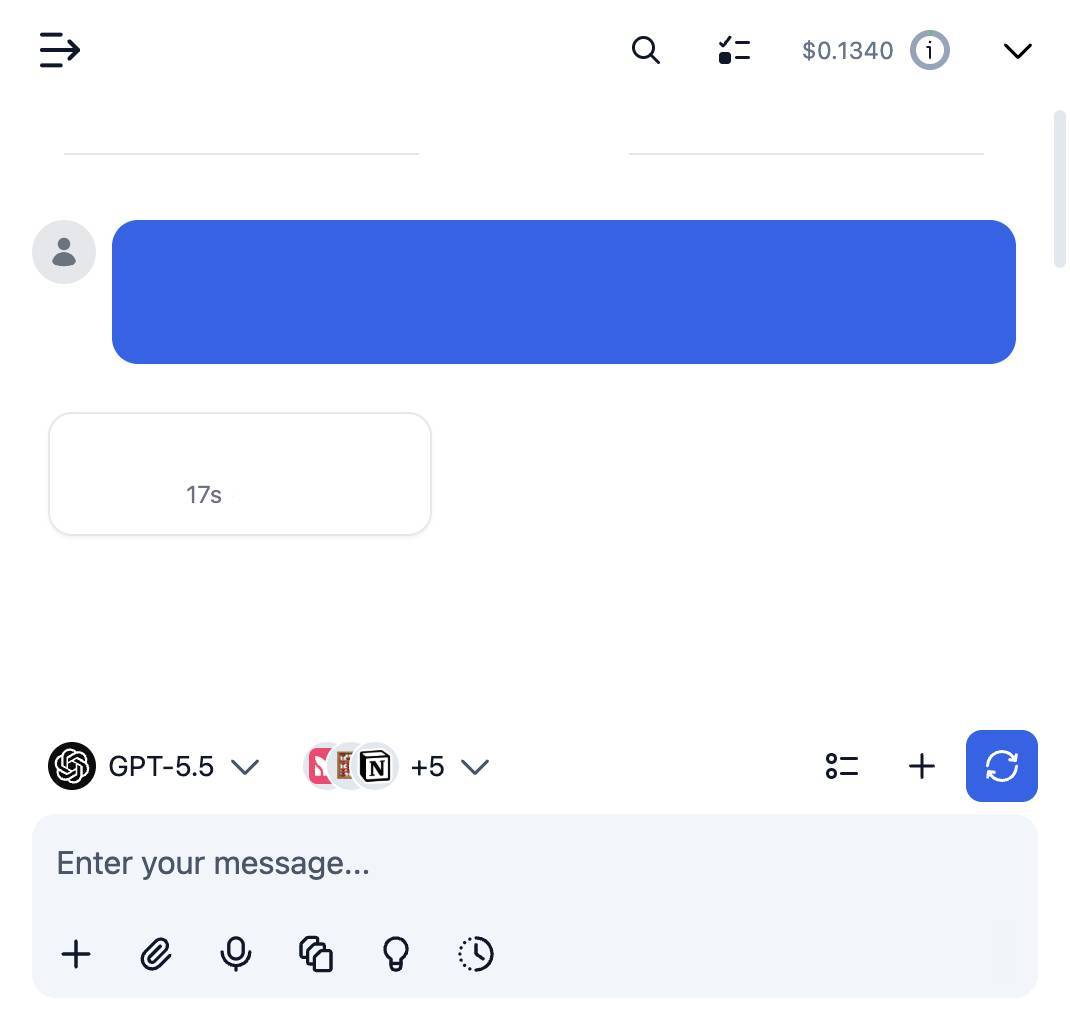
Save the server list, open Plugins, enable the Web Fetcher MCP tools, then select any supported AI model in TypingMind and use the tools in chat or assign them to an AI agent.

  1. Open the Plugins page in TypingMind.
  2. Enable the Web Fetcher MCP tools.
  3. Start a chat and choose the AI model you want to use.
  4. Use the MCP tools in chat or assign them to an AI agent.
  5. Switch to another AI model whenever needed without reconnecting MCP.
TypingMind chat using enabled MCP tools with a selected AI model
Can you use Web Fetcher to help me with this task?
Web Fetcher
Sure. I read it.
Here is what I found using Web Fetcher.

Option 2: Add an MCP server URL

Use this when Web Fetcher is already hosted remotely or your team wants one shared connector that multiple users can access.

1

Open MCP connectors

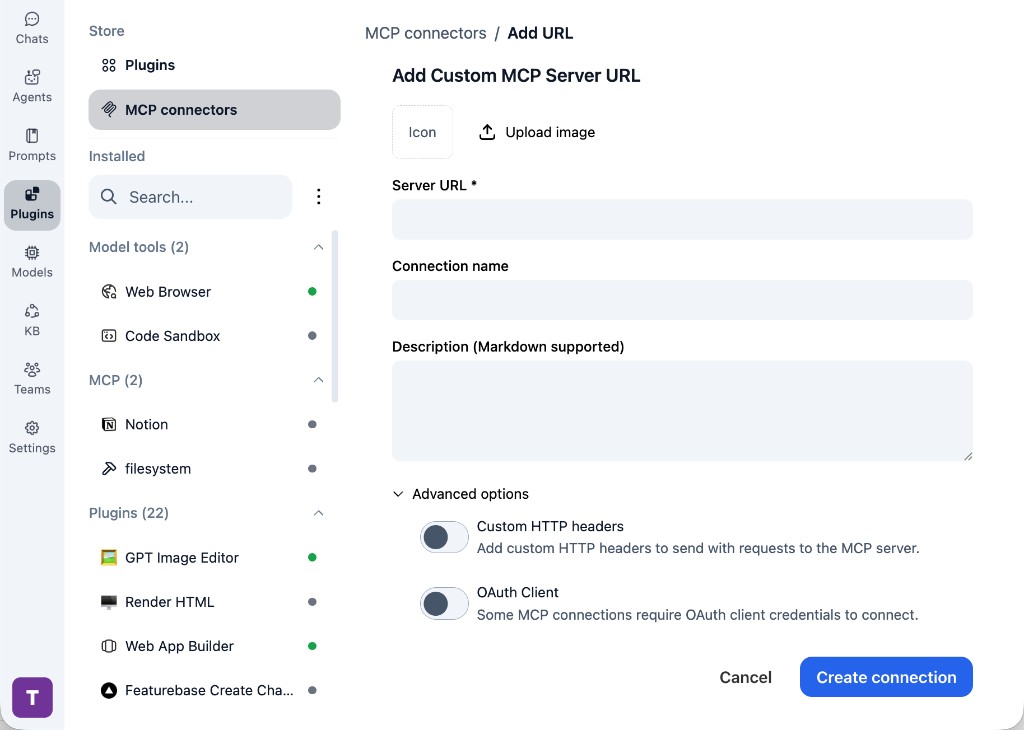
In TypingMind, go to Plugins, open MCP connectors, then choose Add URL.

  1. Open TypingMind in your browser.
  2. Go to Plugins.
  3. Open MCP connectors.
  4. Click Add URL.
TypingMind Add Custom MCP Server URL form
2

Paste the server URL

Enter your server URL in the Server URL field. Add a connection name, description, icon, custom HTTP headers, or OAuth client settings if the server requires them.

  1. Paste your server URL into the Server URL field.
  2. Enter a connection name for Web Fetcher.
  3. Add a description and icon if you want it to be easier to identify.
  4. Add custom HTTP headers or OAuth client details if the server requires authentication.
3

Create the connection

Click Create connection, then return to the Plugins list and confirm the new MCP connection is active.

  1. Click Create connection.
  2. Return to the MCP connectors list.
  3. Confirm the Web Fetcher connection appears as active.
  4. Refresh the plugin list if the connection does not appear immediately.
4

Switch models without reconnecting

Start a chat with your preferred model, enable the Web Fetcher tools from Plugins, and switch to another model whenever needed. The MCP connection stays available to the TypingMind workspace.

  1. Start a new chat in TypingMind.
  2. Select the AI model you want to use.
  3. Enable the Web Fetcher tools from Plugins.
  4. Ask the model to use the tool when needed.
  5. Switch to another AI model and reuse the same MCP connection.
TypingMind chat using enabled MCP tools with a selected AI model
Can you use Web Fetcher to help me with this task?
Web Fetcher
Sure. I read it.
Here is what I found using Web Fetcher.

Frequently asked questions

What is the Web Fetcher MCP server used for?

Web Fetcher is an MCP server that lets compatible AI clients connect to external tools and context. In TypingMind, you can add this MCP server once and make its tools available in your AI workspace.

Can I use Web Fetcher MCP with multiple AI models in TypingMind?

Yes. TypingMind connects MCP tools at the workspace level, so you can use Web Fetcher with different AI models such as Claude, ChatGPT, Gemini, or other models you have configured in TypingMind without setting up the MCP server separately for each model.

Why use Web Fetcher MCP with TypingMind?

TypingMind is one of the best frontends for LLM chat because it brings multiple AI models, prompts, plugins, AI agents, API keys, and MCP tools into one workspace. With Web Fetcher connected, you can use its MCP tools across your preferred models while keeping your chat workflow organized in TypingMind.

How do I connect Web Fetcher MCP to TypingMind?

Web Fetcher can be connected in TypingMind with the local MCP connector or by adding a remote MCP server URL. Use the local connector when the server needs access to files, apps, or private resources on your device, and use a server URL when the MCP server is hosted remotely.

What tools does Web Fetcher MCP provide in TypingMind?

Web Fetcher exposes 3 MCP tools that can be enabled from the TypingMind Plugins page and used in chat or assigned to AI agents.

Do I need to share my API keys with TypingMind to use Web Fetcher MCP?

No. TypingMind is local-first and lets you keep your model providers, API keys, prompts, and MCP configuration under your control. If Web Fetcher requires authentication, add the required headers, OAuth settings, or local configuration for that MCP server when you create the connection.

Related MCP Servers

View all

Set up your own AI workspace now

Get notified about new features and future giveaways by subscribing to our newsletter 👇