Your AI has the memory of a goldfish. Not anymore.
Persistent, self-improving memory for AI agents — built on the science of how humans remember.









▶ Try the live interactive demo · Website · Benchmarks
The problem
Every morning your AI agent treats you like a stranger. Same context re-explained. Same preferences forgotten. Every session starts from zero.
Most "memory" tools bolt a vector database onto an agent and call it done — but that's just storage. It hoards every near-duplicate until retrieval drowns in noise. A goldfish with a bigger bowl.
YourMemory is different: memory that works like a brain, not a database.
mermaidflowchart LR A["🧠 You tell your<br/>AI something"] --> B["Extract durable<br/>facts"] B --> C["Dedup + embed<br/>+ graph-link"] C --> D[("Memory<br/>store")] D -->|"related facts pile up"| E["✨ Consolidate<br/>N → 1 summary"] D -->|"stale + unused"| F["📉 Decay<br/>+ prune"] D -->|"new session"| G["♻️ Recall<br/>hybrid + graph"] E --> D G --> H["🤖 Your agent<br/>picks up where<br/>it left off"] style D fill:#0a2540,stroke:#19cdff,color:#fff style E fill:#0c2b3a,stroke:#5eead4,color:#fff style H fill:#0c2b3a,stroke:#19cdff,color:#fff
✨ What makes it different
| Feature | What it does | |
|---|---|---|
| 🧠 | Consolidation | When enough related facts accumulate, they're compressed into one clean summary and the originals are archived. Memory gets sharper over time, not bloated. |
| 📉 | Biological decay | Every memory ages on an Ebbinghaus forgetting curve. Stale, unused facts fade; important and frequently-recalled ones persist. |
| 🔗 | Entity graph | Memories link by shared people, places, and concepts — so recall surfaces what you forgot to ask for. |
| ♻️ | Survives context resets | When the context window compacts, YourMemory hands the working context back — no re-reading files to figure out where you were. |
| 🔒 | Tamper-evident audit trail | Every read / write / delete is logged in a hash-chained ledger. Alter one record and the chain breaks. |
| 👥 | Team memory pools | Role-based shared memory, so a whole team's agents draw on the same institutional knowledge — with private memories kept private. |
| 🛡️ | Data rights built in | One-command export (right to access) and right-to-forget (purge), plus SOC 2-aligned controls. |
| 🔌 | MCP-native & local-first | Works with Claude, Cursor, Cline, Windsurf, or any MCP client. Runs entirely on your machine — no API key, nothing leaves your system. |
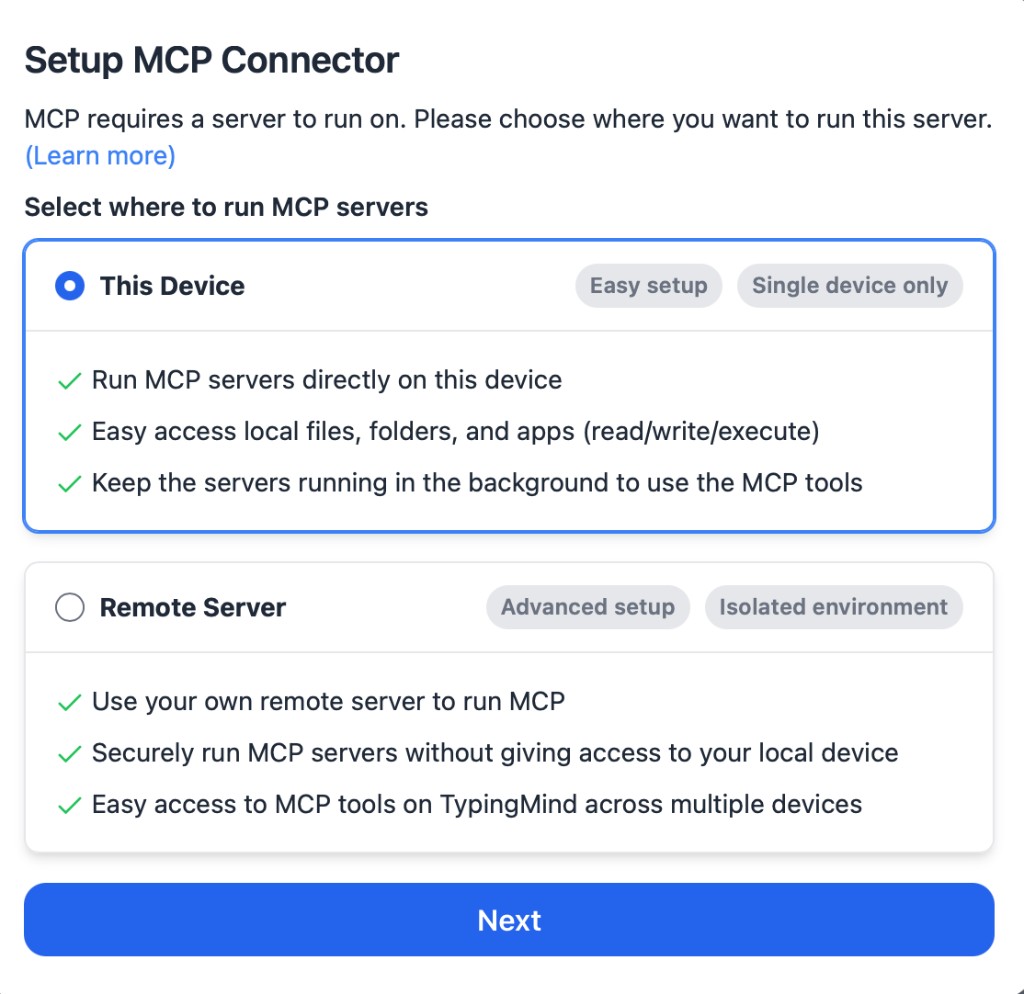
One command to install. DuckDB by default (zero setup), Postgres + pgvector for teams.
Table of Contents
- 🏆 Benchmarks
- 🚀 Quick Start
- 🧠 How Memory Works
- 🔒 Trust & Audit Trail
- 👥 Team Memory Pools
- 🛡️ Data Rights & Compliance
- 🎛️ Dashboards
- 🔧 MCP Tools
- ⚡ Ask Without an LLM Call
- 🔀 API Proxy — Guaranteed Memory
- 🏗️ Architecture & Stack
- 🩺 Troubleshooting
- 🤝 Contributing
🏆 Benchmarks
Three external datasets. Every number independently reproducible — benchmark code lives in the repo. Full methodology in BENCHMARKS.md.
LoCoMo-10 — multi-session conversational memory
mermaidxychart-beta title "Recall@5 · LoCoMo-10 (higher is better)" x-axis ["Mem0", "Zep Cloud", "Supermemory", "YourMemory"] y-axis "Recall@5 percent" 0 --> 70 bar [18, 28, 31, 59]
2× better recall than Zep Cloud across all 10 samples. *Supermemory and Mem0 exhausted free-tier quotas mid-benchmark; scores computed over the full 1,534 pairs.
LongMemEval-S — 500 questions, ~53 distractor sessions each
The hardest standard benchmark for long-term memory. Each question is buried in ~53 sessions.
| Metric | Score |
|---|---|
| Recall@5 (any gold session in top-5) | 89.4% |
| Recall-all@5 (all gold sessions in top-5) | 84.8% |
| nDCG@5 (ranking quality) | 87.4% |
HotpotQA — 200 multi-hop questions
| System | BOTH_FOUND@5 |
|---|---|
| YourMemory (vector + BM25 + entity graph) | 71.5% |
| YourMemory (no entity edges) | 59.5% |
Entity graph edges add +12 pp — they traverse from Fact 1 to Fact 2 even when Fact 2 has low embedding similarity to the query.
Writeup: I built memory decay for AI agents using the Ebbinghaus forgetting curve
🚀 Quick Start
Python 3.11–3.14. No Docker, no database setup. All memory stored locally in ~/.yourmemory/.
bashpip install yourmemory yourmemory-register <your-token> yourmemory-setup
Get your token: visit yourmemoryai.xyz → enter your email → verify with a 6-digit code → copy your token.
yourmemory-setup auto-detects and wires up Claude Code, Claude Desktop, Cursor, Windsurf, and Cline, then asks which backend to use:
- DuckDB — zero setup, single local file (default)
- Postgres — shared / production; you provide a
DATABASE_URL(needs the pgvector extension)
Optional — smarter local extraction: YourMemory works out of the box with built-in heuristics. For higher-quality, fully-local fact extraction, install Ollama and
yourmemory-setuppulls the model (qwen2.5:7b, ~4.7 GB) automatically. Prefer the cloud? SetYOURMEMORY_EXTRACT_BACKEND=anthropic.
Or install from a binary — no Python required
Prefer not to touch pip? Grab the standalone binary for your platform from the latest release:
| Platform | Asset |
|---|---|
| macOS (Apple Silicon) | yourmemory-macos-arm64.tar.gz |
| macOS (Intel) | yourmemory-macos-x86_64.tar.gz |
| Linux (x86-64) | yourmemory-linux-x86_64.tar.gz |
| Windows (x86-64) | yourmemory-windows-x86_64.exe.zip |
bash# macOS / Linux — download, extract, run tar -xzf yourmemory-macos-arm64.tar.gz ./yourmemory-macos-arm64 register <your-token> ./yourmemory-macos-arm64 setup ./yourmemory-macos-arm64 # start the server
One executable handles every command: register, setup, ask "<question>", path, and (with no args) starts the server.
Fully self-contained & offline — the binary bundles Python, every dependency, and both ML models (the embedding model + spaCy). Nothing is downloaded on first run. The trade-off is size (~2 GB). Build your own with a single command — ./build-binary.sh — and multi-platform release binaries are produced automatically by the build workflow.
🧠 How Memory Works
YourMemory treats memory as a living system — it grows, consolidates, forgets, and connects, the way a brain does.
Consolidation — N → 1
Most memory tools just keep growing. YourMemory watches for clusters of related facts and, once enough accumulate, compresses them into a single clean summary — archiving the originals (never deleting, so nothing is lost).
mermaidflowchart LR subgraph before [Related facts pile up] A1["Railway uses Nixpacks"] A2["Railway on Pro plan"] A3["Railway env vars hold<br/>the Postgres URL"] A4["Deploys on Railway<br/>with Postgres"] end before --> C{"cluster +<br/>LLM summarize"} C --> S["✨ Summary<br/>Deploys on Railway (Pro,<br/>Nixpacks) with Postgres<br/>via env vars"] C -.->|"archived, recoverable"| ARC[("archive")] style S fill:#0a2540,stroke:#5eead4,color:#fff style C fill:#0c2b3a,stroke:#19cdff,color:#fff
Real example from one production store: 444 memories → 16 summaries — same knowledge, a fraction of the noise. Consolidation is event-driven (triggered when related memories pile up), not a blind nightly job.
Decay — the forgetting curve
Memory strength decays exponentially. Importance and recall frequency slow that decay:
effective_λ = base_λ × (1 − importance × 0.8) strength = clamp(importance × e^(−effective_λ × active_days) × (1 + recall_count × 0.2), 0, 1)
active_days counts only days you were active — vacations don't cause memory loss. Memories below strength 0.05 are pruned automatically. Each category ages at its own rate:
| Category | Half-life | Best for |
|---|---|---|
strategy | ~38 days | Patterns that worked, architectural decisions |
fact | ~24 days | Preferences, identity, stable knowledge |
assumption | ~19 days | Inferred context, uncertain beliefs |
failure | ~11 days | Errors, wrong approaches, environment-specific issues |
Chain-aware pruning: a decayed memory is kept alive if any graph neighbour is still strong — load-bearing context survives even when rarely queried directly.
Hybrid Retrieval — Vector + BM25 + Graph
Recall runs in two rounds so it surfaces both what you asked for and what you forgot to ask for:
mermaidflowchart LR Q["query"] --> R1["Vector + BM25<br/>hybrid search"] R1 --> R2["Graph expansion<br/>(what you forgot to ask)"] R2 --> S["rank by<br/>similarity × strength"] S --> OUT["🎯 Ranked memories"] style OUT fill:#0a2540,stroke:#19cdff,color:#fff
Subject-aware deduplication runs before every store — it embeds the subject of each sentence so "Sachit uses DuckDB" and "YourMemory uses DuckDB" stay separate (different entities), while "YourMemory uses DuckDB" and "YourMemory stores data in DuckDB" merge (same entity). No hardcoded word lists; generalises to any language.
🔒 Trust & Audit Trail
Enterprises won't let an opaque black box store their data. So every operation — read, write, update, delete, consolidation — is appended to a hash-chained, tamper-evident audit log.
mermaidflowchart LR E0["GENESIS"] --> E1 subgraph E1 [Event 1] H1["row_hash =<br/>sha256(prev + data)"] end E1 --> E2 subgraph E2 [Event 2] H2["row_hash =<br/>sha256(#1.hash + data)"] end E2 --> E3 subgraph E3 [Event 3] H3["row_hash =<br/>sha256(#2.hash + data)"] end E3 --> V{"GET /audit/verify"} V -->|chain intact| OK["✅ verified"] V -->|any row altered| BAD["❌ chain breaks<br/>at that row"] style OK fill:#0a2540,stroke:#5eead4,color:#fff style BAD fill:#3a0c14,stroke:#fb7185,color:#fff
Each row records the timestamp, actor user + agent, action, operation, target memory, source (http vs mcp), and the previous row's hash. Change any historical record and verify_chain() pinpoints exactly where the chain broke.
bashGET /audit # browse the trail (filter by user / action / operation) GET /audit/verify # cryptographically verify the chain is untampered POST /audit/prune # retention-based cleanup (90-day minimum, never lower)
Audit logging is fail-open — it never blocks a memory operation — and read/list events from the dashboard's own render loop are excluded, so the trail stays signal, not noise.
👥 Team Memory Pools
Give a whole team's agents one shared brain — without leaking anyone's private context. Memories are either shared (visible to the pool) or private (visible only to their owner).
mermaidflowchart TB P(("🧠 Team Pool<br/>shared memory")) A["Alice's agent"] <-->|shared| P B["Bob's agent"] <-->|shared| P C["Carol's agent"] <-->|shared| P A -. private .-> AP["🔒 Alice-only"] B -. private .-> BP["🔒 Bob-only"] style P fill:#0a2540,stroke:#19cdff,color:#fff style AP fill:#0c1424,stroke:#5a6b80,color:#8294a8 style BP fill:#0c1424,stroke:#5a6b80,color:#8294a8
Role-based access is enforced per agent — what one engineer's agent learns, the whole team benefits from instantly; sensitive context stays scoped to its owner.
bashPOST /pools # create a pool POST /pools/{id}/members # add a member (with role) POST /pools/{id}/memories # contribute a shared memory POST /pools/{id}/retrieve # recall across the pool
🛡️ Data Rights & Compliance
Because memory that stores real data needs the controls to be trusted with it:
| Right | Endpoint | What it does |
|---|---|---|
| Access (DSAR export) | GET /users/{id}/export | Full export of everything stored for a user |
| Erasure (right to forget) | DELETE /users/{id}/memories | One-command purge of a user's memories |
| Portability | POST /users/{id}/import | Re-import a previous export |
| Recoverability | GET /users/{id}/archive | Retrieve consolidated-away originals |
Combined with the hash-chained audit trail and 90-day retention floor, these map directly onto the controls documented in SECURITY.md (SOC 2-aligned).
🎛️ Dashboards
Two built-in browser UIs — no extra setup, they start automatically with the server.
Memory Dashboard — http://localhost:3033/ui
A full read/write view with Memories · Audit · Pools tabs: stats bar (Strong / Fading / Near-prune), per-agent tabs, memory cards with live strength bars, category filters, the audit trail, and pool management.
Graph Visualiser — http://localhost:3033/graph
An interactive force-directed map of how memories connect — root memory as a bright node, neighbours color-coded by category, edge thickness = connection strength. Drag, zoom, and click any node for full content.
http://localhost:3033/graph?memoryId=42&userId=alex&depth=2
🔧 MCP Tools
Three tools, called by your AI automatically.
| Tool | When your AI calls it | What it does |
|---|---|---|
recall_memory(query, current_path?) | Start of every task | Surfaces memories ranked by similarity × decay strength; spatial boost for path-matched memories |
store_memory(content, importance, category?, context_paths?) | After learning something new | Embeds, deduplicates, stores with decay; tags optional file/dir paths |
update_memory(id, new_content, importance) | When a stored fact is outdated | Re-embeds and replaces; logs the change to the audit trail |
python# Store with spatial context store_memory( "Alex prefers tabs over spaces in Python", importance=0.9, category="fact", context_paths=["/projects/backend"], ) # Next session — spatial boost fires when working in that directory recall_memory("Python formatting", current_path="/projects/backend") # → {"content": "Alex prefers tabs over spaces in Python", "strength": 0.87}
⚡ Ask Without an LLM Call
The only memory system that can answer questions without making any LLM API call:
bashyourmemory ask "what database does this project use" # → YourMemory uses DuckDB locally and Postgres in production. yourmemory ask "how do I fix a kubernetes deployment" # → Not enough memory context to answer without an LLM.
When memory is strong enough it answers instantly — zero tokens, zero cloud cost, zero latency. When it isn't, it declines cleanly rather than hallucinating. Your query never leaves your machine.
🔀 API Proxy — Guaranteed Memory
MCP tools are called at the AI's discretion. The API proxy removes that uncertainty — it intercepts every LLM call, injects relevant memories automatically, and handles store_memory / update_memory with no model configuration.
Start the server (yourmemory), then point your client at localhost:3033:
pythonfrom anthropic import Anthropic client = Anthropic( api_key="sk-ant-...", base_url="http://localhost:3033/proxy/anthropic", default_headers={"X-YourMemory-User": "alex"}, # per-user memory ) # Memory is injected automatically — no other changes needed response = client.messages.create( model="claude-opus-4-8", max_tokens=1024, messages=[{"role": "user", "content": "What database do I use?"}], )
OpenAI works identically via base_url="http://localhost:3033/proxy/openai".
🏗️ Architecture & Stack
mermaidflowchart LR C["Your AI client<br/>Claude · Cursor · any MCP"] <--> Y["🧠 YourMemory"] Y --> M[("Memory<br/>store")] Y --> A[("Audit<br/>ledger")] style Y fill:#0a2540,stroke:#19cdff,color:#fff style M fill:#0c1a2c,stroke:#5eead4,color:#fff style A fill:#0c1a2c,stroke:#5eead4,color:#fff
| Component | Role |
|---|---|
| DuckDB | Default vector store — zero setup, native cosine similarity |
| PostgreSQL + pgvector | Optional — for teams or large datasets |
| NetworkX | Default graph backend (~/.yourmemory/graph.pkl) |
| Neo4j | Optional graph backend |
| sentence-transformers | Local embeddings (multi-qa-mpnet-base-dot-v1, 768 dims) |
| spaCy | Local NLP for deduplication and entity extraction |
| APScheduler | Automatic decay + pruning |
🩺 Troubleshooting
Writes hang / time out (DuckDB single-writer lock). If both the MCP server and the HTTP server run at once, they compete for the DuckDB write lock. Fix:
bashpkill -f yourmemory 2>/dev/null || true rm -f ~/.yourmemory/memories.duckdb.wal ~/.yourmemory/memories.duckdb.lock 2>/dev/null || true # restart your client
Running Claude Desktop (MCP) and Claude Code (hooks) simultaneously? Use SQLite instead — it handles concurrent readers/writers cleanly:
DATABASE_URL=sqlite:///~/.yourmemory/memories.db
🤝 Contributing
PRs welcome — see CONTRIBUTORS.md.
📚 Dataset References
- LoCoMo — Maharana et al. (2024)
- LongMemEval — Wu et al. (2024)
- HotpotQA — Yang et al. (2018)
📄 License
Copyright 2026 Sachit Misra — Licensed under CC-BY-NC-4.0.
Free for personal use, education, academic research, and open-source projects. Commercial use requires a separate written agreement → mishrasachit1@gmail.com