Kite MCP Server
A Model Context Protocol (MCP) server that provides AI assistants with secure access to the Kite Connect trading API. This server enables AI agents to retrieve market data, manage portfolios, and execute trades through a standardized interface.
TL;DR for Traders
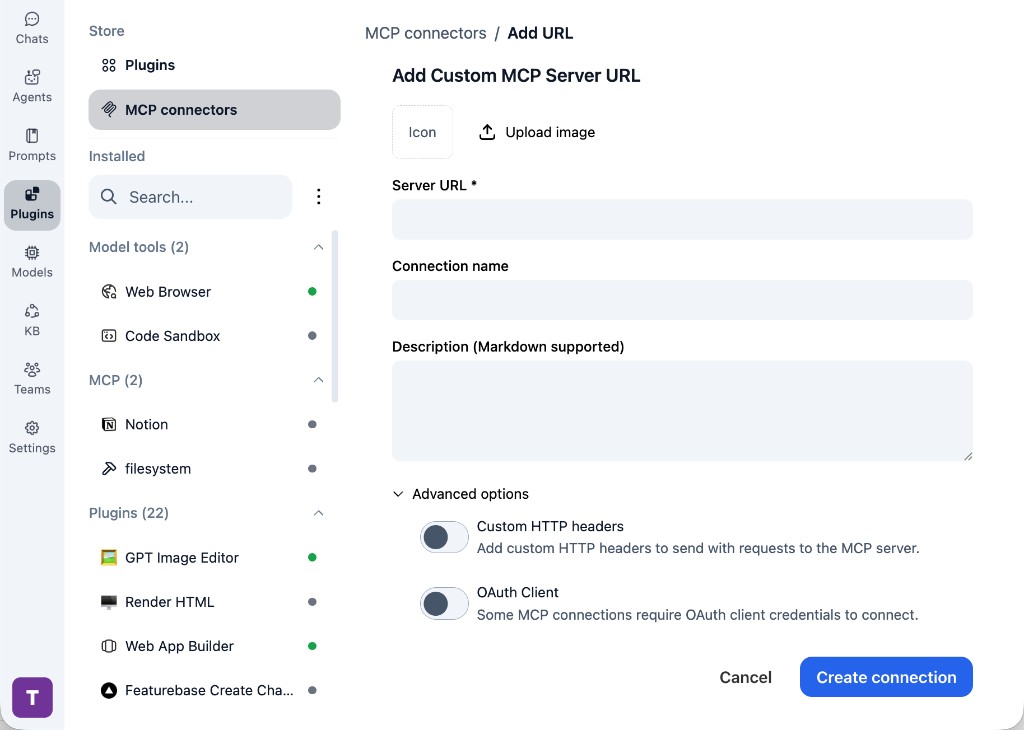
Want to use AI with your Kite trading account? Just add https://mcp.kite.trade/mcp to your AI client configuration. No installation or API keys required - it's hosted and ready to use.
Features
- Portfolio Management: View holdings, positions, margins, and mutual fund investments
- Order Management: Place, modify, and cancel orders with full order history
- GTT Orders: Good Till Triggered order management
- Market Data Access: Real-time quotes, historical data, OHLC data
- Pagination Support: Automatic pagination for large datasets (holdings, orders, trades)
- Comprehensive Coverage: Implements most Kite Connect API endpoints
- Multiple Deployment Modes: stdio, HTTP, SSE, and hybrid mode (production)
- Built-in Documentation: Auto-served documentation at runtime
Quick Start
Hosted Version (Recommended)
The easiest way to get started is with our hosted version at mcp.kite.trade. Both /mcp and /sse endpoints are available - no installation or API keys required on your end.
Quick Setup: Add the following to your MCP configuration:
https://mcp.kite.trade/mcp
Recommended: Use the new HTTP mode (/mcp endpoint) for better performance and reliability. You can use mcp-remote to connect to the hosted server.
For self-hosting with your own API keys, follow the installation steps below.
Prerequisites
- For hosted version (recommended): Nothing! Just use
https://mcp.kite.trade/mcp - For self-hosting: Go 1.21 or later
- For self-hosting: Valid Kite Connect API credentials
Getting started
bashgit clone https://github.com/zerodha/kite-mcp-server cd kite-mcp-server
Configuration
Create a .env file with your Kite Connect credentials:
envKITE_API_KEY=your_api_key KITE_API_SECRET=your_api_secret APP_MODE=http APP_PORT=8080 APP_HOST=localhost PUBLIC_BASE_URL=http://localhost:8080
You can also use the provided justfile to initialize the config.
bashjust init-env
Running the Server
bash# Build and run go build -o kite-mcp-server ./kite-mcp-server # Or run directly go run main.go
The server will start and serve a status page at http://localhost:8080/
Client Integration
Setup Guide
- Claude Desktop (Hosted Mode) - Recommended
- Claude Desktop (HTTP Mode) - Recommended
- Claude Desktop (SSE Mode)
- Claude Desktop (stdio Mode)
- Other MCP Clients
Claude Desktop (Hosted Mode)
For the hosted version, add to your Claude Desktop configuration (~/.config/Claude/claude_desktop_config.json):
json{ "mcpServers": { "kite": { "command": "npx", "args": ["mcp-remote", "https://mcp.kite.trade/mcp"] } } }
Claude Desktop (HTTP Mode)
Add to your Claude Desktop configuration (~/.config/Claude/claude_desktop_config.json):
json{ "mcpServers": { "kite": { "command": "npx", "args": ["mcp-remote", "http://localhost:8080/mcp", "--allow-http"], "env": { "APP_MODE": "http", "KITE_API_KEY": "your_api_key", "KITE_API_SECRET": "your_api_secret" } } } }
Claude Desktop (SSE Mode)
Add to your Claude Desktop configuration (~/.config/Claude/claude_desktop_config.json):
json{ "mcpServers": { "kite": { "command": "npx", "args": ["mcp-remote", "http://localhost:8080/sse", "--allow-http"], "env": { "APP_MODE": "sse", "KITE_API_KEY": "your_api_key", "KITE_API_SECRET": "your_api_secret" } } } }
Claude Desktop (stdio Mode)
For self-hosted installations, you must first build the binary:
bashgo build -o kite-mcp-server
Then add to your Claude Desktop configuration (~/.config/Claude/claude_desktop_config.json):
json{ "mcpServers": { "kite": { "command": "/full/path/to/your/kite-mcp-server", "env": { "APP_MODE": "stdio", "KITE_API_KEY": "your_api_key", "KITE_API_SECRET": "your_api_secret" } } } }
Important: Use the full absolute path to your built binary. For example:
/home/username/kite-mcp-server/kite-mcp-server(Linux)/Users/username/kite-mcp-server/kite-mcp-server(macOS)C:\Users\username\kite-mcp-server\kite-mcp-server.exe(Windows)
Other MCP Clients
For other MCP-compatible clients, use the hosted endpoint https://mcp.kite.trade/mcp with mcp-remote or configure your client to connect directly to the HTTP endpoint.
Available Tools
Setup & Authentication
login- Login to Kite API and generate authorization link
Market Data
get_quotes- Get real-time market quotesget_ltp- Get last traded priceget_ohlc- Get OHLC dataget_historical_data- Historical price datasearch_instruments- Search trading instruments
Portfolio & Account
get_profile- User profile informationget_margins- Account marginsget_holdings- Portfolio holdingsget_positions- Current positionsget_mf_holdings- Mutual fund holdings
Orders & Trading
place_order- Place new ordersmodify_order- Modify existing orderscancel_order- Cancel ordersget_orders- List all ordersget_trades- Trading historyget_order_history- Order execution historyget_order_trades- Get trades for a specific order
GTT Orders
get_gtts- List GTT ordersplace_gtt_order- Create GTT ordersmodify_gtt_order- Modify GTT ordersdelete_gtt_order- Delete GTT orders
API Coverage
This server implements the majority of Kite Connect API endpoints and also provides additional tools.
Development
Development Environment
This project includes a Nix flake for consistent development environments:
bash# Enter development shell nix develop # Or with direnv direnv allow
Using Just Commands
Install Just for convenient development commands:
bashjust build # Build the project just run # Run the server just test # Run tests just lint # Format and lint code just coverage # Generate coverage report
Running Tests
Requirements:
- Go 1.23+ with
GOEXPERIMENT=synctest(required for timing-dependent tests)
bash# Run all tests just test # With coverage just coverage # With race detector just test-race # Direct go command (if you prefer) CGO_ENABLED=0 GOEXPERIMENT=synctest go test -v ./...
Synctest Integration
This project requires Go's synctest package for time-dependent tests (session expiry, clock skew tolerance). All timing tests use synctest.Run() for:
- Fast execution: Time-dependent tests complete in milliseconds instead of minutes
- Deterministic timing: No flaky timing-based test failures
- Controlled time: Tests can advance time without actual delays
The justfile automatically includes GOEXPERIMENT=synctest in all test commands.
Configuration Options
| Environment Variable | Default | Description |
|---|---|---|
KITE_API_KEY | Required | Your Kite Connect API key |
KITE_API_SECRET | Required | Your Kite Connect API secret |
APP_MODE | http | Server mode: stdio, http, sse, or hybrid |
APP_PORT | 8080 | Server port (HTTP/SSE/hybrid modes) |
APP_HOST | localhost | Server host / bind address (HTTP/SSE/hybrid modes) |
PUBLIC_BASE_URL | derived | Public base URL used for browser-facing auth links |
EXCLUDED_TOOLS | (empty) | Comma-separated list of tools to exclude from registration |
Note: In production, we use hybrid mode which supports both /sse and /mcp endpoints, making both HTTP and SSE protocols available for different client needs.
Tool Exclusion
You can exclude specific tools by setting the EXCLUDED_TOOLS environment variable with a comma-separated list of tool names. This is useful for creating read-only instances.
Example:
envEXCLUDED_TOOLS=place_order,modify_order,cancel_order
The hosted version at mcp.kite.trade excludes potentially destructive trading operations for security. For accessing the other operations you can generate your own API keys and run the server locally.
Contributing
- Fork the repository
- Create a feature branch
- Make your changes
- Add tests for new functionality
- Run
just lintandjust test - Submit a pull request
License
This project is licensed under the MIT License - see the LICENSE file for details.
Support
For bugs and general suggestions, please use GitHub Discussions.
For Kite Connect API documentation, visit: https://kite.trade/docs/connect/