Facebook MCP Server logo

Facebook MCP Server

Community
HagaiHen

Facebook MCP server for automating posts, comment moderation, insights, and sentiment filtering.

PublisherHagaiHen
Repositoryfacebook-mcp-server
LanguagePython
Forks
78
Stars
225
Available tools
0
Transport typestdio
Categories
LicenseMIT
Links
  • Connect tools to AI workflows

    Facebook MCP Server exposes MCP capabilities that can be used by compatible AI clients and agents.

  • 0 available tools

    Browse the callable actions below, including names and descriptions when provided by the server.

  • Ready-to-copy setup

    Use the installation snippets to configure this server in your preferred MCP client.

  • Open source signals

    225 stars and 78 forks from the linked repository.

Facebook MCP Server

This project is a MCP server for automating and managing interactions on a Facebook Page using the Facebook Graph API. It exposes tools to create posts, moderate comments, fetch post insights, and filter negative feedback โ€” ready to plug into Claude, or other LLM-based agents.

Trust Score


๐Ÿค– What Is This?

This MCP provides a suite of AI-callable tools that connect directly to a Facebook Page, abstracting common API operations as LLM-friendly functions.

โœ… Benefits

  • Empowers social media managers to automate moderation and analytics.
  • Seamlessly integrates with Claude Desktop or any Agent client.
  • Enables fine-grained control over Facebook content from natural language.

๐Ÿ“ฆ Features

ToolDescription
post_to_facebookCreate a new Facebook post with a message.
reply_to_commentReply to a specific comment on a post.
get_page_postsRetrieve recent posts from the Page.
get_post_commentsFetch comments on a given post.
delete_postDelete a specific post by ID.
delete_commentDelete a specific comment by ID.
hide_commentHide a comment from public view.
unhide_commentUnhide a previously hidden comment.
delete_comment_from_postAlias for deleting a comment from a specific post.
filter_negative_commentsFilter out comments with negative sentiment keywords.
get_number_of_commentsCount the number of comments on a post.
get_number_of_likesCount the number of likes on a post.
get_post_impressionsGet total impressions on a post.
get_post_impressions_uniqueGet number of unique users who saw the post.
get_post_impressions_paidGet number of paid impressions on the post.
get_post_impressions_organicGet number of organic impressions on the post.
get_post_engaged_usersGet number of users who engaged with the post.
get_post_clicksGet number of clicks on the post.
get_post_reactions_like_totalGet total number of 'Like' reactions.
get_post_top_commentersGet the top commenters on a post.
post_image_to_facebookPost an image with a caption to the Facebook page.
send_dm_to_userSend a direct message to a user.
update_postUpdates an existing post's message.
schedule_postSchedule a post for future publication.
get_page_fan_countRetrieve the total number of Page fans.
get_post_share_countGet the number of shares on a post.
get_post_reactions_breakdownGet all reaction counts for a post in one call.
bulk_delete_commentsDelete multiple comments by ID.
bulk_hide_commentsHide multiple comments by ID.
bulk_unhide_commentsUnhide multiple comments by ID.
get_comment_repliesGet all replies to a specific comment.
get_post_permalinkGet the permalink URL of a post.
get_scheduled_postsList all scheduled (unpublished) posts on the Page.
get_page_infoGet extended Page details (name, about, category, website).

๐Ÿš€ Setup & Installation

1. Clone the Repository

bash
git clone https://github.com/your-org/facebook-mcp-server.git
cd facebook-mcp-server

2. ๐Ÿ› ๏ธ Installation

Install dependencies using uv, a fast Python package manager: If uv is not already installed, run:

bash
curl -Ls https://astral.sh/uv/install.sh | bash

Once uv is installed, install the project dependencies:

bash
uv pip install -r requirements.txt

3. Set Up Environment

Create a .env file in the root directory and add your Facebook Page credentials. You can obtain these from https://developers.facebook.com/tools/explorer

bash
FACEBOOK_ACCESS_TOKEN=your_facebook_page_access_token
FACEBOOK_PAGE_ID=your_page_id

๐Ÿงฉ Using with Claude Desktop

To set up the FacebookMCP in Clade:

  1. Open Clade.
  2. Go to Settings โ†’ Developer โ†’ Edit Config.
  3. In the config file that opens, add the following entry:
bash
"FacebookMCP": {
  "command": "uv",
  "args": [
    "run",
    "--with",
    "mcp[cli]",
    "--with",
    "requests",
    "mcp",
    "run",
    "/path/to/facebook-mcp-server/server.py"
  ]
}

โœ… Youโ€™re Ready to Go!

Thatโ€™s it โ€” your Facebook MCP server is now fully configured and ready to power Claude Desktop. You can now post, moderate, and measure engagement all through natural language prompts!


๐Ÿค Contributing

Contributions, issues, and feature requests are welcome!
Feel free to fork the repo and submit a pull request.

  • Create a branch: git checkout -b feature/YourFeature
  • Commit your changes: git commit -m 'feat: add new feature'
  • Push to the branch: git push origin feature/YourFeature
  • Open a pull request ๐ŸŽ‰

Installation

TypingMind
{
  "mcpServers": {
    "facebook-mcp-server": {
      "command": "uv",
      "args": [
        "run",
        "--directory",
        "/absolute/path/to/facebook-mcp-server",
        "facebook-mcp-server"
      ]
    }
  }
}

Use Facebook MCP Server MCP with multiple AI models

TypingMind connects MCP tools at the workspace level, so once Facebook MCP Server is connected, you can use it with different AI models in TypingMind instead of setting it up separately for each model. This MCP runs locally through the TypingMind MCP connector on your device.

Setup guide to use the local connector

Use this when the MCP server needs access to local files, apps, or private resources on your computer.

1

Open the MCP settings

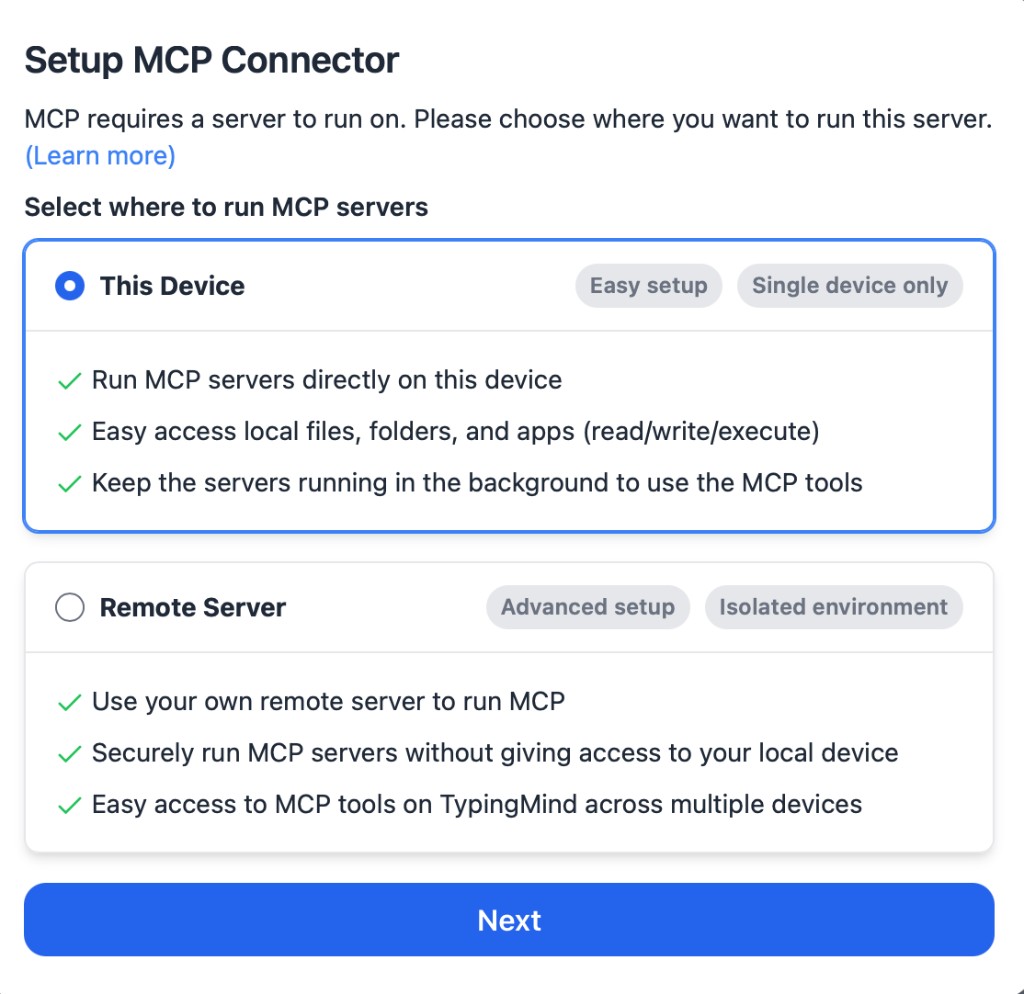
In TypingMind, go to Settings, Advanced Settings, then Model Context Protocol and choose Setup Connector.

  1. Open TypingMind in your browser.
  2. Click the Settings icon.
  3. Go to Advanced Settings.
  4. Open the Model Context Protocol section.
  5. Click Setup Connector and choose This Device.
TypingMind MCP connector setup screen with This Device selected
2

Run the connector command

Choose This Device, copy the command from TypingMind, and run it in Terminal. Keep the process running while you use MCP.

  1. Copy the setup command shown by TypingMind.
  2. Open Terminal on macOS or Windows Terminal on Windows.
  3. Paste and run the command.
  4. Approve the package install if Terminal asks you to proceed.
  5. Keep the Terminal window running while using MCP tools.
3

Add Facebook MCP Server as a server

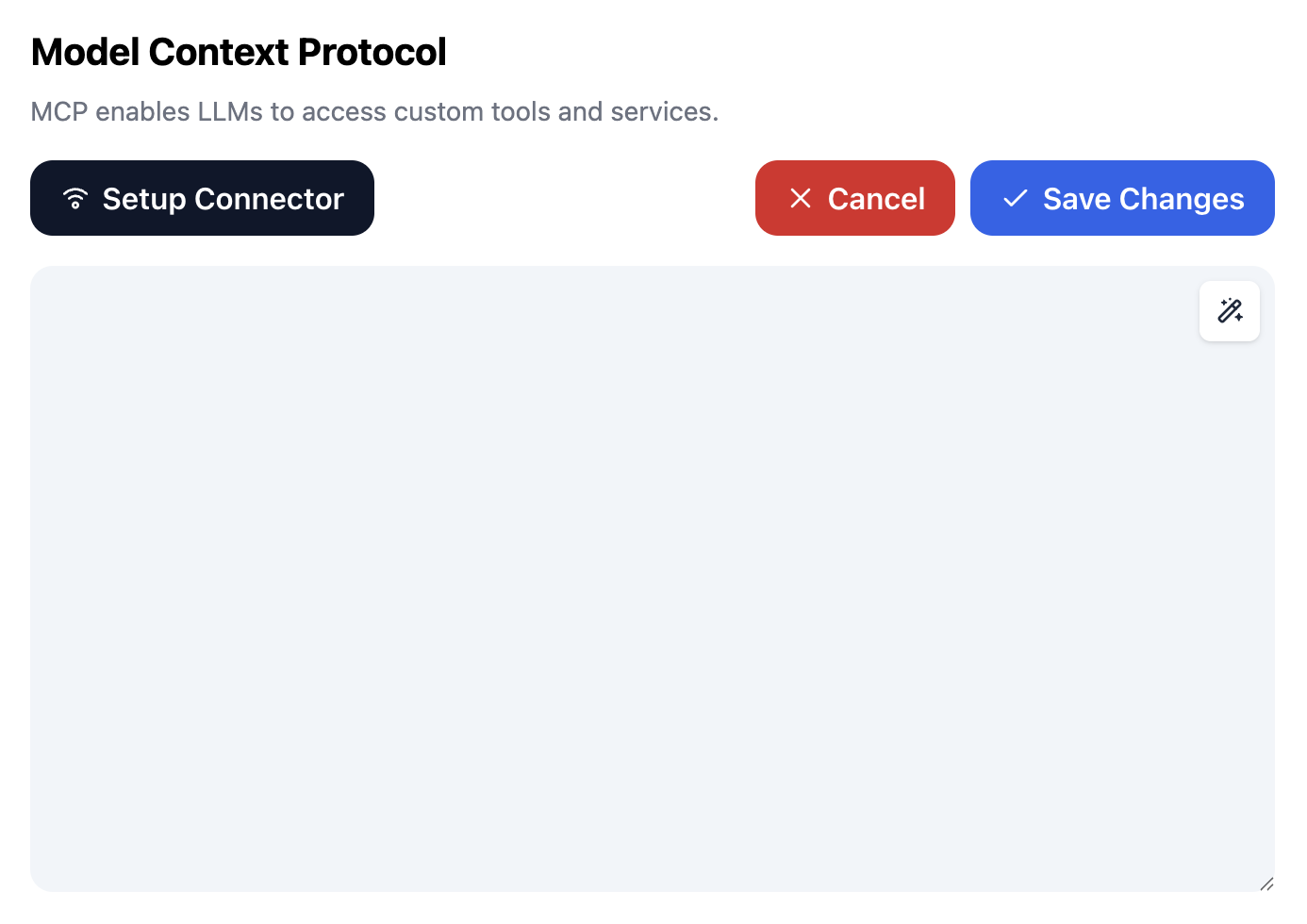
When the connector status is Ready, click Edit Servers and paste the MCP server configuration.

  1. Wait until the connector status shows Ready.
  2. Click Edit Servers.
  3. Paste the Facebook MCP Server MCP server configuration.
  4. Save the server list.
  5. Refresh if you want to confirm the connector is still ready.
TypingMind MCP settings showing active server and Edit Servers button
{
  "mcpServers": {
    "facebook-mcp-server": {
      "command": "npx",
      "args": [
        "-y",
        "<mcp-server-package>"
      ]
    }
  }
}
4

Use it across models

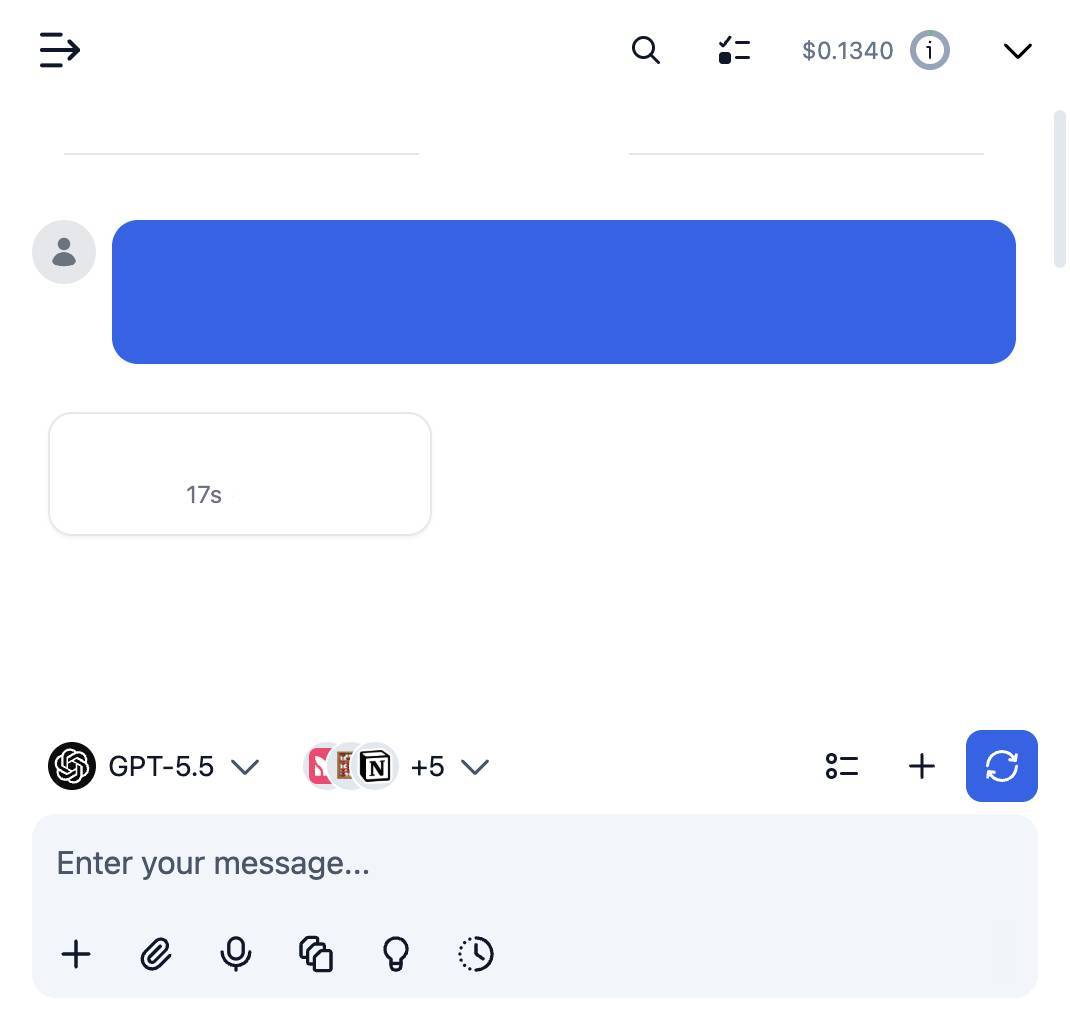
Save the server list, open Plugins, enable the Facebook MCP Server MCP tools, then select any supported AI model in TypingMind and use the tools in chat or assign them to an AI agent.

  1. Open the Plugins page in TypingMind.
  2. Enable the Facebook MCP Server MCP tools.
  3. Start a chat and choose the AI model you want to use.
  4. Use the MCP tools in chat or assign them to an AI agent.
  5. Switch to another AI model whenever needed without reconnecting MCP.
TypingMind chat using enabled MCP tools with a selected AI model
Can you use Facebook MCP Server to help me with this task?
Facebook MCP Server
Sure. I read it.
Here is what I found using Facebook MCP Server.

Frequently asked questions

What is the Facebook MCP Server MCP server used for?

Facebook MCP Server is an MCP server that lets compatible AI clients connect to external tools and context. In TypingMind, you can add this MCP server once and make its tools available in your AI workspace.

Can I use Facebook MCP Server MCP with multiple AI models in TypingMind?

Yes. TypingMind connects MCP tools at the workspace level, so you can use Facebook MCP Server with different AI models such as Claude, ChatGPT, Gemini, or other models you have configured in TypingMind without setting up the MCP server separately for each model.

Why use Facebook MCP Server MCP with TypingMind?

TypingMind is one of the best frontends for LLM chat because it brings multiple AI models, prompts, plugins, AI agents, API keys, and MCP tools into one workspace. With Facebook MCP Server connected, you can use its MCP tools across your preferred models while keeping your chat workflow organized in TypingMind.

How do I connect Facebook MCP Server MCP to TypingMind?

Facebook MCP Server runs through the TypingMind local MCP connector. This is best when the MCP server needs access to local files, desktop apps, command-line tools, or private resources on your computer.

What tools does Facebook MCP Server MCP provide in TypingMind?

Facebook MCP Server exposes MCP capabilities that can be enabled from the TypingMind Plugins page and used in chat or assigned to AI agents.

Do I need to share my API keys with TypingMind to use Facebook MCP Server MCP?

No. TypingMind is local-first and lets you keep your model providers, API keys, prompts, and MCP configuration under your control. If Facebook MCP Server requires authentication, add the required headers, OAuth settings, or local configuration for that MCP server when you create the connection.

Related MCP Servers

View all

Set up your own AI workspace now

Get notified about new features and future giveaways by subscribing to our newsletter ๐Ÿ‘‡