
Looker MCP
CommunityPopularQuery Looker data with natural language using Google's Conversational Analytics API. Supports stdio (Claude Desktop) and HTTP (Cloud Run) deployment modes.
| Publisher | datadaddy89 |
| Repository | looker-mcp |
| Language | TypeScript |
| Forks | 0 |
| Stars | 2.4K |
| Available tools | 17 |
| Transport type | stdio |
| Categories | |
| License | MIT |
| Links |
- Connect tools to AI workflows
Looker MCP exposes MCP capabilities that can be used by compatible AI clients and agents.
- 17 available tools
Browse the callable actions below, including names and descriptions when provided by the server.
- Ready-to-copy setup
Use the installation snippets to configure this server in your preferred MCP client.
- Open source signals
2.4K stars and 0 forks from the linked repository.
Installation
Node.js 18+
{
  "mcpServers": {
    "looker": {
      "command": "npx",
      "args": [
        "-y",
        "looker-mcp"
      ],
      "env": {
        "LOOKER_BASE_URL": "<YOUR_LOOKER_URL>",
        "LOOKER_CLIENT_ID": "<YOUR_CLIENT_ID>",
        "LOOKER_CLIENT_SECRET": "<YOUR_CLIENT_SECRET>"
      }
    }
  }
}
Available Tools
- query_data
Execute natural language queries against Looker data using conversational analytics
- list_dashboards
Retrieve a list of available Looker dashboards and their metadata
- get_dashboard
Fetch a specific dashboard by ID with its tiles and visualizations
- list_looks
Get all available Looks (saved queries) from the Looker instance
- run_look
Execute a specific Look by ID and return the results
- list_explores
Retrieve available Explores and their dimensions/measures for querying
- get_explore_metadata
Get detailed metadata for a specific Explore including field definitions
- search_content
Search across Looker content including dashboards, looks, and folders
- get_query_results
Execute a structured query and return formatted results
- list_folders
Get the folder structure and organization of Looker content
- get_user_permissions
Check current user's access permissions for Looker resources
- validate_query
Validate a natural language or structured query before execution
- export_data
Export query results in various formats (CSV, JSON, Excel)
- get_field_suggestions
Get field suggestions based on natural language intent
- list_connections
Retrieve available database connections and their status
- get_query_history
Access recent query history and execution details
- create_temporary_explore
Create a temporary explore session for ad-hoc analysis
Use Looker MCP MCP with multiple AI models
TypingMind connects MCP tools at the workspace level, so once Looker MCP is connected, you can use it with different AI models in TypingMind instead of setting it up separately for each model. This MCP runs locally through the TypingMind MCP connector on your device.
Setup guide to use the local connector
Use this when the MCP server needs access to local files, apps, or private resources on your computer.
Open the MCP settings
In TypingMind, go to Settings, Advanced Settings, then Model Context Protocol and choose Setup Connector.
- Open TypingMind in your browser.
- Click the Settings icon.
- Go to Advanced Settings.
- Open the Model Context Protocol section.
- Click Setup Connector and choose This Device.
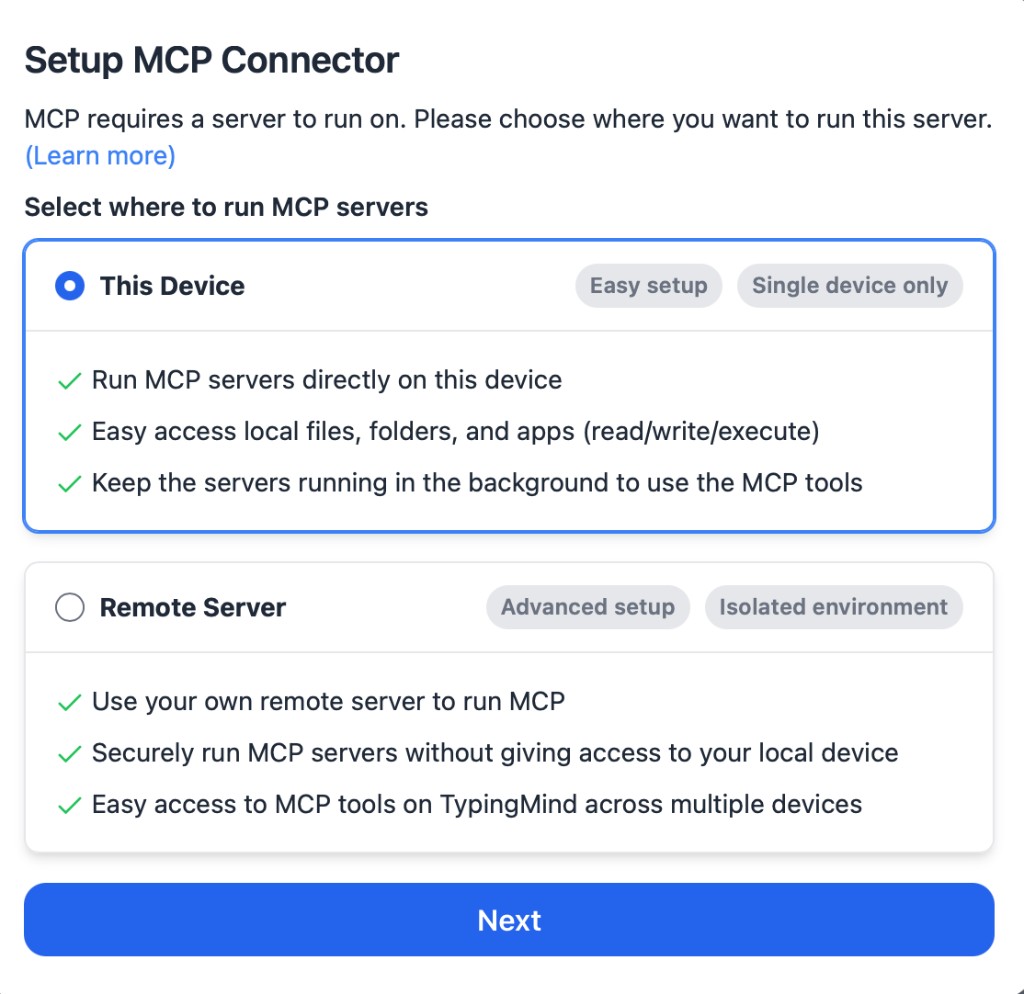
Run the connector command
Choose This Device, copy the command from TypingMind, and run it in Terminal. Keep the process running while you use MCP.
- Copy the setup command shown by TypingMind.
- Open Terminal on macOS or Windows Terminal on Windows.
- Paste and run the command.
- Approve the package install if Terminal asks you to proceed.
- Keep the Terminal window running while using MCP tools.
Add Looker MCP as a server
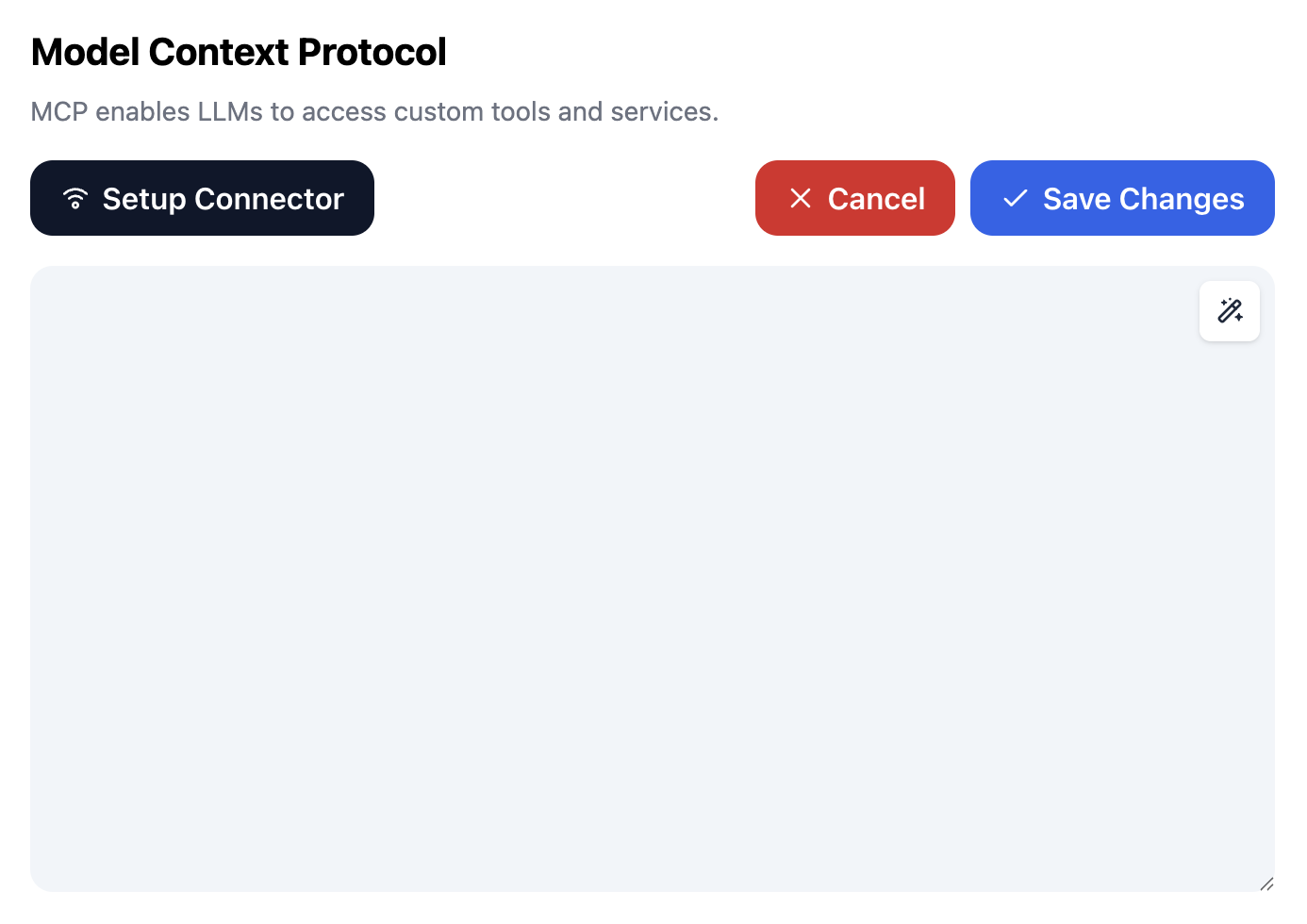
When the connector status is Ready, click Edit Servers and paste the MCP server configuration.
- Wait until the connector status shows Ready.
- Click Edit Servers.
- Paste the Looker MCP MCP server configuration.
- Save the server list.
- Refresh if you want to confirm the connector is still ready.
{
  "mcpServers": {
    "looker-mcp": {
      "command": "npx",
      "args": [
        "-y",
        "looker-mcp"
      ]
    }
  }
}Use it across models
Save the server list, open Plugins, enable the Looker MCP MCP tools, then select any supported AI model in TypingMind and use the tools in chat or assign them to an AI agent.
- Open the Plugins page in TypingMind.
- Enable the Looker MCP MCP tools.
- Start a chat and choose the AI model you want to use.
- Use the MCP tools in chat or assign them to an AI agent.
- Switch to another AI model whenever needed without reconnecting MCP.
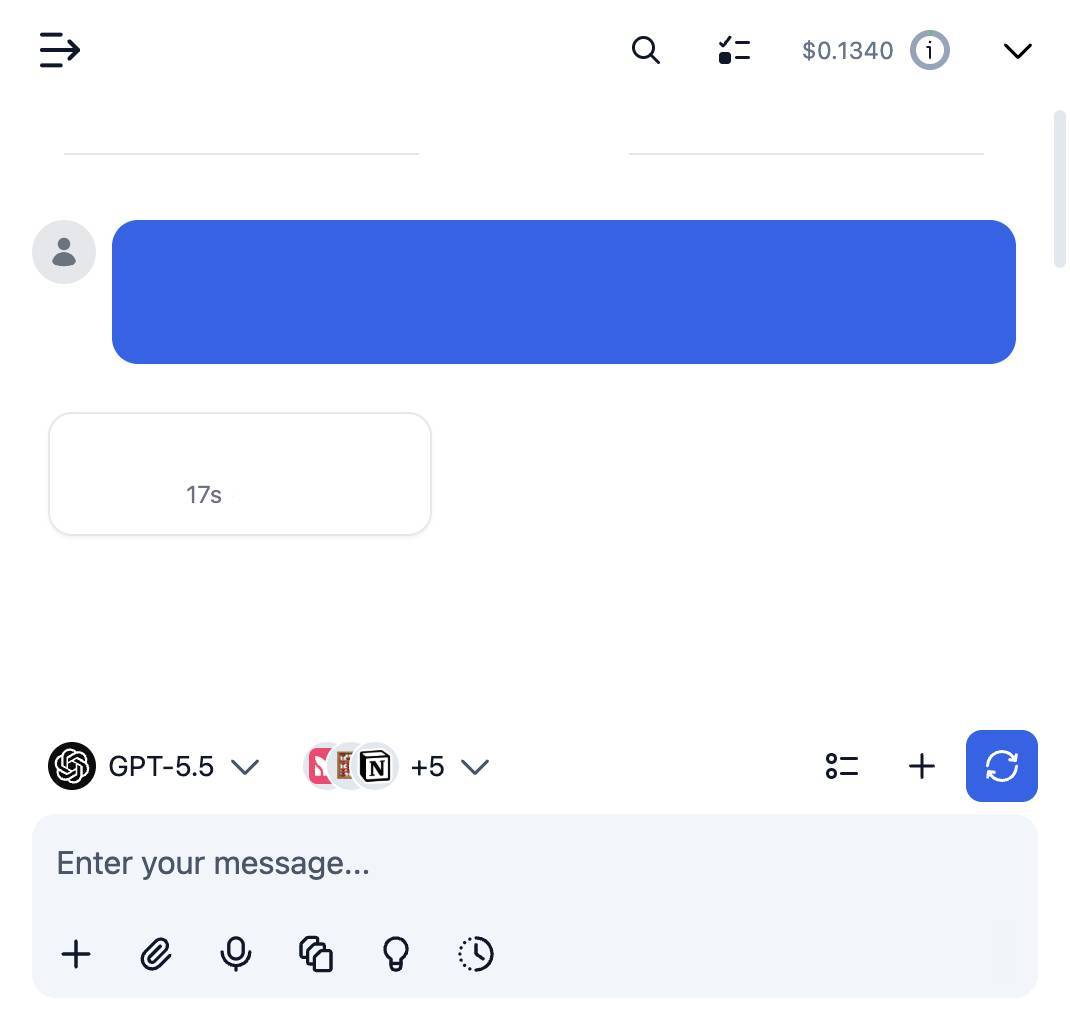
Here is what I found using Looker MCP.
Frequently asked questions
What is the Looker MCP MCP server used for?
Looker MCP is an MCP server that lets compatible AI clients connect to external tools and context. In TypingMind, you can add this MCP server once and make its tools available in your AI workspace.
Can I use Looker MCP MCP with multiple AI models in TypingMind?
Yes. TypingMind connects MCP tools at the workspace level, so you can use Looker MCP with different AI models such as Claude, ChatGPT, Gemini, or other models you have configured in TypingMind without setting up the MCP server separately for each model.
Why use Looker MCP MCP with TypingMind?
TypingMind is one of the best frontends for LLM chat because it brings multiple AI models, prompts, plugins, AI agents, API keys, and MCP tools into one workspace. With Looker MCP connected, you can use its MCP tools across your preferred models while keeping your chat workflow organized in TypingMind.
How do I connect Looker MCP MCP to TypingMind?
Looker MCP runs through the TypingMind local MCP connector. This is best when the MCP server needs access to local files, desktop apps, command-line tools, or private resources on your computer.
What tools does Looker MCP MCP provide in TypingMind?
Looker MCP exposes 17 MCP tools that can be enabled from the TypingMind Plugins page and used in chat or assigned to AI agents.
Do I need to share my API keys with TypingMind to use Looker MCP MCP?
No. TypingMind is local-first and lets you keep your model providers, API keys, prompts, and MCP configuration under your control. If Looker MCP requires authentication, add the required headers, OAuth settings, or local configuration for that MCP server when you create the connection.
Related MCP Servers
View all
Godot MCP
MCP server for interfacing with Godot game engine. Provides tools for launching the editor, running projects, and capturing debug output.

Fli - 航班搜索 MCP 服务器与库
Google Flights MCP, CLI and Python Library

Ableton Live
Enables control of Ableton Live music production software through a bidirectional communication system that supports track creation, MIDI editing, playback control, instrument loading, and library browsing for music composition and sound design workflows.

MCP Unity 编辑器(游戏引擎)
Model Context Protocol (MCP) plugin to connect with Unity Editor — designed for Cursor, Claude Code, Codex, Windsurf and other IDEs
