Magento 2 Development logo

Magento 2 Development

Organization
elgentos

An MCP server to help with Magento 2 development

Publisherelgentos
Repositorymagento2-dev-mcp
LanguageJavaScript
Forks
9
Stars
38
Available tools
28
Transport typestdio
Categories
LicenseMIT
Links
  • Connect tools to AI workflows

    Magento 2 Development exposes MCP capabilities that can be used by compatible AI clients and agents.

  • 28 available tools

    Browse the callable actions below, including names and descriptions when provided by the server.

  • Ready-to-copy setup

    Use the installation snippets to configure this server in your preferred MCP client.

  • Open source signals

    38 stars and 9 forks from the linked repository.

Abandoned - elgentos/magento2-dev-mcp

This project is abandoned since it mainly exposed magerun commands through an MCP. Magerun now offers an internal MCP server; just run magerun2 mcp:server:start - see magerun2 9.3.0 release notes.

A Model Context Protocol (MCP) server for Magento 2 development, designed to integrate with AI agents like Claude, Cursor, Continue.dev, and Augment Code.

Installation

Using npx

bash
npx -y @elgentos/magento2-dev-mcp

Quick Start

  1. Add to your AI agent's MCP configuration:
json
{
  "mcpServers": {
    "magento2-dev": {
      "command": "npx",
      "args": ["-y", "@elgentos/magento2-dev-mcp"]
    }
  }
}
  1. Restart your AI agent to load the MCP server

  2. Start using Magento 2 development tools through your AI agent!

See AI Platform Configuration Examples for platform-specific setup instructions.

Docker Environment Support

The server automatically detects Docker-based Magento environments and routes magerun2 commands through the container:

EnvironmentDetectionCommand prefix
WardenWARDEN_ENV_TYPE in .envwarden shell -c '...'
DDEV.ddev/ directoryddev exec ...
docker-magentobin/clinotty filebin/clinotty ...
docker-composedocker-compose.yml or compose.yamldocker compose exec -T <service> ...

For docker-compose the server tries the service names phpfpm, php-fpm, and php in order.

If Docker execution fails, the server falls back to running magerun2 locally.

Environment Variables

VariableDescriptionDefault
MAGERUN2_COMMANDOverride the magerun2 binary name or pathmagerun2

Use MAGERUN2_COMMAND when your system installs the binary under a different name (e.g. n98-magerun2) or when you need to specify an absolute path:

json
{
  "mcpServers": {
    "magento2-dev": {
      "command": "npx",
      "args": ["-y", "@elgentos/magento2-dev-mcp"],
      "env": {
        "MAGERUN2_COMMAND": "n98-magerun2"
      }
    }
  }
}

Features

DI & Module Tools

Parameters:

  • scope (optional): The scope to get DI preferences for
    • Options: global, adminhtml, frontend, crontab, webapi_rest, webapi_soap, graphql, doc, admin
    • Default: global

Available Scopes:

  • global - Global scope (default)
  • adminhtml - Admin area
  • frontend - Frontend/storefront area
  • crontab - Cron job execution context
  • webapi_rest - REST API context
  • webapi_soap - SOAP API context
  • graphql - GraphQL API context
  • doc - Documentation context
  • admin - Admin context (alternative to adminhtml)

Parameters:

  • format (optional): Output format (table, json, csv) - Default: table
  • enabled (optional): Show only enabled modules
  • disabled (optional): Show only disabled modules

Parameters:

  • format (optional): Output format (table, json, csv) - Default: table
  • event (optional): Filter by specific event name

Parameters:

  • format (optional): Output format (table, json, csv) - Default: table

Parameters:

  • vendorNamespace (required): Namespace (your company prefix)
  • moduleName (required): Name of your module
  • minimal (optional): Create only module file
  • addBlocks (optional): Add blocks
  • addHelpers (optional): Add helpers
  • addModels (optional): Add models
  • addSetup (optional): Add SQL setup
  • addAll (optional): Add blocks, helpers and models
  • enable (optional): Enable module after creation
  • modman (optional): Create all files in folder with a modman file
  • addReadme (optional): Add a readme.md file to generated module
  • addComposer (optional): Add a composer.json file to generated module
  • addStrictTypes (optional): Add strict_types declaration to generated PHP files
  • authorName (optional): Author for readme.md or composer.json
  • authorEmail (optional): Author email for readme.md or composer.json
  • description (optional): Description for readme.md or composer.json

Example Usage:

json
{
  "name": "dev-module-create",
  "arguments": {
    "vendorNamespace": "MyCompany",
    "moduleName": "CustomModule",
    "addAll": true,
    "enable": true,
    "addReadme": true,
    "addComposer": true,
    "authorName": "John Doe",
    "authorEmail": "john@example.com",
    "description": "A custom Magento 2 module"
  }
}

Analyzes di.xml files across all DI scopes to find plugins for a given class. Resolves the full class hierarchy (parent classes and interfaces) so inherited plugins are included. Returns the plugin list, sort order, and full execution order chain per scope.

Parameters:

  • className (required): Fully qualified PHP class or interface name
  • methodName (optional): Method name to inspect. Omit to scan all public methods.

Example — single method:

json
{
  "name": "dev-plugin-list",
  "arguments": {
    "className": "Magento\\Catalog\\Api\\ProductRepositoryInterface",
    "methodName": "save"
  }
}

Example — scan all methods of a class:

json
{
  "name": "dev-plugin-list",
  "arguments": {
    "className": "Magento\\Framework\\View\\LayoutInterface"
  }
}

Scopes checked: global, adminhtml, frontend, crontab, webapi_rest, webapi_soap, graphql

Docker support: Automatically detects Warden, DDEV, docker-magento, and docker-compose environments. Falls back to local PHP.

System Diagnostics

Parameters:

  • format (optional): Output format (table, json, csv) - Default: table

Parameters: None

Cache Management

Available Tools:

  • cache-clean - Clear specific or all caches
  • cache-flush - Flush specific or all caches
  • cache-enable - Enable specific cache types
  • cache-disable - Disable specific cache types
  • cache-status - Check cache status
  • cache-view - Inspect cache entries

See Cache Types Reference for details.

Configuration Management

Parameters:

  • path (optional): Configuration path to show
  • scope (optional): Configuration scope (default, website, store)
  • scopeId (optional): Scope ID (website ID or store ID)

Parameters:

  • path (required): Configuration path to set
  • value (required): Value to set
  • scope (optional): Configuration scope
  • scopeId (optional): Scope ID
  • encrypt (optional): Encrypt the value

Store-specific configuration management for getting and setting configuration values at the store level.

Database Tools

Parameters:

  • query (required): SQL query to execute
  • format (optional): Output format (table, json, csv) - Default: table

Setup & Deployment

Parameters:

  • keepGenerated (optional): Keep generated files during upgrade

Parameters: None

Parameters: None

Parameters:

  • languages (optional): Languages to deploy
  • themes (optional): Themes to deploy
  • jobs (optional): Number of parallel jobs
  • force (optional): Force deployment

Store Management

Parameters:

  • format (optional): Output format (table, json, csv) - Default: table

Parameters:

  • format (optional): Output format (table, json, csv) - Default: table

Parameters:

  • format (optional): Output format (table, json, csv) - Default: table
  • storeId (optional): Store ID to filter URLs

Parameters:

  • format (optional): Output format (table, json, csv) - Default: table

Cron Management

Parameters:

  • format (optional): Output format (table, json, csv) - Default: table

Parameters:

  • job (optional): Specific cron job to run
  • group (optional): Cron group to run

License

MIT License - see LICENSE file for details.
Installation

TypingMind
Prerequisites:

Node.js 18+

{
  "mcpServers": {
    "magento2-dev": {
      "command": "npx",
      "args": [
        "-y",
        "@elgentos/magento2-dev-mcp"
      ]
    }
  }
}

Available Tools

  • get-di-preferences

    Get Magento 2 dependency injection preferences list using magerun2

  • cache-clean

    Clear specific Magento 2 cache types or all caches

  • cache-flush

    Flush specific Magento 2 cache types or all caches

  • cache-enable

    Enable specific Magento 2 cache types

  • cache-disable

    Disable specific Magento 2 cache types

  • cache-status

    Check the status of Magento 2 cache types

  • cache-view

    Inspect specific cache entries in Magento 2

  • dev-module-list

    List all Magento 2 modules and their status

  • dev-module-observer-list

    List all Magento 2 module observers

  • dev-module-create

    Create and register a new Magento 2 module

  • sys-info

    Get Magento 2 system information

  • sys-check

    Check Magento 2 system requirements and configuration

  • config-show

    View Magento 2 system configuration values

  • config-set

    Set Magento 2 system configuration values

  • config-store-get

    Get store-specific Magento 2 configuration values

  • config-store-set

    Set store-specific Magento 2 configuration values

  • db-query

    Execute SQL queries directly on Magento 2 database

  • setup-upgrade

    Run Magento 2 setup upgrade to update database schema and data

  • setup-di-compile

    Compile Magento 2 dependency injection configuration

  • setup-db-status

    Check Magento 2 database status to see if setup:upgrade is needed

  • setup-static-content-deploy

    Deploy Magento 2 static content and assets

  • sys-store-list

    List all Magento 2 stores, websites, and store views

  • dev-theme-list

    List all available Magento 2 themes

  • sys-store-config-base-url-list

    List all base URLs for Magento 2 stores

  • sys-cron-list

    List all Magento 2 cron jobs and their configuration

  • sys-url-list

    Get all Magento 2 URLs

  • sys-website-list

    List all Magento 2 websites

  • sys-cron-run

    Run Magento 2 cron jobs

Use Magento 2 Development MCP with multiple AI models

TypingMind connects MCP tools at the workspace level, so once Magento 2 Development is connected, you can use it with different AI models in TypingMind instead of setting it up separately for each model. This MCP runs locally through the TypingMind MCP connector on your device.

Setup guide to use the local connector

Use this when the MCP server needs access to local files, apps, or private resources on your computer.

1

Open the MCP settings

In TypingMind, go to Settings, Advanced Settings, then Model Context Protocol and choose Setup Connector.

  1. Open TypingMind in your browser.
  2. Click the Settings icon.
  3. Go to Advanced Settings.
  4. Open the Model Context Protocol section.
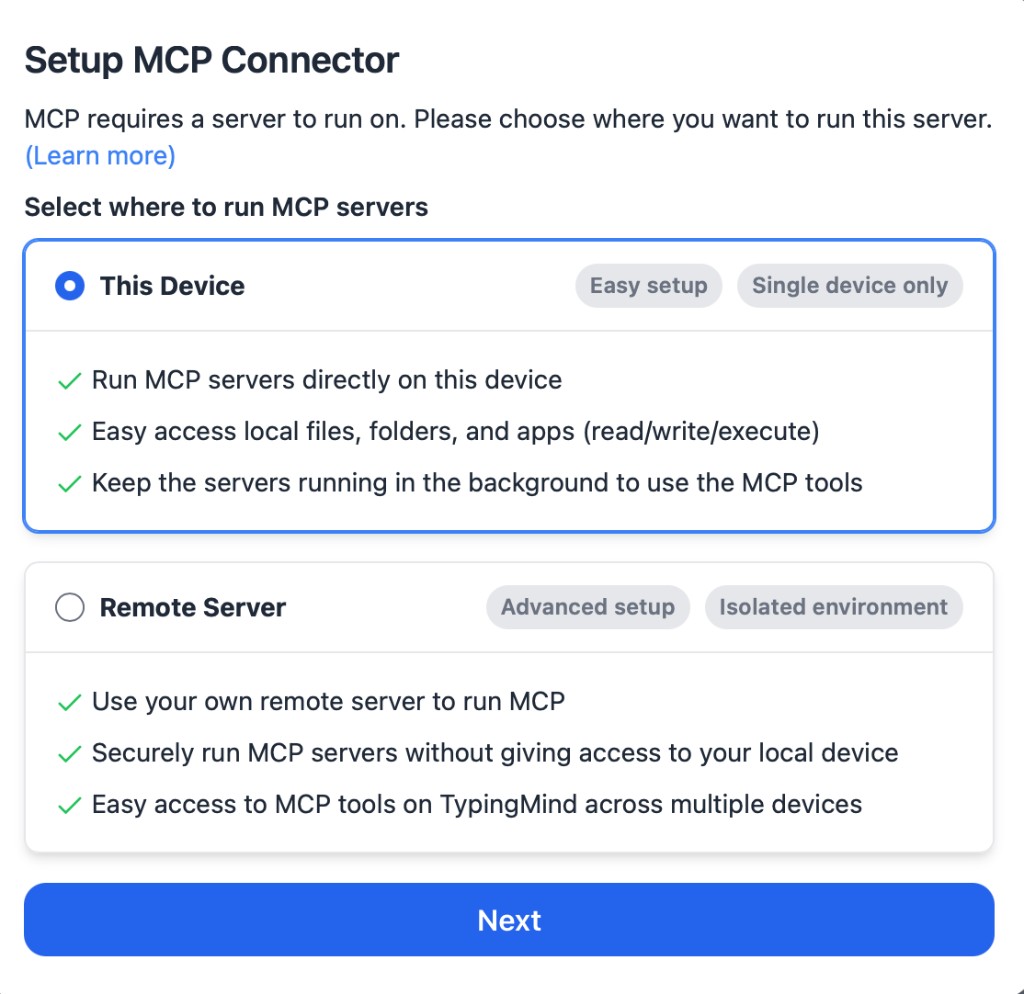
  5. Click Setup Connector and choose This Device.
TypingMind MCP connector setup screen with This Device selected
2

Run the connector command

Choose This Device, copy the command from TypingMind, and run it in Terminal. Keep the process running while you use MCP.

  1. Copy the setup command shown by TypingMind.
  2. Open Terminal on macOS or Windows Terminal on Windows.
  3. Paste and run the command.
  4. Approve the package install if Terminal asks you to proceed.
  5. Keep the Terminal window running while using MCP tools.
3

Add Magento 2 Development as a server

When the connector status is Ready, click Edit Servers and paste the MCP server configuration.

  1. Wait until the connector status shows Ready.
  2. Click Edit Servers.
  3. Paste the Magento 2 Development MCP server configuration.
  4. Save the server list.
  5. Refresh if you want to confirm the connector is still ready.
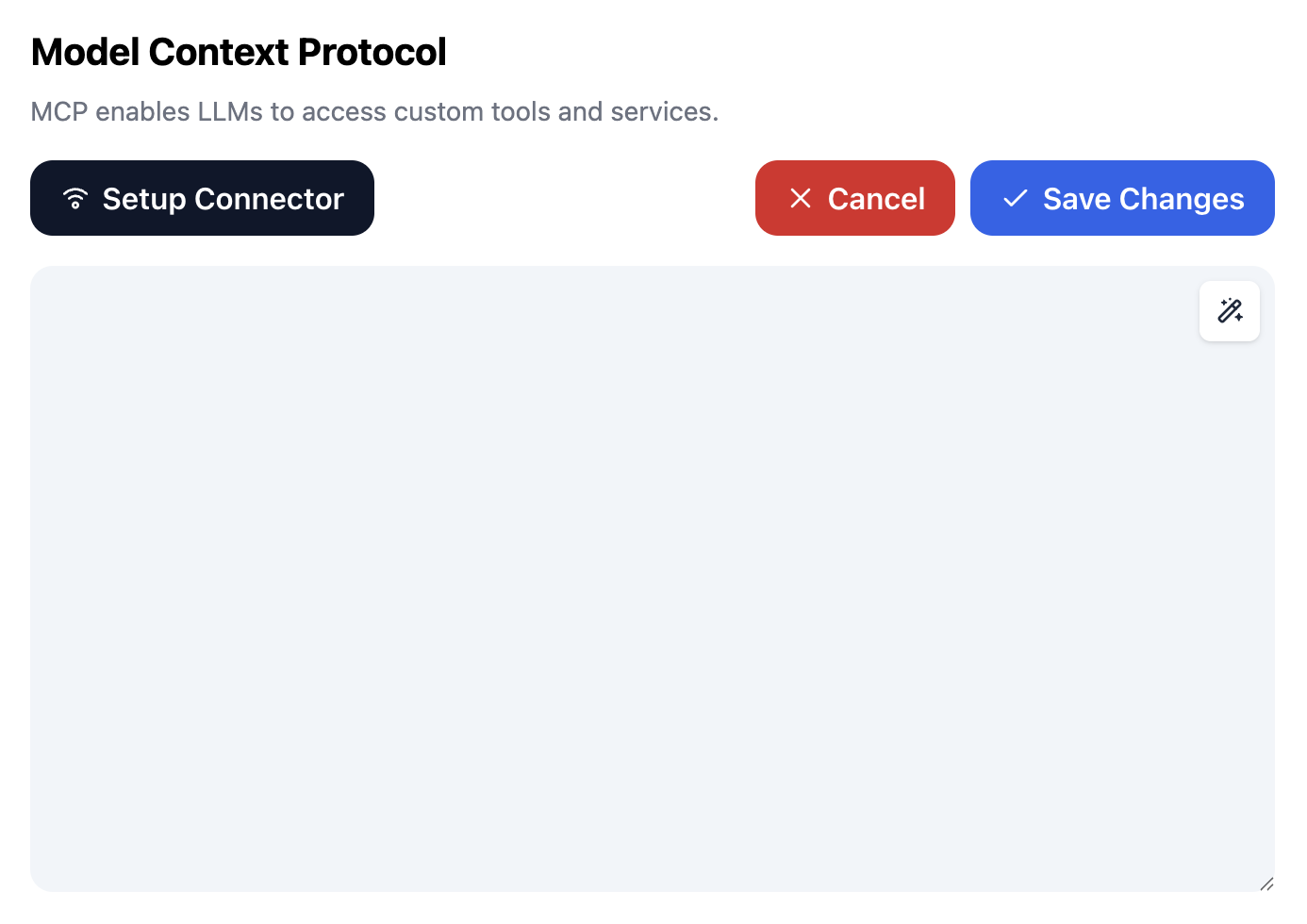
TypingMind MCP settings showing active server and Edit Servers button
{
  "mcpServers": {
    "magento-2-development": {
      "command": "npx",
      "args": [
        "-y",
        "@elgentos/magento2-dev-mcp"
      ]
    }
  }
}
4

Use it across models

Save the server list, open Plugins, enable the Magento 2 Development MCP tools, then select any supported AI model in TypingMind and use the tools in chat or assign them to an AI agent.

  1. Open the Plugins page in TypingMind.
  2. Enable the Magento 2 Development MCP tools.
  3. Start a chat and choose the AI model you want to use.
  4. Use the MCP tools in chat or assign them to an AI agent.
  5. Switch to another AI model whenever needed without reconnecting MCP.
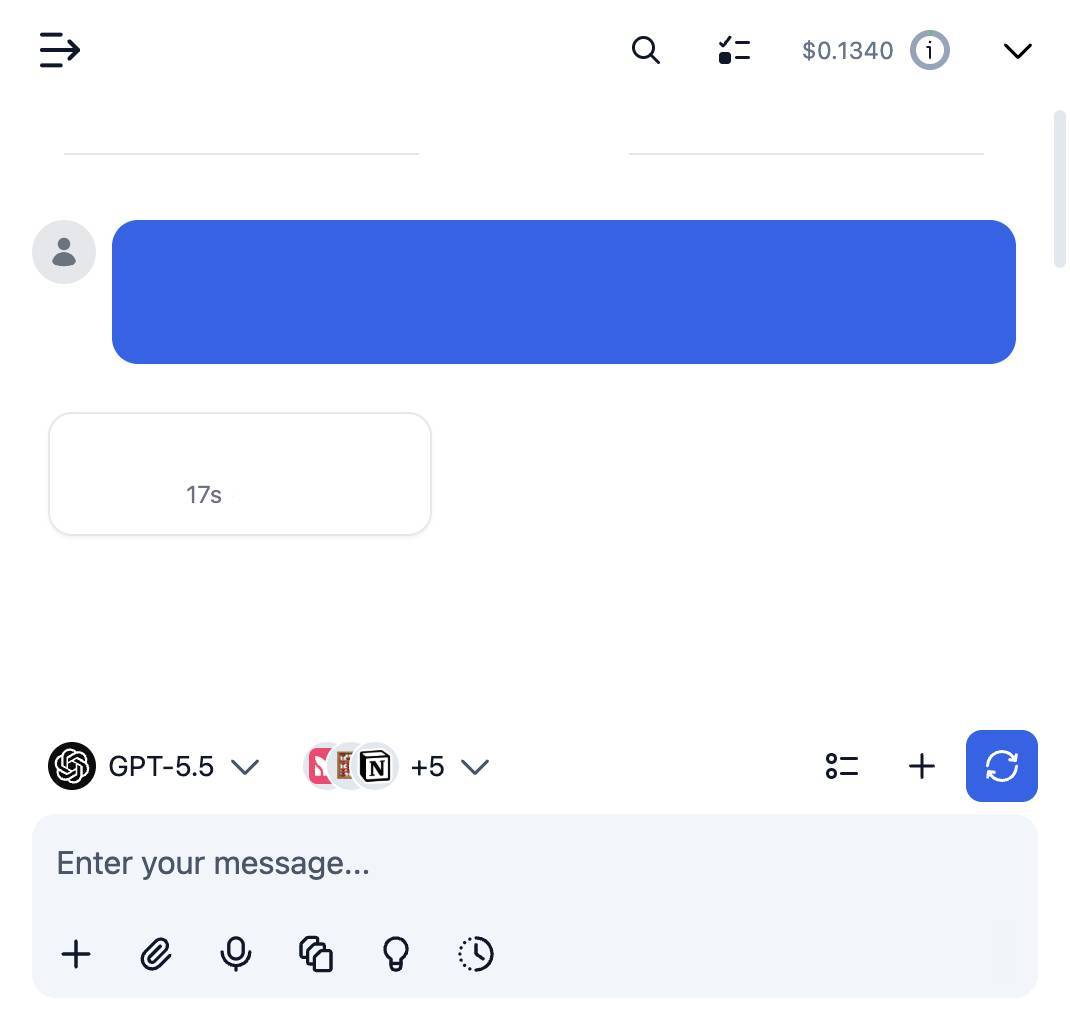
TypingMind chat using enabled MCP tools with a selected AI model
Can you use Magento 2 Development to help me with this task?
Magento 2 Development
Sure. I read it.
Here is what I found using Magento 2 Development.

Frequently asked questions

What is the Magento 2 Development MCP server used for?

Magento 2 Development is an MCP server that lets compatible AI clients connect to external tools and context. In TypingMind, you can add this MCP server once and make its tools available in your AI workspace.

Can I use Magento 2 Development MCP with multiple AI models in TypingMind?

Yes. TypingMind connects MCP tools at the workspace level, so you can use Magento 2 Development with different AI models such as Claude, ChatGPT, Gemini, or other models you have configured in TypingMind without setting up the MCP server separately for each model.

Why use Magento 2 Development MCP with TypingMind?

TypingMind is one of the best frontends for LLM chat because it brings multiple AI models, prompts, plugins, AI agents, API keys, and MCP tools into one workspace. With Magento 2 Development connected, you can use its MCP tools across your preferred models while keeping your chat workflow organized in TypingMind.

How do I connect Magento 2 Development MCP to TypingMind?

Magento 2 Development runs through the TypingMind local MCP connector. This is best when the MCP server needs access to local files, desktop apps, command-line tools, or private resources on your computer.

What tools does Magento 2 Development MCP provide in TypingMind?

Magento 2 Development exposes 28 MCP tools that can be enabled from the TypingMind Plugins page and used in chat or assigned to AI agents.

Do I need to share my API keys with TypingMind to use Magento 2 Development MCP?

No. TypingMind is local-first and lets you keep your model providers, API keys, prompts, and MCP configuration under your control. If Magento 2 Development requires authentication, add the required headers, OAuth settings, or local configuration for that MCP server when you create the connection.

Related MCP Servers

View all

Set up your own AI workspace now

Get notified about new features and future giveaways by subscribing to our newsletter 👇