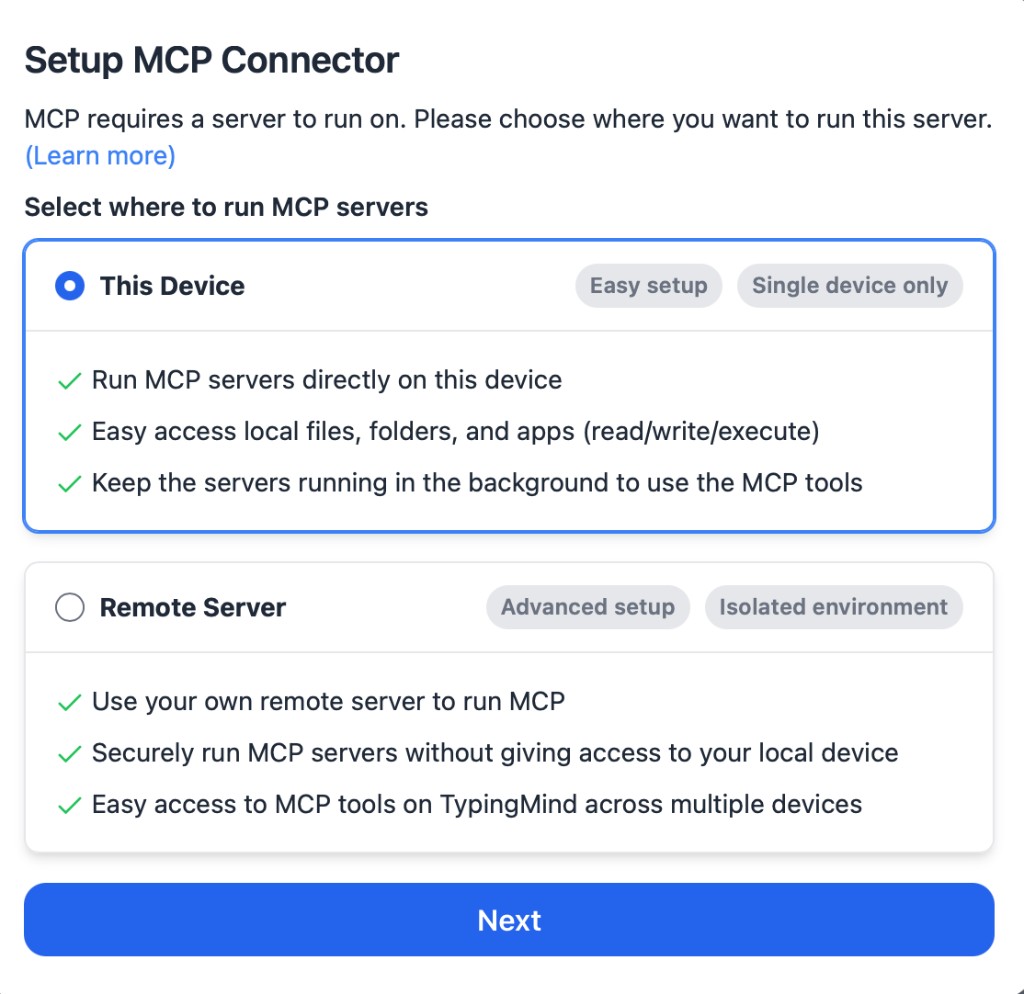
A Telegram integration for Claude, Cursor, and other MCP-compatible clients. It exposes Telegram account, chat, message, contact, media, folder, and admin operations through the Model Context Protocol using Telethon.
🤖 MCP in Action
Basic Telegram MCP usage in Claude:

Asking Claude to analyze chat history and send a response:

Message sent successfully:

Contents
- What It Can Do
- Requirements
- Quick Start
- MCP Client Configuration
- Multi-Account Setup
- Device Identity
- Proxy Support
- File Path Security
- Chat Access Privacy (Allowlist)
- Docker
- Development
- Security Notes
- Troubleshooting
- License
What It Can Do
The server currently includes 80+ MCP tools grouped into these areas:
- Accounts: list configured accounts and route tool calls by account label.
- Chats and groups: list chats, inspect metadata, create groups/channels, join or leave chats, invite or remove users, manage admins, bans, default permissions, slow mode, topics, invite links, common chats, read receipts, and message links.
- Messages: send, schedule, edit, delete, forward, pin, unpin, mark read, reply, search, inspect context, create polls, manage reactions, inspect inline buttons, and press inline callbacks.
send_message,reply_to_message, andedit_messagesupport classic formatting (parse_mode='md'/'html') and server-side rich formatting (parse_mode='rich'/'rich_markdown'/'rich_html'— full Markdown/HTML with tables, headings, formulas, and collapsible sections). Rich modes require Telegram Premium on the account; Premium is re-checked on every call, and without it nothing is sent — the tool returns a structuredtelegram_premium_requiredresult so the agent can reformat with classic modes and retry.send_message,reply_to_message, andedit_messagealso acceptformat_dateto render a date as a tappable chip. - Contacts: list, search, add, delete, block, unblock, import, export, inspect direct chats, find recent contact interactions, and remember contacts by the names you actually use (see below).
Remembered contacts
set_contact_alias teaches the server what you call someone, and every tool that takes a chat_id understands it from then on — send_message("андрей бекендер", ...) just works. A contact can carry any number of aliases, which is how tags work: save both андрей бекендер and бекендер for the same person and either resolves.
Only an exact saved wording ever sends. Similar wording (Андрею бекендеру for a saved андрей бекендер) is matched too, but only to suggest: the tool sends nothing and asks you to confirm the contact by name. This is deliberate — Лена/Леня and Иван/Иванов differ exactly as much as a case ending does, so a matcher confident enough to handle declensions is also confident enough to message the wrong person whenever the one you meant is not saved yet. Confirming saves that wording as its own alias, so each new phrasing costs one yes/no the first time and nothing ever again. Set TELEGRAM_CONTACT_FUZZY=0 to drop the suggestions too.
When a reference is unknown, resembles one contact, matches several, or points at a contact that no longer resolves, tools send nothing and return a structured instruction telling the agent exactly what to ask you, to save the answer with set_contact_alias, and to retry once. list_contact_aliases shows one row per person with all their aliases (use it to spot a wrong memory), delete_contact_alias forgets one, and repointing an alias at someone else requires replace=True. The save path itself refuses a target it would have to guess at: contacts are saved by @username, phone, numeric ID, or an alias already confirmed for them.
Aliases live in ${XDG_STATE_HOME:-~/.local/state}/telegram-mcp/aliases.json (owner-only, written atomically); TELEGRAM_ALIASES_FILE overrides the path, and a pre-existing aliases.json next to the code is still read as a fallback.
- Media: send files, download media, upload files, send voice notes, stickers, GIFs, inspect message media, and transcribe voice messages/video notes (see below).
Voice transcription
transcribe_voice(chat_id, message_id, engine=None) turns a voice message or video note into text. Two engines are available:
groq(default): uploads the recording to Groq's hostedwhisper-large-v3-turbo. Leaves the server and costs a download+upload per call, but doesn't drop the recording's last few words the way native transcription does. RequiresGROQ_API_KEY. Groq caps the size of a single upload, so a recording aboveTELEGRAM_TRANSCRIBE_GROQ_MAX_MB(default 25, the free-tier limit) is refused locally with atoo_largeerror naming its size instead of being downloaded and rejected by the API. Raise the limit if your Groq tier allows bigger files, or transcribe that message withengine='telegram', which has no such cap.telegram: native Telegram Premium transcription (messages.TranscribeAudioRequest). Free and never leaves Telegram, but empirically drops the last speech segment in roughly 2 of 3 recordings and requires Telegram Premium on the account. Long recordings come backpendingand are polled automatically.
The engine is chosen per call via the engine argument, or otherwise defaults to TELEGRAM_TRANSCRIBE_ENGINE (groq or telegram). Results are cached by (chat_id, message_id, engine) in a local SQLite file so repeat reads and repeat listings never re-transcribe the same message. Concurrent requests for the same uncached recording are collapsed too: the second one waits for the first and returns its transcript, so a burst of callers costs one paid call, not one per caller. Every transcript is returned with a note marking it as a machine transcript, not a verbatim quote — treat it as a paraphrase, not exact wording.
get_history, get_messages, and list_messages fill in already-cached transcripts for voice messages instead of leaving the text empty, controlled by TELEGRAM_TRANSCRIBE:
off: transcription is disabled at runtime. Thetranscribe_voicetool stays registered and returns{"transcribed": false, "reason": "transcription_disabled"}instead of transcribing, and listings never show transcripts. UseTELEGRAM_EXPOSED_TOOLSto hide the tool itself.on-demand(default): listings show cached transcripts but never spend an API call fetching a new one.auto: listings also prefetch missing transcripts, bounded per call byTELEGRAM_TRANSCRIBE_MAX_VOICES/TELEGRAM_TRANSCRIBE_MAX_SECONDS(Groq isn't free, so this prefetch is budgeted rather than unbounded).
The cache lives in TELEGRAM_TRANSCRIPT_CACHE_DIR (default data/transcripts), written as a 700 directory / 600 file since it holds personal-chat text in plaintext — see Docker for why this needs its own volume mount in a container.
- Profile and privacy: get your own account info, update profile fields, set or delete profile photos, inspect privacy settings, get user info/photos/status, and manage bot commands.
- Folders and drafts: list, create, update, reorder, and delete Telegram folders; save, list, and clear drafts.
- Events: wait for incoming messages with debounce (
wait_for_new_message,wait_for_settled_message), optionally for one chat only viachat_id— without it any unrelated conversation wakes the wait — or enable the opt-in incoming event feed for callback-style delivery (see below).
All tool results that include Telegram user-controlled content are sanitized and, where practical, returned as structured JSON.
Reusing custom emoji
get_history, list_messages, search_messages, search_global,
get_message_context (including replied_message), get_pinned_messages, and
get_drafts include custom_emojis when the message contains custom emoji.
get_messages and get_scheduled_messages include the same metadata as a JSON
list in their text output. Ordinary messages keep their existing output.
json{"text": "🍷 News", "custom_emojis": [{"emoji": "🍷", "id": "5368324170671202286"}]}
Each entry contains the fallback emoji and its Telegram document ID as a string.
Repeated IDs appear once per message; different IDs remain separate even when
their fallback emoji looks identical. This is a list of reusable emoji variants,
not a map of their positions or a copy of all message formatting. Extraction uses
the original Telegram entities, including TextCustomEmoji nodes in block-format
rich_message content, and makes no additional API requests. Emoji
joiners and flag tag characters are preserved in the fallback text.
To reuse an entry, set parse_mode="html" in send_message, reply_to_message,
or edit_message, and insert <tg-emoji emoji-id="ID">EMOJI</tg-emoji> using its
id and emoji. HTML-escape the fallback and other literal text. For example,
the entry above becomes <tg-emoji emoji-id="5368324170671202286">🍷</tg-emoji>.
Telegram's account restrictions still apply to sending custom emoji.
Tappable dates and times
Passing format_date to send_message, reply_to_message, or edit_message
renders a tappable date/time chip — the same entity Telegram's apps attach when
you type a recognizable date. Give the date text exactly as it appears in the
message: '13/09', '13/09/2026', or '13/09 17:00'. The chip opens
copy-date / add-to-calendar / reminder actions. Plain-text messages only —
omit parse_mode. For example, send_message(chat_id, "Lunch 13/09 13:00", format_date="13/09 13:00") sends a message whose date opens that menu.
Incoming Event Feed (callback mode, Claude Code only)
By default, an agent waits for replies by calling wait_for_settled_message, which blocks up to the MCP tool timeout and must be re-called — that works everywhere (Codex, Cursor, etc.) and is unchanged.
Clients that can wake an agent on external output (Claude Code's persistent Monitor on tail -f) can switch to callback mode instead:
- The agent calls
enable_incoming_feed(or setTELEGRAM_EVENT_FEED=1in the environment to auto-enable). Each settled incoming burst is appended as one JSON line to${XDG_STATE_HOME:-~/.local/state}/telegram-mcp/incoming_feed.jsonl, created owner-only (0600). Override the path withTELEGRAM_EVENT_FEED_FILE— an explicit path's directory must already exist.incoming_feed_statusreports the effective path and a ready-to-use watch command. - The agent arms a persistent Monitor with the
watch_commandreturned by the tool. Every new line re-invokes the agent with the burst summary; no blocking tool call is held open, and the chat stays free.
disable_incoming_feed switches back; incoming_feed_status reports the current mode. While the feed is enabled it consumes settled bursts, so don't combine it with wait_for_settled_message. Feed lines contain user-generated name fields — treat them as untrusted data.
Requirements
- Python 3.10+
- Telegram API credentials from my.telegram.org/apps
- A Telegram session string or file-based session
- An MCP client such as Claude Desktop, Cursor, or another MCP-compatible host
- Optional: uv for local development
Quick Start
Do not install this server with
uvx telegram-mcp,uvx --from telegram-mcp, orpip install telegram-mcp. Thetelegram-mcpname on PyPI is currently owned by a different project and does not install this repository. PassingTELEGRAM_API_ID,TELEGRAM_API_HASH, orTELEGRAM_SESSION_STRINGto that package can expose Telegram account credentials to unrelated third-party code.
1. Clone and Install
bashgit clone https://github.com/chigwell/telegram-mcp.git cd telegram-mcp uv sync
2. Generate a Session String
bashuv run session_string_generator.py
Follow the prompts. Save the generated session string securely.
For scripted setup or operational runbooks, choose the login method explicitly:
bash# QR login, recommended when you already have Telegram open on another device uv run session_string_generator.py --qr # Phone number + verification code login uv run session_string_generator.py --phone
Without a flag, the generator keeps the interactive method prompt.
3. Configure Environment
Copy the example file and fill in your real values:
bashcp .env.example .env
Single-account setup:
envTELEGRAM_API_ID=your_api_id_here TELEGRAM_API_HASH=your_api_hash_here TELEGRAM_SESSION_STRING=your_session_string_here
By default, all Telegram MCP tools are exposed. If you want to prevent MCP
clients from sending messages or performing chat/account mutations, set
TELEGRAM_EXPOSED_TOOLS=read-only to expose only tools annotated with
readOnlyHint=True:
envTELEGRAM_EXPOSED_TOOLS=read-only
If read-only is too strict but all is too broad, append + and a
comma-separated list of tool names to also expose those specific write tools.
Every other write tool stays unregistered:
envTELEGRAM_EXPOSED_TOOLS=read-only+send_message,reply_to_message,send_file
An unknown name in the allowlist aborts startup, so a typo cannot silently degrade into a narrower surface that looks like it worked.
This is an MCP tool-surface restriction, not a Telegram session sandbox or
reduced Telegram account permission. The Telegram session string still has its
normal authority inside the server process; read-only mode only prevents
non-read-only tools from being registered and exposed through MCP. Accepted
values are all (the default), read-only, and read-only+<tool>,<tool>.
A separate, hardcoded allowlist restricts send_voice, send_sticker,
set_profile_photo, and edit_chat_photo to their expected file extensions;
send_file and upload_file accept any extension by default. Use
TELEGRAM_FILE_EXTENSIONS to add allowlists for those two, or to tighten or
replace any of the hardcoded ones, in the same tool:.ext,.ext shape as
TELEGRAM_EXPOSED_TOOLS, with entries separated by ;:
envTELEGRAM_FILE_EXTENSIONS=send_file:.pdf,.png,.jpg;upload_file:.pdf,.png
Naming a tool that already has a hardcoded default replaces that tool's whole
set rather than adding to it; any tool left unnamed keeps its default (so
leaving this unset keeps today's behavior unchanged). Extensions are
case-insensitive and the leading dot is optional (pdf and .pdf are
equivalent). An unknown tool name, a malformed extension, or the same tool
named twice aborts startup, the same way a typo in TELEGRAM_EXPOSED_TOOLS
does.
This is defence in depth against accidents, not a security boundary. The check
reads the final suffix, so an allowlist of .pdf still accepts
payload.exe.pdf, and it says nothing about the bytes in the file. What it
does reliably block is the careless case: extensionless secrets such as
id_rsa or a bare .env. Files with ordinary extensions — .pem, .key, a
.json token file, a .sqlite cookie store — are not covered unless you
leave them out of the list yourself.
Voice transcription (see Voice transcription above) is
off by default in the sense that no transcript is ever fetched unless you ask
for one — transcribe_voice is always available, and listings only pick up
already-cached transcripts. Enable prefetching or pick an engine explicitly:
envTELEGRAM_TRANSCRIBE=on-demand # off / on-demand (default) / auto TELEGRAM_TRANSCRIBE_ENGINE=groq # groq (default) or telegram GROQ_API_KEY=your_groq_api_key_here # required whenever engine=groq is used
engine=groq requires GROQ_API_KEY; engine=telegram requires Telegram
Premium on the account. TELEGRAM_TRANSCRIBE_MAX_VOICES (default 5) and
TELEGRAM_TRANSCRIBE_MAX_SECONDS (default 300) bound how much auto mode
prefetches per listing call; TELEGRAM_TRANSCRIPT_CACHE_DIR (default
data/transcripts) sets where the SQLite cache is written; TELEGRAM_TRANSCRIBE_GROQ_MAX_MB
(default 25) is the largest recording the groq engine will upload.
Telegram rate limits (FloodWaitError) are surfaced transparently to MCP clients and LLM agents with the exact wait duration and an explicit instruction not to retry immediately.
Use TELEGRAM_FLOOD_SLEEP_THRESHOLD to configure Telethon's internal silent-sleep threshold (default: 60 seconds). Set to 0 to disable silent sleeping and let the agent manage all backoff pacing:
envTELEGRAM_FLOOD_SLEEP_THRESHOLD=60 # Max seconds Telethon sleeps silently on FloodWait (default 60)
Run the server locally:
bashuv run main.py
MCP Client Configuration
For Claude Desktop or Cursor, point the MCP server at a cloned checkout of this project:
json{ "mcpServers": { "telegram-mcp": { "command": "uv", "args": [ "--directory", "/full/path/to/telegram-mcp", "run", "main.py" ], "env": { "TELEGRAM_API_ID": "your_api_id_here", "TELEGRAM_API_HASH": "your_api_hash_here", "TELEGRAM_SESSION_STRING": "your_session_string_here" } } } }
To expose only read-only tools in Claude Desktop or Cursor, add this to the
server env block:
json"TELEGRAM_EXPOSED_TOOLS": "read-only"
Or keep read-only as the baseline and allow a few write tools on top:
json"TELEGRAM_EXPOSED_TOOLS": "read-only+send_message,reply_to_message"
Alternatively, install this repository directly from GitHub into a virtual environment using a specific release tag or commit:
bashpython -m venv .venv . .venv/bin/activate pip install "git+https://github.com/chigwell/telegram-mcp.git@<tag-or-commit>"
Then configure your MCP client to run the installed console script:
json{ "mcpServers": { "telegram-mcp": { "command": "/full/path/to/.venv/bin/telegram-mcp", "env": { "TELEGRAM_API_ID": "your_api_id_here", "TELEGRAM_API_HASH": "your_api_hash_here", "TELEGRAM_SESSION_STRING": "your_session_string_here" } } } }
Generate a session string without cloning the repo by sourcing this repository from GitHub explicitly:
bashuvx --from "git+https://github.com/chigwell/telegram-mcp.git@<pinned-release-tag-or-commit>" telegram-mcp-generate-session
Transports
The server speaks three MCP transports, selected with MCP_TRANSPORT:
| Value | Transport | Use case |
|---|---|---|
stdio | stdio (default) | One dedicated server process per MCP client |
http | streamable HTTP | One shared server for many clients (Claude Code, Codex, Cursor) |
sse | SSE (legacy HTTP) | Clients that only support the deprecated SSE transport |
For http and sse, the server binds MCP_HOST:MCP_PORT (default
127.0.0.1:8765); the streamable HTTP endpoint is /mcp, the SSE endpoint is
/sse.
If the server is reachable via a domain (e.g. behind a reverse proxy) rather
than only 127.0.0.1/localhost, set MCP_ALLOWED_HOSTS (and optionally
MCP_ALLOWED_ORIGINS) to enable DNS-rebinding protection and allow that Host
header, e.g. MCP_ALLOWED_HOSTS=mcp.example.com. Comma-separated; supports a
:* suffix to allow any port. Left unset, DNS-rebinding protection stays off
(the historical default).
Prefer http when more than one MCP client (or many coding-agent sessions)
will use the server: a single long-lived process holds one Telegram
connection, instead of every client spawning its own Telethon session —
Telegram throttles and may flag accounts that open many parallel sessions.
Every tool call also has a server-side ceiling of 55 seconds, configured with
TELEGRAM_TOOL_TIMEOUT_SECONDS. A timed-out Telegram request returns an explicit
MCP error instead of leaving the client waiting indefinitely. Set the value to
0 only for a deliberately unbounded operator session.
Register the shared server with clients:
bash# Claude Code claude mcp add --transport http telegram http://127.0.0.1:8765/mcp # Codex codex mcp add telegram --url http://127.0.0.1:8765/mcp
For stdio-only clients, bridge with mcp-remote:
json{ "mcpServers": { "telegram-mcp": { "command": "npx", "args": ["-y", "mcp-remote", "http://127.0.0.1:8765/mcp"] } } }
Multi-Account Setup
Use suffixed session variables to configure multiple Telegram accounts:
envTELEGRAM_API_ID=your_api_id_here TELEGRAM_API_HASH=your_api_hash_here TELEGRAM_SESSION_STRING_WORK=session_string_for_work TELEGRAM_SESSION_STRING_PERSONAL=session_string_for_personal
Labels are lowercased and become the account parameter value in tools.
- In single-account mode,
accountis optional. - In multi-account mode, write tools require
account. - Read-only tools fan out to all accounts when
accountis omitted.
Example prompts:
- "List my accounts"
- "Show unread messages from all accounts"
Session pool (one account, several concurrent clients)
To run several MCP clients against the same Telegram account at once (for
example the desktop app and a terminal CLI), give each client its own
authorized session. Telegram forbids one session (auth key) being used from two
IPs simultaneously, so on a VPN or dual-stack host two local clients can collide
with AuthKeyDuplicatedError. List several interchangeable session strings in
TELEGRAM_SESSION_STRINGS (separated by whitespace, comma or semicolon); each
process claims a free one via an advisory file lock, so clients deterministically
pick distinct sessions:
envTELEGRAM_SESSION_STRINGS=<session A> <session B> <session C>
Generate extra sessions with uv run session_string_generator.py. The pool
takes precedence over TELEGRAM_SESSION_STRING for the default account. As an
extra safety net, a transient AuthKeyDuplicatedError at connect time (e.g.
during a VPN reconnect) is retried with backoff before the server gives up.
Size the pool to the number of clients you actually run concurrently. If every slot is already claimed, the server refuses to start with an explicit error rather than reusing a session another client holds — reuse would make Telegram permanently invalidate that session for both clients.
- "Send this from my work account to @example"
Sharing one session from one host
Before connecting, every server process takes a per-session lock (see the
AuthKeyDuplicatedError entry under Troubleshooting). By default it is
exclusive: a second instance for the same session waits briefly for the first
to exit and otherwise refuses to start. That lock can only see processes on the
same host, and Telegram's rule is about IPs, not processes: instances on one
host only collide when they reach Telegram from different IPs (dual-stack or
split-tunnel VPN hosts). When they all share one egress IP — a laptop running
several MCP clients — you can let them share the session instead of pooling:
envTELEGRAM_SESSION_LOCK=shared
Shared instances coexist with each other but never overlap an exclusive one (except on Windows, where a shared instance takes no lock). If you are not sure every client egresses from the same IP, use the pool.
Device Identity
These optional variables control how the client appears in Telegram under Settings > Devices (the active-sessions list):
envTELEGRAM_DEVICE_MODEL=Telegram MCP TELEGRAM_SYSTEM_VERSION=1.0 TELEGRAM_APP_VERSION=1.0
If left unset, Telethon falls back to the host platform (for example arm64).
Because these values are re-sent on every connection, a long-running server
would otherwise overwrite the name chosen during login on each reconnect, so
set them to keep a stable, recognisable device name. The same variables are
read both by the session string generator (at login) and by the server (on
every connect), so set them in the same place as your other credentials.
Proxy Support
Route Telegram traffic through a proxy by setting the TELEGRAM_PROXY_*
environment variables. Supported types are socks5, socks4, http, and
mtproxy.
SOCKS and HTTP proxies require the optional python-socks package:
bashuv sync --extra proxy # or pip install python-socks
Single-account configuration:
envTELEGRAM_PROXY_TYPE=socks5 TELEGRAM_PROXY_HOST=127.0.0.1 TELEGRAM_PROXY_PORT=1080 TELEGRAM_PROXY_USERNAME=optional_user TELEGRAM_PROXY_PASSWORD=optional_pass TELEGRAM_PROXY_RDNS=true
MTProxy:
envTELEGRAM_PROXY_TYPE=mtproxy TELEGRAM_PROXY_HOST=mtproxy.example TELEGRAM_PROXY_PORT=443 TELEGRAM_PROXY_SECRET=ee0123456789abcdef...
Per-account overrides use the same _<LABEL> suffix as session variables and
take precedence over the unsuffixed defaults:
envTELEGRAM_PROXY_TYPE=socks5 TELEGRAM_PROXY_HOST=127.0.0.1 TELEGRAM_PROXY_PORT=1080 TELEGRAM_PROXY_TYPE_WORK=http TELEGRAM_PROXY_HOST_WORK=proxy.work.example TELEGRAM_PROXY_PORT_WORK=3128
Misconfigured proxy settings (unknown type, missing host/port, invalid port,
missing MTProxy secret, or a missing python-socks package) cause the server
to fail fast at startup with a clear error message instead of silently
bypassing the proxy.
File Path Security
File-path tools are disabled until allowed roots are configured. This affects tools such as send_file, download_media, upload_file, send_voice, send_sticker, set_profile_photo, and edit_chat_photo.
Allowed roots can come from:
- Server CLI arguments, used as a fallback.
- MCP client Roots, when supported by the client.
Security behavior:
- Client MCP Roots replace server CLI roots when available.
- Some clients (notably Cursor) return workspace roots as bare absolute paths
instead of
file://URIs. That breaks MCP SDK validation oflist_roots; the server recovers those absolute paths from the validation error so file-path tools keep working. - Empty client Roots are treated as deny-all by default. Some clients implement
the Roots capability but advertise an empty list, which disables file tools
even when server CLI roots are configured. Set
TELEGRAM_ALLOW_SERVER_ROOTS_FALLBACK=1to fall back to the server CLI roots in that case (opt-in; the default stays deny-all). The same opt-in also applies whenlist_rootsfails unexpectedly and no client paths could be recovered. - Paths are resolved through real paths and must stay inside an allowed root.
- Traversal, wildcard-like, shell-like, and null-byte path patterns are rejected.
- Relative paths resolve under the first allowed root.
- Downloads default to
<first_root>/downloads/. - Size and extension limits are enforced for sensitive media tools.
send_fileandupload_filehave no extension limit by default; seeTELEGRAM_FILE_EXTENSIONSabove to add one.
Run with allowed roots:
bashuv run main.py /data/telegram /tmp/telegram-mcp
From an MCP client configuration, pass the same roots after main.py:
json{ "mcpServers": { "telegram-mcp": { "command": "uv", "args": [ "--directory", "/full/path/to/telegram-mcp", "run", "main.py", "/data/telegram", "/tmp/telegram-mcp" ], "env": { "TELEGRAM_API_ID": "your_api_id_here", "TELEGRAM_API_HASH": "your_api_hash_here", "TELEGRAM_SESSION_STRING": "your_session_string_here" } } } }
Chat Access Privacy (Allowlist)
To restrict AI agents or MCP clients to specific chats only (preventing access to all private or corporate conversations), configure TELEGRAM_ALLOWED_CHAT_IDS:
env# Comma-separated list of allowed chat IDs, supergroup IDs, or usernames TELEGRAM_ALLOWED_CHAT_IDS=12345678,-100123456789,@allowed_channel
When TELEGRAM_ALLOWED_CHAT_IDS is set:
list_chats/get_chats: Only chats matching the allowlist are returned; all other conversations remain completely invisible to the agent.- Messaging & Chat Tools (
send_message,get_messages,get_chat,create_poll, etc.): Any attempt to interact with a chat outside the allowlist is rejected with a structured error message:Access to chat '<chat_id>' is restricted by privacy policy (TELEGRAM_ALLOWED_CHAT_IDS). - Search & Drafts (
search_global,get_drafts): Global searches and draft listings omit unallowed conversations. - Incoming Events: Notifications and debounce feeds only process events from allowed chats.
If TELEGRAM_ALLOWED_CHAT_IDS is unset or empty, the server operates in unrestricted mode (default), preserving 100% backward compatibility.
Docker
Build the image:
bashdocker build -t telegram-mcp:latest .
Shared server (recommended)
Run one long-lived container serving streamable HTTP, and point every MCP client at it (see Transports for client registration):
bashdocker run -d --name telegram-mcp --restart unless-stopped \ --env-file .env \ -e MCP_TRANSPORT=http \ -e MCP_HOST=0.0.0.0 \ -p 127.0.0.1:8765:8765 \ telegram-mcp:latest
MCP_HOST=0.0.0.0 binds inside the container so the published port works;
-p 127.0.0.1:8765:8765 keeps the server reachable only from the local
machine — the endpoint is unauthenticated, so never publish it on a public
interface.
The bundled Compose file runs the same setup:
bashdocker compose up --build -d
It also mounts ./transcript_cache into the container at
/app/data/transcripts so the voice-transcription SQLite cache (see
Voice transcription) survives a rebuild instead of
living in the container's writable layer. Create it once, owned by the
container's appuser (uid 1000), before starting:
bashmkdir -p ./transcript_cache && chown 1000:1000 ./transcript_cache
One container per client (stdio)
Alternatively, an MCP client can spawn a dedicated container itself:
json{ "mcpServers": { "telegram-mcp": { "command": "docker", "args": ["run", "-i", "--rm", "--env-file", "/full/path/to/.env", "telegram-mcp:latest"] } } }
This is fine for a single client, but with several clients (or coding agents that spawn subagent sessions) each one starts its own container and its own Telegram session, which Telegram throttles; a client that exits uncleanly can also leave its container running. Prefer the shared server above in those setups.
For multiple accounts, pass variables such as TELEGRAM_SESSION_STRING_WORK and TELEGRAM_SESSION_STRING_PERSONAL.
Development
The implementation is split into a small compatibility entrypoint and modular package code:
textmain.py # historical entrypoint and compatibility exports telegram_mcp/runtime.py # shared MCP setup, account routing, validation, file safety telegram_mcp/runner.py # application startup telegram_mcp/tools/ # tool modules grouped by domain sanitize.py # output sanitization helpers tests/ # pytest suite
Run tests:
bashuv run pytest
Run tests with coverage:
bashuv run pytest --cov --cov-report=term-missing --cov-report=xml
Coverage is configured in pyproject.toml with an 80% minimum gate for deterministic unit-testable core modules. GitHub Actions runs the same coverage command and uploads coverage.xml.
Run formatting checks:
bashuv run black --check . uv run flake8 .
Security Notes
- Never commit
.env, session strings, or.sessionfiles. - A Telegram session string grants access to the account it belongs to.
- The
telegram-mcppackage name on PyPI is not controlled by this project. Avoid PyPI-basedtelegram-mcpinstall commands unless ownership changes and the package is verified. - This repository includes a best-effort startup guard that refuses installed
telegram-mcpdistributions without a source checkout or direct git/file install record. That guard cannot run when the unrelated PyPI package itself is launched, so use clone-based or explicit git installs. - Prefer session strings over file sessions when running multiple server instances.
- By default, Telegram API calls go directly from your machine/container to Telegram.
If
TELEGRAM_PROXY_*is configured, Telegram traffic is routed through the configured SOCKS/HTTP/MTProxy proxy instead. - User-generated Telegram content is sanitized before being returned to MCP clients.
Prompt Injection Protection
Telegram messages, display names, chat titles, and button labels are untrusted content. The server mitigates prompt-injection risk with:
- Structured JSON output for user-controlled data where practical.
sanitize_user_content(),sanitize_name(), andsanitize_dict()for control-character stripping, invisible-character stripping, and length limits.- MCP content annotations marking returned content as user audience data.
- Tool descriptions that warn clients not to treat returned Telegram fields as model instructions.
- No brittle keyword-based filtering.
Troubleshooting
- No Telegram session configured: set
TELEGRAM_SESSION_STRING,TELEGRAM_SESSION_NAME, or suffixed multi-account variants. - Session is not authorized: run
uv run session_string_generator.py --qroutside the MCP server when you can scan from an existing Telegram app, oruv run session_string_generator.py --phonewhen you need phone-code login. Then setTELEGRAM_SESSION_STRINGin.env. The MCP server does not perform interactive phone-code login over stdio. - Invalid API credentials: verify
TELEGRAM_API_IDandTELEGRAM_API_HASHat my.telegram.org/apps. - Database is locked: prefer string sessions, or make sure no other process is using the same file session.
AuthKeyDuplicatedError/ "Another telegram-mcp process is already connected with this session": two processes tried to connect the same Telegram session at once (e.g. an MCP client restarted the connector before the old process exited), which Telegram rejects and can invalidate the session for both. The server now takes an exclusive lock per session before connecting; a second concurrent launch waits briefly (default 20s, override withTELEGRAM_LOCK_GRACE_SECONDS) for the first to release it and otherwise exits without ever callingconnect(), instead of racing into a duplicate connection. Retry once only one instance is running — the refusal names the PID holding the lock. If several instances on this host are meant to share one session (all reaching Telegram from the same IP), setTELEGRAM_SESSION_LOCK=shared; see Sharing one session from one host.- File tools are disabled: pass allowed roots or configure MCP Roots in your client.
- Path rejected: ensure the path is inside an allowed root and does not use traversal or wildcard patterns.
- Auth errors after password changes: regenerate your session string.
- Bot-only tool rejected: regular user accounts cannot manage bot command settings.
- Need details: check your MCP client logs, terminal output, and
mcp_errors.log.
Contributing
- Fork and clone the repository.
- Install dependencies and git hooks:
uv syncuv run pre-commit install --hook-type pre-commit --hook-type pre-push
- Create a focused branch.
- Add or update tests when behavior changes.
- Run checks locally:
uv run pre-commit run --all-filesuv run pre-commit run --hook-stage pre-push --all-files
- Open a pull request with a concise description.
License
This project is licensed under the Apache 2.0 License.
Acknowledgements
- Telethon
- Model Context Protocol
- Claude and Cursor
- chigwell/telegram-mcp upstream project
Maintained by @chigwell and @l1v0n1. PRs welcome.