OpenStreetMap (OSM) MCP 服务器 logo

OpenStreetMap (OSM) MCP 服务器

Community
jagan-shanmugam

An OpenStreetMap MCP server implementation that enhances LLM capabilities with location-based services and geospatial data.

Publisherjagan-shanmugam
Repositoryopen-streetmap-mcp
LanguagePython
Forks
43
Stars
193
Available tools
0
Transport typestdio
Categories
LicenseMIT
Links
  • Connect tools to AI workflows

    OpenStreetMap (OSM) MCP 服务器 exposes MCP capabilities that can be used by compatible AI clients and agents.

  • 0 available tools

    Browse the callable actions below, including names and descriptions when provided by the server.

  • Ready-to-copy setup

    Use the installation snippets to configure this server in your preferred MCP client.

  • Open source signals

    193 stars and 43 forks from the linked repository.

OpenStreetMap (OSM) MCP Server

An OpenStreetMap MCP server implementation that enhances LLM capabilities with location-based services and geospatial data.

Demo

Meeting Point Optimization

Meeting Point Use Case

Neighborhood Analysis

Neighborhood Analysis Use Case

Parking Search

Parking Search Use Case

Installation

In MCP Hosts like Claude Desktop, Cursor, Windsurf, etc.

  • osm-mcp-server: The main server, available for public use.

    json
    "mcpServers": {
      "osm-mcp-server": {
        "command": "uvx",
        "args": [
          "osm-mcp-server"
        ]
      }
    }

Features

This server provides LLMs with tools to interact with OpenStreetMap data, enabling location-based applications to:

  • Geocode addresses and place names to coordinates
  • Reverse geocode coordinates to addresses
  • Find nearby points of interest
  • Get route directions between locations
  • Search for places by category within a bounding box
  • Suggest optimal meeting points for multiple people
  • Explore areas and get comprehensive location information
  • Find schools and educational institutions near a location
  • Analyze commute options between home and work
  • Locate EV charging stations with connector and power filtering
  • Perform neighborhood livability analysis for real estate
  • Find parking facilities with availability and fee information

Components

Resources

The server implements location-based resources:

  • location://place/{query}: Get information about places by name or address
  • location://map/{style}/{z}/{x}/{y}: Get styled map tiles at specified coordinates

Tools

The server implements several geospatial tools:

  • geocode_address: Convert text to geographic coordinates
  • reverse_geocode: Convert coordinates to human-readable addresses
  • find_nearby_places: Discover points of interest near a location
  • get_route_directions: Get turn-by-turn directions between locations
  • search_category: Find places of specific categories in an area
  • suggest_meeting_point: Find optimal meeting spots for multiple people
  • explore_area: Get comprehensive data about a neighborhood
  • find_schools_nearby: Locate educational institutions near a specific location
  • analyze_commute: Compare transportation options between home and work
  • find_ev_charging_stations: Locate EV charging infrastructure with filtering
  • analyze_neighborhood: Evaluate neighborhood livability for real estate
  • find_parking_facilities: Locate parking options near a destination

Local Testing

Running the Server

To run the server locally:

  1. Install the package in development mode:
bash
pip install -e .
  1. Start the server:
bash
osm-mcp-server
  1. The server will start and listen for MCP requests on the standard input/output.

Testing with Example Clients

The repository includes two example clients in the examples/ directory:

Basic Client Example

client.py demonstrates basic usage of the OSM MCP server:

bash
python examples/client.py

This will:

  • Connect to the locally running server
  • Get information about San Francisco
  • Search for restaurants in the area
  • Retrieve comprehensive map data with progress tracking

LLM Integration Example

llm_client.py provides a helper class designed for LLM integration:

bash
python examples/llm_client.py

This example shows how an LLM can use the Location Assistant to:

  • Get location information from text queries
  • Find nearby points of interest
  • Get directions between locations
  • Find optimal meeting points
  • Explore neighborhoods

Writing Your Own Client

To create your own client:

  1. Import the MCP client:
python
from mcp.client import Client
  1. Initialize the client with your server URL:
python
client = Client("http://localhost:8000")
  1. Invoke tools or access resources:
python
# Example: Geocode an address
results = await client.invoke_tool("geocode_address", {"address": "New York City"})

Claude Desktop config for local server

On MacOS: ~/Library/Application\ Support/Claude/claude_desktop_config.json On Windows: %APPDATA%/Claude/claude_desktop_config.json

json
"mcpServers": {
  "osm-mcp-server": {
    "command": "uv",
    "args": [
      "--directory",
      "/path/to/osm-mcp-server",
      "run",
      "osm-mcp-server"
    ]
  }
}

Development

Building and Publishing

To prepare the package for distribution:

  1. Sync dependencies and update lockfile:
bash
uv sync
  1. Build package distributions:
bash
uv build

This will create source and wheel distributions in the dist/ directory.

  1. Publish to PyPI:
bash
uv publish

Note: You'll need to set PyPI credentials via environment variables or command flags.

Debugging

Since MCP servers run over stdio, debugging can be challenging. For the best debugging experience, we strongly recommend using the MCP Inspector.

You can launch the MCP Inspector via npm with this command:

bash
npx @modelcontextprotocol/inspector uv --directory /path/to/osm-mcp-server run osm-mcp-server

Upon launching, the Inspector will display a URL that you can access in your browser to begin debugging.
Installation

TypingMind
Prerequisites:

Node.js 18+

{
  "mcpServers": {
    "jagan-shanmugam-open-streetmap-mcp": {
      "command": "uvx",
      "args": [
        "osm-mcp-server"
      ]
    }
  }
}

Use OpenStreetMap (OSM) MCP 服务器 MCP with multiple AI models

TypingMind connects MCP tools at the workspace level, so once OpenStreetMap (OSM) MCP 服务器 is connected, you can use it with different AI models in TypingMind instead of setting it up separately for each model. This MCP runs locally through the TypingMind MCP connector on your device.

Setup guide to use the local connector

Use this when the MCP server needs access to local files, apps, or private resources on your computer.

1

Open the MCP settings

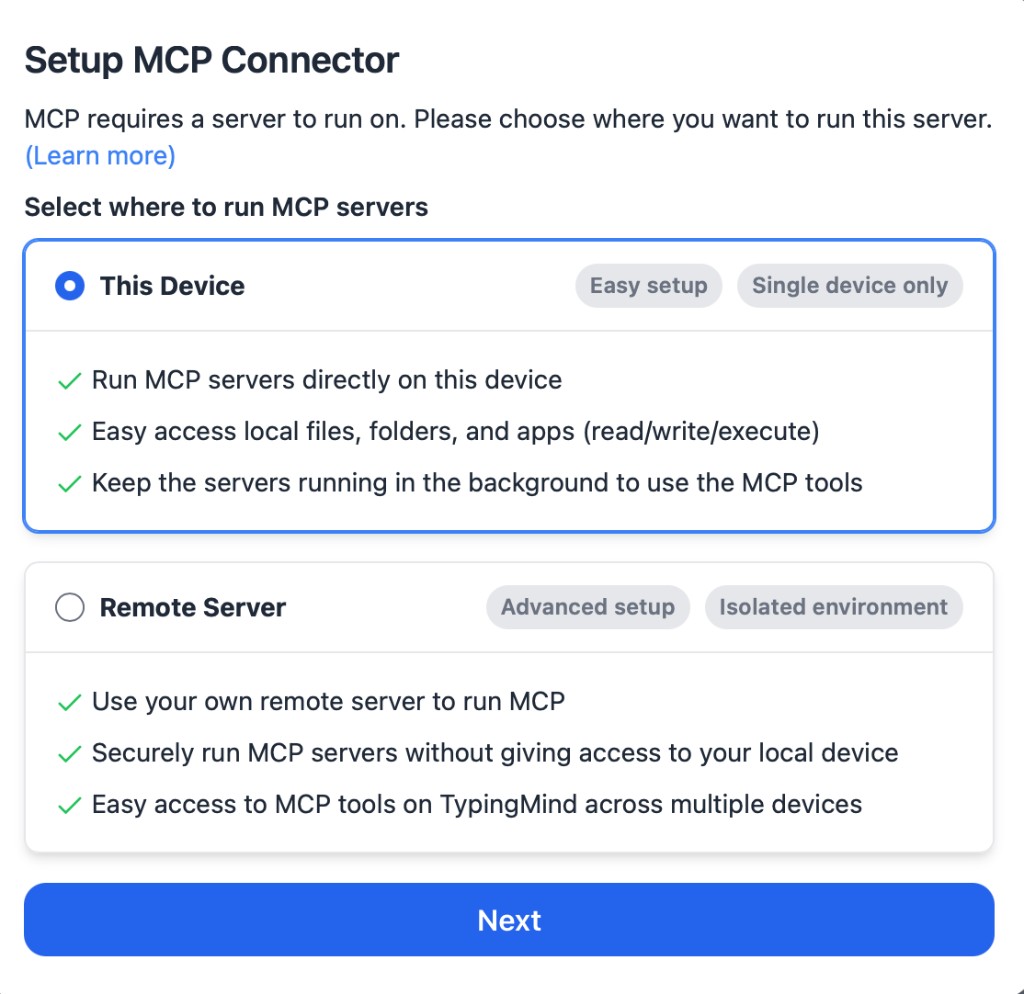
In TypingMind, go to Settings, Advanced Settings, then Model Context Protocol and choose Setup Connector.

  1. Open TypingMind in your browser.
  2. Click the Settings icon.
  3. Go to Advanced Settings.
  4. Open the Model Context Protocol section.
  5. Click Setup Connector and choose This Device.
TypingMind MCP connector setup screen with This Device selected
2

Run the connector command

Choose This Device, copy the command from TypingMind, and run it in Terminal. Keep the process running while you use MCP.

  1. Copy the setup command shown by TypingMind.
  2. Open Terminal on macOS or Windows Terminal on Windows.
  3. Paste and run the command.
  4. Approve the package install if Terminal asks you to proceed.
  5. Keep the Terminal window running while using MCP tools.
3

Add OpenStreetMap (OSM) MCP 服务器 as a server

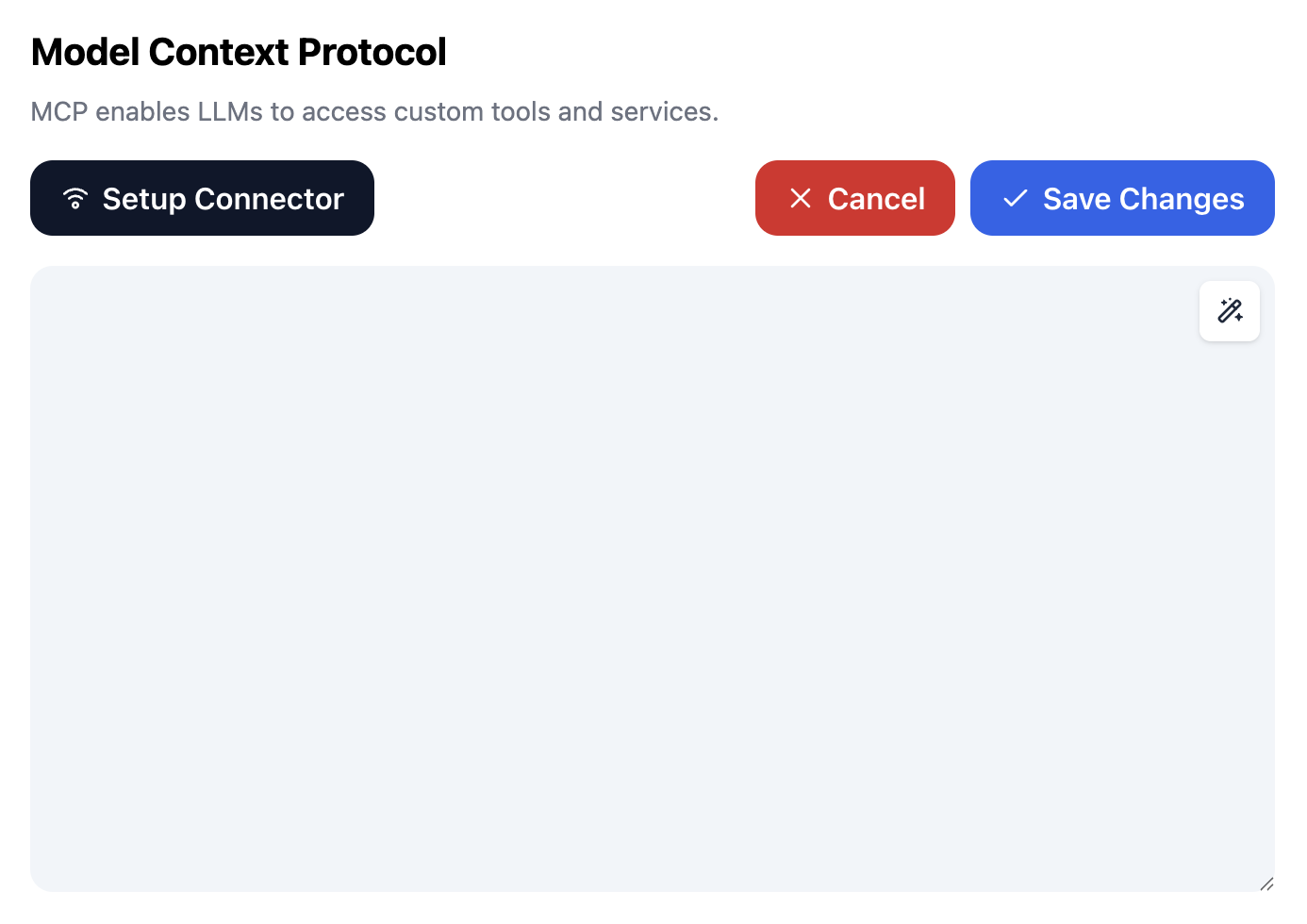
When the connector status is Ready, click Edit Servers and paste the MCP server configuration.

  1. Wait until the connector status shows Ready.
  2. Click Edit Servers.
  3. Paste the OpenStreetMap (OSM) MCP 服务器 MCP server configuration.
  4. Save the server list.
  5. Refresh if you want to confirm the connector is still ready.
TypingMind MCP settings showing active server and Edit Servers button
{
  "mcpServers": {
    "jagan-shanmugam-open-streetmap-mcp": {
      "command": "npx",
      "args": [
        "-y",
        "osm-mcp-server"
      ]
    }
  }
}
4

Use it across models

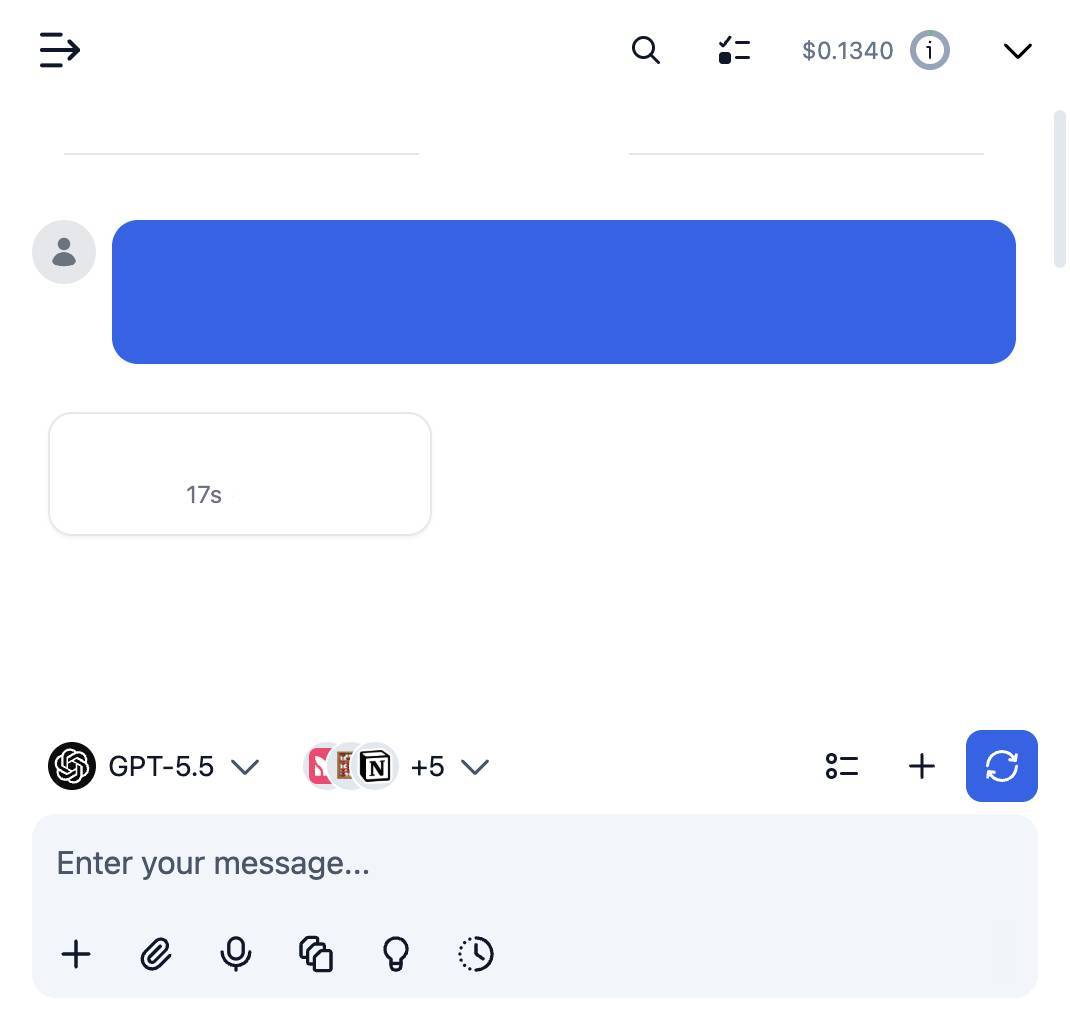
Save the server list, open Plugins, enable the OpenStreetMap (OSM) MCP 服务器 MCP tools, then select any supported AI model in TypingMind and use the tools in chat or assign them to an AI agent.

  1. Open the Plugins page in TypingMind.
  2. Enable the OpenStreetMap (OSM) MCP 服务器 MCP tools.
  3. Start a chat and choose the AI model you want to use.
  4. Use the MCP tools in chat or assign them to an AI agent.
  5. Switch to another AI model whenever needed without reconnecting MCP.
TypingMind chat using enabled MCP tools with a selected AI model
Can you use OpenStreetMap (OSM) MCP 服务器 to help me with this task?
OpenStreetMap (OSM) MCP 服务器
Sure. I read it.
Here is what I found using OpenStreetMap (OSM) MCP 服务器.

Frequently asked questions

What is the OpenStreetMap (OSM) MCP 服务器 MCP server used for?

OpenStreetMap (OSM) MCP 服务器 is an MCP server that lets compatible AI clients connect to external tools and context. In TypingMind, you can add this MCP server once and make its tools available in your AI workspace.

Can I use OpenStreetMap (OSM) MCP 服务器 MCP with multiple AI models in TypingMind?

Yes. TypingMind connects MCP tools at the workspace level, so you can use OpenStreetMap (OSM) MCP 服务器 with different AI models such as Claude, ChatGPT, Gemini, or other models you have configured in TypingMind without setting up the MCP server separately for each model.

Why use OpenStreetMap (OSM) MCP 服务器 MCP with TypingMind?

TypingMind is one of the best frontends for LLM chat because it brings multiple AI models, prompts, plugins, AI agents, API keys, and MCP tools into one workspace. With OpenStreetMap (OSM) MCP 服务器 connected, you can use its MCP tools across your preferred models while keeping your chat workflow organized in TypingMind.

How do I connect OpenStreetMap (OSM) MCP 服务器 MCP to TypingMind?

OpenStreetMap (OSM) MCP 服务器 runs through the TypingMind local MCP connector. This is best when the MCP server needs access to local files, desktop apps, command-line tools, or private resources on your computer.

What tools does OpenStreetMap (OSM) MCP 服务器 MCP provide in TypingMind?

OpenStreetMap (OSM) MCP 服务器 exposes MCP capabilities that can be enabled from the TypingMind Plugins page and used in chat or assigned to AI agents.

Do I need to share my API keys with TypingMind to use OpenStreetMap (OSM) MCP 服务器 MCP?

No. TypingMind is local-first and lets you keep your model providers, API keys, prompts, and MCP configuration under your control. If OpenStreetMap (OSM) MCP 服务器 requires authentication, add the required headers, OAuth settings, or local configuration for that MCP server when you create the connection.

Related MCP Servers

View all

Set up your own AI workspace now

Get notified about new features and future giveaways by subscribing to our newsletter 👇