BloodHound-MCP logo

BloodHound-MCP

Community
MorDavid

BloodHound-MCP-AI is integration that connects BloodHound with AI through Model Context Protocol, allowing security professionals to analyze Active Directory attack paths using natural language instead of complex Cypher queries.

PublisherMorDavid
RepositoryBloodHound-MCP-AI
LanguagePython
Forks
53
Stars
355
Available tools
0
Transport typestdio
Categories
Licensenull
Links
  • Connect tools to AI workflows

    BloodHound-MCP exposes MCP capabilities that can be used by compatible AI clients and agents.

  • 0 available tools

    Browse the callable actions below, including names and descriptions when provided by the server.

  • Ready-to-copy setup

    Use the installation snippets to configure this server in your preferred MCP client.

  • Open source signals

    355 stars and 53 forks from the linked repository.

BloodHound-MCP

BloodHound-MCP

Model Context Protocol (MCP) Server for BloodHound

BloodHound-MCP is a powerful integration that brings the capabilities of Model Context Procotol (MCP) Server to BloodHound, the industry-standard tool for Active Directory security analysis. This integration allows you to analyze BloodHound data using natural language, making complex Active Directory attack path analysis accessible to everyone.

πŸ₯‡ First-Ever BloodHound AI Integration!
This is the first integration that connects BloodHound with AI through MCP, originally announced here.

πŸ” What is BloodHound-MCP?

BloodHound-MCP combines the power of:

  • BloodHound: Industry-standard tool for visualizing and analyzing Active Directory attack paths
  • Model Context Protocol (MCP): An open protocol for creating custom AI tools, compatible with various AI models
  • Neo4j: Graph database used by BloodHound to store AD relationship data

With over 75 specialized tools based on the original BloodHound CE Cypher queries, BloodHound-MCP allows security professionals to:

  • Query BloodHound data using natural language
  • Discover complex attack paths in Active Directory environments
  • Assess Active Directory security posture more efficiently
  • Generate detailed security reports for stakeholders

πŸ“± Community

Join our Telegram channel for updates, tips, and discussion:

🌟 Star History

Star History Chart

✨ Features

  • Natural Language Interface: Query BloodHound data using plain English
  • Comprehensive Analysis Categories:
    • Domain structure mapping
    • Privilege escalation paths
    • Kerberos security issues (Kerberoasting, AS-REP Roasting)
    • Certificate services vulnerabilities
    • Active Directory hygiene assessment
    • NTLM relay attack vectors
    • Delegation abuse opportunities
    • And much more!

πŸ“‹ Prerequisites

  • BloodHound 4.x+ with data collected from an Active Directory environment
  • Neo4j database with BloodHound data loaded
  • Python 3.8 or higher
  • MCP Client

πŸ”§ Installation

  1. Clone this repository:

    bash
    git clone https://github.com/your-username/MCP-BloodHound.git
    cd MCP-BloodHound
  2. Install dependencies:

    bash
    pip install -r requirements.txt
  3. Configure the MCP Server

    bash
    "mcpServers": {
        "BloodHound-MCP": {
            "command": "python",
            "args": [
                "<Your_Path>\\BloodHound-MCP.py"
            ],
            "env": {
                "BLOODHOUND_URI": "bolt://localhost:7687",
                "BLOODHOUND_USERNAME": "neo4j",
                "BLOODHOUND_PASSWORD": "bloodhoundcommunityedition"
            }
        }
    }

πŸš€ Usage

Example queries you can ask through the MCP:

  • "Show me all paths from kerberoastable users to Domain Admins"
  • "Find computers where Domain Users have local admin rights"
  • "Identify Domain Controllers vulnerable to NTLM relay attacks"
  • "Map all Active Directory certificate services vulnerabilities"
  • "Generate a comprehensive security report for my domain"
  • "Find inactive privileged accounts"
  • "Show me attack paths to high-value targets"

πŸ” Security Considerations

This tool is designed for legitimate security assessment purposes. Always:

  • Obtain proper authorization before analyzing any Active Directory environment
  • Handle BloodHound data as sensitive information
  • Follow responsible disclosure practices for any vulnerabilities discovered

πŸ“œ License

This project is licensed under the MIT License - see the LICENSE file for details.

πŸ™ Acknowledgments

  • The BloodHound team for creating an amazing Active Directory security tool
  • The security community for continuously advancing AD security practices

Verified on MseeP


Note: This is not an official Anthropic product. BloodHound-MCP is a community-driven integration between BloodHound and MCP.
Installation

TypingMind
Prerequisites:

Node.js 18+

{
  "mcpServers": {
    "mordavid-bloodhound-mcp-ai": {
      "command": "",
      "args": []
    }
  }
}

Use BloodHound-MCP MCP with multiple AI models

TypingMind connects MCP tools at the workspace level, so once BloodHound-MCP is connected, you can use it with different AI models in TypingMind instead of setting it up separately for each model. This MCP runs locally through the TypingMind MCP connector on your device.

Setup guide to use the local connector

Use this when the MCP server needs access to local files, apps, or private resources on your computer.

1

Open the MCP settings

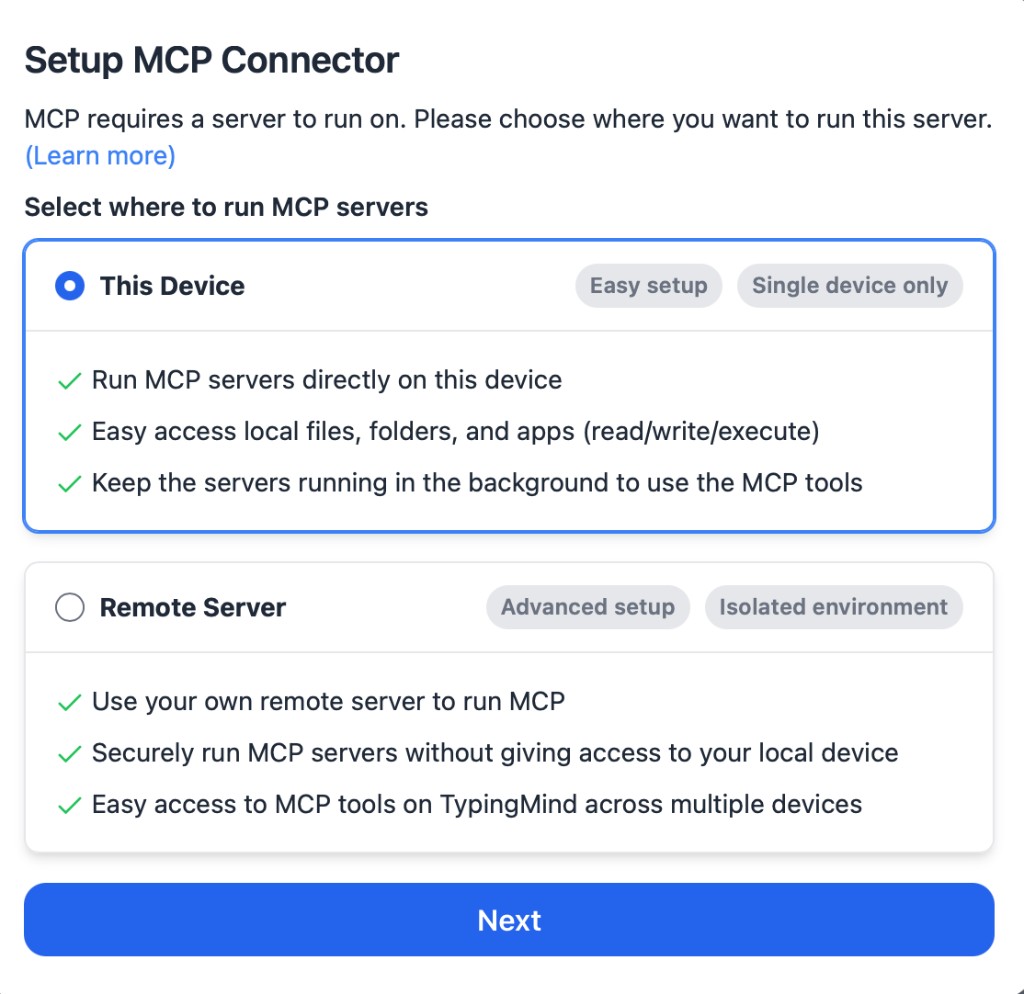
In TypingMind, go to Settings, Advanced Settings, then Model Context Protocol and choose Setup Connector.

  1. Open TypingMind in your browser.
  2. Click the Settings icon.
  3. Go to Advanced Settings.
  4. Open the Model Context Protocol section.
  5. Click Setup Connector and choose This Device.
TypingMind MCP connector setup screen with This Device selected
2

Run the connector command

Choose This Device, copy the command from TypingMind, and run it in Terminal. Keep the process running while you use MCP.

  1. Copy the setup command shown by TypingMind.
  2. Open Terminal on macOS or Windows Terminal on Windows.
  3. Paste and run the command.
  4. Approve the package install if Terminal asks you to proceed.
  5. Keep the Terminal window running while using MCP tools.
3

Add BloodHound-MCP as a server

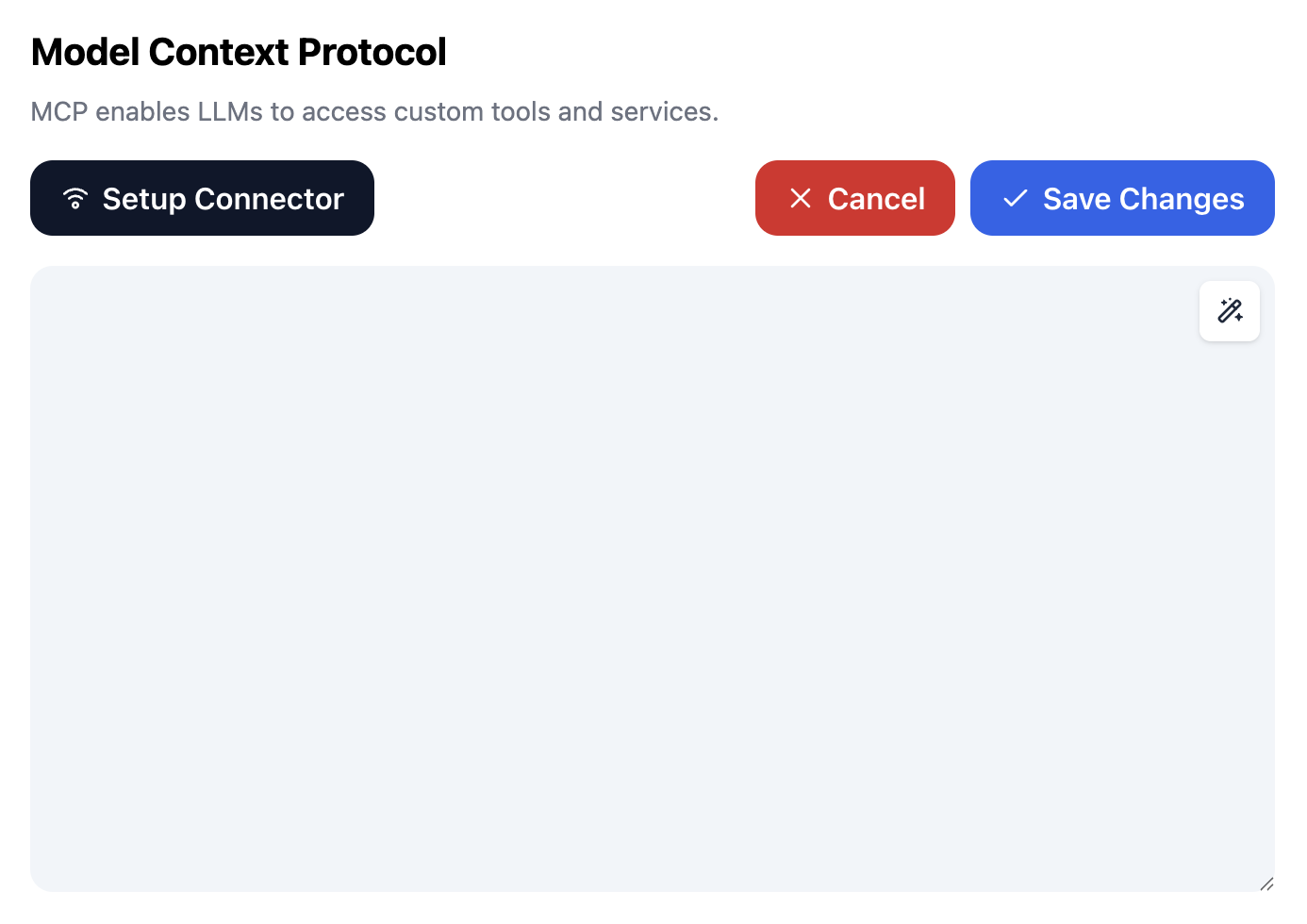
When the connector status is Ready, click Edit Servers and paste the MCP server configuration.

  1. Wait until the connector status shows Ready.
  2. Click Edit Servers.
  3. Paste the BloodHound-MCP MCP server configuration.
  4. Save the server list.
  5. Refresh if you want to confirm the connector is still ready.
TypingMind MCP settings showing active server and Edit Servers button
{
  "mcpServers": {
    "mordavid-bloodhound-mcp-ai": {
      "command": "npx",
      "args": [
        "-y",
        "BloodHound-MCP-AI"
      ]
    }
  }
}
4

Use it across models

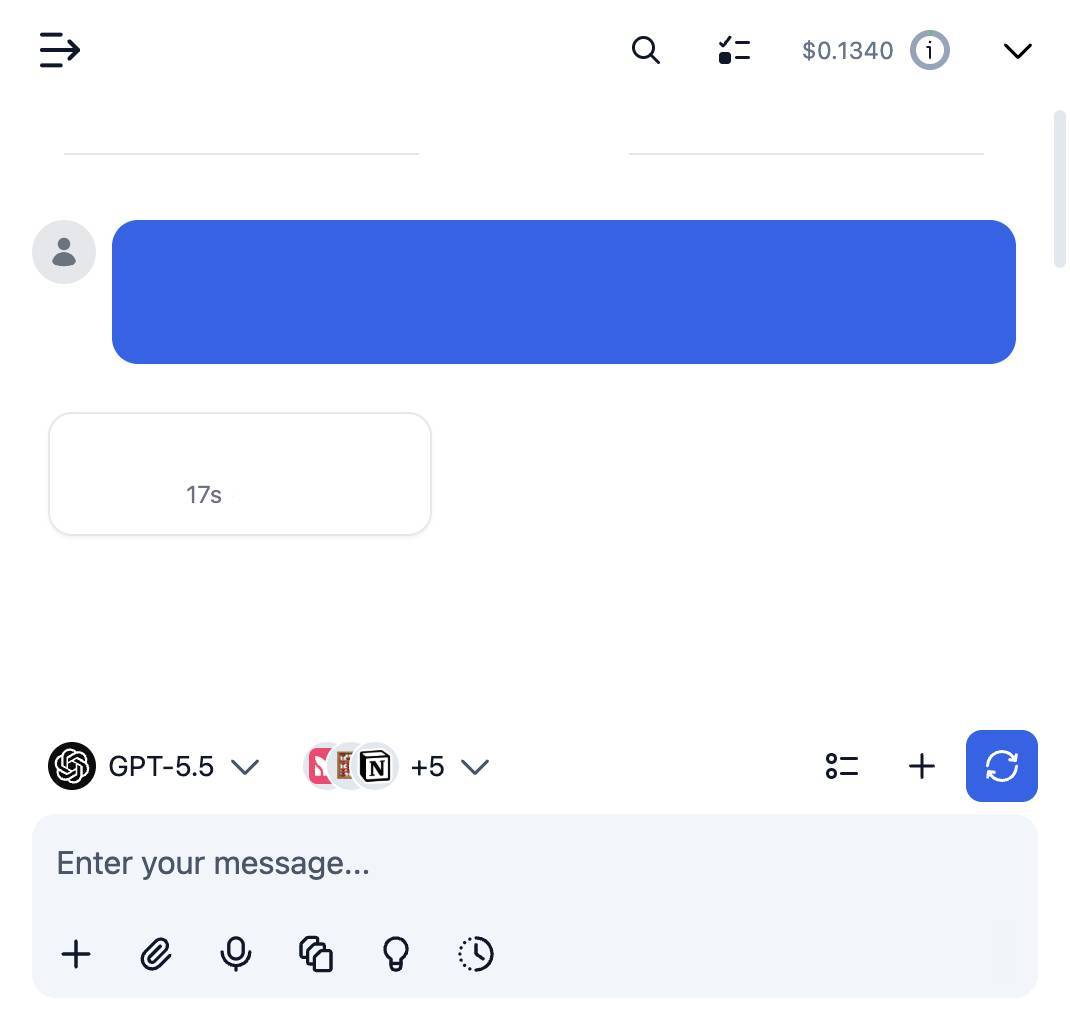
Save the server list, open Plugins, enable the BloodHound-MCP MCP tools, then select any supported AI model in TypingMind and use the tools in chat or assign them to an AI agent.

  1. Open the Plugins page in TypingMind.
  2. Enable the BloodHound-MCP MCP tools.
  3. Start a chat and choose the AI model you want to use.
  4. Use the MCP tools in chat or assign them to an AI agent.
  5. Switch to another AI model whenever needed without reconnecting MCP.
TypingMind chat using enabled MCP tools with a selected AI model
Can you use BloodHound-MCP to help me with this task?
BloodHound-MCP
Sure. I read it.
Here is what I found using BloodHound-MCP.

Frequently asked questions

What is the BloodHound-MCP MCP server used for?

BloodHound-MCP is an MCP server that lets compatible AI clients connect to external tools and context. In TypingMind, you can add this MCP server once and make its tools available in your AI workspace.

Can I use BloodHound-MCP MCP with multiple AI models in TypingMind?

Yes. TypingMind connects MCP tools at the workspace level, so you can use BloodHound-MCP with different AI models such as Claude, ChatGPT, Gemini, or other models you have configured in TypingMind without setting up the MCP server separately for each model.

Why use BloodHound-MCP MCP with TypingMind?

TypingMind is one of the best frontends for LLM chat because it brings multiple AI models, prompts, plugins, AI agents, API keys, and MCP tools into one workspace. With BloodHound-MCP connected, you can use its MCP tools across your preferred models while keeping your chat workflow organized in TypingMind.

How do I connect BloodHound-MCP MCP to TypingMind?

BloodHound-MCP runs through the TypingMind local MCP connector. This is best when the MCP server needs access to local files, desktop apps, command-line tools, or private resources on your computer.

What tools does BloodHound-MCP MCP provide in TypingMind?

BloodHound-MCP exposes MCP capabilities that can be enabled from the TypingMind Plugins page and used in chat or assigned to AI agents.

Do I need to share my API keys with TypingMind to use BloodHound-MCP MCP?

No. TypingMind is local-first and lets you keep your model providers, API keys, prompts, and MCP configuration under your control. If BloodHound-MCP requires authentication, add the required headers, OAuth settings, or local configuration for that MCP server when you create the connection.

Related MCP Servers

View all

Set up your own AI workspace now

Get notified about new features and future giveaways by subscribing to our newsletter πŸ‘‡