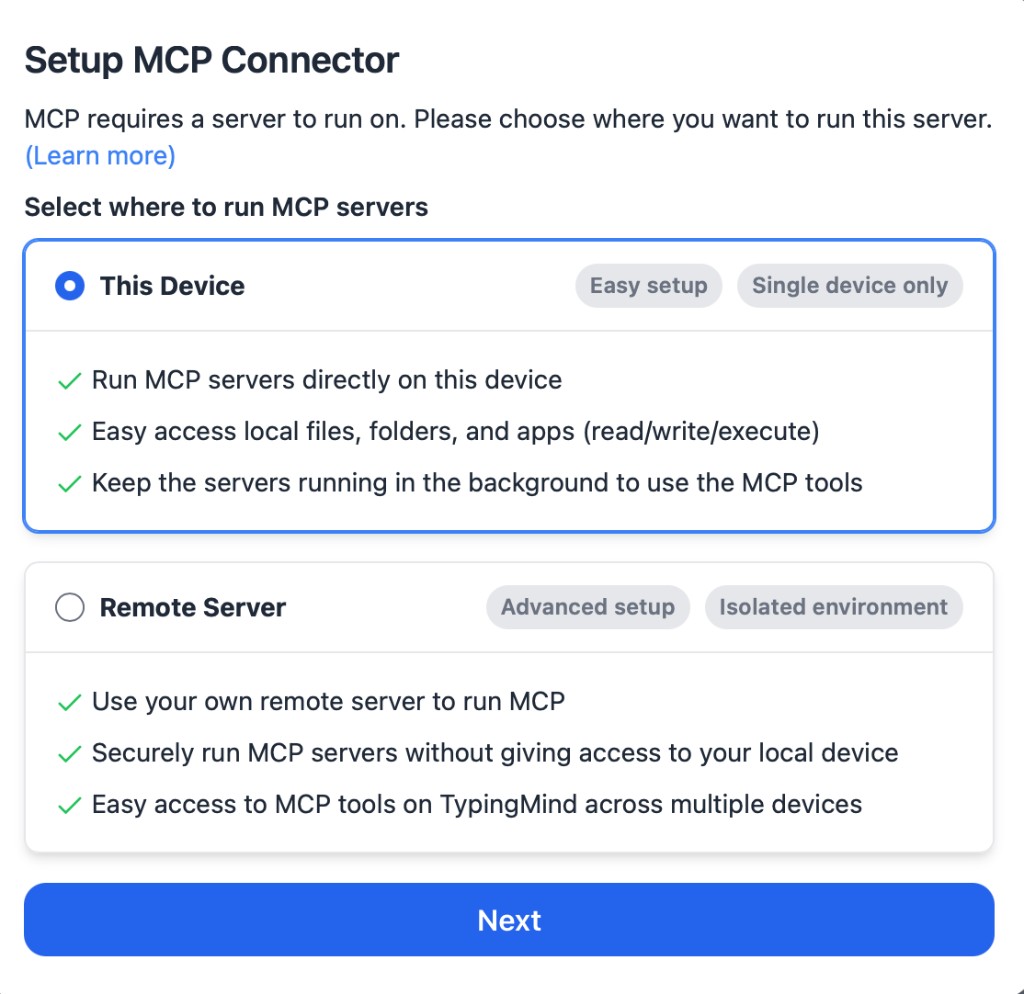
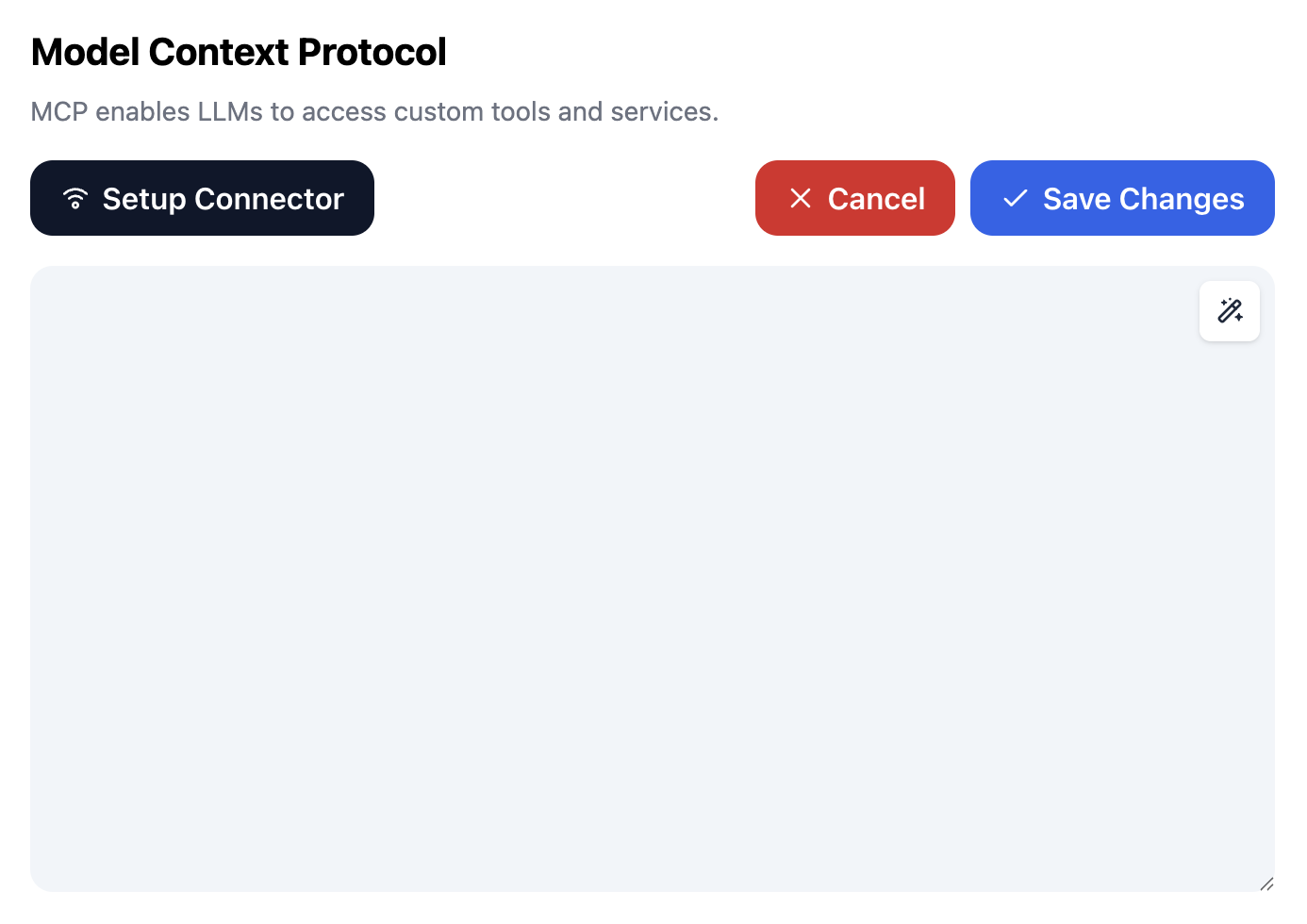
Intervals.icu MCP Server
Model Context Protocol (MCP) server for connecting Claude and ChatGPT with the Intervals.icu API. It provides tools for authentication and data retrieval for activities, events, wellness data, power curves, and custom items.
If you find the Model Context Protocol (MCP) server useful, please consider supporting its continued development with a donation.
Requirements
- Python 3.12 or higher
- Model Context Protocol (MCP) Python SDK
- httpx
- python-dotenv
Setup
1. Install uv (recommended)
macOS/Linux:
bashcurl -LsSf https://astral.sh/uv/install.sh | sh
Windows (PowerShell):
powershellpowershell -ExecutionPolicy ByPass -c "irm https://astral.sh/uv/install.ps1 | iex"
After installation, find the full path to uv — you'll need it later when configuring Claude Desktop:
powershellwhere.exe uv # Example output: C:\Users\<USERNAME>\.local\bin\uv.exe
2. Clone this repository
bashgit clone https://github.com/mvilanova/intervals-mcp-server.git cd intervals-mcp-server
3. Create and activate a virtual environment
bash# Create virtual environment with Python 3.12 uv venv --python 3.12 # Activate virtual environment # On macOS/Linux: source .venv/bin/activate # On Windows: .venv\Scripts\activate
4. Sync project dependencies
bashuv sync
5. Set up environment variables
Make a copy of .env.example and name it .env by running the following command:
macOS/Linux:
bashcp .env.example .env
Windows (PowerShell):
powershellCopy-Item .env.example .env
Then edit the .env file and set your Intervals.icu athlete id and API key:
API_KEY=your_intervals_api_key_here ATHLETE_ID=your_athlete_id_here
Getting your Intervals.icu API Key
- Log in to your Intervals.icu account
- Go to Settings > API
- Generate a new API key
Finding your Athlete ID
Your athlete ID is typically visible in the URL when you're logged into Intervals.icu. It looks like:
https://intervals.icu/athlete/i12345/...wherei12345is your athlete ID
Updating
This project is actively developed, with new features and fixes added regularly. To stay up to date, follow these steps:
1. Pull the latest changes from main
⚠️ Make sure you don't have uncommitted changes before running this command.
macOS/Linux:
bashgit checkout main && git pull
Windows (PowerShell):
powershellgit checkout main; git pull
2. Update Python dependencies
Activate your virtual environment and sync dependencies:
macOS/Linux:
bashsource .venv/bin/activate uv sync
Windows (PowerShell):
powershell.venv\Scripts\activate uv sync
Troubleshooting
If Claude Desktop fails due to configuration changes, follow these steps:
- Delete the existing
Intervals.icuentry inclaude_desktop_config.json. - Reconfigure Claude Desktop from the
intervals-mcp-serverdirectory.
macOS/Linux:
bashmcp install src/intervals_mcp_server/server.py --name "Intervals.icu" --with-editable . --env-file .env
Windows: Re-add the entry manually as described in the Windows configuration section.
Common errors
spawn uv ENOENT — Claude Desktop cannot find the uv executable. Use the full path to uv in the command field. Run which uv (macOS/Linux) or where.exe uv (Windows) to get it.
spawn /Users/... ENOENT on Windows — The config file contains a macOS/Linux-style path. Replace it with the correct Windows path using backslashes as described in the Windows configuration section below.
Windows Store install: config changes not taking effect — You may be editing the wrong config file. Claude Desktop installed from the Microsoft Store reads from AppData\Local\Packages\Claude_pzs8sxrjxfjjc\LocalCache\Roaming\Claude\claude_desktop_config.json, not AppData\Roaming\Claude\.
Usage with Claude
1. Configure Claude Desktop
To use this server with Claude Desktop, you need to add it to your Claude Desktop configuration.
macOS/Linux
- Run the following from the
intervals-mcp-serverdirectory to configure Claude Desktop:
bashmcp install src/intervals_mcp_server/server.py --name "Intervals.icu" --with-editable . --env-file .env
- If you open your Claude Desktop App configuration file
claude_desktop_config.json, it should look like this:
json{ "mcpServers": { "Intervals.icu": { "command": "/Users/<USERNAME>/.local/bin/uv", "args": [ "run", "--with", "mcp[cli]", "--with-editable", "/path/to/intervals-mcp-server", "mcp", "run", "/path/to/intervals-mcp-server/src/intervals_mcp_server/server.py" ], "env": { "INTERVALS_API_BASE_URL": "https://intervals.icu/api/v1", "ATHLETE_ID": "<YOUR_ATHLETE_ID>", "API_KEY": "<YOUR_API_KEY>", "LOG_LEVEL": "INFO" } } } }
Where /path/to/ is the path to the intervals-mcp-server code folder in your system.
Windows
The mcp install command may fail on Windows due to environment or permission issues. Instead, configure Claude Desktop manually:
-
Find the Claude Desktop config file. If Claude Desktop was installed from the Microsoft Store, the config is located at:
C:\Users\<USERNAME>\AppData\Local\Packages\Claude_pzs8sxrjxfjjc\LocalCache\Roaming\Claude\claude_desktop_config.jsonIf installed via the standard installer, it may be at:
C:\Users\<USERNAME>\AppData\Roaming\Claude\claude_desktop_config.jsonIf the file or folder does not exist, create it.
-
Add the following entry to
claude_desktop_config.json, replacing the placeholders with your actual values:
json{ "mcpServers": { "Intervals.icu": { "command": "C:\\Users\\<USERNAME>\\.local\\bin\\uv.exe", "args": [ "run", "--with", "mcp[cli]", "--with-editable", "C:\\path\\to\\intervals-mcp-server", "mcp", "run", "C:\\path\\to\\intervals-mcp-server\\src\\intervals_mcp_server\\server.py" ], "env": { "INTERVALS_API_BASE_URL": "https://intervals.icu/api/v1", "ATHLETE_ID": "<YOUR_ATHLETE_ID>", "API_KEY": "<YOUR_API_KEY>", "LOG_LEVEL": "INFO" } } } }
- Use double backslashes (
\\) for all Windows paths in JSON. - To find the full path to
uv.exe, runwhere.exe uvin PowerShell. - To find the full path to the cloned repository, run
pwdfrom inside theintervals-mcp-serverfolder.
Note for Windows Store installs: Claude Desktop installed from the Microsoft Store sandboxes its config under
AppData\Local\Packages\.... EditingAppData\Roaming\Claude\claude_desktop_config.jsonwill have no effect — make sure you edit the correct file.
- Restart Claude Desktop.
2. Use the MCP server with Claude
Once the server is running and Claude Desktop is configured, you can use the following tools to ask questions about your past and future activities, events, and wellness data.
get_activities: Retrieve a list of activitiesget_activity_details: Get detailed information for a specific activityget_activity_intervals: Get detailed interval data for a specific activityget_activity_streams: Get raw data streams (power, heart rate, etc.) for a specific activityget_athlete_power_curves: Get best power output curves for selected durations and time periodsget_wellness_data: Fetch wellness dataget_events: Retrieve upcoming events (workouts, races, etc.)get_event_by_id: Get detailed information for a specific eventadd_or_update_event: Create or update an event (workout, race, note, etc.)delete_event: Delete a specific eventdelete_events_by_date_range: Delete events within a date rangeget_custom_items: Get custom items (charts, custom fields, zones, etc.) for an athleteget_custom_item_by_id: Get detailed information for a specific custom itemcreate_custom_item: Create a new custom item for an athleteupdate_custom_item: Update an existing custom itemdelete_custom_item: Delete a custom item
Usage with ChatGPT
ChatGPT’s beta MCP connectors can also talk to this server over the SSE transport.
-
Start the server in SSE mode so it exposes the
/sseand/messages/endpoints:bashexport FASTMCP_HOST=127.0.0.1 FASTMCP_PORT=8765 MCP_TRANSPORT=sse FASTMCP_LOG_LEVEL=INFO python src/intervals_mcp_server/server.pyThe startup log prints the full URLs (for example
http://127.0.0.1:8765/sse). ChatGPT needs that public URL, so forward the port with a tool such asngrok http 8765if you are not exposing the server directly. -
In ChatGPT, open Settings → Features → Custom MCP Connectors and click Add. Fill in:
- Name:
Intervals.icu - MCP Server URL:
https://<your-public-host>/sse - Authentication: leave as No authentication unless you have protected your tunnel.
You can reuse the same
ngrok http 8765tunnel URL here; just ensure it forwards to the host/port you exported above. - Name:
-
Save the connector and open a new chat. ChatGPT will keep the SSE connection open and POST follow-up requests to the
/messages/endpoint announced by the server. If you restart the MCP server or tunnel, rerun the SSE command and update the connector URL if it changes.
Development and testing
Install development dependencies and run the test suite with:
bashuv sync --all-extras pytest -v tests
Running the server locally
To start the server manually (useful when developing or testing), run:
bashmcp run src/intervals_mcp_server/server.py
Enabling debug logging
To capture server logs for debugging, wrap the command in a shell and redirect stderr to a file.
macOS/Linux — modify your claude_desktop_config.json like this:
json{ "mcpServers": { "Intervals.icu": { "command": "/bin/bash", "args": [ "-c", "/Users/<USERNAME>/.local/bin/uv run --with 'mcp[cli]' --with-editable /path/to/intervals-mcp-server mcp run /path/to/intervals-mcp-server/src/intervals_mcp_server/server.py 2>> /path/to/intervals-mcp-server/mcp-server.log" ], "env": { "INTERVALS_API_BASE_URL": "https://intervals.icu/api/v1", "ATHLETE_ID": "<YOUR_ATHLETE_ID>", "API_KEY": "<YOUR_API_KEY>", "LOG_LEVEL": "INFO" } } } }
Then tail the log file to see output in real-time:
bashtail -f /path/to/intervals-mcp-server/mcp-server.log
Windows — modify your claude_desktop_config.json like this:
json{ "mcpServers": { "Intervals.icu": { "command": "powershell", "args": [ "-Command", "C:\\Users\\<USERNAME>\\.local\\bin\\uv.exe run --with 'mcp[cli]' --with-editable C:\\path\\to\\intervals-mcp-server mcp run C:\\path\\to\\intervals-mcp-server\\src\\intervals_mcp_server\\server.py 2>> C:\\path\\to\\intervals-mcp-server\\mcp-server.log" ], "env": { "INTERVALS_API_BASE_URL": "https://intervals.icu/api/v1", "ATHLETE_ID": "<YOUR_ATHLETE_ID>", "API_KEY": "<YOUR_API_KEY>", "LOG_LEVEL": "INFO" } } } }
Then monitor the log file in real-time using PowerShell:
powershellGet-Content C:\path\to\intervals-mcp-server\mcp-server.log -Wait
License
The GNU General Public License v3.0